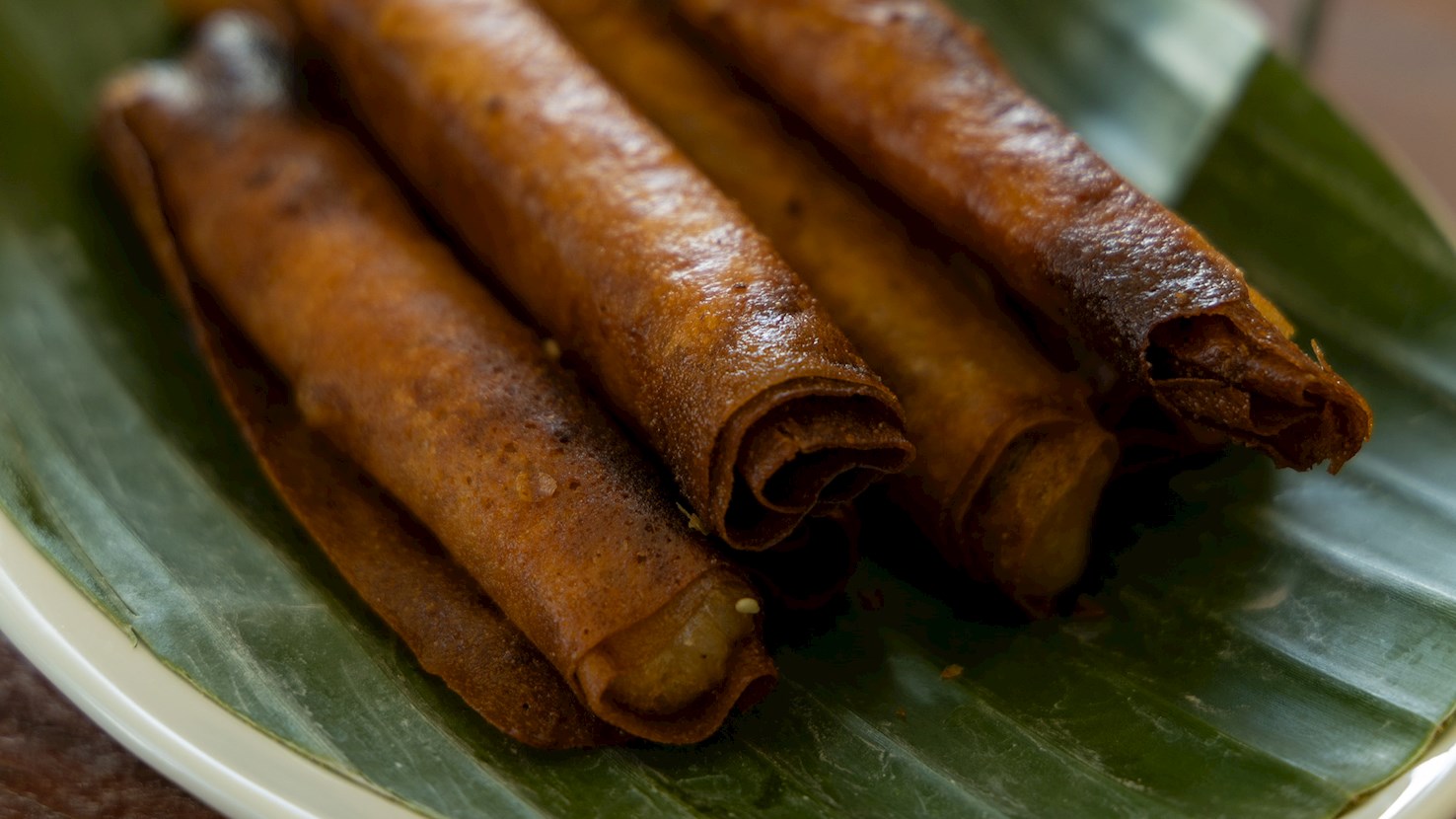
Falling in the group of popular lumpia snacks, turon is the famous Filipino treat made with saba plantains and jackfruit. The fruit is sliced lengthwise, dusted in brown sugar, enclosed in thin wheat wrappers, then fried until golden and crispy. Like other lumpia varieties, turon was also developed from the Chinese spring rolls and represents one of the most common sweet versions of the dish. Before it is served, it is commonly drizzled with caramel or sprinkled with roasted sesame seeds. It is usually sold by Filipino street vendors and enjoyed as a sweet snack or a satisfying dessert.
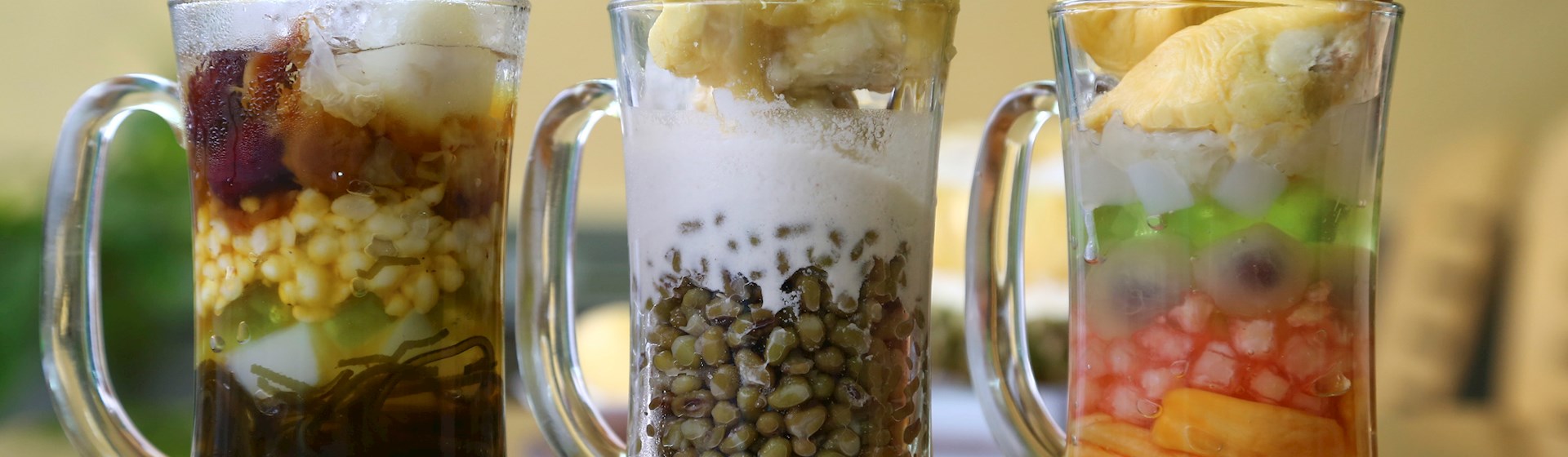
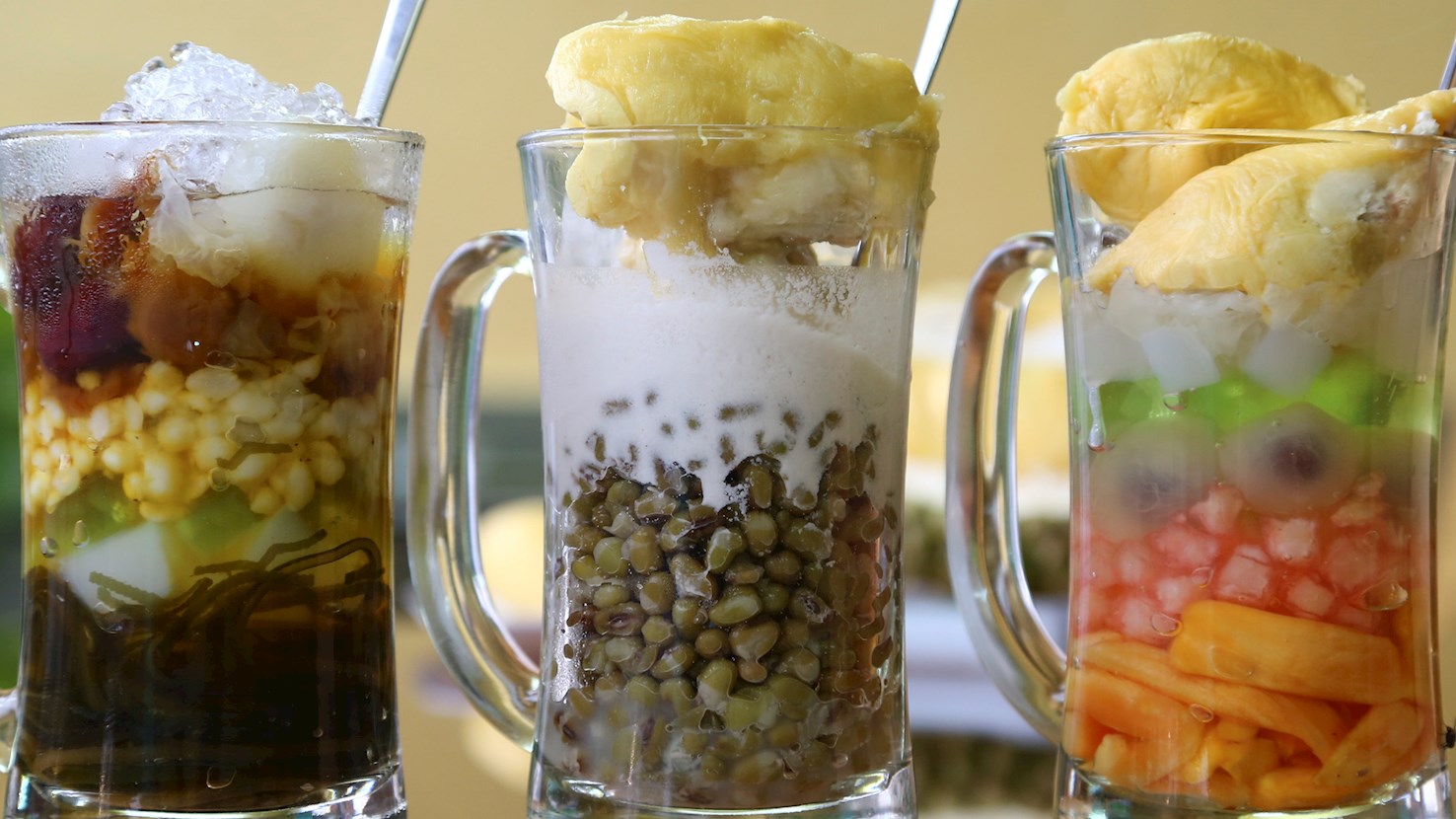
This versatile dessert usually consists of a cream base that is enriched with various ingredients. Typical additions include various types of canned fruit such as lychee, jackfruit, longan, or red-colored water chestnuts, as well as coconut milk, pandan-flavored jelly, and the sweet liquid in which the fruit was preserved. The dessert is finished off with the addition of ice cubes and should be served immediately.
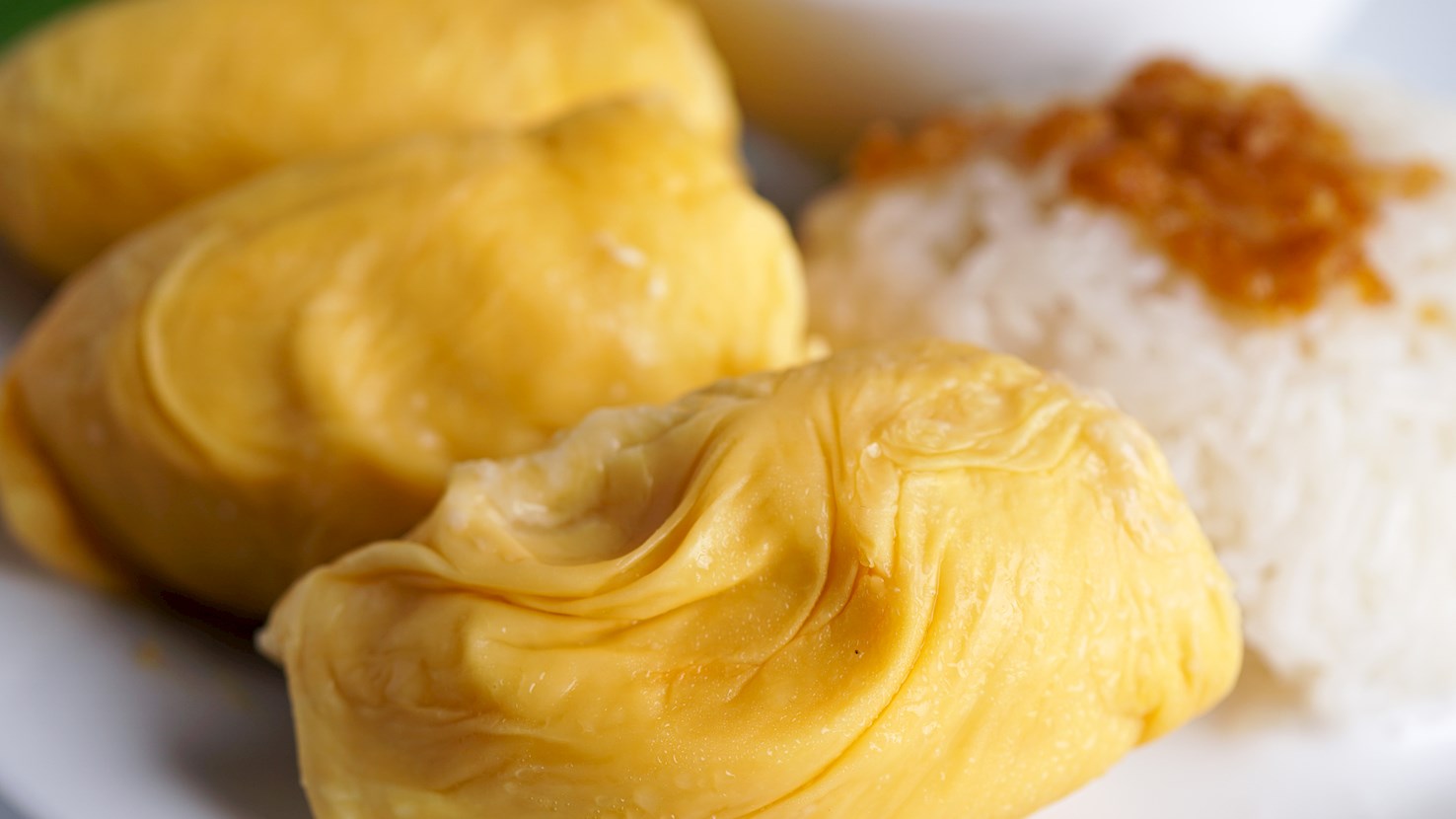
Pulut durian is a traditional Asian dessert that's popular in Malaysia, Thailand, and Singapore. It's usually made with a combination of durian flesh, glutinous rice, coconut milk, salt, sugar, and pandan leaves. The glutinous rice is seasoned with salt and steamed until done. The durian flesh is mixed with coconut milk, salt, sugar, and pandan leaves, and the mixture is boiled until the sauce develops a thick consistency. Once done, the sauce is served hot with glutinous rice.
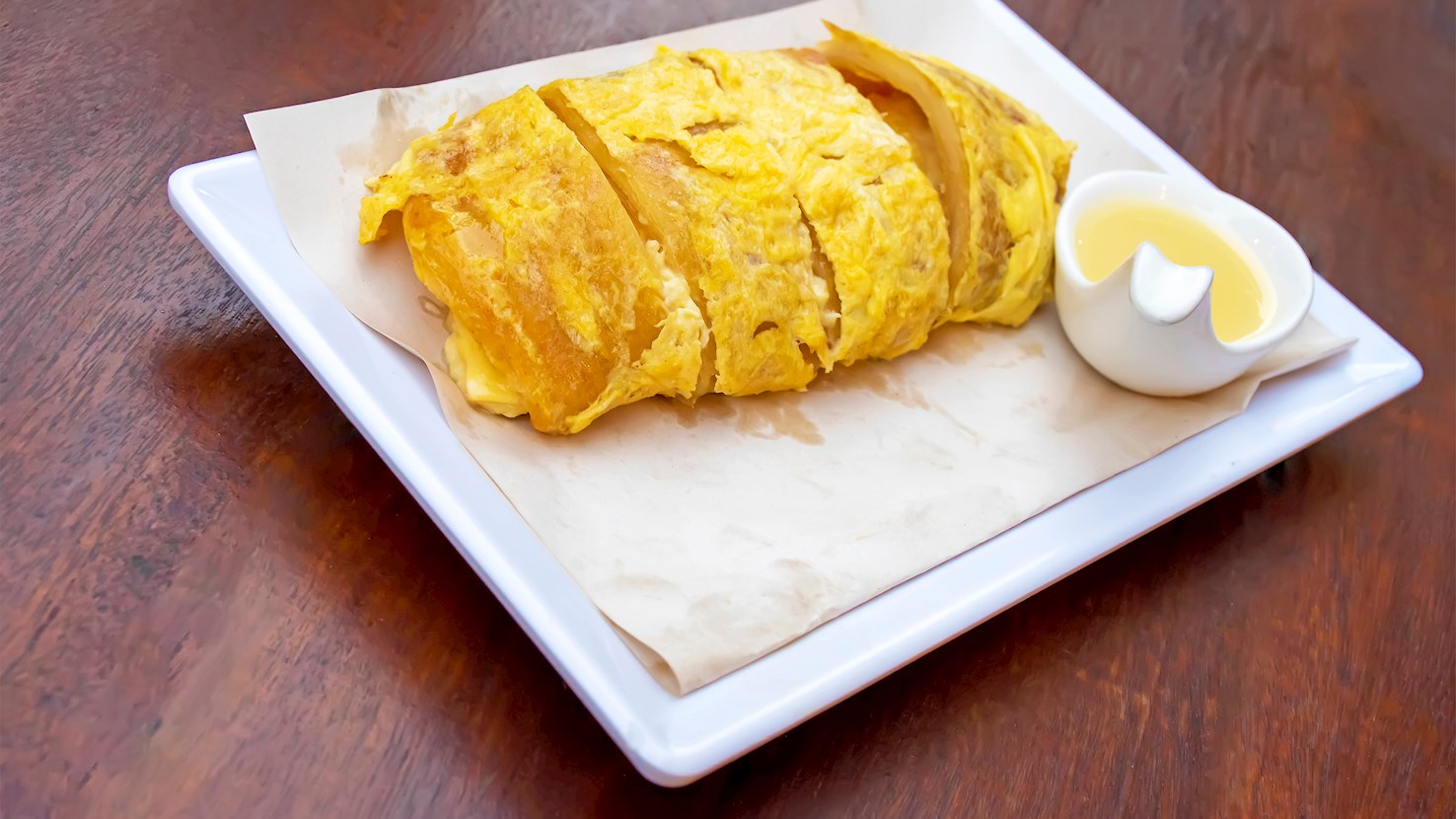
Roti durian is a sweet variety of roti canai, layered with durian fruit purée. Durian is a favorite in Southeast Asia (described by many as the "king of fruits"), beloved for its unmistakeably strong aroma and complex flavor profile. Once the durian fruit has fully ripened, the flesh becomes more creamy and slightly alcoholic, and so the flavors become more enhanced. The recipe for roti durian is very straightforward - mix the durian flesh or purée inside the roti canai, add sugar if necessary for extra sweetness, and pan-fry the whole thing. The dish can be found at most street vendors, and you can have it as a dessert or as a stand-alone snack!
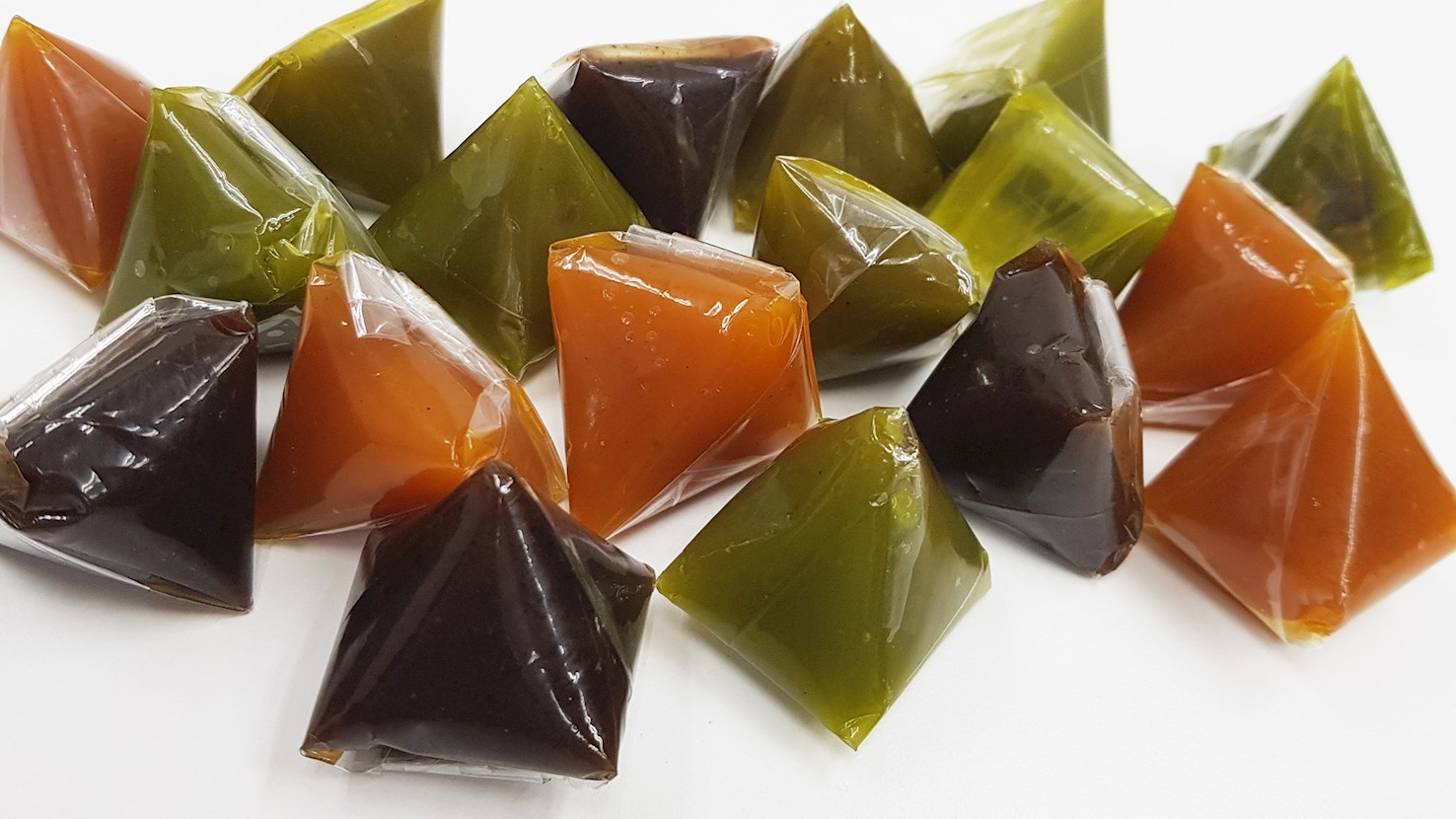
This sweet, sticky treat is prepared with a base of coconut milk, jaggery, and rice flour. It is characterized by its dense, chewy texture, and is typically cut into squares, strips, or diamonds. Common in many countries in Southeast Asia, dodol is prepared for various religious festivals and comes in many flavor combinations such as vanilla, durian, mango, apple, pineapple, and coconut. Although it is also factory-produced, homemade varieties are still common. The history and origin of dodol are vague, but it is considered to be one of the oldest desserts found in maritime Asia.
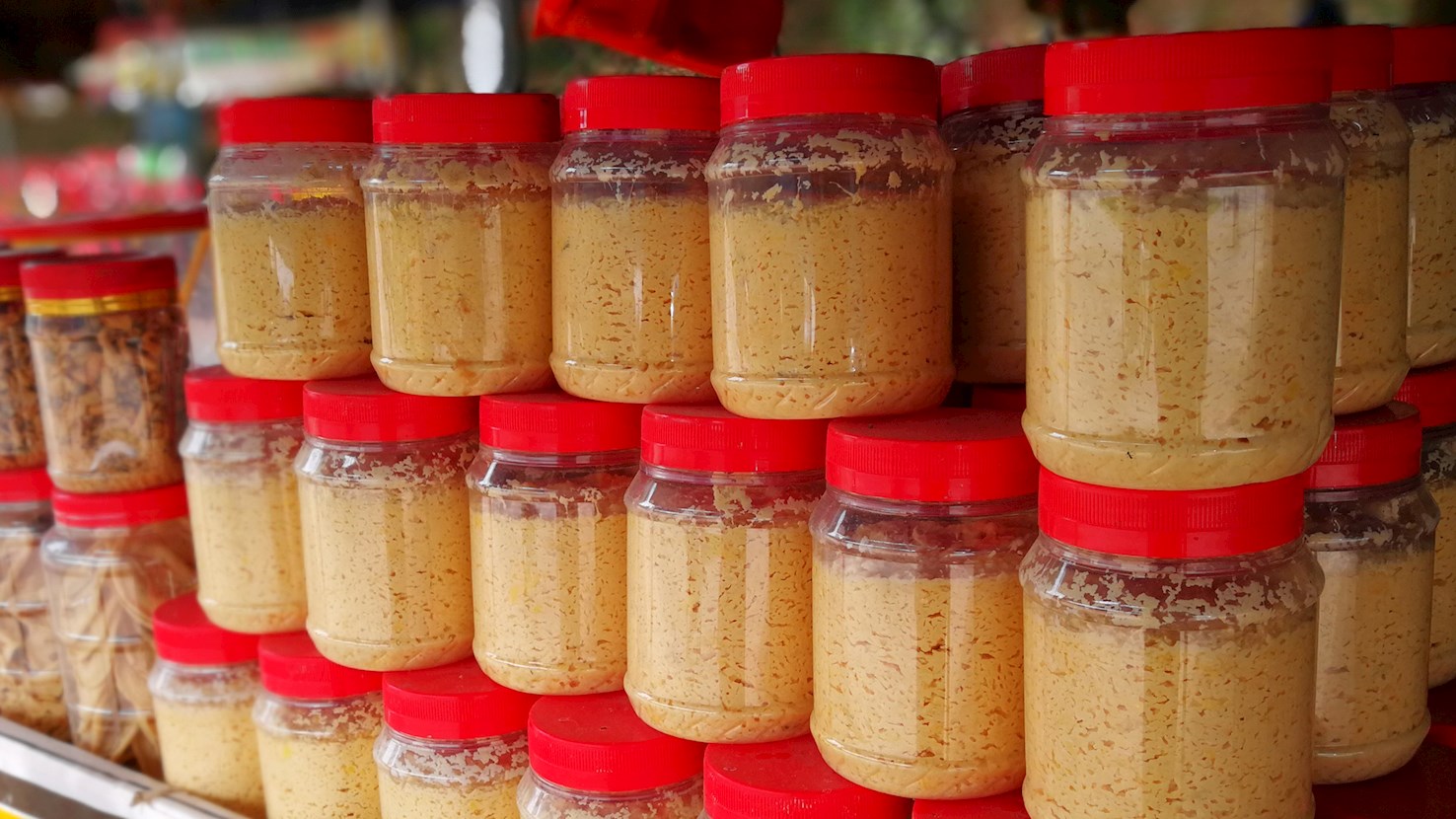
This popular Malaysian condiment is made with salted durian fruit that is left to ferment at room temperature for at least two days. Since it is highly versatile, it can vary in flavor and spiciness, but it is usually characterized by a combination of sweet, tangy, and salty flavors. Tempoyak is rarely eaten on its own, but it is often incorporated into curry-based dishes or served as an accompaniment to vegetables and rice. Like many other fermented Asian condiments, tempoyak is also believed to be an accidental invention which proved to be a great solution for ripe and low-quality durian, as well as an excellent preservation technique. Besides Malaysia, this pungent treat is also found in traditional Indonesian cuisine.
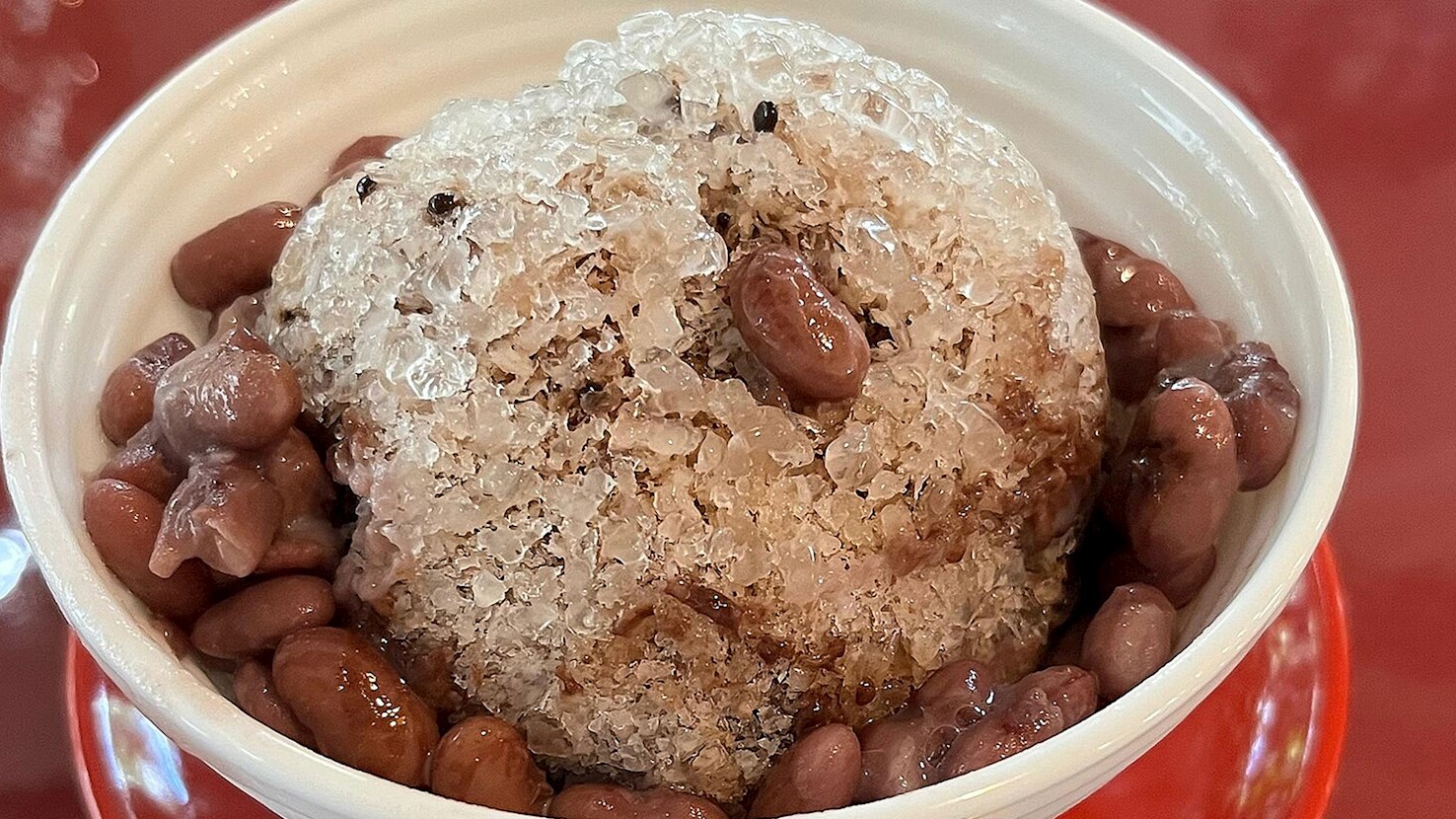
Es brenebon, also known as es kacang merah, is a sweet, cold dessert from Manado and the wider North Sulawesi region, built around tender red kidney beans, shaved ice, palm sugar syrup, and sweetened condensed milk. The beans give it a soft, creamy texture and mild earthy flavor, while the ice and milk turn it into a rich but refreshing dessert. The name brenebon comes from the Dutch bruine bonen, meaning “brown beans.” The term entered the local culinary vocabulary during the colonial period and became closely associated with kidney beans. Brenebon is also the name of a savory Minahasan soup made with kidney beans, vegetables, spices, and often pork or beef. The sweet iced version developed from the same locally familiar bean but eventually became a separate dessert. Its exact inventor and date of origin are not documented, so it cannot be firmly traced to the 17th century or specifically to the Dutch East India Company. Dried kidney beans are usually soaked in water overnight, then boiled slowly until completely tender. Sugar is added toward the end of cooking, sometimes together with pandan leaves and a small amount of salt. Palm sugar or brown sugar is especially common and gives the beans and their cooking liquid a deeper caramel flavor. As the liquid reduces, starch released by the beans helps create a thick reddish-brown syrup. The mixture is cooled before the dessert is assembled. A generous portion of beans and syrup is placed in a bowl or tall glass and covered with finely shaved ice. Sweetened condensed milk is poured over the top, gradually mixing with the bean syrup as the ice melts. Some versions add extra liquid palm sugar, producing an even richer caramel flavor. Roasted peanuts are a common topping and provide a crisp contrast to the soft beans and melting ice. Chocolate es brenebon adds chocolate sauce or syrup along with the condensed milk. The cocoa works particularly well with the earthy beans and changes the dessert from primarily caramel-like to distinctly chocolate-forward. Chocolate-topped versions are widely served in restaurants and cafés. Fresh fruit can also be added. Avocado is one of the most common additions, bringing a dense, creamy texture that blends naturally with the condensed milk and beans. Durian is another established variation, adding a much richer aroma and custard-like character. Jackfruit also appears in more elaborate mixed versions, contributing sweetness and a firmer, slightly chewy texture. Other modern servings may include chocolate sprinkles, roasted peanuts, pudding or jelly, coconut, or additional fruit. These are optional additions rather than defining ingredients. Es brenebon is served immediately after assembly. A long spoon is used to mix the beans, syrup, milk, and melting ice. As the ice dissolves, the dessert changes from distinct layers into a cold, creamy liquid filled with soft kidney beans. It is especially popular as an afternoon refreshment in Manado’s warm climate and is also served as a dessert after a meal. Es brenebon appears during festive periods as well, including Christmas, when it is served alongside other sweets associated with North Sulawesi.
TasteAtlas food rankings are based on the ratings of the TasteAtlas audience, with a series of mechanisms that recognize real users and that ignore bot,
nationalist or local patriotic ratings, and give additional value to the ratings of users that the system recognizes as knowledgeable.
For the “7 Best Rated Dishes with Durian” list until October 17, 2026, 1,046,806 ratings were recorded, of which 695,538 were recognized by the system as legitimate.
TasteAtlas Rankings should not be seen as the final global conclusion about food. Their purpose is to promote excellent local foods,
instill pride in traditional dishes, and arouse curiosity about dishes you haven’t tried.



What People Say