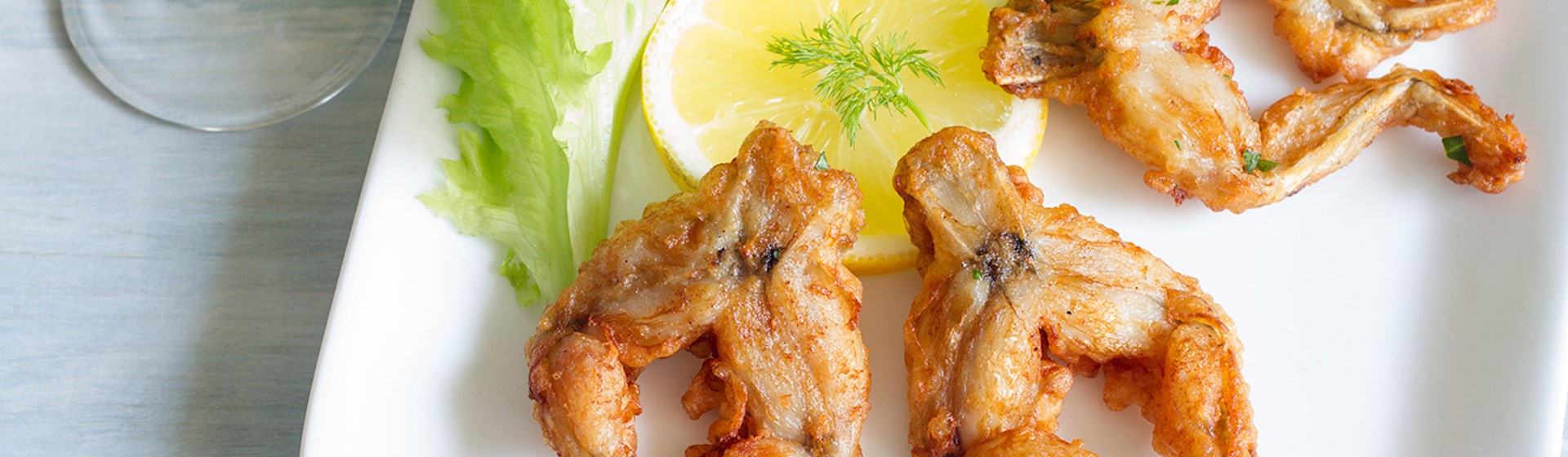
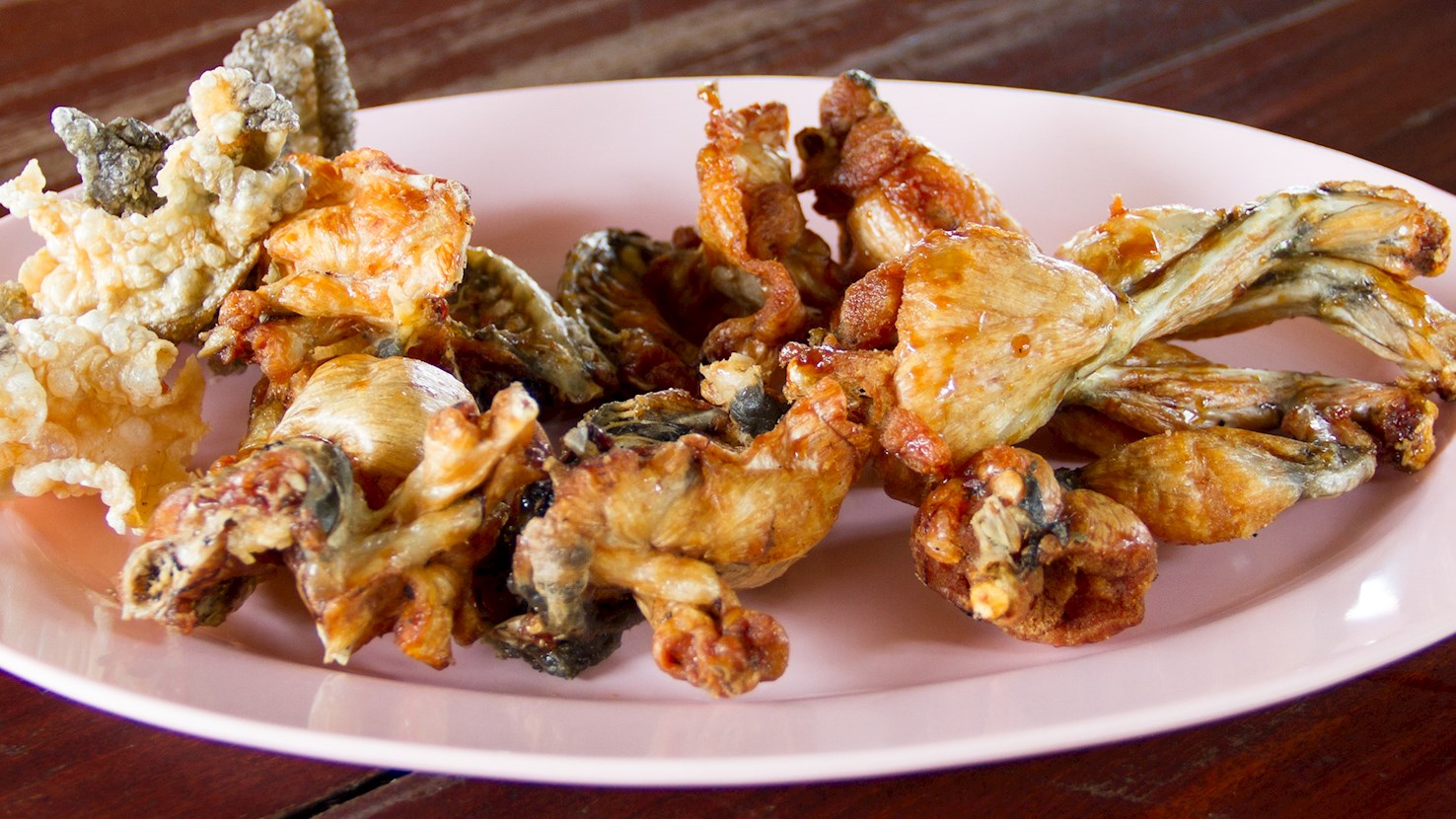
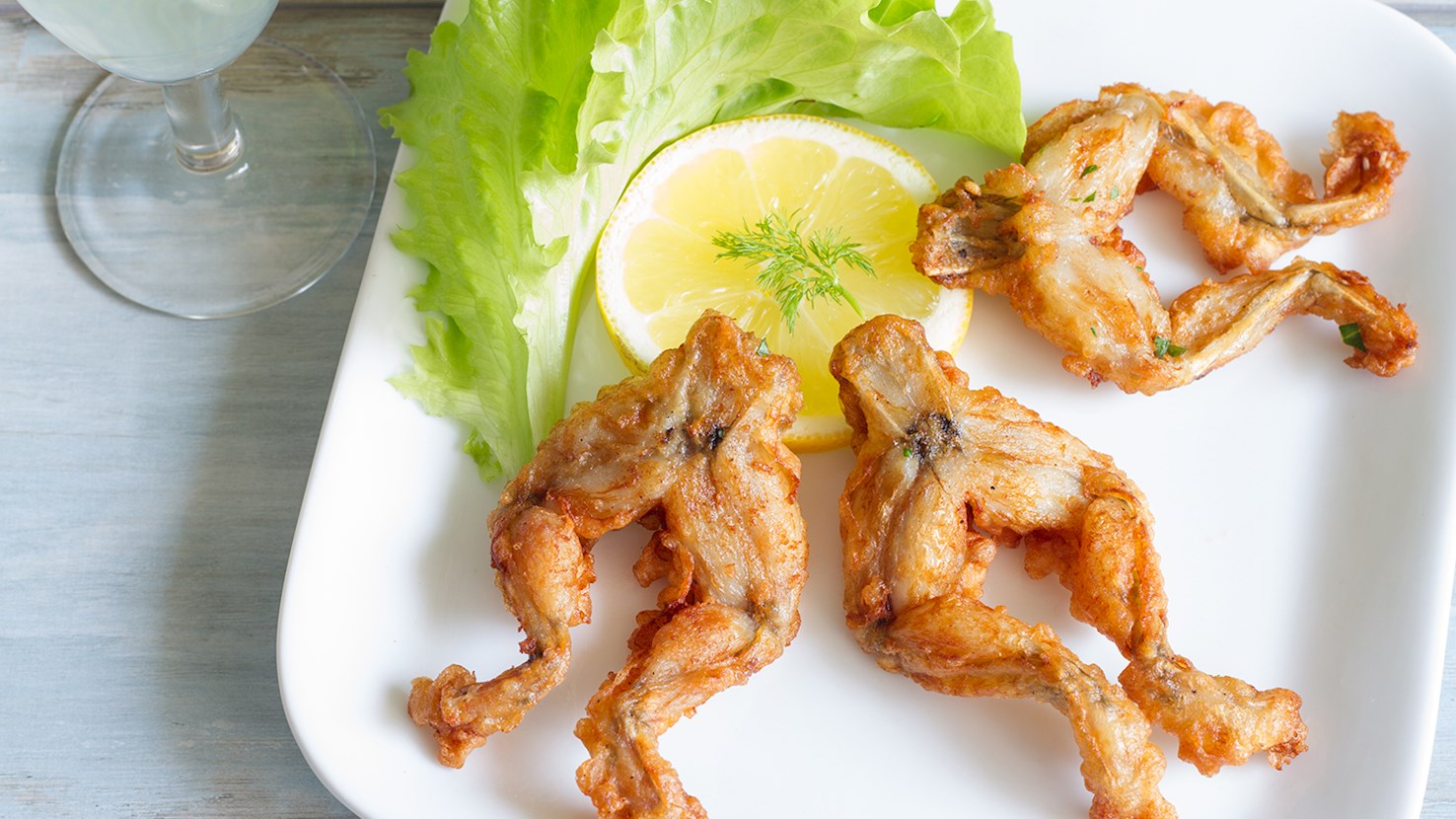
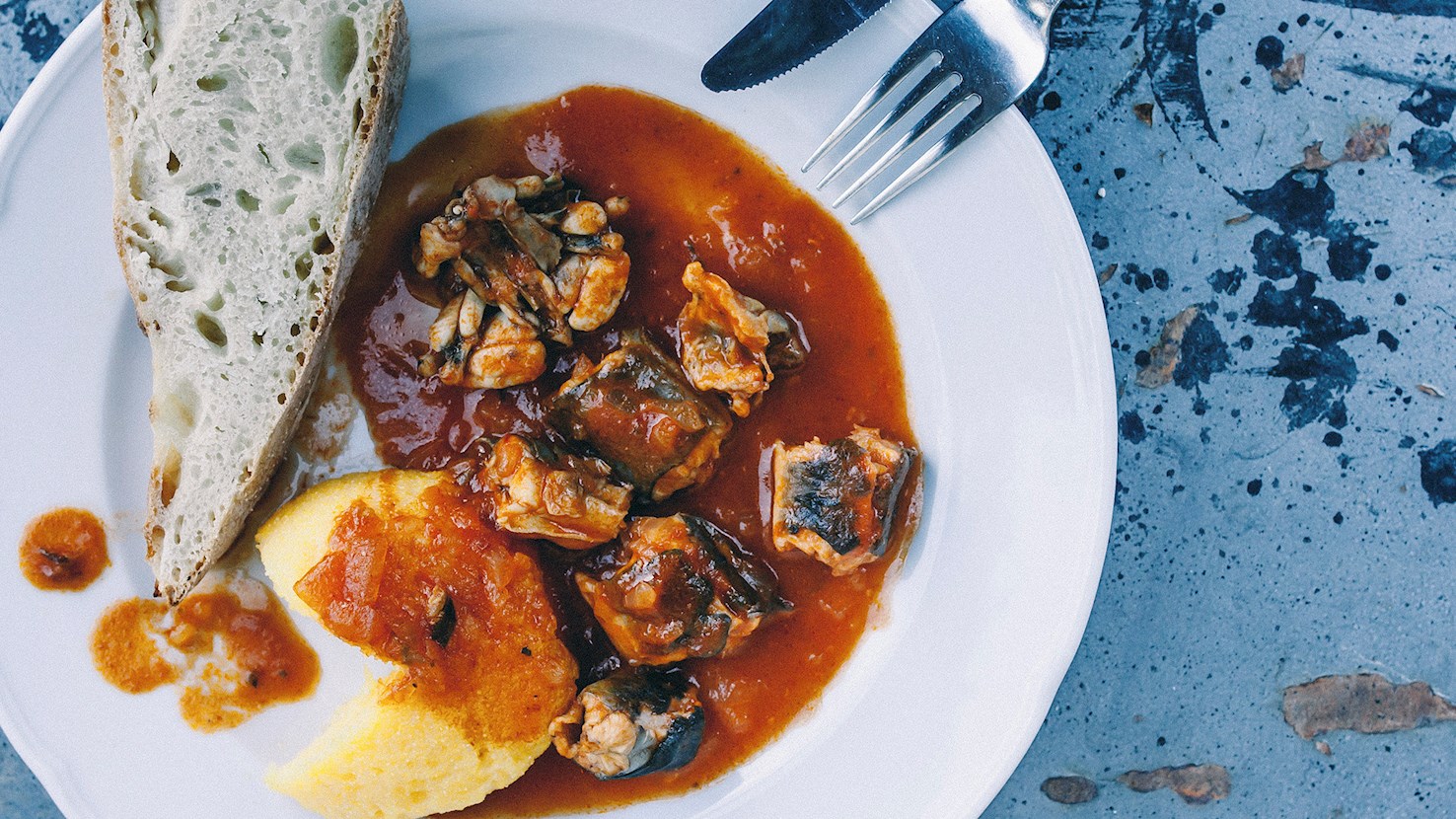
Cuisses de grenouilles is a traditional dish of fried frog legs. It is especially popular in the region of the Dombes. In order to prepare the dish, frozen frog legs are thawed and dried, then tossed in flour. They are then fried in butter with garlic and parsley until well done. When served, the frog legs are usually sprinkled with lemon juice before eating. The texture of frog legs is compared to the meat on chicken wings, while the flavor is often compared with that of chicken or freshwater crayfish. You can eat cuisses de grenouilles with your hands, but knife and fork are also a viable option. In the past, frog's legs were a staple of every bistro's menu, and nowadays you can try them with pasta, in pies, with mushrooms, and there is even a frog's legs pizza.
Rane fritte or fried frogs is a very popular dish in Piedmont, especially around the cities of Vercelli and Novara. The region is famous for its rice fields, and the damp territory covered in irrigation canals creates an ideal habitat for the frogs, so it is no surprise that they have always been a part of a local poor man's cuisine. As it often happens, what was once a poor man's dish prepared out of necessity is nowadays a delicacy and an important part of the gastronomic culture of the area. For this dish, the frogs are first cleaned, macerated in oil with onions, chopped parsley, lemon juice, salt, and pepper. They are then dried and deep-fried in oil until golden and crispy. Rane fritte are best enjoyed hot, lightly sprinkled with lemon juice.
Out of the numerous varieties of Croatian brudet, the one that hails from the Neretva region is considered unique since it usually employs eels and frogs, two traditional ingredients used in the area. It is said that every village in the region has a different recipe, but the basic version employs thoroughly cleaned pieces of eels and frogs that are sautéed alongside olive oil, onions, and garlic. They are later braised in a combination of seafood stock, fresh tomatoes, chili peppers, and a touch of vinegar. Though tradition suggests the use of eels and frogs, the dish is commonly enriched with other fish varieties. Regardless of the differences, every version of brudet is always prepared in a traditional, heavy-bottomed pan and should never be stirred. This flavorful fish stew is traditionally accompanied by polenta or rustic, country-style bread.
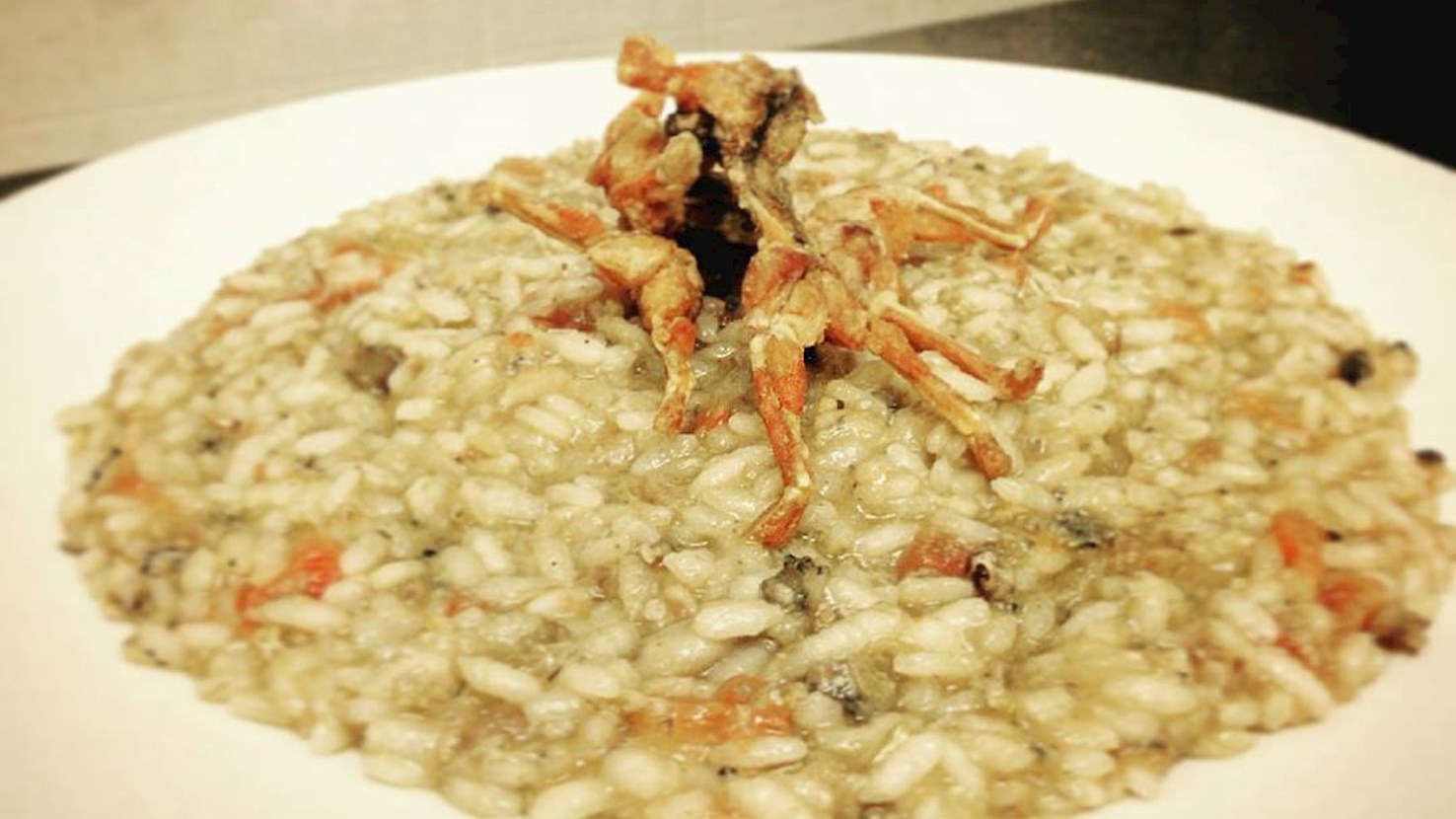
Riso e rane is a traditional risotto originating from the region of Piedmont, and it's especially popular in the Novara area. It's usually made with a combination of risotto rice such as carnaroli, frog legs, carrots, onions, celery, bay leaves, white wine, vegetable stock, butter, olive oil, and grated parmesan. Frog legs are first browned in olive oil, and the dish is then prepared following the typical procedure for Italian risotto. Once cooked, a bit of butter is stirred into the risotto. Before serving, the dish is sprinkled with grated parmesan.
Adobong palakâ is a traditional stew originating from the Philippines. This exotic type of adobo is usually made with a combination of frogs, vinegar, soy sauce, garlic, sugar, water, oil, salt, and pepper. The garlic is sautéed in oil, then covered with soy sauce, water, and vinegar, and shortly simmered. Frog meat, sugar, salt, and pepper are then added to the stew and simmered again until everything is fully cooked and tender. Adobong palakâ is typically served warm with rice on the side.
Chha kh’nhei is a Cambodian dish of crispy, stir-fried ginger combined with chicken, pork, fish, or frog legs. Thin slices or strips of julienned ginger are first briefly fried on their own before they are mixed and fried with the remaining ingredients. This cooking method allows the ginger to develop a nice crispiness and a pleasant flavor apart from its natural peppery flavor and spicy aroma. Other typical ingredients of the dish include garlic, chives, onions, soy sauce, oyster sauce, fish sauce, jalapeño peppers or Thai chilis, pepper, and sugar. This spicy and pungent stir-fry is usually garnished with coriander leaves and served alongside steamed white rice.
Grenouilles comme à Boulay is a frog-leg dish associated with both Normandy and Lorraine. It is composed of frog legs cooked until tender with a lightly golden surface, offering a delicate, mild flavor and a supple texture, most often built around butter, garlic and parsley, sometimes finished with a light sauce or a gratin topping depending on the chosen preparation. The dish developed in regions where ponds, rivers and wetlands supported frog harvesting and where frog legs formed part of everyday cooking rather than ceremonial cuisine, and over time the name comme à Boulay came to designate a recognizable way of preparing them that spread beyond its point of origin and became established in both Normandy and Lorraine. Preparation begins with thoroughly cleaned frog legs that are carefully dried. They are lightly dusted with flour to ensure even browning and then cooked in butter over moderate heat, with garlic added early so it perfumes the fat and parsley incorporated toward the end to retain freshness. This sautéed version highlights the natural delicacy of the meat and produces a light pan sauce from butter and cooking juices. The same base preparation can also be finished au gratin, where the sautéed frog legs are placed in a shallow dish, lightly covered with breadcrumbs and sometimes cheese, and baked briefly until the surface is lightly crisp while the meat remains tender underneath. Both methods rely on short cooking times and restrained seasoning to avoid masking the flavor of the frog legs. Variations are limited and usually involve the choice between the sautéed or gratin finish, the quantity of garlic, or the addition of a small amount of white wine or lemon juice to adjust acidity, while the core technique and ingredients remain consistent regardless of region. Grenouilles comme à Boulay are eaten hot in homes and restaurants, served as a starter or light main course, commonly accompanied by fried potatoes, rice or simple vegetables that absorb the butter and juices. They pair well with dry white wines, crisp cider or light rosé wines.
Zǐjiāng niúwā is a spicy bullfrog dish from Zigong, a city in Sichuan province, known for its robust, oily, and deeply flavored cuisine. The name translates to “purple sauce bullfrog,” referring to the thick, dark red sauce that takes on a purplish hue after long frying with chili paste and oil. It represents one of Zigong’s signature dishes, where the use of chilies, fermented bean paste, and peppercorn defines both flavor and technique. It developed in Zigong’s restaurant kitchens and local eateries, particularly during the twentieth century, when bullfrog became a popular ingredient due to its tender meat and mild flavor. The city’s cuisine, shaped by its salt industry and the demands of laborers working in hot, humid conditions, emphasized bold, salty, and spicy foods that stimulated the appetite. Bullfrog suited this environment well: its soft meat absorbed sauces efficiently, and its availability from nearby rivers and ponds made it accessible. Over time, chefs refined the preparation, combining bullfrog with fried doubanjiang (Sichuan’s fermented broad bean and chili paste) to create a dish that embodied the city’s approach to seasoning. The purple-red sauce became a hallmark of Zigong cooking, giving the dish its distinct color and name. The preparation begins by cleaning and cutting fresh bullfrog into pieces, removing the skin and bones as preferred. The meat is lightly coated with cooking wine, salt, and starch, then blanched to preserve its tenderness. In a wok, chili oil or vegetable oil is heated, and doubanjiang is stir-fried slowly until its color deepens and the oil turns red. Garlic, ginger, and green onions are added, followed by dried chilies and Sichuan peppercorns, which release a numbing aroma. The blanched bullfrog pieces are then stir-fried in this base, and soy sauce, sugar, and stock are added to create the sauce. The mixture is simmered briefly, allowing the flavors to absorb and the sauce to thicken into a glossy coating. The dish is finished with chopped scallions and, in some versions, a handful of pickled chilies or fermented black beans for additional complexity. The final presentation shows the frog meat nestled in the rich, dark sauce, glistening with oil and alive with spice. In Zigong, the dish is served as a centerpiece during meals and is most often eaten hot, accompanied by plain steamed rice to offset the richness. It appears in restaurants ranging from small local shops to larger Sichuan establishments and has spread to cities like Chengdu and Chongqing, where it is recognized as a representative of Zigong’s bold cooking style.
Vranske žabe is a traditional dish originating from the area of Vransko jezero (Vrana Lake). The dish is usually made with a combination of frogs, parsley, potatoes, butter, white wine, lemon juice, garlic, olive oil, sunflower oil, onions, salt, and pepper. The onions are diced and sautéed in both types of oil in an earthenware pot. The frogs and garlic are added to the pot, seasoned with salt and pepper, covered with wine, and simmered for about half an hour. The new potatoes are boiled, added to the pot with butter, and the dish is cooked for a bit longer until everything is tender. Vranske žabe are sprinkled with chopped parsley and served in the earthenware pot.
Rane alla Camuna is a traditional dish originating from the Camonica Valley in Brescia. The dish is usually made with a combination of frogs, milk, butter, flour, egg yolks, onions, salt, and pepper. The frogs are fried in butter with thinly sliced onions, milk, salt, and pepper. The pan is covered, and after about fifteen minutes, the frogs are removed and the flour is added to the sauce with the remaining butter. The sauce is cooked over low heat, and the frogs are placed back into the pot and simmered until fully tender. Before serving, beaten egg yolks are poured over the frogs, and the dish is then stirred with a wooden spoon. It's recommended to serve the dish with polenta on the side.
TasteAtlas food rankings are based on the ratings of the TasteAtlas audience, with a series of mechanisms that recognize real users and that ignore bot,
nationalist or local patriotic ratings, and give additional value to the ratings of users that the system recognizes as knowledgeable.
For the “11 Best Rated Dishes with Frogs” list until May 22, 2026, 989,159 ratings were recorded, of which 646,967 were recognized by the system as legitimate.
TasteAtlas Rankings should not be seen as the final global conclusion about food. Their purpose is to promote excellent local foods,
instill pride in traditional dishes, and arouse curiosity about dishes you haven’t tried.