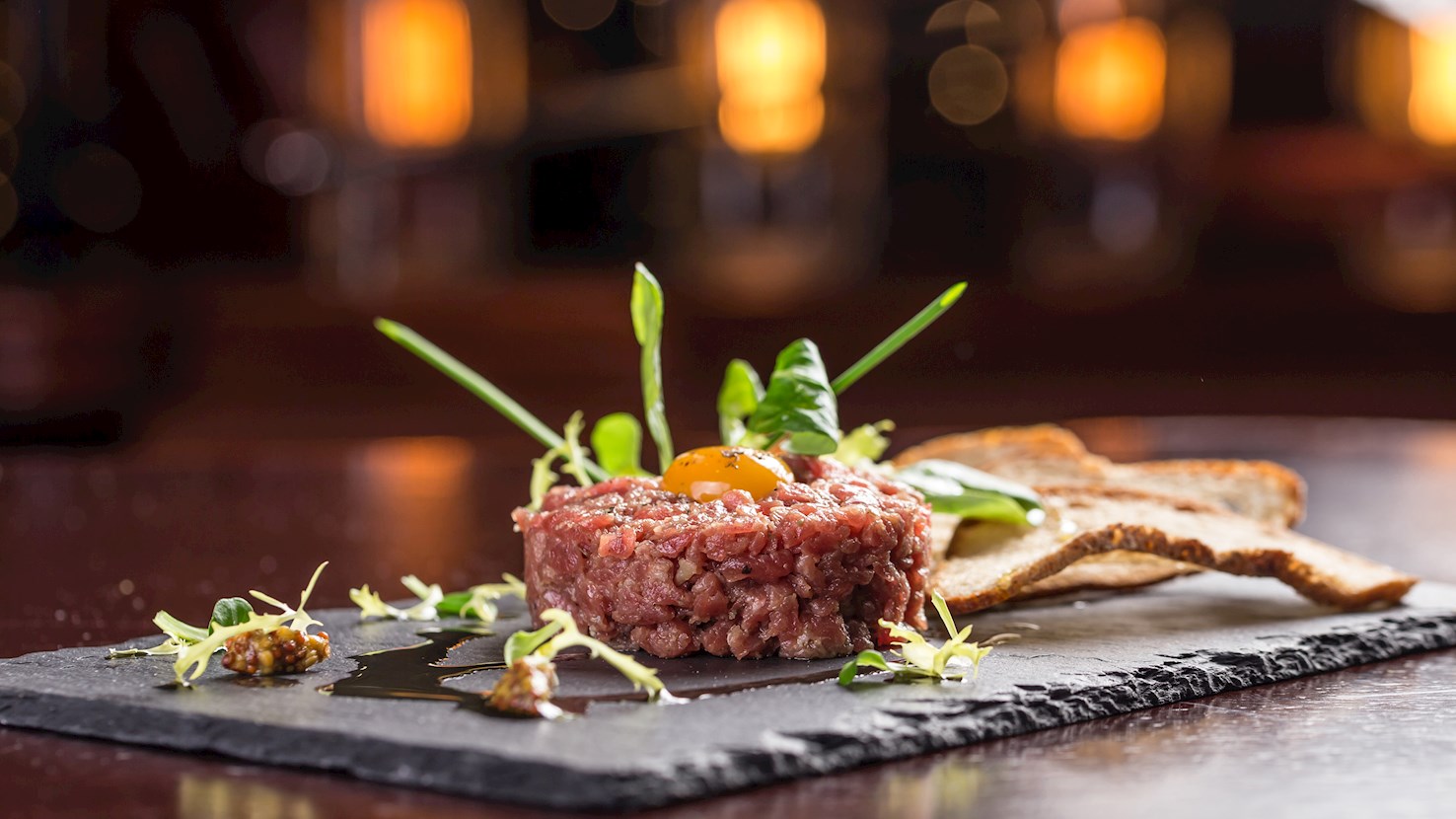
Steak tartare is an appetizer made with finely chopped raw beef or horse meat that is seasoned with salt, pepper, Worcestershire sauce, Tabasco, and mustard. The meat is combined with a raw egg yolk, capers, shallots, parsley, and (sometimes) chopped gherkins. When served, steak tartare is usually accompanied by toasted bread, rye bread, or french fries. It is believed that steak tartare was originally a variation on beefsteack à l'Américaine, a dish of raw chopped beefsteak that first appeared in France at the turn of the 20th century. This variation, steak tartare, was originally served with tartar sauce, and anything that was served with it was known as à la tartare, hence the name.
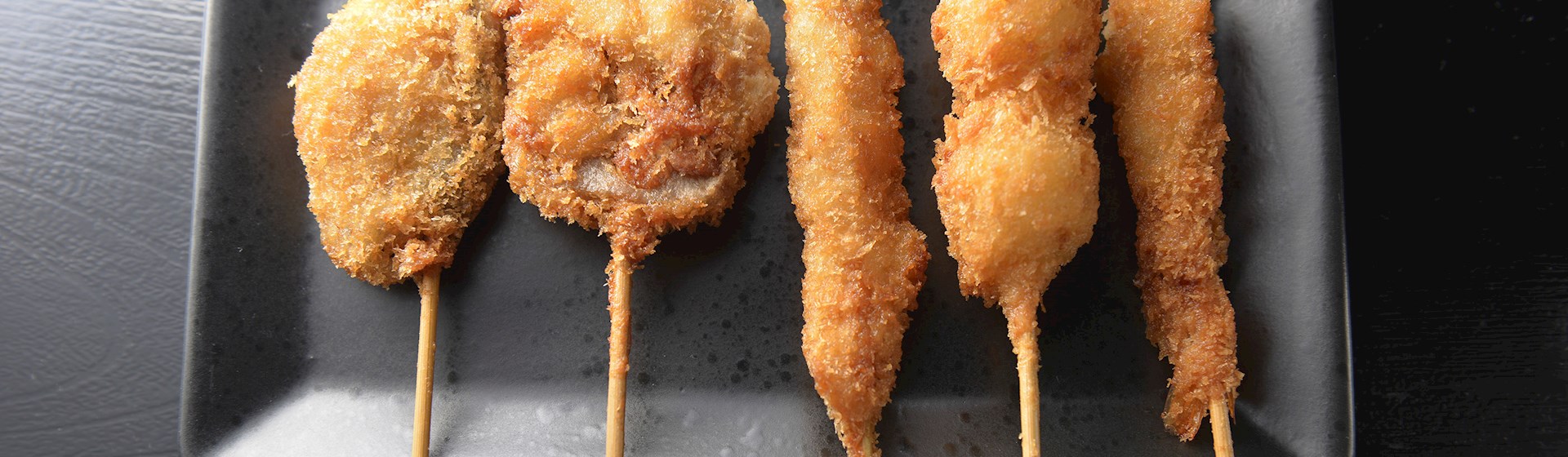
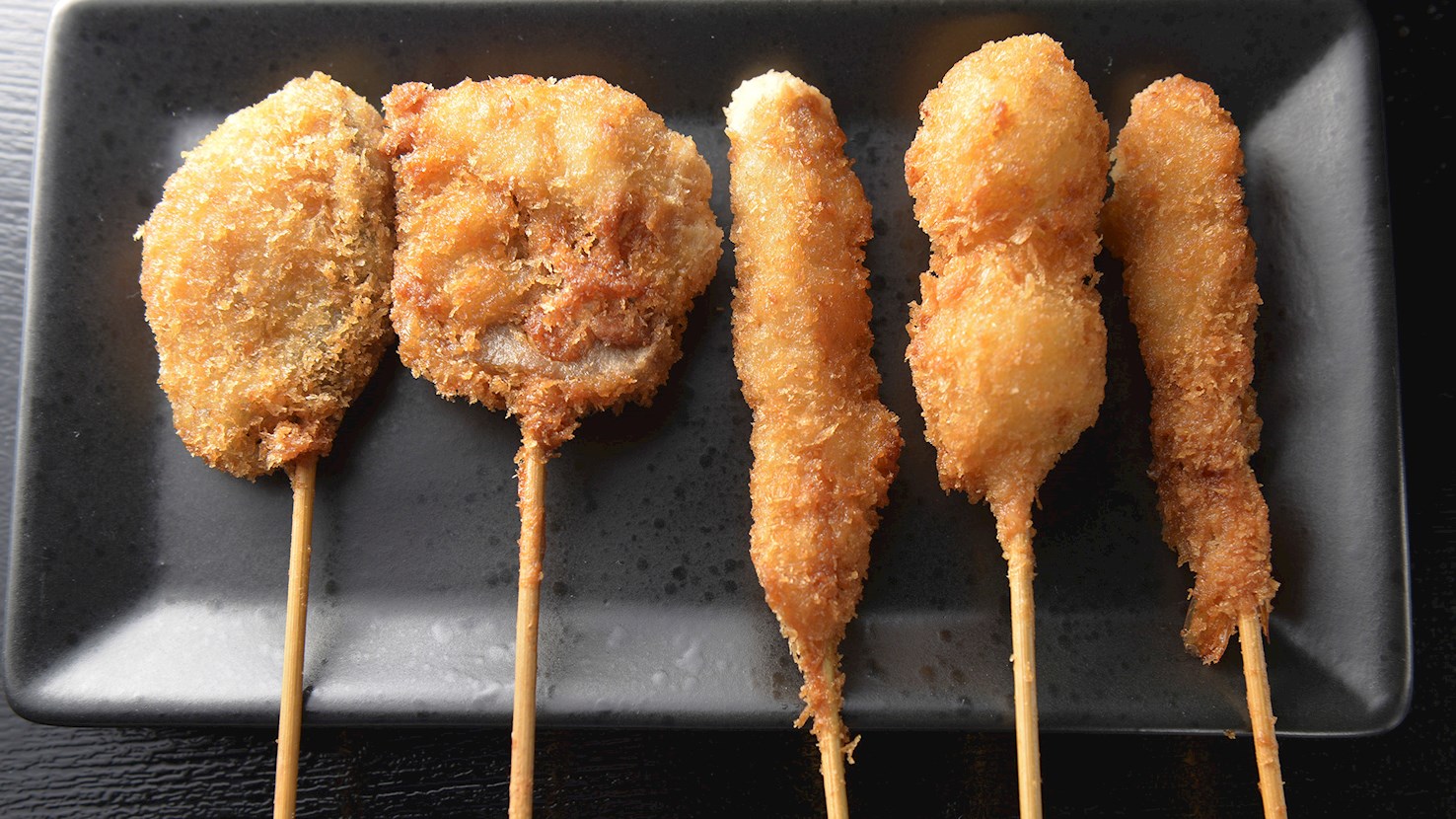
Breaded, skewered with a bamboo stick and deep-fried, the delectable bite-sized pieces of various fish and seafood, pork, chicken, beef, and even horse meat or fresh vegetables are collectively called kushiage, also kushikatsu, and originate from Osaka, a city aptly nicknamed the kitchen of Japan. Kushiage first appeared in the 1920s in Shinsekai, but today, these incredibly popular fried skewers can be enjoyed anywhere from numerous street food stands to kushiage-specialized restaurants that offer a truly unique Japanese dining experience. And while the street snack version of kushiage is simply served with a Worcestershire-like brown sauce which comes in a communal pot, the gourmet kushiage prepared at high-end Asian fusion restaurants is amazingly creative and sophisticated. It is often counterbalanced by small, refreshing side dishes, and comes served with a variety of dipping sauces and condiments, with each skewer pointing to the recommended dip for that variety of kushiage. These most commonly include the classic kushiage brown sauce, ponzu or soy sauce mixed with vinegar or citrus juice, ichimi or chili salt, sesame sauce, and Japanese Kewpie mayonnaise made with apple cider or rice vinegar. Kushiage menus change according to what’s in season, often featuring a countless assortment of varieties and combinations such as shrimps with shiso basil, crab claws, salmon and cheese, shiitake mushrooms, whole garlic cloves, rice cakes, okra, quail eggs, bacon-wrapped asparagus, lotus root, sea tangle with herring roe, monkfish liver, etc. Some places even offer the kushiage version of a popular Osaka soul food called okonomiyaki, which is a savory pancake-like omelet often referred to as the Japanese pizza. The variations are virtually endless and left for food lovers to discover both in Osaka and beyond.
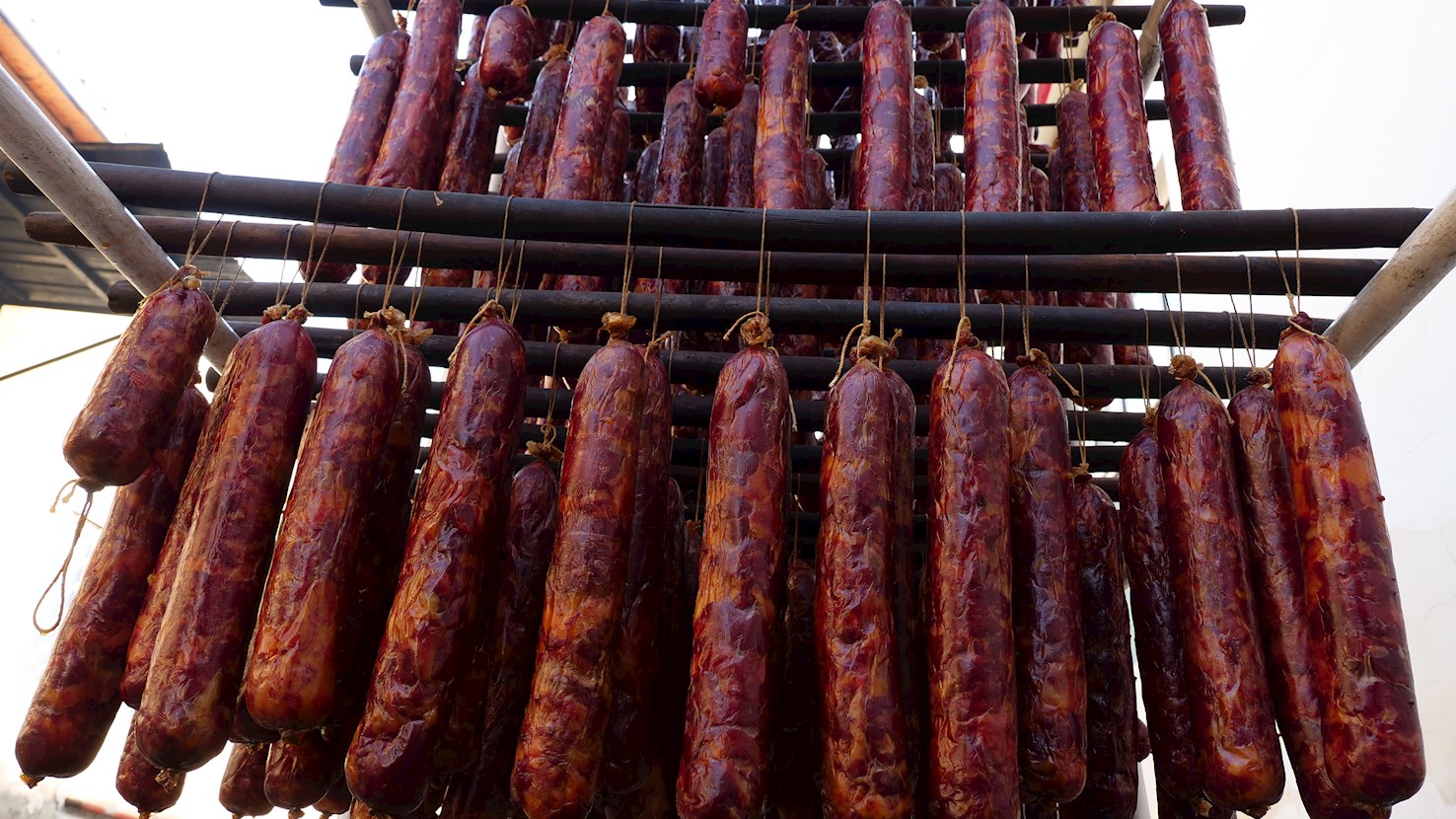
Lókolbász is a Hungarian sausage made from horse meat. During the preparation process, the meat is flavored with paprika, garlic, and caraway. Occasionally, pork fat is added to enrich the flavor and improve texture. Horse sausage is typically cooked and served on a plate with various vegetables, but it can also be used as an ingredient in stews and traditional goulashes.
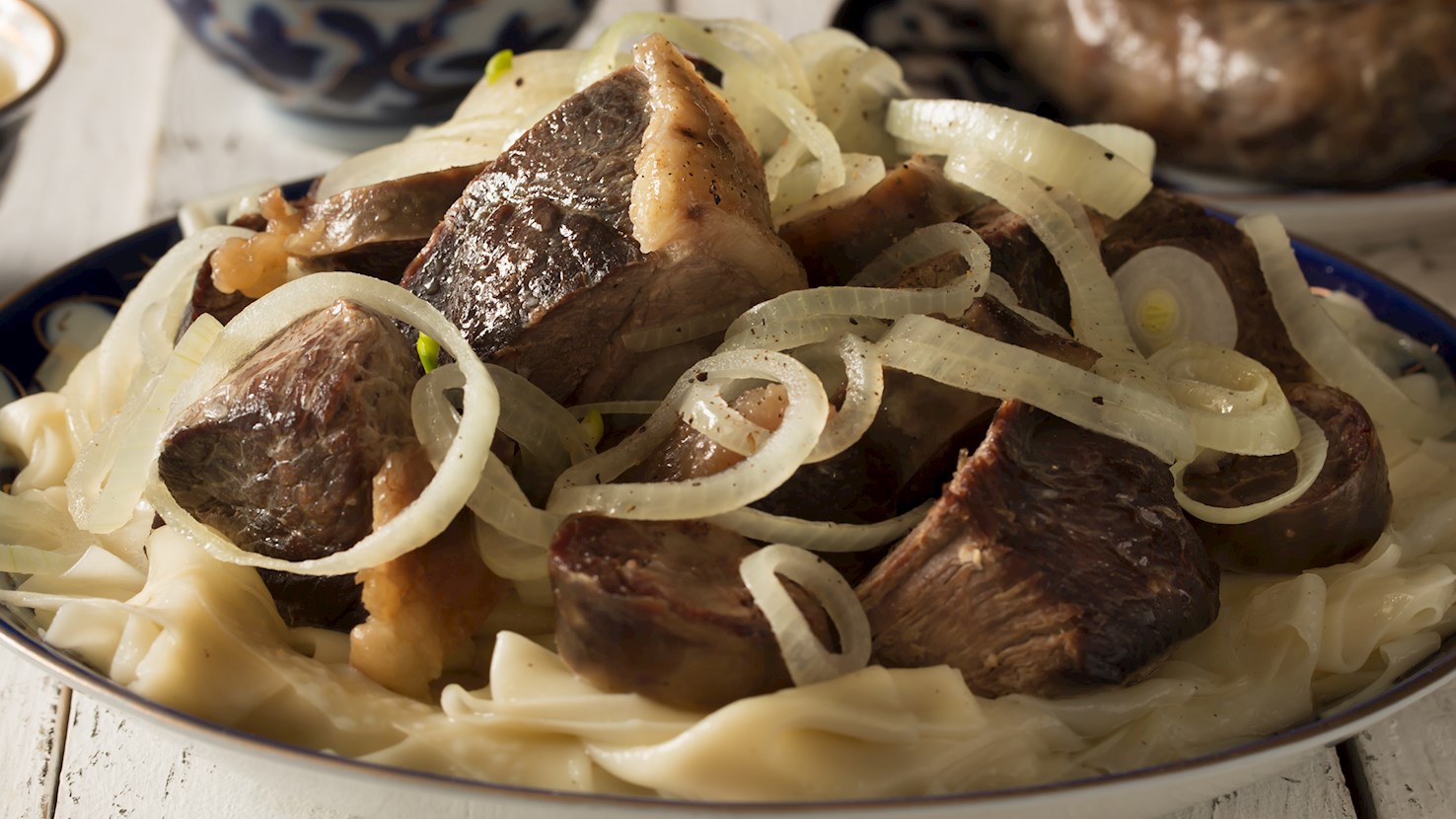
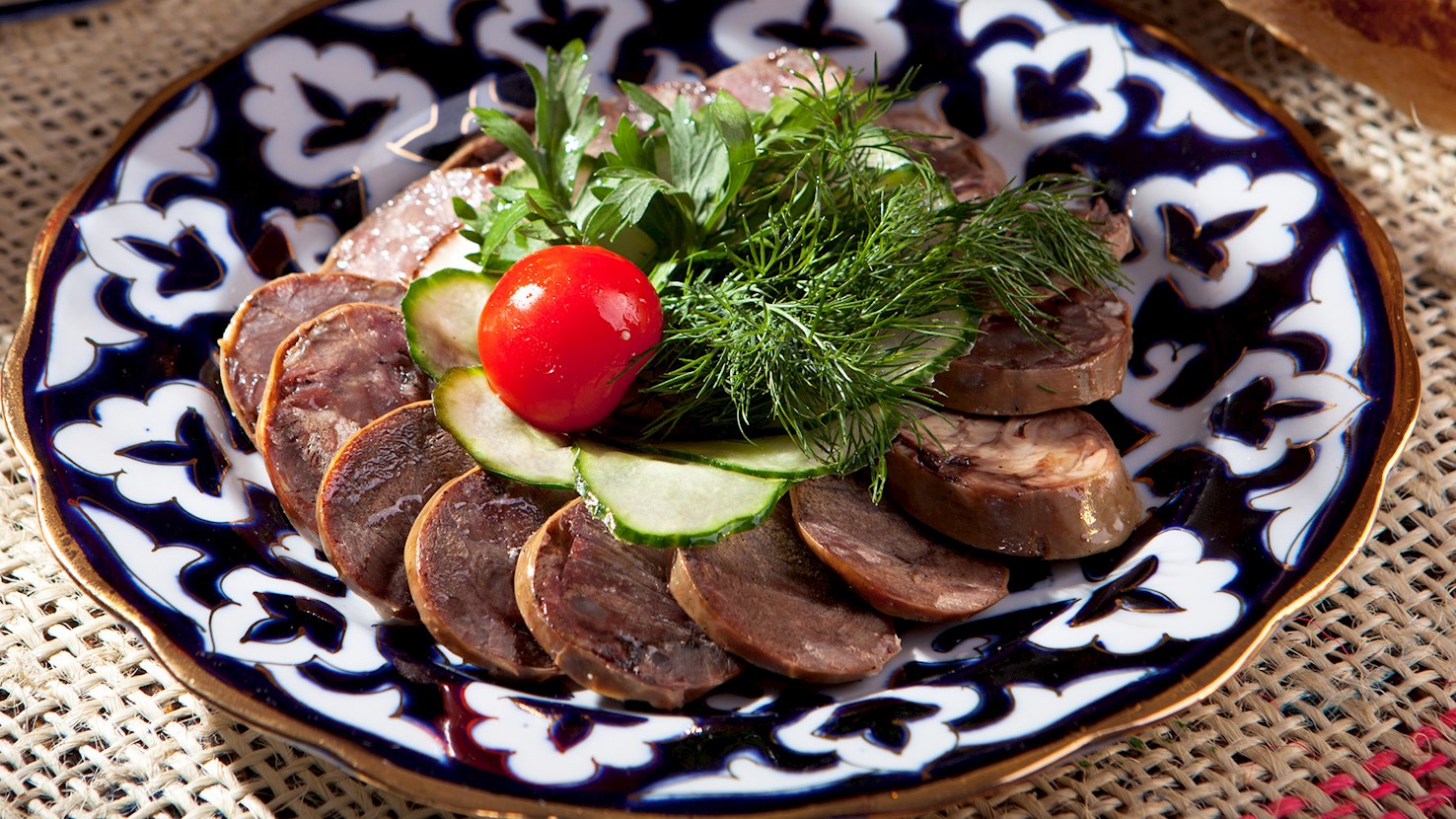
Qazı is a sausage made from horse rib meat and fat, prepared and consumed across Central Asia with its strongest identification in Kazakhstan, where it is regarded as a formal meat item associated with guest meals and ceremonial tables rather than daily cooking. Its formation is rooted in steppe pastoral systems in which horses played a central role in transport, economy, and food supply, and where slaughtering a horse was an infrequent but socially significant event that required preserving valuable cuts in ways that maintained both nutritional value and structure, leading to the development of whole-cut sausages that relied on salting, drying, and boiling rather than grinding or heavy seasoning. Preparation begins by separating rib meat and attached fat from the horse, cutting it into long strips, seasoning primarily with salt and occasionally black pepper or garlic, then stuffing the pieces tightly into cleaned horse intestines, tying the casing at intervals, and allowing the sausage to dry for a controlled period before being slowly boiled until fully cooked, with care taken to avoid splitting so the fat remains enclosed. Serving typically involves slicing the cooked qazı into thick rounds and arranging it prominently on a platter or incorporating it into dishes built around dough and broth such as beshbarmak, while in some contexts it is cooled and served in thinner slices as part of a cold meat spread. What distinguishes qazı is that it is made from intact muscle and fat rather than minced meat, preserving a visible pattern inside each slice and linking the product directly to a specific anatomical cut, a practice that reinforces its status and limits substitution with other meats. It is eaten during large family gatherings, weddings, commemorative meals, and honored guest occasions, shared communally and often served early in the meal, and it pairs naturally with flat noodles or dough sheets, onions softened in broth, and clear soups, while beverages such as black tea, fermented mare’s milk, or lightly salted broth accompany it to balance its richness without adding sweetness or acidity.
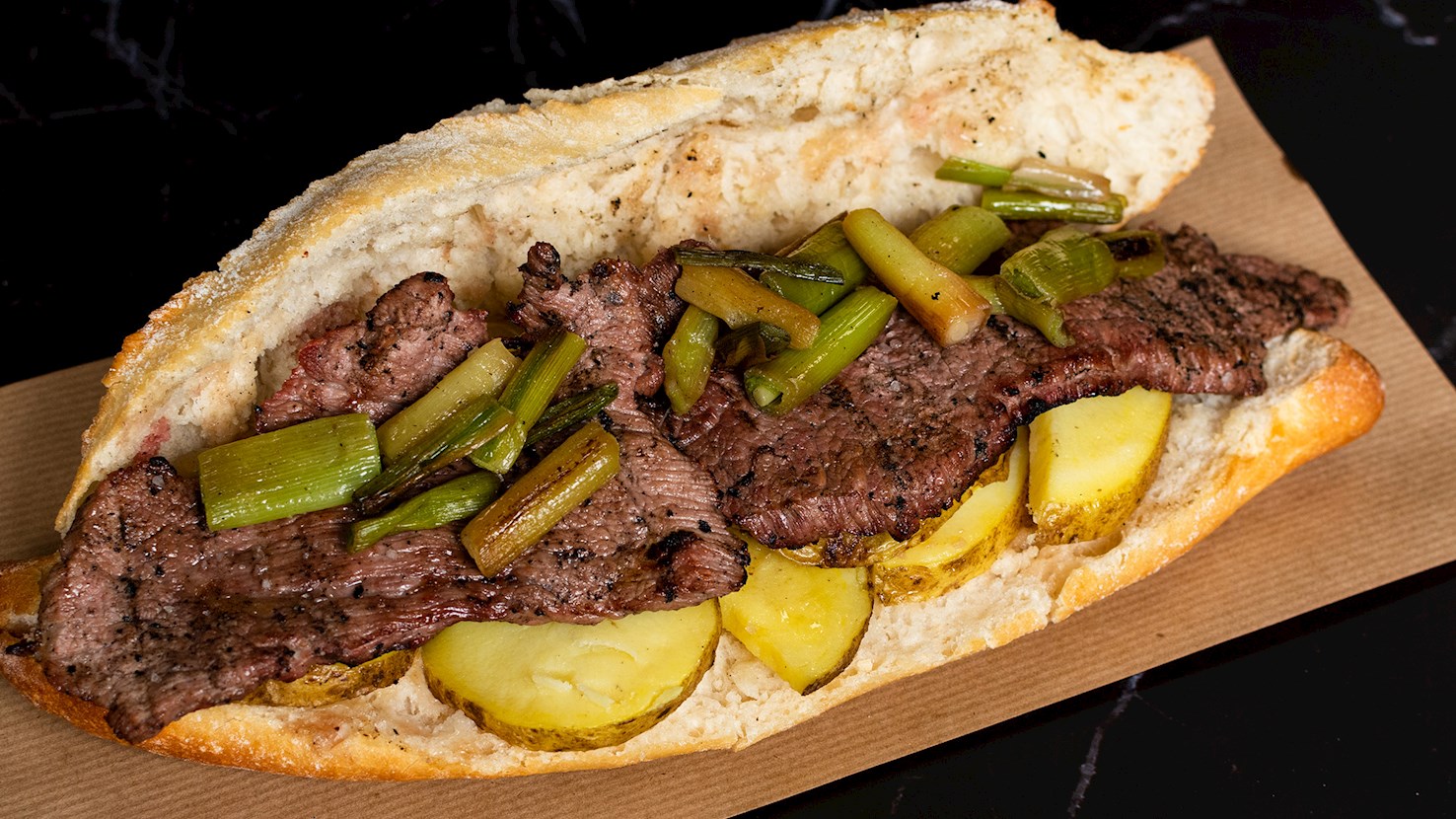
Bocadillo de carne de caballo is a traditional sandwich that’s filled with horse meat. Typically, a Spanish-style baguette called barra de pan is sliced in half lengthwise, and it is then stuffed with pieces of roasted, fried, or grilled horse meat. Other common ingredients added to the sandwich’s filling include young garlic, slices of cheese, crispy-fried bacon, beans, and onions. This variety of the Spanish bocadillo sandwich is typically served with accompaniments such as a glass of cold beer or red wine, a cup of coffee, olives, and peanuts on the side. Horse meat sandwiches are especially popular in lunch bars in Valencia.
Carne di cavallo alla brace is a traditional Sicilian dish made with grilled horse meat. The phrase "alla brace" translates to "on the coals," indicating that the meat is cooked over an open flame or hot charcoal, which imparts a smoky and rich flavor to the dish. Horse meat used for this dish is typically very lean, tender, and flavorful. It is often prepared as steaks, cutlets, or skewers. The meat is usually seasoned simply with salt, pepper, and sometimes olive oil to enhance its natural flavor without overpowering it. In some cases, a squeeze of fresh lemon is added after grilling for a touch of brightness. Carne di cavallo alla brace is especially popular in Catania, a city in Sicily, where horse meat is a well-known specialty. Street food stalls and trattorias in the area often feature this dish, cooked fresh over an open flame, and served with accompaniments such as grilled vegetables, salads, or pane cunzato (seasoned Sicilian bread).
Panino con straccetti di cavallo is a traditional sandwich featuring thin strips of horse meat, popular in regions like Apulia and Sicily, where horse meat is part of the local culinary heritage. The straccetti di cavallo are tender slices of meat, often marinated with olive oil, garlic, and rosemary, then quickly cooked over high heat to retain their flavor and juiciness. Served on a rustic Italian roll or ciabatta, the sandwich is typically accompanied by sautéed onions, fresh arugula, grilled vegetables, or a drizzle of olive oil. Some variations include spicy sauces or mustard for added zest. The result is a rich, savory sandwich, with the slightly sweet and gamey flavor of horse meat complemented by the fresh, aromatic ingredients. Often enjoyed as street food or a casual meal, this panino offers a taste of Italy's diverse and regional culinary traditions.
TasteAtlas food rankings are based on the ratings of the TasteAtlas audience, with a series of mechanisms that recognize real users and that ignore bot,
nationalist or local patriotic ratings, and give additional value to the ratings of users that the system recognizes as knowledgeable.
For the “8 Best Rated Dishes with Horse Meat” list until June 17, 2026, 1,000,987 ratings were recorded, of which 657,348 were recognized by the system as legitimate.
TasteAtlas Rankings should not be seen as the final global conclusion about food. Their purpose is to promote excellent local foods,
instill pride in traditional dishes, and arouse curiosity about dishes you haven’t tried.