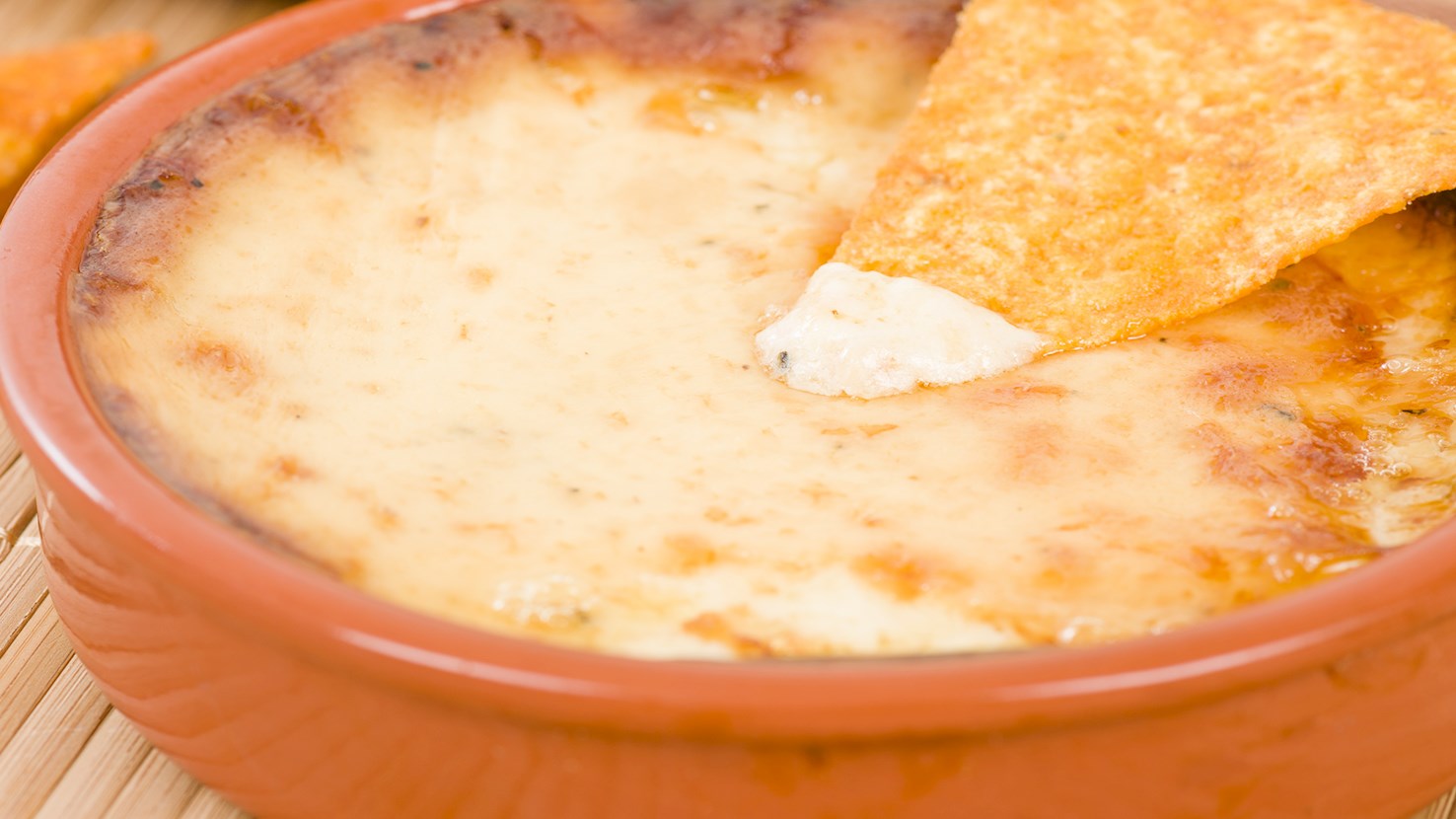
Queso fundido is a tasty Mexican comfort food dish that is typically served as an appetizer. It consists of pieces of chorizo, tomatoes, onions, poblano peppers, and gooey, stringy melted cheese. The dish is often prepared tableside in restaurants, where it is flambéed and presented bubbling hot in small casserole dishes. Queso fundido is traditionally spooned onto soft corn tortillas so that it could be eaten individually, as the dish is typically shared between groups of people, making it a great party food as well. It originated in northern Mexico, where it was originally prepared as a campfire dish. Nowadays, queso fundido is also popular in the United States, especially in El Paso.
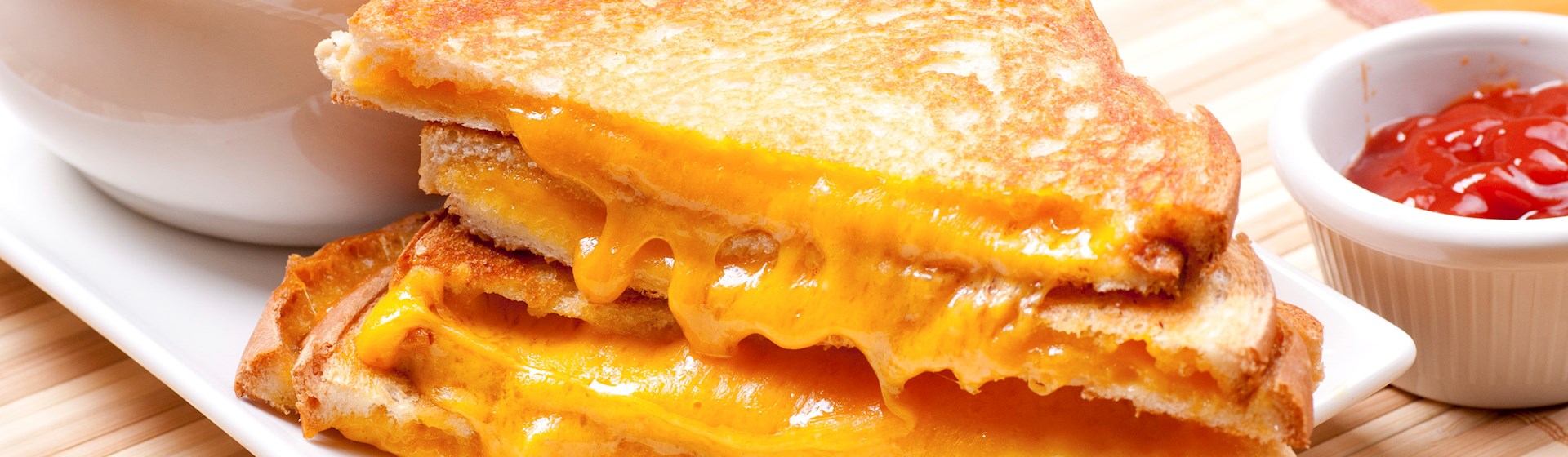
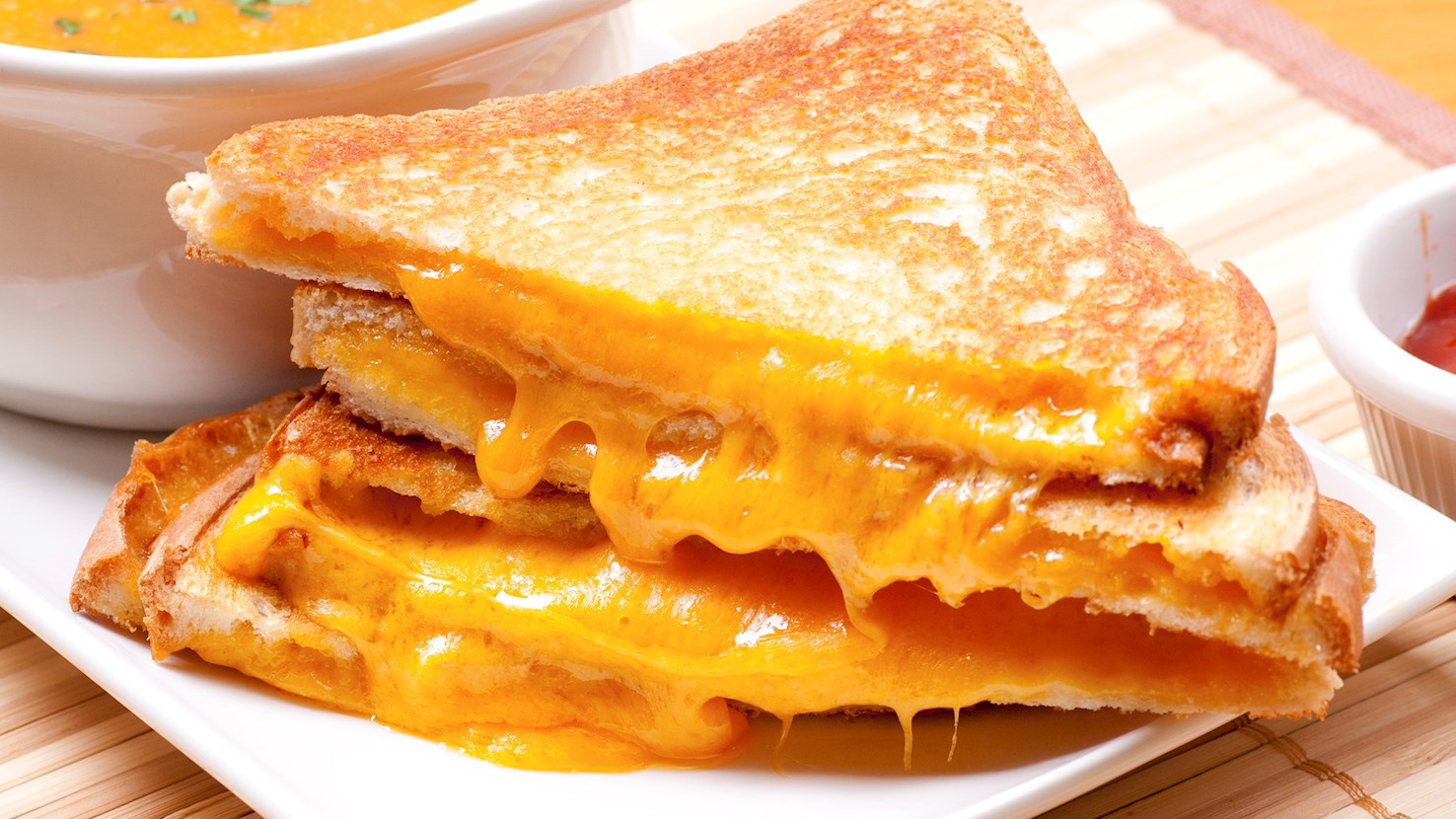
Grilled cheese is a classic American sandwich that is usually prepared with one or more cheese varieties that are placed between two slices of bread. The slices are buttered from the outside, and the sandwich is then shortly heated, typically in a pan or on a griddle, until the bread is golden and the cheese melts. Although cheese and bread were a common pairing since the early 1900s, and the French have their own, similar Croque Monsieur sandwich, grilled cheese sandwich first appeared in the United States in the 1920s, when it was prepared open-faced, as a slice of bread topped with shredded cheese. It rose in popularity due to the fact that it was inexpensive and affordable. In the 1960s, a second slice of bread was added on top, and the classic grilled cheese as we know today was invented, due to the availability of pre-sliced bread and processed cheese singles. Today, the sandwich has evolved into various creations, as innovators started serving it on bagels, adding different kinds of cheese, meat, and vegetables such as bacon, tomatoes, and avocado into it. Grilled cheese still remains a staple of comfort food and the children's favorite, although it is often consumed by many adults, and it is even served in some high-end restaurants. For many people, there is nothing better than pairing a hot grilled cheese sandwich with a bowl of tomato soup, and it is believed that the comforting combination is best when consumed on a cold, rainy night.
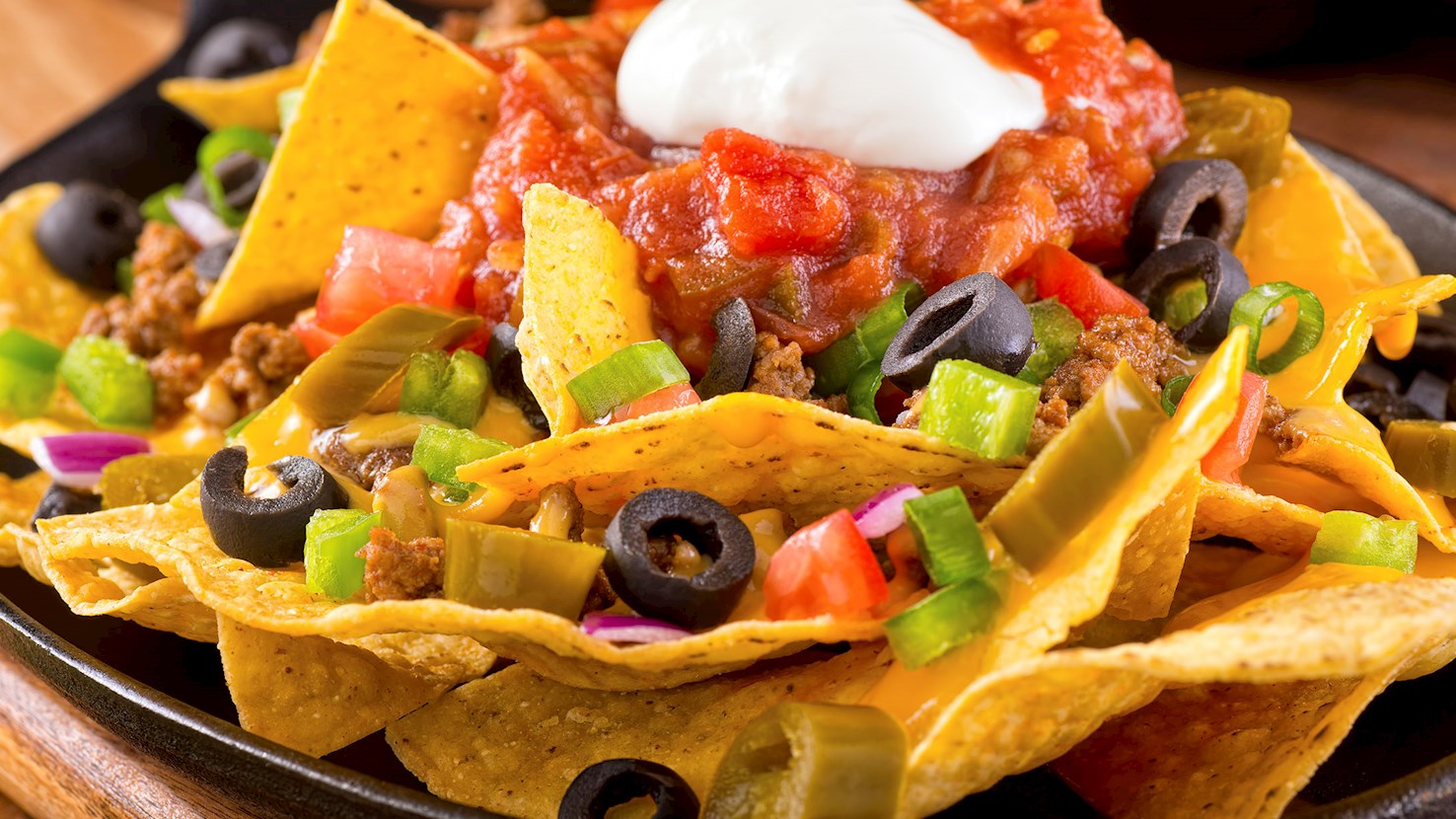
The first, original plate of nachos consisting of tortilla chips, melted cheese, and jalapeños was made for a group of military officers' wives in 1943 in Piedras Negras, Mexico. The ladies of the US Army Air Force base went over to a restaurant in the city, called the Victory Club. Its maitre d', Ignacio "Nacho" Anaya couldn't find the cook, so he combined some readily available ingredients for the ladies and presented them with canapes of tortilla chips, cheese, and jalapeño peppers. Nachos were created, and Anaya became the restaurant's head chef a few years later. The dish was named after his nickname, and was advertised on both sides of the border as Nacho Specials. The combination of chips and melted cheese quickly gained popularity, so by the 1960s, it became a staple of Tex-Mex cuisine. Some people credit a man named Frank Liberto for turning the nachos into a global phenomenon, since he is the one who turned the dish into stadium food in the United States, greatly increasing the sales of nachos and boosting their popularity even more. Today, common toppings include ingredients such as beans, elote corn, guacamole, lettuce, onions, tomatoes, and meat, and there is even a special event called the International Nacho Festival, held every October in Piedras Negras.
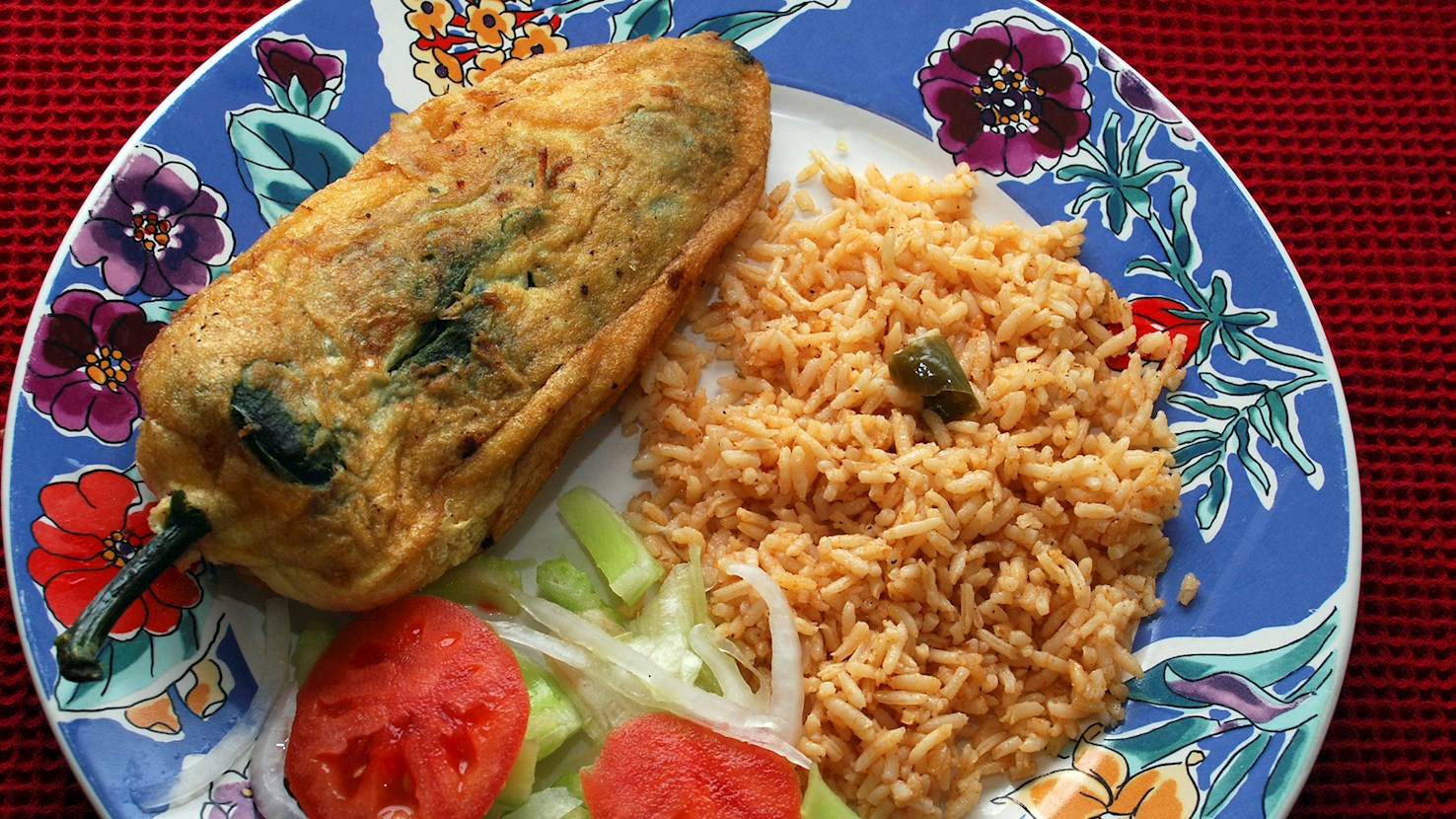
Chile relleno is a large, mild roasted pepper completely hollowed out, heavily stuffed with melting cheese or spiced meat, coated in a fluffy egg batter, and deep-fried until golden. The recipe starts with blistering a fresh poblano pepper over an open flame until the outer skin turns completely black and charred. The pepper is placed inside a sealed bag to steam, allowing the burnt skin to peel away effortlessly. A small slit is sliced down the side to extract all the seeds and membranes, leaving an empty cavity ready for the filling. Large blocks of stringy, white, melting cheese or a dense mixture of ground beef, raisins, and almonds are packed tightly into the hollow space. The opening is pinned shut with wooden toothpicks. The coating requires separating raw eggs, vigorously whipping the whites until stiff peaks form, and gently folding the yolks back in to create an airy, cloud-like foam. The stuffed pepper is lightly dusted with wheat flour, submerged entirely in the foamy egg mixture, and immediately dropped into hot oil. It fries rapidly until a soft, spongy golden-brown crust forms on the outside. Upon leaving the hot oil, the battered pepper is transferred directly to a shallow bowl and consumed immediately while the interior cheese remains molten. A thin, savory tomato broth, heavily flavored with oregano and garlic, known as caldillo, is poured generously over the fried crust just seconds before eating. A side of warm tortillas, seasoned rice, and mashed pinto beans constantly accompanies the plate, absorbing the remaining red sauce and stray bits of batter. The genesis of this stuffed vegetable dates back to the city of Puebla in the mid-16th century, arising from the fusion of indigenous ingredients and imported European livestock. Nuns in local convents used native poblano peppers as a vehicle for newly introduced dairy products and pork. Over time, numerous distinct iterations branched off from the original cheese-filled version. Some coastal regions swap meat and dairy for shredded fish and shrimp, while arid northern territories rely heavily on long, slender Anaheim or Hatch green chiles rather than the wider poblanos. A highly elaborate iteration known as chiles en nogada bypasses the frying phase entirely, featuring a sweet-and-savory, fruit-laced meat filling and a topping of chilled walnut cream sauce scattered with bright red pomegranate seeds. Another adaptation skips the egg batter and hot oil altogether, instead wrapping the stuffed pepper in flaky pastry dough before baking it in a hot oven. The dish is traditionally served as a snack or an appetizer, most commonly in late August and early September, since it is associated with Mexican Independence Day and the Day of San Agustín.
Queso fundido al tequila is a traditional dish that's usually served as an appetizer or a dip. It's made with a combination of chorizo, sweet onions, tequila, green chili peppers, flour, tomato salsa, and cheese such as Monterey Jack, Pepper Jack, or a sharp cheddar. The tomatoes, chili peppers, and onions are sautéed in olive oil until soft, followed by the addition of tequila and cheese. The combination is simmered until the cheese fully melts, and the dish is then placed into a bowl and served garnished with chopped coriander. This dip is traditionally served with tortillas or tortilla chips on the side.
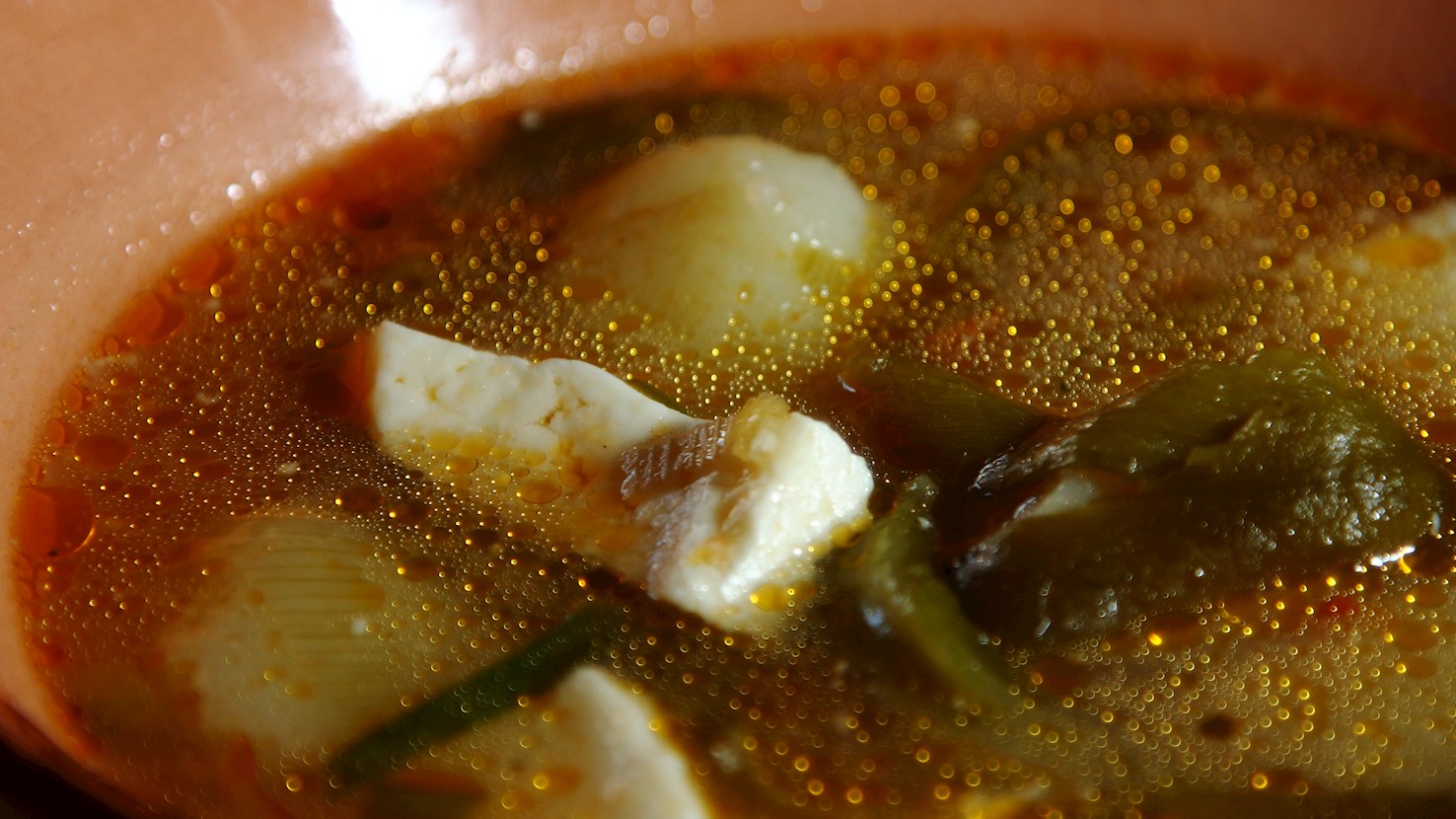
Caldo queso is a traditional soup originating from Baja California. It’s usually made with a combination of potatoes, onions, cheese such as Monterey Jack, tomatoes, jalapeños, chicken stock, corn oil, salt, and pepper. The potatoes, onions, tomatoes, and hot peppers are cooked in oil over low heat. The chicken stock is seasoned with salt and pepper and brought to a boil. Diced cheese is then stirred into the stock along with the vegetables, and the soup is then served in individual bowls while piping hot.
TasteAtlas food rankings are based on the ratings of the TasteAtlas audience, with a series of mechanisms that recognize real users and that ignore bot,
nationalist or local patriotic ratings, and give additional value to the ratings of users that the system recognizes as knowledgeable.
For the “6 Best Rated Dishes with Monterey Jack” list until June 17, 2026, 1,000,987 ratings were recorded, of which 657,348 were recognized by the system as legitimate.
TasteAtlas Rankings should not be seen as the final global conclusion about food. Their purpose is to promote excellent local foods,
instill pride in traditional dishes, and arouse curiosity about dishes you haven’t tried.