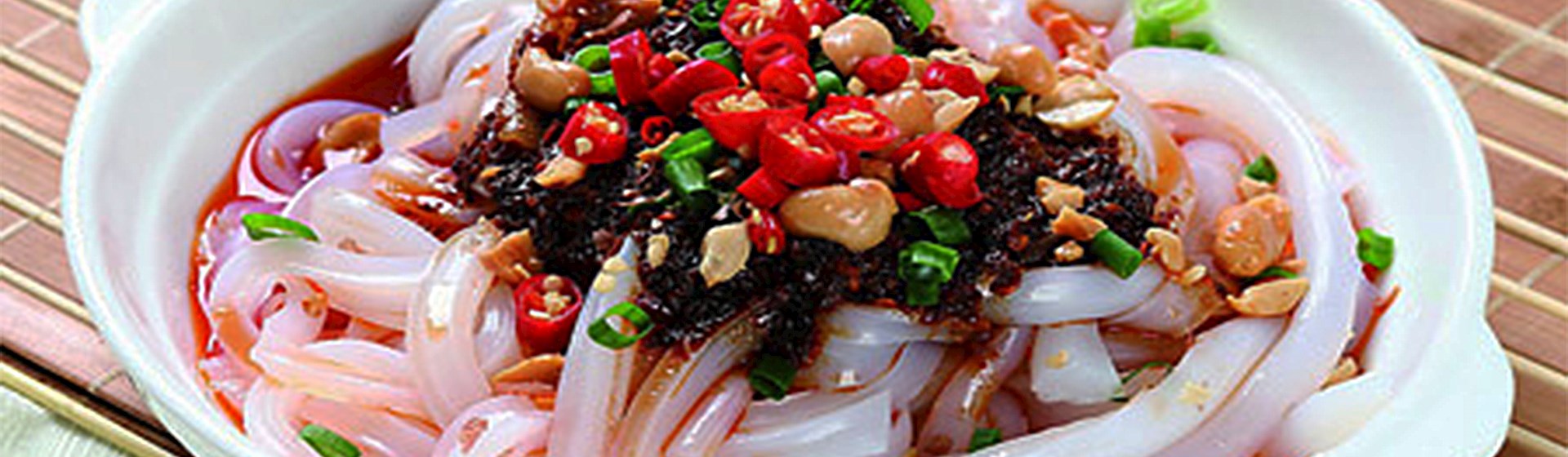
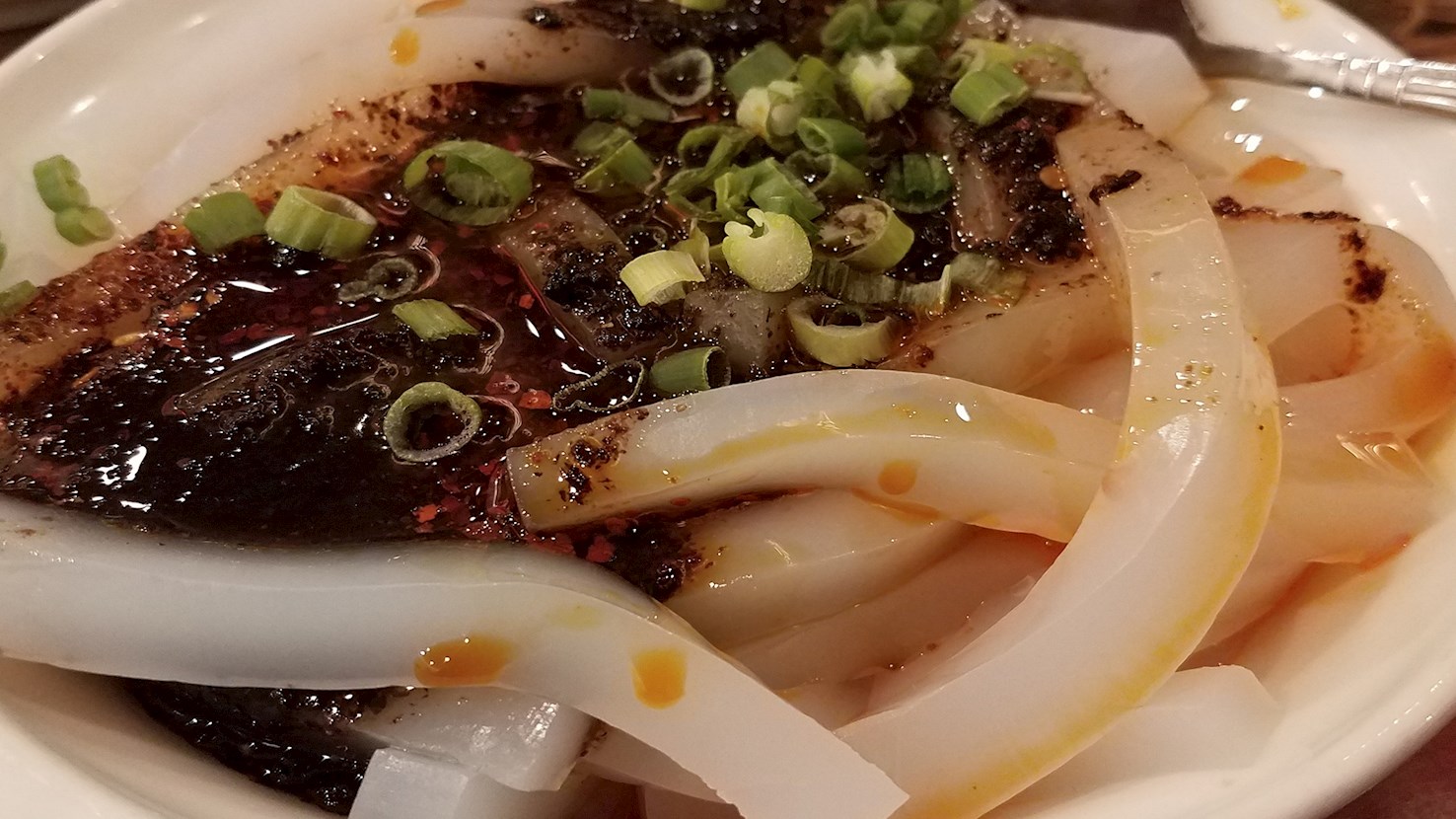
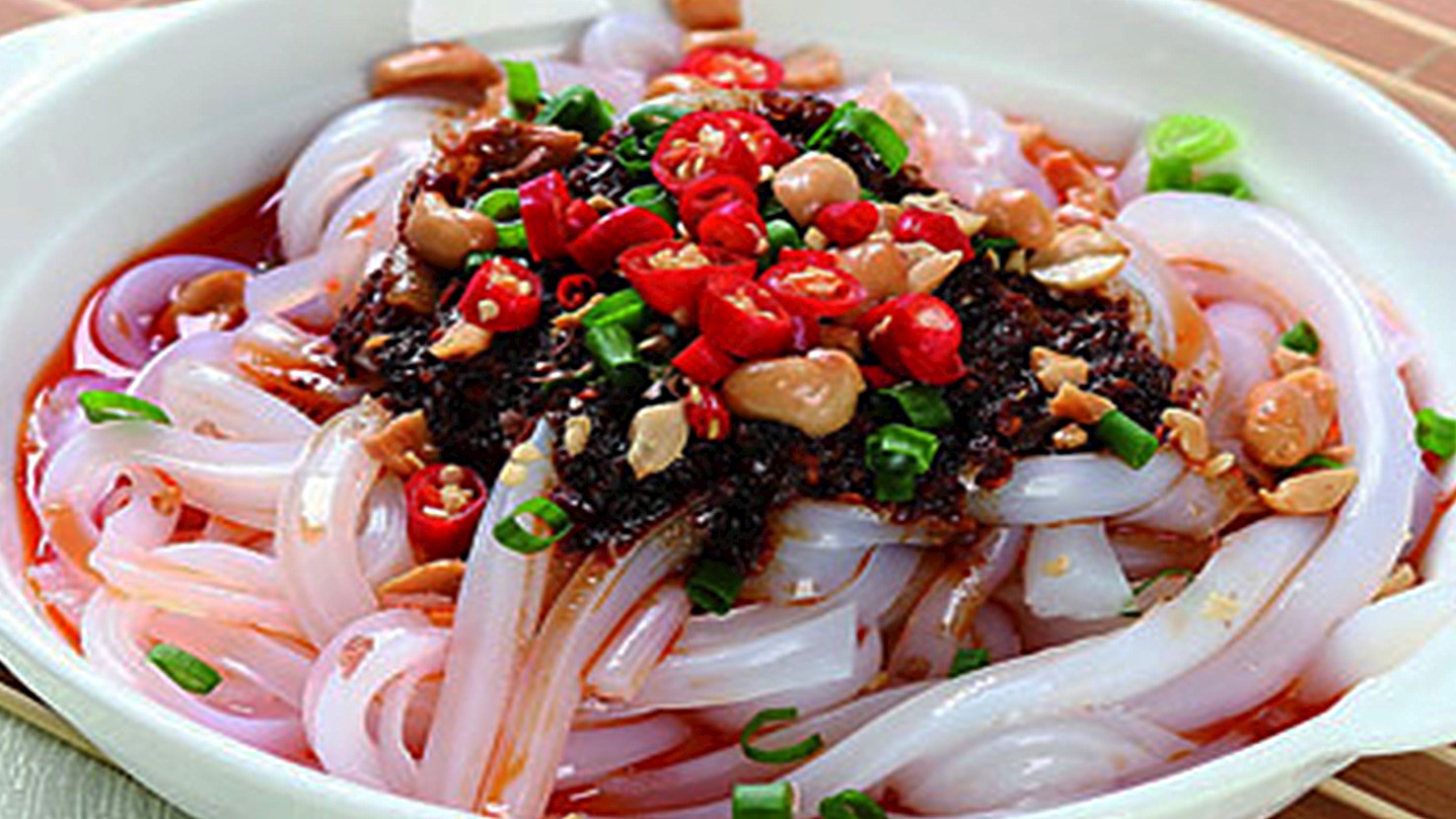
Liangfen is a popular northern Chinese dish that is also often consumed in Sichuan and Qinghai, consisting of slices or strips of starch jelly tossed in a savory, spicy sauce that is topped with various garnishes. The jelly is predominantly made from mung bean starch, but pea starch, sweet potato starch, and wheat starch are also common in recipes. As far as the sauce goes, typically it will include soy sauce, vinegar, minced garlic, ginger, sesame paste, and chili oil, while peanuts, daikon radish, and strips of carrot are also often employed. The dish is served cold, mostly in summer, but it can also be stir-fried. What makes liangfen such a favorite is the balance of textures and flavors; the mildness and smoothness of the cold jelly is the perfect antidote to the spicy sauce and garnishings. Apart from the traditional version, there is also chuan bei liangfen from Sichuan, jidou liangfen from the Yunnan province made with chickpeas, and the recently invented, numbingly spicy shangxin liangfen from Chengdu and Chongqing. Although liangfen is Chinese, similar types of dishes can be found throughout Asia, namely in Korea, Japan, and Tibet.
Laping is a street food dish that is popular in Tibet and China. It utilizes mung bean noodles as the key ingredient, which are enriched with various ingredients such as coriander, garlic, green onion sauce, or red chili peppers. Apart from these ingredients, the noodles are always served with a soy sauce gravy. Laping is traditionally prepared and consumed during summer, and it is typically served cold.
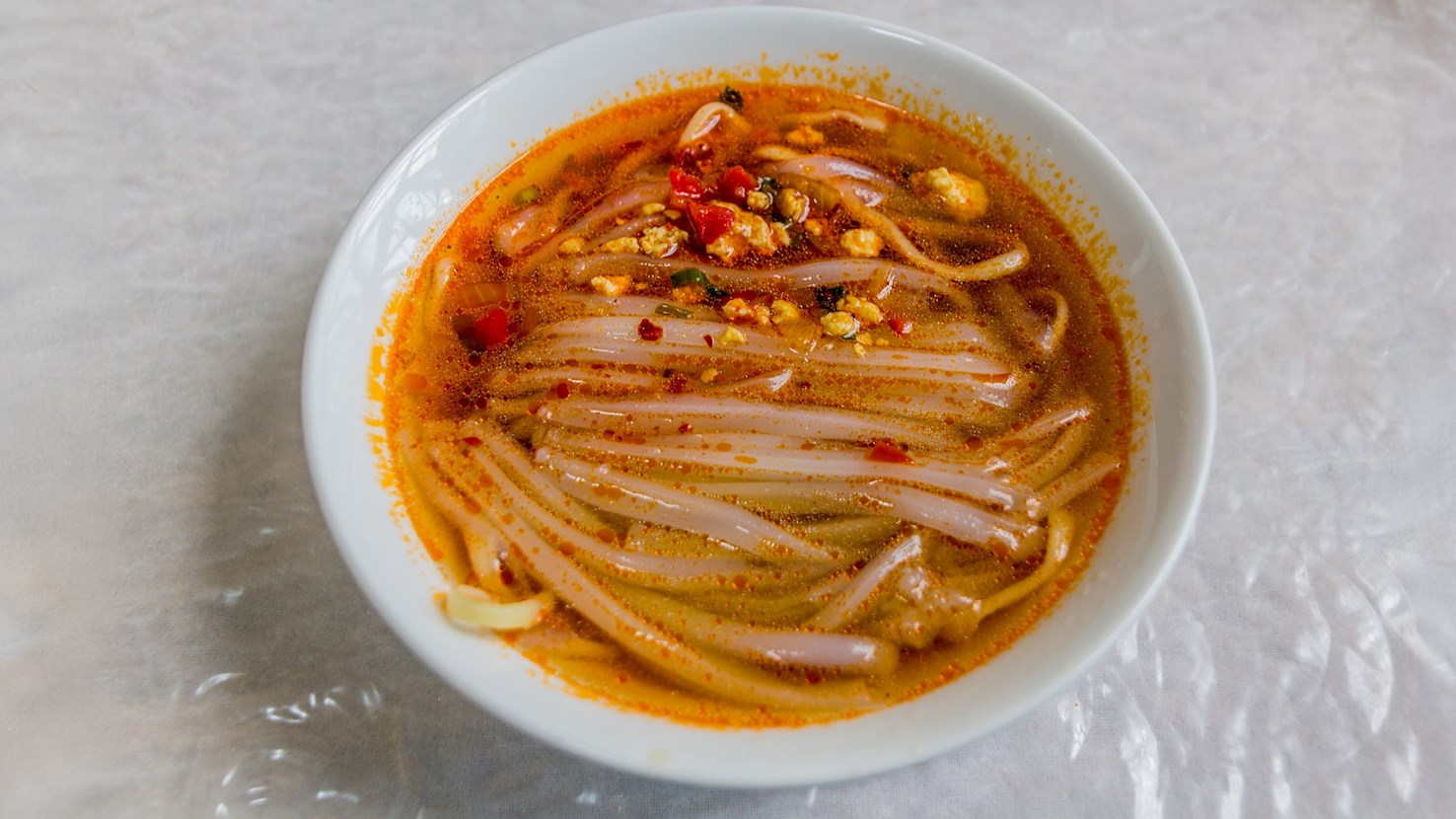
Ashlan-fu is a cold noodle soup that originates from the Dungan community in Kyrgyzstan, where it has become one of the country’s most distinctive street foods. The dish blends influences from Central Asian and Chinese culinary practices, reflecting the heritage of the Dungan people, who migrated from China to Central Asia in the late 19th century. Ashlan-fu combines two types of noodles, clear starch-based noodles and wheat noodles, served in a chilled, tangy broth made from vinegar, garlic, and sometimes a small amount of chili paste. It is typically garnished with strips of omelet, chopped fresh herbs, and pieces of cooked meat or gluten, depending on the region and vendor. Preparation begins with making the starch noodles by cooking potato or mung bean starch with water until it thickens into a jelly-like sheet that is left to cool and set. Once firm, it is cut into strips that resemble translucent noodles. Separately, wheat flour dough is rolled and cooked to make the second type of noodle, providing contrast in texture. The cold broth is prepared by combining vinegar, water, salt, and minced garlic, then chilled until ready to serve. Some versions include a splash of lightly spiced stock to balance the acidity. To assemble, the noodles are placed in a bowl and covered with the cold broth, then topped with omelet strips and any additional garnishes. Ashlan-fu is especially popular in the city of Karakol and is often sold at bazaars and roadside cafes. It is commonly eaten as a refreshing meal in warm weather and is valued for its combination of sour, savory, and slightly spicy flavors. Vendors often keep large bowls of chilled broth and freshly prepared noodles ready so that servings can be quickly assembled. Recipes and proportions vary, with some cooks using a stronger vinegar base and others preferring a milder taste. Beyond Kyrgyzstan, ashlan-fu is recognized as a symbol of Dungan identity and culinary adaptation. The technique of making starch noodles has similarities to liangfen, a cold mung bean jelly dish from northwestern China, and reflects the Dungan community’s Chinese roots. In Karakol, a local food market has become known for offering different styles of ashlan-fu, attracting both residents and travelers interested in experiencing this unique cold soup.
TasteAtlas food rankings are based on the ratings of the TasteAtlas audience, with a series of mechanisms that recognize real users and that ignore bot,
nationalist or local patriotic ratings, and give additional value to the ratings of users that the system recognizes as knowledgeable.
For the “3 Best Rated Dishes with Mung Bean Starch” list until May 22, 2026, 989,163 ratings were recorded, of which 646,971 were recognized by the system as legitimate.
TasteAtlas Rankings should not be seen as the final global conclusion about food. Their purpose is to promote excellent local foods,
instill pride in traditional dishes, and arouse curiosity about dishes you haven’t tried.