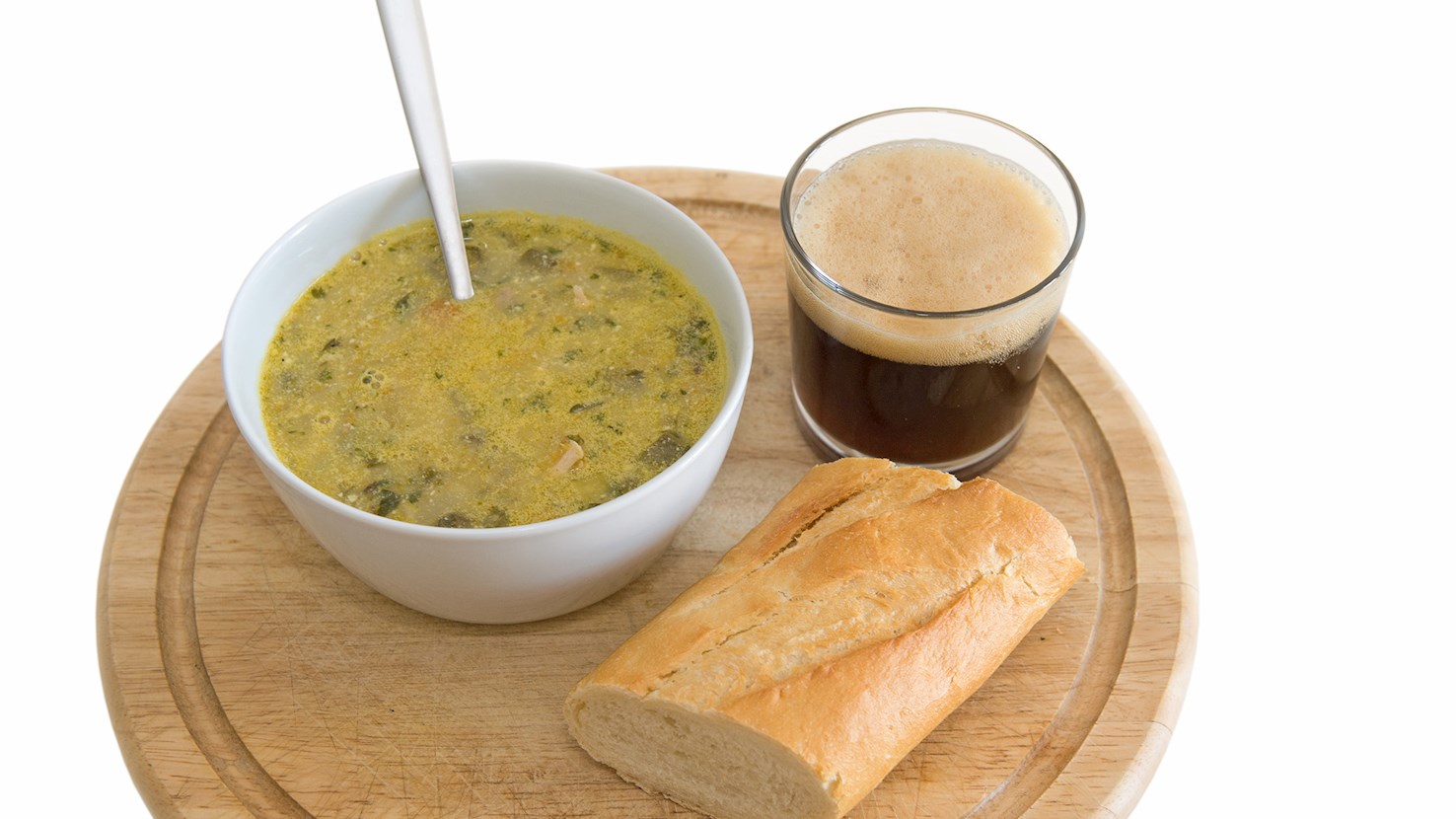
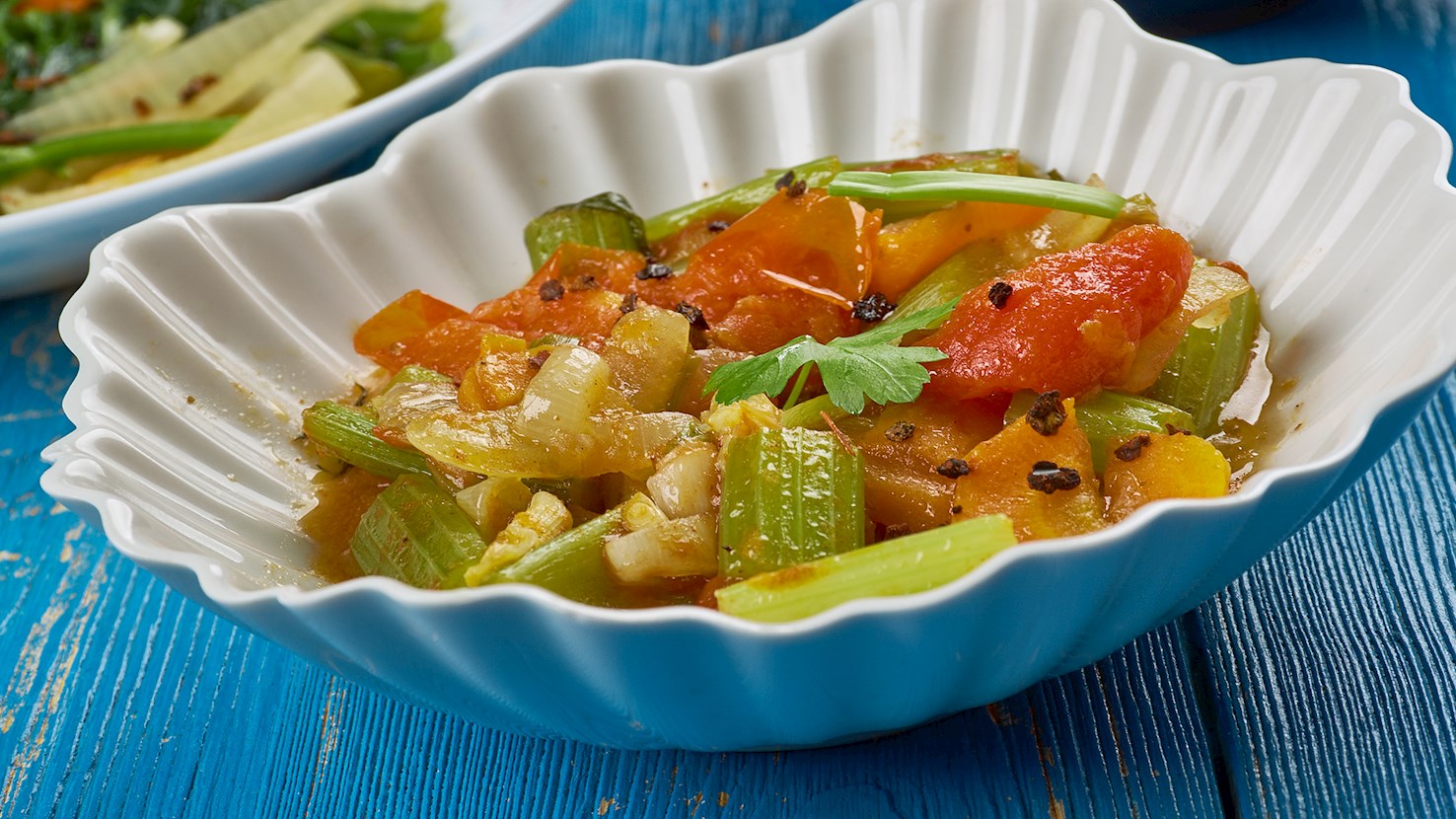
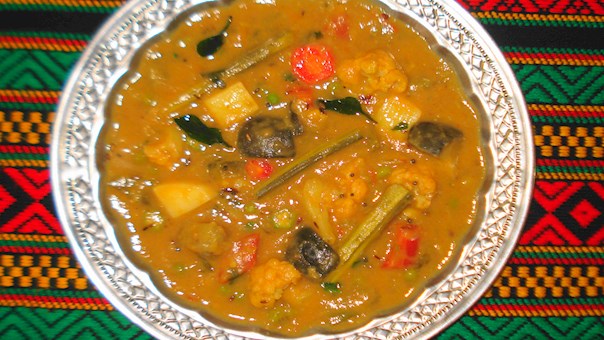
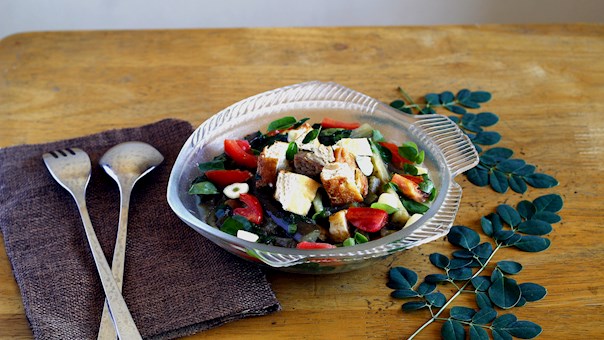
Begova čorba (lit. bey’s soup) is a Bosnian chicken soup that is traditionally served as a warm appetizer. The main ingredients are chicken and okra, which is said to act as an aphrodisiac, but the soup also includes various root vegetables and is thickened with sour cream and eggs. It is typically prepared for national holidays and festive occasions, but it is also a staple of traditional Bosnian restaurants.
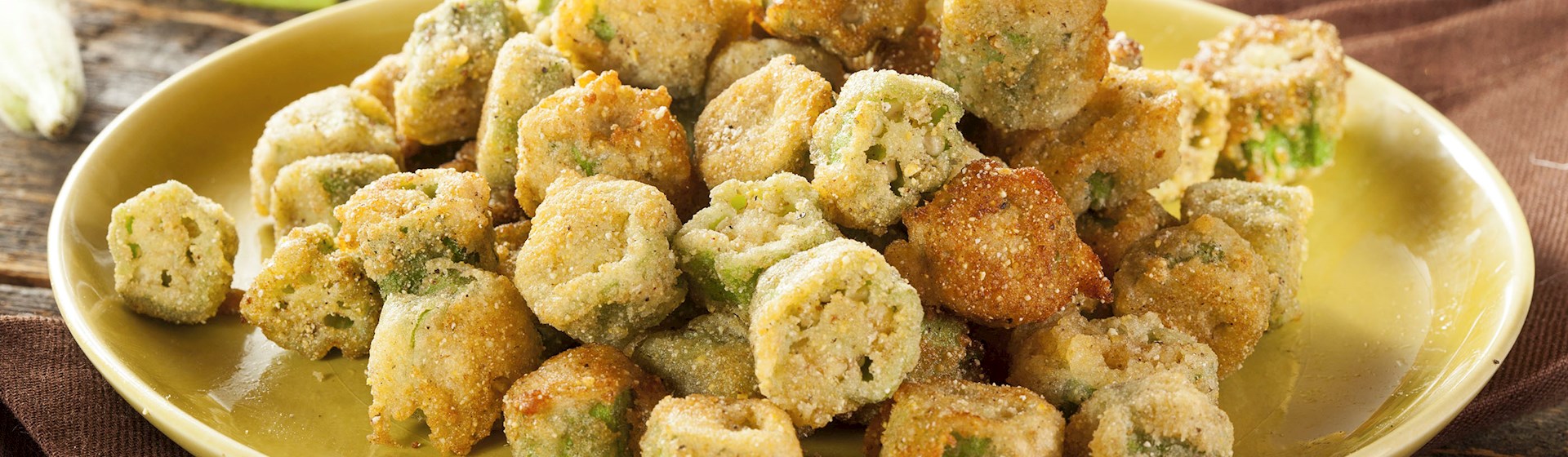
A popular side dish called fried okra is a must-have at any Southern festivity, and almost every Southern cook has a favorite recipe. Okra is usually coated with cornmeal or flour and shallow-fried in oil. It is sometimes served with ranch dressing, used for dipping the fried okra in it.
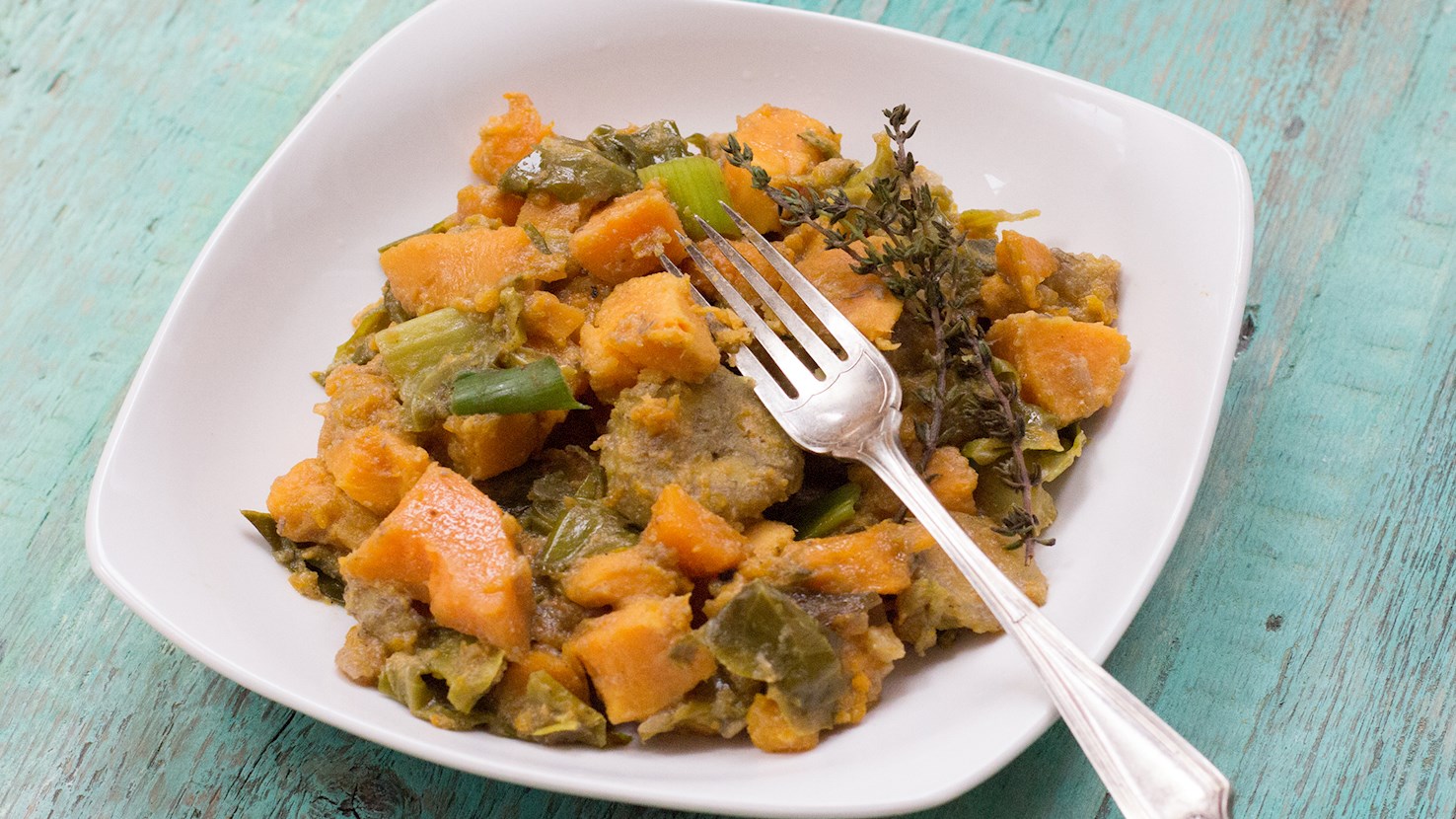
Ital stew is a plant-based Jamaican dish prepared with vegetables, legumes, coconut milk, herbs, and natural seasonings, cooked without meat and often without salt. The name “Ital” refers to the Rastafarian dietary principle that food should be vital, pure, and derived directly from natural sources, avoiding processed ingredients, artificial additives, or anything seen as diminishing the life force of the eater. Ital food is therefore centered on whole foods, minimal intervention, and methods that preserve the integrity of the ingredients. Ital stew appears in homes, community gatherings, and Ital cookshops, and has become widely recognized outside Jamaica as one of the core expressions of Rastafarian cooking. Its development is linked to the growth of Rastafari in the mid-twentieth century, when adherents shaped dietary practices to align with spiritual beliefs that emphasize natural living and a close relationship with the earth. As Ital cooking spread in urban and rural areas, the stew evolved into a flexible preparation that accommodates local produce such as pumpkin, callaloo, beans, and ground provisions. Preparation begins with a base of onions, scallions, garlic, thyme, and Scotch bonnet pepper, which are sautéed in coconut oil or cooked directly in coconut milk. Vegetables such as pumpkin, carrots, okra, and chocho are added along with red peas or broad beans. Coconut milk provides the liquid and helps thicken the stew. Ingredients such as Irish potato or sweet potato may be included to increase the stew’s body. Salt is often omitted or replaced with natural substitutes such as seaweed or celery, in keeping with Ital practice. The stew simmers until the vegetables are tender and the coconut milk reduces to a cohesive, lightly creamy texture. Its character depends on the use of fresh herbs and natural seasonings rather than manufactured sauces. Ital stew is eaten across Jamaica, especially in Rastafarian communities and in Ital restaurants that focus on plant-based meals. It is served with rice, bulgur, quinoa, or boiled ground provisions such as yam and green banana. Beverage pairings include coconut water, herbal teas, sorrel, and fresh fruit juices, all of which align with the emphasis on unprocessed foods and complement the clean, earthy flavors of the stew.
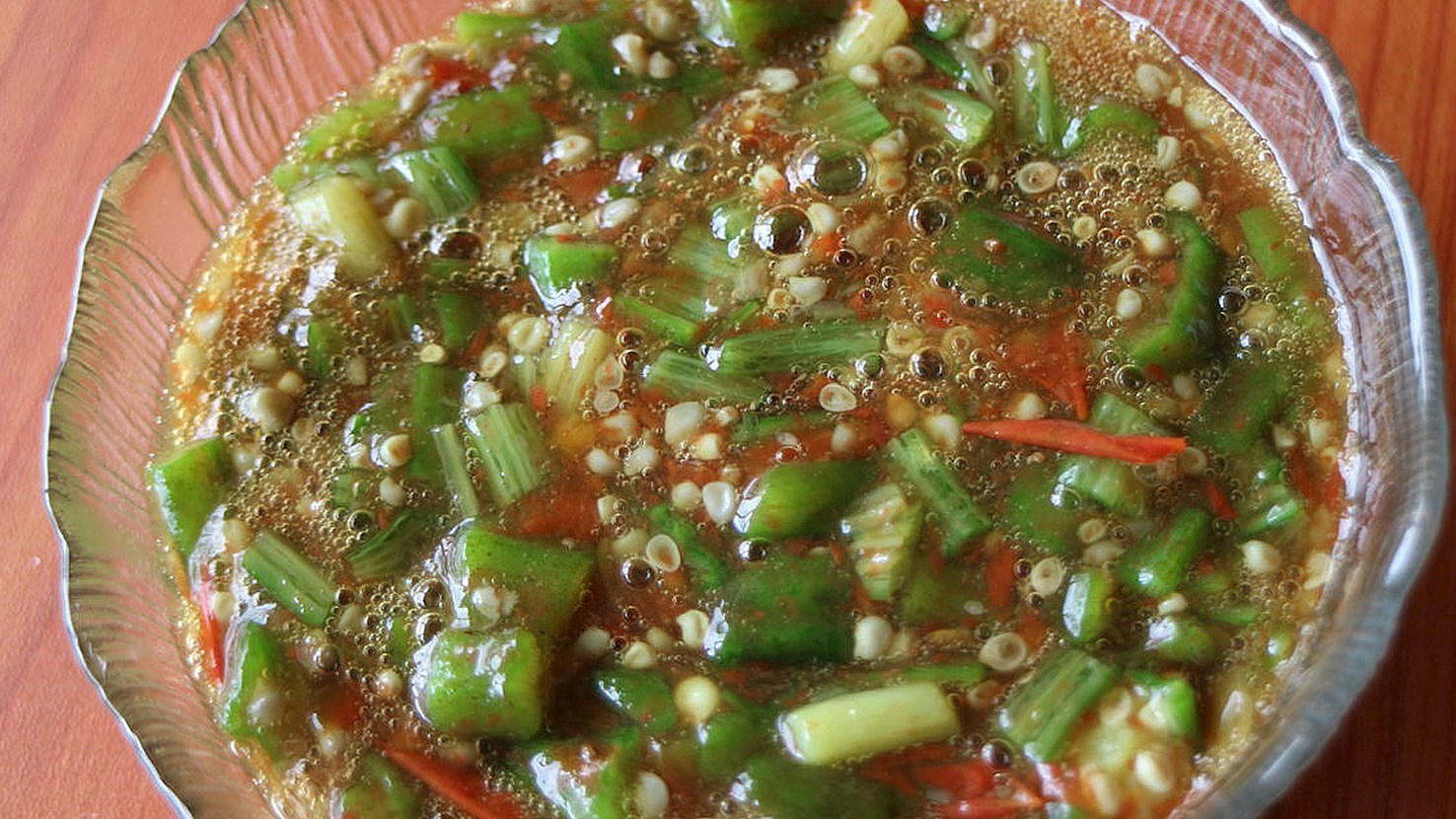
In Zambia, the term delele denotes okra, but also a simple dish that incorporates this traditional vegetable. The dish is predominately prepared with fresh okra that is cooked in water, alongside sliced tomatoes. Bicarbonate of soda is considered to be the essential addition that provides a distinctive thick, glutinous texture. Pair it with nshima, a traditional Zambian cornmeal porridge. The same dish is also enjoyed in Zimbabwe, where it typically goes under the name derere.
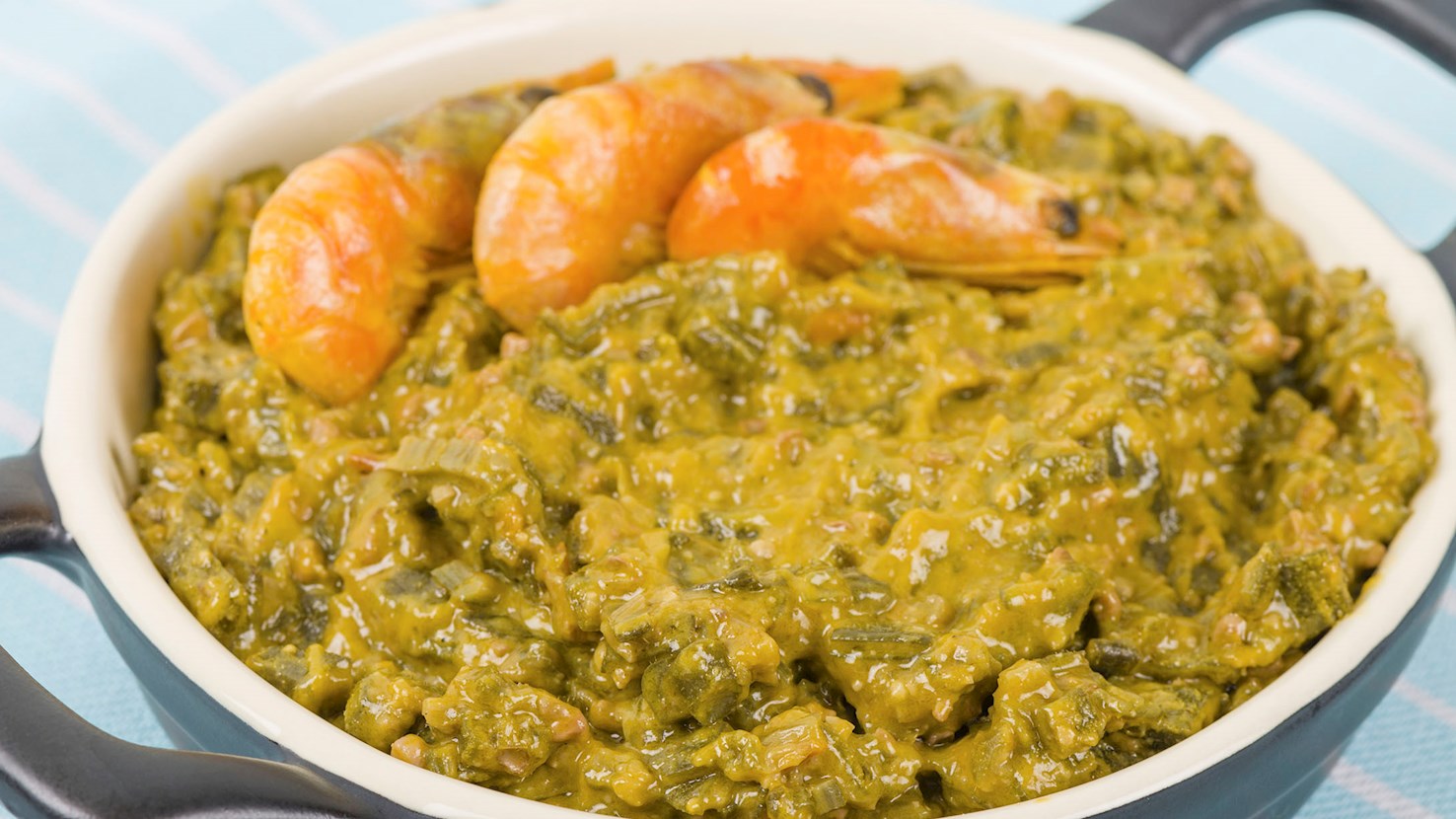
Caruru is a dish that is a blend of okra, dried shrimps, onions, and toasted nuts cooked in dendê palm oil. In the Bahia region, caruru is traditionally consumed as a condiment alongside acarajé, a type of street food consisting of fried black-eyed peas. Although the dish has African origins, it is considered to be a Brazilian dish which was exported out of Africa by the slaves who worked on sugar plantations in Brazil. Caruru is a staple of Afro-Brazilian religious ceremonies, where it's known under the name amalá, and it is a favorite of Xango, the Yoruba African god of fire. It is also the main meal that is served during the September festivities honoring Cosme and Damien, the twin saints of Bahian Afro-Catholic culture. The dish is traditionally served to guests as a sign of celebrating family ties and friendship.
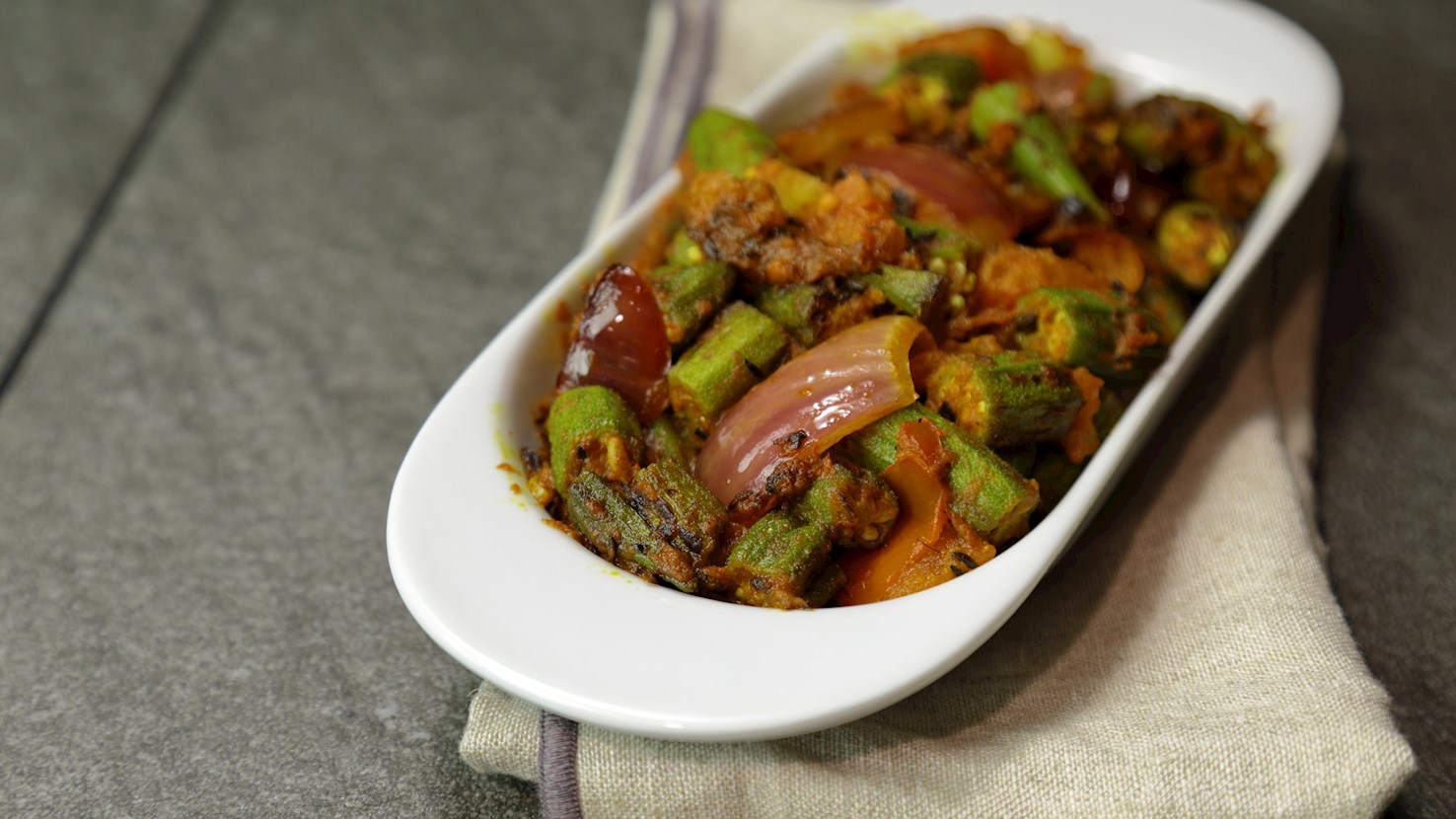
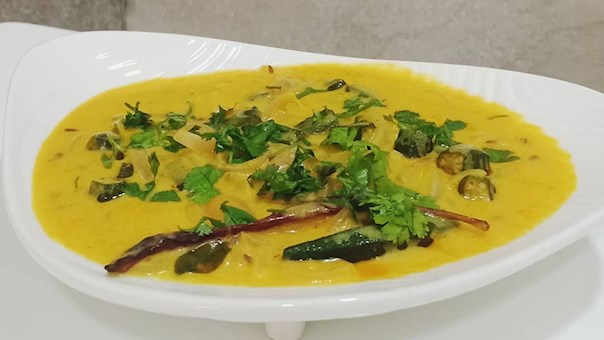
Bhindi do pyaza is a traditional stir-fried curry based on onions and okra, originating from the northern parts of India. Bhindi means okra, pyaz means onions, and do means twice, referring to double the amount of onions used in the recipe, two types of onions, or adding the onions at two different stages. Although there are variations, the dish is usually made with a combination of okra, onions, oil, hot chili peppers, and ginger. These ingredients are mixed with a masala consisting of oil, cumin, onions, garlic-ginger paste, tomatoes, red chili powder, garam masala, coriander, salt, and fenugreek leaves. This okra and onion curry is simmered until the okra becomes tender. Once done, bhindi do pyaza is usually garnished with coriander leaves, then served hot with jeera rice, roti, chapati, or naan on the side.
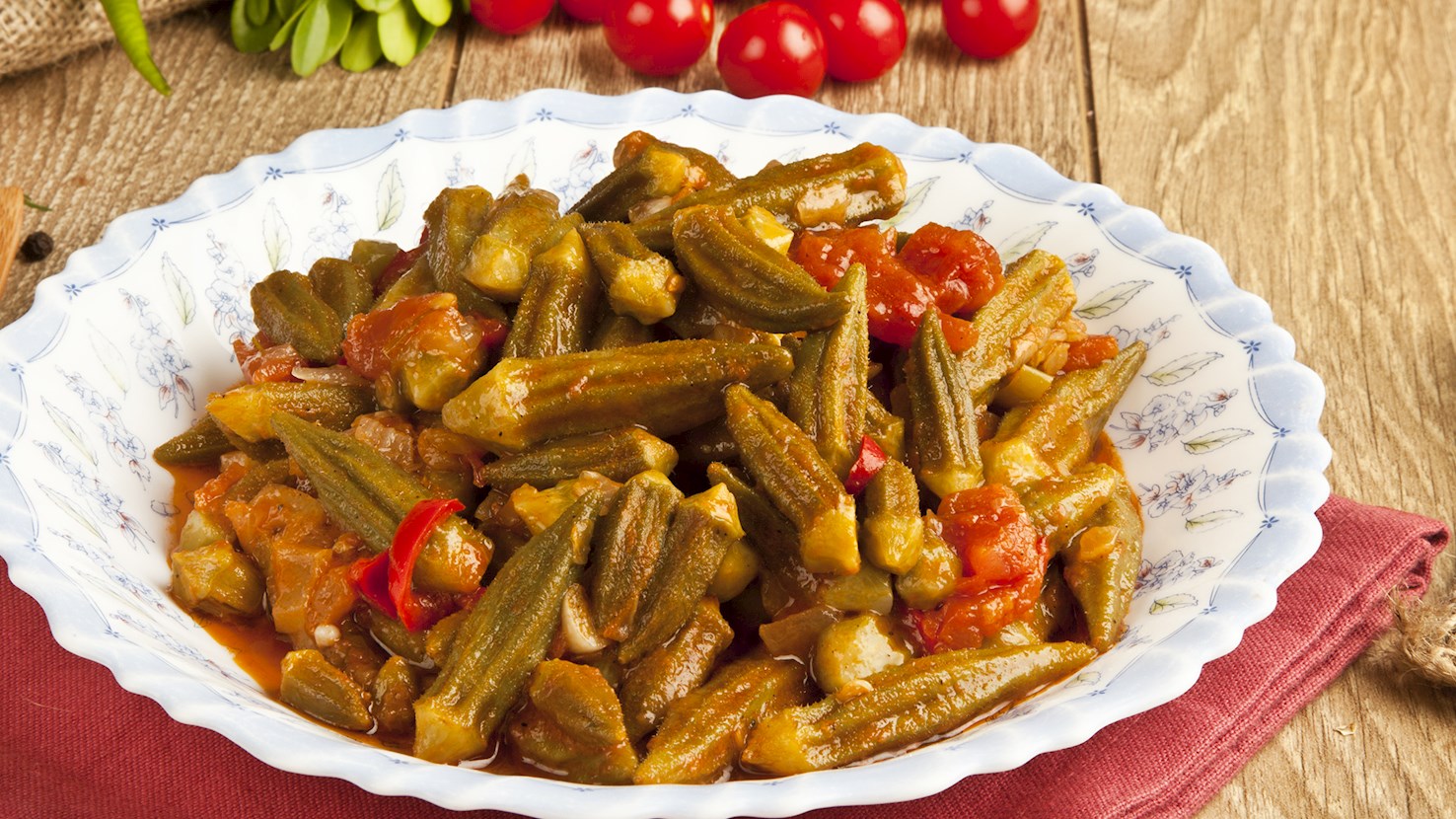
Braised okra is a Greek classic that is usually enjoyed as a light main course or a side dish. It consists of okra, sautéed onions, and fresh or canned tomatoes. All of the ingredients are braised in olive oil and seasoned with a variety of fresh herbs. If served as the main course, this flavor-packed vegetable dish is traditionally accompanied by crusty bread on the side.
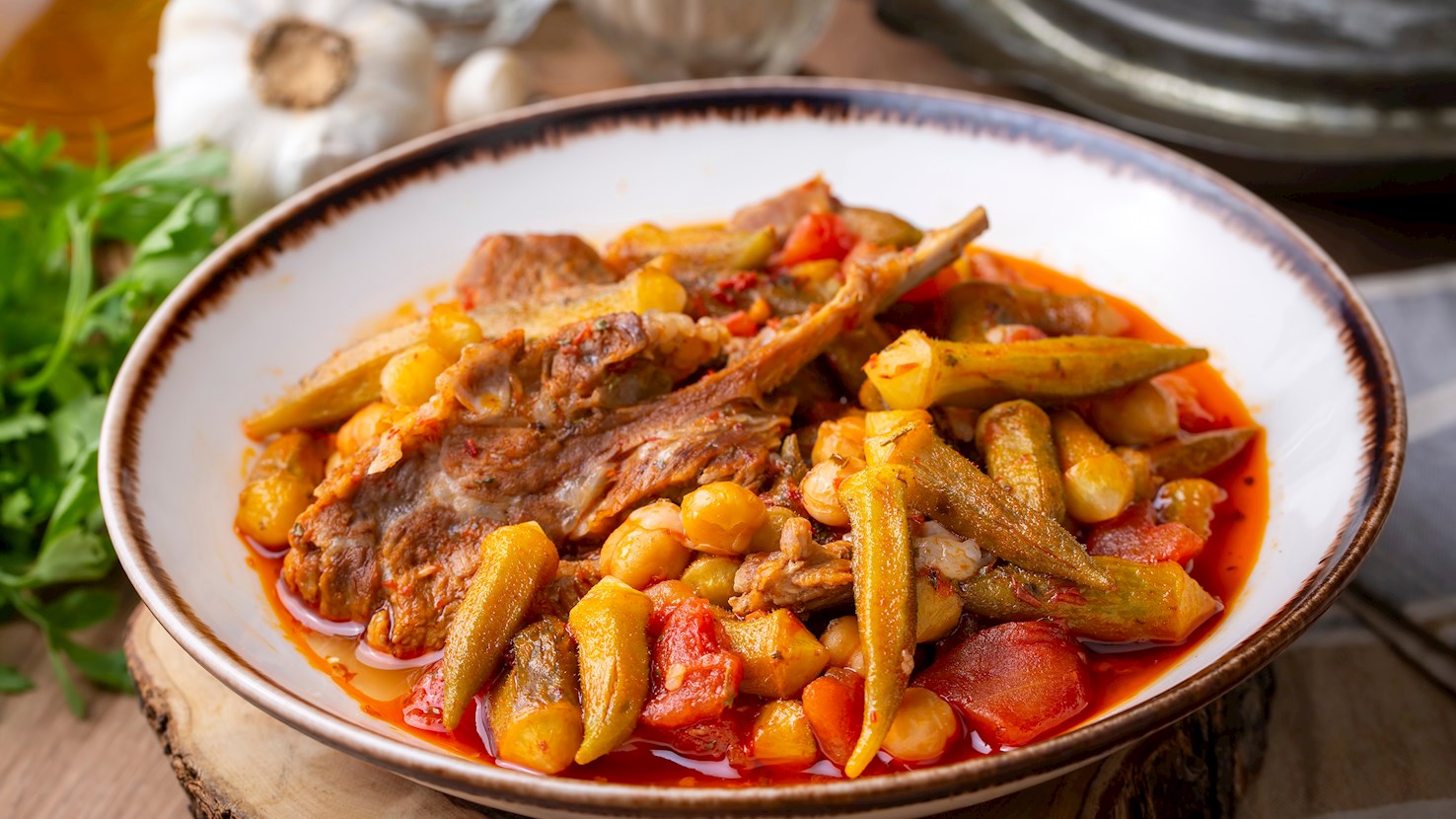
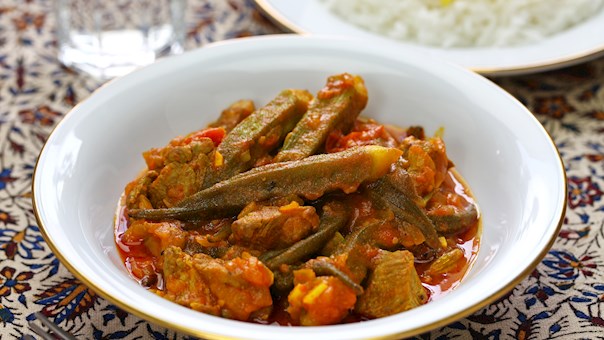
Etli bamya is a traditional dish originating from Türkiye. It's usually made with a combination of okra, lamb (or sometimes beef), olive oil, onions, tomatoes, garlic, lemon juice, tomato paste, sugar, salt, and pepper. The lamb is cubed and fried in olive oil, then mixed with the onions, garlic, tomato paste, sugar, and water. Once the ingredients become tender, okra, lemon juice, and seasonings are added to the pot, and the dish is simmered over low heat. Before serving, the stew is once again seasoned with lemon juice and a drizzle of olive oil. It's recommended to enjoy etli bamya with rice, salad, or crusty bread on the side.
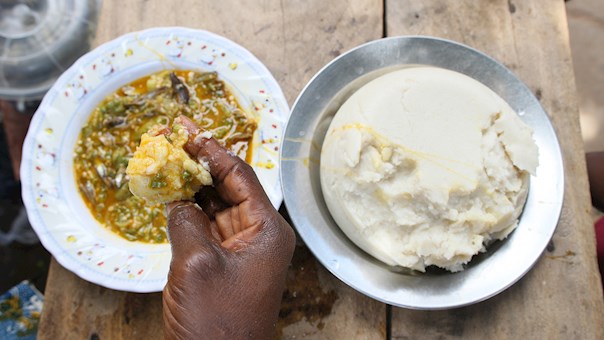
Fungee and pepperpot is the national dish of Antigua and Barbuda, and although one may think that they are going to be served some kind of mushroom and pepper stew, the truth is far more interesting than the unusual name suggests. Fungee is a bread ball similar to polenta, consisting of cornmeal mixed with okra. To make fungee, okra is boiled in salted water and mixed with wet cornmeal until the mixture becomes stiff. When the mixture does not stick to the pan, the fungee is ready to be consumed. The key ingredients in pepperpot are leafy vegetables, taro leaves, pumpkin, squash and other vegetables, while the stew is traditionally made with corned beef and offal. Since this dish consists of two separate meals that are combined together, it can be traced back to the times of slave population in the region, when the combination of cheap meat and carbohydrates provided a balanced and nutritious diet for a day of hard labor, with the added benefit of complex and rich flavors of the stew.
Simple, healthy, and inexpensive, daraba is a Chadian stew made with chopped okra, mixed vegetables, tomatoes, stock cubes, and smooth peanut butter, giving the dish a unique flavor. It is usually served with rice, boiled cassava, or boiled plantains on the side.
TasteAtlas food rankings are based on the ratings of the TasteAtlas audience, with a series of mechanisms that recognize real users and that ignore bot,
nationalist or local patriotic ratings, and give additional value to the ratings of users that the system recognizes as knowledgeable.
For the “27 Best Rated Dishes with Okra” list until June 17, 2026, 1,000,987 ratings were recorded, of which 657,348 were recognized by the system as legitimate.
TasteAtlas Rankings should not be seen as the final global conclusion about food. Their purpose is to promote excellent local foods,
instill pride in traditional dishes, and arouse curiosity about dishes you haven’t tried.