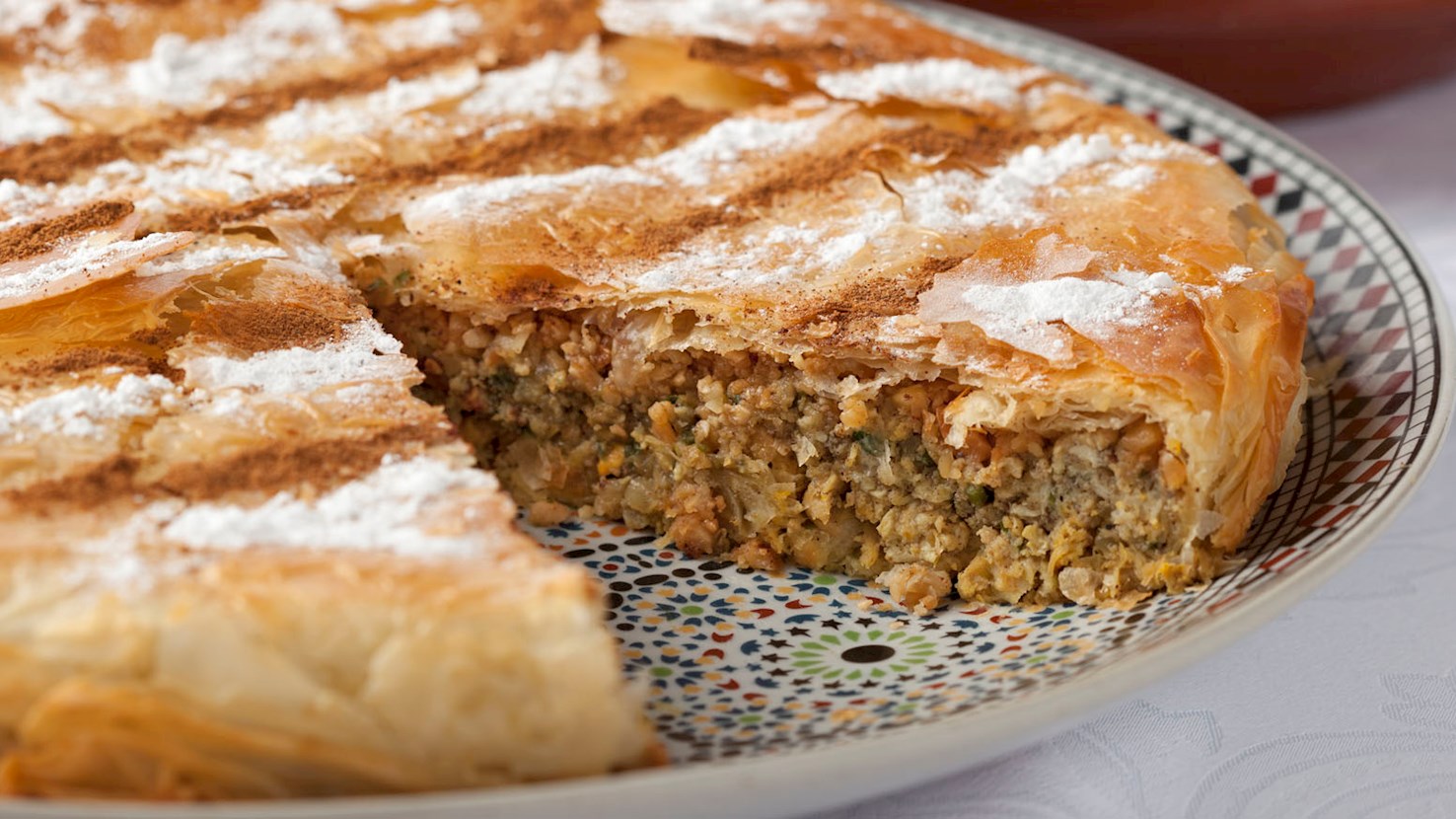
Pastilla is a stuffed pastry from Morocco, also known as b'stilla or bastilla. The rich, sweet and savory pie is filled with an unusual mix of pigeon or chicken meat, eggs, almonds, and cinnamon. It is commonly prepared for special events such as holidays, weddings, or parties. The name stems from the Spanish word for pastry – pastilla. It is a time-consuming dish, but well worth the effort, as the end result is an incredibly flavorful, crispy warqa pastry, concealing savory meat and spices such as saffron, nutmeg, and ginger, topped with fried almonds and a dash of powdered sugar and cinnamon. Although it is quite sweet on the exterior, this is a main course dish and not a dessert, as it is a plat complet, a dish with everything - the contrasts of savoriness and sweetness working together in unison. For the adventurous, there is also a modern and popular seafood pastilla, filled with fish, calamari, shrimp, and Asian rice noodles.
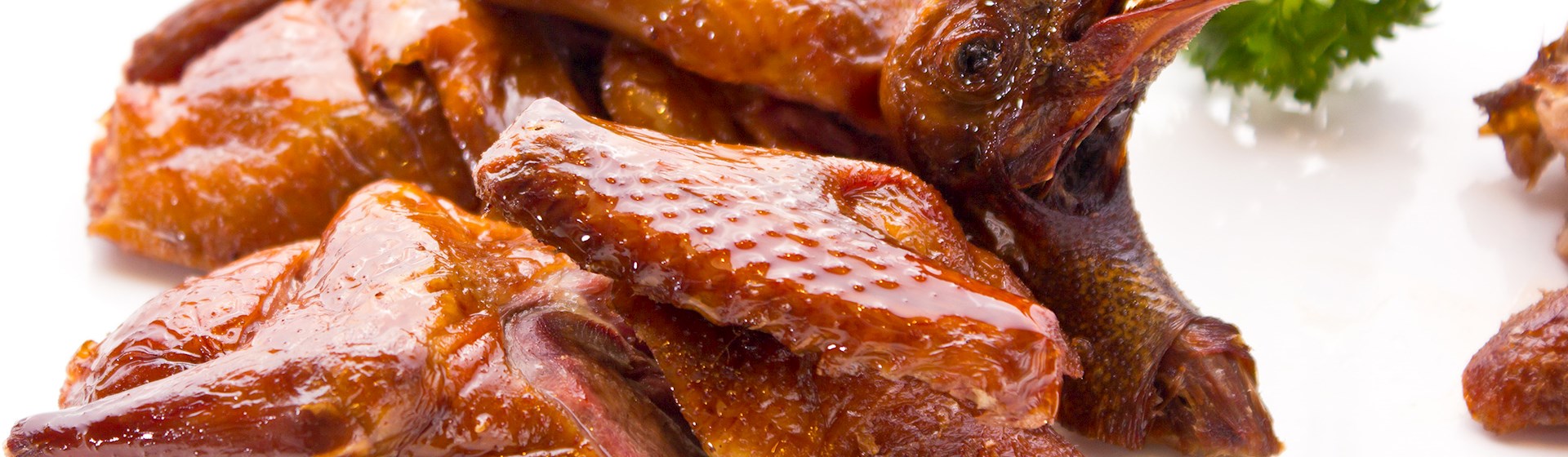
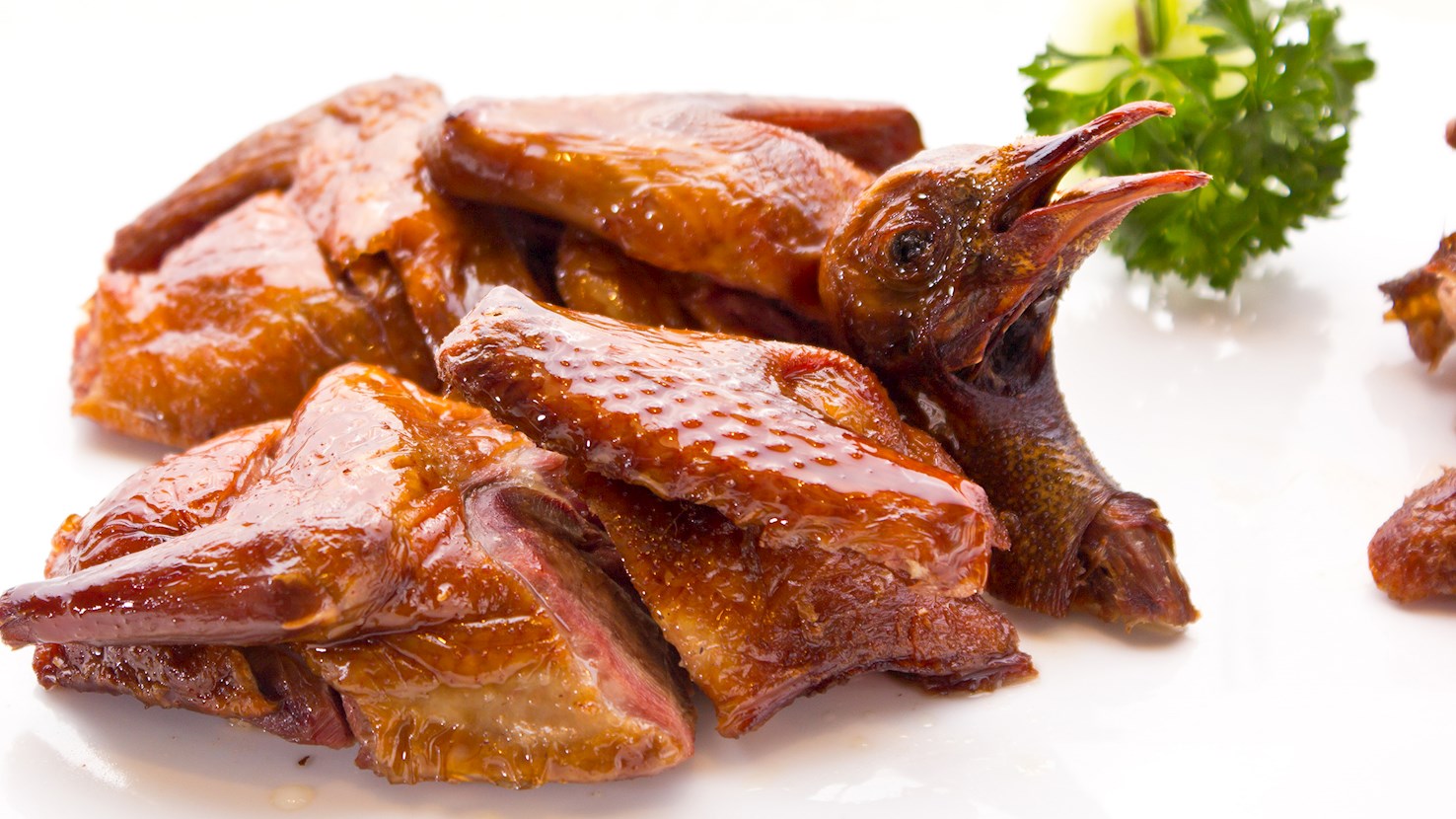
Roast squabs, domesticated farm-raised young pigeons, are one of the unique delicacies originating from the Chinese Cantonese region. Traditionally, young squabs under four weeks of age are roasted and served whole, including the head and feet. To prepare the meat for roasting, squabs are usually marinated or shortly braised in hot water and left to dry. Before or during cooking, the insides are spiced with five spice powder, and squab's skin is glazed with a mixture of soy sauce, rice wine, vinegar, ginger, honey or sugar, and occasionally hoisin sauce. This technique provides the lacquered appearance, a dark amber color, and an incredibly crunchy texture of the skin. The five spice powder penetrates the meat from the inside and covers it in fragrant aromas. In Chinese culture, roast squabs are usually eaten on special occasions such as weddings and other formal gatherings, but are also available in many restaurants where they are served as a special delicacy. Outside of China, roast squabs can be found on the menus of some Chinese restaurants, accompanied by vegetables and soy or hoisin sauce on the side.
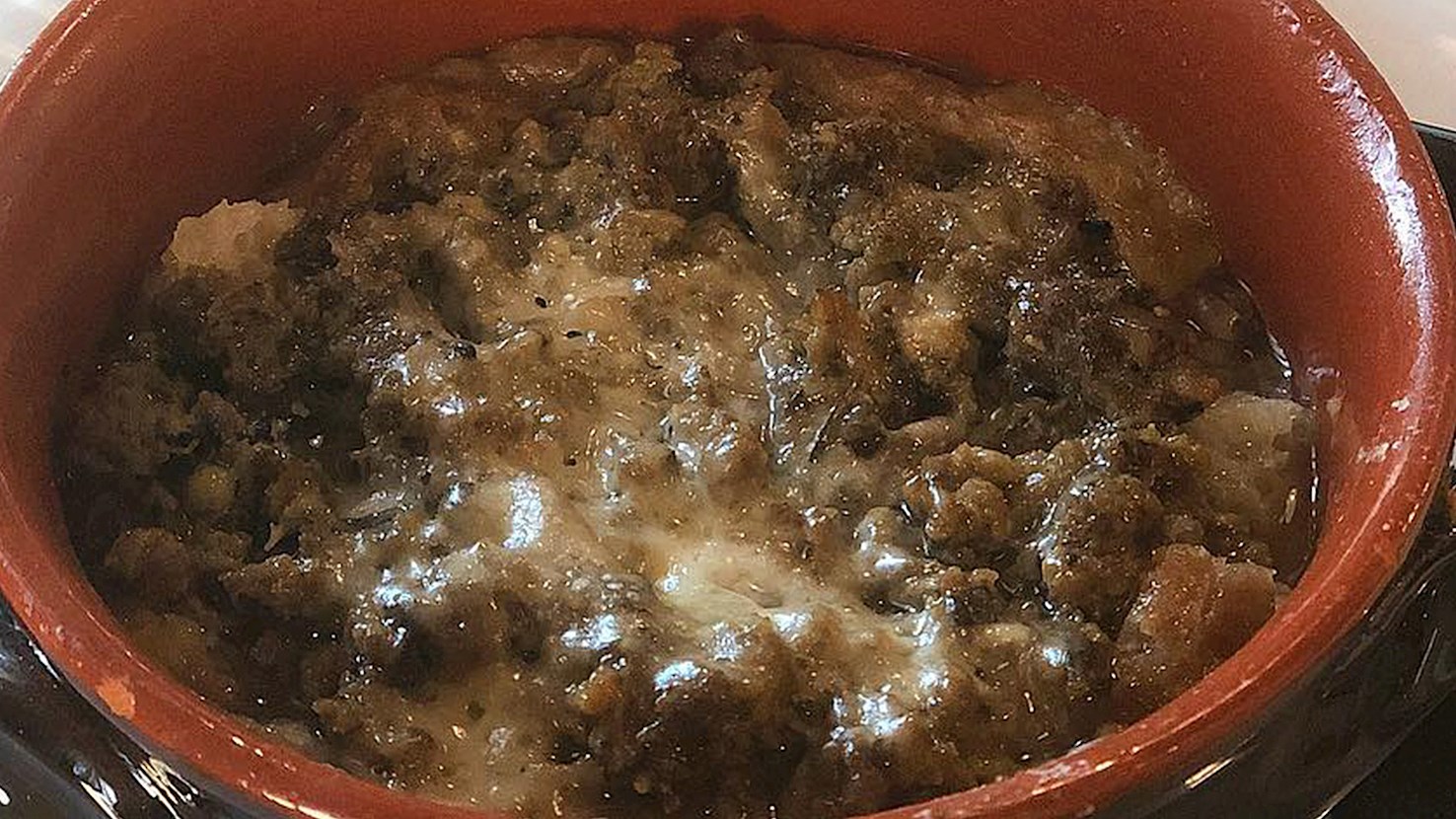
Originally cooked very slowly in earthenware pots in the oven, this obscure Italian dish hails from Treviso and can best be described as almost-a-lasagne, consisting of layers of pigeon meat and bread, covered with cheese and doused in pigeon broth before baking. The resulting dish is traditionally served in more of the same broth. In order to prepare it, you'll need a full list of ingredients: pigeon meat, olive oil, stock, onions, celery, carrots, garlic, rosemary, sage, red wine, rustic bread, and grated parmesan. It is recommended to serve sopa coàda with a bit more grated cheese on top and maybe a drizzle of olive oil.
Piccioni all spiedo is a traditional dish originating from Umbria. It consists of spit-roasted pigeons. The dish is usually made with a combination of pigeons, minced veal, breadcrumbs, eggs, thyme, bay leaves, rosemary, olive oil, salt, and black pepper. The eggs, breadcrumbs, thyme, salt, pepper, olive oil, and minced veal are mixed, and the seasoned pigeons are stuffed with the filling mixture. The bay leaves and rosemary are attached to the birds with a kitchen string, and the pigeons are then placed on a spit and roasted while being basted with a mixture of olive oil and herbs. Once they’ve become golden and crispy, the pigeons are cut and served with roasted potatoes on the side. Alternatively, the dish can also be prepared in the oven, but it’s not a traditional preparation in that case.
Pichones estofados is a traditional stew originating from Valladolid. The stew is usually made with a combination of pigeons, onions, tomatoes, garlic, olive oil, bay leaves, white wine, stock, thyme, salt, and pepper. The pigeons are cleaned and browned in olive oil. The onions, garlic, bay leaves, thyme, and pepper are added to the pan and sautéed until the onions become translucent. The tomatoes and wine are then added to the pan and once the alcohol evaporates, the mixture is covered with stock and seasoned with salt. The pan is covered and the stew is simmered until everything is tender. Once done, the stew is enjoyed while still warm.
Salmis de palombes is a rustic, highly complex stew from the Basque and Béarn regions, made with wild wood pigeons that are first flash-roasted on the bone and then slow-braised in an intensely rich, dark sauce thickened with the bird's own liver and offal. Because the wood pigeon is an active, migratory game bird whose dark meat carries a pronounced iron-rich, wild flavor, standard braising techniques simply wash it out. The "salmis" method was specifically engineered by traditional hunters to solve this: the birds are first seared in extremely hot duck fat or butter just until the skin crisps and the exterior seals, while the meat near the bone remains entirely raw. The birds are then carved, and while the prized breast and leg meat is set aside to rest, the raw carcasses, bones, hearts, and livers are heavily crushed in a mortar or meat grinder. This paste is fried vigorously with shallots, garlic, Bayonne ham fat, and a bouquet garni, then deglazed thoroughly with local, full-bodied red wine—typically an Irouléguy or Madiran—and reduced with rich beef or veal stock. After simmering down into a highly concentrated, almost black reduction, the liquid is pressed violently through a fine sieve to extract every ounce of marrow and flavor from the crushed bones, resulting in a velvety, profound sauce. Only at the very end are the reserved pieces of pigeon meat submerged in this simmering liquid just long enough to cook through gently without turning tough and stringy. Often fortified right before serving with a splash of Armagnac or a final swirl of bitter dark chocolate to counteract the heavy gaminess, this dish is the culinary pinnacle of the southwestern French hunting season, traditionally served over toasted, garlic-rubbed croutons or simple roasted potatoes.
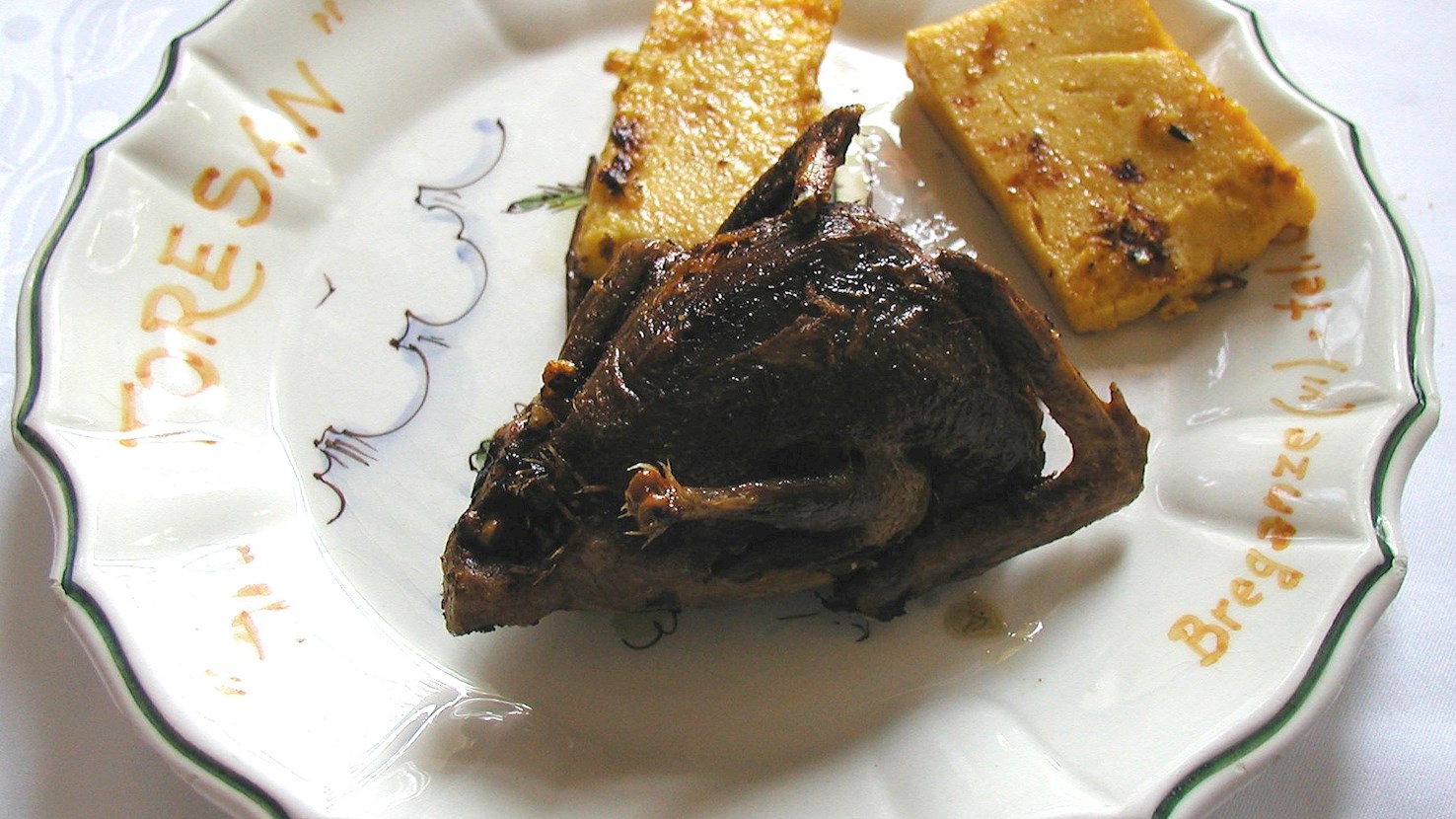
Torresano al forno is a baked pigeon dish from the Veneto region of northern Italy, particularly associated with the province of Vicenza, where pigeons raised in tower-like dovecotes have been part of local food culture for generations. The term “torresano” refers specifically to young pigeons reared in these structures, which provided a controlled environment and ensured a steady supply of birds suited for roasting. These dovecotes were once common on rural estates and farms, and references in agricultural documents and regional cookbooks from the eighteenth and nineteenth centuries note pigeon raising as a regular practice in Vicenza and nearby towns. The use of young birds for oven cooking became well established due to their tender meat and mild flavor. Preparation begins by cleaning and seasoning the young pigeon with salt, pepper and herbs such as rosemary or sage. The cavity is often filled with aromatics or small amounts of lard or pancetta to maintain moisture during baking. The bird is placed in a moderate oven with olive oil or rendered fat and cooked until the skin becomes crisp and the meat tender. In some versions, a splash of white wine is added during roasting to create a light pan sauce. The result is a dish defined by the balance of crisp exterior and delicate interior, a combination that relies on the age and size of the bird as much as on the cooking method. A characteristic element of torresano al forno is the reliance on pigeons raised specifically for the table rather than wild birds, ensuring uniform texture and flavor. The dish is served hot, usually whole or halved, often alongside polenta, which is a staple accompaniment in Vicenza and the broader Veneto region. It appears at local restaurants, agriturismi and family meals, especially in rural communities where pigeon raising has maintained continuity. Torresano al forno pairs well with regional wines such as Soave, Gambellara or light reds from the Colli Berici, whose acidity or mild tannins complement the richness of the meat. It remains a dish rooted in Veneto’s agricultural landscape and reflects long-established cooking practices centered on small-scale local ingredients.
Salmi de palombes is a game dish from southwestern France, particularly the Basque regions, prepared with wood pigeons, known locally as palombes, that migrate through the Pyrenean corridor each autumn. It developed in an area where migratory pigeon hunting was a long-standing seasonal activity and where rural households and country inns relied on slow, wine-based cooking to handle firmer, darker game meat. Cooks began preparing palombes by browning the birds, creating a concentrated base with aromatics and wine, and using the livers and cooking juices to enrich the sauce, producing a dish that reflects both local hunting practices and regional preferences for deep, stew-like preparations. The process generally starts with plucked and cleaned birds that are browned in fat, then simmered with onions, carrots, garlic, herbs, and red or white wine depending on local usage. Once the birds are tender, the cooking liquid is thickened, often by incorporating the finely crushed livers and sometimes a small amount of blood, yielding a smooth, cohesive sauce. The meat is returned to the sauce so the flavors bind during the final heating stage. A defining feature of salmi de palombes is the use of the bird’s own liver to stabilize and enrich the sauce, giving it a dense texture and a strong game aroma that differs from stews relying solely on roux or reduction. The dish is eaten in rural homes, hunting lodges, and regional restaurants during the migratory season when palombes are available. It is usually served with potatoes, sautéed mushrooms, or toasted bread that absorbs the sauce, and it pairs well with regional wines such as Madiran, Irouléguy, or fuller-bodied Bordeaux blends that complement the richness of the game.
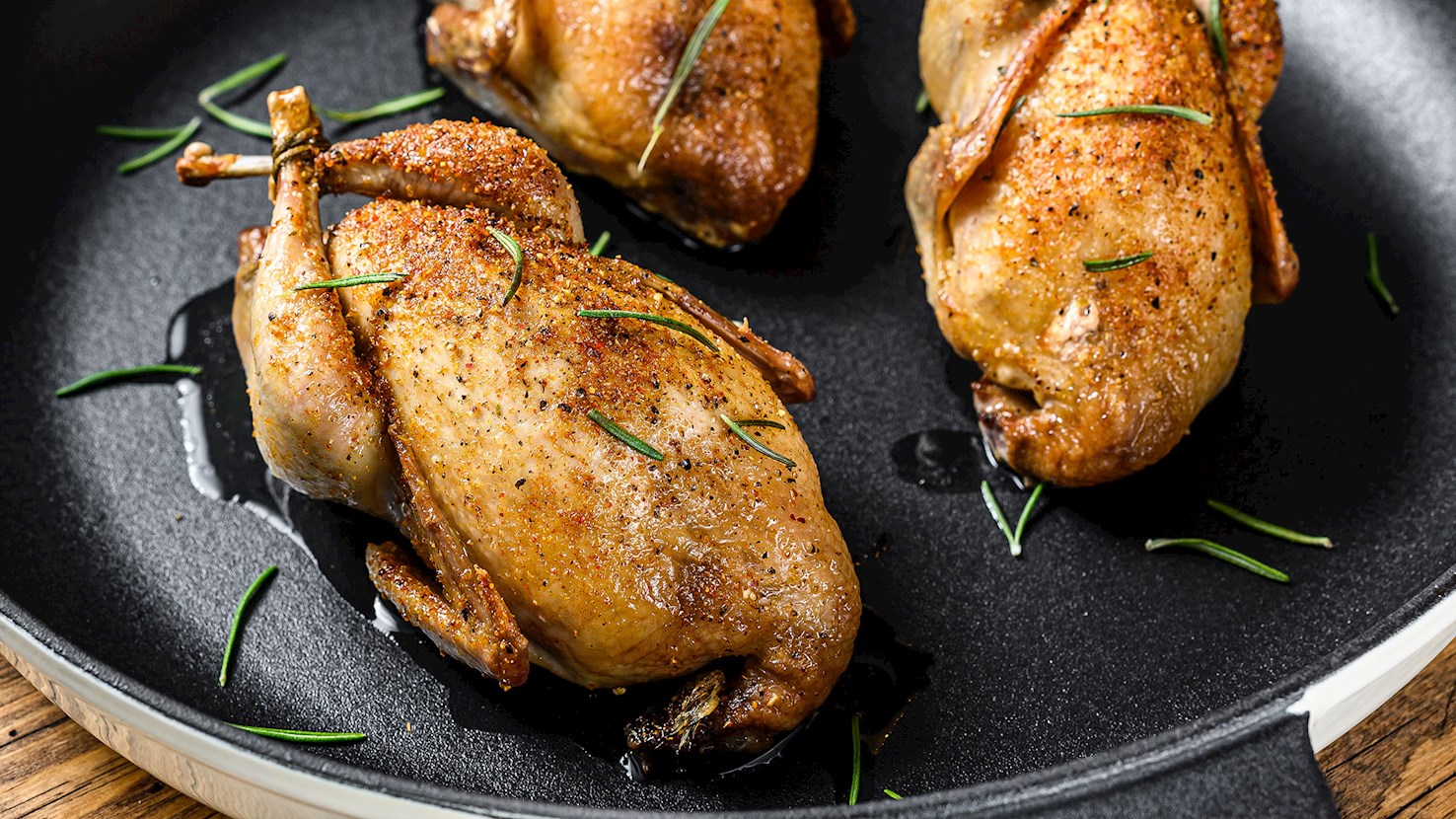
Pigeon rôti is a classic French dish that involves roasting a whole pigeon. The bird is typically seasoned with salt and pepper but can have other aromatics such as garlic, onions, or fresh herbs. It is then roasted, either in the oven or on the stove, until the meat is tender and the skin is crispy. This dish is often served with a sauce made from the pan drippings, and accompanied by vegetables or a light salad. Pigeon rôti is celebrated for its rich flavor and delicate meat, making it a gourmet choice in French cuisine.
Pigeon en crapaudine is a traditional game dish. The dish is made with pigeons that are farm-raised on corn or other feed. The pigeons are butterflied and their wings are tucked behind their shoulder bones, becoming visually reminiscent of a toad (crapaud in French). They're typically brushed with butter, seasoned with salt and pepper, and then grilled or pan-grilled (always under a weight). There are many variations on the dish, and it can be enriched with lardons, onions, white wine, stock, garlic, thyme, tiny peas, and sweet lettuce. Once prepared, pigeon en crapaudine is typically served with boiled new potatoes on the side.
TasteAtlas food rankings are based on the ratings of the TasteAtlas audience, with a series of mechanisms that recognize real users and that ignore bot,
nationalist or local patriotic ratings, and give additional value to the ratings of users that the system recognizes as knowledgeable.
For the “10 Best Rated Dishes with Pigeon” list until June 17, 2026, 1,000,987 ratings were recorded, of which 657,348 were recognized by the system as legitimate.
TasteAtlas Rankings should not be seen as the final global conclusion about food. Their purpose is to promote excellent local foods,
instill pride in traditional dishes, and arouse curiosity about dishes you haven’t tried.