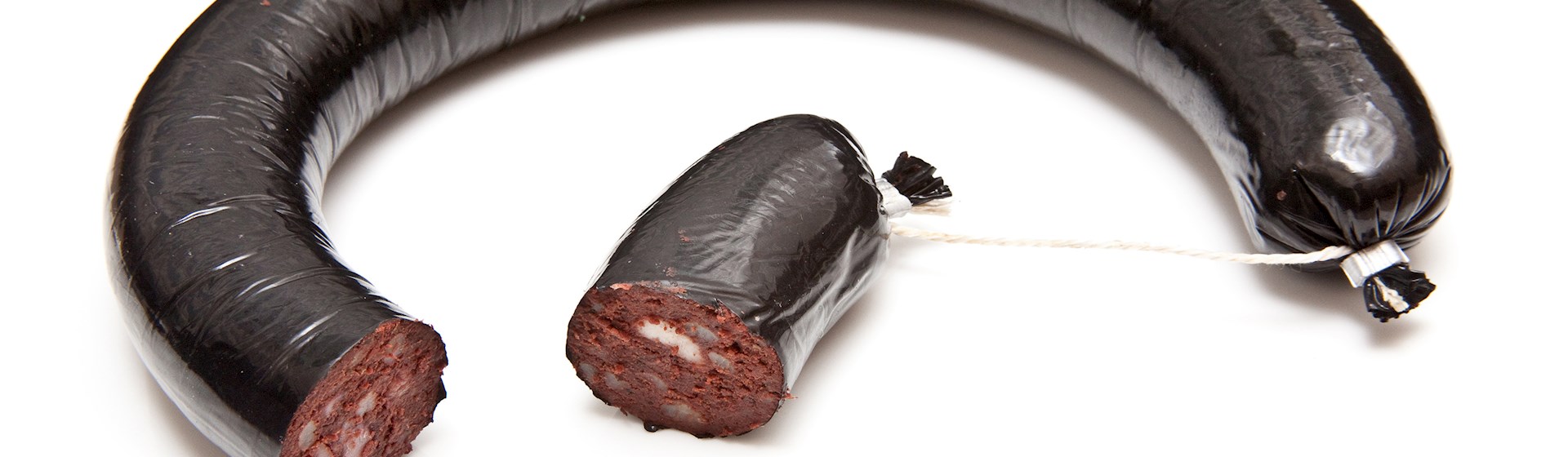
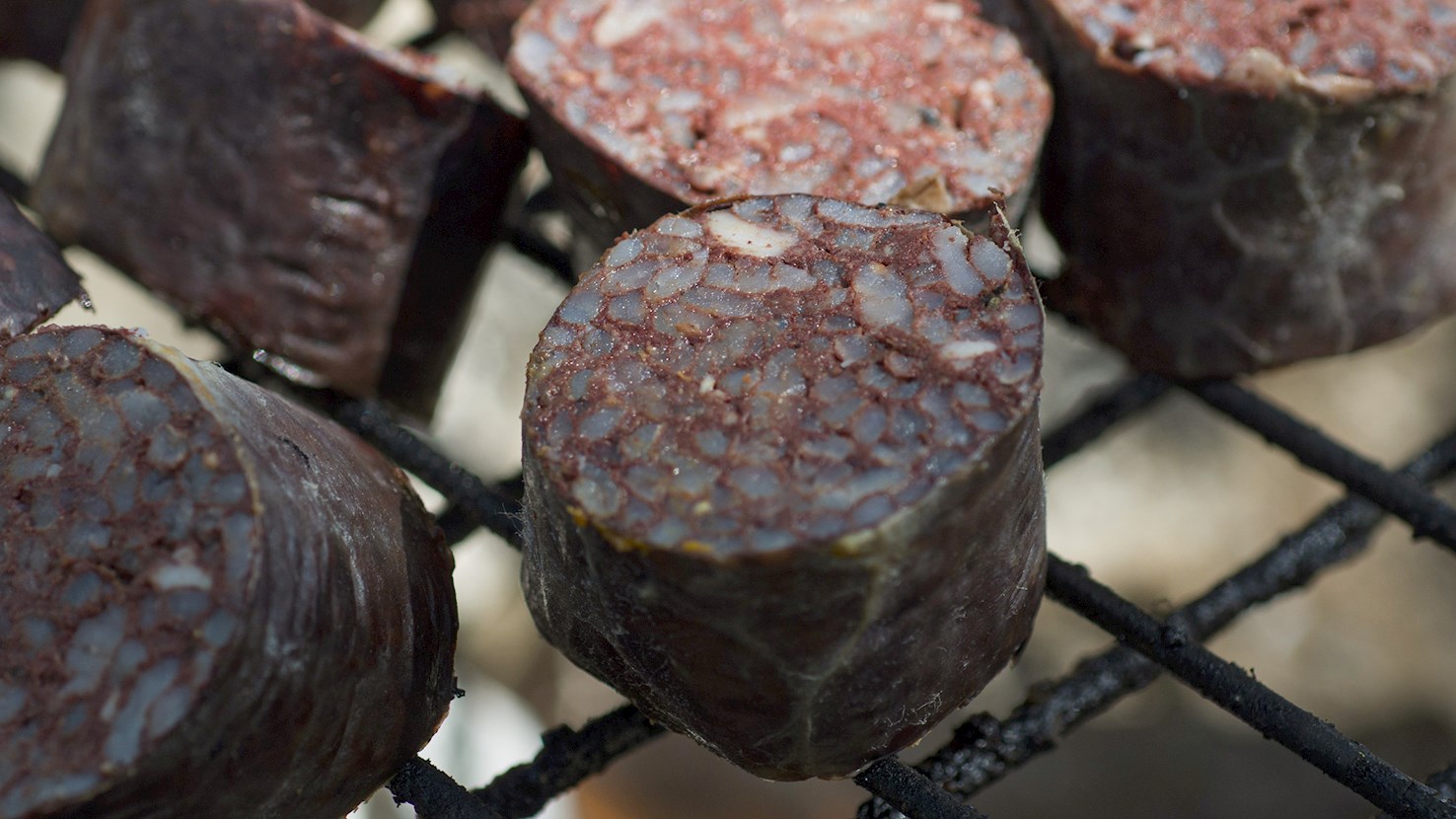
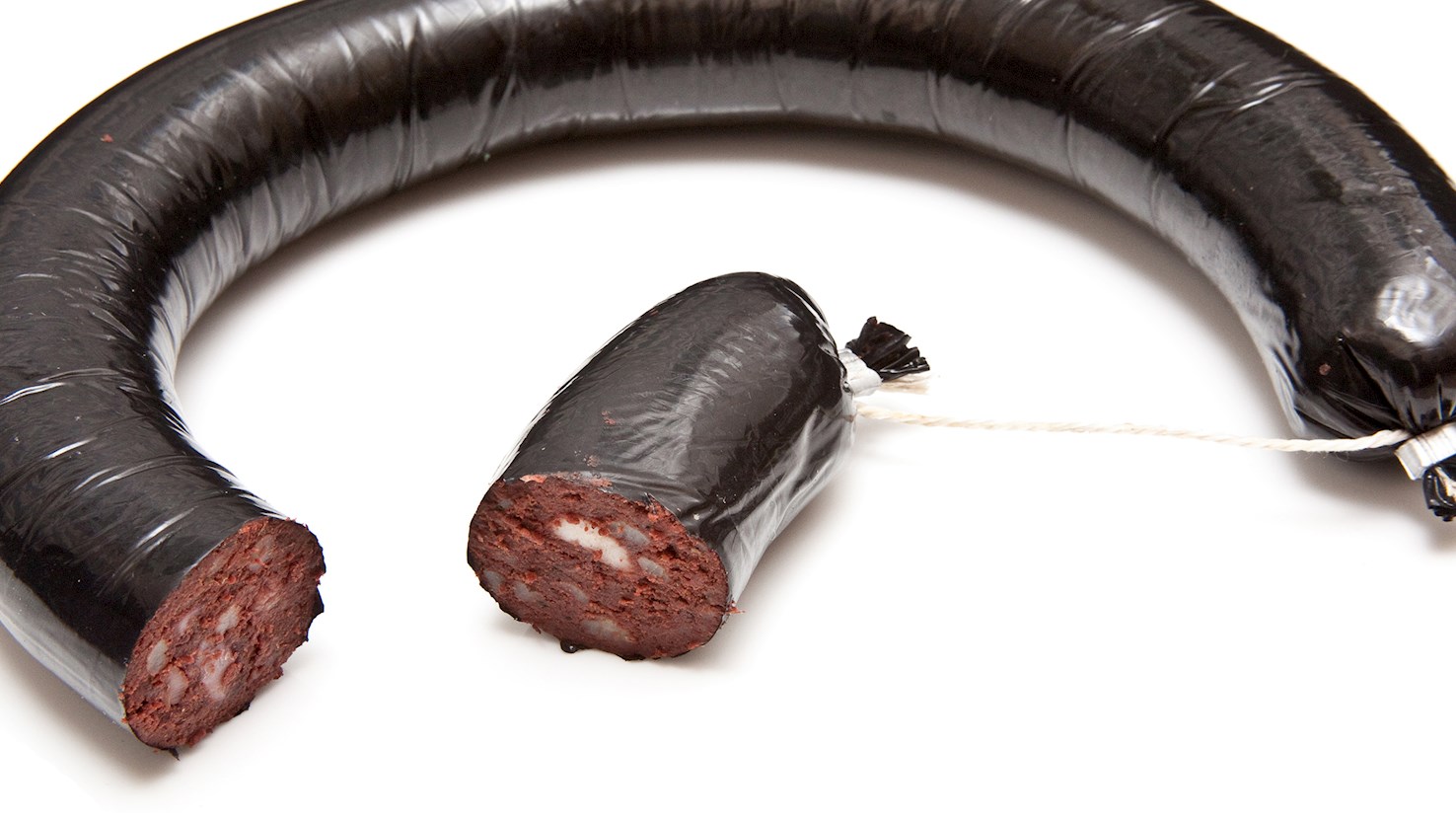
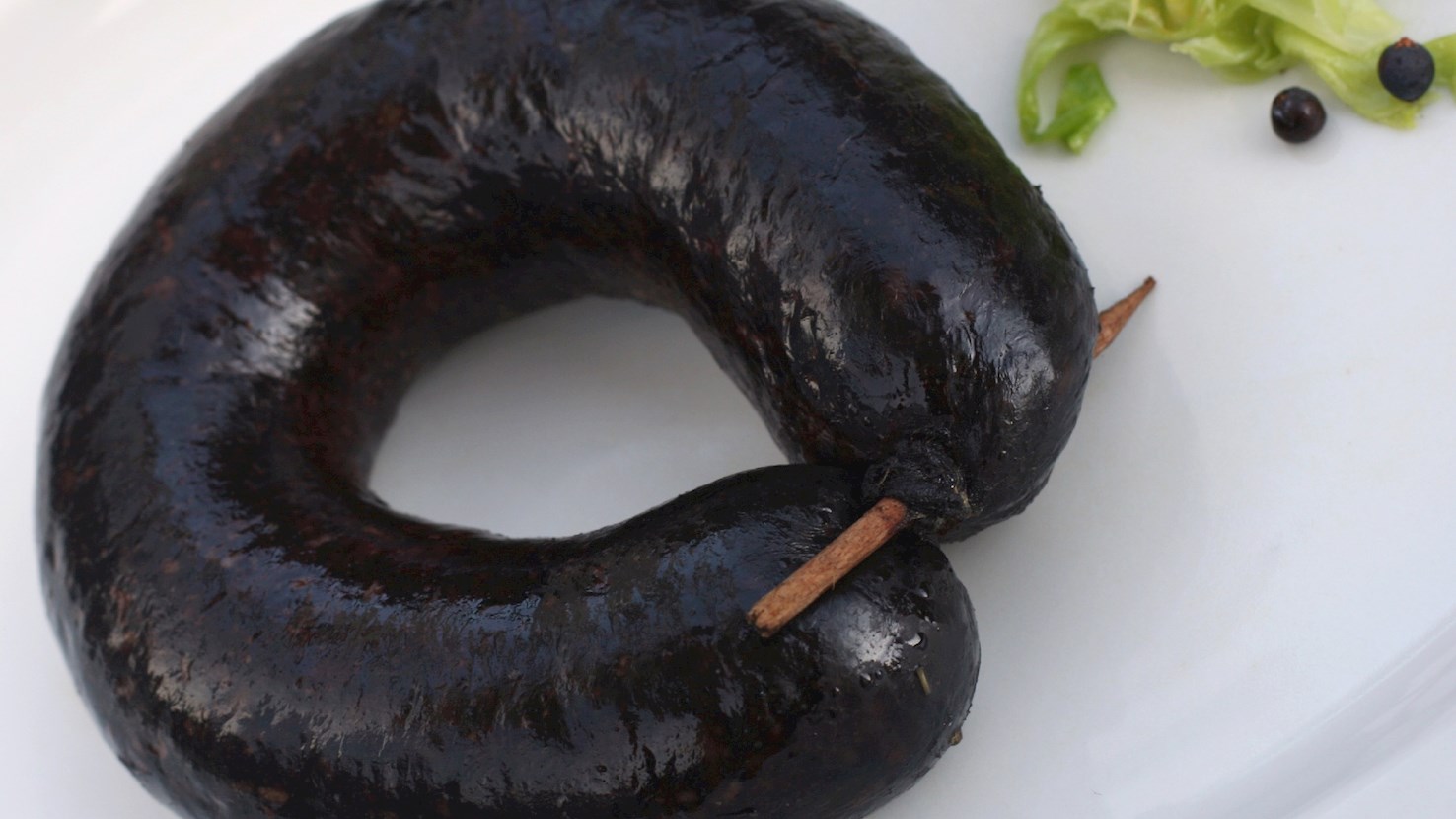
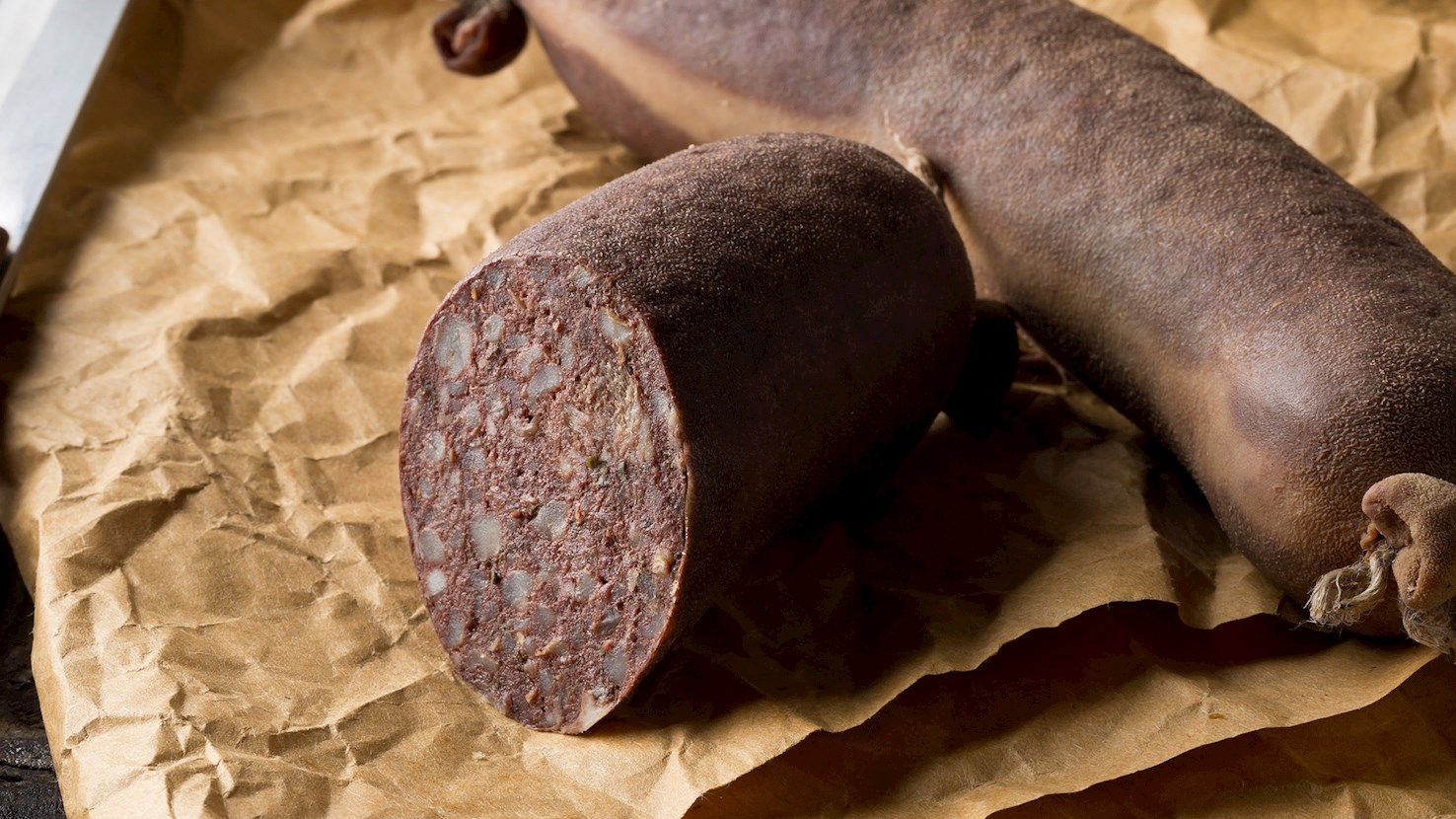
Morcilla dulce from the Canary Islands is a traditional blood sausage made with pig's blood, lean meat, bacon, sugar, almonds, raisins, garlic, spices like cinnamon and aniseed, and salt. It is a cherished part of the Canarian culinary heritage known for its unique sweet flavor and soft, crumbly texture. Whether served as part of a tapas platter, in stews, or grilled, Morcilla dulce offers a distinctive taste experience that reflects the rich and diverse food culture of the Canary Islands.
Black pudding is a type of blood sausage that originates from the British Isles, though similar versions exist across Europe. It is made by combining pig’s blood with fat or suet and a filler such as oatmeal or barley, then seasoning it with herbs and spices before being encased and cooked. The dish has long been considered both a practical way to use every part of the animal and a source of nourishment. Evidence suggests that blood sausages were made in many early agrarian societies, and the version that became black pudding became firmly established in the diets of rural communities where livestock was central to survival. To prepare black pudding, the blood is mixed with binders and seasonings such as pepper, onions, and sometimes allspice or cloves, depending on regional preferences. The mixture is stuffed into casings, simmered until firm, and then cooled. It can be sliced and fried, grilled, or crumbled into other dishes. In Ireland and the UK, it is often made with oats, lending it a distinctive texture and earthy taste. Some versions from continental Europe lean more toward smooth fillings with rice or other grains, but the British Isles’ variety is especially defined by its hearty consistency and savory balance. Today, black pudding is widely eaten in many ways. It is a classic part of a full Irish or English breakfast, fried and served alongside eggs, bacon, and toast. It can also be included in more elaborate meals, such as crumbled into stews, folded into potato dishes, or paired with scallops in modern restaurant cooking. The sausage pairs well with strong flavors, including mustard, apples, and sharp sauces that cut through its richness, and it is equally at home in rustic kitchens or on fine dining menus.
Krvavice are blood sausages produced mostly throughout continental Croatia, especially in the regions of Zagorje, Istria, Dalmatia, and Slavonija-Baranja. Apart from Croatia, the sausages are also commonly consumed in Slovenia and Serbia. They're made by cooking pork blood, skin, and offal with rice and either buckwheat, barley, or cornflour, unlike most other European blood sausages that use oats or oatmeal as fillers. However, there are numerous varieties of krvavice and every cook has his own recipe, so the ingredients may vary. The names also vary, and they're also called divenice, devenice, or kulenice. These sausages are traditionally consumed during winter when they are often accompanied by sauerkraut and a combination of boiled potatoes and sautéed onions known as restani krumpir.
Belonging to the category of cooked sausages, blutwurst is a famous German blood sausage with many regional varieties. It is predominantly made with pork and incorporates animal blood, fat, and meat, next to a wide variety of seasonings such as marjoram, allspice, and thyme. Blutwurst comes in various sizes, and many regional versions include barley, oats, or bread, while some varieties may even consist of diced bacon or innards. Since this blood sausage is typically cooked, it has a firm consistency and is commonly enjoyed as an appetizer alongside other cold cuts. It is usually shortly boiled or fried and served warm, often complemented by mashed potatoes or sauerkraut on the side.
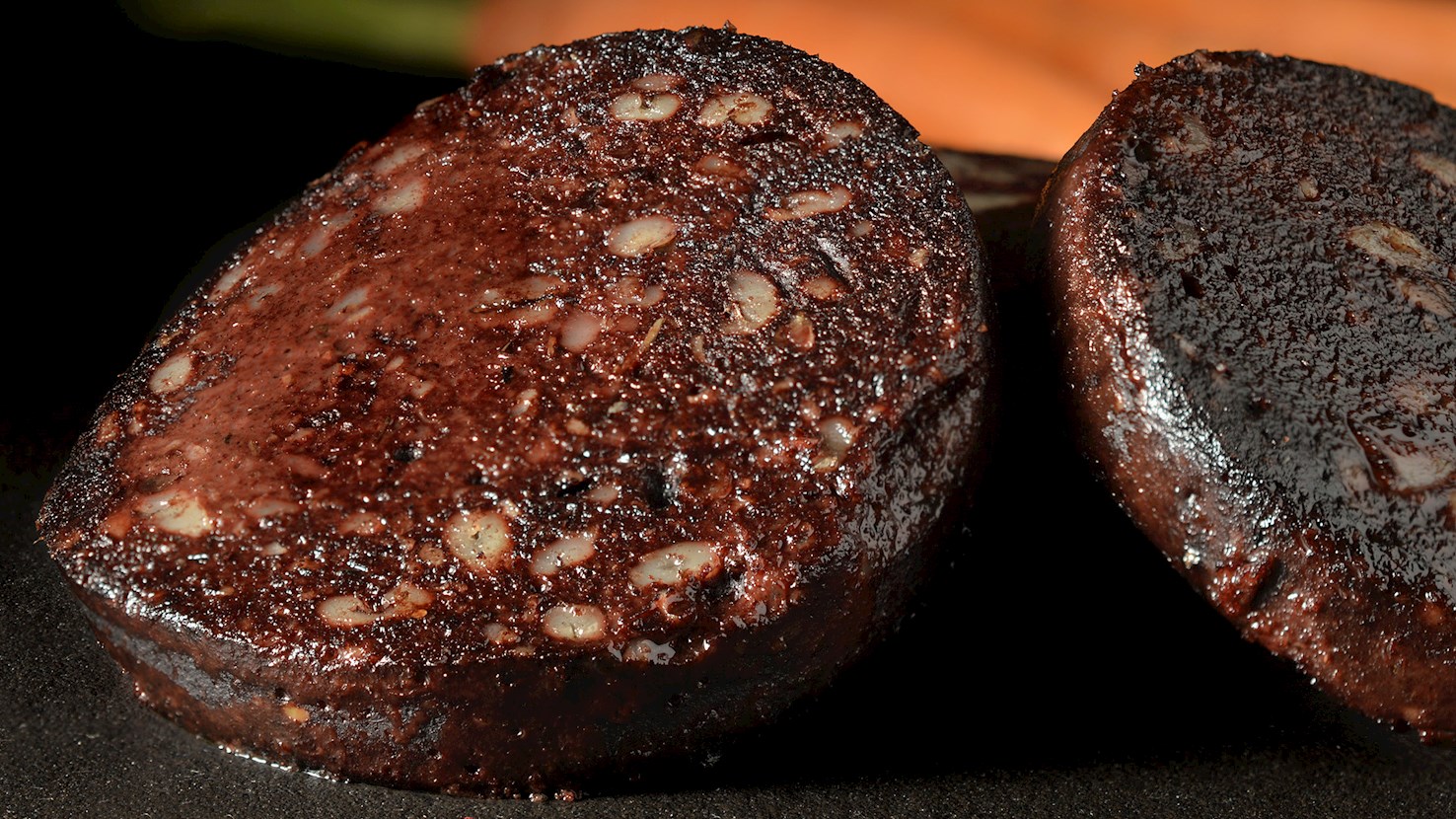
Sneem black pudding is a blood sausage produced in the village of Sneem in County Kerry, Ireland. It is made from fresh pig’s blood mixed with oatmeal, onions, suet, and seasonings, and is notable for being a set pudding rather than a cased one. The mixture is cooked and pressed into rectangular trays or blocks, then sliced for serving, giving it a distinct flat shape unlike the more common sausage-style puddings found elsewhere in Ireland. Sneem black pudding is a recognized regional specialty and has received Protected Geographical Indication (PGI) status from the European Union, acknowledging its local production methods and distinct character linked to the area. The production of blood pudding in Sneem dates back to small-scale farmhouse practices where pig slaughtering was a communal and seasonal activity. Local families used every part of the animal, and the blood was combined with available grains and fat to create a sustaining food that could be stored and cooked easily. Over time, the method became associated specifically with the Sneem area, where pudding was prepared in trays rather than casings, reflecting both convenience and resource use in domestic kitchens without access to butchery equipment. Local butchers and home producers maintained the same approach through the twentieth century, and Sneem’s pudding gained reputation through regional fairs and markets, eventually being sold commercially in the wider Kerry region. Preparation involves collecting fresh pig’s blood and mixing it with finely chopped onions, oatmeal, suet, salt, pepper, and sometimes a small amount of spice. The mixture is poured into baking trays and cooked slowly until set, then cooled and sliced. This process produces a dense but tender texture and allows the oatmeal to absorb the blood evenly, giving the pudding its dark, smooth consistency. The absence of a casing makes it easy to handle and portion, and the texture differs from sausage-style black pudding by being slightly crumbly but cohesive. Some producers still cook it in cast-iron trays, maintaining a specific flavor profile influenced by the method and the balance of salt and grain. Sneem black pudding is usually eaten fried or grilled as part of a breakfast plate, often alongside white pudding, bacon, and eggs. It can also appear in starters, salads, or as an element in more elaborate dishes in Kerry restaurants. The pudding’s mild, clean flavor allows it to pair well with both savory and sweet accompaniments, such as apple compote, mustard, or soft goat’s cheese. It is eaten across Ireland but remains closely tied to its village of origin, where it continues to be made by a few producers using local ingredients and long-established recipes. Beverages that suit Sneem black pudding include Irish stout, which complements its earthy richness, or a dry cider, whose acidity offsets its smooth and slightly nutty texture.
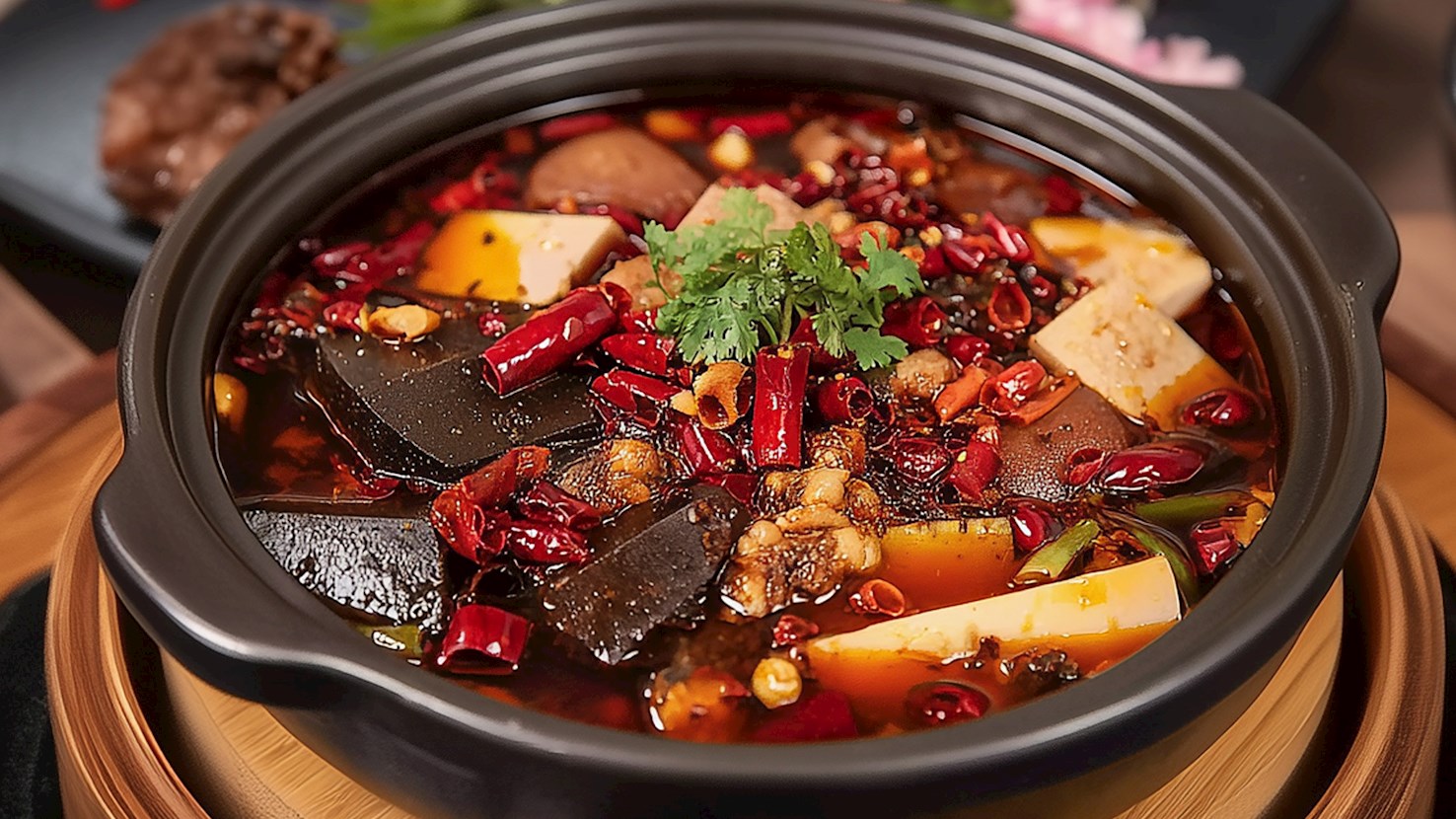
Máoxuèwàng is a spicy Sichuan hotpot-style dish made with a mix of meats, offal, and vegetables cooked in a deep, crimson broth flavored with chili, Sichuan peppercorn, and bean paste. The name roughly means “boiled blood and tripe in chili soup,” reflecting its use of duck or pig blood curd and a variety of ingredients simmered together in one bowl. It comes from Chongqing, in the heart of the Sichuan region, where the cuisine is defined by bold heat, complex layers of spice, and an emphasis on texture. The dish began as a humble street food, prepared by workers and boatmen along the Yangtze River who used inexpensive cuts of meat and animal offal to create a rich, hearty meal. The broth’s base of chili and bean paste served not only to add flavor but also to preserve and mask the strong taste of organ meats. Over time, cooks began refining the dish, balancing the ratio of chilies, oil, and spices, and adding blood curd for a smooth, custard-like texture that complemented the chewiness of tripe and the tenderness of meat slices. In later years, máoxuèwàng moved from local eateries to restaurants across China, becoming a staple of Sichuan hot dishes known for their heat and depth. Preparation begins by simmering a broth made with Sichuan bean paste (doubanjiang), dried chilies, and Sichuan peppercorn in generous amounts of oil to release aroma and color. Garlic, ginger, and fermented black beans are added for complexity. Once the base is rich and fragrant, sliced beef, duck blood curd, beef tripe, and other ingredients such as luncheon meat, tofu skin, or bean sprouts are blanched and layered in a large bowl. The boiling chili broth is then poured over the ingredients, cooking them instantly. The dish is finished with a scattering of dried chilies, peppercorn, garlic, and scallions, followed by a final pour of sizzling hot oil that releases the spices’ aroma into the air. The result is a dish that is vivid in appearance and layered in taste, numbing, spicy, and aromatic all at once. Máoxuèwàng is served as a large communal dish, usually placed at the center of the table and shared with others. It is eaten hot, often accompanied by plain rice or steamed buns that absorb the spicy broth. Cold side dishes such as cucumber salad or marinated black fungus are commonly served alongside to contrast its intensity.
Timoleague brown pudding is a type of blood pudding produced in and around the village of Timoleague in County Cork. It is a regional variant within the Irish pudding family, made from pig’s blood, cereal, fat, onions, and spices, but known for its lighter brown color and milder seasoning compared to darker black puddings. The distinctive hue comes from the balance of ingredients and the specific cooking process, which produces a smooth, slightly grainy texture and a savory, balanced flavor. It is most closely associated with the butchers and small-scale producers of West Cork, where local pork and oats form the basis of its composition. The production of brown pudding in Timoleague developed alongside the region’s established curing and pork-processing industries, which date back to the nineteenth century. Local butchers in Cork and surrounding areas became known for their range of puddings (white, brown, and black) each varying slightly by the ratio of blood, grain, and spice. In Timoleague, the brown pudding became a distinctive middle ground between white and black varieties, using some blood for richness but less than a black pudding, resulting in a lighter color and a more delicate taste. Over time, it became a recognized specialty of the area, and the village name became associated with this particular style of pudding. Preparation begins with fresh pig’s blood mixed with pinhead oatmeal, chopped suet or pork fat, and finely diced onions. Seasonings such as salt, pepper, and mild spices, often nutmeg or allspice, are added. The mixture is blended thoroughly and then filled into natural casings before being gently boiled or steamed until firm. After cooking, the puddings are cooled, sliced, and fried or grilled before serving. The oatmeal gives the finished product a soft, moist consistency, while the moderate use of blood contributes to its characteristic brown shade rather than a deep black tone. The restrained spice mix and balanced fat content allow the flavor of the grain and meat to remain prominent without excessive seasoning. Timoleague brown pudding is eaten throughout Cork and neighboring counties, usually sliced and fried as part of a cooked breakfast or paired with eggs, bacon, and bread. It also appears in contemporary menus, often served with apple purée, mustard cream, or leafy salads. The pudding pairs well with Irish stout, whose roasted malt flavors complement the grain and mild spice, or with dry cider, which balances its richness.
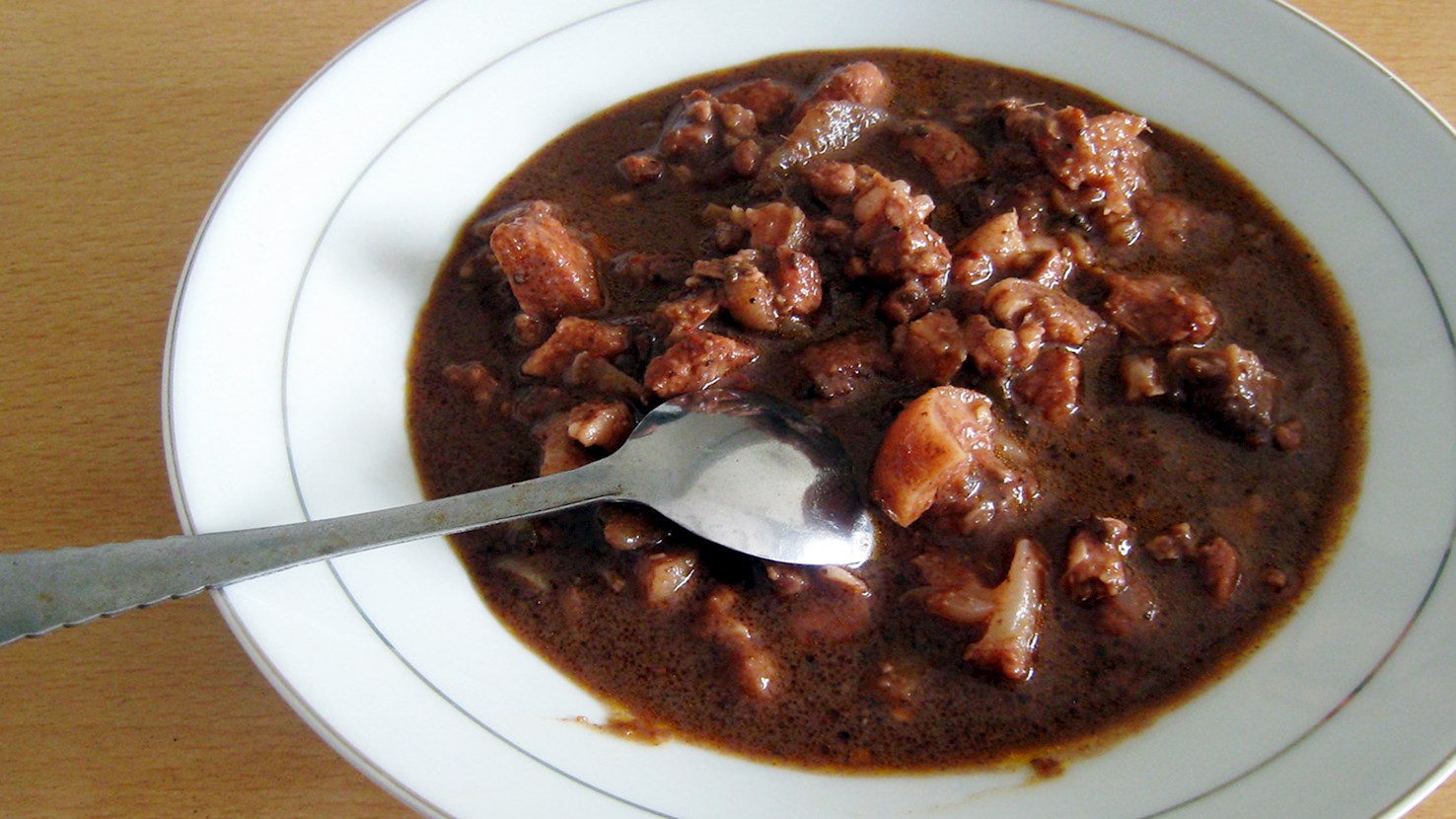
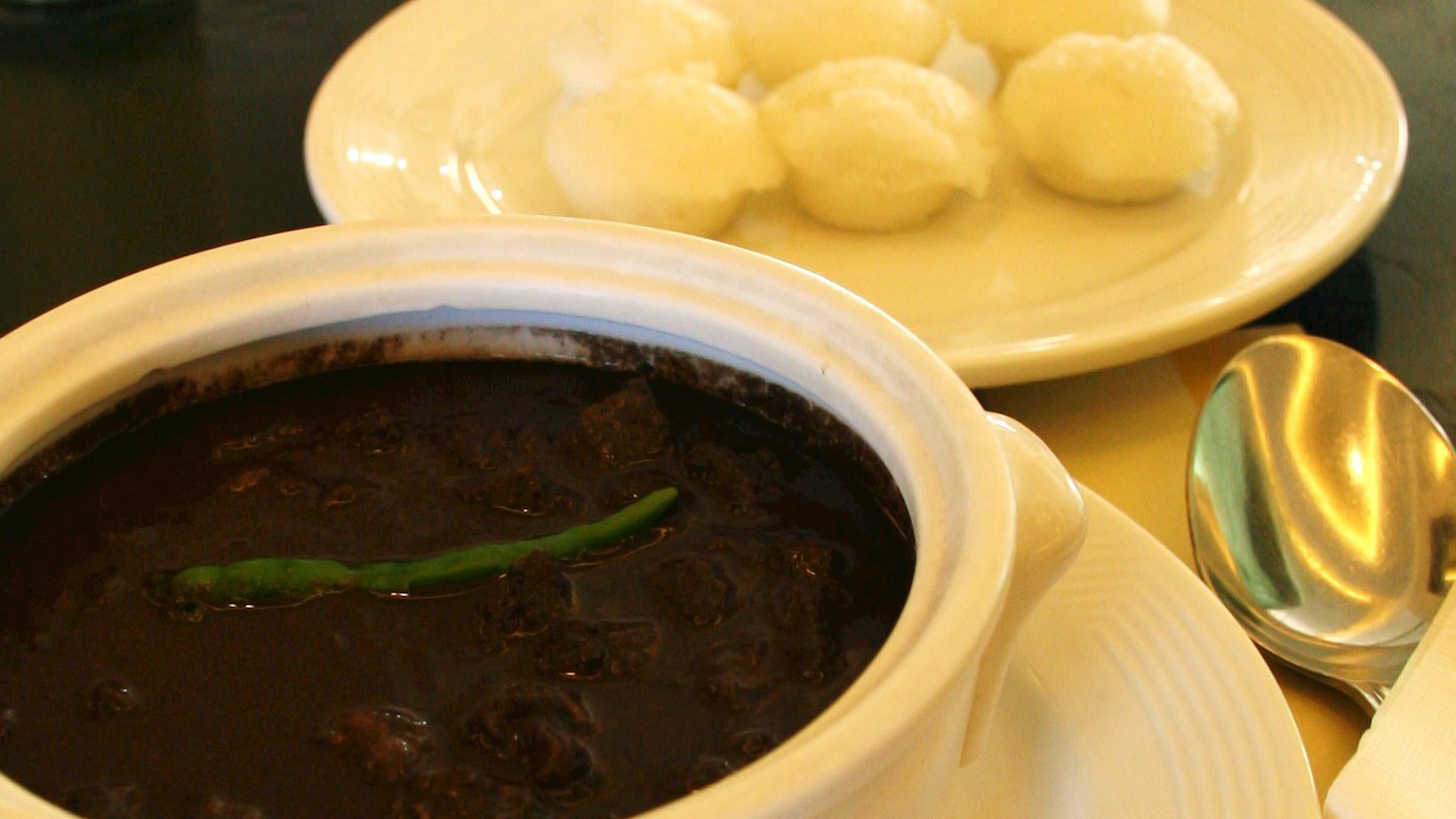
Saksang is a savory Indonesian stew which is usually served on special occasions. It is traditionally made with pork, which is cooked in blood and fiery spices. The tradition of preparing saksang is believed to have originated among the Batak people of North Sumatra. The most common main ingredient is pork; however, the varieties which include dog or water buffalo meat are also frequent among the Batak culture. Due to the addition of blood and numerous different spices, the dish has a unique spicy and sweet flavor and a distinctive dark-brown color. Batak people consider saksang to be their ceremonial dish and a traditional meal served at weddings. If not served at traditional ceremonies, saksang can be found at many traditional Batak restaurants throughout North Sumatra. In restaurants, the dish should be ordered a day in advance, and it is usually served with boiled vegetables and rice. The head of the animal is specially prepared and included in the ceremony during prayers and blessings.
This traditional German blood soup has its origins in the northern parts of the country and is typically associated with the Schleswig-Holstein region. It was mainly prepared during pig slaughter, when fresh blood was collected and cooked with pork, vinegar, onions, and spices such as bay leaves, peppercorns, and cloves. Though it is rarely found on restaurant menus, it is considered a delicacy that usually comes served alongside potatoes or dumplings.
In Chile's countryside and rural areas, there is an unusual snack called ñachi. It is made with the blood of freshly killed lambs, goats, or pigs. The blood is combined with salt, coriander, lemon juice, and smoked pepper, and the concoction is then left to coagulate into a jelly. Once set, ñachi is cut into cubes and served with bread on the side, although it can also be consumed while still in its soup-like state. This snack is a staple of the Mapuche people, and the word ñachi means blood in Mapudungun language.
TasteAtlas food rankings are based on the ratings of the TasteAtlas audience, with a series of mechanisms that recognize real users and that ignore bot,
nationalist or local patriotic ratings, and give additional value to the ratings of users that the system recognizes as knowledgeable.
For the “33 Best Rated Dishes with Pig’s Blood” list until May 22, 2026, 989,161 ratings were recorded, of which 646,969 were recognized by the system as legitimate.
TasteAtlas Rankings should not be seen as the final global conclusion about food. Their purpose is to promote excellent local foods,
instill pride in traditional dishes, and arouse curiosity about dishes you haven’t tried.