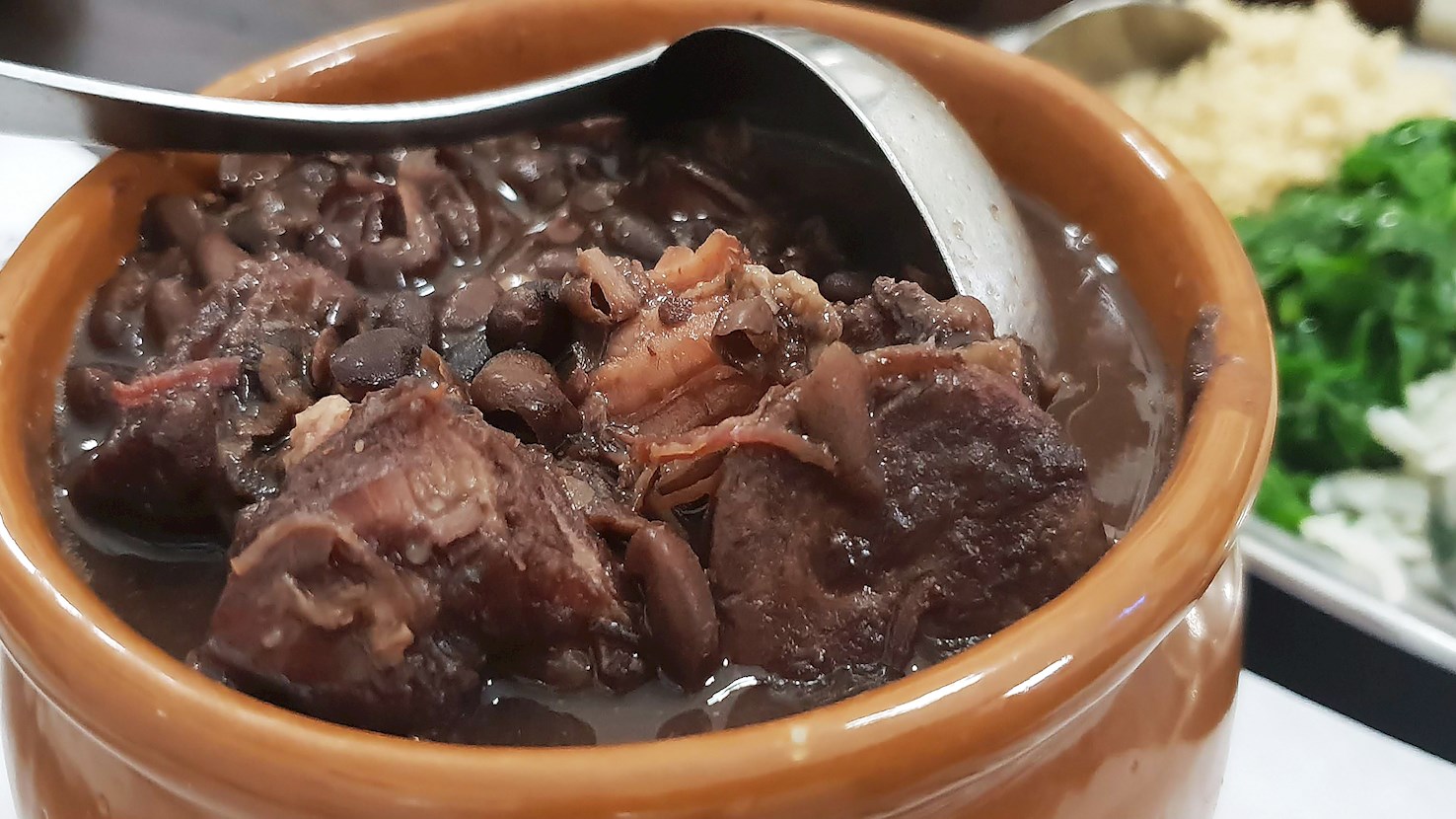
Feijoada or feijoada completa is Brazil's national dish, a hearty stew featuring pork and black beans. The dish is consumed throughout the country, and every family in Brazil has their own, special recipe. Sautéed greens, cheese rolls, rice, and fresh, sliced oranges are served as an accompaniment to the smoked pork and richly flavored black beans. Traditionally, it is prepared for Saturday lunch, so that the consumers may sleep it off. The beans are flavored with onions, tomatoes, coriander, and garlic, while pork meat can be additionally enriched with dried beef and smoked pork sausages. Before the main meal, consumers are offered caldinho de feijao, a bean broth served in shot glasses or small ceramic cups and garnished with pork rinds known as torresmos. The name feijoada is derived from the Portuguese word for beans, feijão, and it probably originated in the 1600s in Recife, on sugar plantations built by the Portuguese colonists, although some believe that it was created in Rio de Janeiro. The Brazilian version usually uses black beans, while the Portuguese one typically uses white or kidney beans. Feijoada is artfully displayed on platters full of ingredients, so that the consumers may choose their favorites and enjoy them at a leisurely pace. The meats are sliced and placed on platters; the beans served in large serving bowls, and the accompaniments include Brazilian rice, kale, cassava with butter or hard-boiled eggs, sliced oranges, and hot pepper-lime sauce. During the meal, cachaca, a sugarcane brandy and Brazil's most popular liquor, is served as a traditional accompaniment to feijoada.
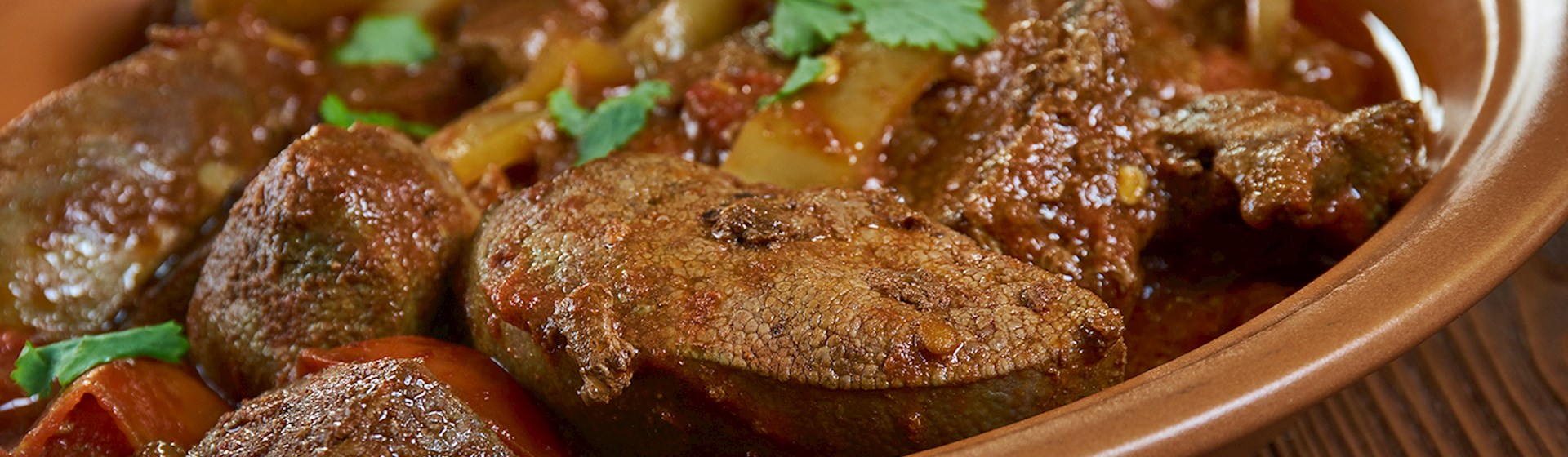
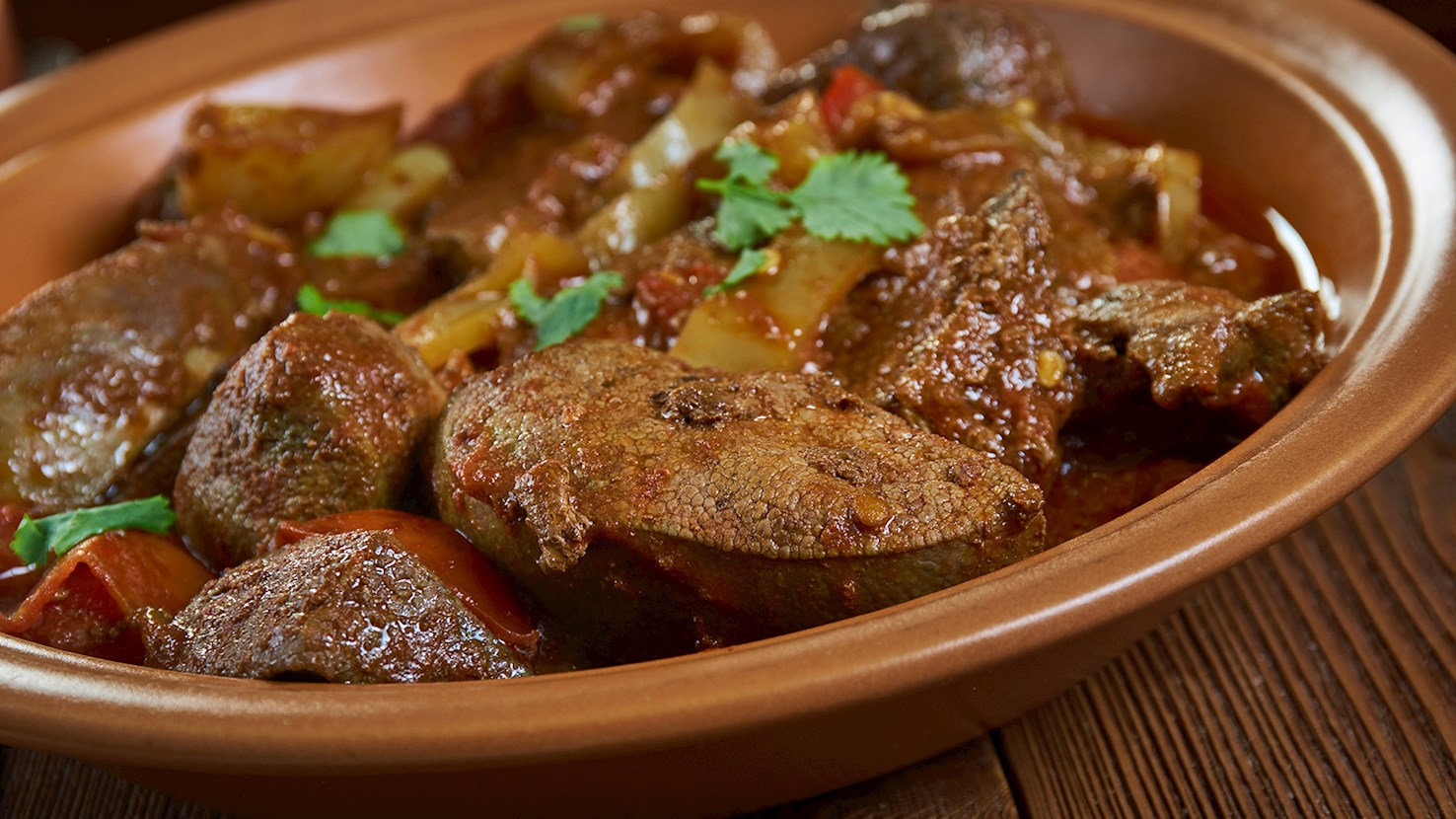
Drob po selski, meaning liver cooked village-style, is a traditional dish that is made by cooking liver with vegetable chunks and (optionally) mushrooms in a clay earthenware pot. Pieces of chicken, beef, or pork liver are first roasted with sautéed onions, carrots, peppers, garlic, tomatoes, and mushrooms, and they are then typically simmered with some water and flour. Wine, tomato purée, and spices are often added to the dish for extra flavor. In Bulgaria, the dish is a typical lunch or dinner meal that is usually garnished with freshly chopped parsley and eaten with slices of homemade bread on the side.
Braunschweiger is a German dish using liverwurst sausage as the main ingredient. The sausage is first sliced into smaller pieces, then combined with smoked meat (such as bacon) in a pan. The two are fried together until they develop a nice, browned color. Braunschweiger is typically served as a main meal, and it is often accompanied by mashed potatoes, vegetables, or pasta.
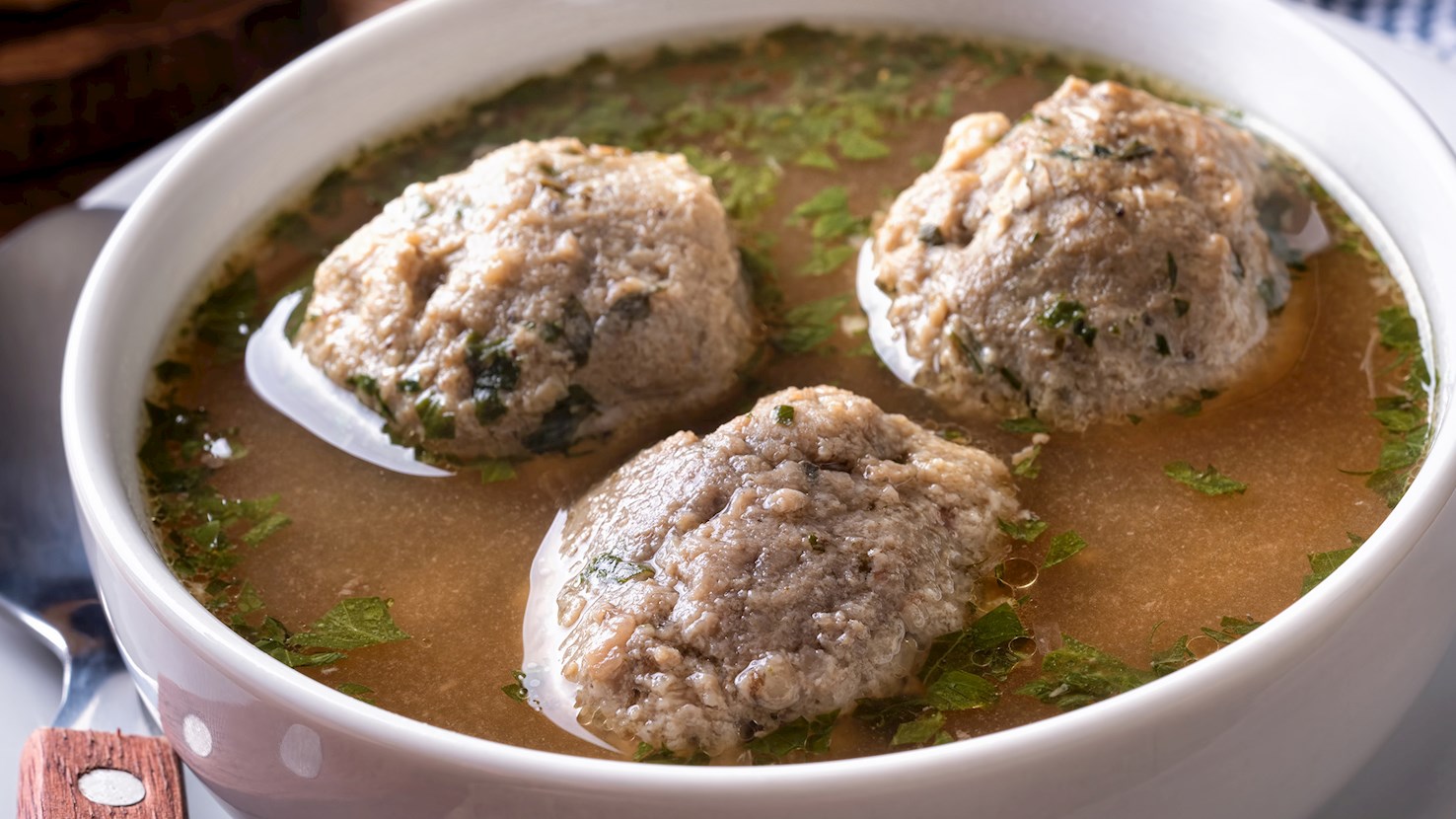
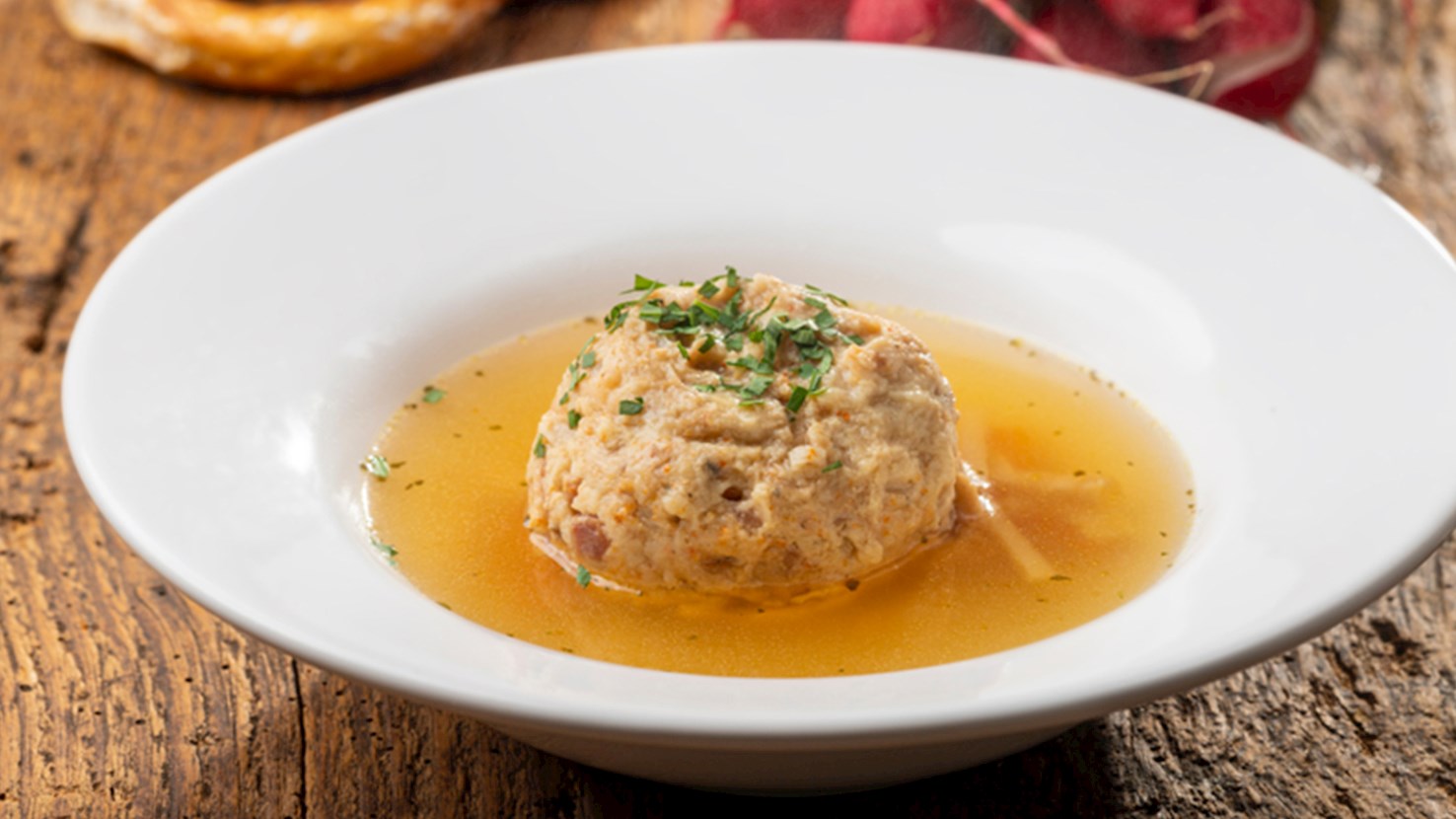
Leberknödel is a type of liver dumpling originating from southern Germany and Austria, especially associated with the regions of Bavaria, Swabia, and parts of Austria such as Salzburg and Upper Austria. The dish consists of finely ground liver, commonly from beef or pork (sometimes even veal), combined with stale bread rolls soaked in milk, eggs, onions, fresh herbs, and spices to create a dense, flavorful mixture that can be shaped into large, round dumplings. The liver is typically minced or passed through a grinder until smooth, then carefully mixed with the other ingredients to form a cohesive mass. Once shaped, Leberknödel are gently simmered in salted water or clear broth until firm and cooked through. These dumplings are commonly served in two main ways. They can be presented in a clear beef broth as a soup, known as Leberknödelsuppe, where the dumpling absorbs some of the broth’s flavor while adding richness to the liquid. Alternatively, they are served as a more substantial main dish accompanied by sauerkraut and boiled or mashed potatoes. The flavor is distinctly savory and robust, reflecting the use of liver and the aromatic additions of marjoram, parsley, and occasionally nutmeg or pepper. Preparation requires attention to achieve the correct texture, which should be tender but not falling apart when cooked. Leberknödel has a long history as a practical and nourishing food in rural and urban settings, where no part of the animal was wasted and organ meats were valued for their nutritional content. Today, it appears in both everyday cooking and regional restaurant menus, especially in southern Germany and Austria, where it remains an example of regional comfort food made with simple, accessible ingredients. The dumplings are typically prepared fresh, although they can also be made in advance and reheated in broth.
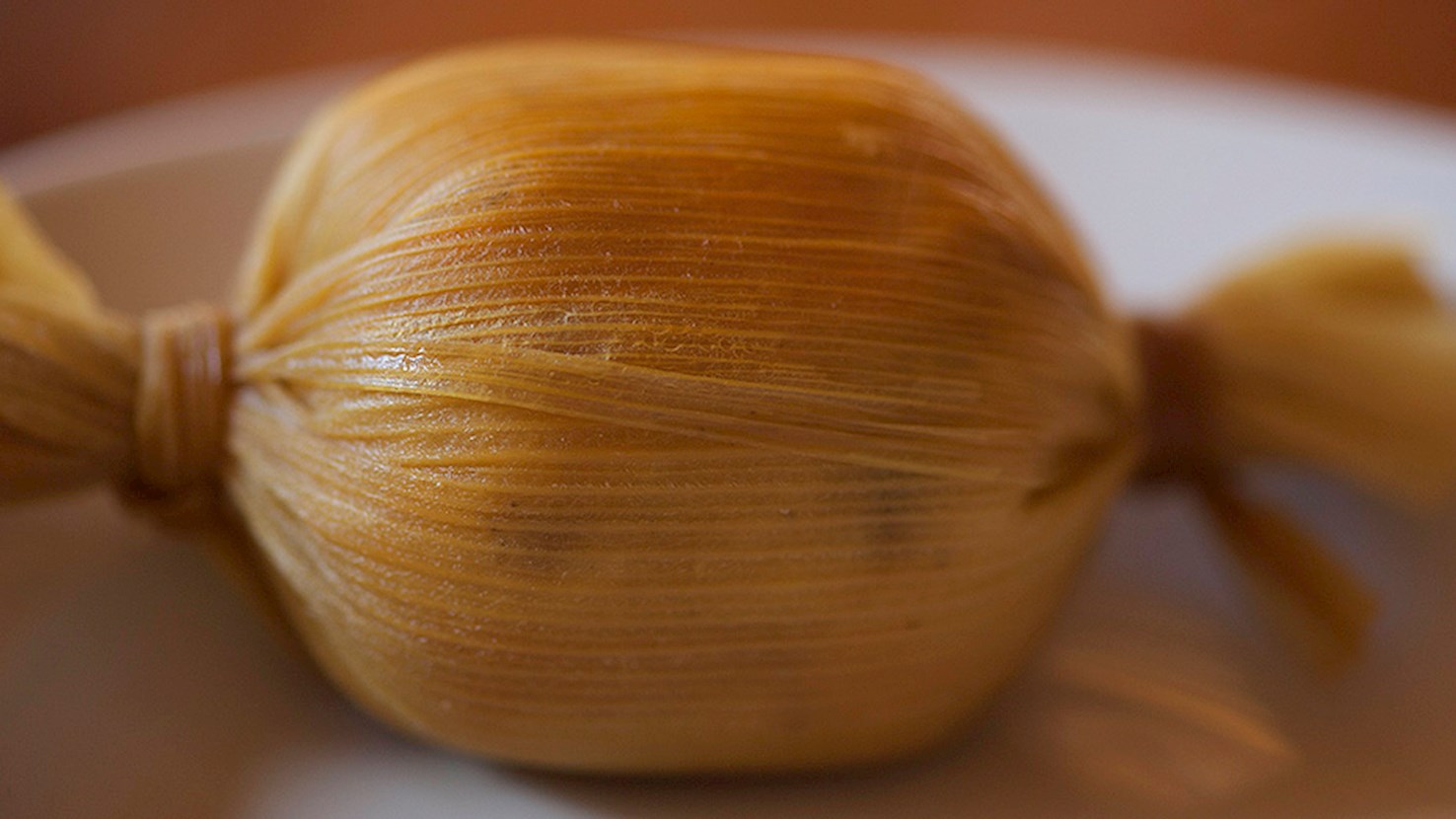
This tamale variety originates from the town of Salta in Argentina, hence the name. Fresh corn husks called chalas are filled with a delicious mixture of corn flour and shredded meat – either from boiled lamb or pork head. These tamales are often enriched with the addition of onions, pimentón, and ají peppers. When assembled, tamales salteños are boiled, then removed from the husks and consumed warm.
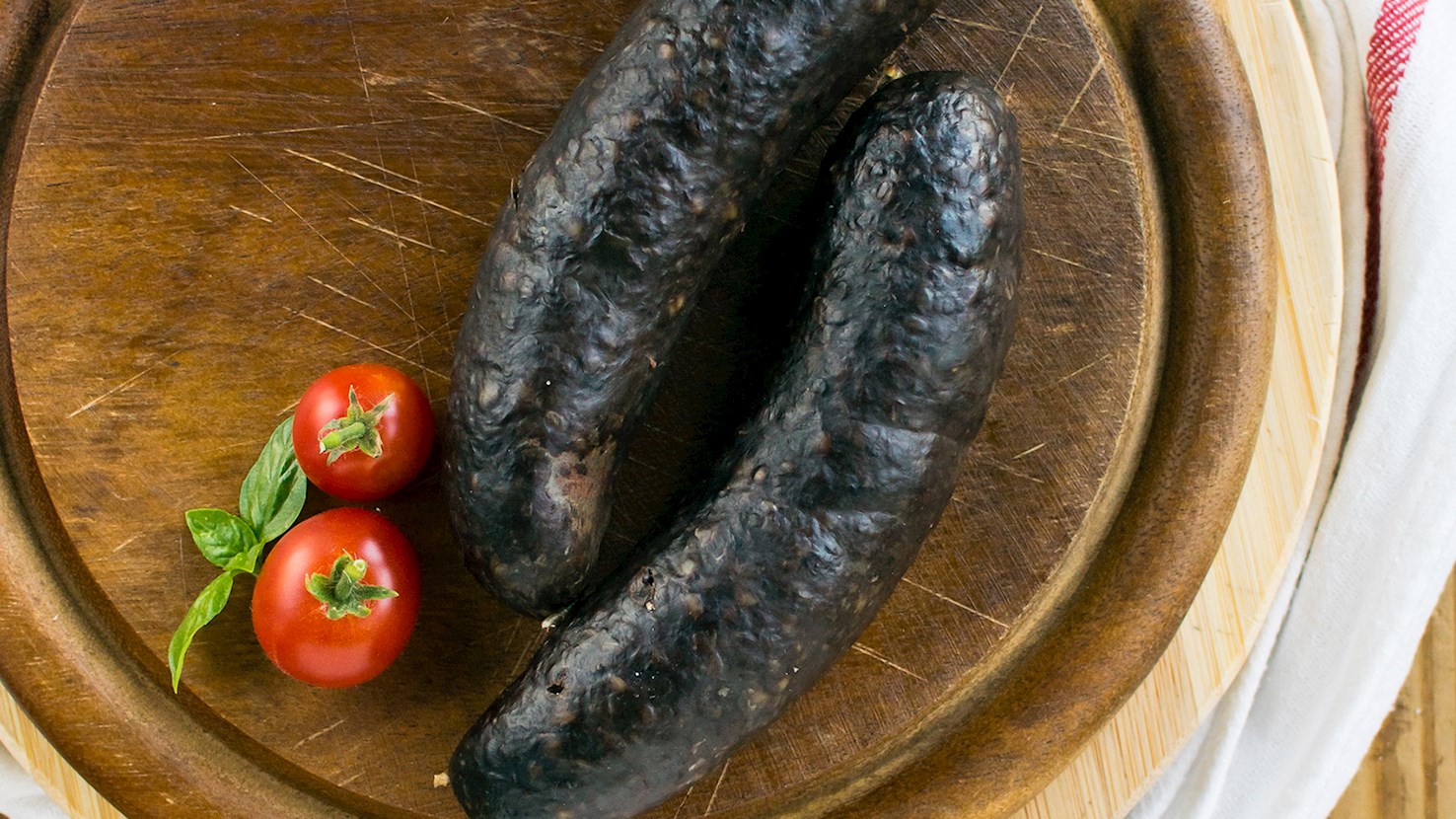
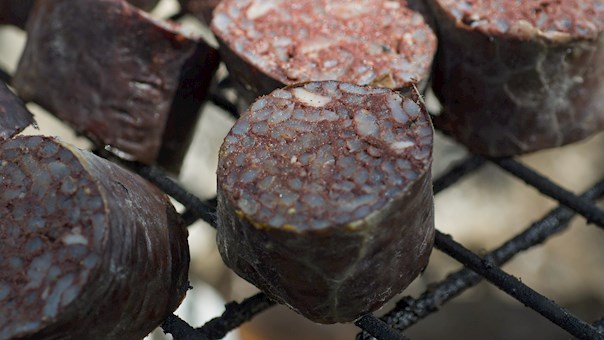
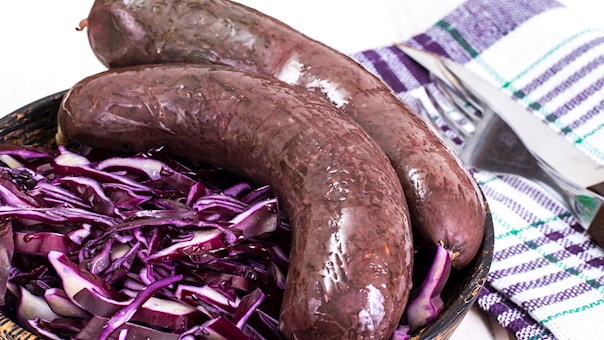
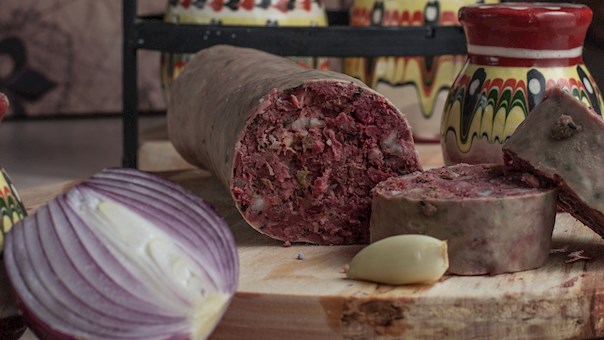
Hurka is a popular Hungarian sausage consisting of ground pork and pork liver, rice, and onions. There are two main varieties: májas hurka, made with liver and rice, and véres hurka, made with blood, rice, and seasonings. It is recommended to pan-fry or grill the sausages and enjoy them with fresh bread, sauerkraut, potatoes with parsley, and mustard, or alternatively, pickled vegetables such as cucumbers and peppers. Hurka pairs extremely well with a glass of cold beer on the side.
Leberknödelsuppe is a traditional and Austrian soup featuring liver dumplings. The dumplings, or "leberknödel," are made from ground liver (typically beef or pork), stale bread rolls (or bread), onions, eggs, and various herbs and spices. These ingredients are mixed together, shaped into balls, and then gently cooked in a clear broth, usually beef or vegetable. The result is a rich, hearty soup with a robust flavor, ideal for cold weather. Leberknödelsuppe is often served as a starter in traditional meals and is cherished for its comforting and nourishing qualities.
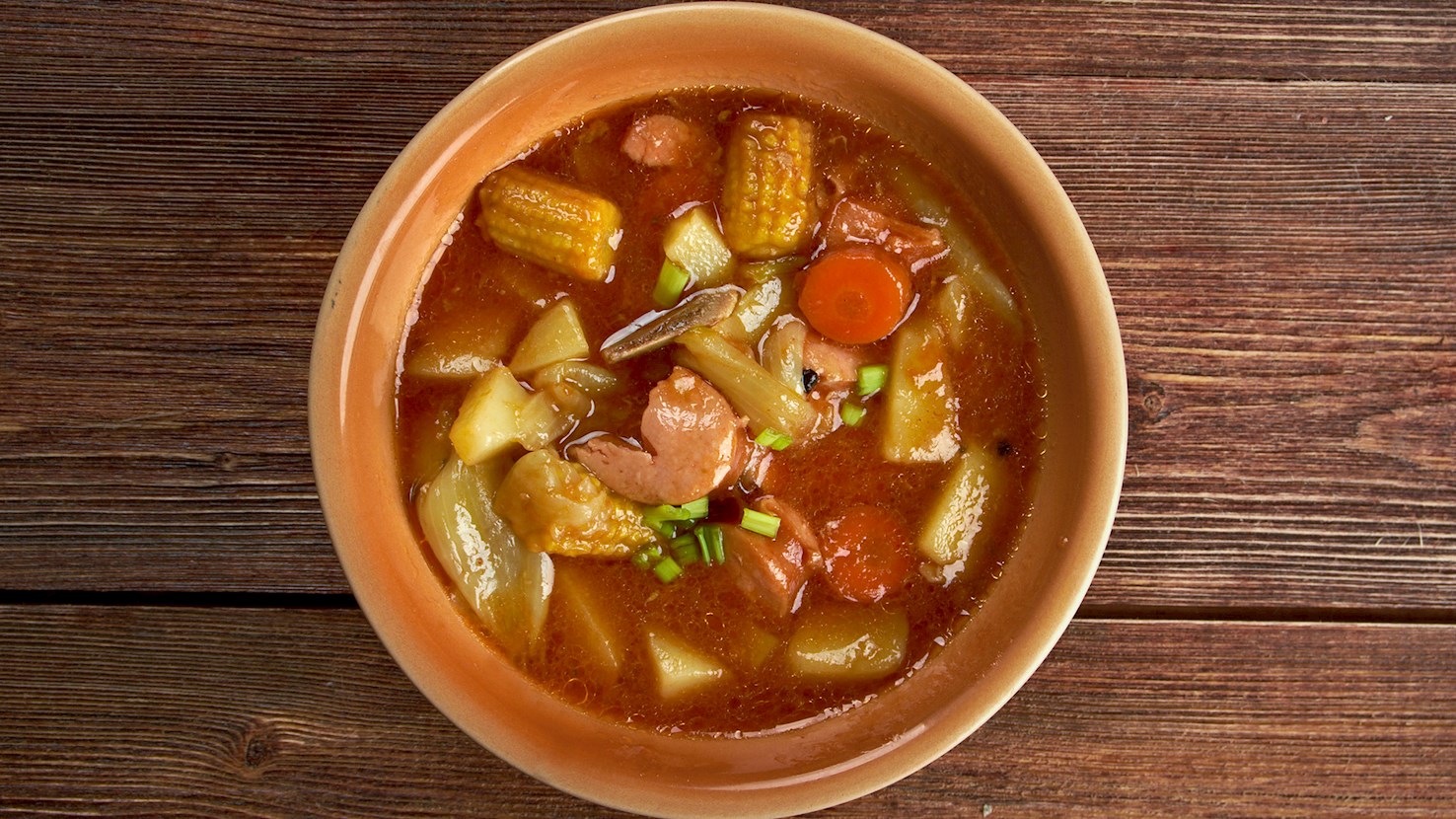
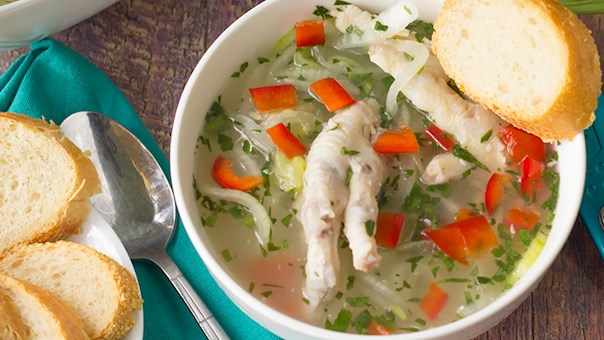
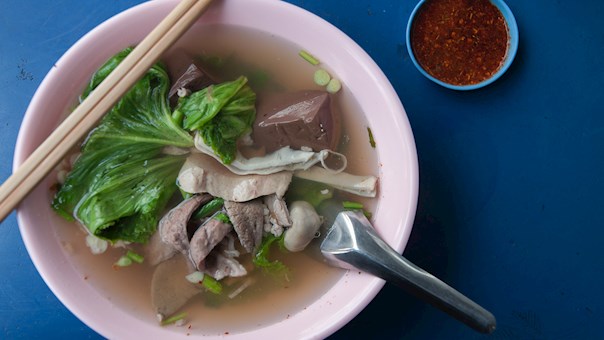
Sopa de mondongo is a term that is widely used all across Central and South America when referring to a hearty tripe and vegetable soup. The star of the dish is beef or pork tripe, the rather tough edible part of animal stomach which is cut into smaller pieces and cooked with other ingredients in a flavorful broth. Different versions of the soup are found all across Latin America, where it has been adapted with locally available ingredients and spices. Typically, sopa de mondongo employs plain and sweet potatoes, cassava, corn, cabbage, plantains, onions, sliced avocado, and generous amounts of chopped cilantro, which is used as a garnish. It is often spiced with cumin and the authentic Latin American spice called achiote. Local varieties commonly include additional ingredients such as lean pork meat, pork feet, Columbian chorizo sausage, and animal bone marrow. Because of its nutritious ingredients, it is usually regarded as a complete meal that is mainly served alongside white rice. Sliced lemon or lime wedges and local tortilla varieties such as arepa in Colombia are often served on the side. Unusual additions may include raisins or capers in Puerto Rican versions, or peanut sauce in the Ecuadorian version, popularly called guatica. In many Latin American countries, sopa de mondongo is believed to have healing properties, and it represents a traditional dish that is usually served for lunch or in the early hours after a night of clubbing.
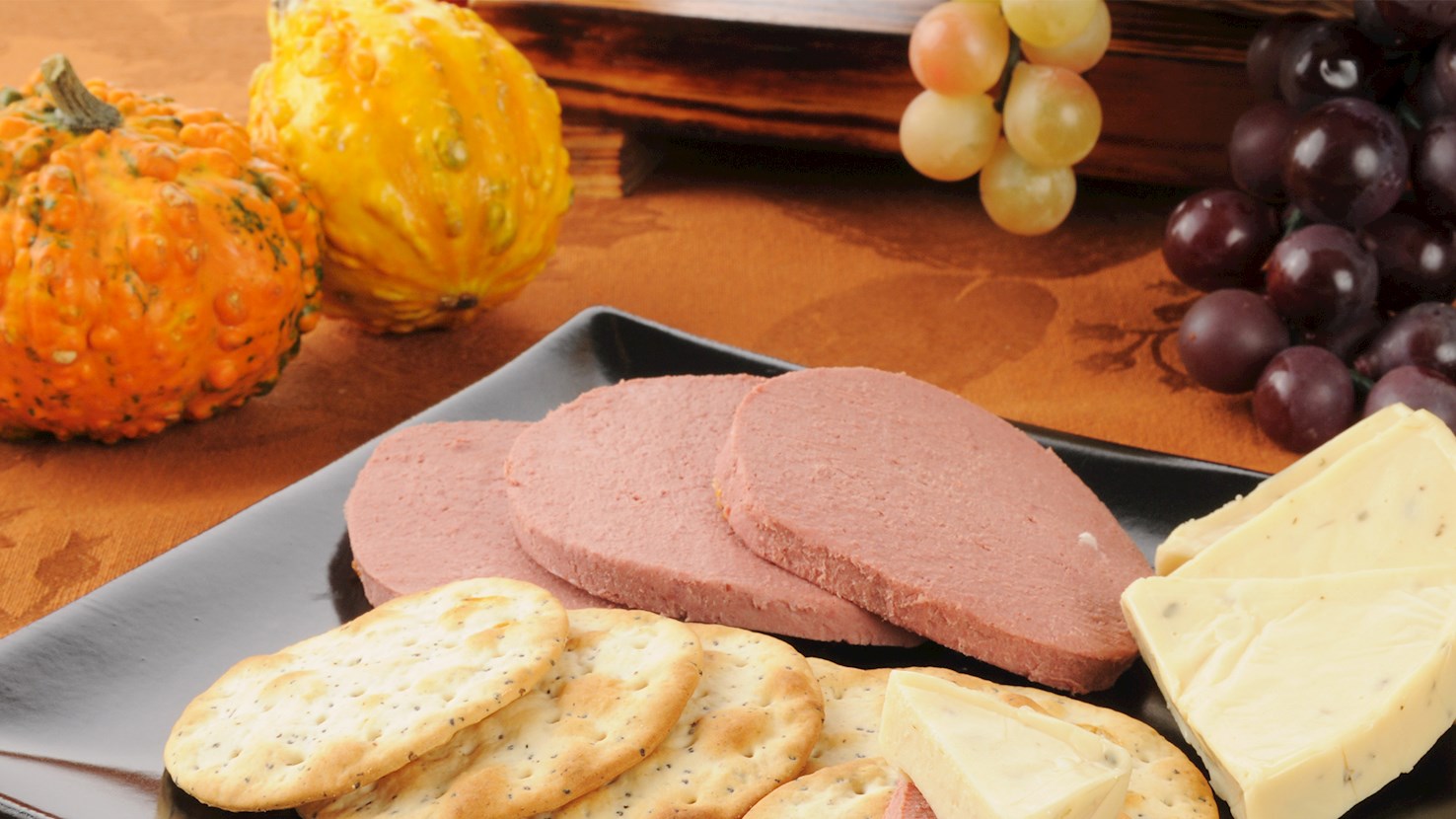
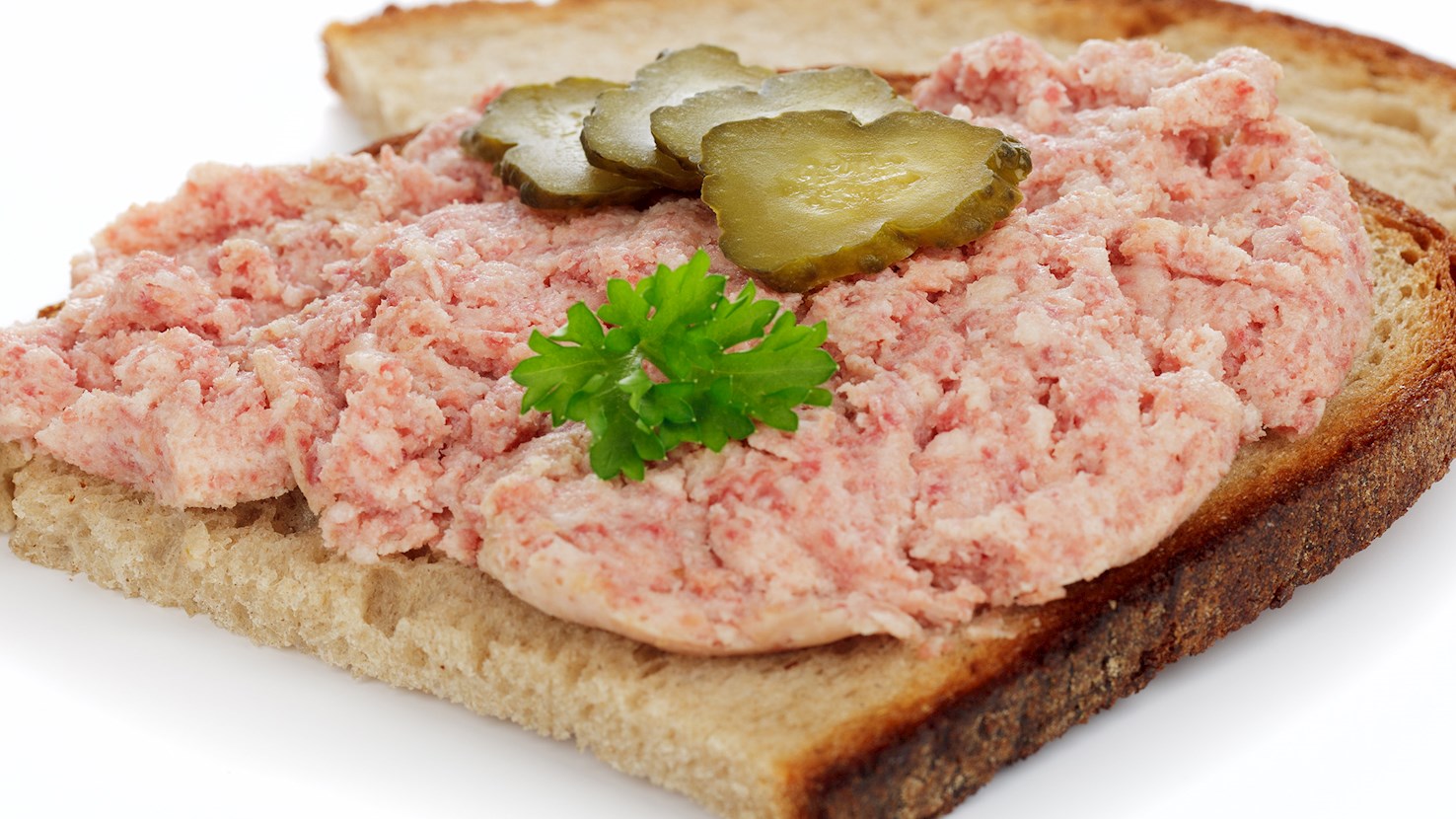
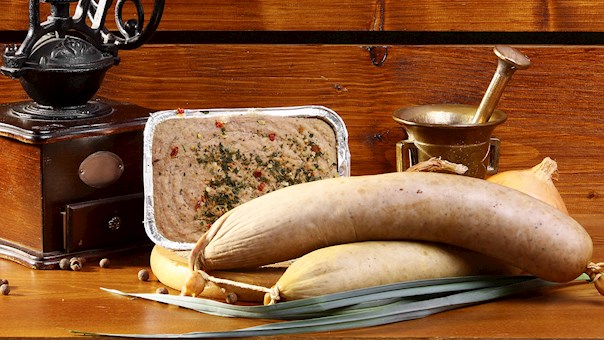
Leberwurst is a spicy German sausage consisting of a combination of ground pork liver, onions, and spices. The sausage is traditionally consumed with sauerkraut, although it can also be used in sandwiches, where leberwurst is sliced and paired with cheese, mustard, pickles, and bread. It might be cooked, but most leberwurst varieties are spreadable and can be consumed uncooked. Apart from Germany and Austria, this sausage is popular in many other countries such as Slovenia, Serbia, and Romania, and today there are many varieties of leberwurst, with additions such as mushrooms and cowberries.
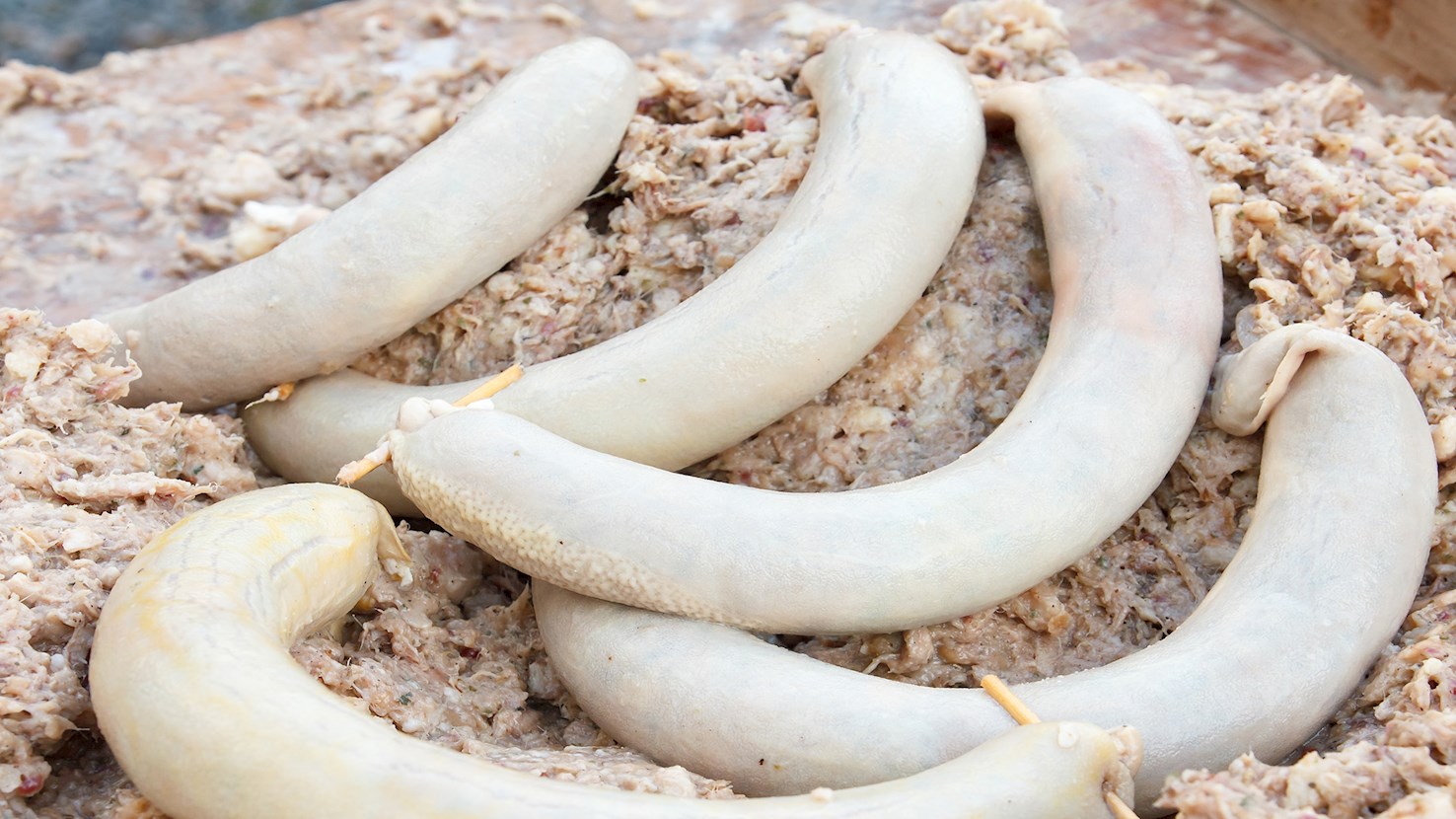
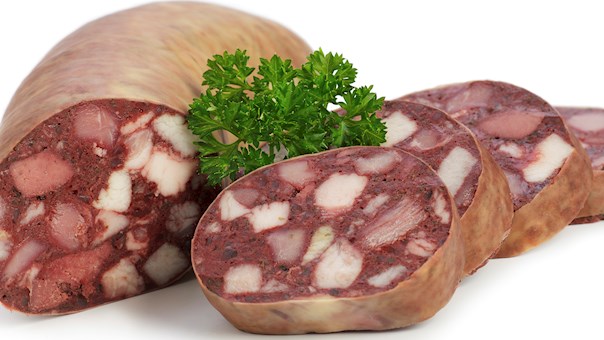
Jitrnice are one of the most common pork sausages in the Czech Republic. Although there are numerous regional varieties, they mostly consist of pork cuts, various internal organs, and pork liver. Depending on the tradition, some prefer to incorporate barley or soaked wheat buns in the basic mixture. The sausages are often seasoned with a variety of herbs and spices such as marjoram, allspice, garlic, and pepper. Jitrnice are usually large, they vary in color and consistency, but are distinguished by a wooden stick tied at each end. Although they can be fried or grilled and eaten as other sausage varieties, the Czechs prefer to enjoy them sliced, drizzled with vinegar, and served alongside freshly chopped onions.
TasteAtlas food rankings are based on the ratings of the TasteAtlas audience, with a series of mechanisms that recognize real users and that ignore bot,
nationalist or local patriotic ratings, and give additional value to the ratings of users that the system recognizes as knowledgeable.
For the “100 Best Rated Dishes with Pork Offal” list until August 17, 2026, 1,026,063 ratings were recorded, of which 678,656 were recognized by the system as legitimate.
TasteAtlas Rankings should not be seen as the final global conclusion about food. Their purpose is to promote excellent local foods,
instill pride in traditional dishes, and arouse curiosity about dishes you haven’t tried.









What People Say