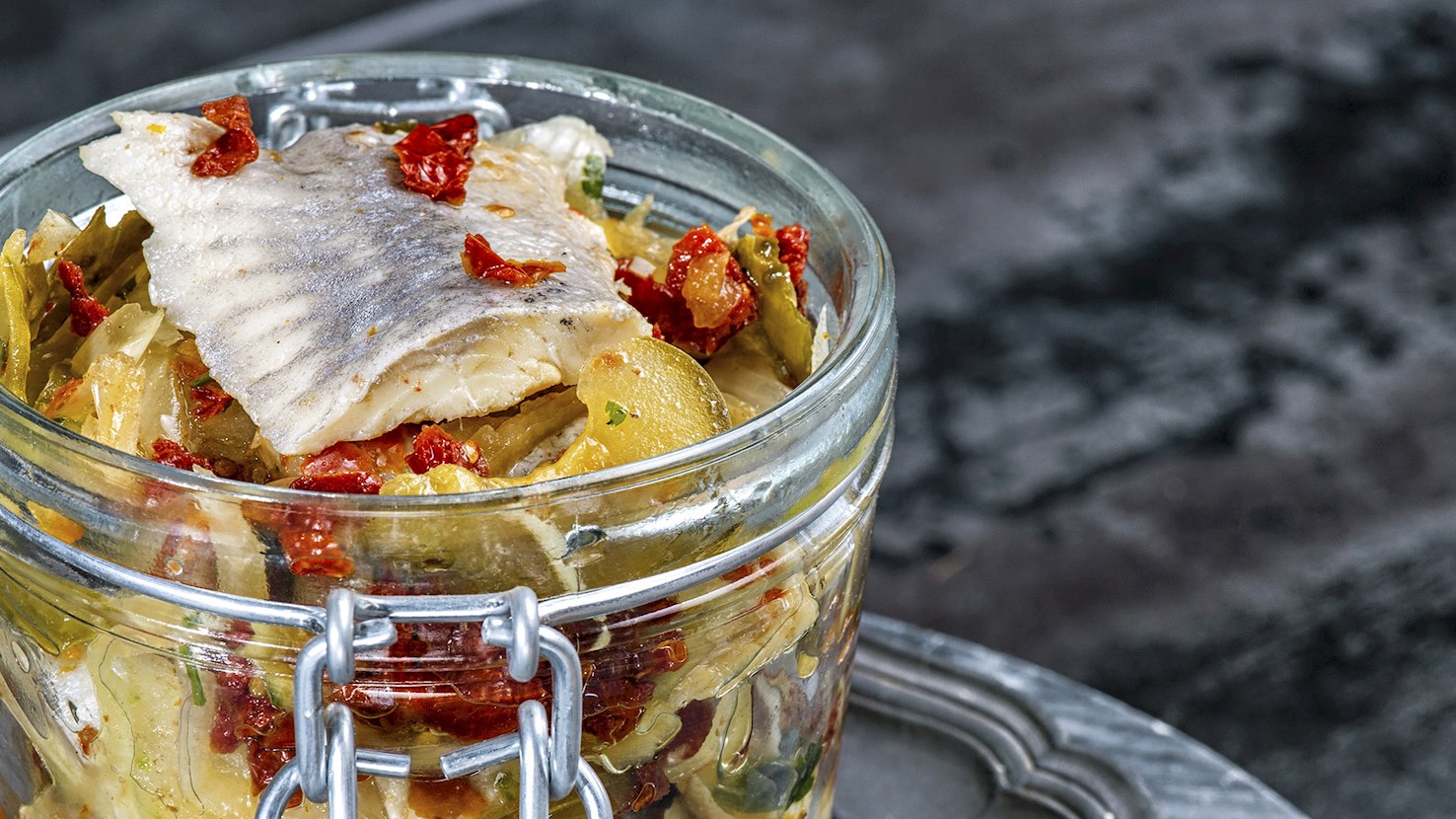
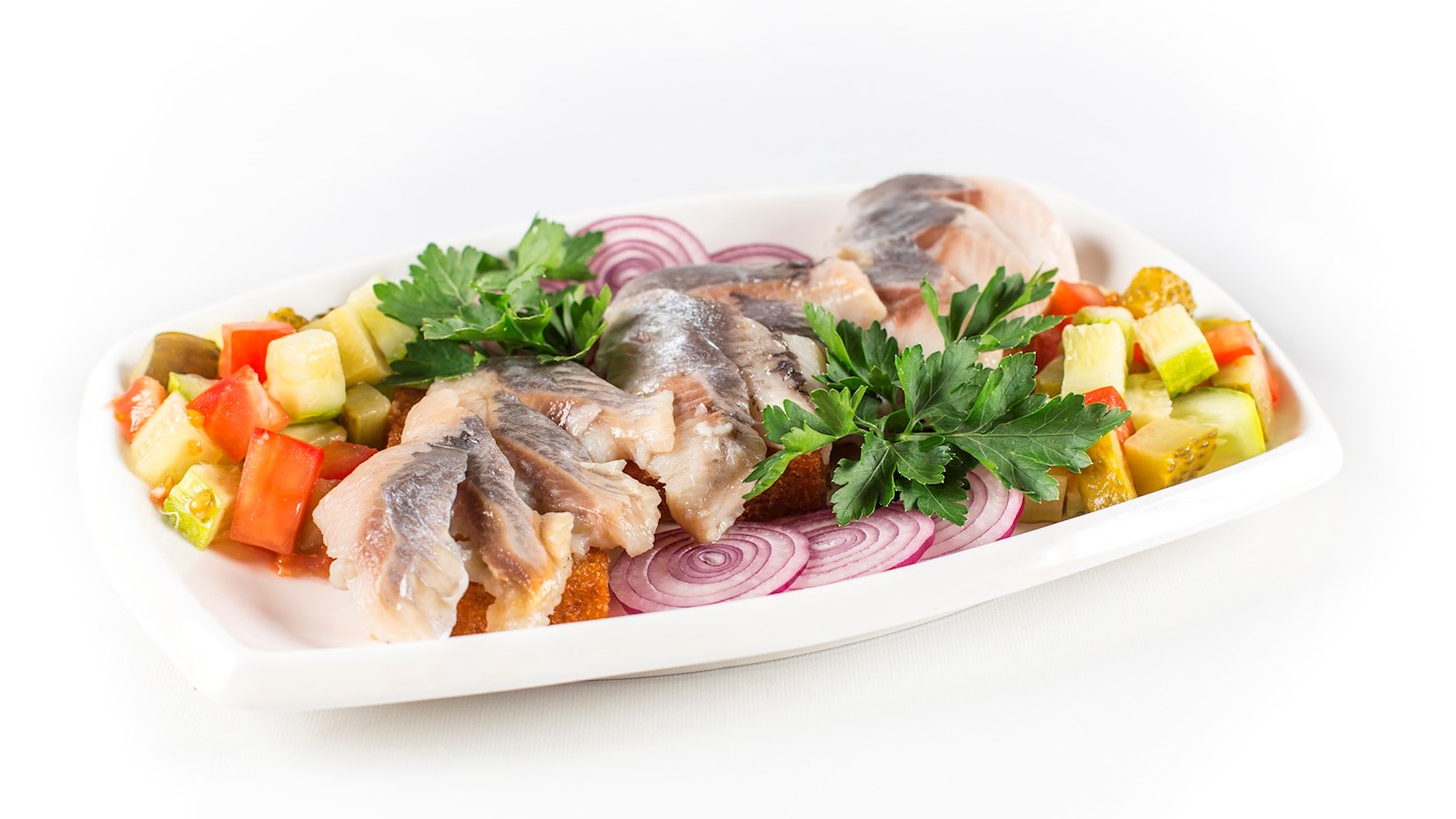
Śledzie is a Polish specialty consisting of herrings pickled in various ingredients such as vinegar, oil, sour cream, and onions. Due to the large amount of marinades and flavors, there is also a special variety of sweet herrings. Śledzie is traditionally served on Christmas Eve, as a cold appetizer or a side dish. It is recommended to pair this popular dish with dry white and red wines.
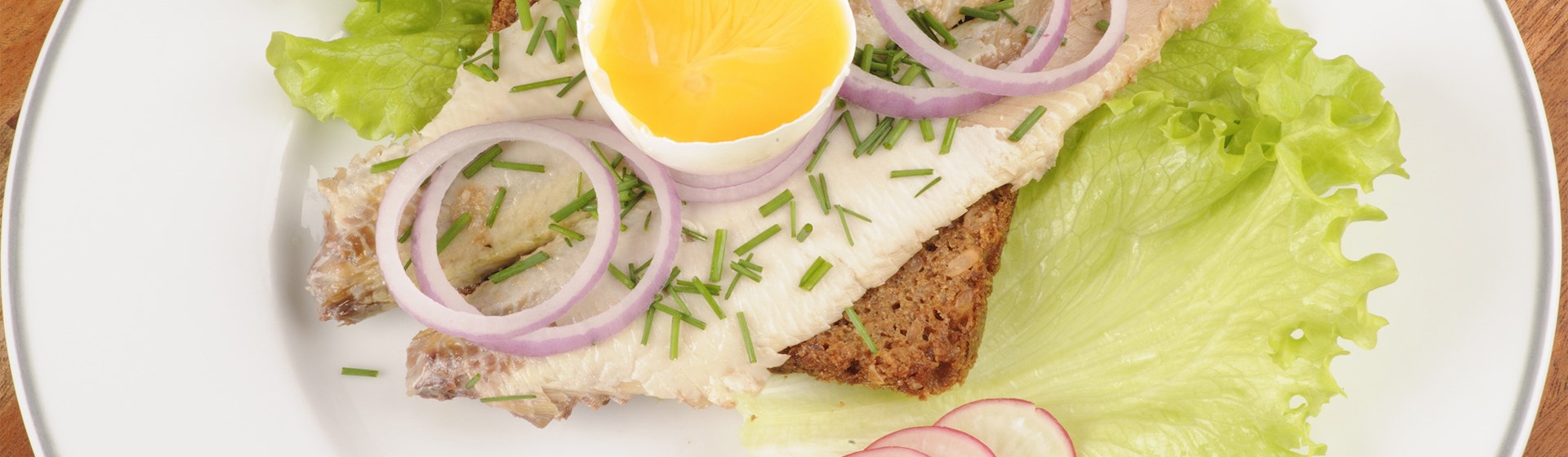
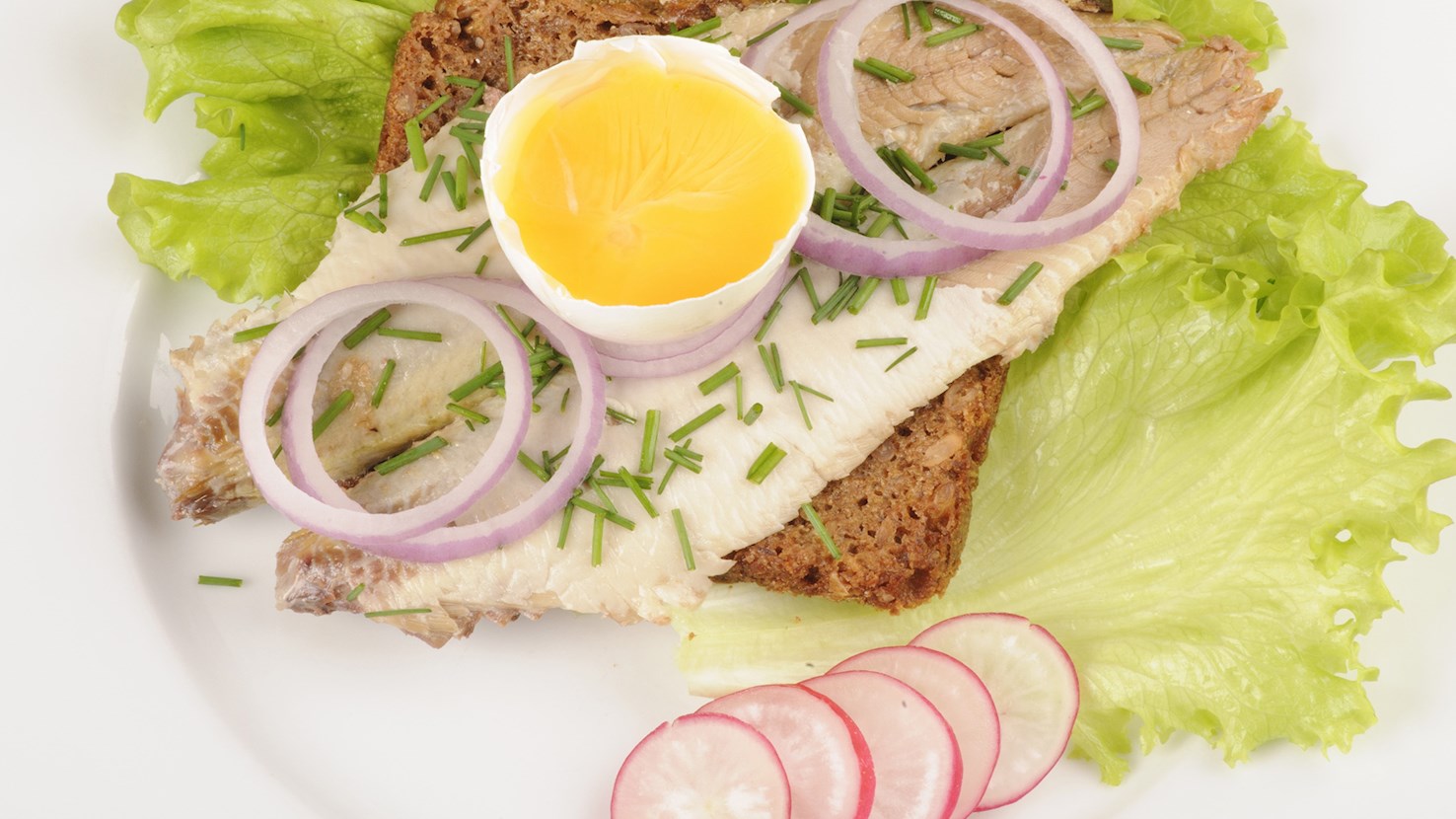
The open-faced sandwich known as sol over Gudhjem is a variety of the ubiquitous Danish smørrebrød. It is prepared with buttered rye bread that is typically topped with smoked or marinated herring, radish, chives, onion rings, and a raw egg yolk that symbolizes the sun. The unusual name of the dish can be translated as the sun over Gudhjem, referring to a city on the island of Bornholm, famous for its smoked herring and this sandwich–originally invented more than a hundred years ago. Today, this Danish classic is eaten throughout the country, and it should always be prepared and served fresh.
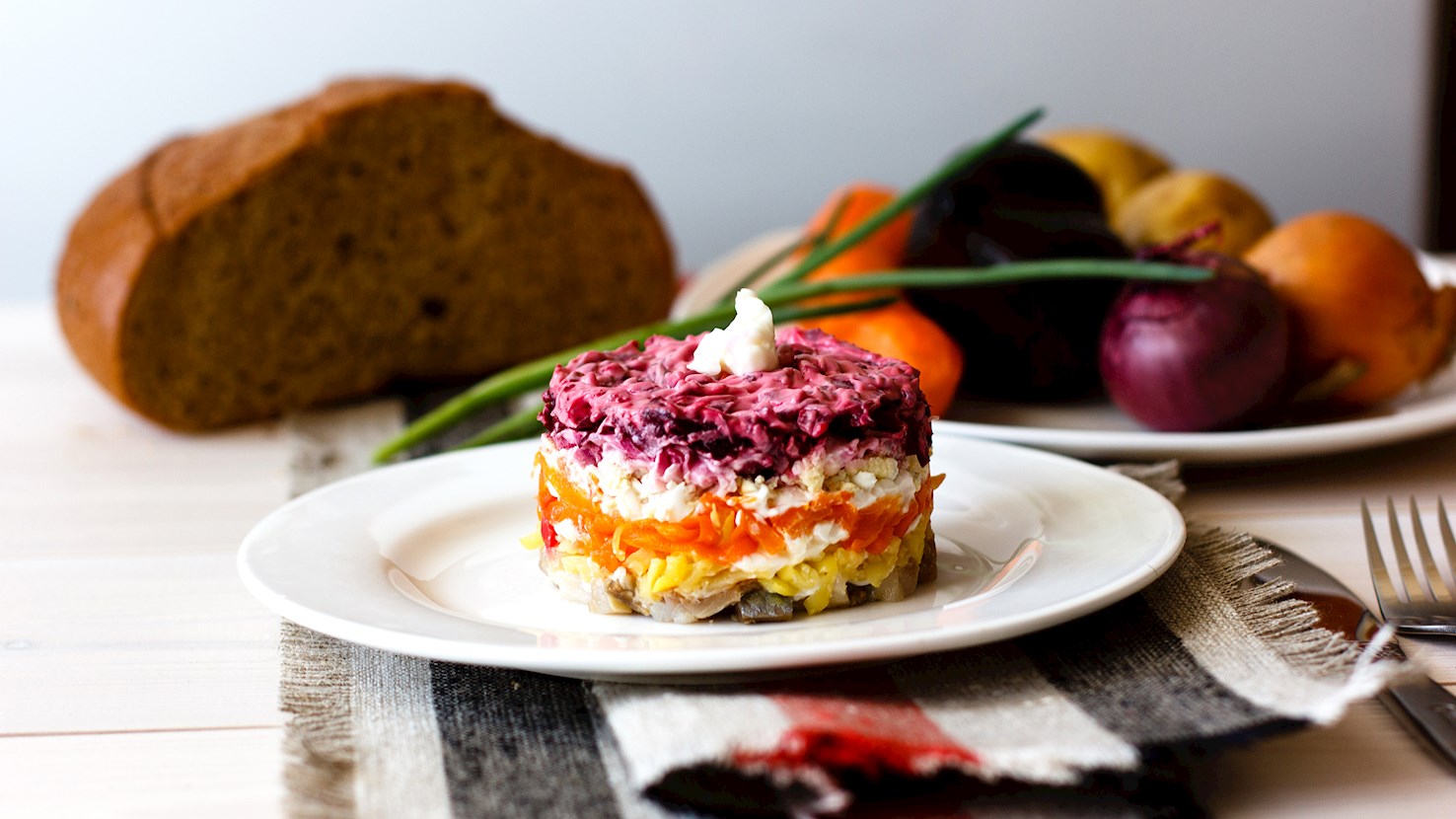
Shuba or herring under a fur coat is a unique Russian salad consisting of three distinctive layers: salted herring, potatoes, and beets. The salad often has more than three layers, mostly consisting of apples, onions, or hard-boiled eggs. Most people believe that it was invented by a tavern owner named Anastas Bogomilov at the beginning of the 20th century. The red color of the beets symbolizes the red flag, and potatoes symbolize the staple food of peasants and workers. Today, the salad is a well-known staple at Russian New Year celebrations.
Traditionally served on the Christmas smörgåsbord, sillsalat is a Swedish salad that combines finely sliced or minced pickled herring with diced boiled potatoes, pickled beets, pickles, apples, and chopped onions. All the ingredients are placed in a large bowl and tossed lightly with a sour-sweet dressing made with vinegar, water, sugar, pepper, and (optionally) cream or yogurt. For a nice pop of color, the salad can be enriched with whipped cream flavored with beet juice. Sillsalat is usually garnished with chopped parsley and served with wedges of hard-boiled eggs, rye bread, and sour cream.
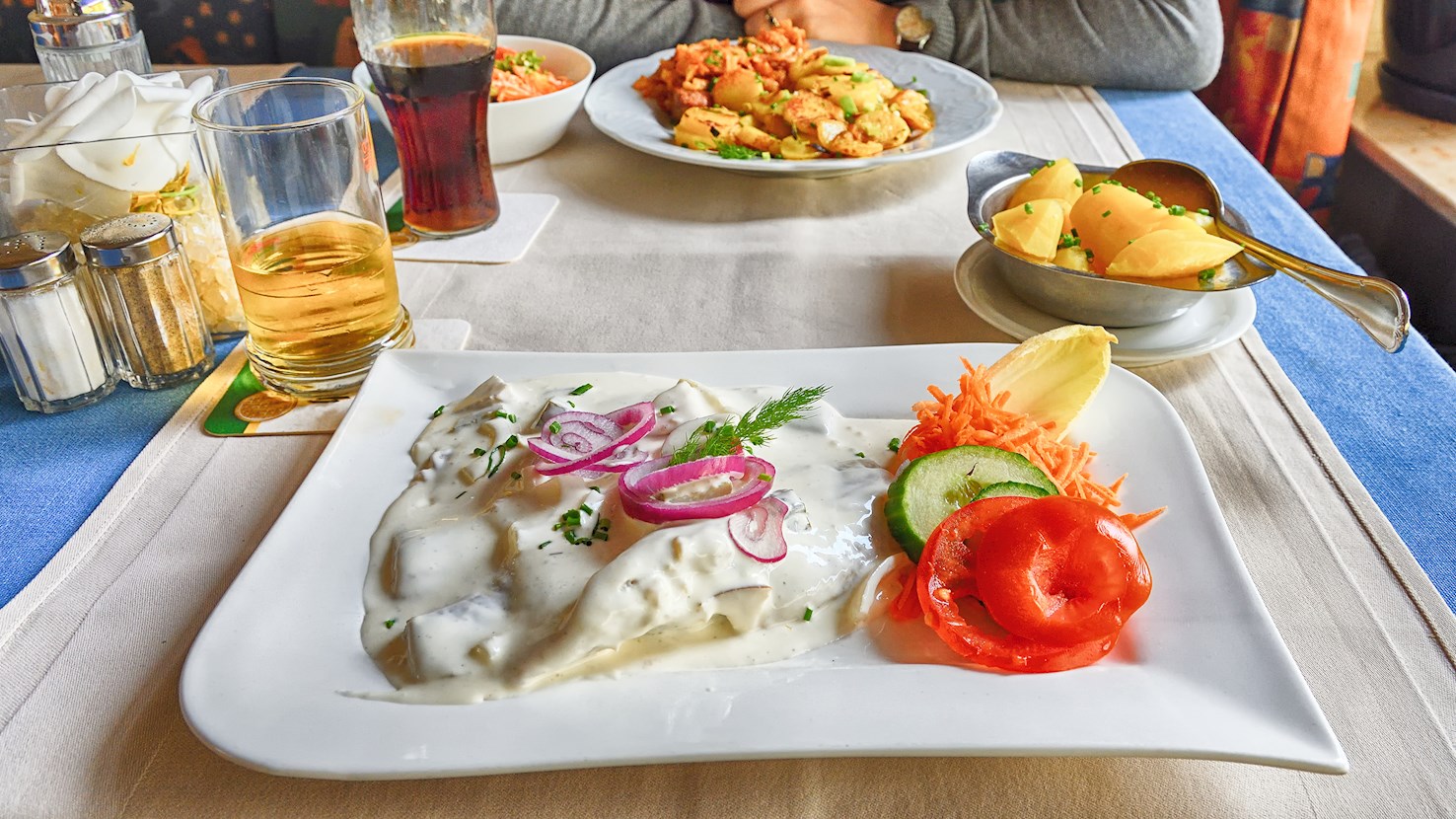
Pickled or salted herring fillets are doused in a sweet and sour sauce of cream, yogurt, pickling liquid, and fresh herbs along with apples, pickles, and onions in this German specialty called sahnehering. Typical varieties of herring fillets used in this specialty include bismarck herring, matjes herring, or Baltic herring, and the dish is often finished with freshly chopped chives on top before serving. The refreshing combination is usually enjoyed chilled with boiled jacket potatoes and a cucumber salad on the side, but it can also be spread on a slice of buttered brown bread. Sahnehering is usually consumed as a side or snack, and it is a traditional fasting dish that's mainly prepared in northern Germany and the Rhineland.
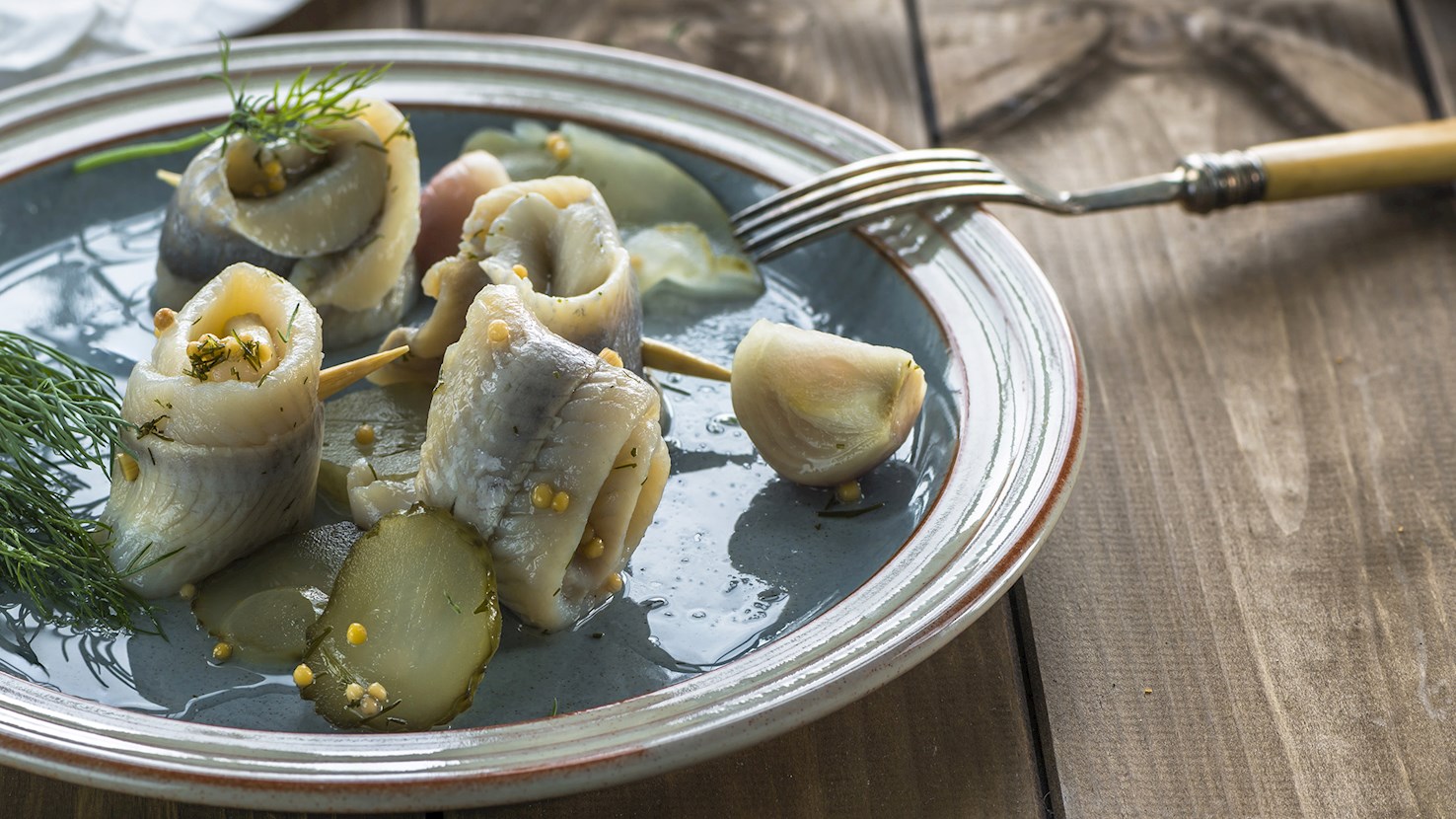
Rollmops is a German dish consisting of pickled herring fillets that are wrapped around ingredients such as gherkins, onion rings, or green olives. The combination is then usually skewered with a cocktail skewer. The dish is traditionally eaten cold, on its own or with bread. It grew in popularity in 19th-century Berlin, and it was a common pub food in the city. Aside from Germany, rollmops are also popular in England and Poland, especially during the Christmas season.
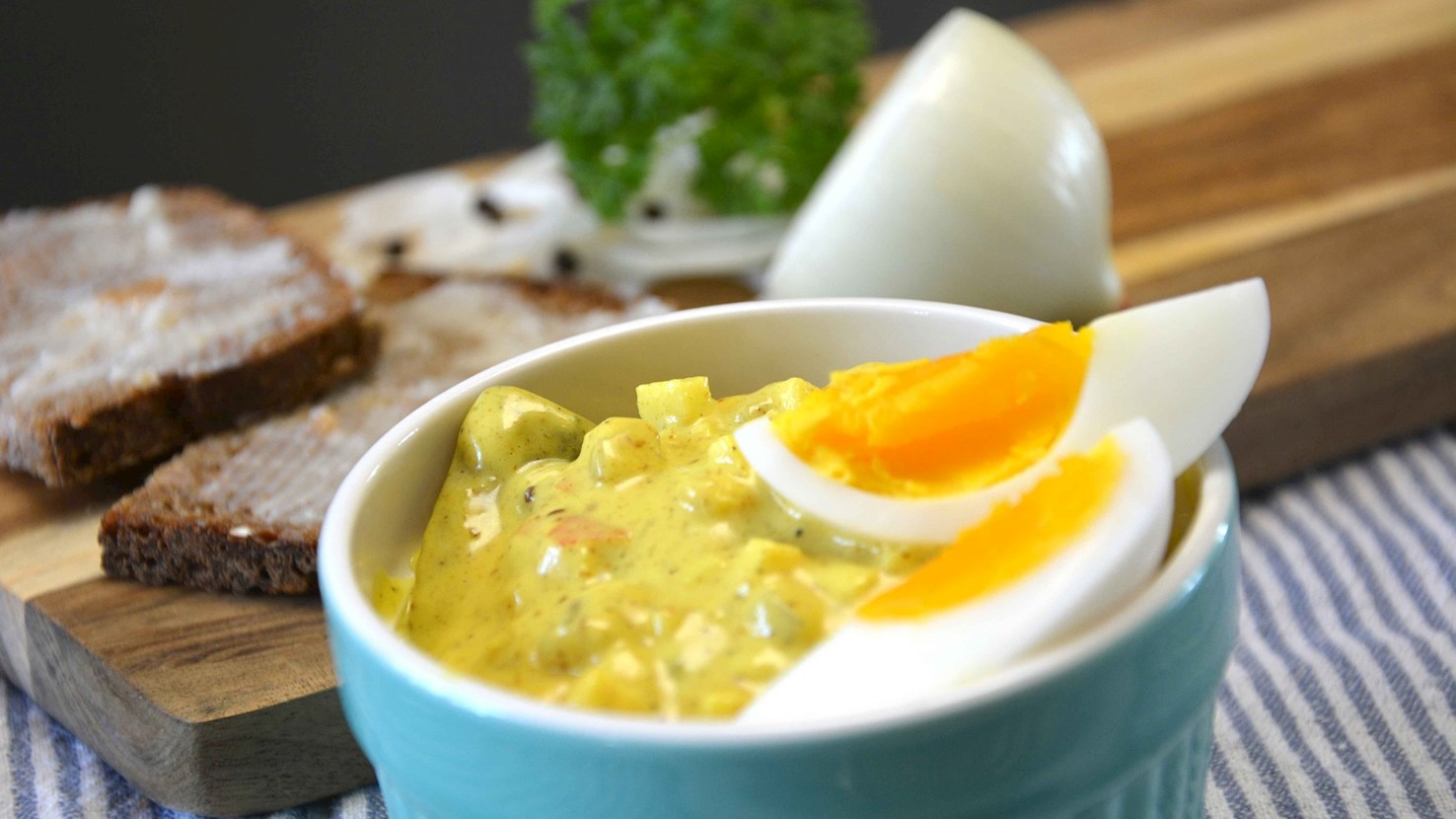
Karrysild is a traditional spread originating from Denmark. This curried herring spread is usually made with a combination of marinated herrings, curry powder, mayonnaise, and crème fraîche or sour cream. The mayonnaise and crème fraîche are mixed together with curry powder, pickling liquid, salt, and pepper. The herring is folded into the mixture, and it's then typically spread over sliced rye bread and topped with mustard. It's recommended to accompany the spread with boiled eggs and sliced onions on the side.
Rengosalata is a traditional smoked herring spread. It's usually made with a combination of herring fillets (or herring roe), scallions, red wine vinegar, potatoes, olive oil, lemon juice, and dill. The herring fillets are puréed with the vinegar and scallions. The potatoes are mashed and mixed with the herring purée and some lemon juice. The mixture is typically stirred with a wooden spoon and a bit of oil is drizzled into the mixture before it's covered and left in the fridge to chill for at least a few hours or overnight. Rengosalata is garnished with dill sprigs before serving. The spread is often enjoyed on Clean Monday, the Greek Orthodox first day of Lent.
Solomon Gundy is a cold fish preparation associated with Jamaica, made primarily from smoked herring or mackerel that is seasoned and pounded or finely processed into a spread-like consistency and eaten as a savory accompaniment rather than a main dish. Its development is connected to the long use of preserved fish in the Caribbean, particularly smoked and salted herring imported through Atlantic trade, combined with local methods of seasoning and hand-processing foods to extend usability and concentrate flavor, practices shaped by African-derived foodways and colonial supply patterns. Preparation begins by soaking smoked herring to soften it and reduce excess salt, then removing skin and bones before pounding or blending the flesh with onion, scallion, thyme, hot pepper, black pepper, and oil until the mixture becomes smooth and cohesive, with texture controlled by the degree of processing rather than added binders. The result is a dense, spreadable mixture that is served without cooking after seasoning, relying on the curing and smoking of the fish for preservation and depth. Solomon Gundy is typically served cold or at room temperature and presented in small portions. It is most often eaten at breakfast or as a snack, spread on crackers, hard dough bread, or paired with boiled green banana, breadfruit, or dumplings, and it appears in homes, roadside food stops, and small eateries. Beverage pairings are usually simple and neutral, such as tea, water, or lightly sweetened drinks, chosen to balance the saltiness and smoke without competing with the seasoning.
Sillmacka is a classic Swedish open-faced sandwich that features pickled herring as its central ingredient, originating from the coastal and fishing communities of Sweden. This dish reflects the Scandinavian culinary emphasis on preserving fish through pickling, a method developed to ensure availability of protein during long winters. Pickled herring became a staple due to its long shelf life and nutritional value, and placing it atop bread made it a convenient meal or snack. Over time, this preparation became a cultural staple, enjoyed across social classes and regional variations emerged based on local ingredients and preferences. Preparation of sillmacka involves selecting high-quality pickled herring, which is then placed on a slice of buttered crisp or rye bread. Additional toppings may include finely chopped raw onions, fresh dill, or slices of boiled egg, enhancing both texture and flavor. Some versions include a dollop of sour cream or mustard sauce to add creaminess and balance the acidity of the pickled fish. The sandwich is assembled simply but with attention to harmony among the ingredients. Sillmacka is commonly enjoyed throughout Sweden, especially during festive occasions such as Midsummer, Christmas, and Easter, as well as in everyday meals and fika breaks. It is typically served cold, often accompanied by snaps or aquavit, traditional Swedish spirits that complement the flavors of the pickled fish.
TasteAtlas food rankings are based on the ratings of the TasteAtlas audience, with a series of mechanisms that recognize real users and that ignore bot,
nationalist or local patriotic ratings, and give additional value to the ratings of users that the system recognizes as knowledgeable.
For the “10 Best Rated Dishes with Preserved Herring” list until July 17, 2026, 1,011,265 ratings were recorded, of which 666,015 were recognized by the system as legitimate.
TasteAtlas Rankings should not be seen as the final global conclusion about food. Their purpose is to promote excellent local foods,
instill pride in traditional dishes, and arouse curiosity about dishes you haven’t tried.