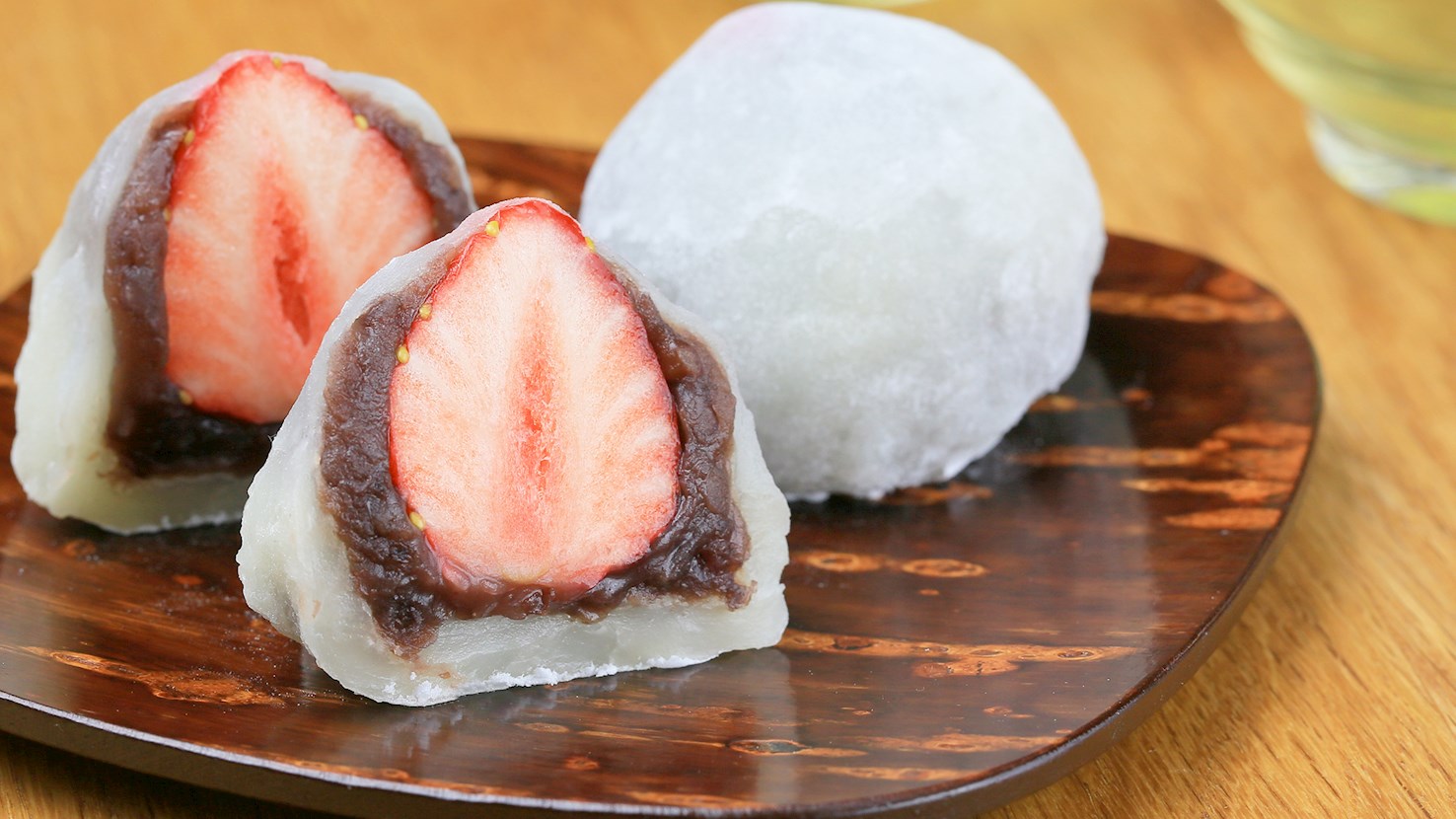
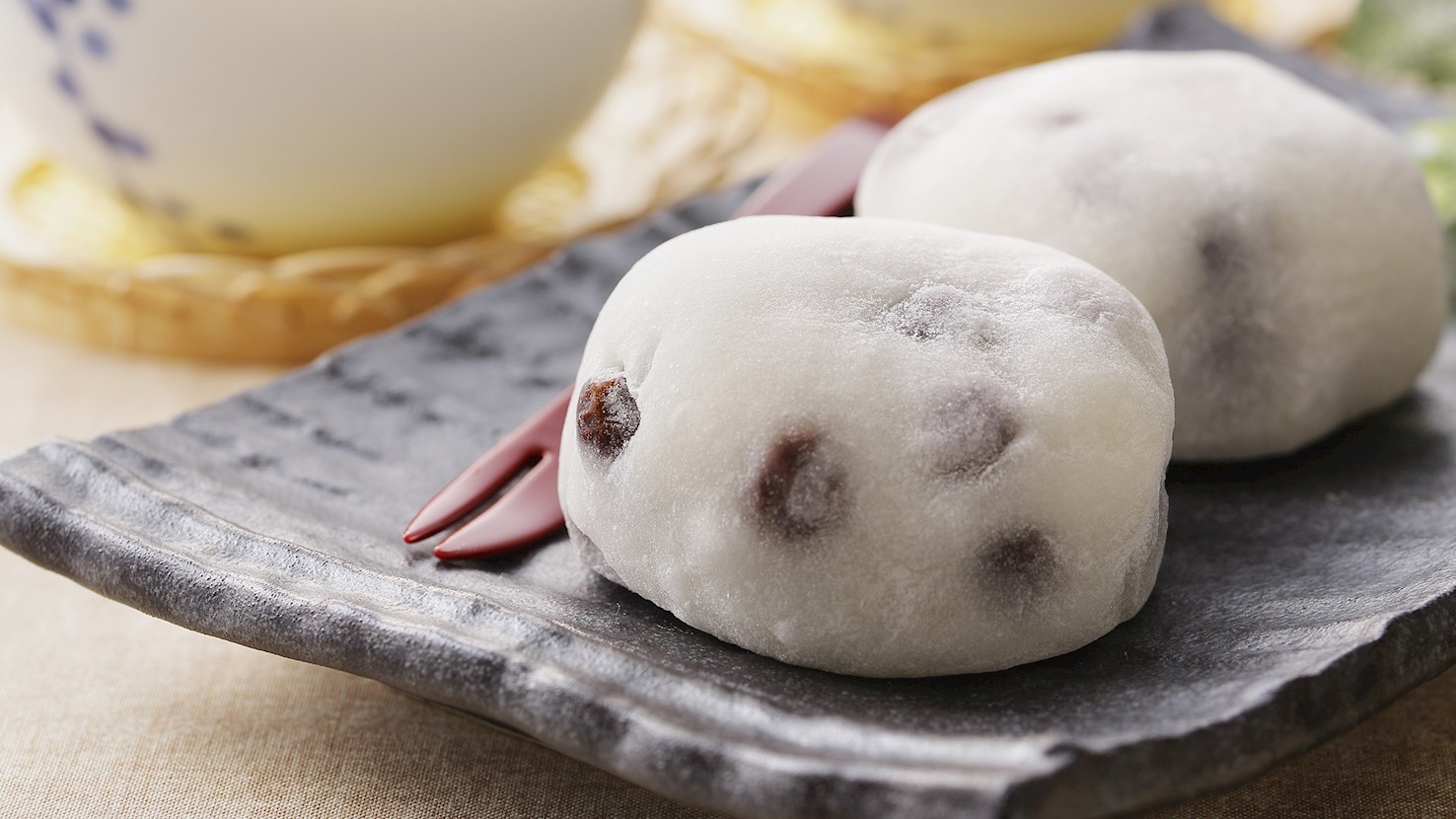
Daifuku,often referred to as daifukumochi, is a popular Japanese confectionery. It is usually shaped into small round balls, which consist of a chewy outer layer and a creamy, sweet filling. The daifuku shell is made with mochi, a glutinous ingredient created through the time-consuming process of crushing boiled or steamed rice. It is often tinted with different colors, most commonly pale pink and light green, creating a decorative and appealing treat. Each daifuku cake is filled with the luscious creamy and sweet content, and the most common is the traditional semi-sweet red bean paste, popularly called anko or tsubuan. Other popular fillings include chestnut, mocha, apricot, or caramel flavored creams and pastes, or occasionally ice cream. The most famous seasonal variety is the ichigo daifuku, filled with a whole strawberry wrapped in a thin layer of red bean paste. Daifuku is eaten as a dessert or a quick snack and it is usually served accompanied by a cup of refreshing green tea. Different daifuku varieties can be found across Japan and are easily available in convenience stores, supermarkets, restaurants, and dessert shops. They are also commonly served during traditional Japanese tea ceremonies.
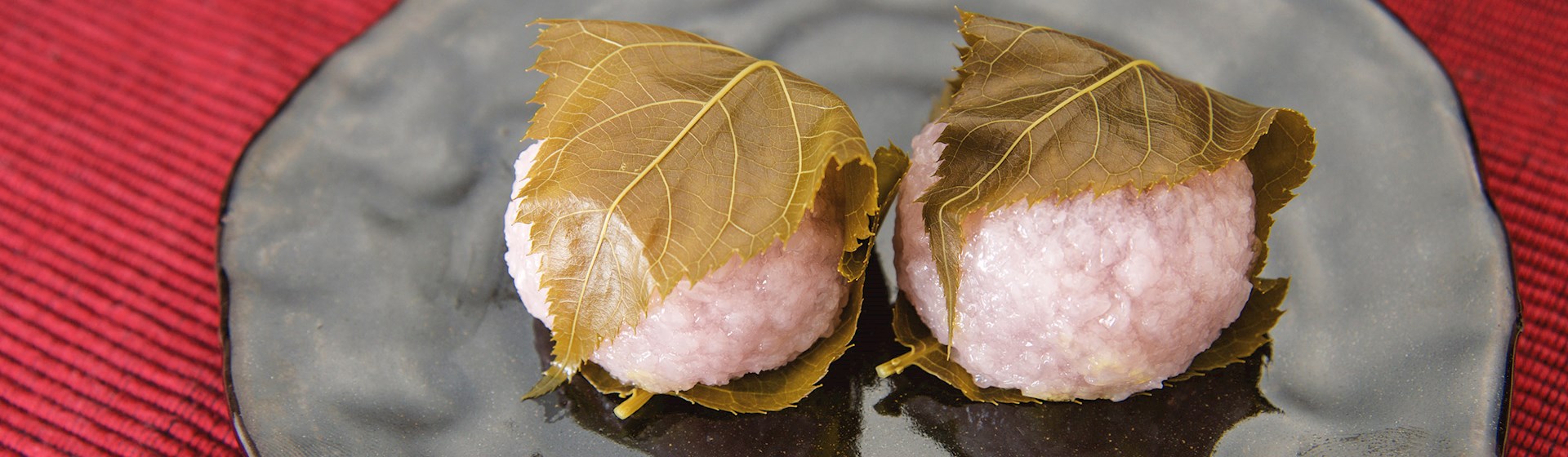
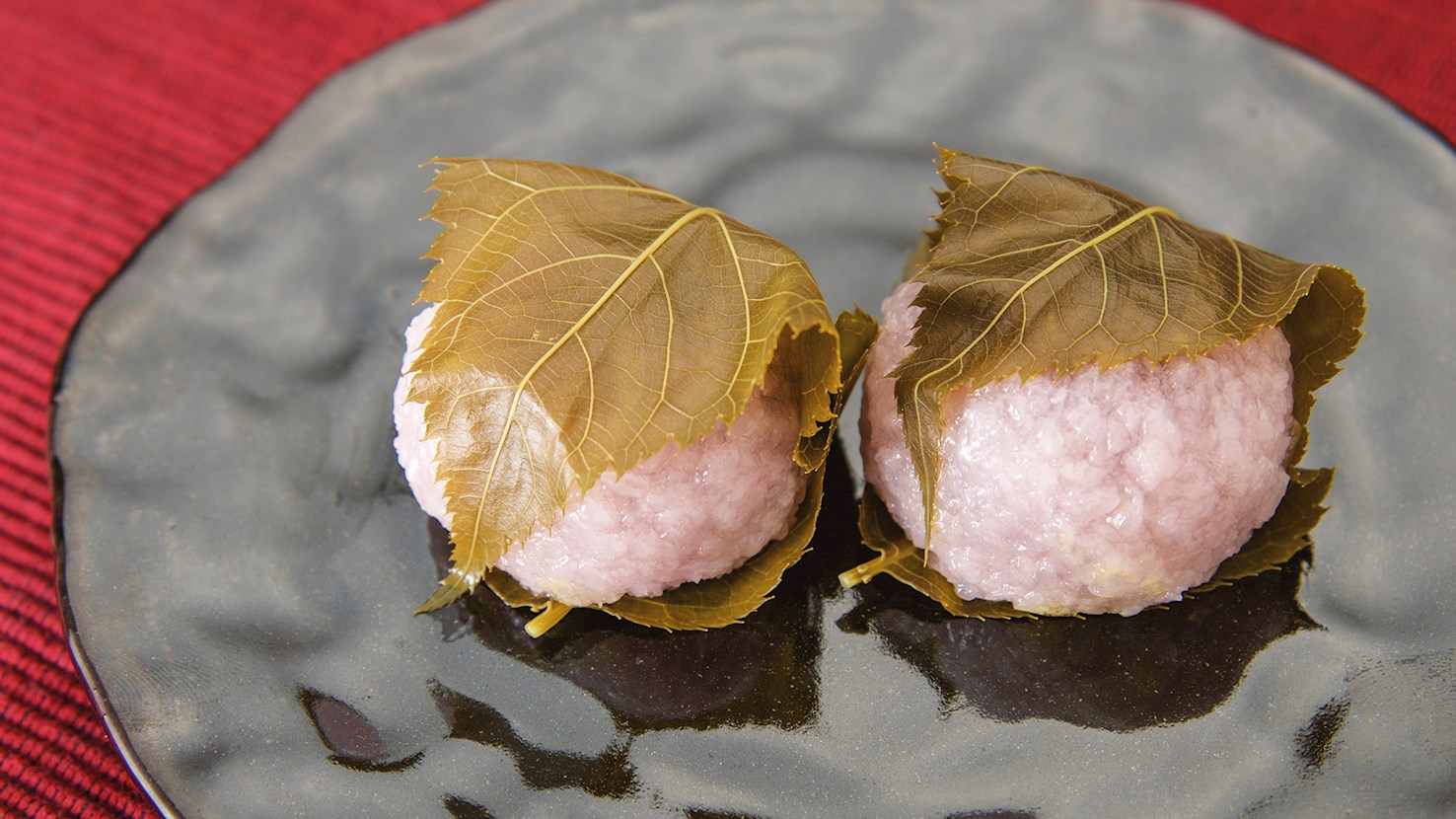
Sakuramochi is a traditional dessert that is made to depict sakura (cherry blossom), so the rice cake is usually pink in color. Most of the times, sakuramochi contains red bean paste and it is covered with a salty cherry blossom leaf, which some people consume together with the rice cake, and some don't. Although the sweet treat is sold throughout the year, it can be found most easily in spring, when cherry blossoms are in season. It is believed that sakuramochi was invented in 1717 in Edo by a guard named Yamamoto Shinroku, using the leaves from the trees along the Sumida River. He started to sell his new treats; people loved them, and that is how sakuramochi was born. Today, there are two versions of sakuramochi, the domyouji mochi from Kansai, consisting of steamed rice filled with anko and wrapped with a leaf, and the chomeiji mochi from Kanto, made with a pink crepe instead of rice.
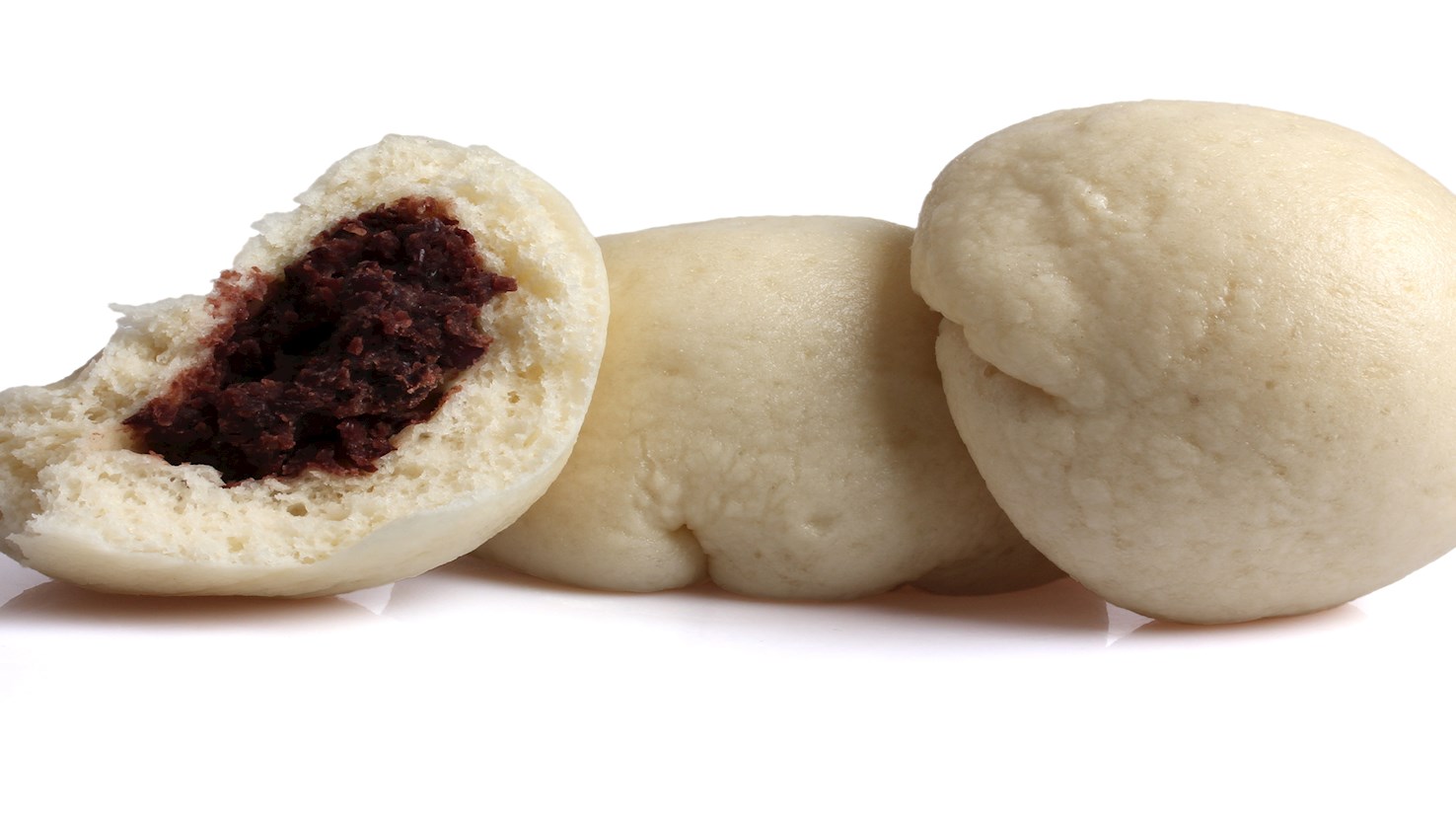
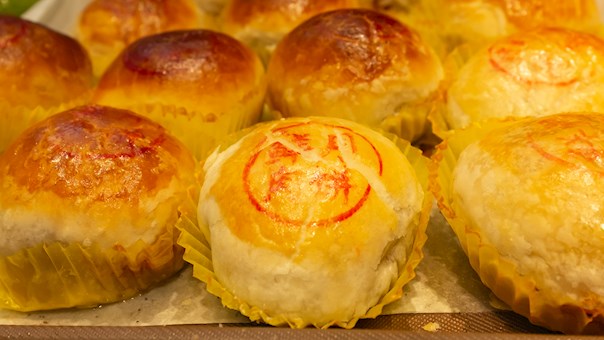
Doushabao is a soft and sweet Chinese steamed bun filled with smooth red bean paste. Falling in the category of baozi, they were created in China but due to the popularity of traditional Chinese cuisine, they can be found in numerous countries around the world nowadays. The flavorful combination of white steamed dough and the sweet red bean filling make doushabao an excellent everyday snack, a nutritious breakfast, or a filling dessert.
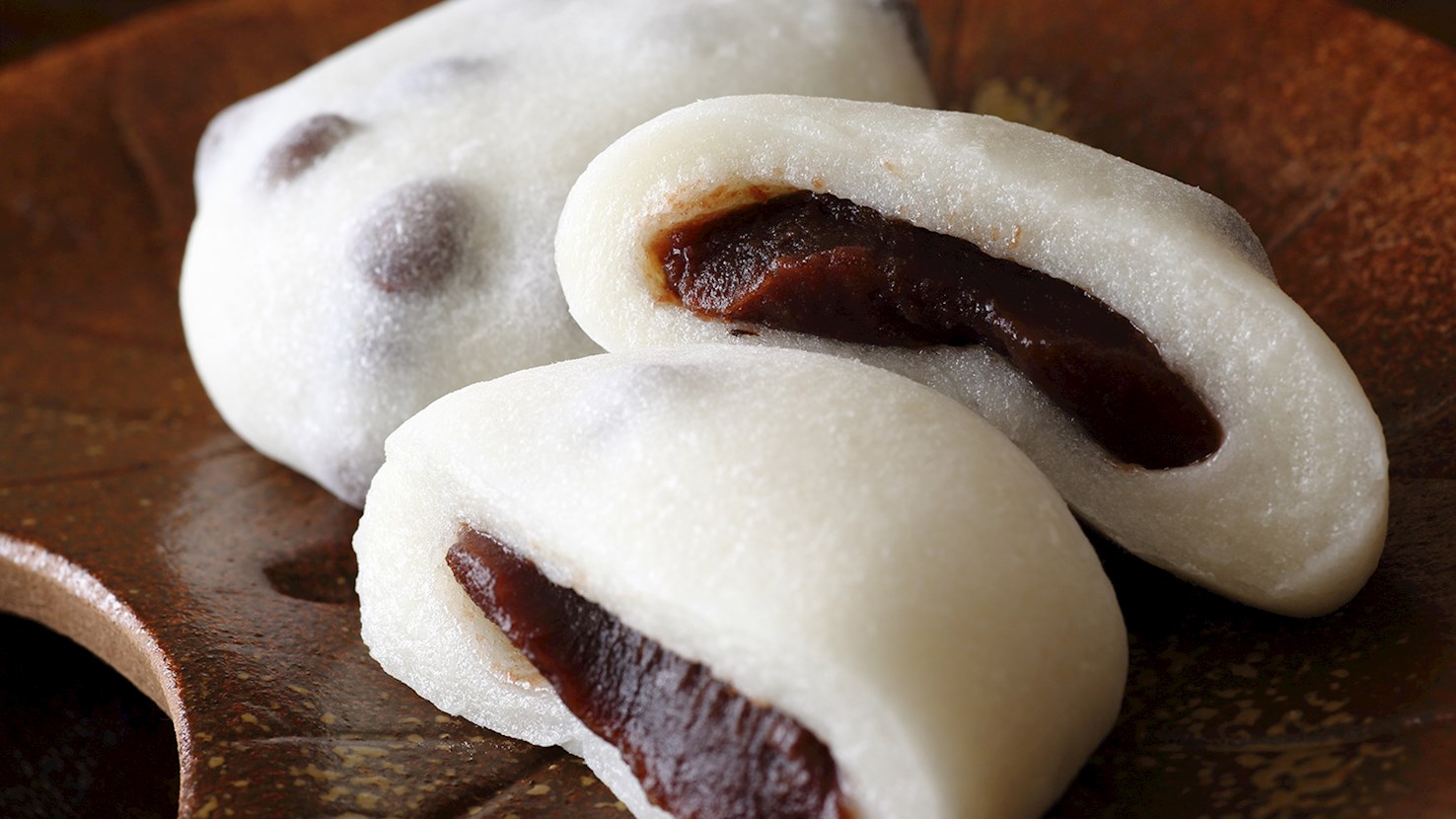
Mame daifuku is a beloved Japanese sweet dating back to the Edo period. The sweet consists of a rice cake filled with anko, soybeans, or azuki beans. Mame daifuku is commonly served at Japanese tea ceremonies, although it can also be served alongside coffee. Many believe that it is a morning snack and should be consumed on the same day that it was produced.
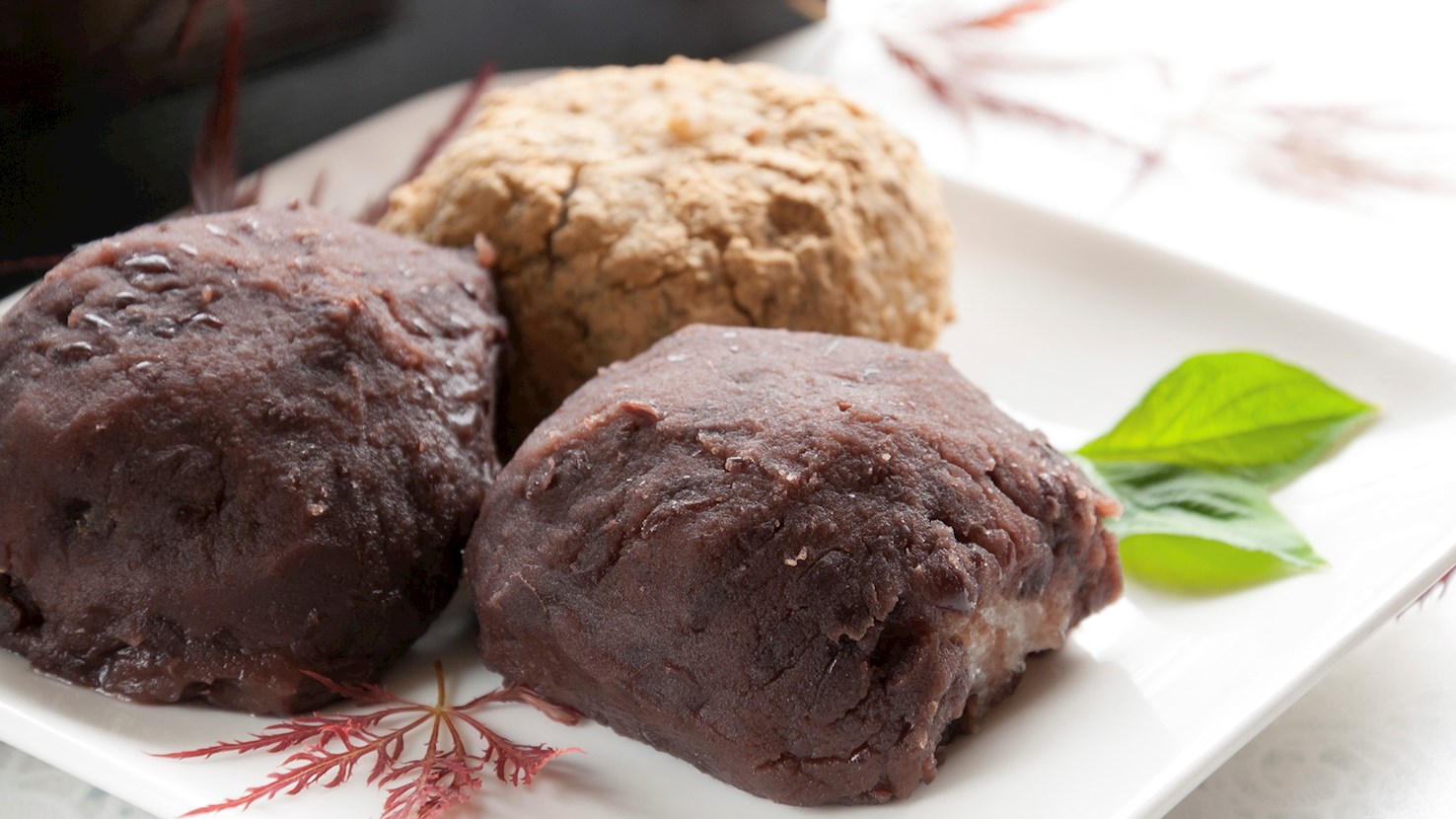
Botamochi or ohagi is a sweet Japanese confection consisting of glutinous rice stuffed inside a ball of azuki bean paste. The name of this treat consists of two words: bota, which is derived from botan, meaning tree peony, and mochi, meaning sticky, pounded rice. The shape of botamochi is supposed to resemble a tree peony flower. Although botamochi and ohagi are the same, botamochi is served in spring, while ohagi is served in autumn, and is supposed to resemble hagi, also known as bush clover flower. These sweets are especially popular around spring and autumn equinox, when numerous Japanese people visit ancestral graves and make offerings such as flowers, incense, botamochi, and ohagi. There are some variations on the sweets, so they can also be coated with black sesame or toasted soy bean powder, depending on personal preferences.
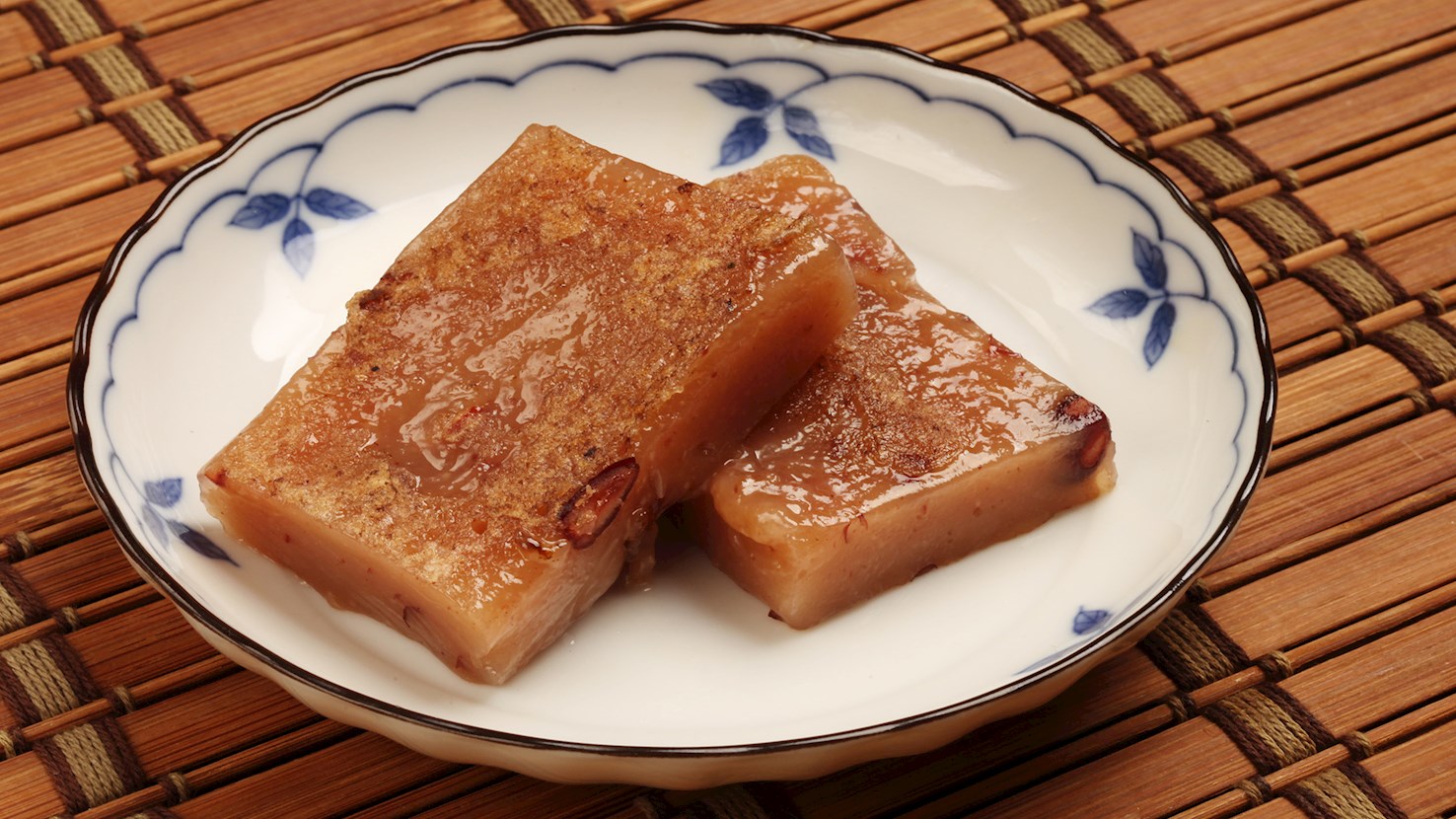
Red bean cake is a traditional dessert which incorporates glutinous rice flour and lightly sweetened red bean paste. The base of the cake employs sweet rice flour and eggs, which are then combined with smooth or coarse red bean mixture. Most commonly, red beans are evenly distributed in the cake, but occasionally they can only be used as a filling, coated in the glutinous batter. Chinese red bean cake is usually steamed or baked in various molds and pans. Because of its custard-like consistency, it is regarded as a special delicacy which is mainly associated with Chinese New Year, when it is commonly prepared and shared among relatives and friends.
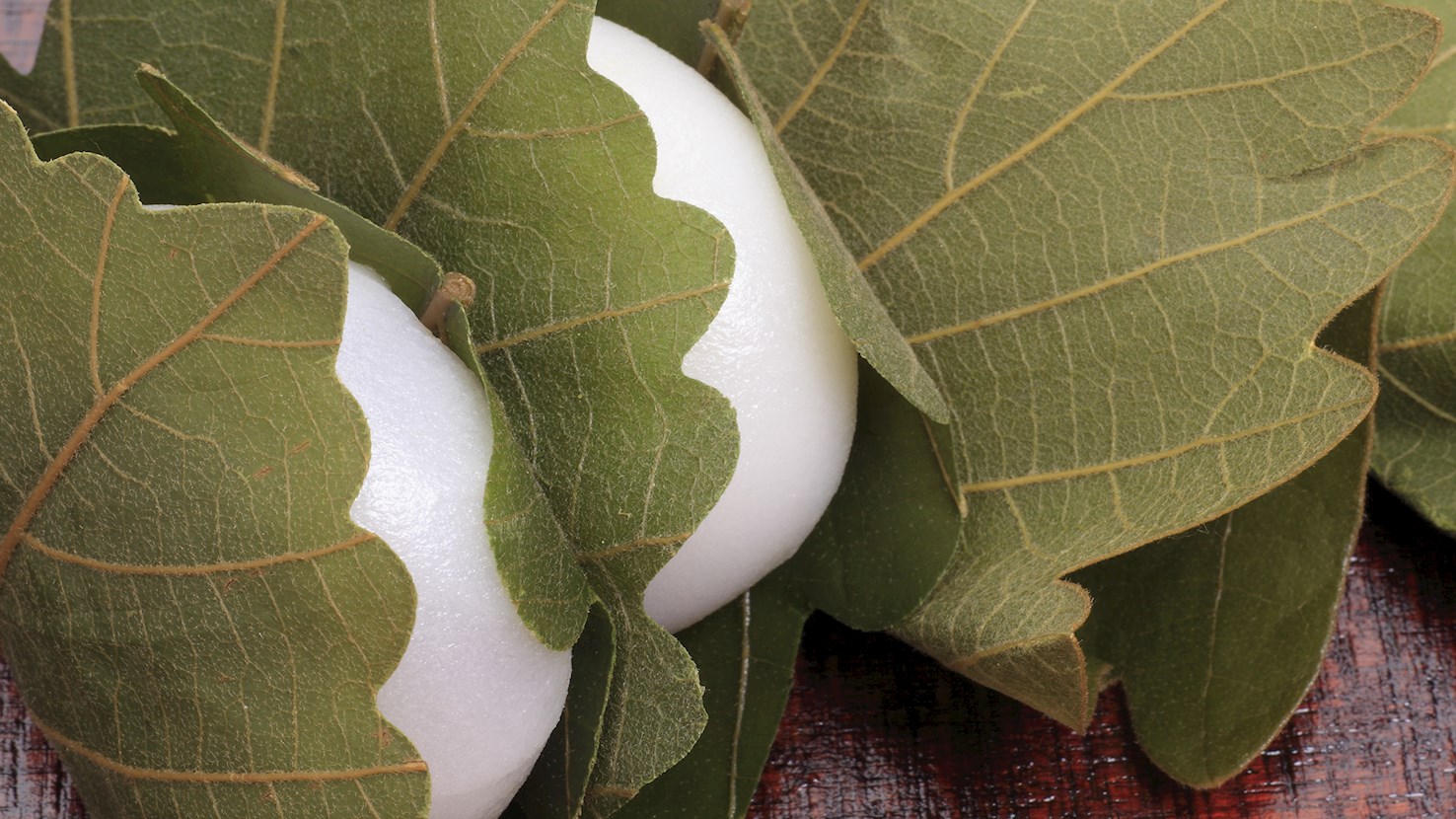
Kashiwa-mochi is a chewy Japanese rice cake that is filled with red bean paste and wrapped in oak leaves. Even though the leaves are not edible, they provide these tender cakes with an unusual earthy flavor. It is one of the traditional mochi varieties which is typically served on Children's’ Day, a Japanese national holiday celebrating the well-being and prosperity of children.
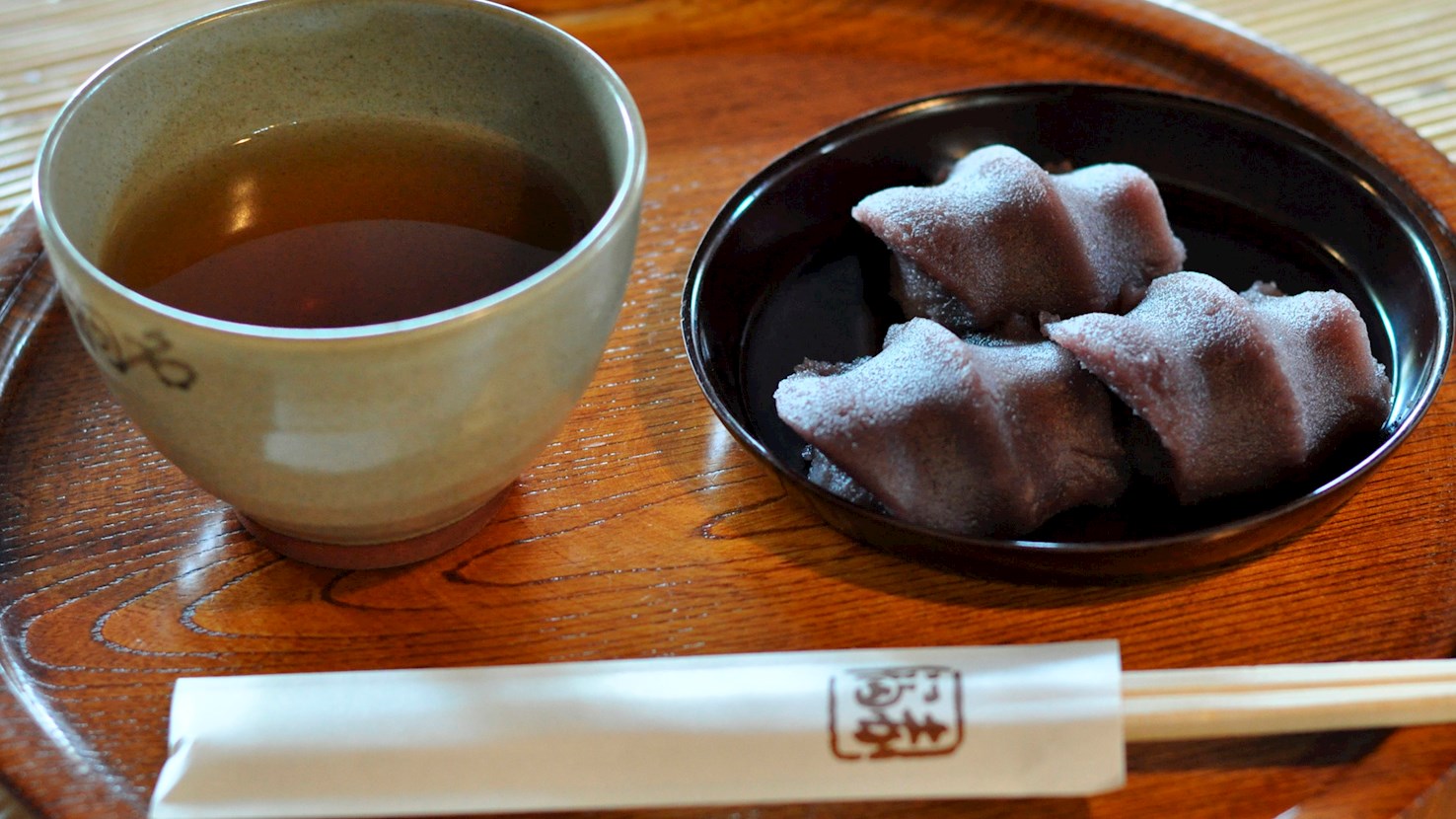
Akafuku wagashi is a variety of mochi (a Japanese pounded rice confection) prepared only in the area central to Ise City in Mie Prefecture. It consists of smooth koshi-an, or sweet red bean paste coated around soft, yet firm mochi. That composition is somewhat unusual because wagashi are usually made by enclosing the paste inside the mochi, so akafuku is to wagashi what an inside-out roll is to sushi. Its shape symbolizes the Isuzu River: the ridges in the paste are skillfully hand-pressed in order to represent the clear water flowing through the river, while the white mochi interior depicts the pebbles lying on the riverbed. Tourists like to buy akafuku as a souvenir, but it should be enjoyed quickly, as it expires after only two days.
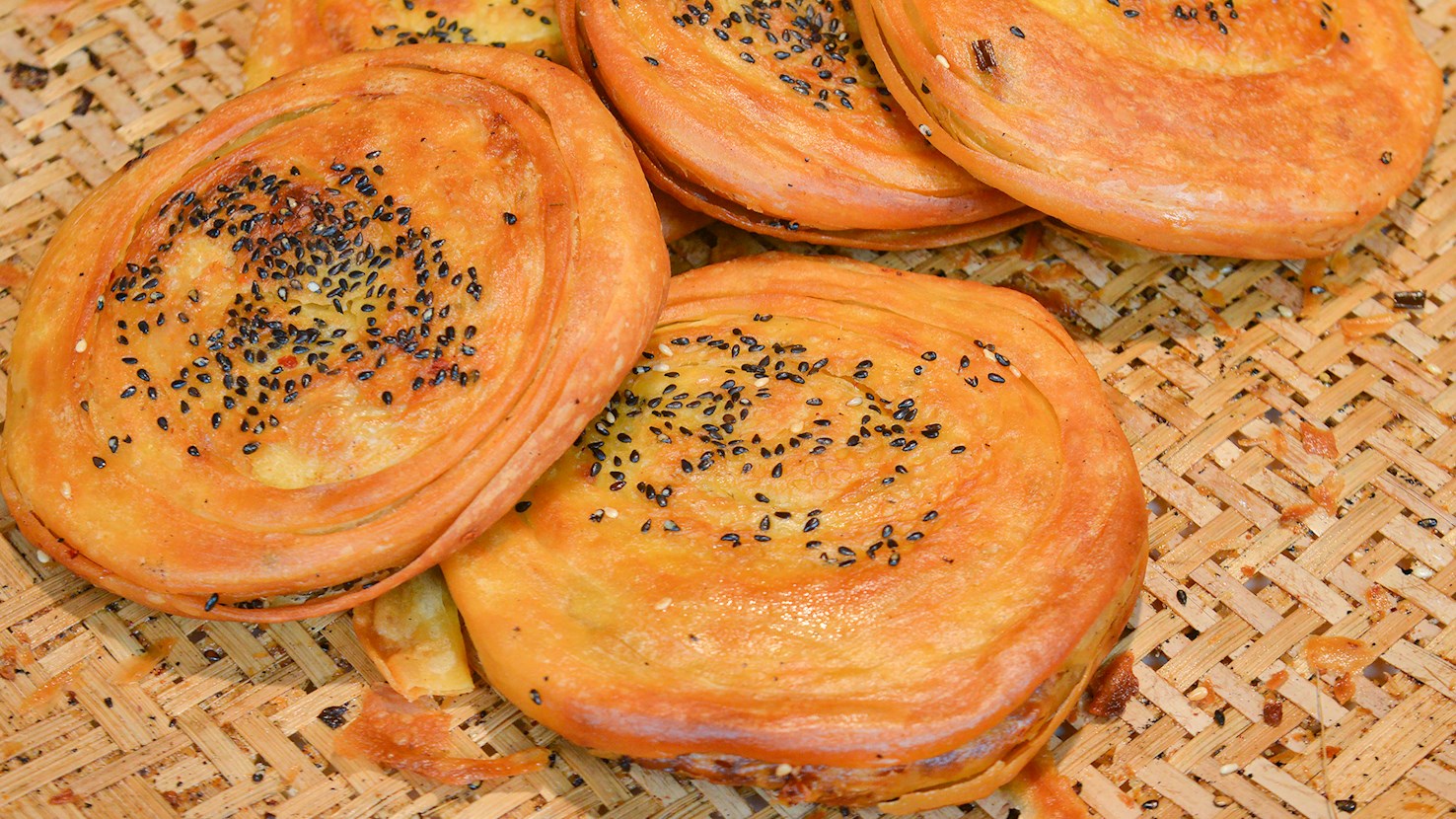
Guokui is a traditional flatbread originating from the Shaanxi province, now popular in various regions across China. Known for its large, thin, and crispy texture, guokui translates to "pot helmet," reflecting its distinctive shape when cooked. The bread is typically large and round, resembling a flattened disc, with a crispy outer layer and a soft, chewy inside. In Shaanxi, there is also guokui type that is round in shape, more reminiscent of a bread loaf than a flatbread, about a foot in diameter, an inch in thickness, and weighs about 2.5 kg. The preparation starts with making dough from wheat flour, water, and sometimes yeast or baking powder for leavening. Guokui can be either plain or filled with a variety of ingredients, such as minced pork, beef, or vegetables. It is traditionally cooked in a tandoor-like oven or on a griddle, giving it a unique smoky flavor and crispy texture. There are several varieties of guokui: Shaanxi guokui often contains spicy beef or lamb fillings and has a distinctive regional flavor; Hubei guokui is known for its thicker, softer texture and sometimes features sweet fillings; Sichuan guokui is typically spicy, filled with a mix of minced meat and Sichuan peppercorns, offering a numbing and hot taste; Chengdu guokui is usually thinner and crispier, often featuring various fillings like spicy pork or vegetables. Guokui is not just a type of bread but a symbol of Chinese culinary tradition, often enjoyed as a snack or a quick meal. It is a staple in street food culture across different regions of China, showcasing its versatility and regional adaptations.
This daifuku variety consists of a chewy outer layer made with mochi and a creamy coffee-flavored bean paste. The dessert comes in different variations that are available in Japanese pastry shops. Usually, each coffee dafiku will include a filling made with fresh cream, while some will also combine mochi with coffee, which provides additional coffee element and gives the cake a distinctive brown color.
TasteAtlas food rankings are based on the ratings of the TasteAtlas audience, with a series of mechanisms that recognize real users and that ignore bot,
nationalist or local patriotic ratings, and give additional value to the ratings of users that the system recognizes as knowledgeable.
For the “13 Best Rated Dishes with Red Bean Paste” list until June 17, 2026, 1,000,987 ratings were recorded, of which 657,348 were recognized by the system as legitimate.
TasteAtlas Rankings should not be seen as the final global conclusion about food. Their purpose is to promote excellent local foods,
instill pride in traditional dishes, and arouse curiosity about dishes you haven’t tried.