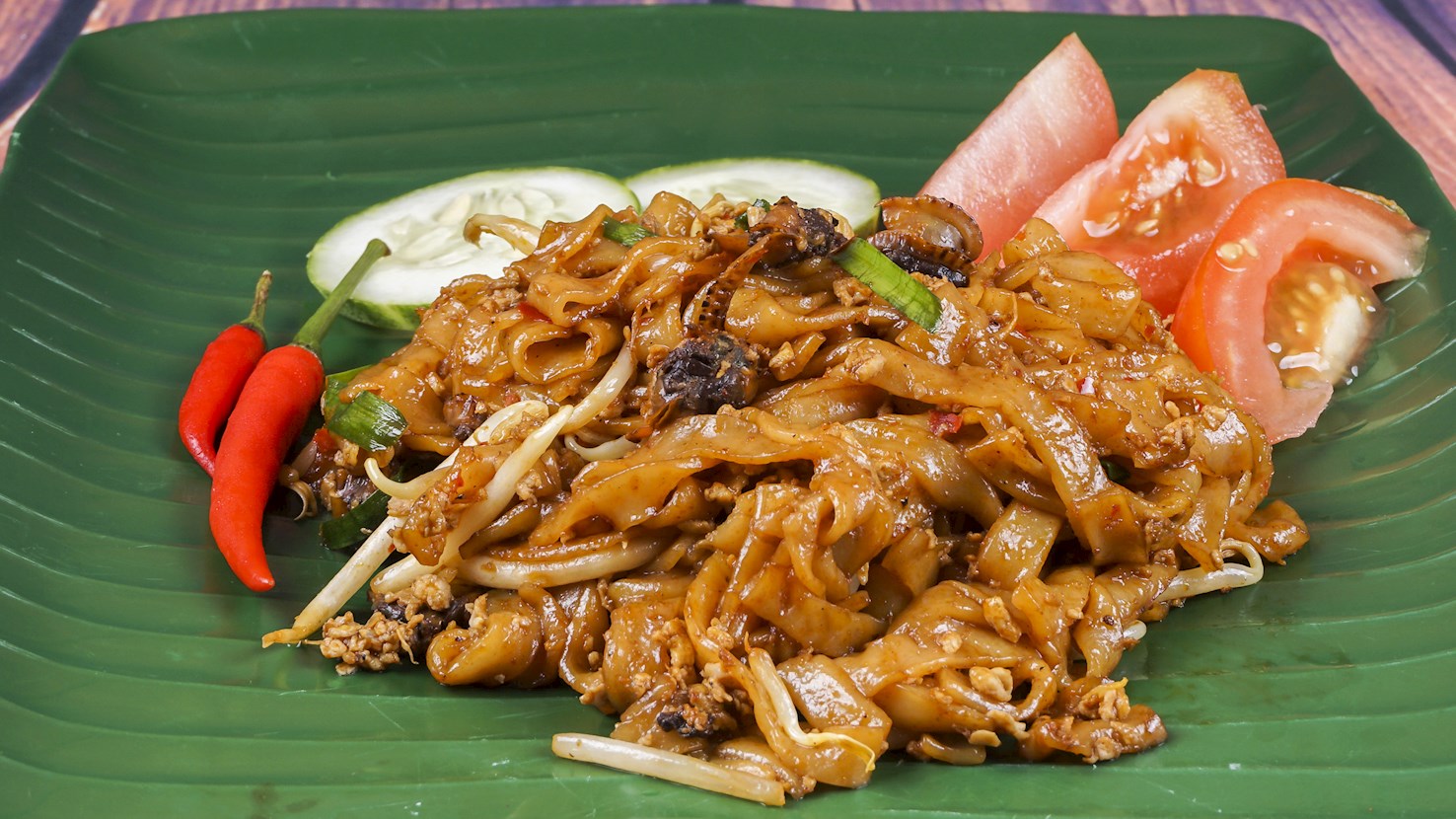
Beef chow fun is a Cantonese dish prepared by stir-frying previously marinated beef slices together with flat, wide rice noodles (hor fun), and bean sprouts. Because of the preparation method, beef chow fun is a true measure of any accomplished Cantonese chef. Specifically, it is necessary to get two things right: wok hei — the cooking technique of stir-frying the ingredients at high heat which imparts them with a special umami flavor; and pow wok — a way of quickly tossing the ingredients without the use of a spatula, which prevents sticking and does not break the delicate rice noodles. The origins of the dish are still unclear, but according to a folk tale, it was invented during World War II in Guangzhou. Today, this Cantonese stir-fry is typically served in yum cha restaurants and cha chaan teng - tea restaurants known for serving diverse and affordable meals.
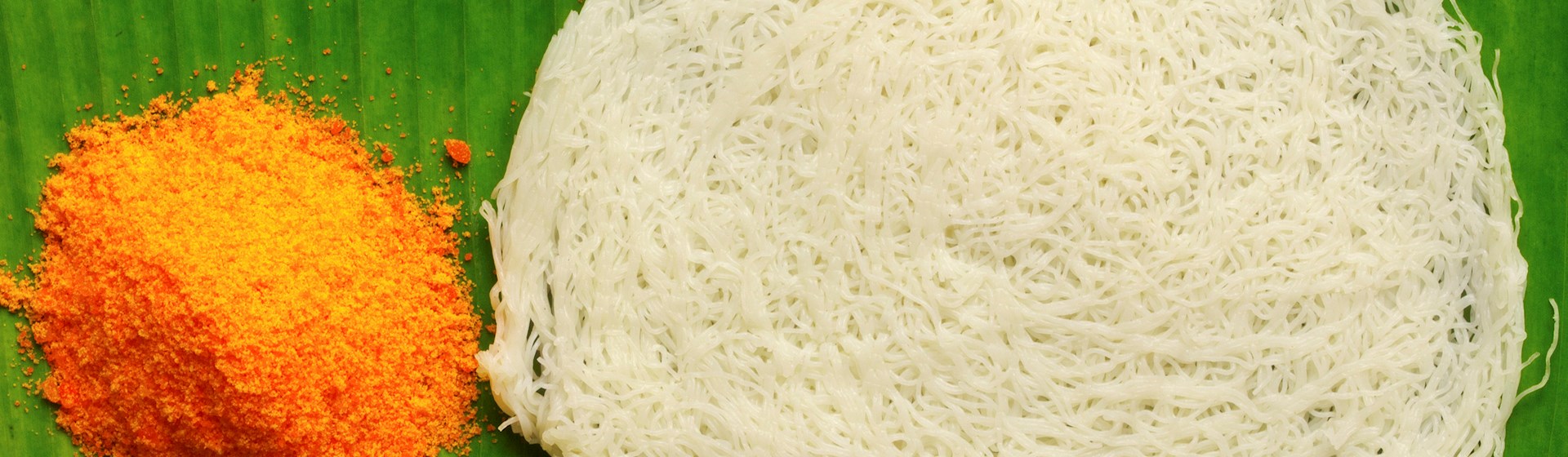
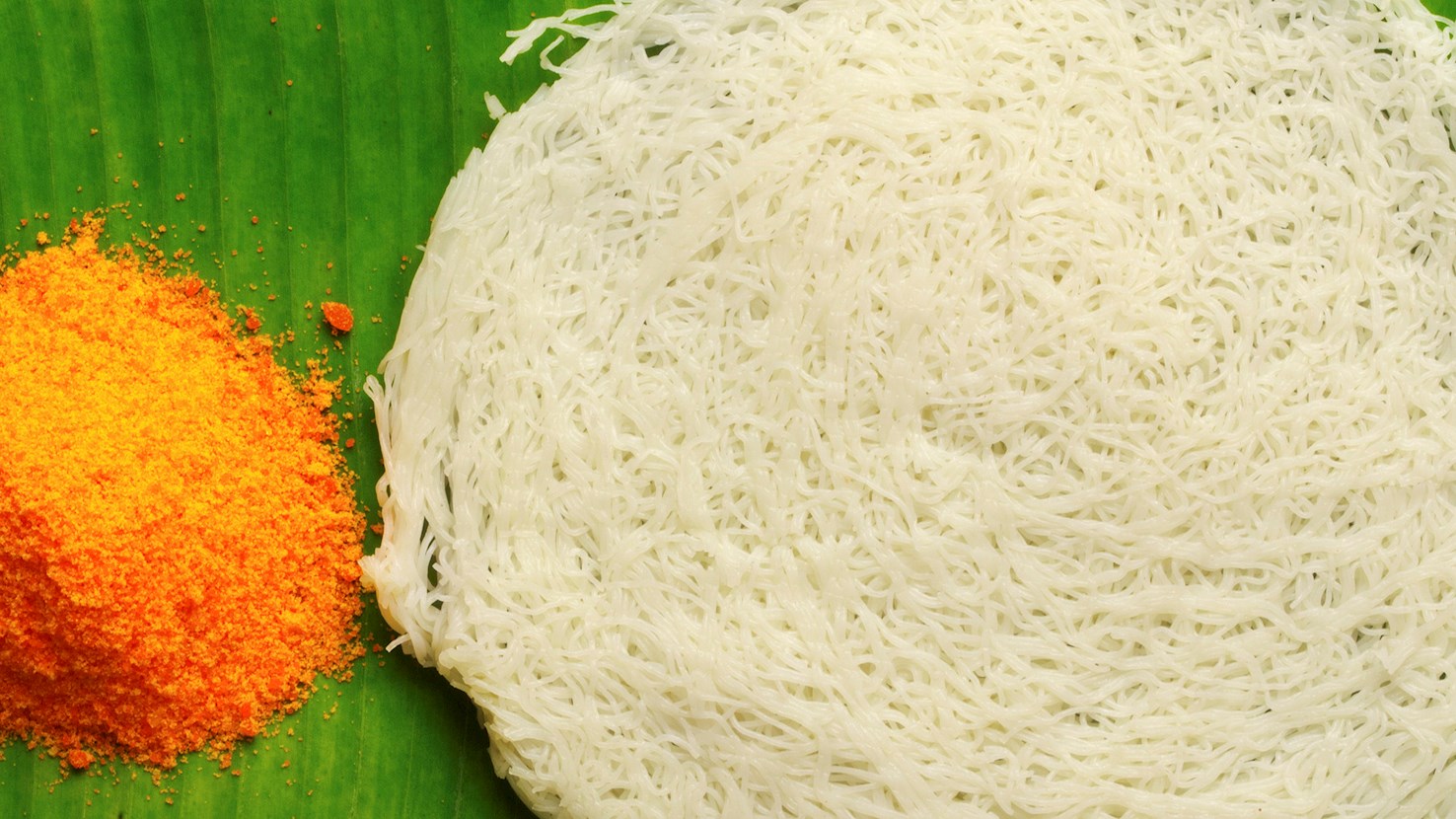
Putu mayam is a popular street food dish with origins either in the Indian state of Tamil Nadu or Kerala. Although it is south Indian in origin, it is also extremely popular in Malaysia, Sri Lanka, Singapore, and Indonesia. The dish consists of rice or idiyappam flour noodles which are topped with desiccated coconut and sweetened with sugar blocks. The noodles are made by passing the dough through a sieve (usually a traditional rattan basket with holes), and then they are steamed in the same basket, imparting a wood-like aroma to the noodles. Traditionally, putu mayam is served on a banana leaf, for easier consumption. It can be used as an accompaniment for meat dishes or curries. The name of the dish stems from two words, putu, Malayan for rice cake, and mayam, which is derived from the word mayang, meaning desiccated coconut.
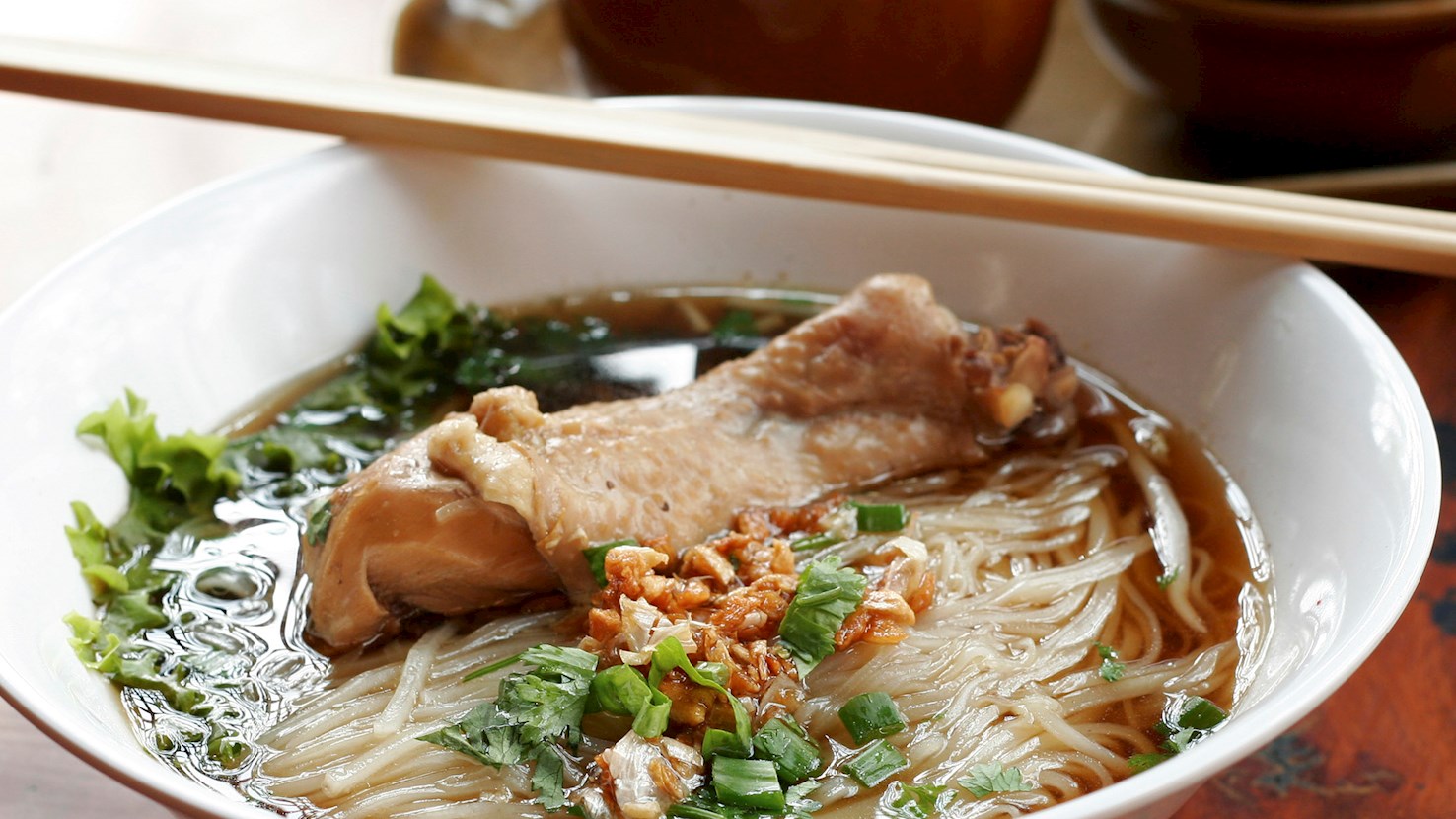
Over the bridge rice noodles (guo qiao mi xian) is a rice noodle soup, a specialty of Yunnan cuisine. When broken into segments, the soup consists of chicken soup, rice noodles, sliced meat, and vegetables, as well as some additional ingredients used for garnishing and seasoning. The dish originated from Mengzi County over 100 years ago. What's peculiar about this soup is the way in which it is prepared; a bowl of hot soup, a bowl of rice noodles, and a platter with sliced ingredients are brought to the table where the dish is assembled and cooked. Ingredients are added one by one, starting with meat. Next are quail eggs, squid, and tofu skin, followed by vegetables, often only bok choy, Chinese mushrooms, and herbs. Rice noodles are saved for the end, and the finished soup gets divided into individual bowls. Given that the soup can be somewhat bland, the taste can be adjusted to personal preference with soy sauce, vinegar, pickled vegetables, and chili sauce. The rice noodle soup is often served in restaurants and sold by street vendors, but the price is determined by the number of ingredients - the more, the pricier.
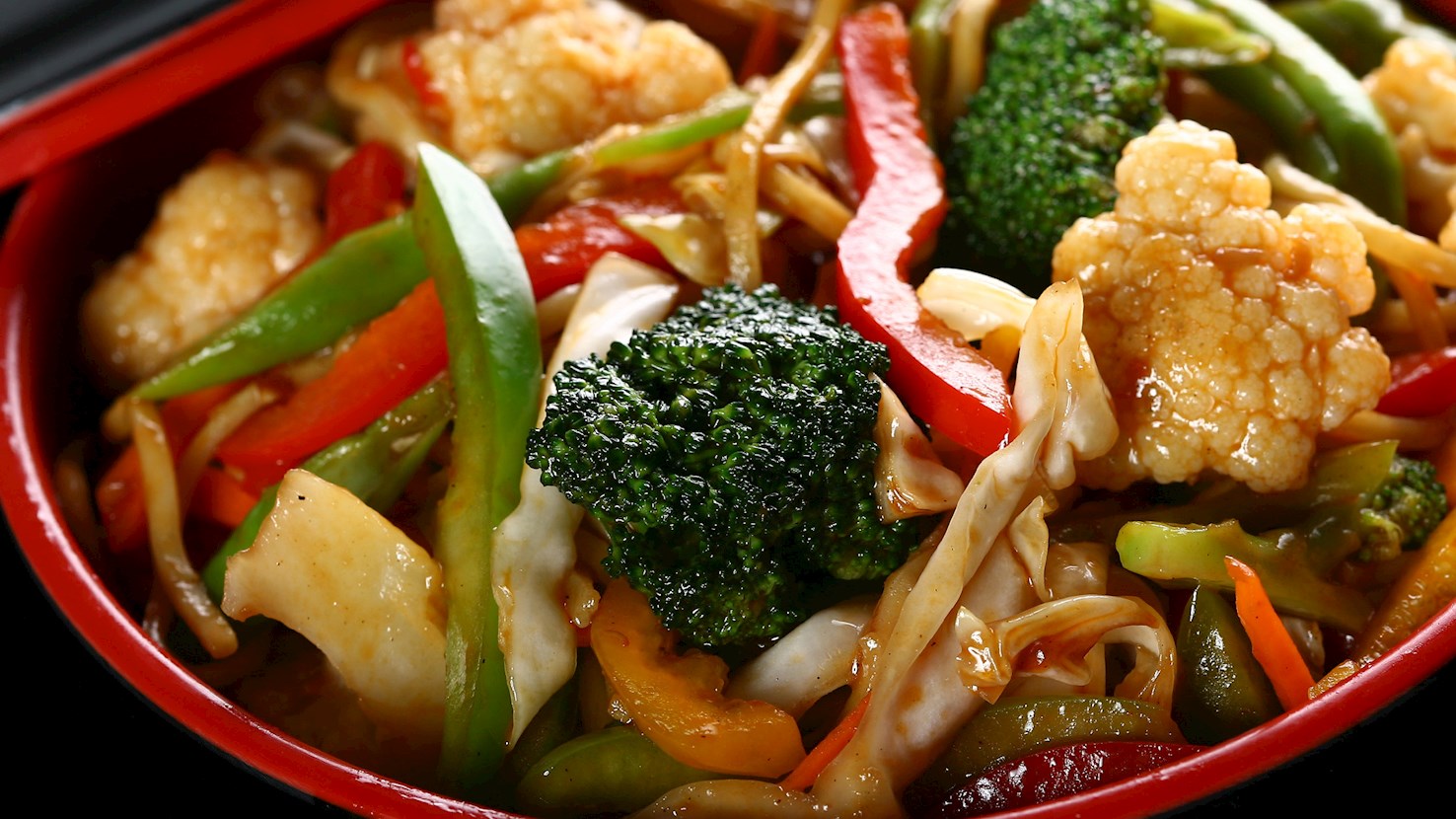
Buddha's delight is a popular dish both in numerous Chinese households and in Buddhist temples, since it is a vegetarian dish, often consisting of more than ten different types of vegetables which are cooked in soy sauce and spices until they develop a tender texture. Some of the more common vegetables used in the dish are bamboo shoots, black mushrooms, carrots, lotus seeds, water chestnuts, and cellophane noodles. Originally, the dish was a staple of Buddhist monks, as all of them are practicing vegetarians, but today, it is an international dish prepared in many Chinese restaurants, satisfying the appetites of vegetarians throughout the world. Buddha's delight is especially popular for Chinese New Year celebrations due to the Buddhist practice of maintaining a vegetarian diet for the first five days of the new year.
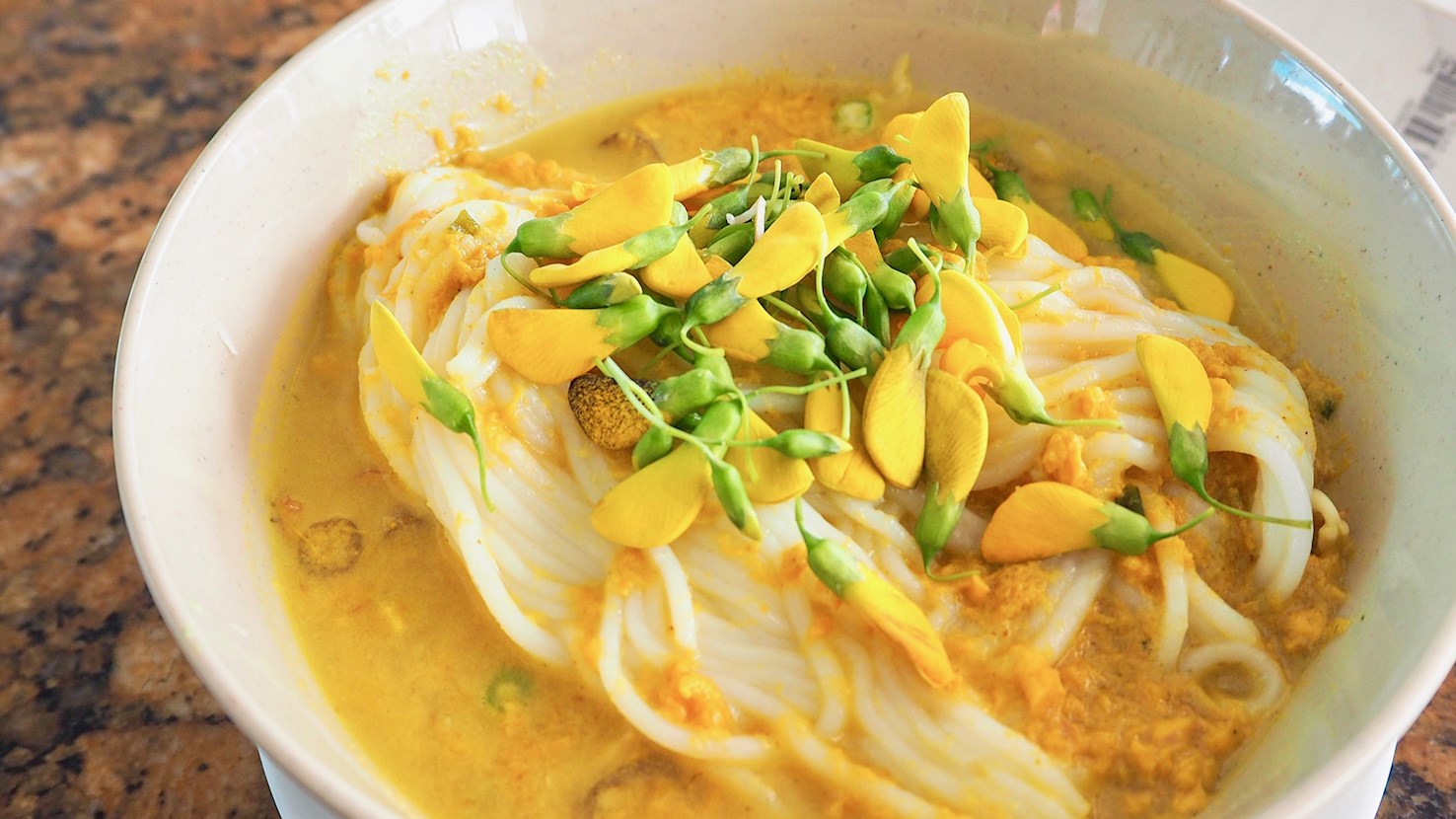
Num banh chok or Khmer noodles is a Cambodian dish that is typically served for breakfast or consumed as an afternoon snack. These fermented rice noodles are hand-made in stone or wooden mills, then topped with fish gravy and raw vegetables such as banana blossom, cucumbers, and water lily stems, along with a variety of fresh herbs such as mint and basil. Nowadays, there are many variations on this noodle dish that is typically eaten in warm weather, and some even say that the Chinese got the idea for rice noodles from the Cambodians, referring to a legend about Thun Chey who was exiled from the Khmer Empire to China.
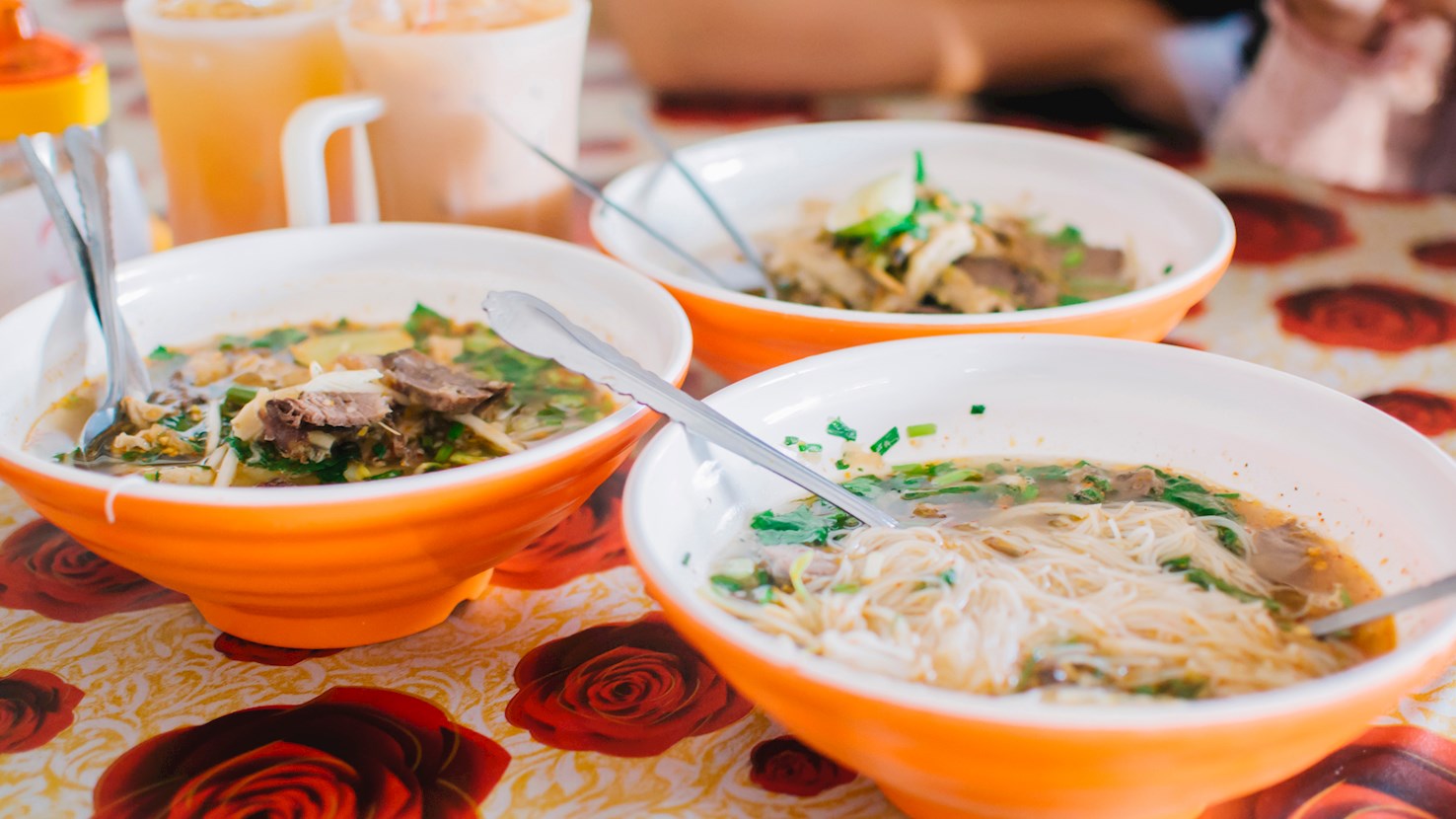
Bihun sup is a traditional noodle soup originating from Malaysia. The dish consists of beef broth, rice vermicelli noodles, and sambal chili paste. The broth is usually made with a combination of beef, ginger, garlic, shallots, cloves, star anise, cinnamon, and salt. The rice vermicelli are mixed with turmeric, soaked, drained, and boiled. The beef is shredded, topped with the noodles, garnished with scallions and coriander, and all of the ingredients are then covered with the hot broth and sambal before bihun sup is ready for consumption.
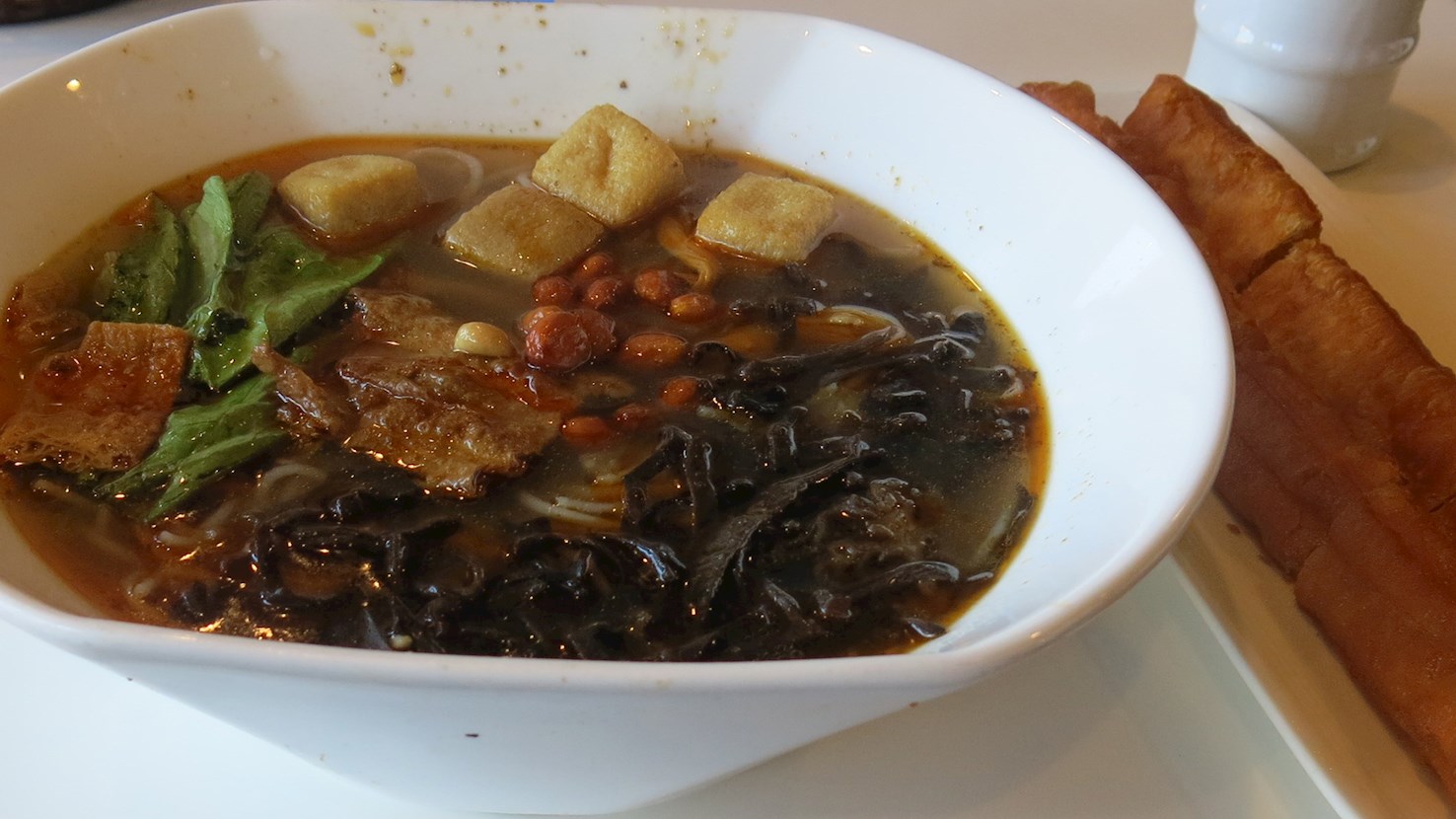
Luosifen, a native to Liuzhou in China's Guangxi province, is a dish consisting of a snail-based broth, rice noodles, and an array of additional ingredients, typically including pickled bamboo shoots, peanuts, tofu skins, and green vegetables. The hot and spicy taste comes from an elaborate concoction of spices and herbs that's used to make the broth, as well as a sizable amount of chili oil that's added to the finished soup at the end. Luosifen is typically sold by street vendors and only rarely served in restaurants, with each place having their secret recipe. Recently, specialized luosifen restaurants started to appear in numerous Chinese cities, but also abroad.
Mee ketang is a Cambodian take on the Cantonese noodle dish known as beef chow fun. This Cambodian dish consists of wide rice noodles stir-fried with a flavor-packed gravy, vegetables, various condiments, meat, and (sometimes) seafood. Typical ingredients include Chinese broccoli, baby corn, carrots, mushrooms, and eggs, while the selection of meat and seafood usually includes beef, chicken breasts, shrimps, squids, and fish. The dish uses plenty of condiments and seasonings such as oyster sauce, soy sauce, black bean sauce, chicken bouillon, rice wine, fried garlic, ginger, and black pepper, and it is usually sweetened with sugar. All these condiments and seasonings impart a wide range of flavors to this dish, which is widely consumed in all its variations throughout Cambodia, China, Vietnam, Thailand, and Laos.
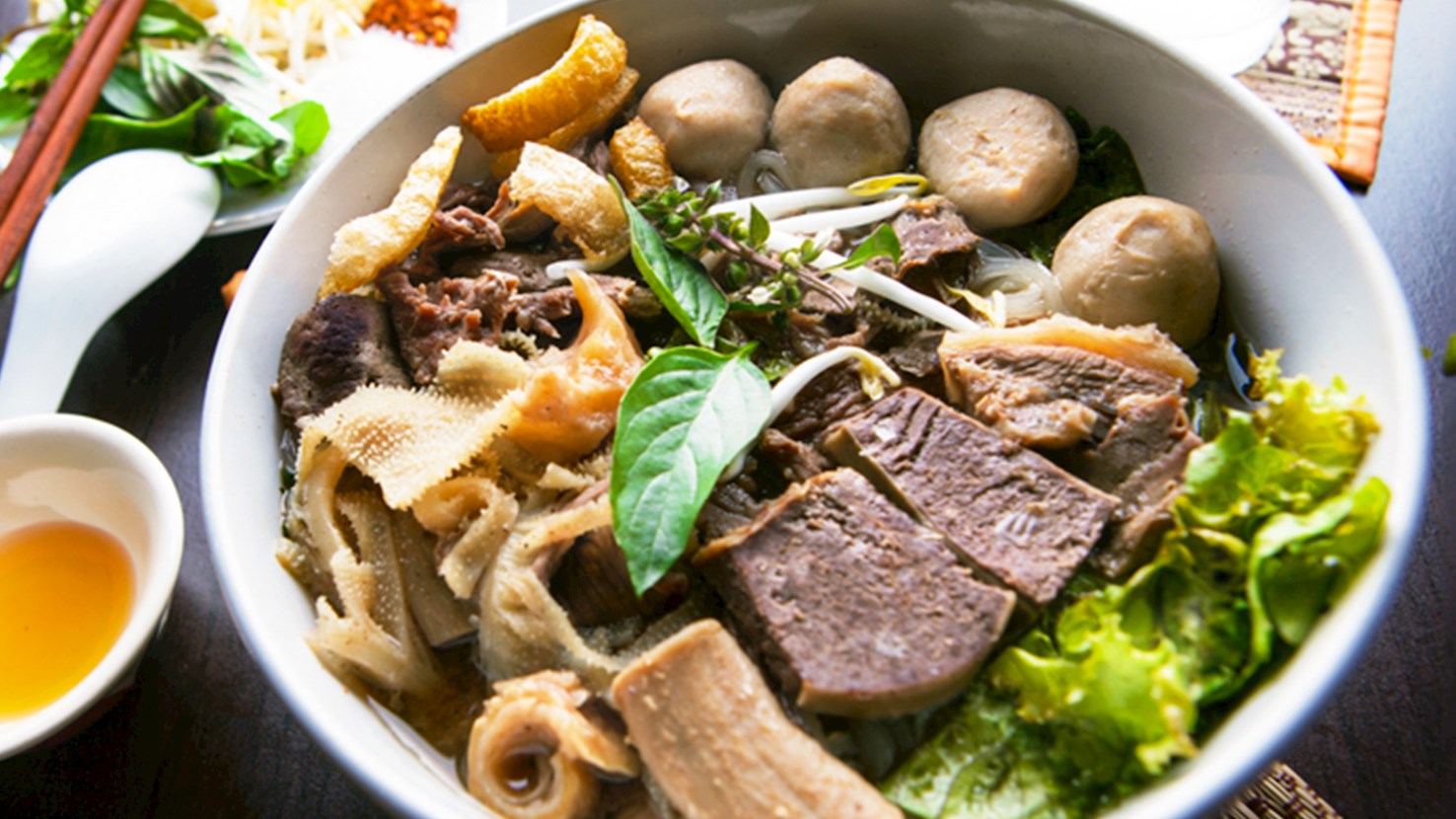
Kuay teow neua is a Thai beef noodle dish, where "kuay teow" translates to "noodles" and "neua" means "beef." It's a popular street food in Thailand, especially in Bangkok. The dish typically consists of rice noodles (often the flat, wide kind, similar to what's used in pad thai) served in a beef broth, accompanied by slices of beef (it could be a mix of tender beef slices and beef balls). The broth is simmered for hours, usually with bones, spices, and herbs, to achieve a rich and flavorful taste. It's often seasoned with various spices and condiments, such as star anise, cinnamon, and soy sauce. You'll commonly find it garnished with bean sprouts, cilantro, green onions, and fried garlic. On the side or at the table, there might be condiments like sugar, chili flakes, fish sauce, and lime wedges for diners to adjust the flavor to their liking.
Chángdé niúròu fěn is a beef rice noodle soup from Changde in Hunan province, known for its rich broth, tender beef, and smooth, slippery noodles. It is one of the most representative breakfast foods in the city and has become an essential part of the local food culture, often found in street stalls and small eateries that serve it from early morning until midday. The dish is deeply tied to Changde’s culinary identity and reflects the region’s preference for hearty, savory flavors balanced with spice and aroma. Its origins trace back to local noodle shops that began preparing beef noodles as a nourishing and affordable meal for workers and travelers in the early 20th century. Rice noodles had long been a staple in Hunan due to the region’s abundant rice cultivation, and beef became a favored addition as cattle rearing grew more common in inland China. Over time, cooks refined the recipe to highlight the beef’s flavor through slow cooking and seasoning techniques typical of Hunanese cuisine, which favors depth and intensity over subtlety. The dish’s popularity spread beyond the city, and it is now considered a benchmark example of how local flavors shape noodle-based meals in southern China. Preparation begins with the broth, which is the foundation of the dish. Beef bones and cuts with connective tissue are simmered slowly for several hours with ginger, garlic, scallions, star anise, and sometimes dried tangerine peel, creating a deep and aromatic stock. Thin slices of beef, often brisket or shank, are stewed separately with soy sauce, Shaoxing wine, and chili paste until tender and infused with flavor. The rice noodles, made from finely ground rice flour and water, are briefly blanched to maintain their delicate texture before being added to the hot broth. The stewed beef is then layered on top, and the bowl is finished with chopped scallions, pickled vegetables, chili oil, and occasionally a splash of beef fat to enrich the flavor. Chángdé niúròu fěn is most often eaten as a breakfast or lunch dish, commonly enjoyed at small family-run noodle shops where bowls are prepared to order and served steaming hot. It is sometimes paired with pickled side dishes or small plates of cold vegetables, and in colder months, diners may add extra chili paste or fermented bean sauce to increase the warmth and depth of flavor.
TasteAtlas food rankings are based on the ratings of the TasteAtlas audience, with a series of mechanisms that recognize real users and that ignore bot,
nationalist or local patriotic ratings, and give additional value to the ratings of users that the system recognizes as knowledgeable.
For the “10 Best Rated Dishes with Rice Noodles” list until June 17, 2026, 1,000,987 ratings were recorded, of which 657,348 were recognized by the system as legitimate.
TasteAtlas Rankings should not be seen as the final global conclusion about food. Their purpose is to promote excellent local foods,
instill pride in traditional dishes, and arouse curiosity about dishes you haven’t tried.