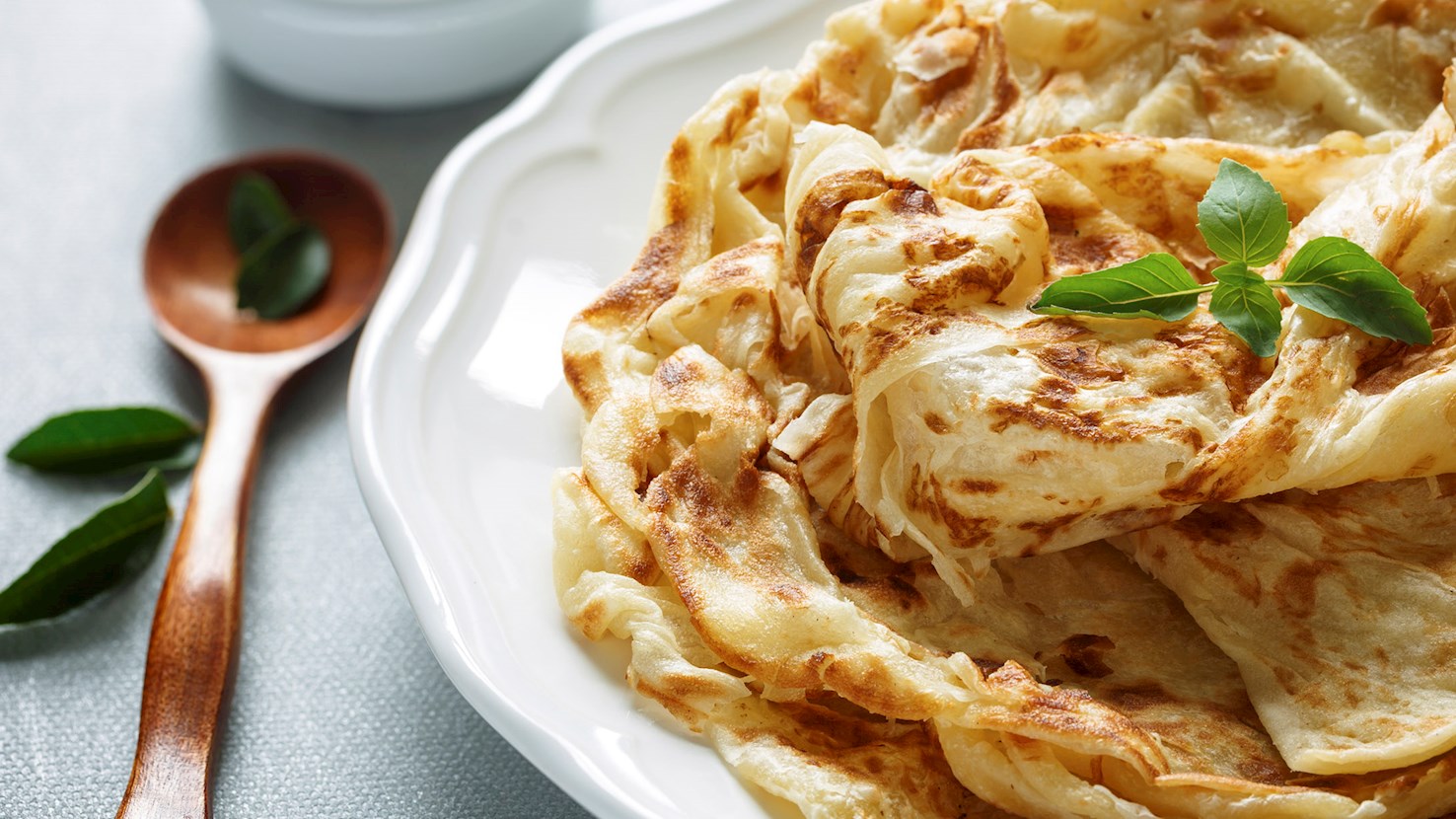
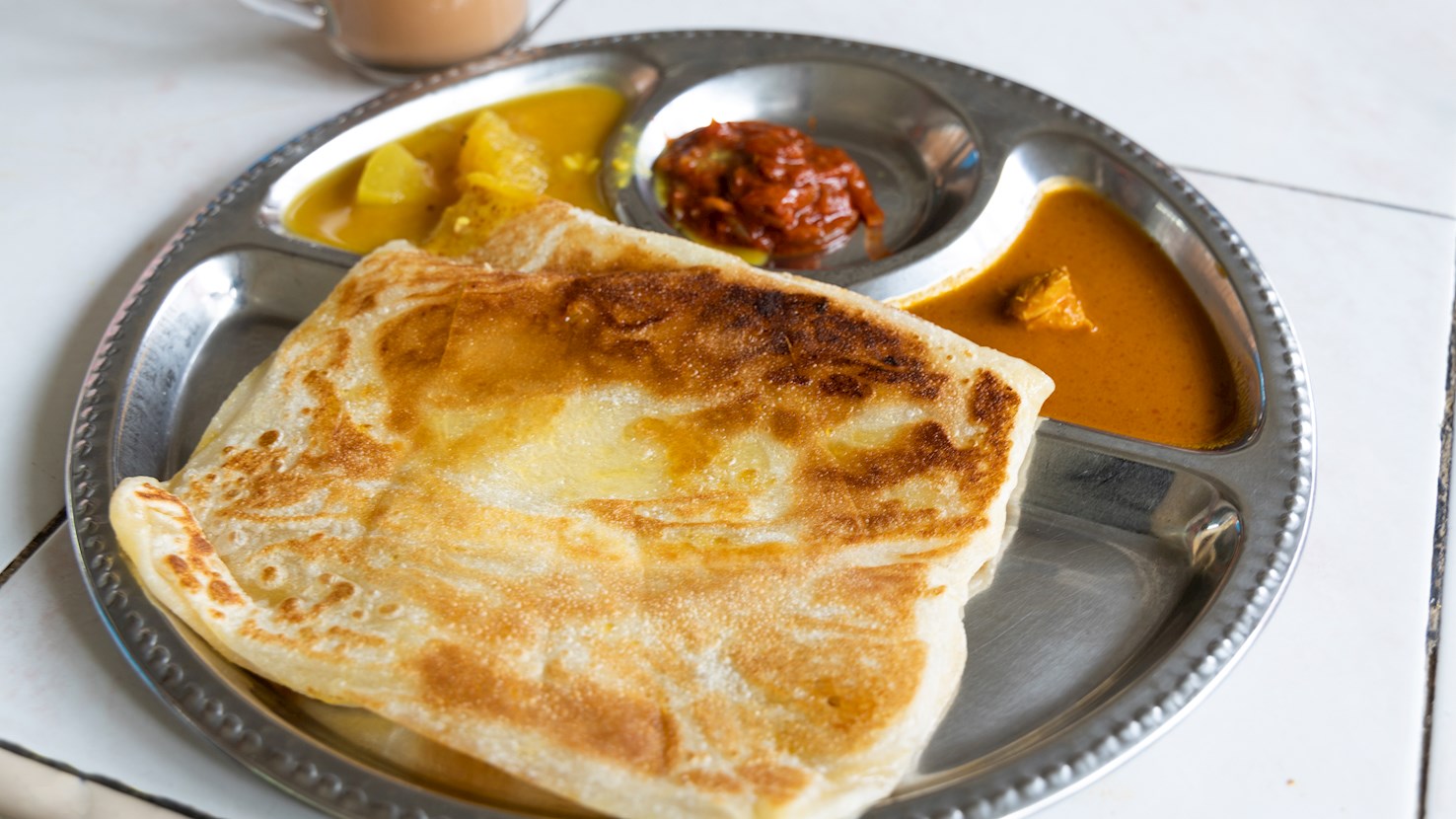
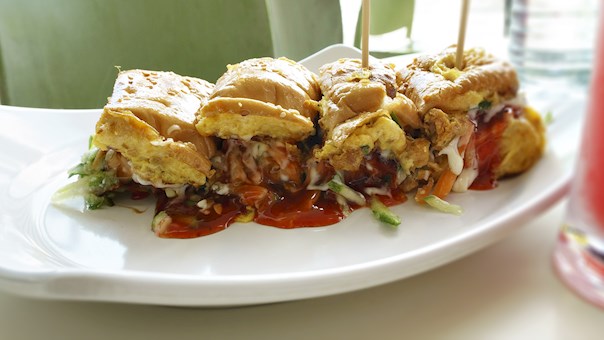
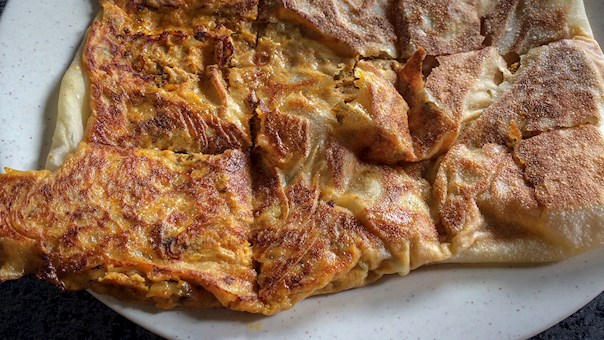
Roti canai is a traditional pan-fried flatbread made with flour, water, eggs, and fat of Indian origin, but mainly associated with Malaysia, and surrounding countries like Indonesia, Brunei, and Thailand. The dough for roti canai is repeatedly folded, so the final product has a layered texture, a soft interior, and a crispy outer layer. The most common fat used in roti canai is ghee, the traditional Indian clarified butter. It is believed that the dish originated in India when the Indian laborers who migrated to Malaysia brought the recipe and the tradition of preparing this crispy pastry to the foreign country. Usually, it is served plain in its traditional round form, as an accompaniment to curries. It can be served on the side or torn into pieces and mixed with the curry. However, roti canai is often served as the star dish, accompanied by different savory and sweet fillings and ingredients. If additional fillings are added, roti canai is usually shaped into rectangles. For example, in Malaysia, one can find various roti canai types, which are differentiated by the type of filling — egg, onion, egg and onion, banana, sardines, margarine and sugar, Maggi instant noodles, cheese, vegetable, and pork filling are some of the many available. However, roti canai doesn't have to have a filling but only a topping, such as fried eggs, curry, beans, lentils, and coffee beans. But martabak, a thick roti filled with meats, eggs, onions, and spices, is probably the best-known type of roti canai. Apart from Malaysia, it can also be found in Saudi Arabia, Yemen, and a few other countries. Other than Malaysia, a very similar type of flatbread can be found in Singapore, where it's called roti prata. This crispy bread is usually sold by street vendors called mamaks.
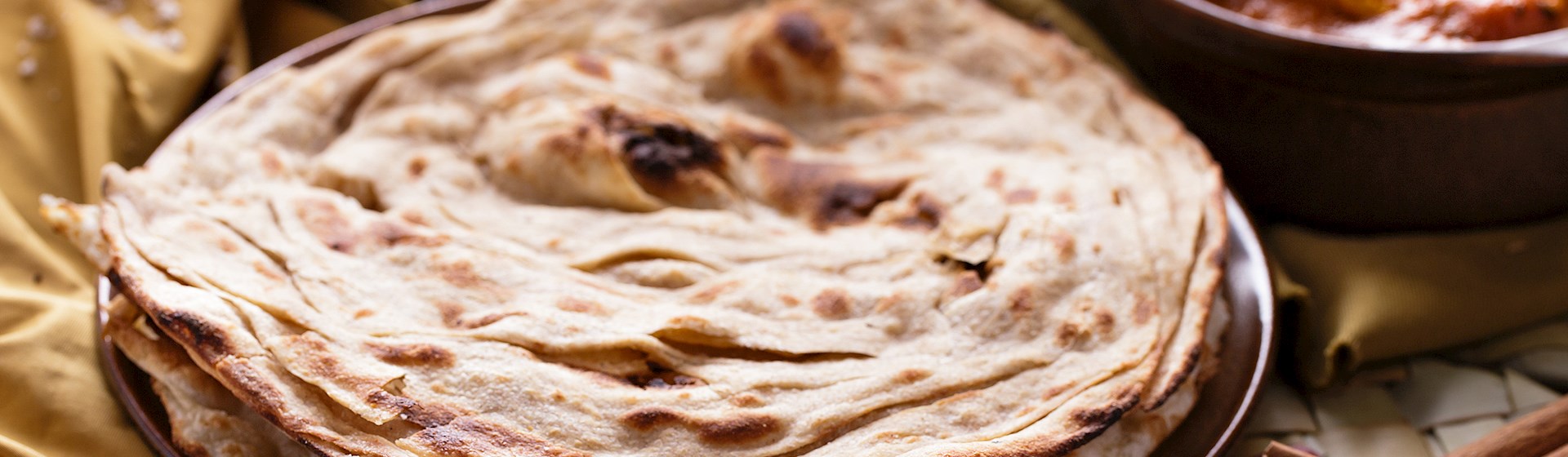
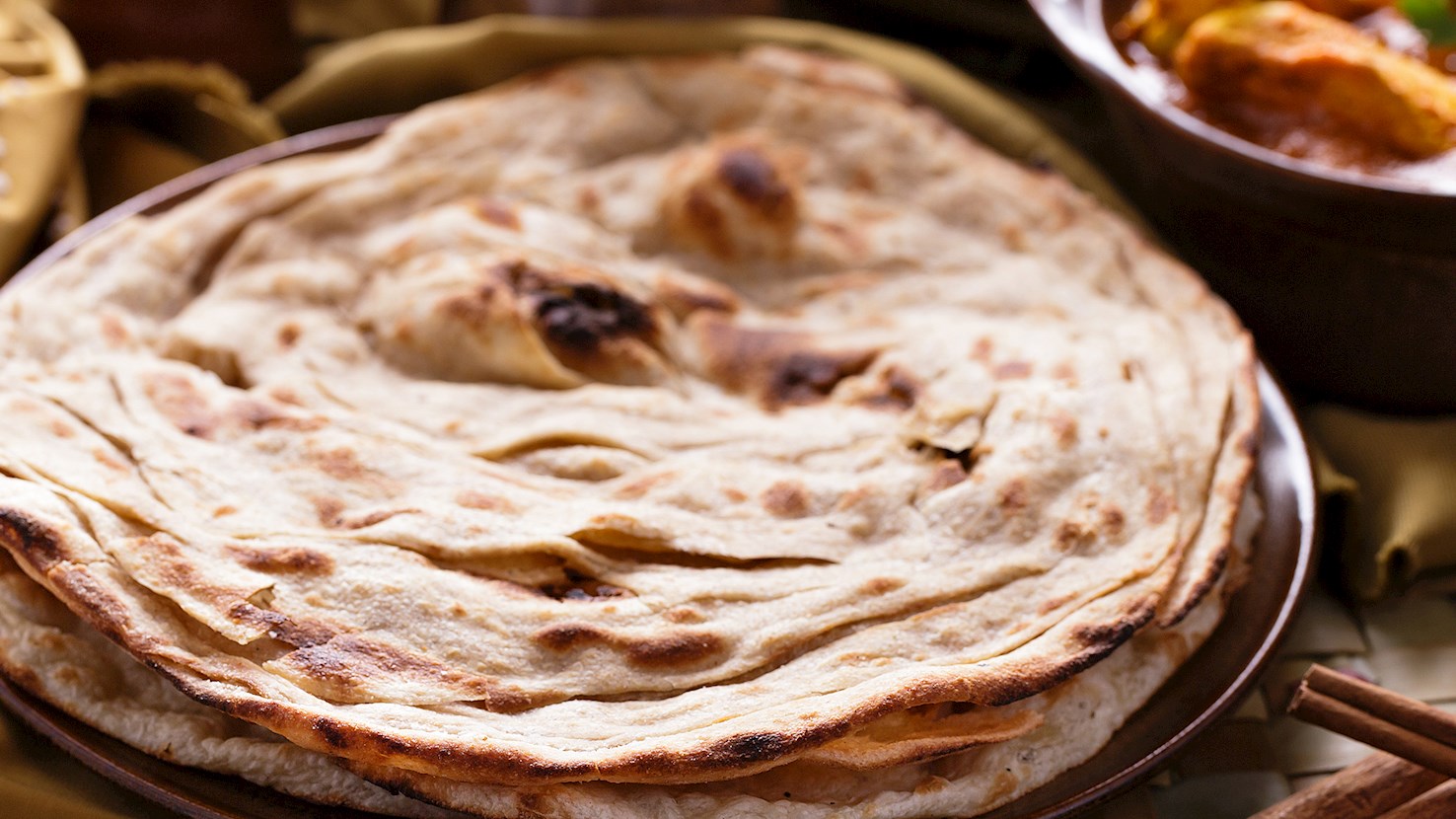
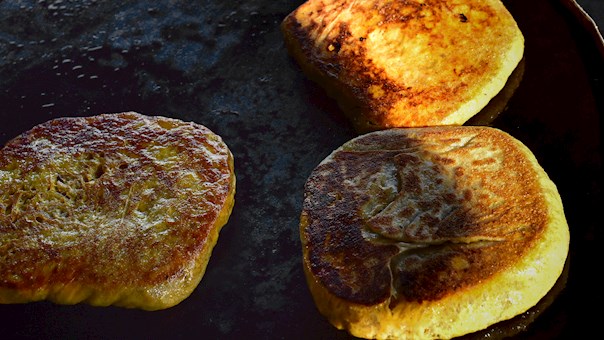
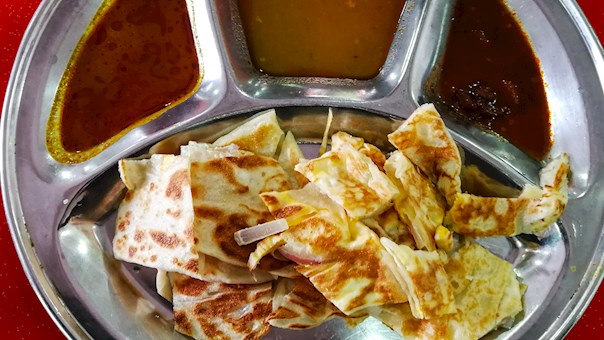
Roti prata is a pan-fried laminated flatbread with a crisp, blistered exterior and a soft, elastic center formed from many thin layers. It is made by stretching wheat dough until almost transparent, coating it with fat, folding or coiling it, and frying it on a flat griddle. Ghee is closely associated with the bread, although margarine and vegetable oil are now equally common. Roti prata is most strongly associated with Singapore, while the closely related form sold in Malaysia is generally called roti canai. Both belong to the wider family of layered flatbreads connected with paratha and the thinner, highly laminated parotta of southern India. Similar breads are also found in Sri Lanka, Myanmar, Thailand, Brunei, and parts of Indonesia. Its development in the Malay Peninsula is connected with migration from the Indian subcontinent during the nineteenth and early twentieth centuries. Tamil Muslim communities from the Coromandel Coast played a particularly important role in establishing food stalls and restaurants in Singapore. Migrants from Kerala and the Malabar Coast also contributed to the broader culinary culture from which prata emerged. Roti prata became closely associated with Indian Muslim food stalls, coffee shops, markets, and later hawker centers. Its modest ingredients, compact size, and substantial energy value made it suitable for workers around ports, commercial districts, and other busy urban areas. However, there is no strong evidence that it began exclusively as a meal for plantation and dock laborers. It developed as an inexpensive everyday food that could be eaten at breakfast, lunch, dinner, or late at night. The name combines two related culinary terms. Roti is an Indo-Aryan word used broadly for bread or flatbread. Prata is generally understood as a shortened local form of paratha or parotta, rather than a separate word meaning only “flat.” The name therefore reflects the bread’s connection with the layered flatbreads of the Indian subcontinent. The dough usually contains strong wheat flour, water, salt, sugar, and fat. Ghee, margarine, or vegetable oil can supply the fat, while some formulas also include egg, milk, or condensed milk for greater tenderness and browning. Commercial yeast and chemical raising agents are generally unnecessary because the layers are created through kneading, resting, stretching, folding, steam, and hot fat rather than fermentation. The dough is kneaded until smooth, elastic, and capable of stretching without tearing. It is then divided into uniform balls and coated generously with oil or fat. The portions must rest long enough for the gluten to relax, commonly for at least one to five hours and sometimes overnight. They do not need to remain completely submerged in oil, although a generous coating prevents the surface from drying and makes the dough easier to stretch. Each rested ball is flattened on an oiled stainless-steel or stone work surface. An experienced vendor lifts, swings, slaps, and rotates the dough repeatedly until it expands into a nearly transparent sheet several times its original size. The rapid movement helps stretch the dough evenly, but the result also depends on properly developed and rested gluten. The sheet can alternatively be pulled outward by hand without being thrown through the air. Fat is spread across the thin sheet before the edges are folded inward. The dough may be folded into a flat square or gathered into a long rope and wound into a spiral. Folding creates overlapping sheets separated by a fine coating of fat, while small pockets of air remain between some of the layers. A coiled portion normally rests again before being flattened for frying. The shaped bread is placed on a hot, well-greased iron griddle. Heat turns the water inside the dough into steam, which expands between the fat-coated layers and pushes them apart. At the same time, direct contact with the griddle produces dark brown blisters and a crisp, golden surface. The heat must be strong enough to brown the exterior without scorching it before the inner dough is fully set. Once the prata leaves the griddle, it is often clapped or compressed quickly from opposite sides. This is not intended simply to crush the bread. It loosens the layers, breaks the rigid outer shell into flakes, releases trapped steam, and helps keep the surface crisp. The motion can be performed between the hands or against a clean work surface and should be firm without reducing the bread to fragments. The plain form is known as roti kosong, meaning empty or unfilled bread. Its flavor comes from toasted wheat, browned fat, salt, and the lightly sweet dough. Roti prata is served immediately while the crust is still crisp and the internal layers remain hot and flexible. It is commonly torn by hand into small pieces, exposing the soft, elastic center. Forks and spoons may also be supplied, especially for filled versions or when several sauces accompany the bread. The standard accompaniments are curries and lentil gravies. A thin, tangy fish curry provides acidity and heat, while mutton or chicken curry gives the bread a richer coating. Dal supplies a milder, earthy alternative based on lentils. Some stalls serve more than one sauce, allowing pieces of prata to be dipped into different gravies during the same meal. Sweet serving styles are equally established. Plain prata can be dipped into coarse white sugar, served with sugar beside the curry, or covered with condensed milk. These combinations are especially common at breakfast and as late-night food, although prata is eaten throughout the day.
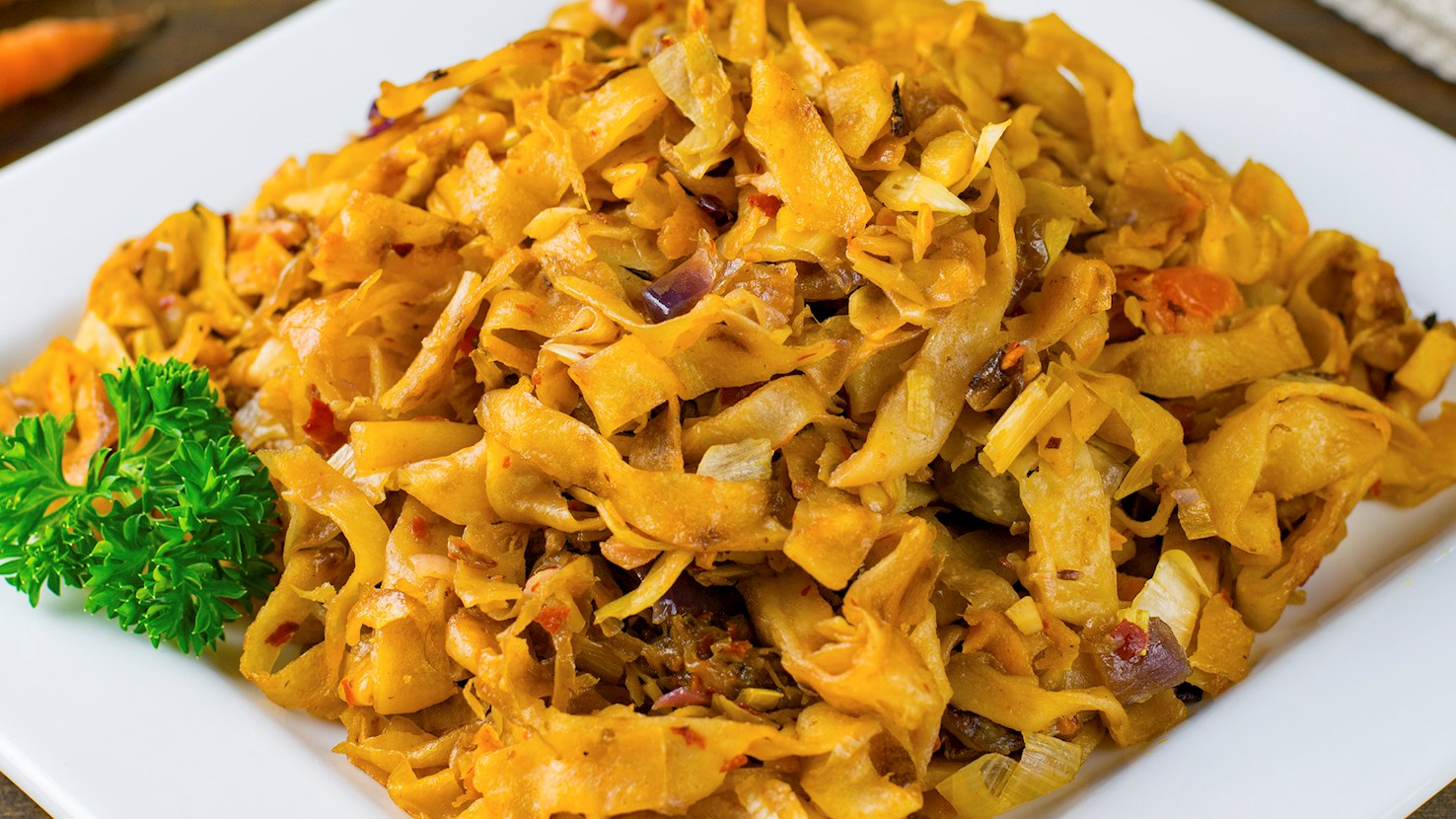
Kottu is one of the national dishes of Sri Lanka, a favorite among locals and tourists throughout the country. It employs crucial elements of national Sri Lankan cuisine: roti flatbread, aromatic spices, crispy vegetables, and tasty meat. Each kottu is prepared individually on a hot griddle. The process starts with spices such as ginger, garlic, pandan leaves, curry, chili, cardamom, and cinnamon, which are shortly fried to release all their intense aromas. The spices are topped and mixed with carrots, scallions, leeks, or other vegetables, while pieces of sliced roti are added on top. Traditionally, kottu is topped with eggs which are used to hold the ingredients together, and most varieties of the dish also employ meat, usually generously seasoned slices of beef or chicken. When all ingredients are placed on a flat sizzling griddle, traditional long metal utensils are used to slice (and incorporate) them into kottu. In the process, the metal appliances make loud sounds, which are recognized as a universal music that can be heard every evening on Sri Lankan streets.
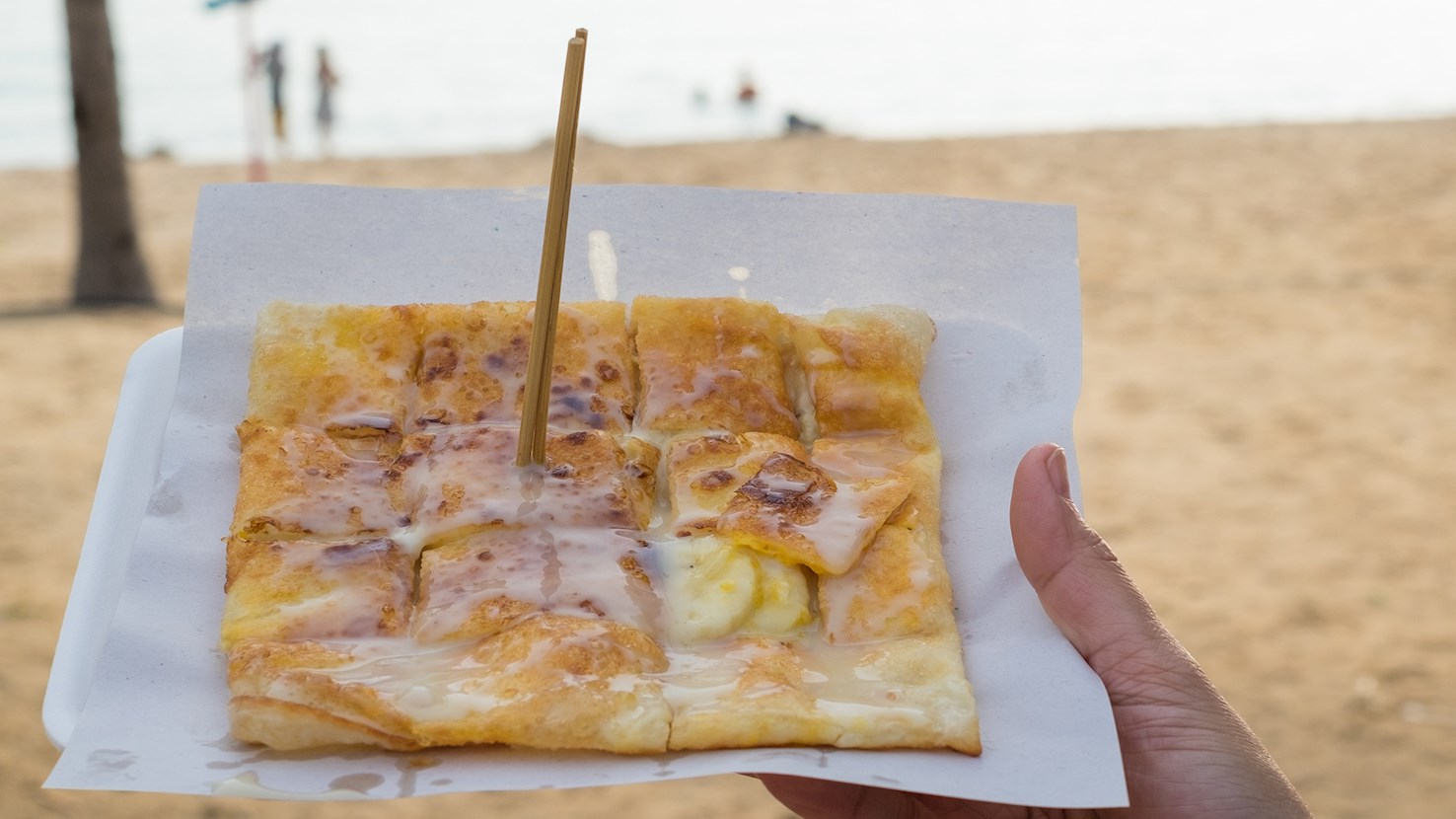
This sweet variety of the traditional Malaysian roti employs bananas as the star ingredient. The unleavened roti dough is stretched until thin, and the combination of sliced bananas, eggs, and sugar is then wrapped in the dough. Roti is usually pan-fried until golden, and it comes served cut into bite-sized pieces that are dusted with sugar and drizzled with condensed milk. The dish is a classic street food item that is usually enjoyed as a sweet and filling breakfast or an afternoon snack.
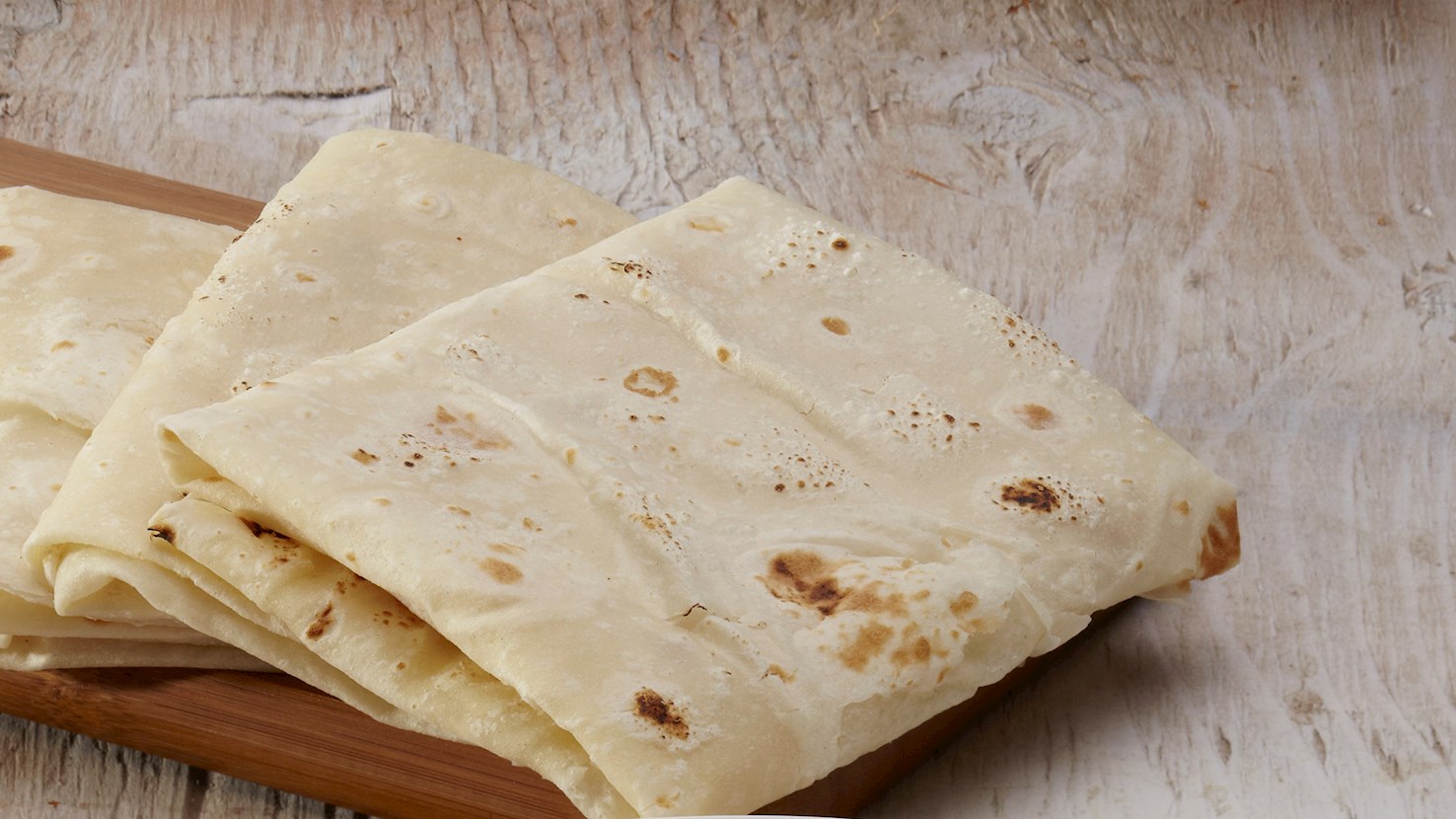
Rumali roti is a popular Indian flatbread made with white and wheat flour, water, and oil. The dough is baked on a traditional tawa, and since it is extremely thin, it was named handkerchief (rumali) bread. Some say that the bread got its name because it was used instead of a handkerchief after a meal. Rumali roti is typically served as an accompaniment to various curries or with any sort of liquid meal that can be scooped up with the flatbread. It is important to serve the bread slightly moist so that it does not become stiff and unpalatable. Although it has origins in the Mughal cuisine, today it is mainly consumed in North India and Pakistan.
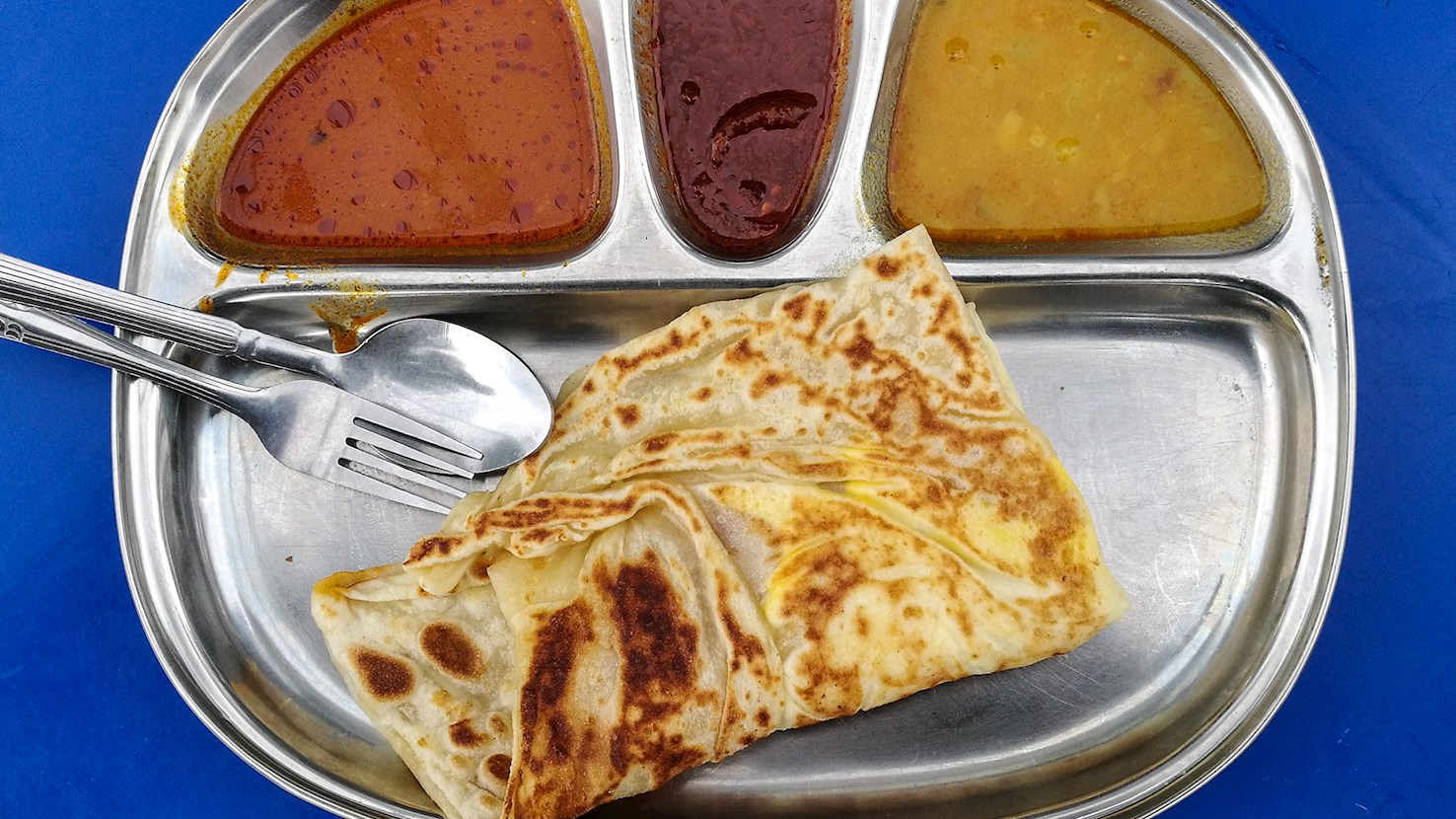
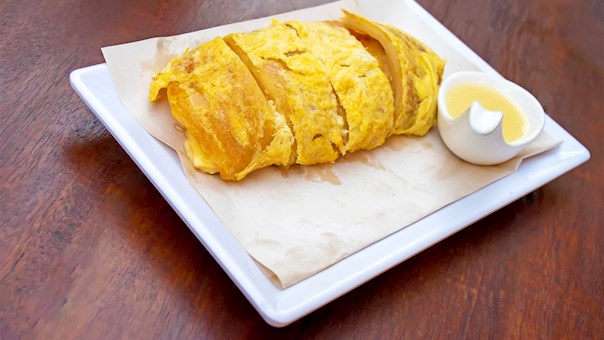
This simple variation of Malay roti canai is prepared with a cracked or lightly beaten egg that is encased inside the flaky roti dough. Roti telur is traditionally wrapped into rectangular shapes, and just like other types of savory roti snacks, it is typically accompanied by various sides that usually include thick and spicy curries or dahl dishes. The variety with added onions is known as roti telur bawang.
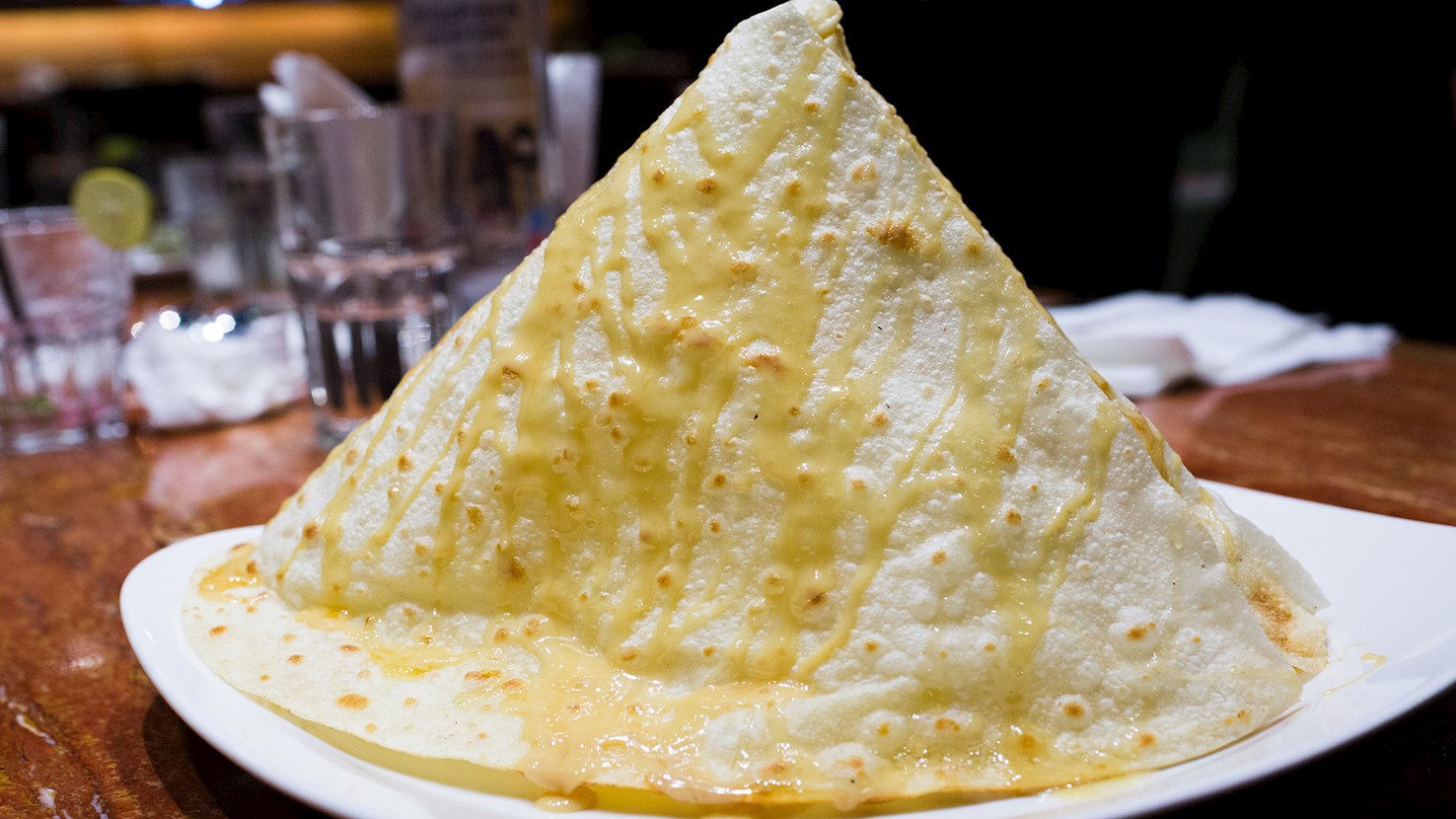
Roti tisu is the paper thin variety of the traditional Malay roti canai. It is prepared with the same type of dough that is stretched thin, sometimes up to five or six feet in length, and it is then shortly pan-fried. Tisu is served wrapped around a large cone, hence its alternative name rocket roti or roti helicopter. It can be served alongside curries or chutneys, but it is usually enjoyed as a dessert or a sweet snack, when it comes drizzled with condensed milk or chocolate, dusted with sugar, or sided with ice cream or fruit jams. A staple at Mamak restaurants and stalls throughout Singapore and Malaysia, roti tisu is usually eaten by cracking small pieces of delicate pastry with your hands.
Roti planta is a traditional variety of roti flatbread originating from Malaysia. It’s usually made with a combination of flour, eggs, salt, sugar, condensed milk, and margarine. Although quite similar to its cousin roti bom, roti planta is folded into a big square instead of a circle. This folded, square-shaped, layered roti is cooked in oil over high heat until both sides become golden brown. Due to the fact that margarine and sugar are folded into this crispy flatbread, its flavors will be savory and sweet.
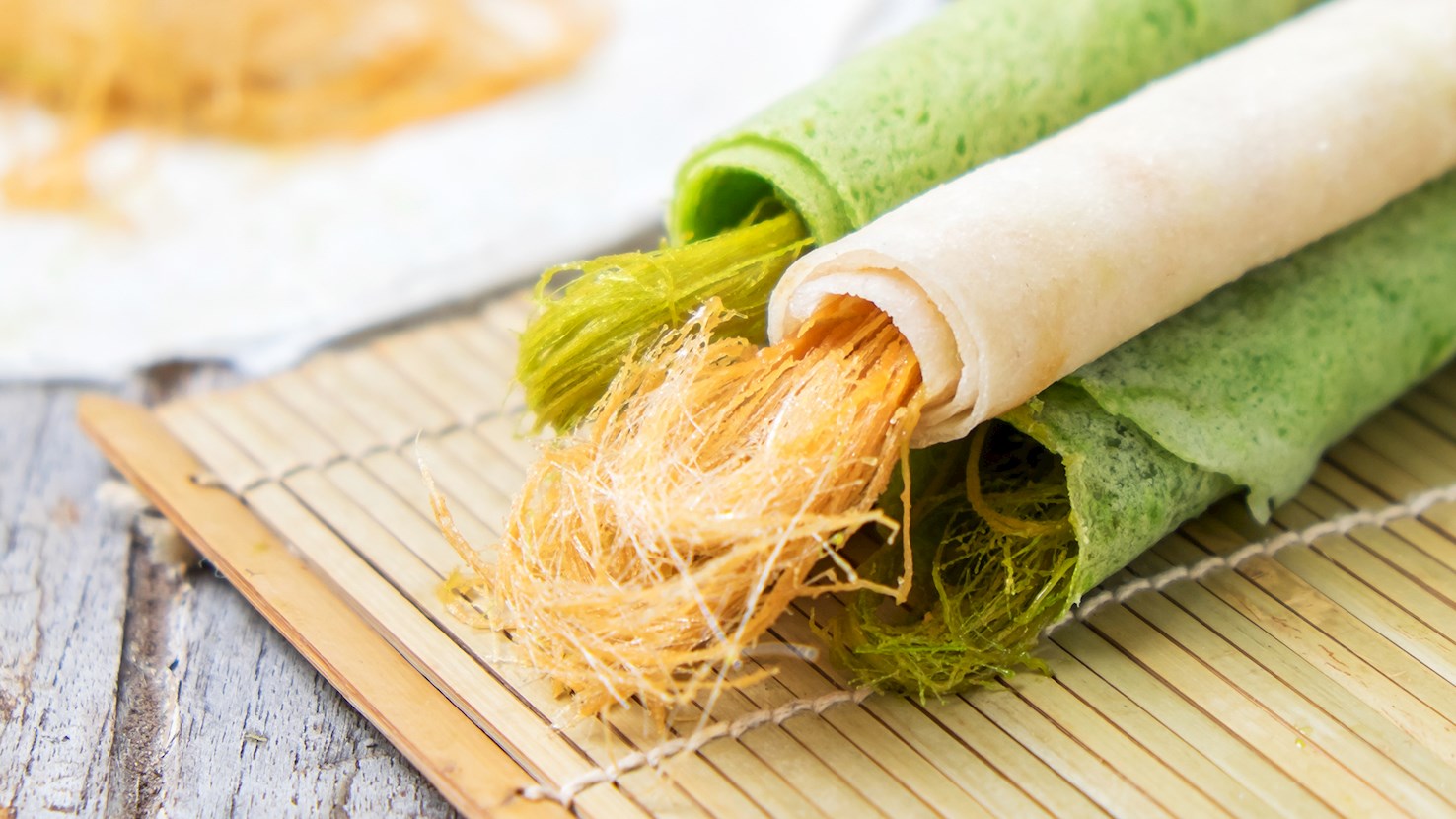
Roti sai mai is a sweet Thai snack consisting of a pandan-flavored pancake (roti) that is filled with cotton candy. The pan-fried pancake is similar to a crêpe, and it has a distinctive green color attained from the addition of pandan. The dish is believed to have originated in Ayutthaya, primarily among the Muslim community. It is usually sold by vendors who prepare it on street stalls.
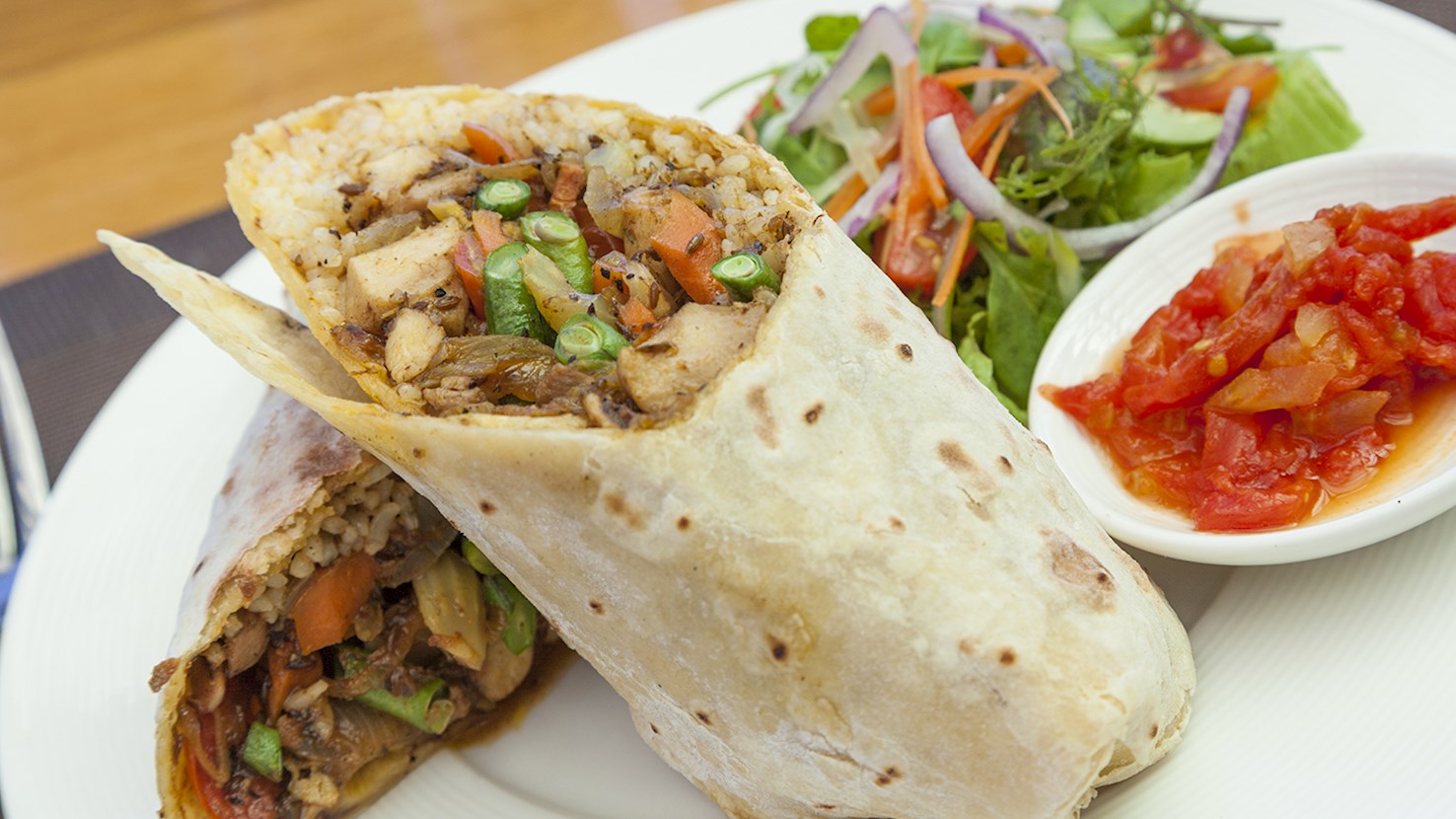
This flavorful, savory Trini wrap typically consists of a tawa-cooked dhalpuri roti that is filled with curries, potatoes, or meat. The wrapped form of roti originated in Southern Trinidad in the 1940s. It is believed that wrap roti was invented by Sackina Karamath, who wanted to make a convenient meal that could be consumed on the go. The dish quickly gained popularity and spread throughout the Caribbean. Nowadays, wrap roti comes in numerous variations and can also be filled with pumpkin, spinach, conch, goat, shrimp, chutneys, and hot sauces.
TasteAtlas food rankings are based on the ratings of the TasteAtlas audience, with a series of mechanisms that recognize real users and that ignore bot,
nationalist or local patriotic ratings, and give additional value to the ratings of users that the system recognizes as knowledgeable.
For the “18 Best Rated Dishes with Roti” list until November 17, 2026, 1,058,865 ratings were recorded, of which 705,319 were recognized by the system as legitimate.
TasteAtlas Rankings should not be seen as the final global conclusion about food. Their purpose is to promote excellent local foods,
instill pride in traditional dishes, and arouse curiosity about dishes you haven’t tried.










What People Say