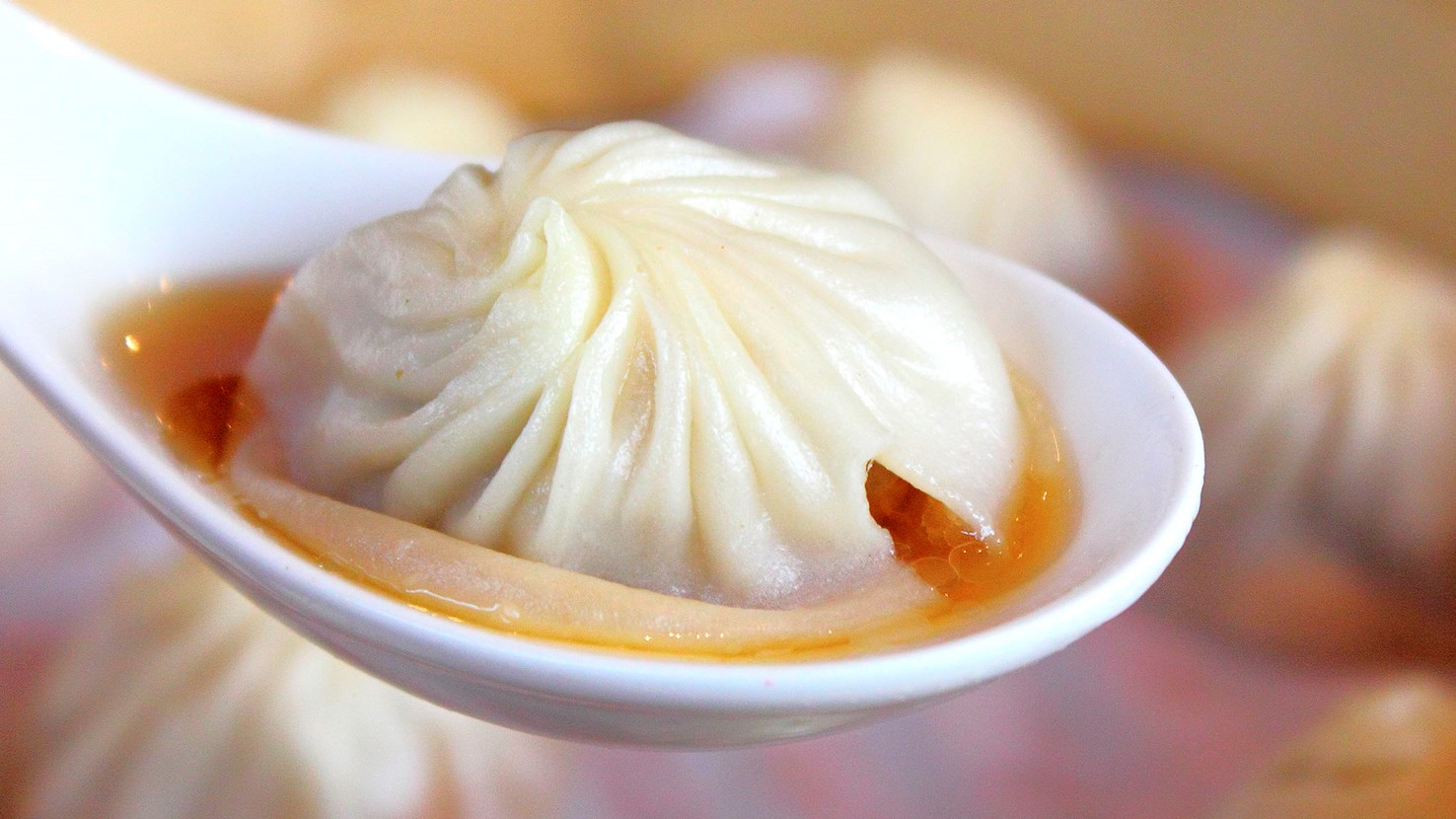
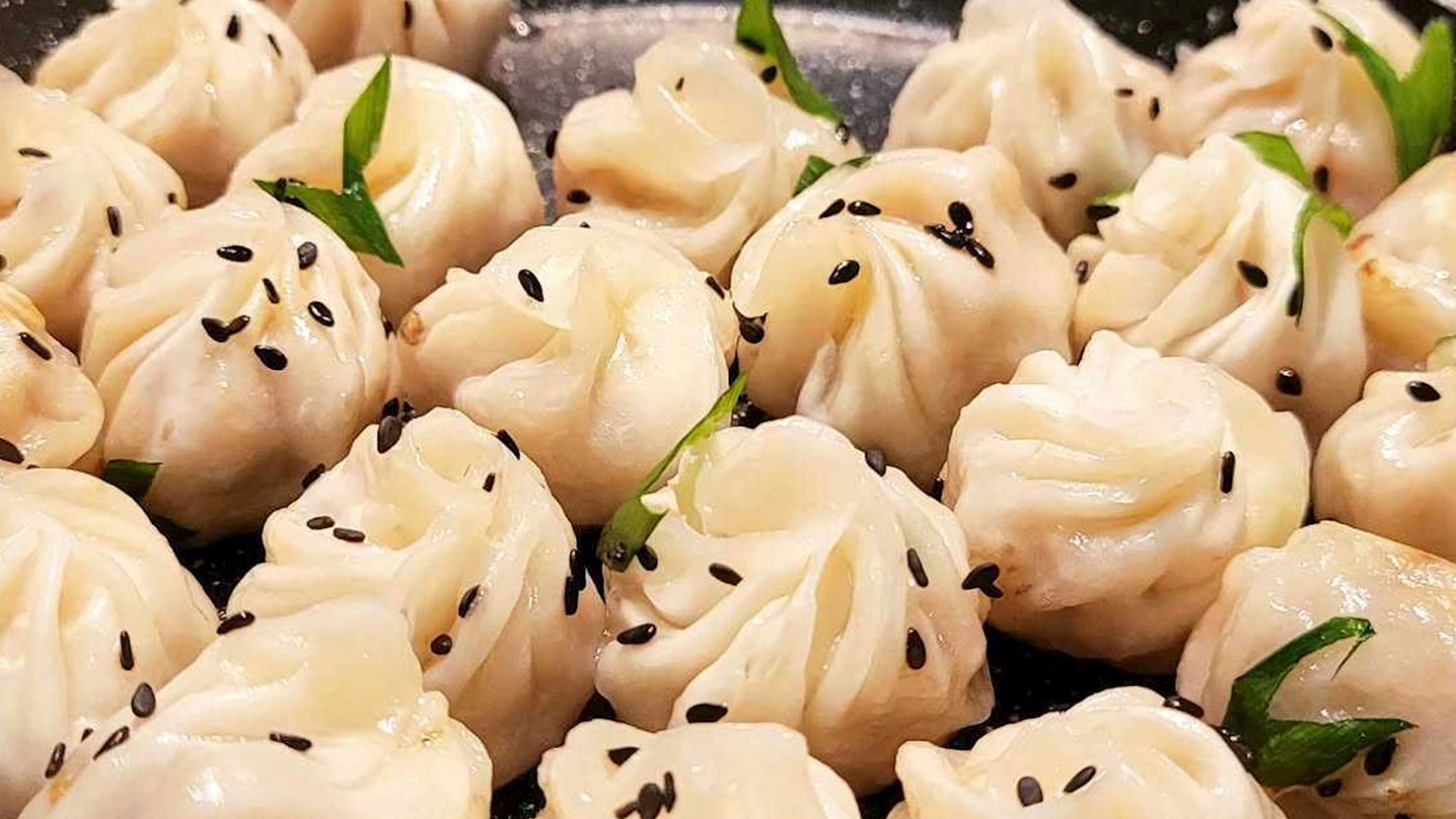
Xiaolongbao are soup-filled dumplings originating from the 19th-century Nan Xiang, what is today Shanghai's Jiading district. It is believed that the first form of xiaolongbao was sold by Huang Mingxian, a shop owner who wanted to evolve the classic dumpling due to the increased competition of neighboring vendors. The dumplings are usually filled with a large volume of soup and minced pork, then steamed in a specially-designed bamboo steamer. Sometimes, xiaolongbao can also be filled with crab or shrimp meat. The dough is quite thin, and it is believed that it should be thicker than tang bao, but not as thick as shen jian bao. It is recommended to serve xiaolongbao dumplings while they are still hot, preferably with a vinegar and ginger dip on the side.
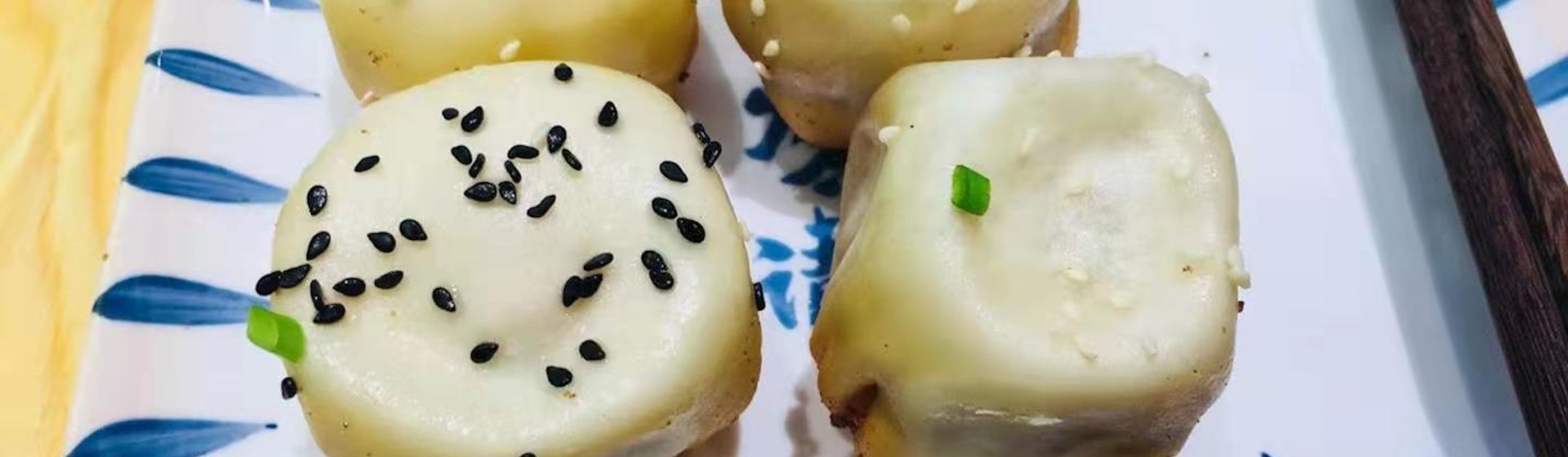
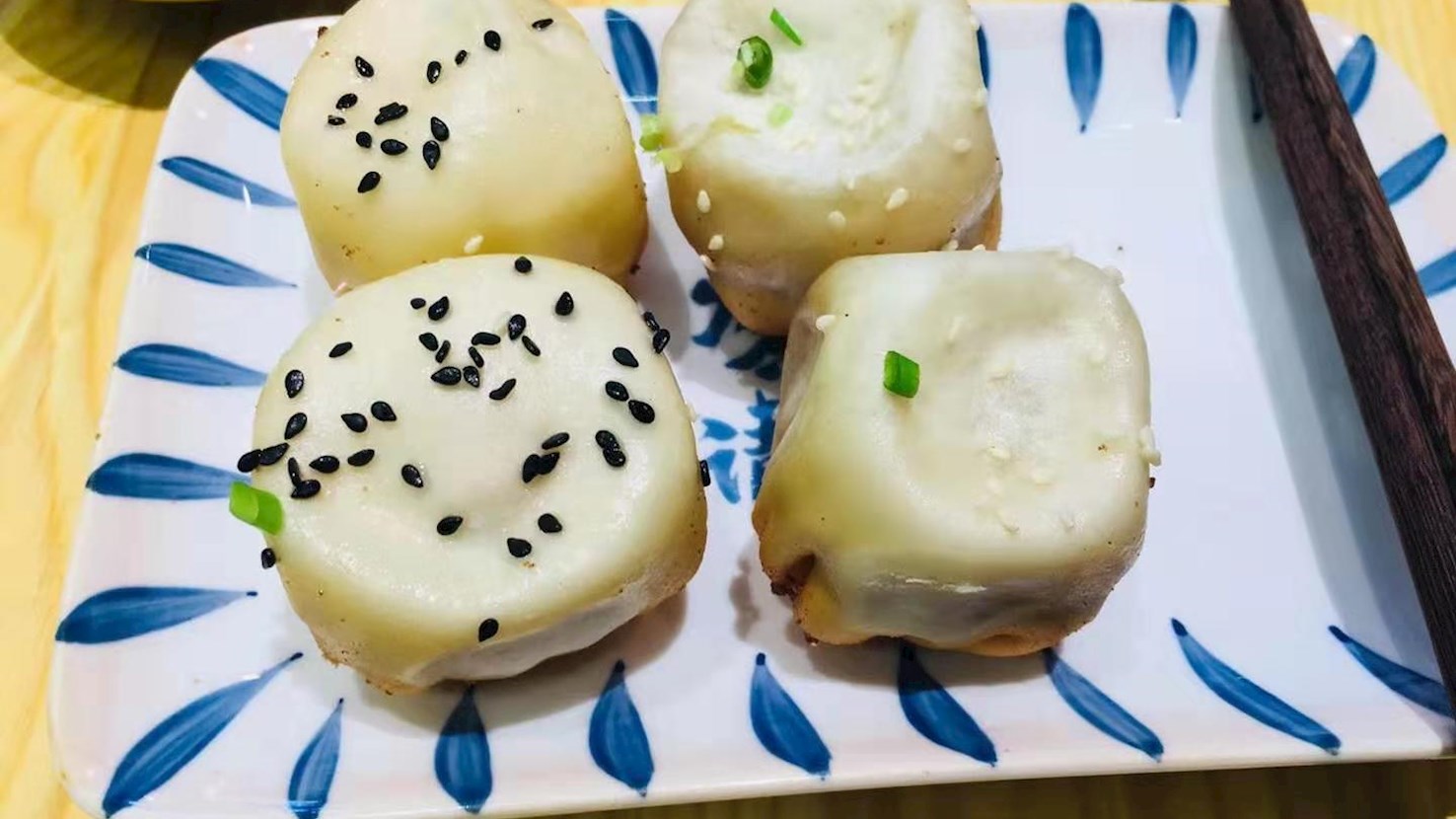
Among the broad group of Chinese dumplings, shengjian mantou stands out as a unique pan-fried variety. Belonging to the category of soup dumplings, or soup buns, they are slightly different than the more famous xiao long bao. Shengjian mantou can be made with minced pork, vegetable, or shrimp as the base, often incorporated with cabbage and chives, then infused with soy sauce, sesame oil, and occasionally ginger and garlic. The fillings are wrapped in a traditional soft leavened dough which might vary in thickness. When wrapped, the dumplings are pan-fried in shallow oil, and alternatively covered in water to produce the steaming effect. This technique provides texturally exciting dumplings, with a soft top and a crispy brown bottom. They are typically sold by piece, and before serving they are sprinkled with black or white sesame seeds, chopped cilantro, or spring onions. Although they can be found in restaurants, they are typically bought at street stands and food stalls which specialize in the preparation of this nutritious delicacy. It is believed that shengjian mantou originally appeared as a part of the traditional dim sum meals, and the first specialized shops started to open in the 1930s. The place of origin is usually associated with Suzhou and Shanghai, but today these delicious hearty dumplings can be found in other parts of China, as well as in numerous Chinese restaurants around the world.
Mǔzhǐ shēngjiān bāo, or thumb-sized pan-fried buns, is a specialty snack from Shanghai, where shēngjiān bāo has long been one of the city’s defining street foods. These buns, smaller than the more common versions, condense all the qualities that made the larger ones famous (crisp bottom, fluffy top, and juicy filling) into a compact form that can be eaten in a single bite. Their size makes them especially convenient in the fast-paced environment of Shanghai, where street food has always thrived. The origin of shēngjiān bāo lies in Shanghai during the early twentieth century, when street vendors experimented with ways to combine the appeal of baozi with the texture of fried dumplings. The result was a bun that offered both the heartiness of a filled bread and the satisfying crunch of pan-frying. Over time, as demand grew, smaller versions emerged to meet the needs of diners who wanted lighter portions or snacks suitable for sharing. The thumb-sized buns fit naturally into this setting, becoming a popular option at busy teahouses and food stalls. The preparation of mǔzhǐ shēngjiān bāo follows the same principles as the larger buns. A soft dough is made from yeast and flour, rolled out into small circles, and filled with seasoned minced pork mixed with scallions, ginger, soy sauce, and sesame oil. Some variations include gelatinized broth that melts into soup as the bun cooks. The filled buns are pleated, placed into a shallow pan, and fried until the bottoms turn crisp and golden. A splash of water is added, the pan covered, and the buns steam until the dough is tender and the filling fully cooked. Before serving, they are sprinkled with sesame seeds and chopped scallions. Today, mǔzhǐ shēngjiān bāo is a familiar sight in Shanghai’s teahouses, night markets, and snack shops. They are eaten at breakfast, lunch, or late at night, often served in small baskets or on plates meant for sharing.
TasteAtlas food rankings are based on the ratings of the TasteAtlas audience, with a series of mechanisms that recognize real users and that ignore bot,
nationalist or local patriotic ratings, and give additional value to the ratings of users that the system recognizes as knowledgeable.
For the “Top 3 Eastern Chinese Dumplings” list until April 20, 2026, 564 ratings were recorded, of which 467 were recognized by the system as legitimate.
TasteAtlas Rankings should not be seen as the final global conclusion about food. Their purpose is to promote excellent local foods,
instill pride in traditional dishes, and arouse curiosity about dishes you haven’t tried.