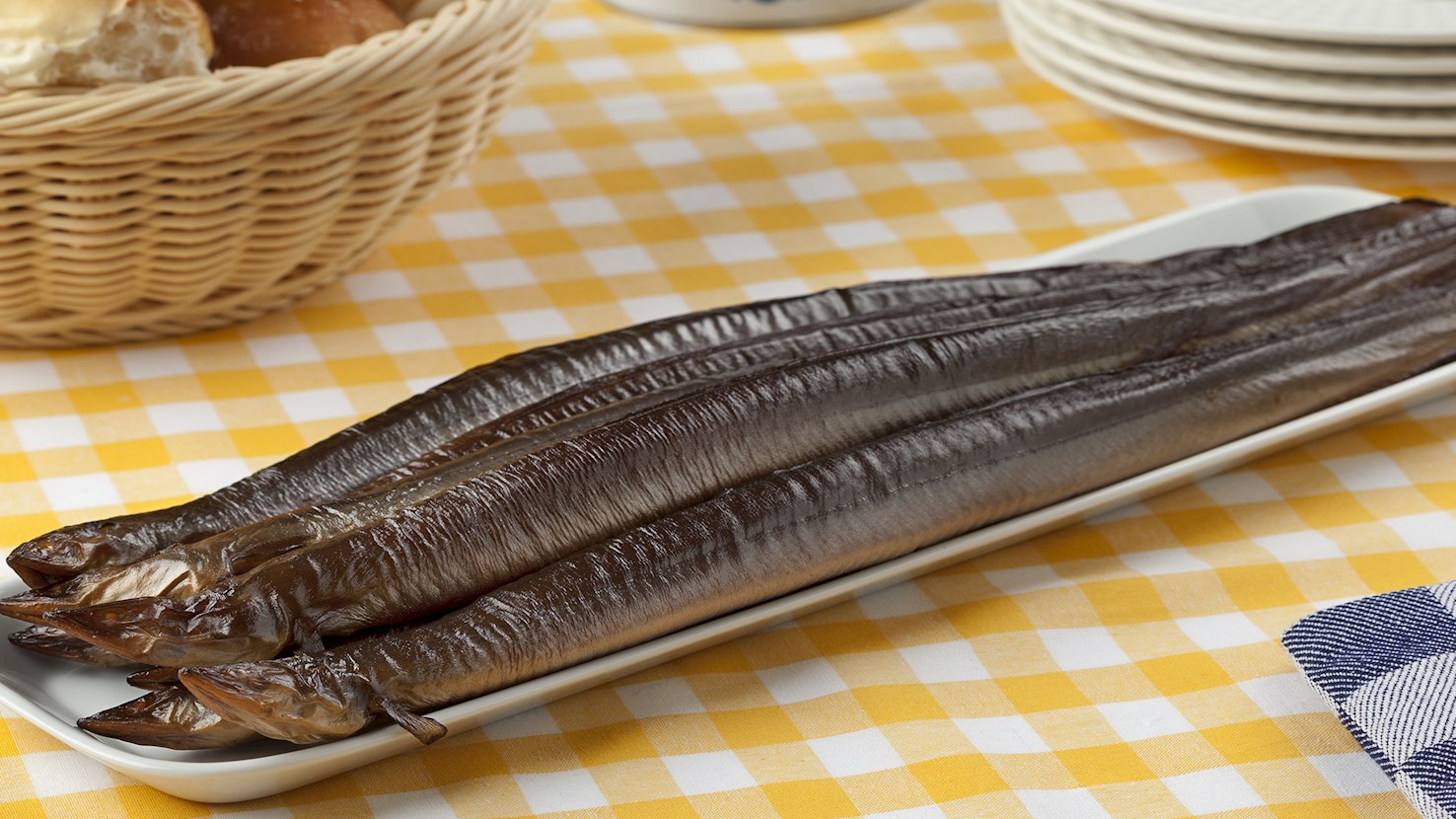
At just about every haringhuis (herring stand) or vishandel (fish shop) in Amsterdam, one can buy the Dutch delicacy of smoked eel, known as gerookte paling. In the past, smoked eel was a staple in the country, but today it is a true delicacy due to the scarcity of eels and its high price. The dish is both healthy and flavorful, filled with omega-3 fatty acids, vitamins, and protein. It is usually served on a bun or a cracker and consumed as a snack.
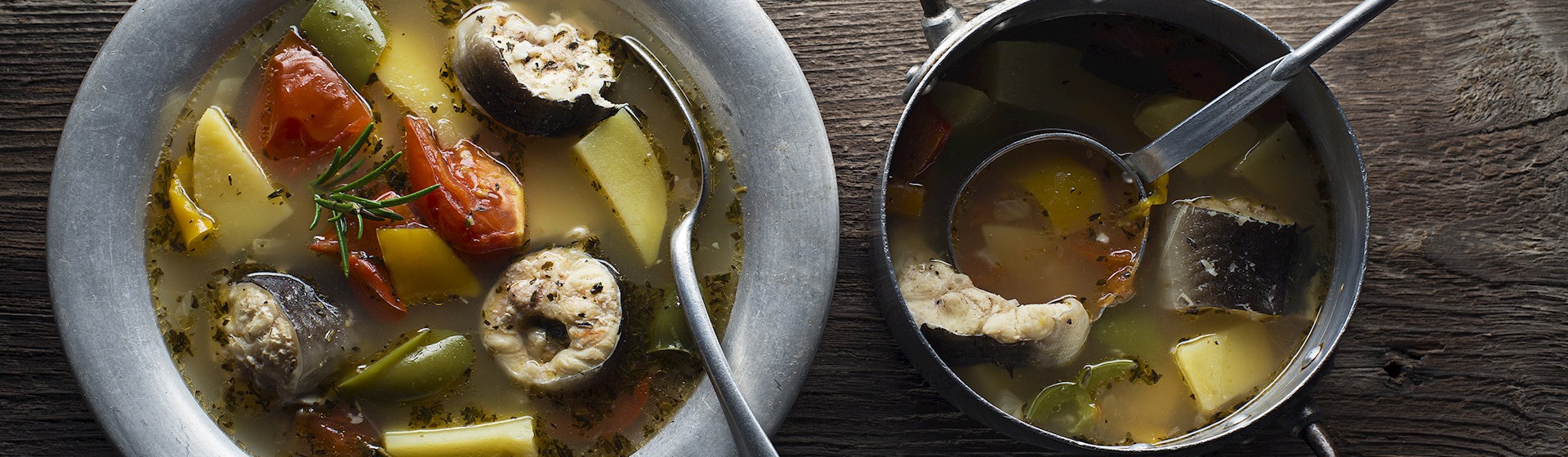
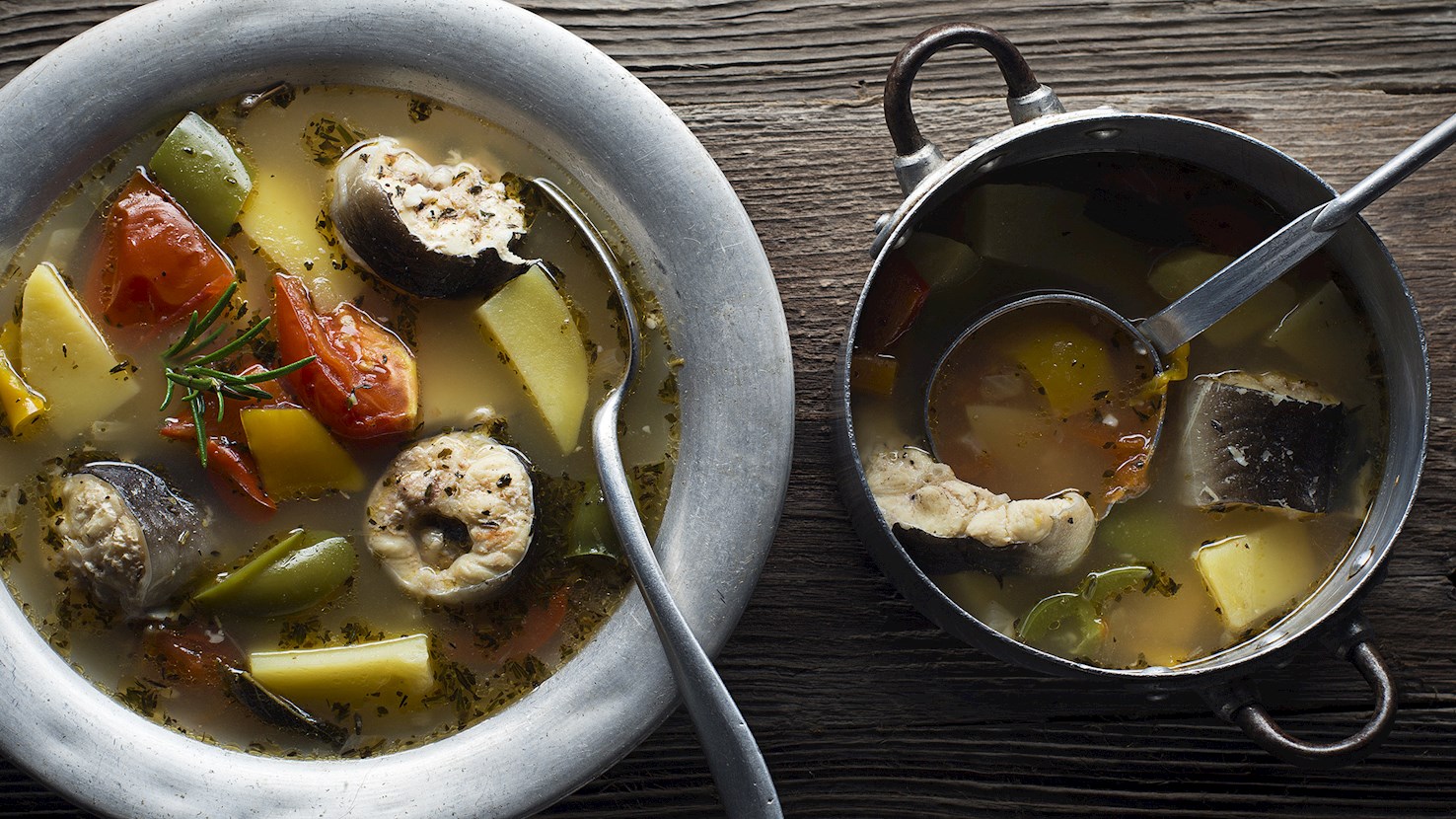
Originating from Aveiro, famous for its eels, caldeirada de enguias is a flavorful Portuguese eel stew that is typically seasoned with saffron and accompanied by onions, potatoes, and bell peppers. The stew should be cooked on medium heat without any stirring until the potatoes are fully cooked. It is recommended to pair caldeirada de enguias with crisp white wines from the Bairrada region.
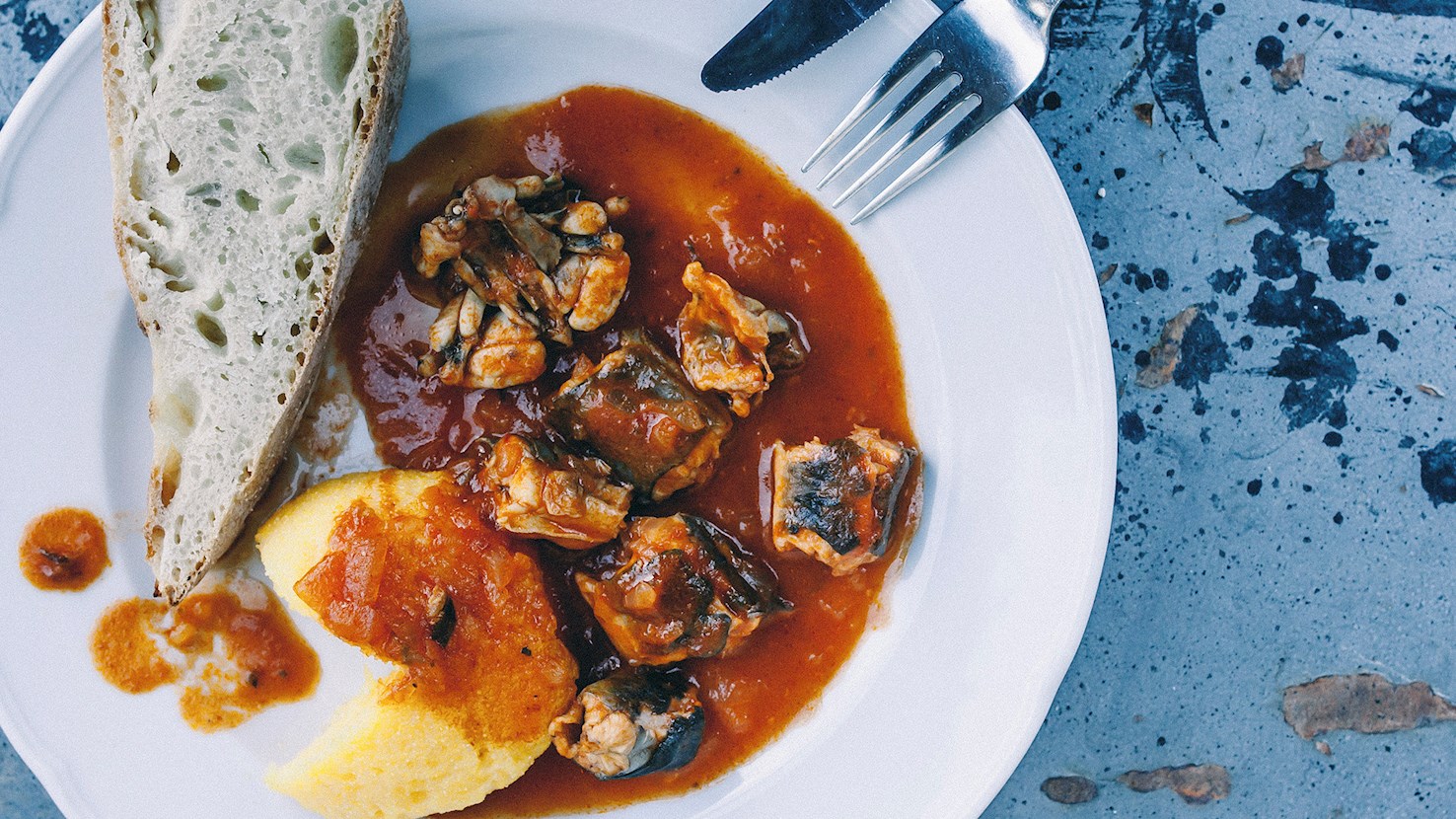
Out of the numerous varieties of Croatian brudet, the one that hails from the Neretva region is considered unique since it usually employs eels and frogs, two traditional ingredients used in the area. It is said that every village in the region has a different recipe, but the basic version employs thoroughly cleaned pieces of eels and frogs that are sautéed alongside olive oil, onions, and garlic. They are later braised in a combination of seafood stock, fresh tomatoes, chili peppers, and a touch of vinegar. Though tradition suggests the use of eels and frogs, the dish is commonly enriched with other fish varieties. Regardless of the differences, every version of brudet is always prepared in a traditional, heavy-bottomed pan and should never be stirred. This flavorful fish stew is traditionally accompanied by polenta or rustic, country-style bread.
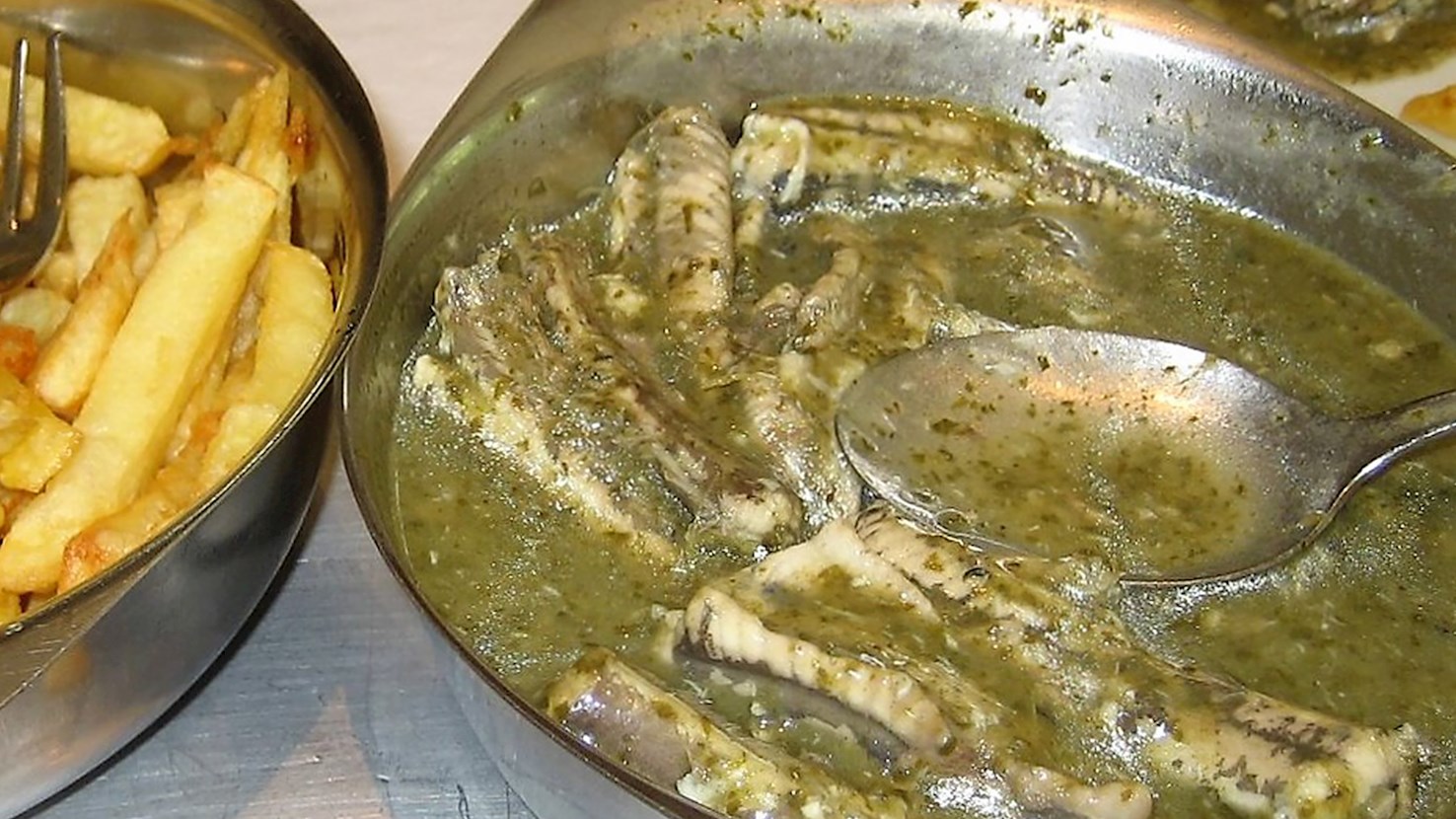
Paling in 't groen is a Flemish specialty dish consisting of chopped eel in a unique green sauce made from white wine, parsley, spinach, mint, tarragon, sage, dill, and lemon juice. It is believed that the dish originated on the banks of the river Scheldt, when local fishermen started to catch large quantities of eel and combined them with whatever fresh herbs they found near the river. The dish should be served hot, preferably with some fresh bread or fries on the side.
Jellied eels is a traditional Cockney street food item, dating back to the 18th century. Originally, it was a cheap and easy way to make a good dish, with plenty of native eels readily available in the Thames River. The eels would get chopped, boiled for approximately half an hour in herbs, then cooled - that is when the fish would produce their own gelatin, and a soft, transparent jelly would form on the cut pieces. The texture of jellied eels is delicate and soft, and while some may say it's unpleasant, their flavor is unique - mild, slightly salty, like pickled herring, but without the unusual "fishy" scent. They are commonly accompanied by white pepper and vinegar in order to further accentuate the flavors. The dish can be served either hot or cold, and according to jellied eels experts, it tastes perfect when paired with chili vinegar.
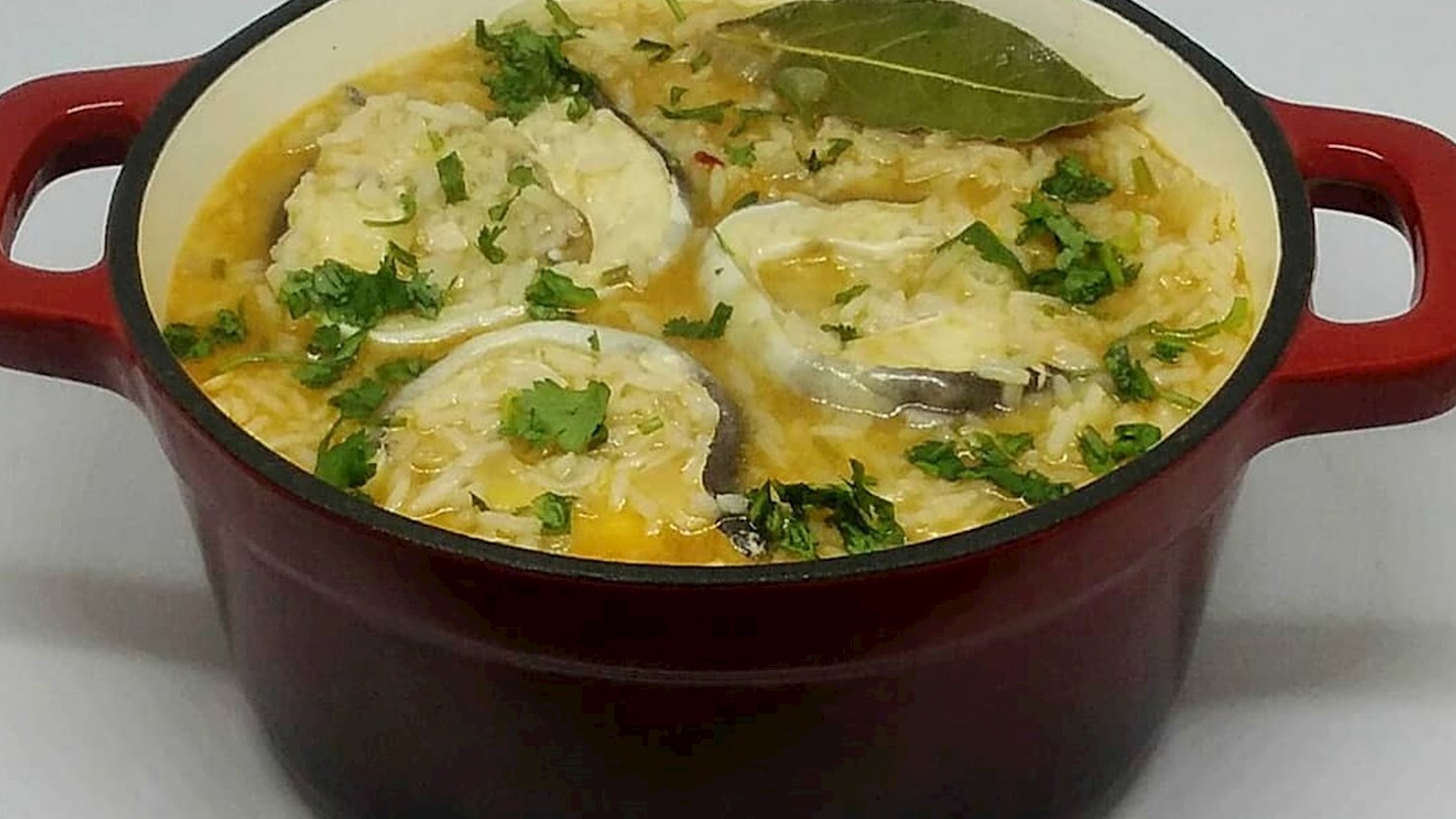
This traditional Portuguese dish consists of rice and sliced conger eel. It's mainly associated with the Algarve region. Other ingredients for the dish typically include onions, garlic, tomatoes, white wine, parsley, bay leaves, coriander, and olive oil. The combination of vegetables and seasonings is cooked in olive oil with the conger eel slices added to the pot in the end. When it’s done, the fish should be removed, and the rice added to the mix. Before serving, the slices of eel are mixed with the rice and sprinkled with fresh coriander or chopped parsley.
Bisato in speo is a traditional dish from Grado, featuring eel (bisato) that is skewered and grilled, a technique known as "in speo" in local dialect. It has been a staple for centuries in the area of Marano Lagoon. The eel is typically marinated in a mix of vinegar, garlic, rosemary, and bay leaves, giving it a fragrant and slightly tangy flavor. After marinating, the eel is skewered and slowly cooked over an open flame or hot coals, which adds a smoky element to its rich, oily flesh. The slow cooking process helps to make the meat tender and flavorful, while the marinade highlights the natural taste of the eel. Traditionally served as a main dish, Bisato in speo captures the essence of lagoon cooking and is often enjoyed with polenta, another staple of Venetian cuisine.
Enguias fritas are traditional Portuguese fried eels, commonly enjoyed in coastal regions. The eels are typically cleaned, cut into pieces, seasoned, and then coated in flour or breadcrumbs before being deep-fried until golden and crispy. They are often served with sides like fried potatoes, a salad, or simply with a squeeze of lemon. This dish is particularly popular in coastal regions, where eel fishing is a long-standing tradition. It's appreciated for its unique flavor and crunchy texture.
Bisato in umido is a traditional Venetian dish made with eel cooked "in umido" (meaning "in a stew" or "braised"). In this preparation, the eel is first cut into pieces, then slowly braised in a rich sauce of carrots, celery, onions, garlic, and white wine, seasoned with bay leaves, parsley, and sometimes rosemary. This slow cooking method allows the eel to become tender while absorbing the flavors of the aromatic sauce. The dish has a distinctive, slightly earthy flavor, as eel has naturally rich and oily meat. Bisato in umido is typically served with polenta, which complements the dish’s thick, flavorful sauce. This dish is popular in the Venetian Lagoon, where eel has been a staple ingredient for centuries.
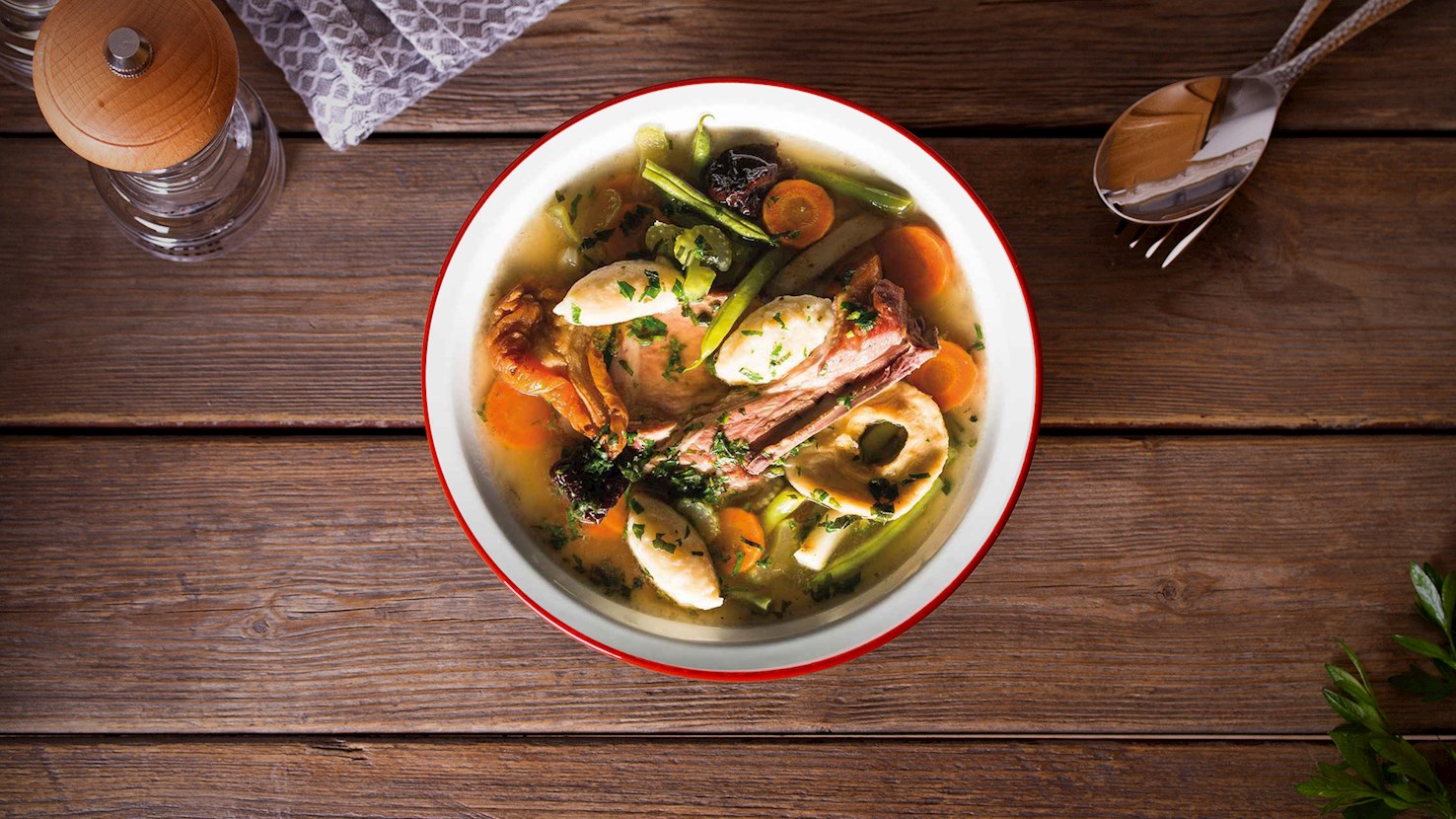
Hamburger Aalsuppe is a traditional eel soup originating from Hamburg. In the past, several hundred years ago, it contained no eel and was in fact called aol suppe in northern German dialect, which means all soup, referring to the leftover ingredients such as ham bones and old fruits and vegetables. To Germans outside of the Hamburg area, aol sounded like Aal, meaning eel, so they complained that the eel was missing from the soup. That was the case until the late 18th century, when smart cooks started to add the eel to the broth, doubling the price of the soup in the process. There is no fixed recipe for the soup, but the base is always prepared with a clear ham broth that's flavored with vinegar and sugar, giving it contrasting flavors. The usual ingredients include carrots, leeks, dried plums, apples and pears, knödel dumplings, and spices such as thyme, coriander, marjoram, and sage. The eel is sliced thinly, then added into the pot at the last moment. In order to balance the sweetness of this soup, it's recommended to pair it with a dry white wine such as Rheingau or a bottle of beer. Interestingly, if the soup is nowadays prepared without the eel, it's called Verlorene Aalsuppe (lost eel soup).
TasteAtlas food rankings are based on the ratings of the TasteAtlas audience, with a series of mechanisms that recognize real users and that ignore bot,
nationalist or local patriotic ratings, and give additional value to the ratings of users that the system recognizes as knowledgeable.
TasteAtlas Rankings should not be seen as the final global conclusion about food. Their purpose is to promote excellent local foods,
instill pride in traditional dishes, and arouse curiosity about dishes you haven’t tried.













What People Say