Shakshouka is a delicious combination of eggs poached in a spicy tomato sauce. Although it has an unusual name, the dish is straightforward and easy to make. It is usually made in a skillet in which onions, tomatoes, and spices are cooked until they form a delicious tomato sauce. Eggs are then added directly to the tomato sauce and poached until done. Merguez sausage can also be added to the dish. It is believed that shakshouka originated in Tunisia, but the dish is well-known and commonly eaten throughout North Africa and the Middle East as well. Almost every region has formed their distinctive variety of shakshouka: in Egypt, eggs are usually scrambled and served in a sandwich, and in Israel it is often served with salty feta cheese on top. The consistency of the sauce and eggs is also variable – the sauce can be thinner or thicker, while the eggs can be completely firm or soft. For a more nutritious meal, meat, most commonly sausages, can be included in the dish. Shakshouka is suitable for any meal of the day and is usually served warm or sizzling hot, with bread on the side. Because it is budget-friendly, simple, and easy to prepare, the dish has recently gained popularity both in Europe and North America.
Chipsi mayai or chips and eggs is a staple of Tanzanian street food. French fries are combined with eggs to make a dish that is similar to an omelet with fries dispersed throughout it. Alternatively, the dish can be made with additional ingredients such as bell peppers or onions. It is typically served with kachumbari sauce on the side, consisting of tomatoes, chili peppers, and onions. If you are ever in Tanzania and see a big black wok filled with bubbling yellow oil in front of a restaurant, it is a pretty sure sign that the restaurant serves chips mayai.
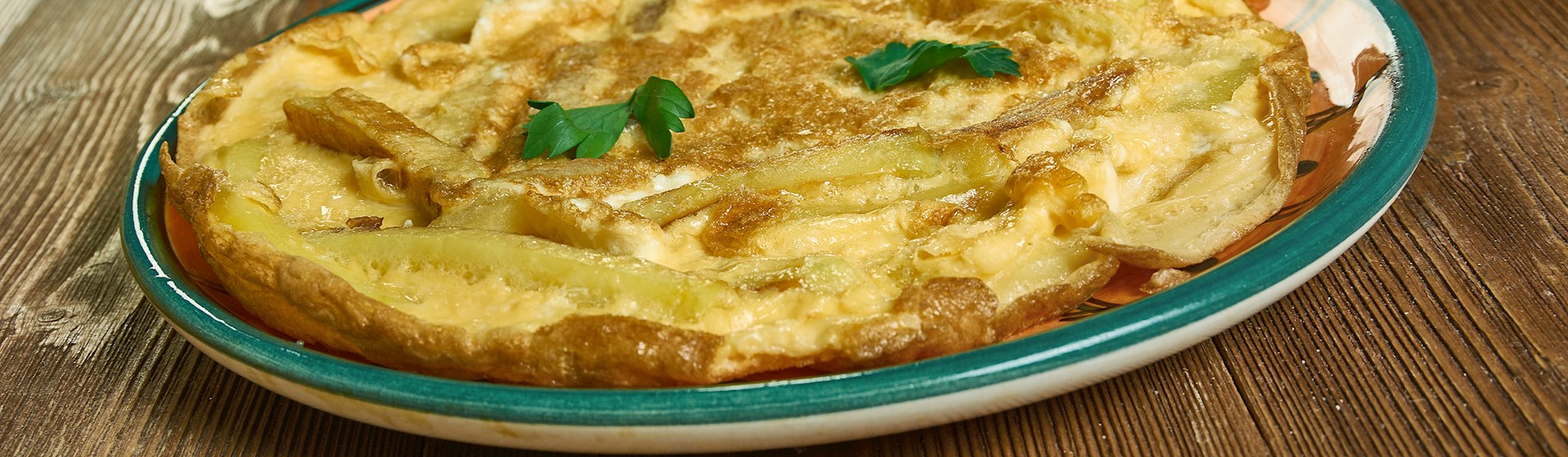
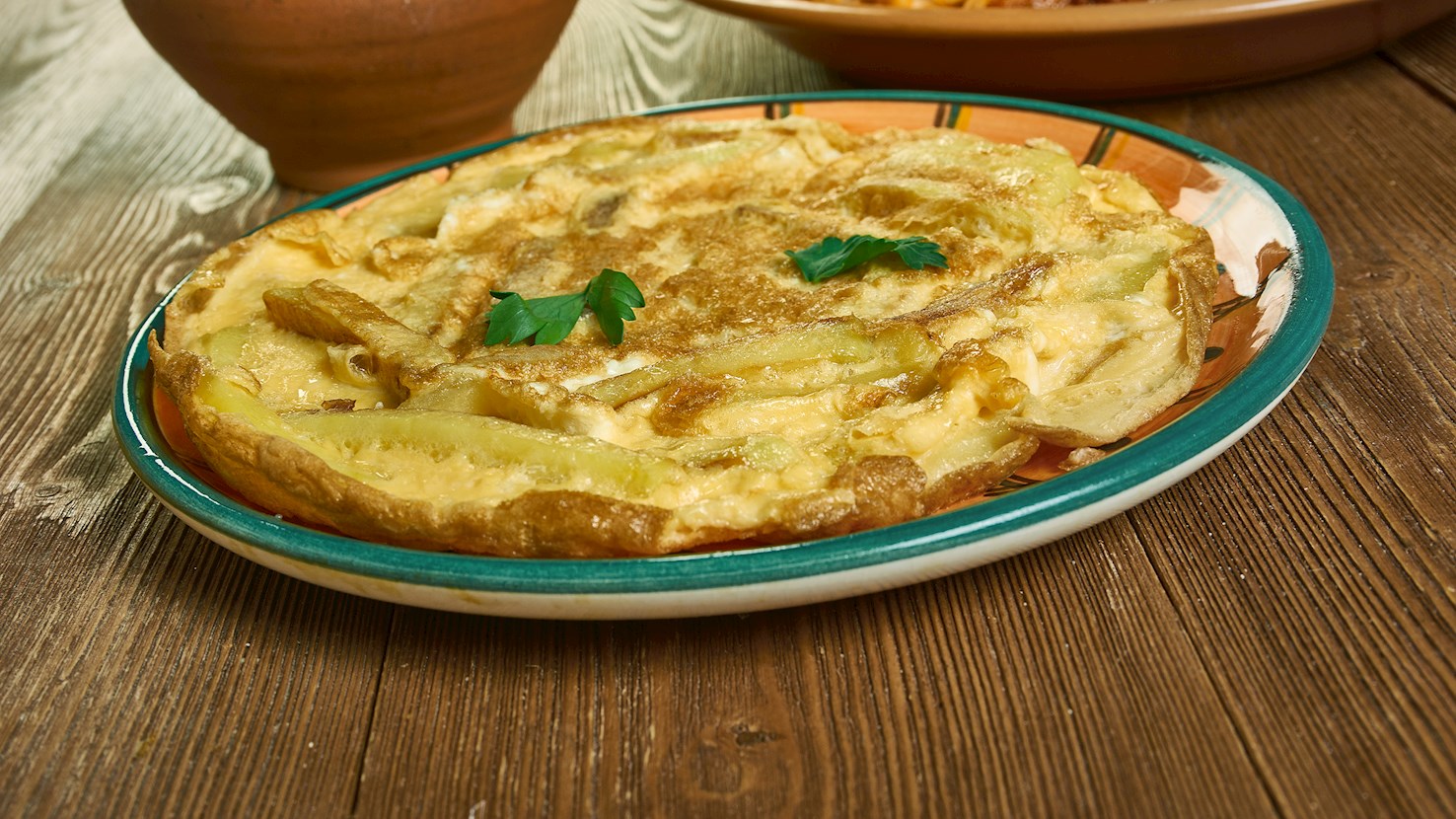
Eggah is the thick and heavy Egyptian version of an omelet. However, eggs might not be the main ingredient – they can merely be used as a binding for the filling, which can include chicken, lamb, or various vegetables such as eggplants, leeks, spinach or potato. Eggah is commonly flavored with turmeric, cumin, nutmeg, cinnamon, or fresh herbs. The dish is typically pancake-shaped, and it is served sliced into wedges or rectangles which can be hot or cold.
Rolex is a popular Ugandan street food consisting of an omelette rolled in a chapati, commonly filled with vegetables such as cabbage, tomatoes, onions, and sometimes green peppers. It originates from Uganda’s urban centers, particularly in the Busoga region and later in Kampala, where it gained widespread popularity among students and workers seeking a quick, inexpensive, and filling meal. The name comes from a local adaptation of the phrase “rolled eggs,” which, when spoken quickly, became “rolex.” It emerged in the early 2000s as street vendors began selling chapatis with eggs and vegetables cooked together, a combination that evolved into a national snack. To prepare it, a chapati is first cooked on a flat metal griddle until lightly browned. Separately, eggs are beaten with chopped vegetables and fried on the same griddle, forming a thin, round omelette. While still warm, the omelette is placed directly on the chapati and rolled tightly, forming a compact wrap that can be eaten by hand. Vendors often adjust the ingredients to a customer’s preference, sometimes adding cooked meats, cheese, or even potatoes. It is typically made to order and served hot, often wrapped in paper for easy takeaway. Its preparation requires minimal equipment and ingredients, making it accessible to vendors operating from small roadside stalls. In Uganda, it is eaten at any time of day, commonly for breakfast, lunch, or as a late-night meal. It is frequently enjoyed with soft drinks, tea, or fruit juice, and in some areas, it is paired with avocado slices or accompanied by roasted meat sold by nearby vendors.
TasteAtlas food rankings are based on the ratings of the TasteAtlas audience, with a series of mechanisms that recognize real users and that ignore bot,
nationalist or local patriotic ratings, and give additional value to the ratings of users that the system recognizes as knowledgeable.
For the “Top 4 African Egg Dishes” list until May 15, 2026, 1,157 ratings were recorded, of which 501 were recognized by the system as legitimate.
TasteAtlas Rankings should not be seen as the final global conclusion about food. Their purpose is to promote excellent local foods,
instill pride in traditional dishes, and arouse curiosity about dishes you haven’t tried.