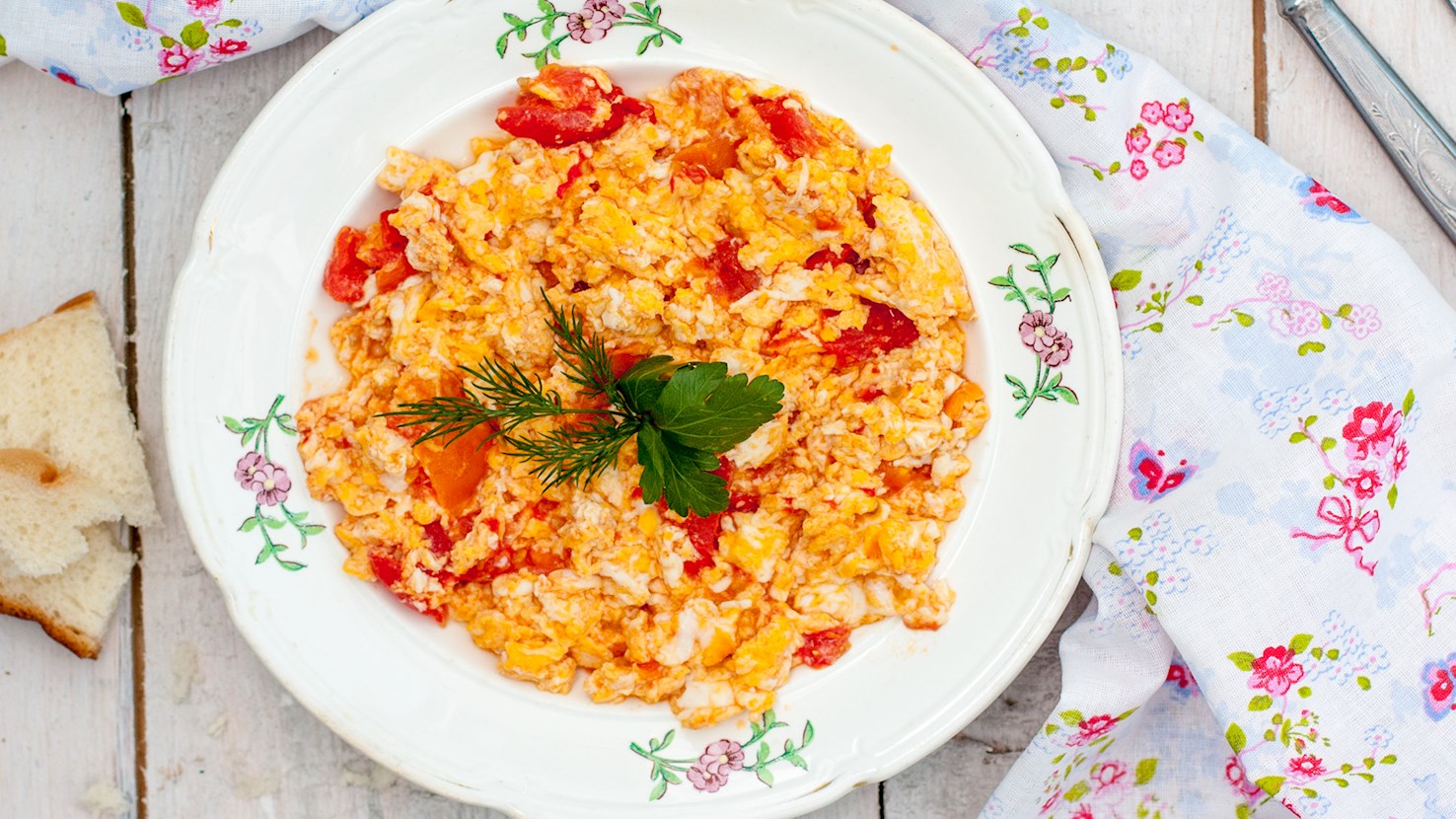
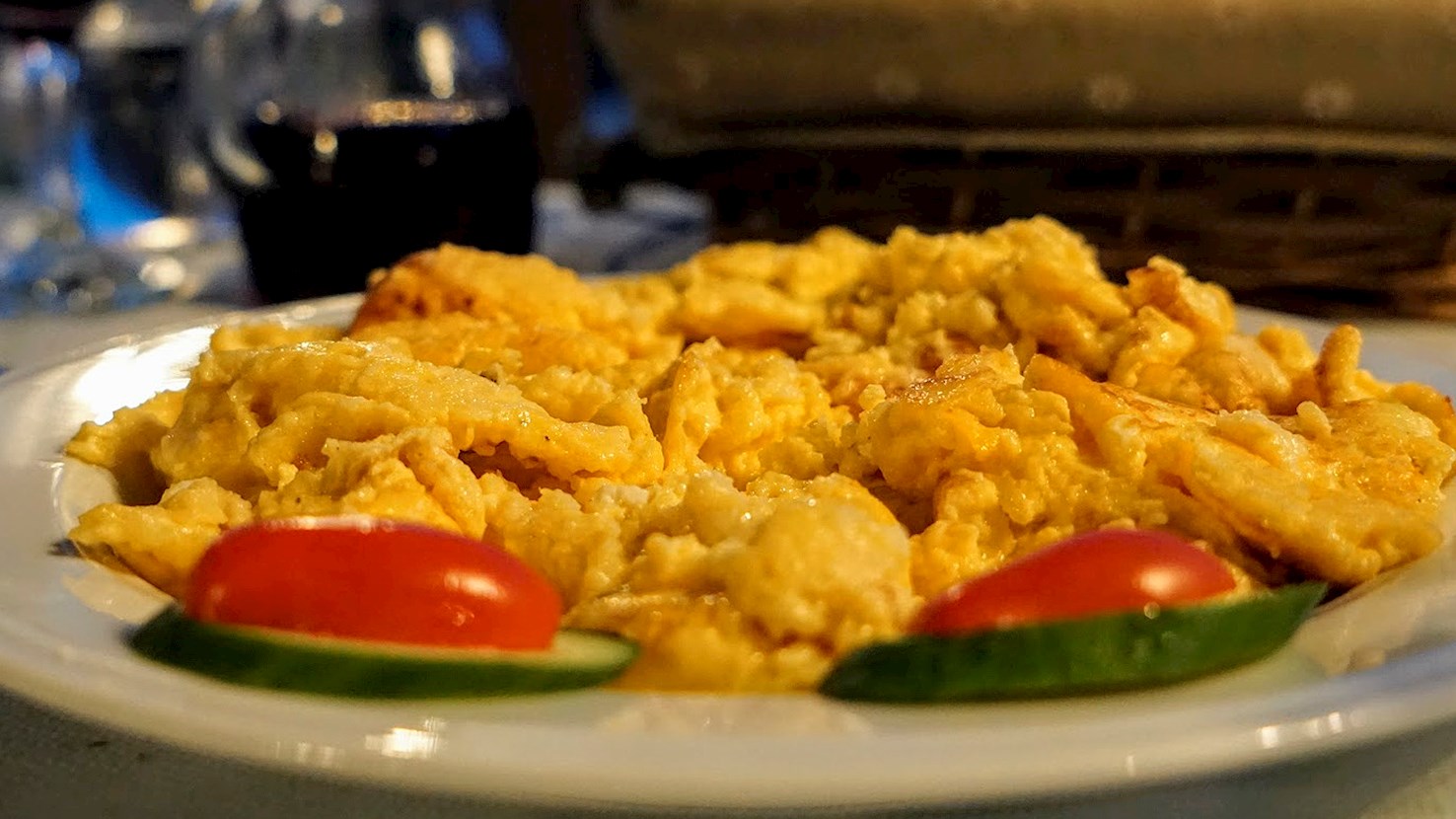
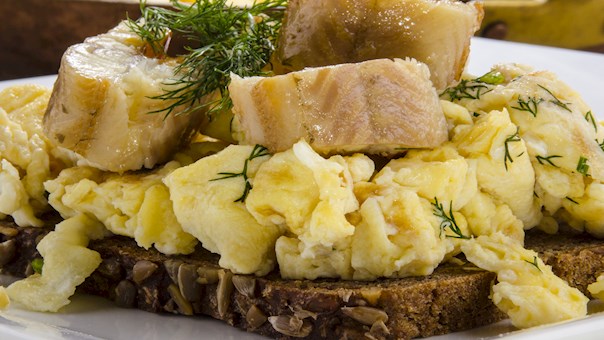
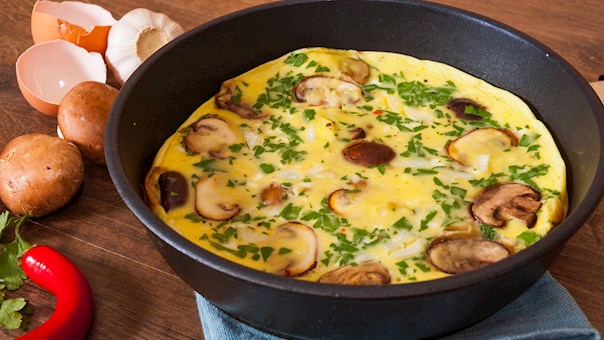
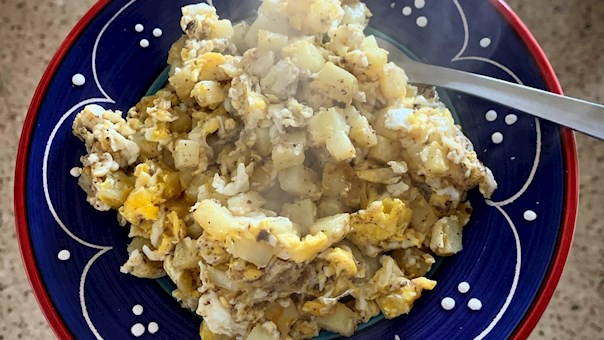
This popular Greek dish, which goes under the name strapatsada or kagianas, consists of diced, sautéed tomatoes that are seasoned with fresh herbs, then combined with lightly beaten eggs and topped with crumbled feta cheese. With its rustic appeal and clean, refreshing flavors, it is mainly enjoyed as a light main course or a side to various roasts or grilled meat. Even though it is traditionally associated with Ionian islands, it is commonly eaten throughout the country.
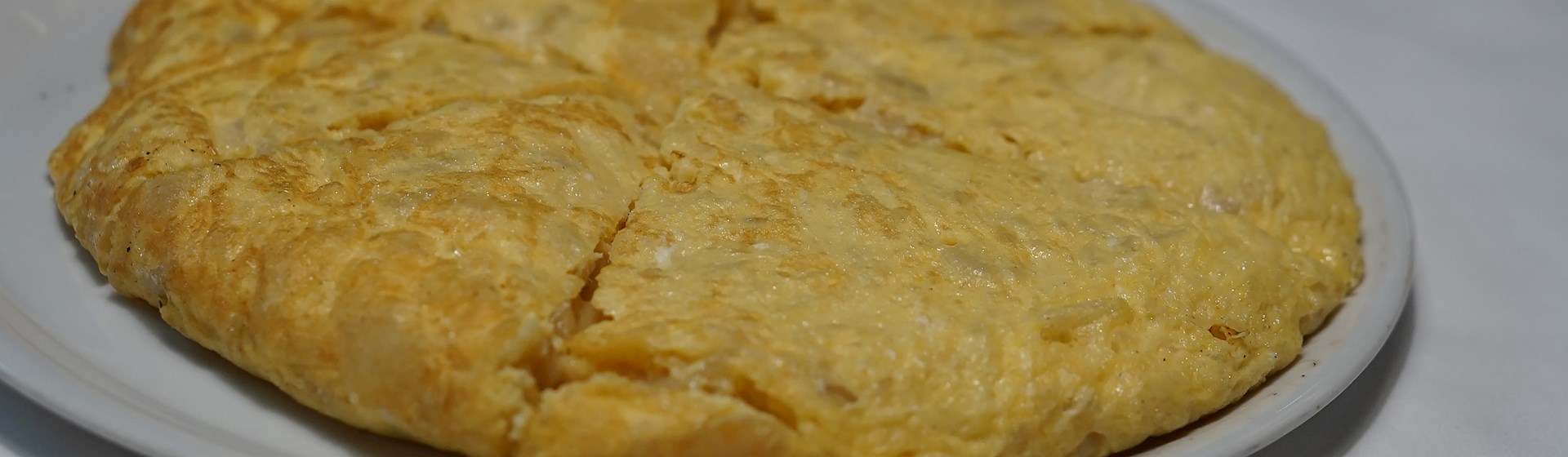
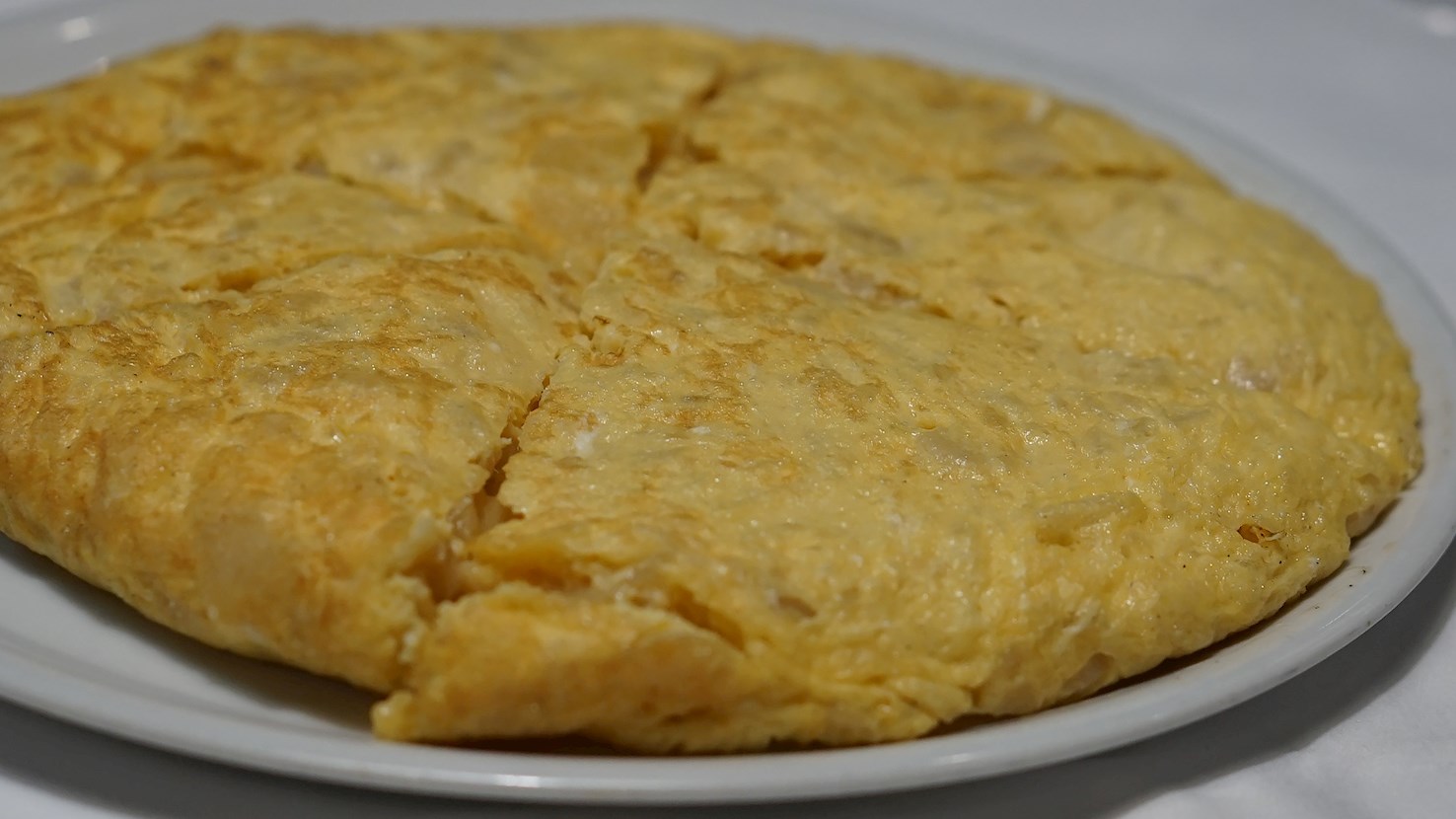
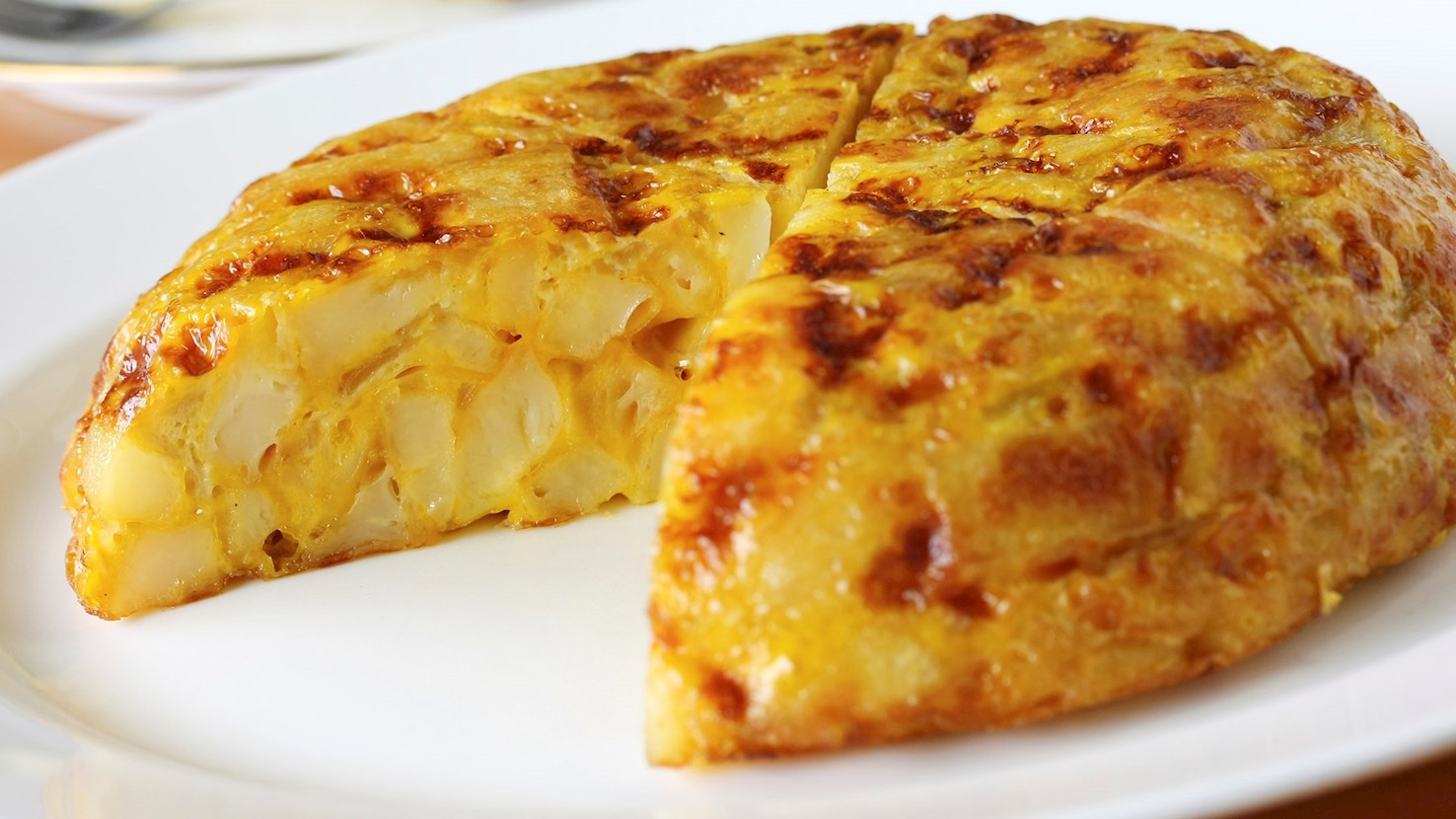
Tortilla de Betanzos is a Spanish dish originating from the Galician municipality of Betanzos. This dish is basically a local variety of tortilla de patatas or Spanish omelet. In Betanzos, it consists of potatoes, eggs, oil, and salt, nothing more and nothing less, so don't even think about tasting onions or chorizo in this local delicacy. The city became famous for its omelets because of a local woman, Angelita, who always prepared them without onions. But there's more – the eggs have to be really runny (resulting in really juicy omelets), while local high-quality potatoes have to develop a perfectly golden color during the frying process.
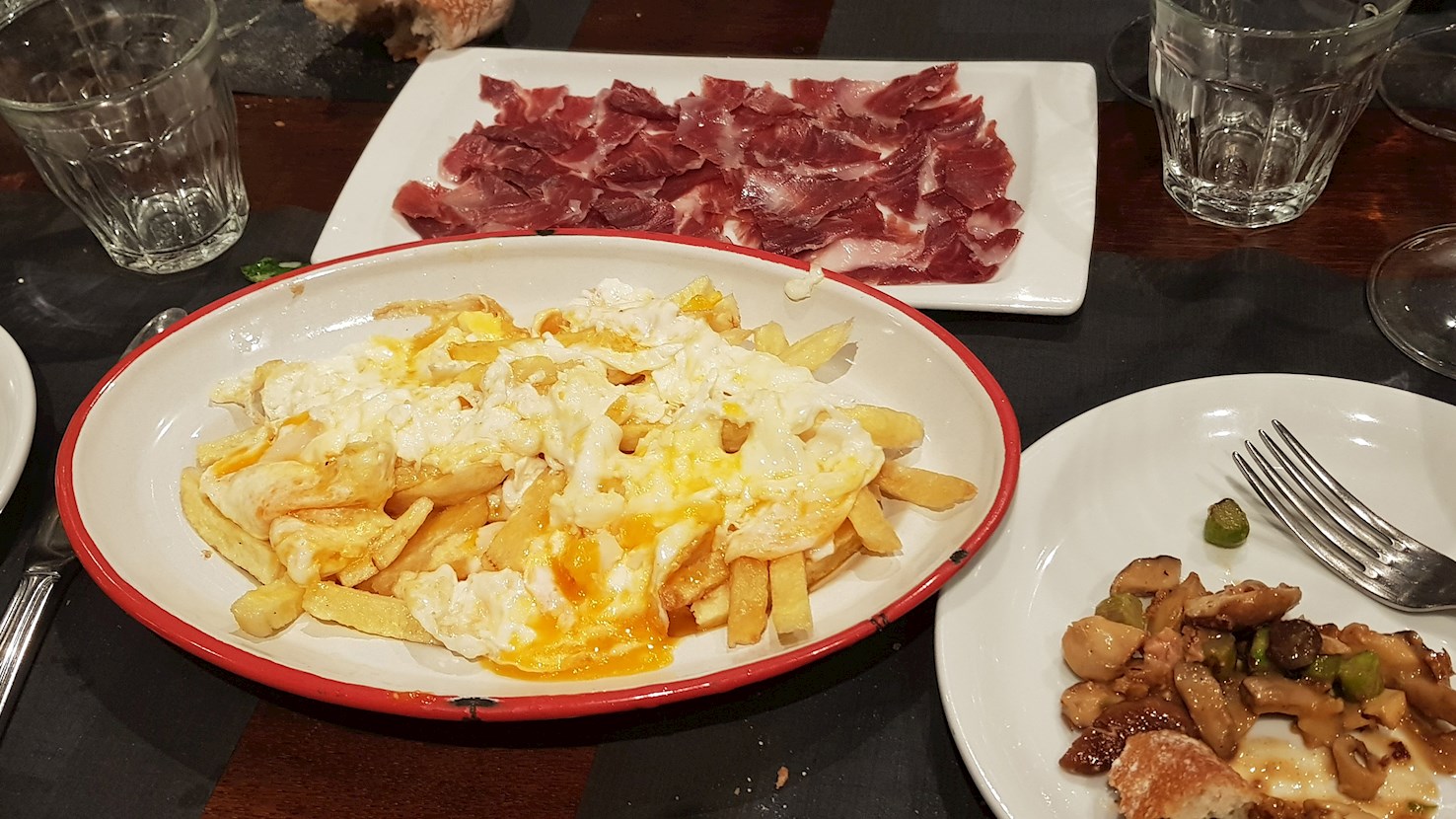
The simple and inexpensive huevos rotos (lit. broken eggs, also known as huevos estrellados) is a Spanish dish that is a specialty of Madrid. It consists of eggs fried in olive oil, which are then placed over french fries. The dish is traditionally topped with chorizo pieces, seafood, or slices of Iberian ham. The eggs should be cut so that the yolk drizzles down over the french fries, which are used to soak up the yolk. Although the dish is easily found throughout Madrid, its origins are quite murky, and nowadays, huevos rotos are also very popular in the Canary Islands, and Portugal also boasts its own version of the dish.
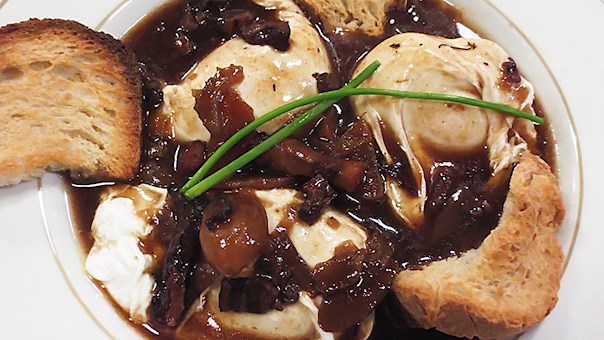
Staka me ayga is a simple Cretan dish consisting of poached or fried eggs and local staka (a type of buttery cream mixed with flour). The combination is usually seasoned with salt and pepper, and it is typically enjoyed warm for breakfast. Eggs with staka are often paired with apaki (smoked pork), another traditional Cretan product. Staka is a unique specialty of Cretan cuisine, and it can also be eaten as a spread on slices of bread or as a side dish.
Fourtalia is a traditional omelet hailing from the island of Andros. Although the ingredients may vary from area to area, the basic recipe always contains eggs, potatoes, and sausages. The cut potatoes are fried in olive oil and pork fat, with the addition of sausage bits just after the potatoes start to turn golden. At this stage, you can add peppers, onions, and bacon, if desired. The final step is the addition of beaten eggs, and the omelet is then fried until fluffy or firm, based on personal preferences. Fourtalia should always be served hot, straight out of the pan. If desired, garnish it with fresh mint on top.
Tortilla de patata, often called Spanish omelette, is a dish from Spain made with little more than potatoes, eggs, olive oil and salt, sometimes enriched with onions depending on preference. It is one of the country’s most recognisable recipes, found in homes, markets and restaurants across every region. What began as a humble preparation using the most accessible ingredients has become a national emblem of Spanish cooking. The origins of tortilla de patata can be traced back to the 19th century, when the widespread cultivation of potatoes in Europe after their introduction from the Americas made them a cheap and nourishing staple. One of the most cited references comes from Villanueva de la Serena in Extremadura, where a local story credits the invention of the dish to a housewife who, during wartime scarcity, made a simple meal for General Tomás de Zumalacárregui using just eggs, potatoes, and a little onion. Zumalacárregui is then said to have popularised it among his troops during the First Carlist War (1830s), because it was filling, cheap, and easy to prepare. Over time, the dish spread beyond its rural beginnings and established itself in urban kitchens, taverns and eventually restaurants. Its reputation grew not through extravagance but through its comforting simplicity and consistency. The preparation is straightforward yet requires care. Potatoes are sliced or diced and gently cooked in olive oil until tender but not browned. They are then mixed with beaten eggs and cooked slowly in a pan until set, with the centre either firm or slightly runny depending on regional and personal tastes. The decision to include onions, a matter of constant debate in Spain, adds sweetness and depth but is by no means universal. Tortilla can be served warm or cold, cut into wedges or cubes, making it as suitable for a full meal as it is for tapas. It can be eaten at any time of day, whether as breakfast, a light lunch, dinner or a late-night snack. Its portability has also made it popular as a dish taken on picnics or eaten at festivals. Variations exist, such as tortillas filled with vegetables, ham or cheese, but the potato and egg base remains constant. Today, tortilla de patata is eaten everywhere in Spain, from cafés and bars to fine dining establishments that may reinterpret it in creative ways.
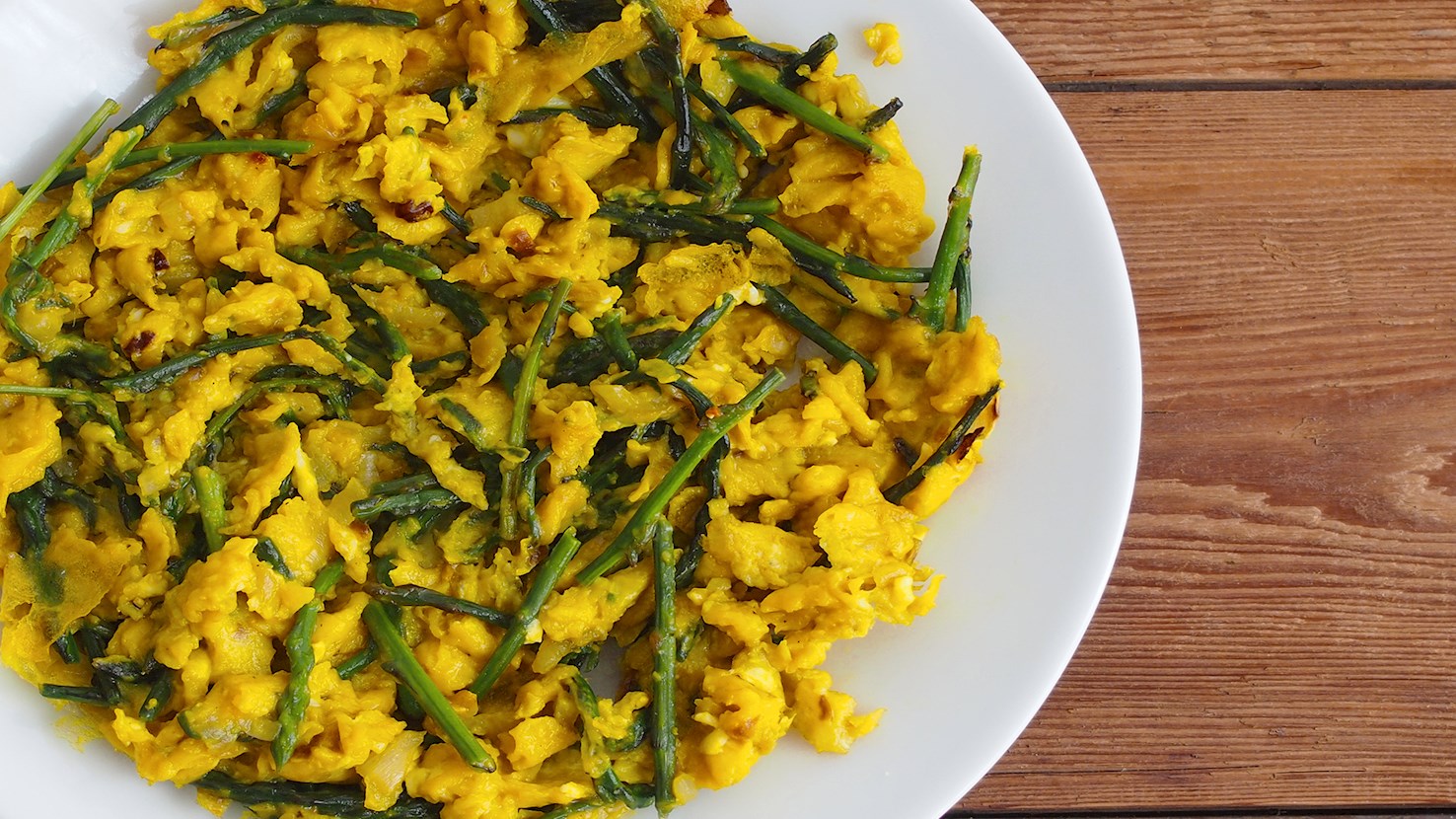
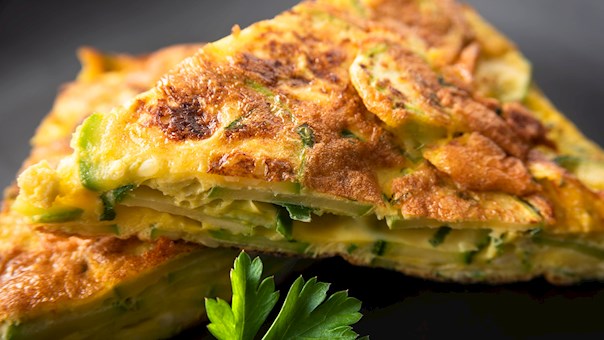
Fritaja sa šparogama is a popular Istrian egg-based dish. Its key ingredients are wild Istrian asparagus – slightly bitter and with an aroma that is reminiscent of the sea, Istrian pines, and aromatic herbs. The dish is prepared by combining the asparagus with olive oil, onions, eggs, and simple seasonings such as salt and pepper. Fritaja should be served warm, preferably with homemade bread on the side. For extra flavor, it is recommended to top it with grated goat cheese before serving.
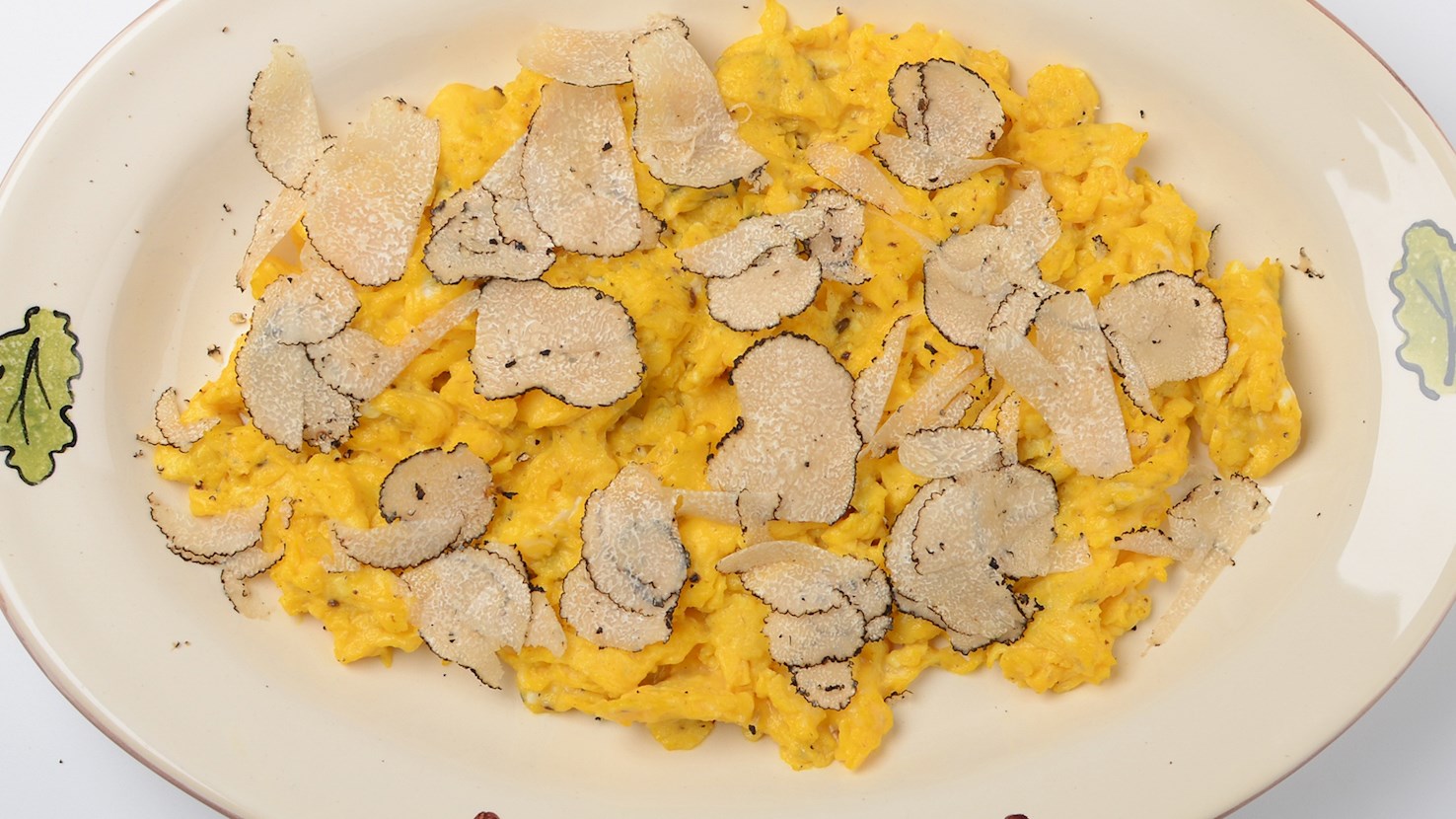
Frittata al tartufo is a traditional Umbrian and Istrian dish made with a combination of eggs, black truffles, olive oil, salt, and black pepper. This simple dish is made by pouring beaten eggs into a pan with hot olive oil, and then adding thin shavings of truffles, salt, and pepper to the pan. After the eggs have curdled, all that's left is to sprinkle the dish with finely chopped parsley or dry white wine before serving. If desired, the dish can be additionally flavored with grated cheese on top. In Istria, the dish is called fritaja s tartufima - it's commonly prepared for breakfast and it can easily be found in local restaurants. However, one should be careful when ordering the dish - there is a chance you won't taste real truffles, but truffle oil or tartufata instead - both of those are flavored with a toxic gas that has a fake truffle aroma, while the inexpensive and bland black summer truffles are shaved over the dish only as garnishes, although consumers might think that's where the flavor of truffles in this dish comes from. You should always make sure that the dish doesn't contain truffle oil, truffle butter, truffle cheese, or tartufata. If it does, it's not the real deal, so you shouldn't order the dish. Make sure that the dish contains white Istrian truffles or black winter truffle, Tuber melanosporum.
Uitmsijter spek en kaas denotes a typical way of preparing eggs in the Netherlands. The bacon is first placed in a buttered pan, then come the sunny-side-up fried eggs, topped with Gouda cheese until it melts. The dish is seasoned with salt and pepper, and the whole thing is placed on slices of bread. It makes for a filling breakfast or lunch and it is regularly served at numerous Dutch cafés and canteens.
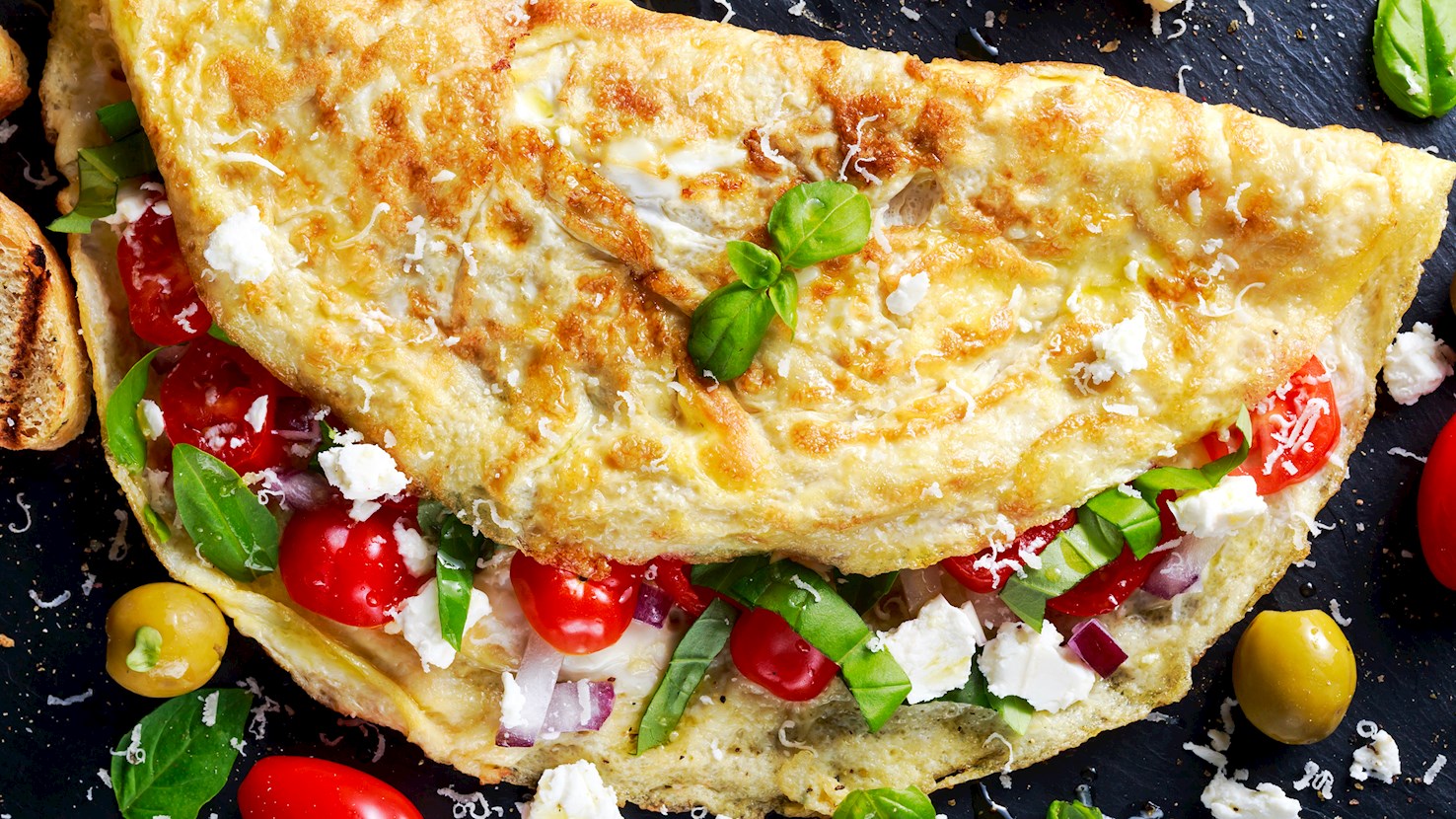
Omeleta is a traditional Greek-style omelet made with Mediterranean ingredients, giving it a distinct and flavorful twist compared to classic omelets. Unlike a typical omelet, the Greek omeleta incorporates local vegetables, cheeses, and sometimes meats directly into the eggs rather than as fillings. The base is made with whisked eggs seasoned with salt and pepper, and crumbled feta cheese is a common addition, adding a tangy, creamy flavor. Fresh tomatoes, bell peppers, onions, and sometimes zucchini are included, giving the omelet vibrant color and taste, while Kalamata olives contribute a briny depth. Fresh herbs such as oregano, parsley, or thyme enhance the Mediterranean flavor, and olive oil is used instead of butter for cooking, adding a fruity richness. The vegetables are typically sautéed in olive oil until softened, after which the beaten eggs are poured over to incorporate the cheese and herbs, cooking slowly to allow the flavors to meld. The Greek omeleta is often enjoyed as a breakfast or light lunch and is served with fresh bread and a side of Greek yogurt or tzatziki.
TasteAtlas food rankings are based on the ratings of the TasteAtlas audience, with a series of mechanisms that recognize real users and that ignore bot,
nationalist or local patriotic ratings, and give additional value to the ratings of users that the system recognizes as knowledgeable.
For the “Top 100 European Egg Dishes” list until May 15, 2026, 3,755 ratings were recorded, of which 2,716 were recognized by the system as legitimate.
TasteAtlas Rankings should not be seen as the final global conclusion about food. Their purpose is to promote excellent local foods,
instill pride in traditional dishes, and arouse curiosity about dishes you haven’t tried.