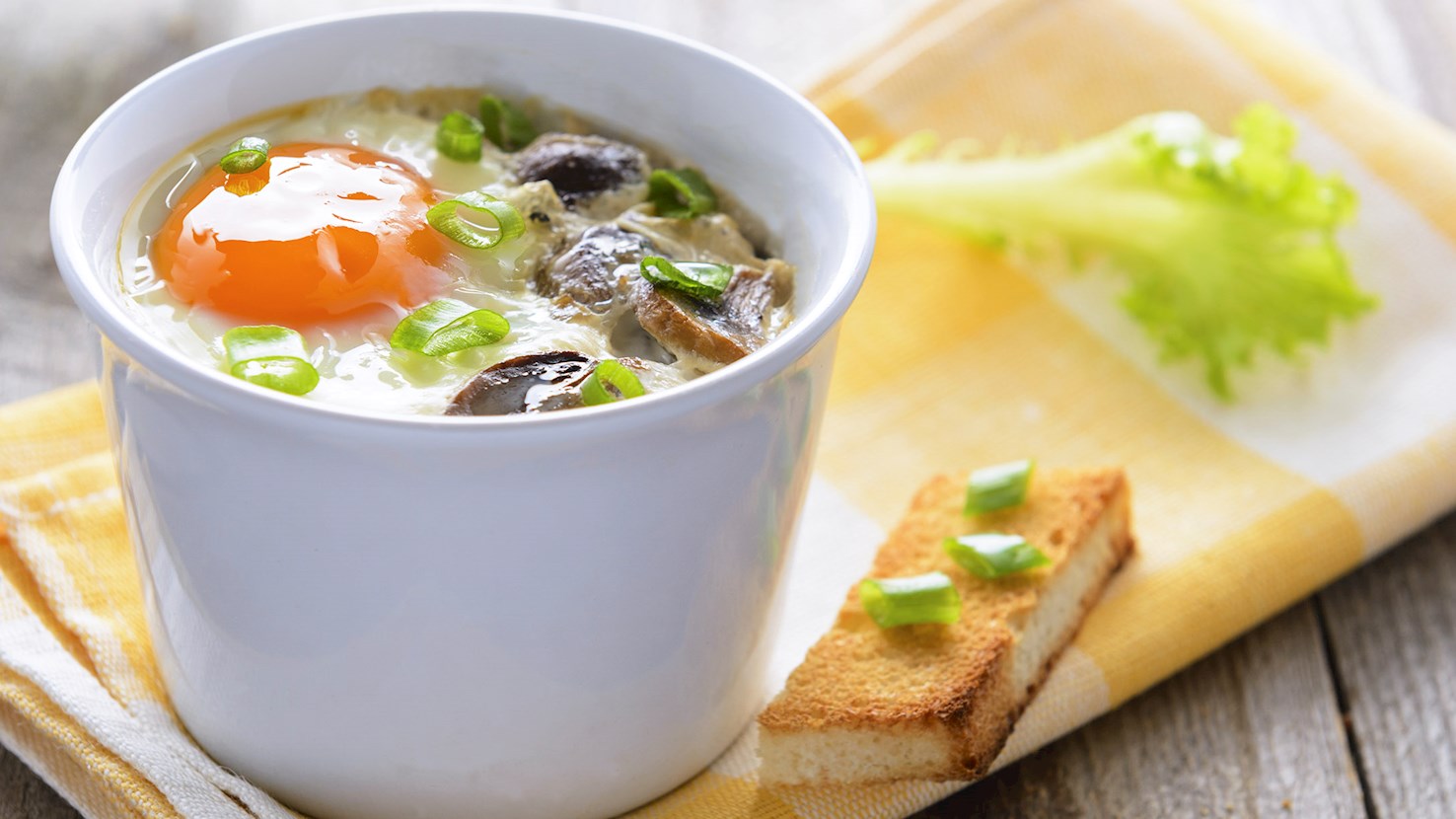
Oeufs cocotte or eggs in pots provide an easy and delicate way of serving eggs for breakfast. Cocotte refers both to the method of baking individual eggs and the small, round baking vessels with handles on the sides. The eggs are placed in greased pots, ramekins, or cocottes, with flavorings above or below them, and the combination of those ingredients is then baked in the oven in a hot water bath until, ideally, the whites are set and the yolks are still runny. Toppings might include bacon, fresh herbs, cheese, pesto, or cream. Oeufs cocotte is also an ideal dish to serve to guests - visually impressive, delicious in flavor, and highly versatile.
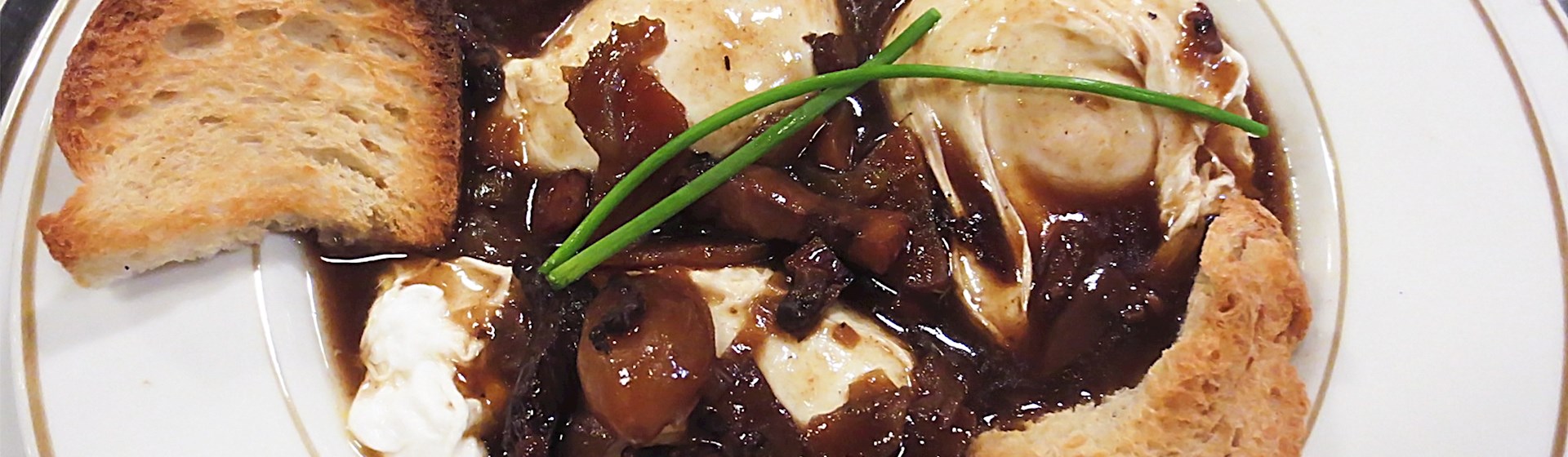
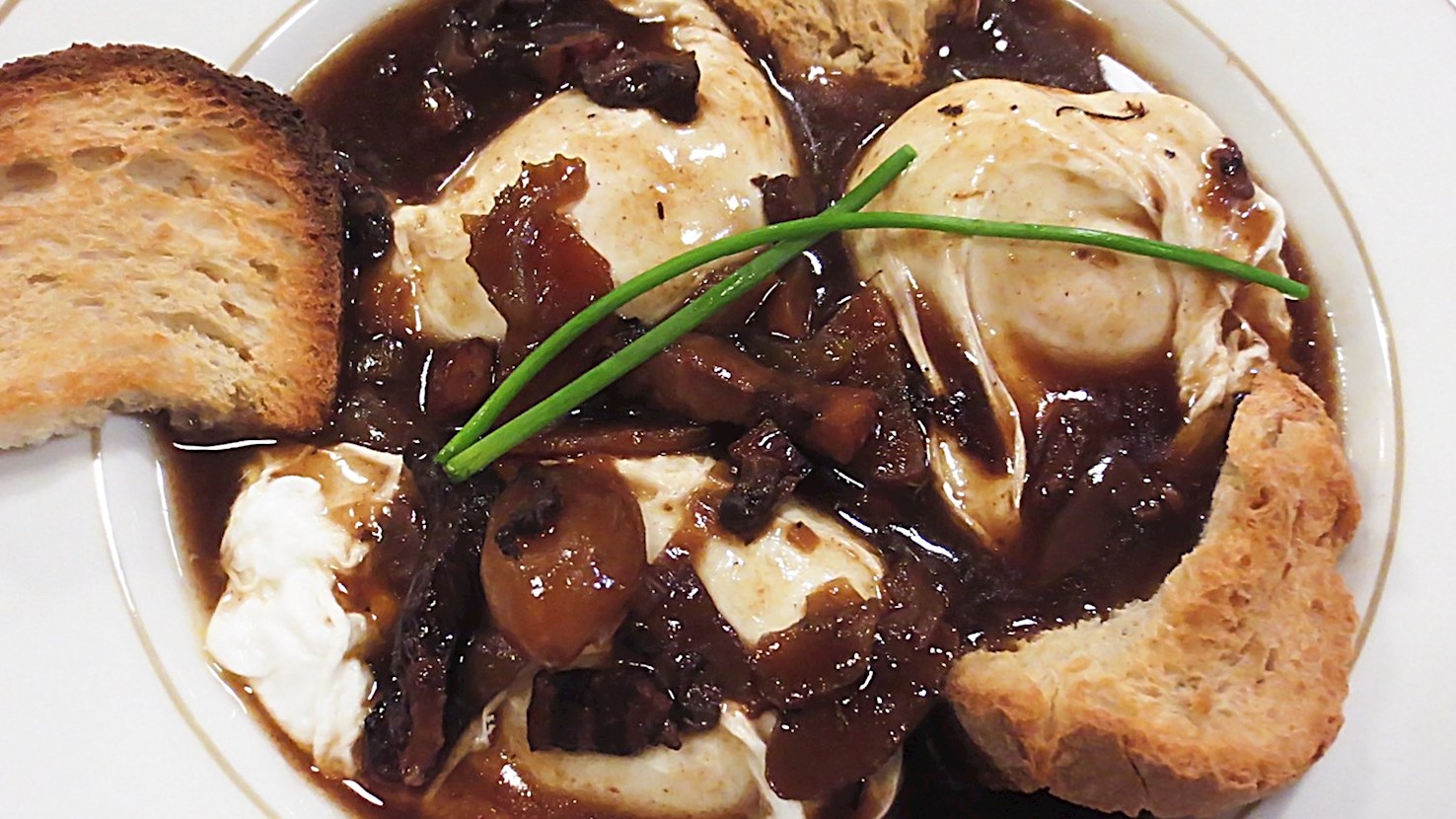
Oeufs en meurette is a traditional dish originating from the French region of Burgundy. The dish consists of eggs that are poached in red wine, as the wine's acid keeps the eggs nice and tidy and prevents the spillage that can happen during poaching. The eggs are accompanied by either a meurette or bourguignon sauce, consisting of red wine, onions, bacon, and shallots. This elegant dish is traditionally served with toasted garlic bread on the side.
L'oeuf parfait à la truffe is a French dish of a slow-cooked egg and fresh black truffles. The eggs are cooked in a precision water bath, maintaining a temperature of exactly 64°C (147°F) for 45 to 60 minutes. Cooking the egg at this specific temperature prevents the proteins from tightening completely. The resulting egg white and yolk achieve the exact same silky, custard-like consistency. The white holds its shape without becoming rubbery, and the yolk remains thick and fluid. The cooked egg is cracked and plated in a shallow bowl. It is typically surrounded by earthy elements that complement the egg, such as a creamy mushroom duxelles, a potato emulsion, or a rich poultry jus. Just before serving, raw black truffles are shaved directly over the hot egg. The heat from the egg and the surrounding sauce warms the truffle slices, releasing their strong aroma. L'oeuf parfait à la truffe is eaten with a spoon, and slices of toasted country bread soak up the yolk and sauce.
Œufs à la Monteynard is a comforting, cheese-crusted gratin that layers soft-boiled eggs over a bed of creamy rice, originating from the rural plateau of the Monteynard commune in the Isère region. The hearty recipe was born out of agricultural necessity, as local farming families sought a nourishing way to repurpose leftover grains and fresh eggs from their hens into a satisfying meal. To assemble the dish, rice is first simmered in milk or a delicate broth until perfectly tender, while eggs are simultaneously boiled just enough to keep their yolks beautifully runny. The warm, cooked rice is then spread into a buttered baking dish, and the eggs are sliced in half lengthwise before being gently pressed into the base. After a simple seasoning of salt and black pepper, the entire casserole is blanketed in grated Parmesan or Gruyère and placed under a hot broiler until the cheese melts into a bubbling, golden-brown crust. Cooks often personalize the bake by folding crispy bacon lardons or rich cream into the rice, or by scattering fresh chives over the top just before serving. Enjoyed as a fulfilling main course in mountain inns and domestic kitchens throughout Isère, the gratin is traditionally plated with a crisp green salad and paired alongside a sharp alpine white wine or a light-bodied red to elegantly cut through the rich dairy.
Crespeou is a savory, multi-layered French omelet cake that stacks several vibrantly colored vegetable egg patties into a single, cohesive tower. Farm laborers in the Avignon and Comtat-Venaissin areas of Provence historically relied on this portable, protein-rich meal to sustain themselves during long harvest days in the fields. Although its title derives from the Occitan word for crêpe, the recipe completely abandons thin batter pancakes in favor of thick, individually cooked egg discs. Each thin omelet features a distinct, single-color ingredient whisked directly into the beaten eggs before hitting the skillet. Spinach or Swiss chard provides a vivid green hue, crushed tomatoes or roasted red peppers yield a bright red layer, summer squash or cheese contributes a sunny yellow tint, and minced black olives create a striking dark stripe. Once at least three or four distinct tiers are ready, they are firmly pressed together inside a deep mold and occasionally baked for a few minutes to solidify the bond. Chilling the entire stack allows it to set perfectly, meaning that when inverted and sliced, the cross-section reveals a striking, rainbow-like geological formation. Regional pantries dictate the exact makeup of the tower, with some kitchens incorporating shredded carrots, diced eggplant, savory sausage, or even flaked fish to expand the color palette. A closely related specialty from the neighboring city of Nice is trouchia, which mandates the inclusion of a thick Swiss chard omelet. Slices of this chilled or room-temperature centerpiece typically arrive at summer picnics and buffet tables alongside a vibrant tomato coulis. This accompanying sauce requires simmering peeled, seeded tomatoes with rich olive oil, fresh basil, and garlic before pureeing the mixture into a smooth, bright liquid. Drizzling this tangy, acidic reduction over the dense eggs cuts through their richness, especially when eaten with a simple green salad and crusty baguette.
Berlinguettes d’Avignon are baked stuffed eggs from France, originating in Avignon, made with hard-boiled eggs filled with a mixture of anchovies, herbs, breadcrumbs, and olive oil, then gratinéed until golden. The eggs are first boiled in salted water until firm. Once cooled and peeled, they are cut lengthwise, and the yolks are removed. The filling is made by mixing crumbled bread soaked in milk and lemon juice with the cooked egg yolks, finely chopped anchovy fillets, minced garlic, and herbs such as parsley and basil. A raw egg yolk is added to bind the mixture, and it is seasoned with salt and freshly ground pepper. The texture should be moist but compact enough to hold its shape. Each egg white half is generously filled with the mixture and arranged closely together in a lightly oiled gratin dish. The surface is sprinkled with breadcrumbs and drizzled with a few drops of olive oil, then baked in a moderate oven until the tops are crisp and golden. When done properly, the whites remain tender, the filling creamy and fragrant with anchovy, herbs, and garlic, and the crumbs form a delicate crust. There are small variations from cook to cook. Some add chopped chervil or shallot to the filling, while others replace lemon juice with white wine vinegar for acidity. The proportions of anchovies can vary, depending on how salty the preserved fish is, and some versions enrich the mixture with a touch of olive paste or a pinch of Espelette pepper. Berlinguettes d’Avignon are served hot, usually arranged on a bed of crisp green salad lightly dressed with olive oil and lemon. The freshness of the greens contrasts with the warmth and saltiness of the eggs. They can be served as a starter, a light main course, or part of a buffet. A dry white wine or pale rosé from the Rhône Valley pairs naturally, cutting through the richness of the eggs and complementing the anchovy and herbs.
Taillous are a hearty potato-ham-and-egg dish from France, originating in the Ariège region. It developed in mountain households where potatoes had become a staple and was cooked on days when simple ingredients needed to be turned into a satisfying meal. The preparation begins by peeling and cutting firm-cooking potatoes into large pieces, boiling them in salted water until just tender, draining and drying them, then cutting stale country bread into croutons and rubbing them with garlic. A large frying pan is heated with a little neutral oil, thick slices of dry-cured country ham are seared for a minute or two per side, then eggs are cracked into the pan along with a splash of wine vinegar. The ham is kept warm, the potatoes serve as a base, and a frisée lettuce salad dressed with walnut or olive oil and vinegar, mixed with the garlic-rubbed croutons, accompanies the dish. Variations include omitting the ham for a vegetarian version, substituting sausages (especially liver sausage) for the ham, adding mushrooms or zucchini when in season, or lightly caramelizing the potatoes in the pan before adding the eggs. Taillous is served hot as a main meal, often on colder days or after a mountain outing, and pairs well with a robust local red or rosé wine from the Ariège valleys and with crusty country bread to soak up the cooking juices; a green salad on the side with walnut oil brings freshness to the rich mix.
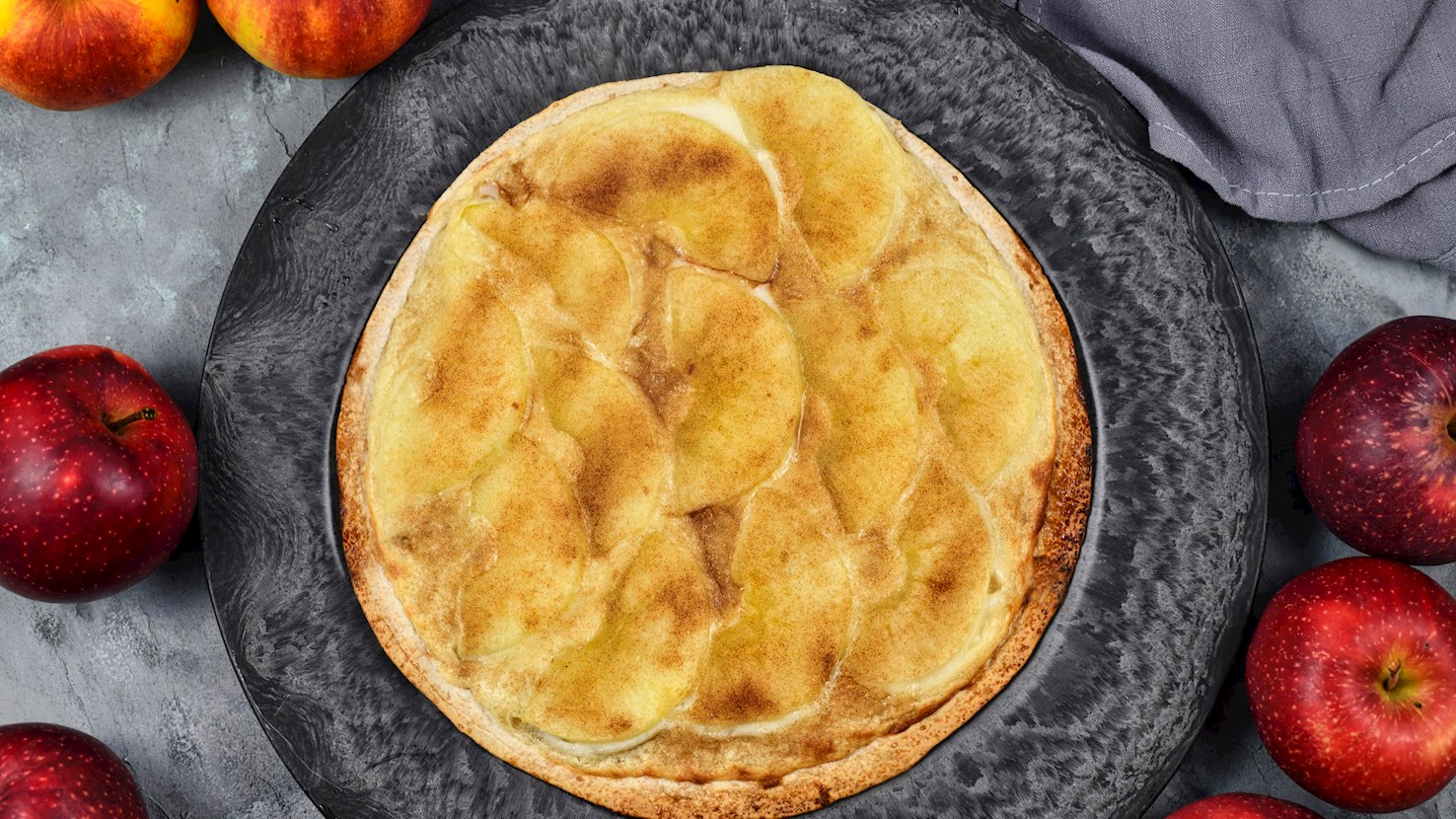
Omelette vallée d'Auge is a traditional dish originating from Normandy. Unlike most omelets, this version is sweet, creamy, and garnished with apples. The dish consists of eggs, sugar, cream, butter, apples, and Calvados. The apples are peeled, cut into cubes, then browned in butter and sugar until they caramelize. The pan is then taken off the heat, and cream is mixed in. The eggs are whisked and mixed with powdered sugar, then cooked in butter over medium heat. Once done, the omelet is garnished with the apples, the edges are folded over, and it's then sprinkled with icing sugar. Before serving, the omelet is flambéed with Calvados and served hot.
TasteAtlas food rankings are based on the ratings of the TasteAtlas audience, with a series of mechanisms that recognize real users and that ignore bot,
nationalist or local patriotic ratings, and give additional value to the ratings of users that the system recognizes as knowledgeable.
For the “Top 9 French Egg Dishes” list until June 15, 2026, 167 ratings were recorded, of which 135 were recognized by the system as legitimate.
TasteAtlas Rankings should not be seen as the final global conclusion about food. Their purpose is to promote excellent local foods,
instill pride in traditional dishes, and arouse curiosity about dishes you haven’t tried.