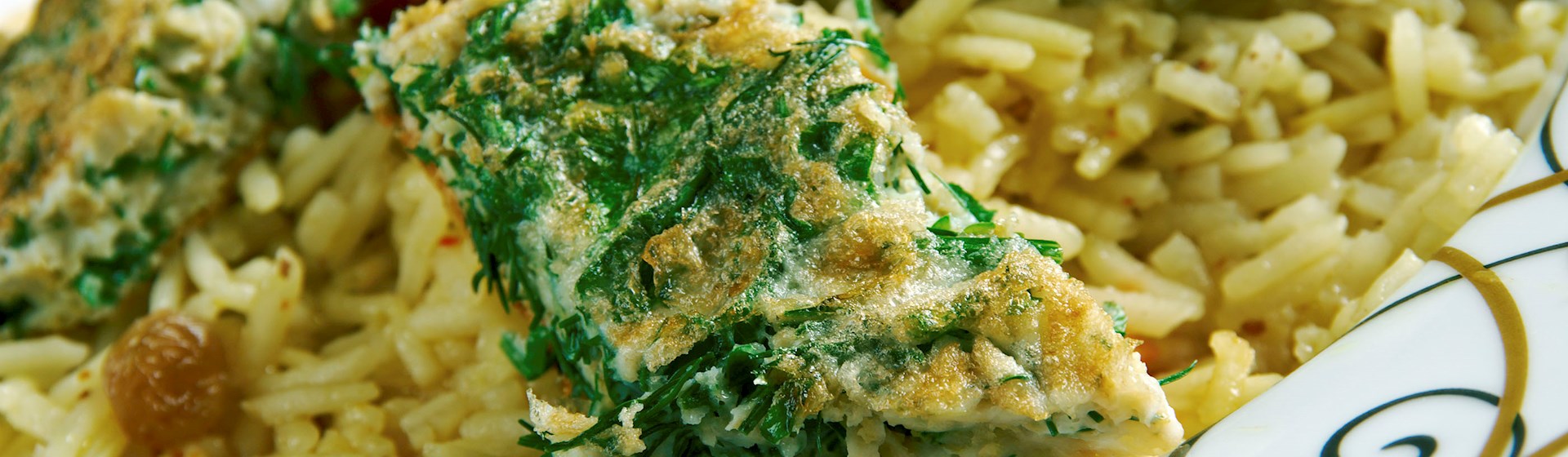
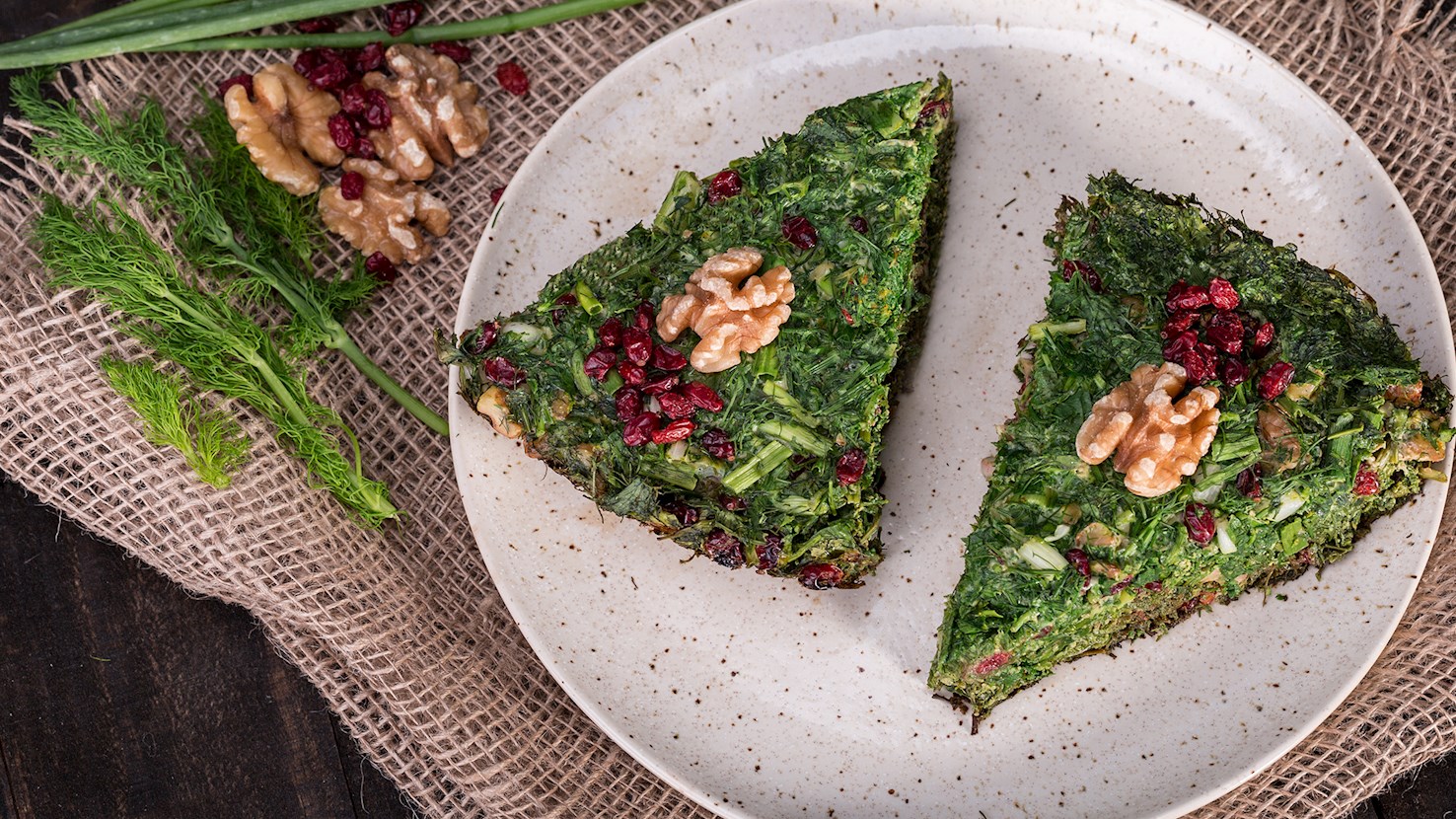
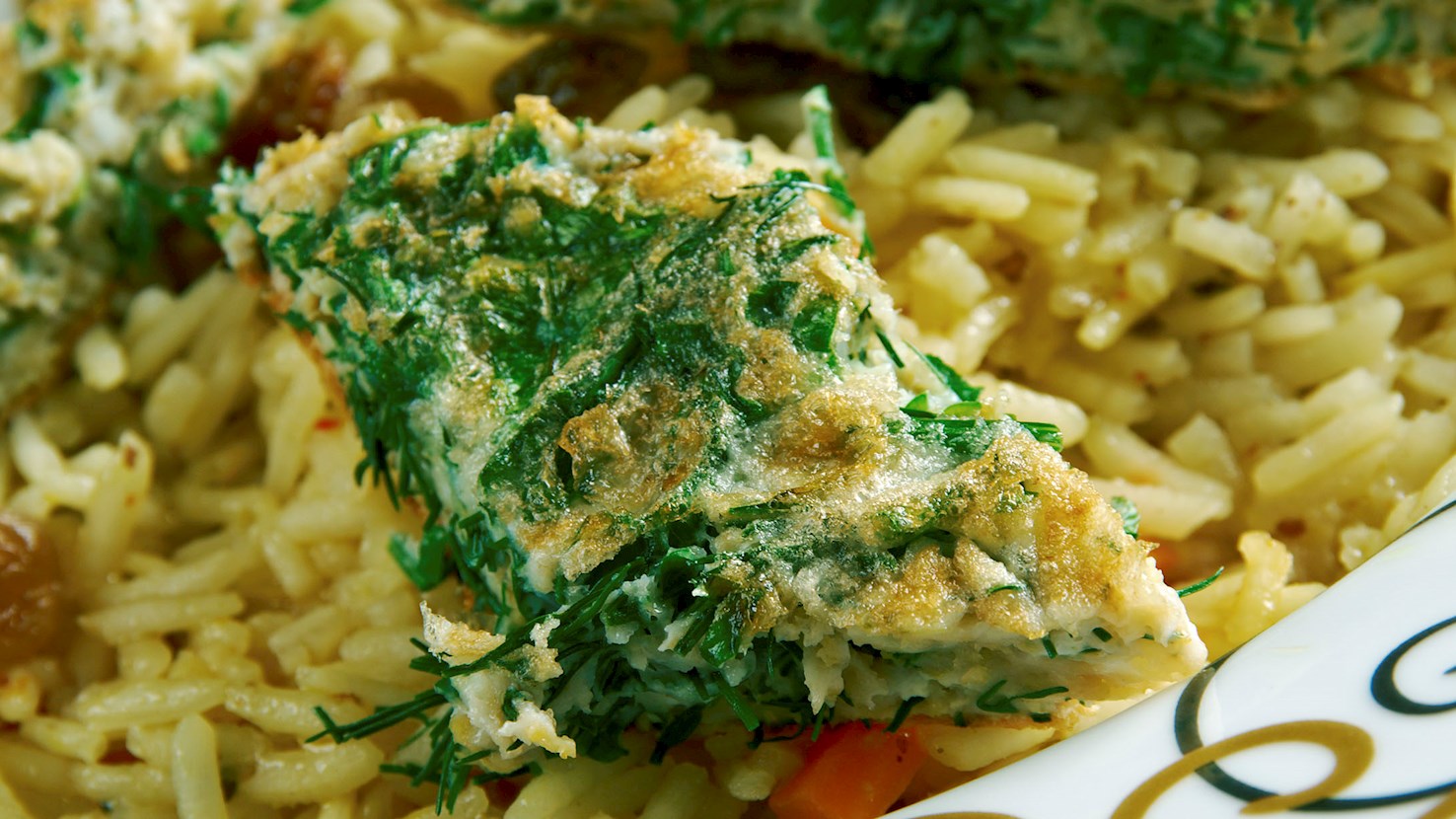
Kuku sabzi is a vibrant Iranian herb frittata that comes from Persian cuisine and is especially associated with Nowruz celebrations marking the Persian New Year. This dish relies on a mixture of finely chopped fresh herbs bound together with eggs and lightly seasoned with turmeric, walnuts, and barberries or dried berries for a bright, tangy contrast. The origins of kuku sabzi are centuries old, connected to the Persian use of herbs as both culinary and medicinal staples. Early references appear in Persian cookery texts that document recipes combining eggs with fresh vegetables and herbs as a way to create nourishing meals using whatever was locally available. Over generations, cooks refined the proportions to achieve a balance where the herbs remain dominant, and the eggs act more as a binder than a filling. While kuku sabzi is eaten year-round, it became particularly linked with the symbolic renewal of spring during Nowruz, when meals emphasize fresh greens as a sign of life and prosperity. Preparation begins by thoroughly washing and drying a variety of herbs, typically including parsley, coriander, chives or green onions, dill, and sometimes spinach or fenugreek leaves. These are chopped very finely by hand or with a food processor. Eggs are whisked separately and seasoned with salt, pepper, and turmeric. The herbs are folded into the eggs until the mixture is thick and vividly green. Some recipes add crushed walnuts for texture and soaked barberries or zereshk to provide a subtle tartness. The batter is then poured into a well-oiled pan and cooked gently over low to medium heat until the edges set. It can be finished by flipping or by baking briefly to firm the center. The result is a tender, cohesive cake that is rich in herbs with a golden crust. In Iran, kuku sabzi is commonly cut into wedges or squares and served warm or at room temperature. Some families garnish it with additional barberries or sprinkle it with ground walnuts before serving. During Nowruz, it often appears alongside rice, pickles, yogurt, and fresh flatbread. One aspect of kuku sabzi is how its preparation reflects personal and regional tastes: some cooks prefer it thick and dense with a soft middle, while others spread it thin for more browning and a crisp texture. Throughout Iran, kuku sabzi is enjoyed as a main dish, side, or mezze.
Kuku is the universal term for a broad group of Iranian dishes that resemble a thick omelet. It is often compared to a frittata, but the ratio of filling to eggs is much higher, resulting in a dense, flavorful mixture held together with just enough beaten egg to bind it. Kuku has origins across Iran, where it appears in everyday meals as well as celebratory spreads, and it is especially popular as part of light dinners and picnic foods. The most recognized variety, kuku sabzi, is prepared with a generous quantity of finely chopped fresh herbs such as parsley, cilantro, dill, and chives, combined with eggs, turmeric, walnuts, and sometimes barberries. The preparation of kuku begins by washing and finely chopping the herbs or vegetables. In some cases, grated potatoes or zucchini are used as the main component instead of greens. The chopped ingredients are seasoned with salt, pepper, and spices like turmeric or cumin, then mixed thoroughly with eggs. The mixture is poured into a well-oiled pan and cooked over gentle heat so that the bottom sets without burning. Traditionally, the kuku is flipped to cook both sides evenly, either by inverting it onto a plate and sliding it back into the pan or by baking it briefly in the oven. The result is a golden crust and a moist interior. Kuku is commonly served warm or at room temperature, cut into wedges or squares. It can be accompanied by flatbreads, yogurt, fresh herbs, or pickled vegetables. Kuku sabzi is particularly associated with Nowruz, the Persian New Year, when it is prepared to celebrate renewal and the arrival of spring. Other varieties include kuku sibzamini, made with mashed or grated potatoes, and kuku kadoo, which features zucchini. While each version has its own character, the unifying quality is the generous inclusion of vegetables or herbs bound lightly with egg. Beyond Iran, kuku has gained recognition among Persian diaspora communities and is often included in cookbooks and restaurant menus introducing Iranian home cooking to broader audiences.
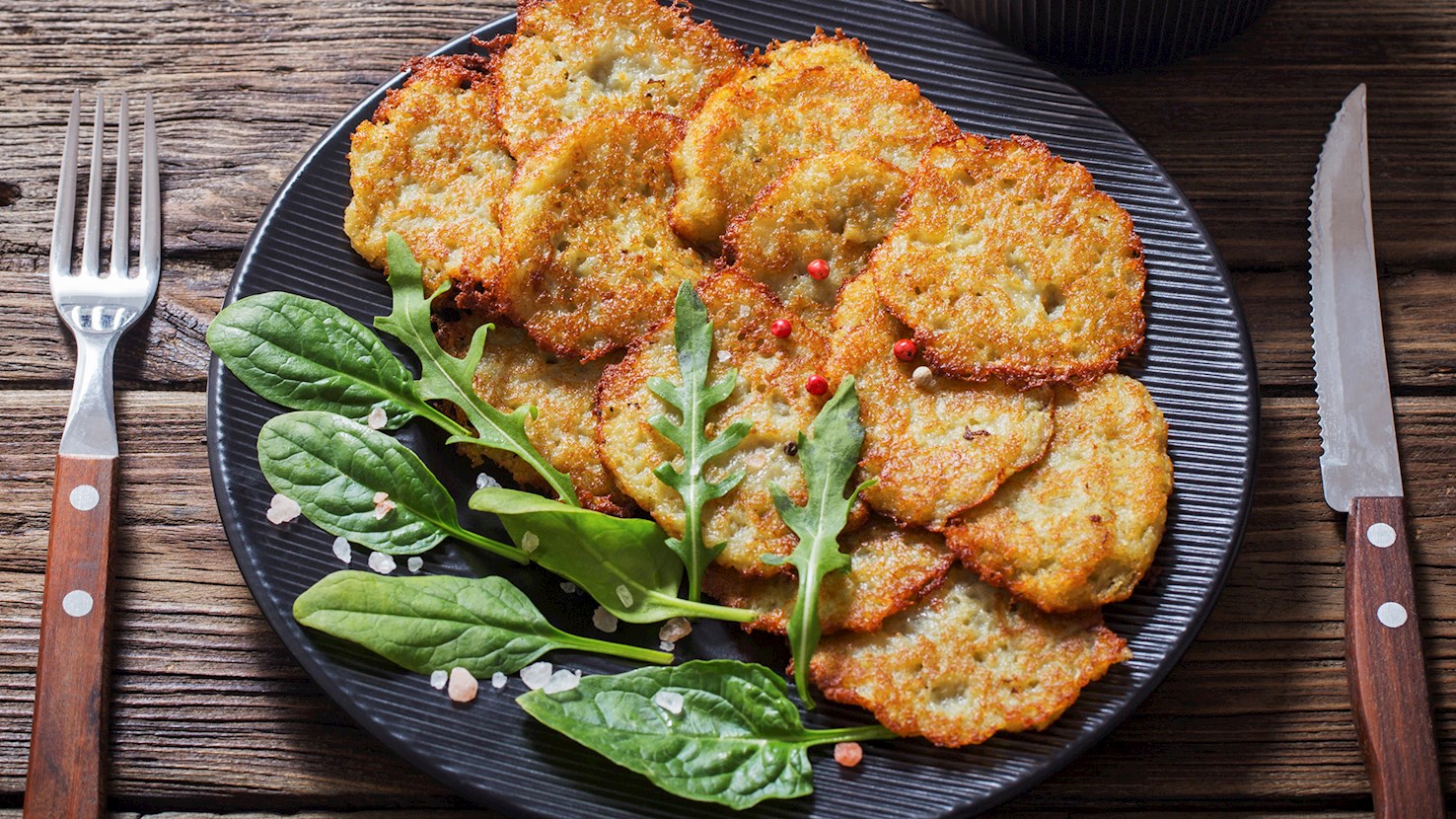
Kuku sibzamini is an Iranian potato-based dish prepared by combining mashed or grated potatoes with eggs, herbs, and spices to create a thick mixture that is gently pan-fried until golden on both sides. The name comes from Persian, where “kuku” refers to an egg-bound dish similar to an omelet or frittata, and “sibzamini” means potato. This style of kuku is popular across Iran as a convenient, satisfying meal that can be served warm or cold, often enjoyed as a light lunch, dinner, or picnic food. Preparation begins by cooking and mashing the potatoes until smooth or grating raw potatoes, depending on the desired texture. The potatoes are mixed with eggs, finely chopped onion, turmeric, salt, and pepper. Some cooks also include baking powder for a fluffier result. Fresh herbs like parsley or cilantro may be added for extra flavor, while a small amount of flour is sometimes incorporated to help bind the mixture. The seasoned batter is spread evenly into an oiled skillet and cooked over moderate heat until the bottom develops a firm, golden crust. It is then carefully inverted onto a plate or flipped in sections to cook the second side until fully set. Kuku sibzamini is served in wedges or squares and accompanied by flatbread, fresh herbs, yogurt, and pickled vegetables. The flavor is mild, with the sweetness of potato balanced by the earthy notes of turmeric and onion. Because the dish is not heavily spiced, it is popular with children and is often prepared as an everyday family meal. Its simplicity and reliance on inexpensive, accessible ingredients have made it a staple in Iranian households. Outside Iran, kuku sibzamini has found a place in Persian restaurants and home kitchens, where it is often introduced as an example of the versatility of kuku recipes. It is sometimes compared to other potato dishes like Spanish tortilla, though the Iranian version typically uses fewer eggs and lighter seasoning. The recipe is adaptable, allowing cooks to adjust the herbs, spices, or even the cooking method, with some opting to bake it rather than fry.
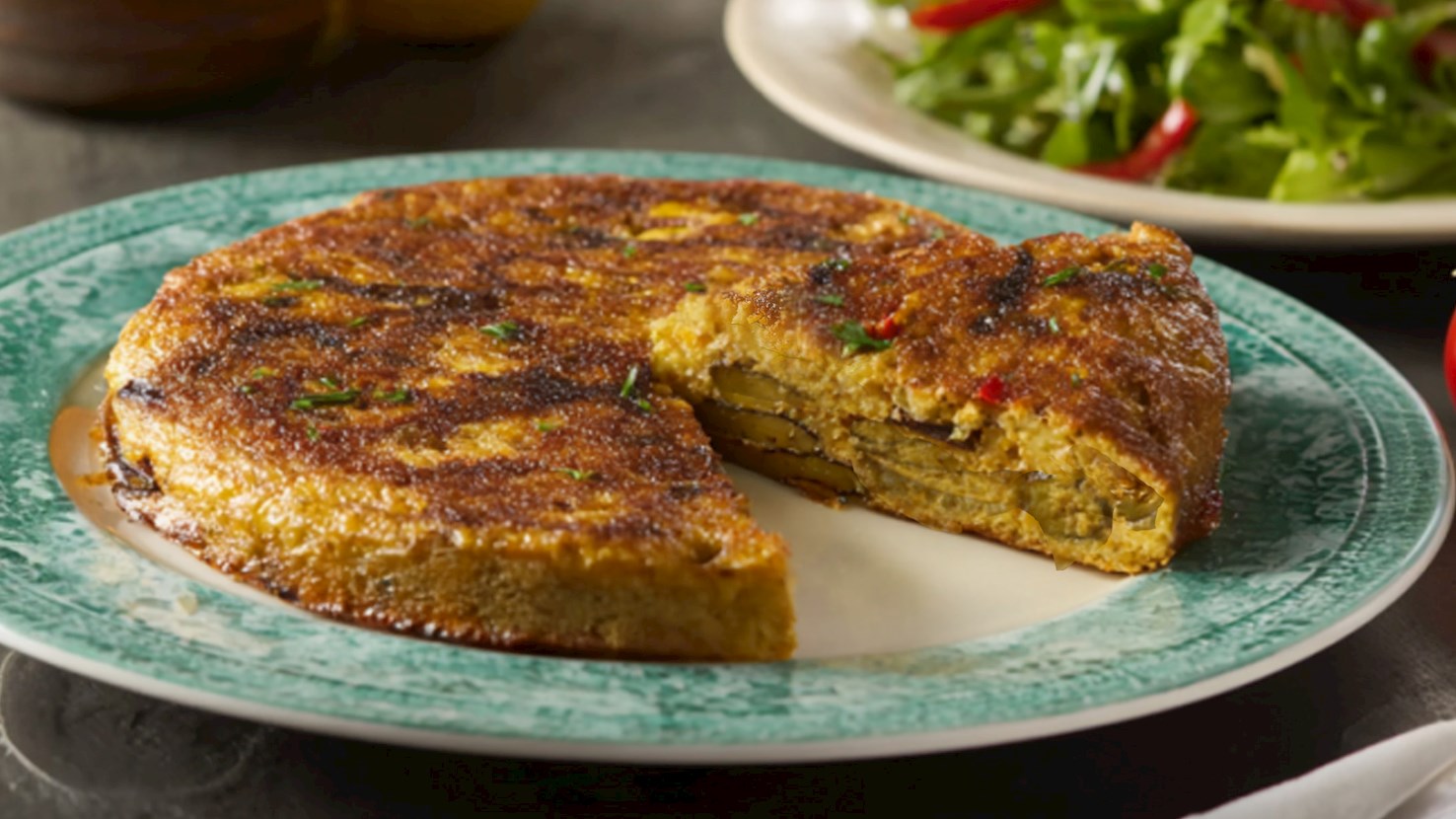
Kuku bademjan is a savory Persian egg-based dish prepared with eggplants, commonly enjoyed across Iran as a main or side course. It belongs to the broader family of kuku recipes, which are similar to frittatas and often combine eggs with vegetables or herbs. The history of kuku as a cooking method dates back centuries, with references in Persian culinary manuscripts to dishes that bind seasonal vegetables with eggs to create a nourishing and economical meal. Over time, variations developed to showcase regional produce, and eggplant became a favored choice because of its soft texture and ability to absorb flavors. As eggplants spread from India and the Middle East to Iran, they gained prominence in many dishes, including stews and kuku preparations. To make kuku bademjan, eggplants are peeled and sliced before being salted and left to rest briefly to reduce bitterness. They are then fried or sautéed in oil until tender and lightly golden. In a bowl, the cooked eggplants are combined with beaten eggs, finely chopped onions, turmeric, salt, black pepper, and sometimes crushed garlic or fresh herbs such as parsley or dill. This mixture is poured into a skillet and cooked over gentle heat until the eggs set and the edges become crisp. In some recipes, the pan is briefly finished in the oven to firm the center without burning the bottom. Kuku bademjan is cut into wedges or squares for serving. It can be served hot, warm, or cold, and is often accompanied by fresh herbs, flatbreads like lavash or sangak, and a side of yogurt or torshi (pickled vegetables). The combination of soft eggplant and fluffy eggs creates a texture that pairs well with rice dishes and salads. Kuku bademjan is commonly eaten at family gatherings, picnics, and as part of shared meals where multiple small dishes are presented together.
Kuku gerdu is a Persian dish originating from the northern regions of Iran, particularly associated with the fertile and verdant province of Mazandaran. This dish is a type of kuku, a thick, herbaceous omelette, made distinct by the inclusion of walnuts (gerdu in Persian), which add a unique texture and a mild, nutty flavor. Kuku gerdu is closely linked to the seasonal availability of walnuts in Mazandaran, where walnut groves are abundant. The dish evolved as a way to incorporate locally sourced ingredients into everyday cooking, combining the richness of eggs with the crunch and aroma of walnuts alongside an array of herbs like parsley, cilantro, and dill. Over generations, kuku gerdu has become a staple in northern Iranian households, especially during spring and summer when fresh herbs are plentiful, and walnuts are freshly harvested. Preparation of kuku gerdu begins with finely chopping fresh herbs and mixing them with beaten eggs, salt, and pepper. Chopped walnuts are then folded into the mixture, which is cooked slowly in a pan until set and golden on both sides. The result is a thick, flavorful omelette that balances the earthiness of herbs with the subtle crunch of walnuts. Kuku gerdu is typically served warm or at room temperature, often accompanied by yogurt, fresh bread, and sometimes a side of pickled vegetables, offering a refreshing and satisfying meal. Kuku gerdu remains a beloved dish in northern Iran, frequently enjoyed as a light lunch, brunch, or appetizer during family gatherings and local celebrations.
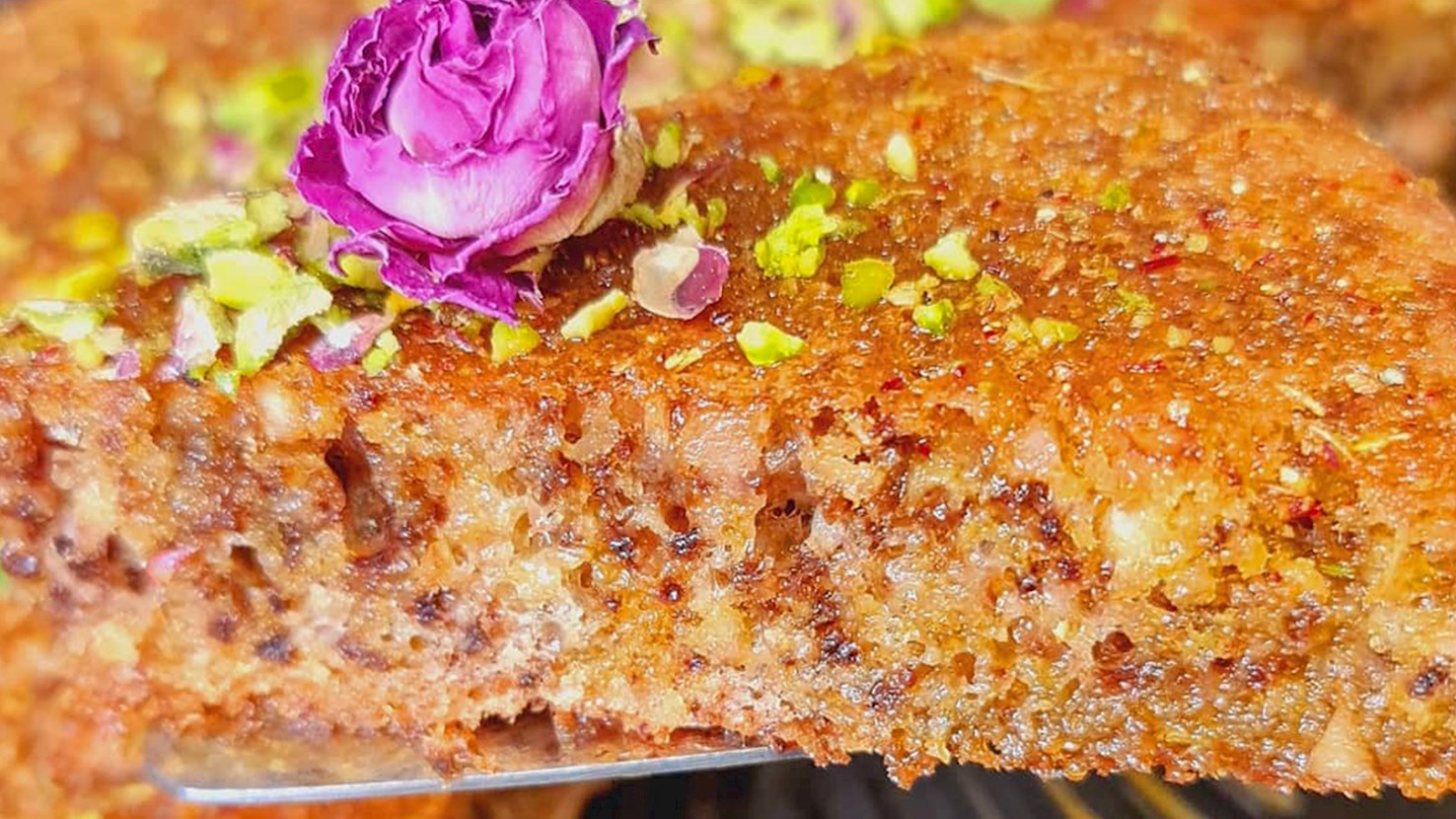
Khagineh is a simple Iranian and Azerbaijani egg-based dish, similar to a pancake or omelet. Often compared to a Persian-style omelet or pancake, khagineh is made by frying a mixture of eggs and flour or starch, then soaking or glazing it with a sweet syrup flavored with ingredients like rosewater, saffron, or cardamom. Though the preparation varies between regions and households, the dish is widely recognized in Iranian-Azeri and Kurdish cuisine, where it appears both as a breakfast food and as a simple dessert. The history of khagineh is closely connected to home cooking in northwestern Iran, where it developed as a flexible and accessible dish made from basic pantry ingredients. With roots in both sweet and savory Persian culinary traditions, khagineh reflects a practical approach to food, allowing cooks to create something satisfying and flavorful with minimal ingredients. While some versions are associated with celebratory events or specific seasons, others serve as everyday meals or snacks. Its name and preparation are distinct from other Persian egg dishes, and it has maintained its presence largely through oral tradition and domestic recipes rather than through formalized restaurant menus. To make khagineh, eggs are whisked together with flour or starch, sometimes with baking powder added for lightness. In sweet versions, a bit of sugar or rosewater may be included in the batter. The mixture is poured into a pan with hot oil or butter and fried gently until set, then flipped to cook both sides evenly. In some styles, the cooked egg mixture is cut into strips or squares before being returned to the pan and soaked in a warm syrup made from sugar, water, rosewater, and sometimes saffron or cardamom. The syrup is either poured over the pieces in the pan or added just before serving. Some home cooks add chopped walnuts or raisins, while others prepare layered versions that resemble a filled crepe or folded pancake. Khagineh is served warm or at room temperature, usually on its own or with tea. In Azerbaijani-style breakfasts, it appears alongside bread and cheese, while sweet variations are more often served in the evening or as part of a casual dessert spread. In some households, it is made for specific holidays or during the colder months due to its richness. Though rarely found in commercial bakeries or restaurants, it remains a common homemade item in Iranian households, especially in the northwest.
Kuku kadoo is an Iranian egg-based dish prepared with zucchini, known for its soft texture and subtle flavor that highlights the natural sweetness of the vegetable. The word “kuku” refers to a class of Persian recipes that resemble an omelet or frittata, made by binding finely chopped or grated ingredients with eggs and gently frying them until set. In this version, “kadoo” simply means zucchini, which becomes the main component of the mixture. Kuku kadoo is popular across Iran as a light meal served with flatbread, yogurt, and pickles, often appearing on family tables when fresh zucchini is in season. The preparation begins by grating zucchini and lightly salting it to draw out excess moisture. After resting for several minutes, the zucchini is squeezed to remove liquid, ensuring the kuku holds its shape. The grated vegetable is then mixed with beaten eggs, finely chopped onions, turmeric, salt, pepper, and sometimes a small quantity of flour for better binding. Some recipes include fresh herbs like parsley or dill, which add extra color and aroma. The mixture is poured into a skillet coated with oil and cooked over moderate heat until the bottom becomes golden. It is then flipped or turned carefully to cook the second side, yielding a lightly browned surface and a tender interior. Kuku kadoo can be served warm or at room temperature, often cut into wedges or squares. It is enjoyed as a simple lunch, a vegetarian side dish, or part of a larger spread with rice dishes and stews. The mild flavor makes it especially popular among children and those who prefer less heavily spiced foods. In many households, it is also prepared as an easy way to use surplus zucchini during the summer harvest. Beyond Iran, kuku kadoo has become more widely known among Persian diaspora communities and in cookbooks that introduce Iranian home cooking. The recipe adapts easily to modern kitchens, with some cooks opting to bake it in the oven rather than frying. The technique of using a high ratio of vegetables to eggs is characteristic of kuku recipes and distinguishes them from Western omelets, which tend to rely more on egg volume.
TasteAtlas food rankings are based on the ratings of the TasteAtlas audience, with a series of mechanisms that recognize real users and that ignore bot,
nationalist or local patriotic ratings, and give additional value to the ratings of users that the system recognizes as knowledgeable.
For the “Top 7 Iranian Egg Dishes” list until May 15, 2026, 319 ratings were recorded, of which 211 were recognized by the system as legitimate.
TasteAtlas Rankings should not be seen as the final global conclusion about food. Their purpose is to promote excellent local foods,
instill pride in traditional dishes, and arouse curiosity about dishes you haven’t tried.