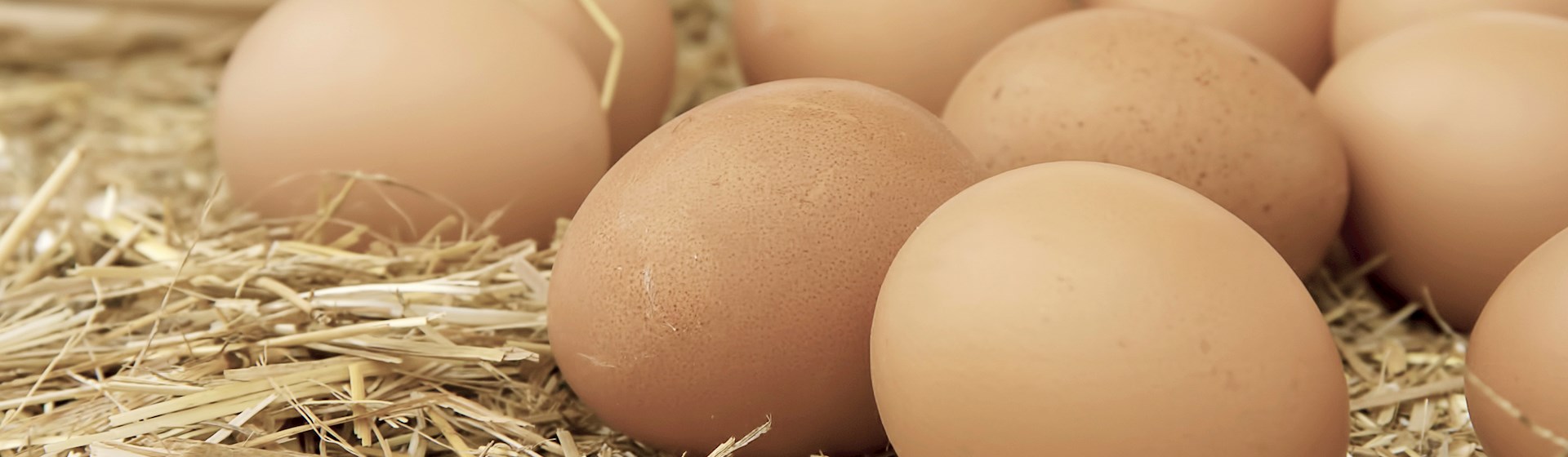
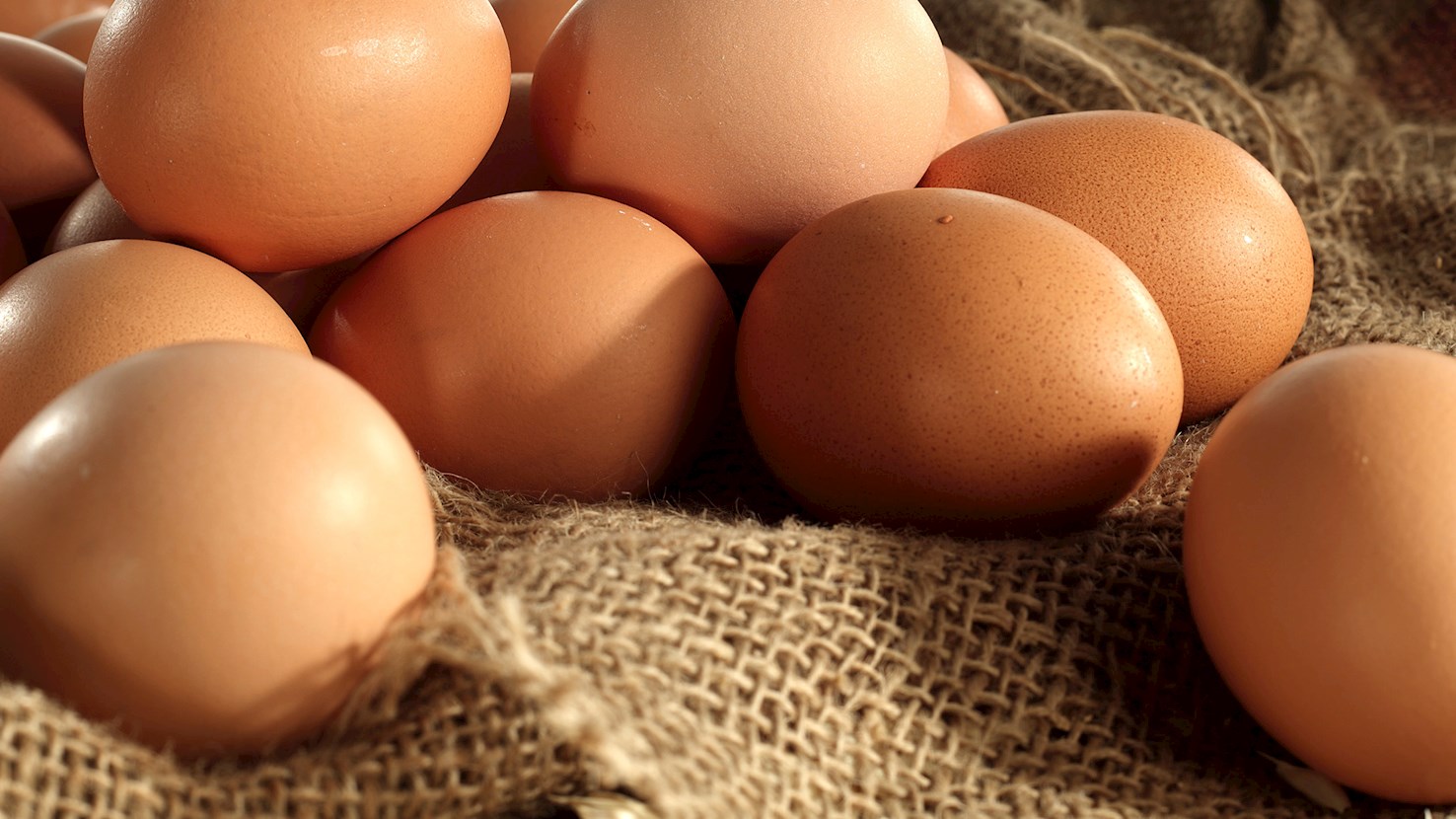
Œufs de Loué are unique eggs from free-range hens that feed on cereals, produced in the French region of Pays de la Loire. The eggs have a brown shell, and when raw, the yolk is straw-colored, due to the hens' diet, while the egg whites are translucent and firm. The taste of these eggs is creamy and very different than other eggs, which is why Loué eggs are the most expensive eggs on the market. Their price is justified because the quality control is very strict - the farmers collect the eggs several times a day, sort them and store them in a controlled environment. The eggs are sold fresh and packed in cartons, ready to be used in tasty omelettes, scrambled or baked.
The specific microclimate of the Slovenian Kamnik Alps ensures the high quality of goods produced in this region and Jajca izpod Kamniških planin (Kamnik Alps eggs) are definitely one of its best-known products. During the summer, temperatures in the Kamnik Alps do not rise significantly which means the chickens don't suffer from heat stress or dehydration and this maintains an excellent egg shell quality as well as a healthy nutrient balance. Even though the local chicken farmers and egg producers supply only local markets, it is certain that the use of the nutrient-rich Kamnik eggs will soon spread far outside of Slovenia.
Tosa Jiro no tamago are small, pale brown hen eggs produced by crossbred Tosa Jiro jidori chickens raised in free-range mountain farms across Kōchi Prefecture. The egg line was developed in 1989 at the Kochi Prefectural Livestock Experiment Station by crossing a male Tosa-Jidori, a protected native game breed, with a female Rhode Island Red hen to produce a specialized egg-and-meat strain adapted to mountain foraging. The egg features an unusually high yolk-to-white ratio, where the yolk constitutes roughly 35% to 40% of the total internal mass compared to the 30% average found in standard commercial eggs. What is unique to Tosa Jiro no tamago is its small size, weighing between 35 and 45 grams, roughly two-thirds the size of a standard L-grade egg, coupled with a thick vitelline membrane and dense outer albumen that allows the yolk to hold a raised, dome-like shape that resists breaking when lifted with chopsticks or separated. Culinary preparation involves cracking the egg raw directly over hot steamed short-grain rice, soft-boiling in water for 5 minutes, gently poaching, steaming into chawanmushi egg custards, or whisking into batters for local confections. Tosa Jiro no tamago are eaten across Kōchi Prefecture, specialty egg shops, and high-end Japanese restaurants (ryotei), served raw as tamago kake gohan seasoned with dashi-infused soy sauce, soft-boiled alongside grilled chicken skewers (yakitori), or served in morning breakfast sets, paired with hot green tea, dry Kochi sake (junmai), chilled draft lager, or hot miso soup.
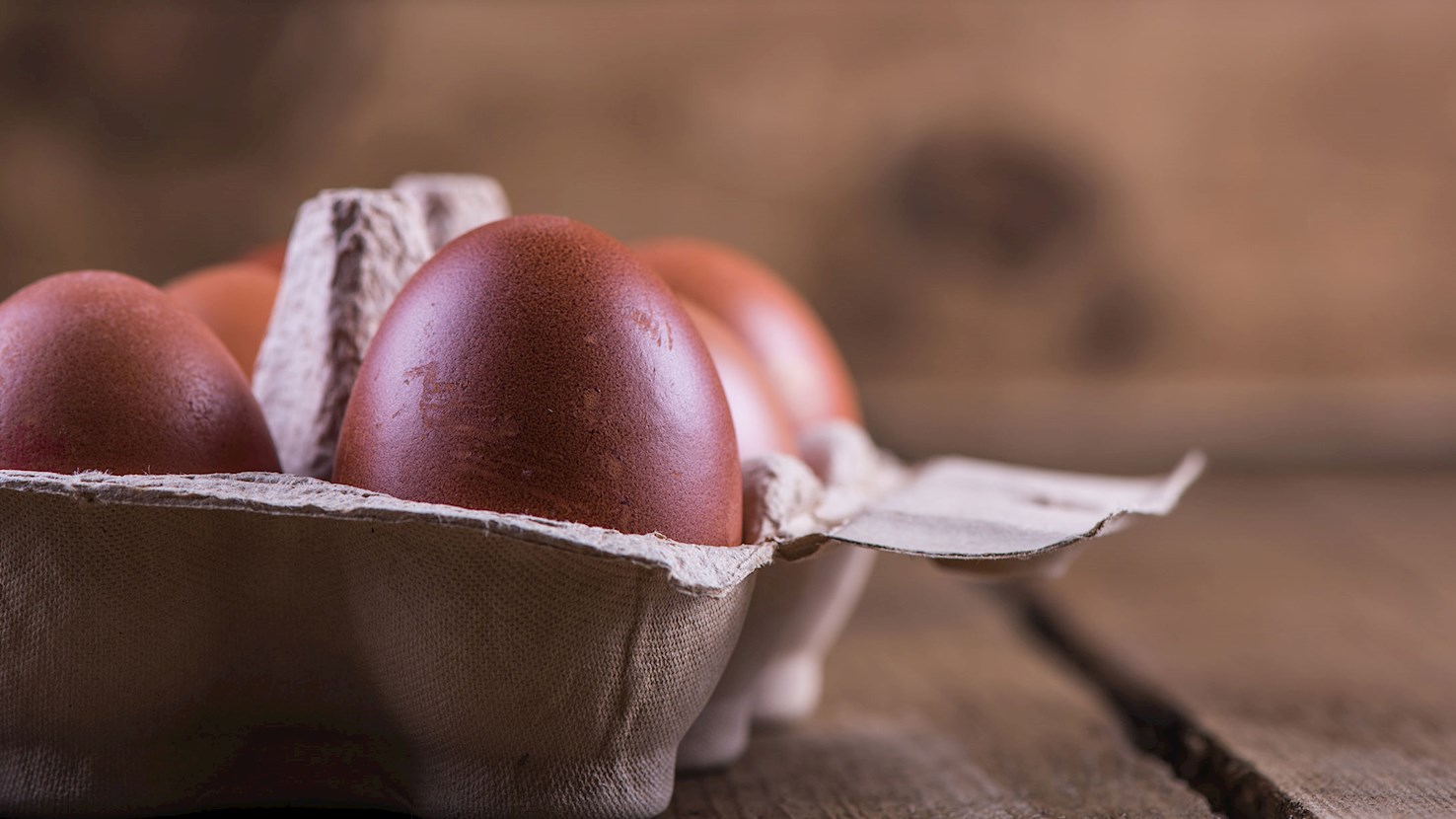
Œufs de Marans are extra-dark, reddish-brown chicken eggs produced by purebred Marans hens, native to the port city of Marans and the surrounding Marais Poitevin wetlands in the Charente-Maritime department of southwestern France. The egg line developed throughout the 19th and early 20th centuries as local marshland hens (poules des marais) crossed with game fowl brought by English sailors and heavy Asiatic breeds such as Langshans and Brahmas imported through the Atlantic trade docks. What is unique to œufs de Marans is that this heavy, mucilaginous pigment coating dries into a dense extra-cuticular layer that acts as a natural seal, significantly reducing shell porosity, lowering internal moisture loss over time, and inhibiting bacterial penetration through the shell wall compared to standard commercial eggs. The dark reddish-brown exterior is caused by protoporphyrin IX pigments secreted by the epithelial cells of the hen's oviduct during the final 3 to 4 hours of shell calcification, forming a thick, polished surface cuticle over an otherwise white calcium carbonate base. Preparation involves soft-boiling in water for 3 to 4 minutes to serve en cocotte or à la coque, hard-boiling for 8 to 9 minutes, gentle poaching, pan-frying in butter, or separating the large, rich yolks to emulsify classic sauces like barnaise, hollandaise, and mayonnaise. Œufs de Marans are eaten in French households, Parisian bistros, local Charente markets, and international Michelin-starred establishments, served soft-boiled in ceramic egg cups with toasted buttered bread strips (mouillettes), poached over fresh asparagus or frisée salads, or baked into savory tarts, paired with dry white wines such as Muscadet Sèvre et Maine or Sancerre, light red wines like Saumur-Champigny, hot espresso, or chilled mineral water.
Huevos de Araucana are blue-to-turquoise shelled avian eggs produced by the Araucana chicken breed, native to the La Araucanía. These eggs developed through the husbandry practices of the indigenous Mapuche people, who selectively bred two local chicken landraces, the tail-less Colonca and the tufted Quintro, which carried genetic traits for blue eggshell pigmentation. The coloration results from an autosomal dominant gene mutation driven by an endogenous retrovirus insertion that activates the SLCO1B3 gene, causing the liver to secrete biliverdin pigment into the oviduct where it integrates directly into the calcium carbonate matrix during shell secretion. What is unique to huevos de Araucana compared to brown or green eggs from crossbred Easter Eggers is that the biliverdin pigment permeates the full thickness of the shell, leaving the inner shell membrane and interior shell wall distinctly blue when peeled or broken. Culinary preparation involves soft-boiling in water for 4 to 6 minutes, hard-boiling for 9 to 10 minutes, poaching in simmering acidified water, frying in lard or butter, or whipping the yolk and white into sauces, batters, and baked desserts. Huevos de Araucana are eaten in Chilean households, agricultural estates, specialty breakfast eateries, and high-end global restaurants, served soft-boiled in egg cups with toasted bread, fried over warm corn tortillas, or folded into scrambled egg dishes with fresh herbs, paired with fresh black coffee, crisp Sauvignon Blanc, sparkling white wine, or chilled yerba mate.
Changshun green shell eggs are poultry eggs characterized by pale blue-green eggshells and high yolk-to-white ratios, produced by native black-feathered chicken breeds in Changshun County within the Qiannan Buyei and Miao Autonomous Prefecture of Guizhou Province. Their origin traces back to isolated karst mountain farming communities in central Guizhou, where local farmers selectively bred free-range indigenous chickens foraging on wild herbs, insects, and corn in high-altitude, humid mountain environments. What sets Changshun green shell eggs apart is the metabolic presence of oocyanin pigment deposited during shell formation in the hen's oviduct, coupled with a higher lecithin content and lower cholesterol concentration per unit volume compared to standard commercial white or brown chicken eggs. Preparation involves boiling the eggs whole in water, steaming them into savory egg custards, soft-poaching them in broth, or pan-frying them in rapeseed oil. Changshun Green Shell Eggs are eaten throughout Guizhou Province in household kitchens, breakfast stalls, and regional restaurants, where they are consumed warm out of the shell, stir-fried with fresh chili peppers and tomatoes, or dropped into bowls of hot Guizhou beef rice noodles (niurou fen), paired with local green tea, warm soy milk, or light rice wine (mijiu).
YELLOW-SPOTTED RIVER TURTLES ARE RARE AND UNDER THE THREAT OF EXTINCTION.
Yellow-spotted river turtles living in the Amazon River are known as taricaya turtles in Peru, and both their eggs (called huevos de taricaya) and meat have long been a staple of the local communities’ diet. The taricaya turtle’s eggs are also a prized delicacy in the country, making them an expensive, highly sought-after food item on the black market. All this has led to illegal poaching of their eggs that, along with hunting for food and accidental deaths in fishing nets, had nearly brought these animals to the verge of extinction. The taricaya turtles have consequently earned a status of vulnerable species by the IUCN (International Union for the Conservation of Nature) and are now protected by the Peruvian authorities who have been making significant efforts to save this species from disappearing.
TasteAtlas food rankings are based on the ratings of the TasteAtlas audience, with a series of mechanisms that recognize real users and that ignore bot,
nationalist or local patriotic ratings, and give additional value to the ratings of users that the system recognizes as knowledgeable.
TasteAtlas Rankings should not be seen as the final global conclusion about food. Their purpose is to promote excellent local foods,
instill pride in traditional dishes, and arouse curiosity about dishes you haven’t tried.










What People Say