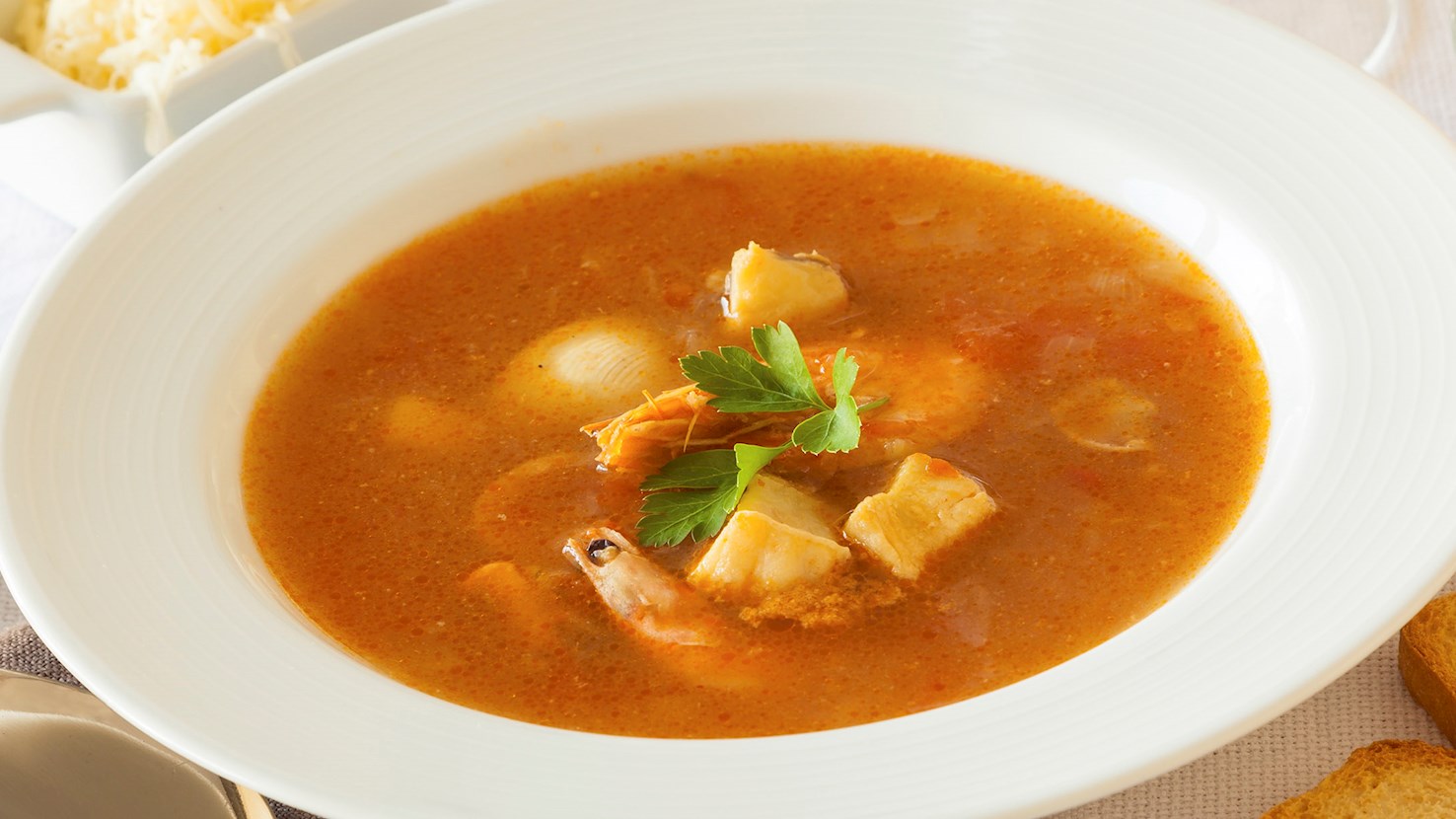
Originally a poor man’s dish, soupe de poisson à la rouille is a classic French soup and a close cousin of the famous bouillabaisse. The soup is usually prepared with white fish that is cooked in a flavorful broth that mostly incorporates tomatoes, olive oil, garlic, saffron, and various herbs. The soup is then strained and served with rouille, a classic Provençal sauce that usually incorporates bread, garlic, spices, egg yolks, and olive oil while some versions can also include monkfish liver, tomatoes, or potatoes. Soupe de poisson originated in the Provençal region, most probably in Marseille, and it can be found all along the French Mediterranean coast. It is often enjoyed as an appetizer, typically served hot and topped with crunchy croutons and Gruyère cheese.
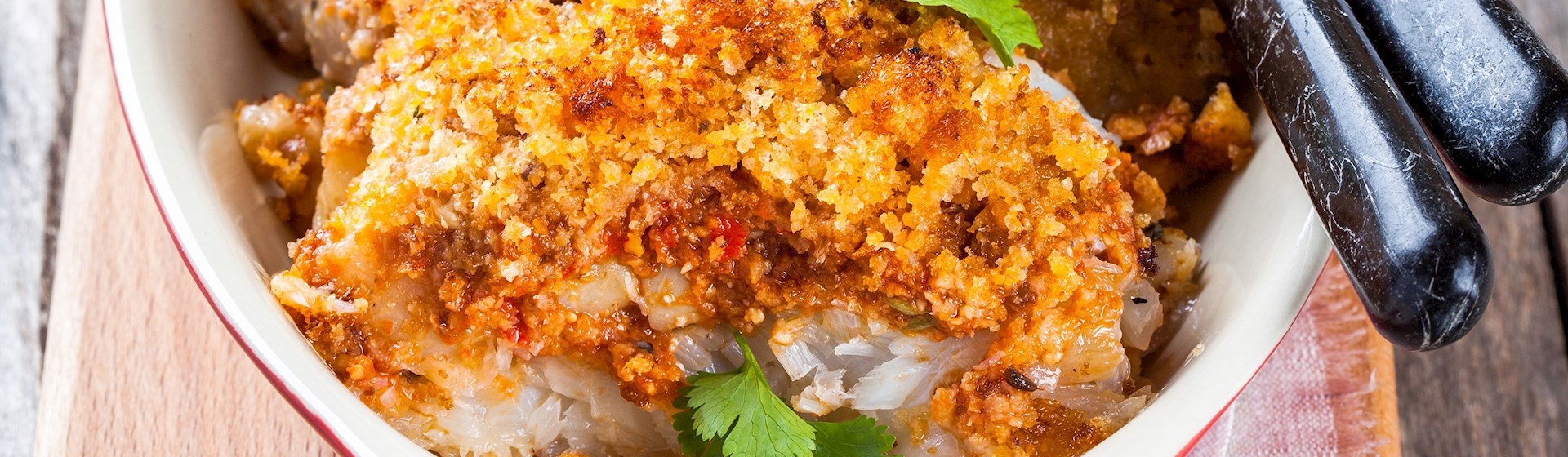
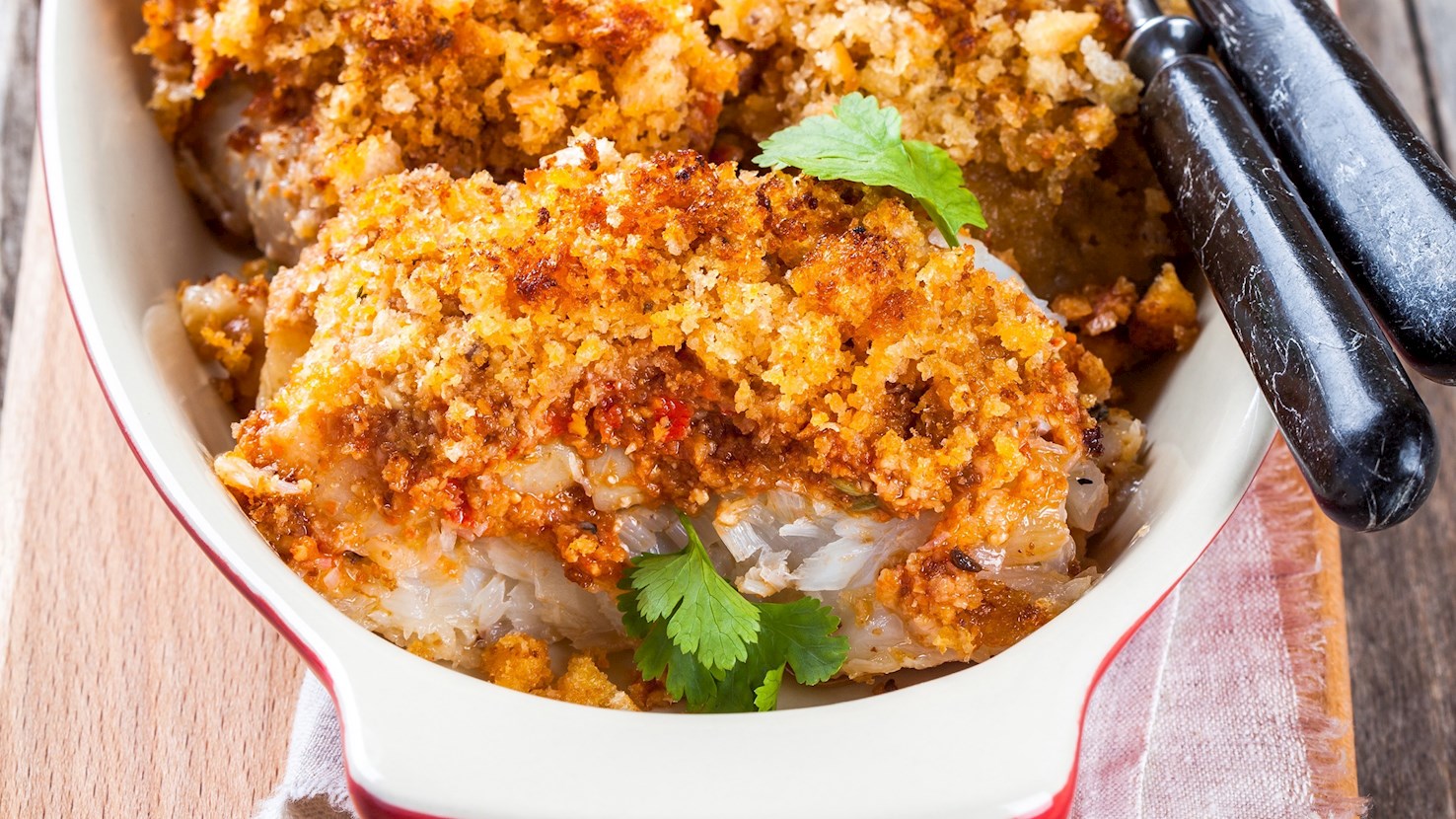
Cabillaud aux herbes is a traditional fish dish originating from Provence. The dish is usually made with a combination of cod fillets, breadcrumbs, butter, olive oil, seasonings, and herbs such as parsley, tarragon, and thyme. The breadcrumbs are mixed with the herbs and seasonings, while the eggs are seasoned with salt and pepper and whisked. The cod fillets are dipped in egg wash, rolled in seasoned breadcrumbs, and fried in a mixture of oil and butter on both sides until fully cooked. Once the breadcrumbs have nicely browned, the dish is typically served with lemon wedges on the side.
Truite à la Vauclusienne is a fish dish from made with trout caught in the Sorgue river. Its origin lies in the waters of the Fontaine-de-Vaucluse source which feeds the Sorgue and historically supplied trouts that were prized for their clarity of flesh and cold stream flavour; cooks in the region developed a preparation that honoured the fish while weaving in local shellfish (crayfish) and truffles, and over time it became recognized as a refined offering in regional cuisine. The preparation begins by filleting or cutting the trout into portions and poaching them in white wine until just cooked through, then arranging those portions over a bed of sautéed mushrooms, crayfish tails or claws, and small pieces of black truffle, covering the ensemble with a béchamel sauce enriched with egg yolks, and then breading and pan-frying the whole to a golden crust in olive oil; a final sauce is made by reducing the poaching liquid with white wine and clarifying it with crayfish butter, then the dish is plated hot with the trout and garnishes and the sauce poured over. Variations include using whole trout instead of fillets, substituting mushrooms with wild seasonal varieties, omitting the truffle for a lighter dish, or simplifying the crusting step by foregoing the breading and frying; a unique aspect of this preparation is the poaching of the trout in white wine and the inclusion of crayfish butter in the sauce, which gives the dish a specific regional identity tied to the Sorgue river’s crayfish and truffle foraging. Truite à la Vauclusienne is served as a main course in restaurants and homes around the Vaucluse region, often accompanied by local white wines such as a Côtes-du-Vaucluse Blanc or a young Rhône white, and it pairs well with green vegetables such as steamed asparagus or young peas, and a light herb salad that balances the richness of the sauce.
A hallmark of Niçois gastronomy, estocafic is a hearty stew built around air-dried cod that arrived in southern France along historic Scandinavian trade routes. Because Christian fasting rules demanded meatless meals, this preserved seafood became deeply woven into the local culinary fabric, relying heavily on the region's abundant olive oil and fresh produce. Unlike recipes that use fresh catch, this meal relies entirely on the unique, concentrated flavor and firm texture of salted stockfish. Cooks must first submerge the stiff, cured cod in cold water for up to three days, constantly refreshing the bath to wash away the heavy brine and tenderize the meat. Once fully revitalized, the seafood is carefully trimmed and sliced into manageable chunks. Next, minced garlic and onions are fried in a generous pour of olive oil within a deep pot, and peeled tomatoes, strips of red bell pepper, slightly browned potato pieces, and a fragrant bundle of fresh thyme and bay leaves are added once garlic and onions have softened. The soaked cod goes into the broth, along with a splash of white wine or brandy, followed by a handful of black olives, salt, and black pepper to round out the savory profile. Everything simmers together over low heat under a tight lid until the ingredients meld and the seafood pulls apart effortlessly. Cooks often customize the pot by throwing in stalks of fresh fennel, a dash of hot chili for warmth, or an intensely savory dollop of anchovy paste. Typically enjoyed steaming hot as a communal centerpiece during large family meals or seaside gatherings, the rich bowl demands a refreshing beverage companion. Crisp, locally produced Provençal rosés or bright, acidic red wines from nearby vineyards perfectly cut through the dense, briny richness of the dish.
Aïoli garni is a traditional French salt cod and vegetable dish that centers entirely around a potent garlic and olive oil sauce. Deeply embedded in the culinary heritage of Marseille and the wider Provence region, this communal meal showcases local garden produce alongside preserved seafood. Making the aïoli sauce requires crushing raw garlic cloves and salt in a heavy mortar, then vigorously whisking in high-quality olive oil—and frequently an egg yolk for stability—until a thick, glossy paste forms. Preparing the fish and the vegetables requires a gentle touch and careful timing. The preserved fish must sit in cold water for several days to draw out the heavy brine before it undergoes a light simmering. Meanwhile, a vibrant assortment of seasonal vegetables, such as waxy potatoes, carrots, green beans, cauliflower florets, artichokes, sweet beets, and mild onions, is individually boiled or steamed. Every piece of produce is kept whole or cut into large chunks to preserve its natural texture and inherent sweetness. Presenting this feast involves arranging the hot, unadorned elements on a large serving board rather than mixing them into a single pot. Diners then coat the individual bites generously with the pungent garlic paste. Elaborate iterations of this meal often incorporate extra proteins to create a more substantial spread. Hard-boiled eggs, classic Provençal escargots, or an array of shellfish, such as mussels, whelks, and baby octopus, frequently appear on the table. Whenever the occasion demands a truly spectacular centerpiece, such as a Christmas Eve dinner, a festive gathering, or a historically meatless Friday, the spread transforms into a lavish feast known as grand aïoli. This ultimate version supplements the foundational seafood and vegetables with tender cuts of boiled beef or chicken salvaged from a hearty pot-au-feu broth. Despite the flexibility of ingredients across households, the essential trio of simply prepared vegetables, revitalized cod, and potent garlic sauce remains a beloved constant across Occitan, Catalan, and Mediterranean foodways. Pouring a crisp, acidic white or rosé vintage from a nearby Provençal vineyard provides the ideal beverage pairing, as the wine perfectly cuts through the rich olive oil while complementing the briny fish and earthy produce.
TasteAtlas food rankings are based on the ratings of the TasteAtlas audience, with a series of mechanisms that recognize real users and that ignore bot,
nationalist or local patriotic ratings, and give additional value to the ratings of users that the system recognizes as knowledgeable.
For the “Top 5 Provençal Fish Dishes” list until May 15, 2026, 33 ratings were recorded, of which 28 were recognized by the system as legitimate.
TasteAtlas Rankings should not be seen as the final global conclusion about food. Their purpose is to promote excellent local foods,
instill pride in traditional dishes, and arouse curiosity about dishes you haven’t tried.