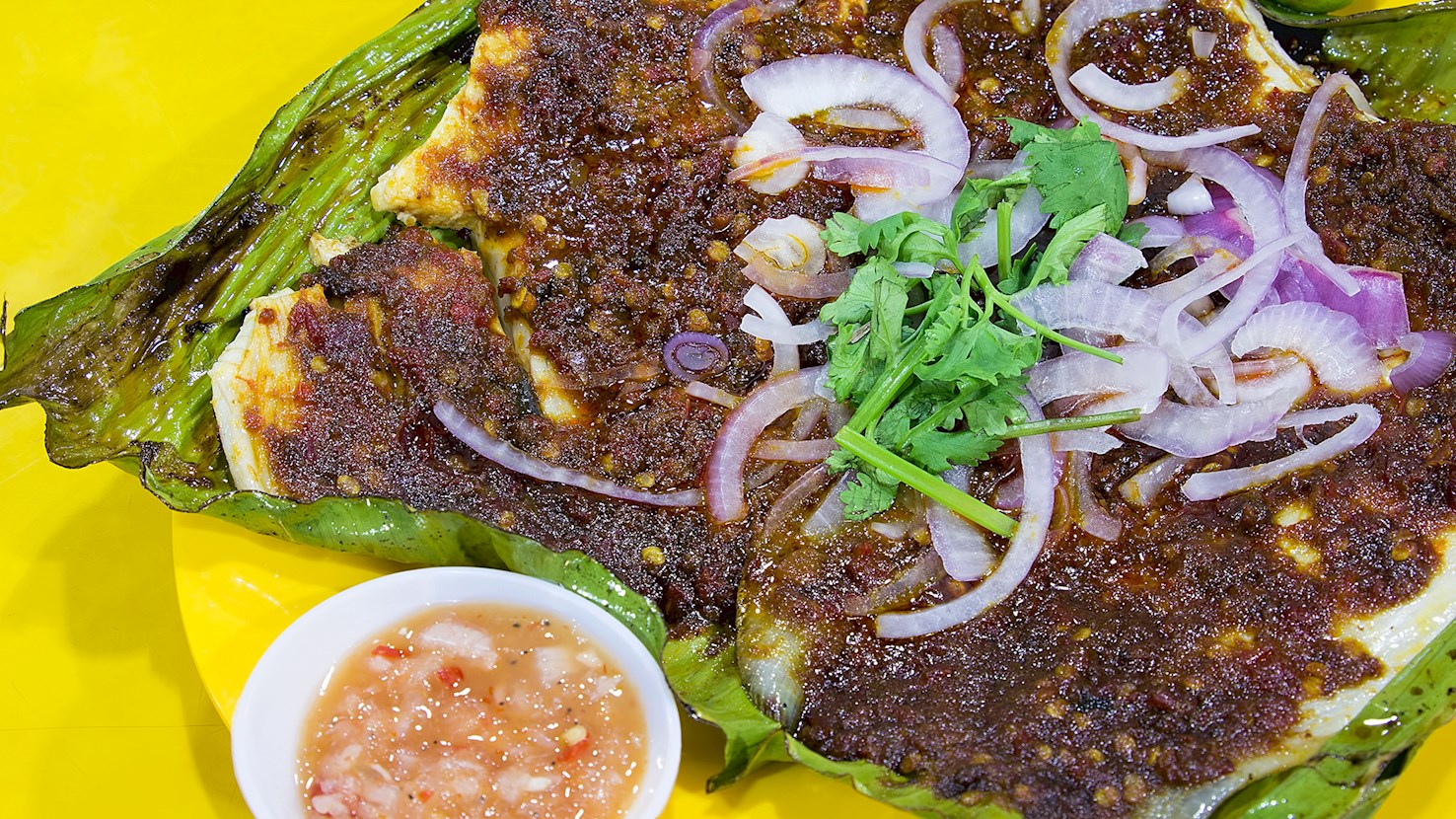
This Singaporean and Malaysian classic dish couples grilled stingray and spicy sambal paste—the chili pepper-based sauce that may incorporate various other elements such as lime juice, shrimp paste, ginger, vinegar, or sugar. The thin stingray fillets are usually coated with sambal and are then grilled and served on a banana leaf. The whole dish is traditionally accompanied by lime wedges, onions, or sliced chili peppers, and there is also a special dipping sauce on the side. Apart from Singapore, the dish is also enjoyed in Malaysia where it is known as ikan pari bakar.
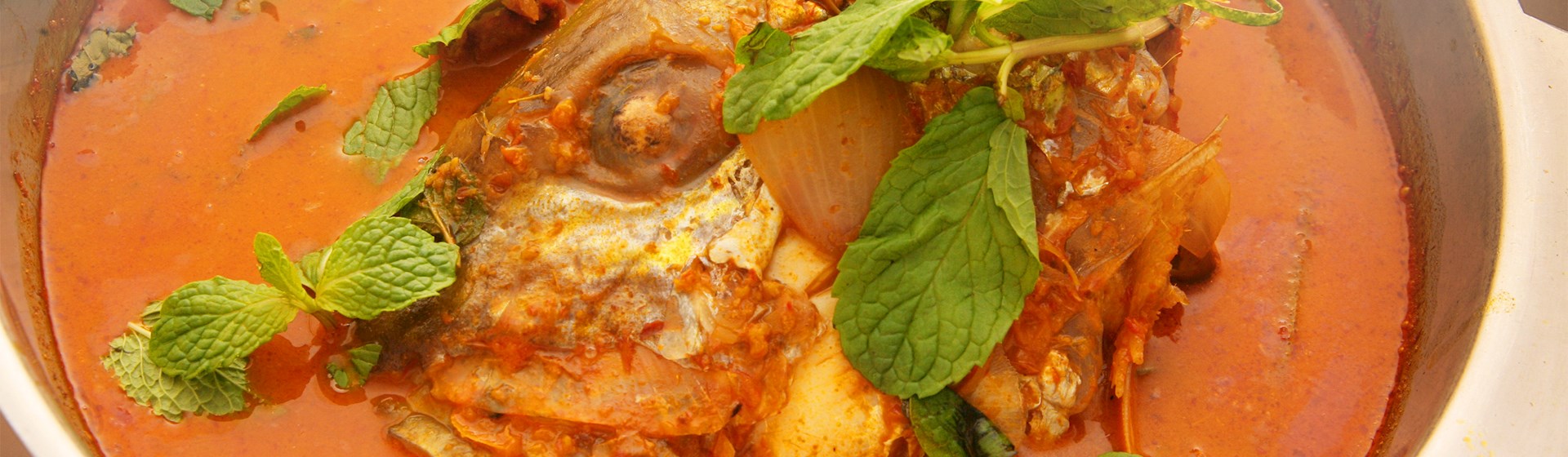
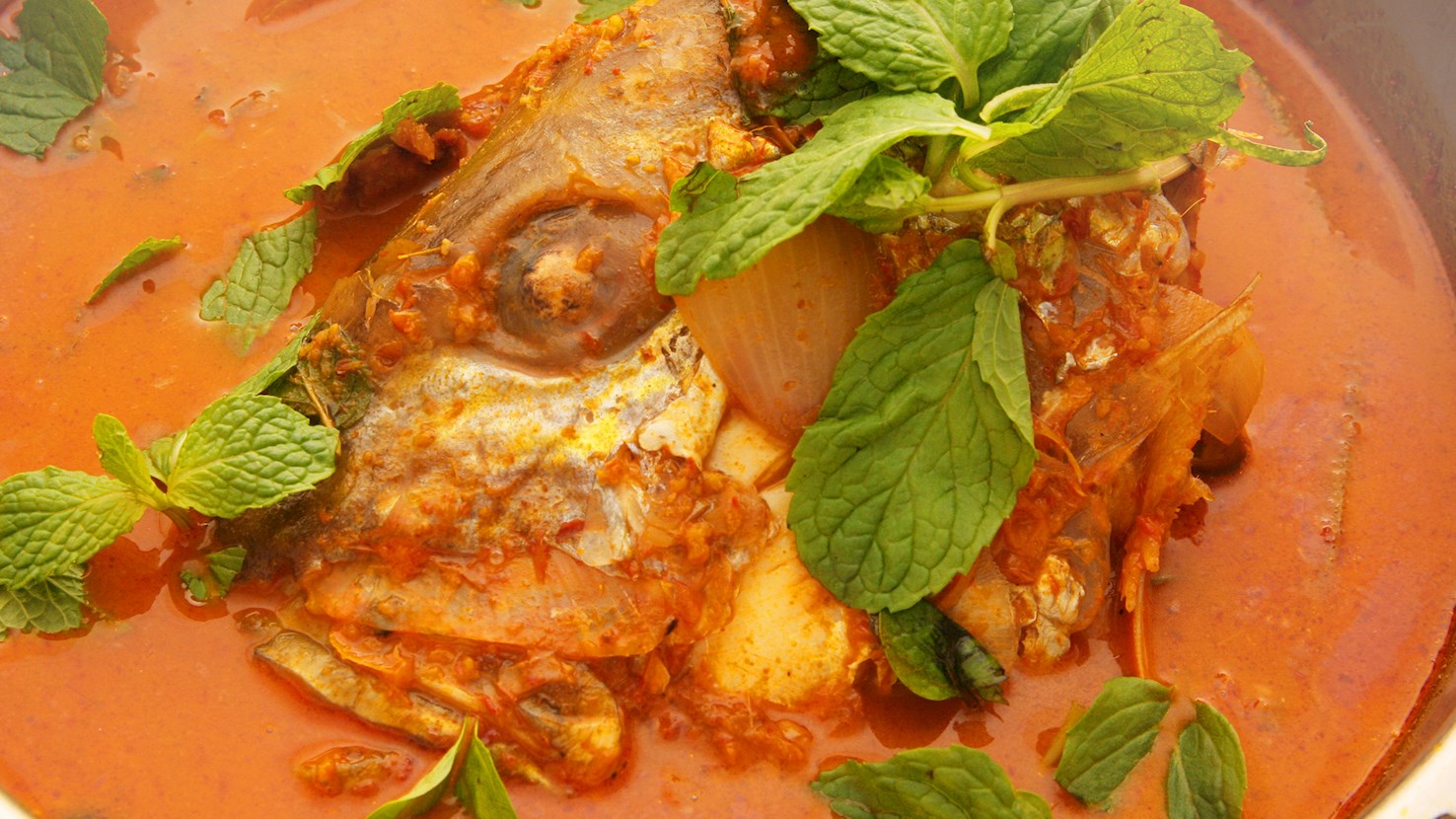
Fish head curry is a robust, highly spiced stew centered on a large fish head simmered with vegetables in a tamarind-based curry. Red snapper, locally called ikan merah, is the best-known choice, although grouper, sea bream, and other large, firm-fleshed fish are also used. The gravy may be thick and enriched with coconut milk or thinner and more sharply sour, depending on the restaurant and culinary style. The most widely accepted origin story dates the creation to 1949, when M. J. Gomez, an immigrant from Kerala who is often identified as coming from Trivandrum, began selling fish head curry from a stall on Sophia Road in Singapore. Fish heads were not generally regarded as premium ingredients within the food culture Gomez knew, but they were highly valued among local Chinese communities, especially for the soft cheek meat, eyes, lips, and gelatinous tissue surrounding the skull. Gomez combined a large fish head with the spices and sour gravy associated with fish curries from Kerala, creating a meal designed for local tastes. Accounts of the exact location and sequence vary slightly. Some place his early eating shop around Mount Sophia in the early 1950s, while later premises operated on Selegie Road. His business eventually closed, but the concept spread rapidly. Other restaurants began offering their own versions, and advertisements for “Gomez fish head curry” and “original Gomez curry” appeared during the 1970s and 1980s. The opening of Muthu’s Curry in 1969 and other well-known curry restaurants helped strengthen its position as one of Singapore’s most recognizable foods. The original idea was therefore not simply imported unchanged from Kerala. It joined a southern Indian spice framework with a local Chinese appreciation for the head of the fish. Malay and Peranakan ingredients and techniques later influenced further versions, turning fish head curry into a clear example of Singapore’s interconnected culinary culture. A typical version begins by heating oil and adding mustard seeds, fenugreek seeds, and fresh curry leaves. As the seeds begin to crackle, onions, garlic, and ginger may be fried until fragrant and softened. Some formulas include sliced green chilies or dried chilies at this stage. A wet spice mixture follows. It commonly contains ground coriander, cumin, turmeric, chili powder, and sometimes fennel, black pepper, or a commercial fish-curry spice blend. The spices are fried in oil long enough to lose their raw aroma without scorching. This stage deepens their flavor and often leaves a visible layer of red, spice-infused oil around the finished curry. Tamarind pulp is soaked in water and squeezed to produce a cloudy, acidic extract. This liquid is added to the fried spices, giving the gravy its defining sourness. Tomatoes can supply further acidity and body. Coconut milk may then be poured in to soften the chili heat, round out the tamarind, and create a thicker, opaque sauce. It is common in many versions but is not essential to every fish head curry. Some restaurants use little or none, producing a thinner and sharper broth. The fish head must be extremely fresh and cleaned thoroughly. The gills, scales, blood, and remaining internal matter are removed because they can give the curry a muddy or bitter flavor. A very large head may be split lengthwise into two halves so that it fits inside the pot and the gravy reaches the inner cavities. Smaller heads can remain intact. Red snapper is strongly associated with the meal because its head is large, fleshy, and sturdy enough to remain intact during simmering. Grouper provides similarly thick cheek meat and abundant gelatin. The head is lowered carefully into the hot gravy rather than stirred aggressively, since rough movement can break the skull apart and scatter small bones through the sauce. Eggplant, whole or trimmed okra pods, and halved or quartered tomatoes are among the most established vegetables. Long beans, onions, pineapple, cabbage, and fried tofu puffs may also appear. Okra thickens the sauce slightly, eggplant absorbs the curry, and tomatoes reinforce its acidity. Pineapple contributes sweet-and-sour contrast, while tofu puffs soak up the surrounding liquid. The curry should simmer steadily but not violently. Excessive boiling can break the fish apart, toughen the exposed flesh, and cause coconut milk to separate. The fish is ready when the flesh turns opaque, separates easily from the bone, and remains moist. Its eyes also become opaque during heating, but their appearance alone is not a reliable measure of doneness. The collagen around the cheeks, lips, jaw, and eye sockets gradually softens, giving those sections their characteristic slippery richness. The sauce should remain abundant enough to surround the head and coat the vegetables. A thick version clings heavily to the fish and rice, while a thinner version behaves more like a sour, spiced broth. Salt, tamarind, chili, and coconut milk are adjusted near the end so that no single element overwhelms the others. Several recognizable styles developed across Singapore, although restaurant formulas overlap and do not fit into completely rigid categories. The Indian-style version remains closest to the format associated with Gomez and later curry restaurants. It usually has a strongly spiced red gravy with prominent tamarind, chili, curry leaves, turmeric, and a visible layer of seasoned oil. Coconut milk may be included for richness, but some formulas keep the sauce comparatively sharp. Eggplant, okra, and tomatoes are common, while pineapple appears in some celebrated versions. A Chinese-style version is often served in a porous earthenware claypot that retains heat and keeps the curry bubbling at the table. Early Chinese adaptations moderated the spice level, and at least one pioneering restaurant steamed the fish head before adding it to the sauce. Modern claypot versions may have a thinner, sweeter, and less fiery gravy, although some are extremely rich and spicy. Cabbage, fried tofu puffs, eggplant, okra, long beans, and tomatoes can be added, with the tofu and cabbage absorbing the seasoned liquid. These ingredients are common options rather than compulsory features. The Peranakan or Nyonya-influenced version often places greater emphasis on tamarind and aromatic ingredients. Some forms resemble assam fish head, with a lighter, intensely sour broth containing chilies, shallots, garlic, ginger, lemongrass, belacan, torch ginger, and occasionally belimbing, a sharply acidic fruit. Coconut milk may be omitted to keep the broth clear and tart, but other Nyonya versions include it for a fuller, sweeter texture. It is therefore inaccurate to define every Peranakan version as entirely free of coconut milk. The finished curry is commonly brought to the table in a large serving bowl or claypot with the head still intact. Claypot versions can remain visibly bubbling for several minutes because the vessel continues releasing stored heat. The curry is usually shared rather than divided before serving. Eating the head requires working around its complex arrangement of bones. The broad sections of flesh are removed first, followed by the meat hidden around the jaw, collar, and cheeks. The cheeks are especially valued because their flesh is soft, moist, and finely textured. The gelatinous eyes, lips, and connective tissue around the skull are also prized. The eye can be lifted out whole, while the soft tissue surrounding it is separated carefully from the harder central structure. Steamed white rice is the most common accompaniment. Ladles of curry are poured over the rice so that the grains absorb the tamarind, chili, coconut milk, and fish juices. At restaurants serving banana-leaf meals, rice may be placed directly on a fresh leaf with fish head curry, papadum, vegetables, and other sides. Hot flatbreads provide another way to handle the gravy. Roti prata, parotta, chapati, or other breads can be torn into pieces and dipped into the sauce. Their layered or porous texture absorbs the curry particularly well, while crisp papadum adds a dry contrast to the tender fish and thick gravy.
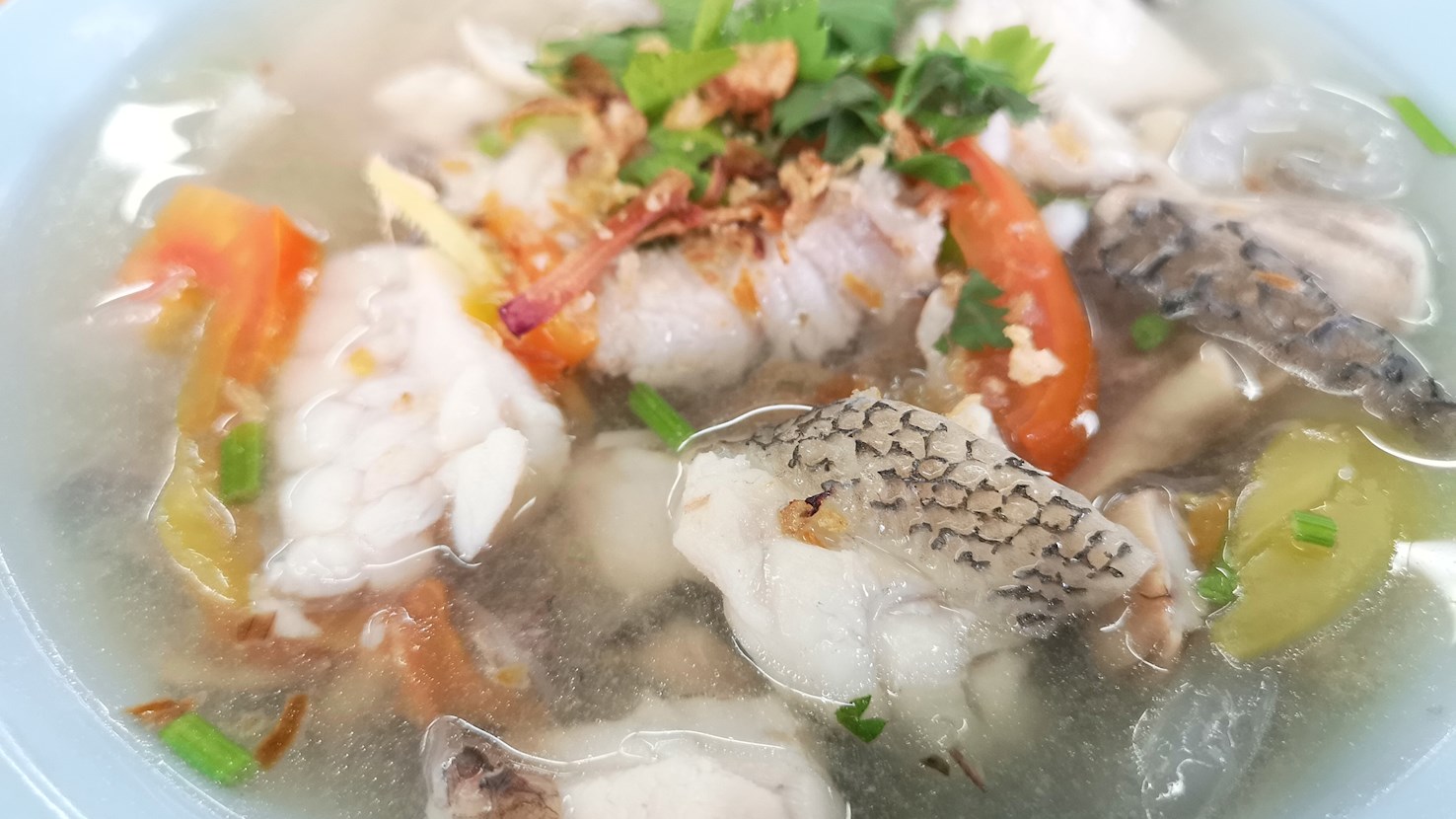
Sliced fish soup is a traditional fish soup originating from Singapore. There are many variations, but it’s often made with a combination of fish such as grouper, minced pork, cabbage, tofu, tomatoes, fish stock, salt, white pepper, sesame oil, cornstarch, soy sauce, and Shaoxing wine. The fish and meat are marinated, sautéed, and then cooked into a soup with the vegetables and seasonings. If desired, cooked noodles can also be added to the soup. Sliced fish soup is a staple at hawker centers across the country and it’s believed that the dish was created by the Teochew people.
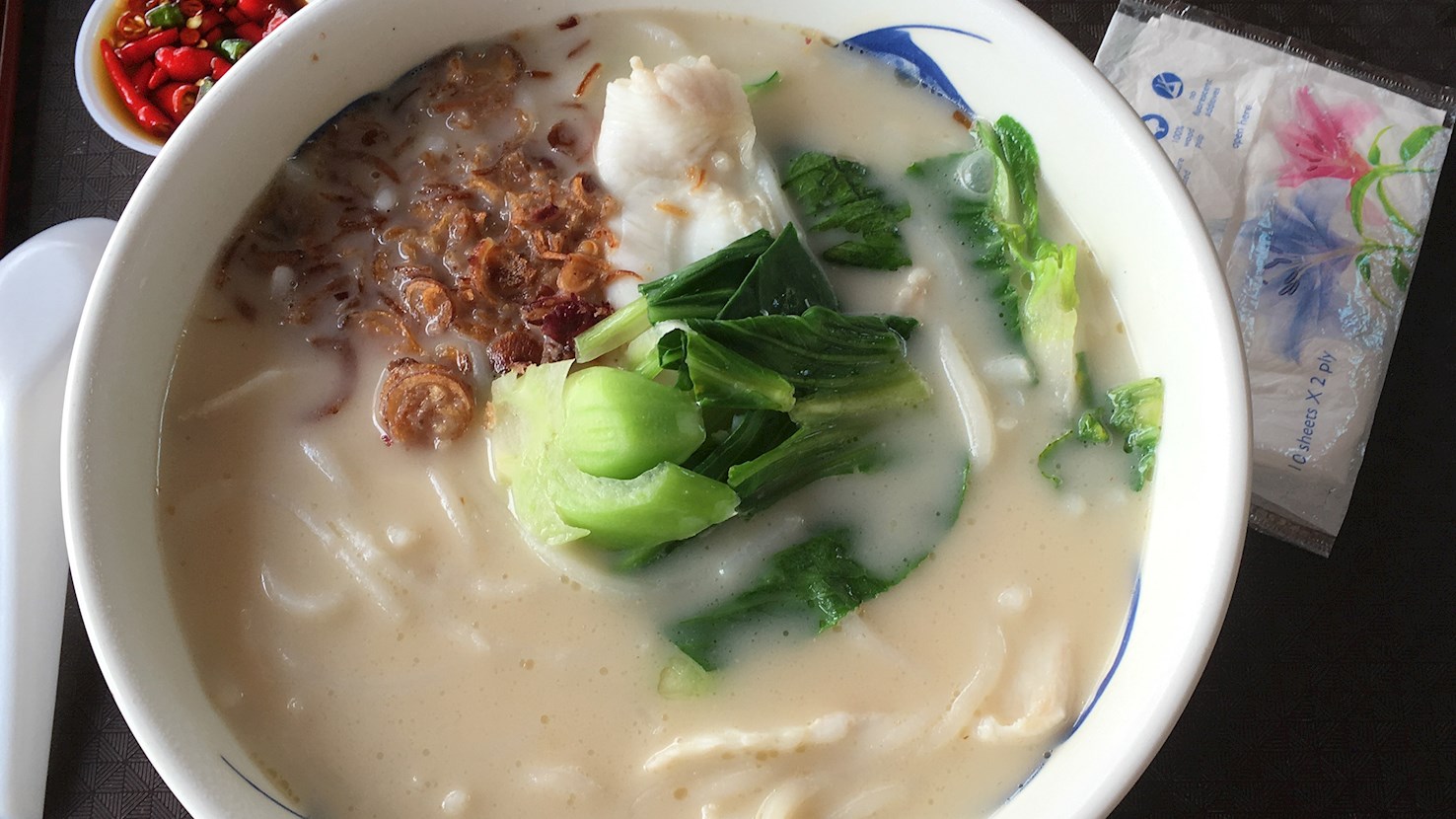
The main elements of this Singaporean soup include a flavorful fish-based broth that is enriched with milk and spices, bee hoon noodles (rice vermicelli), fried or boiled fish heads or fish slices, and mustard greens. Garoupa, snakehead, pomfret, and batang are the most common types of fish used in this dish, and the fish stock is occasionally flavored with brandy or rice wine. This hearty soup is a classic hawker-style dish that is usually served garnished with fresh scallions. In 2010, CNN mentioned this soup as one of the forty must-try dishes in Singapore.
TasteAtlas food rankings are based on the ratings of the TasteAtlas audience, with a series of mechanisms that recognize real users and that ignore bot,
nationalist or local patriotic ratings, and give additional value to the ratings of users that the system recognizes as knowledgeable.
TasteAtlas Rankings should not be seen as the final global conclusion about food. Their purpose is to promote excellent local foods,
instill pride in traditional dishes, and arouse curiosity about dishes you haven’t tried.


What People Say