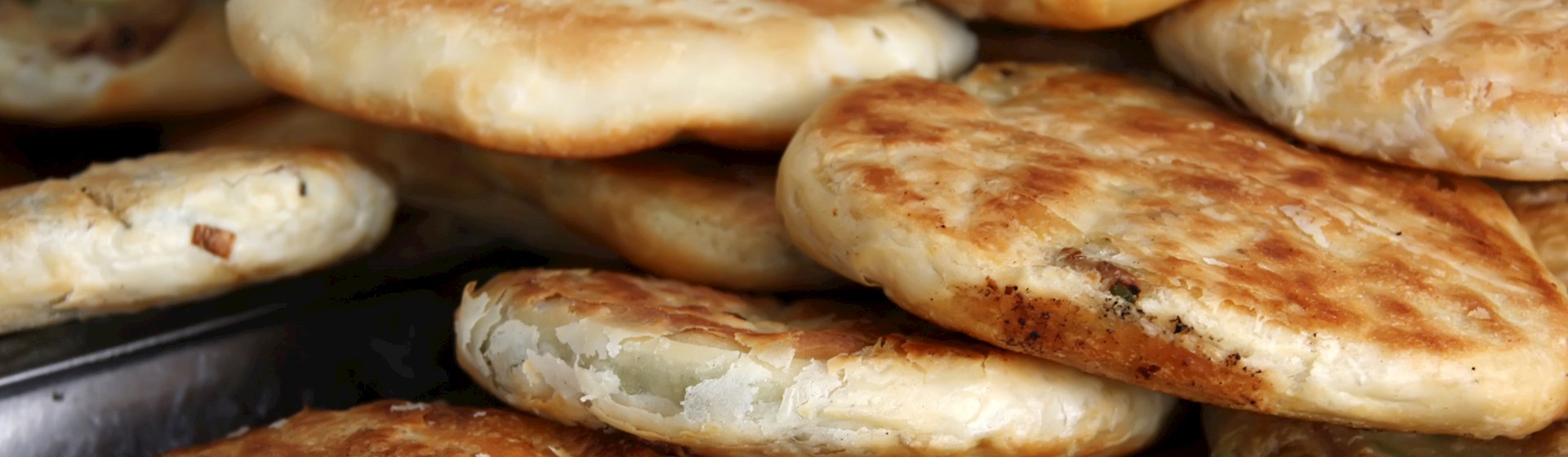
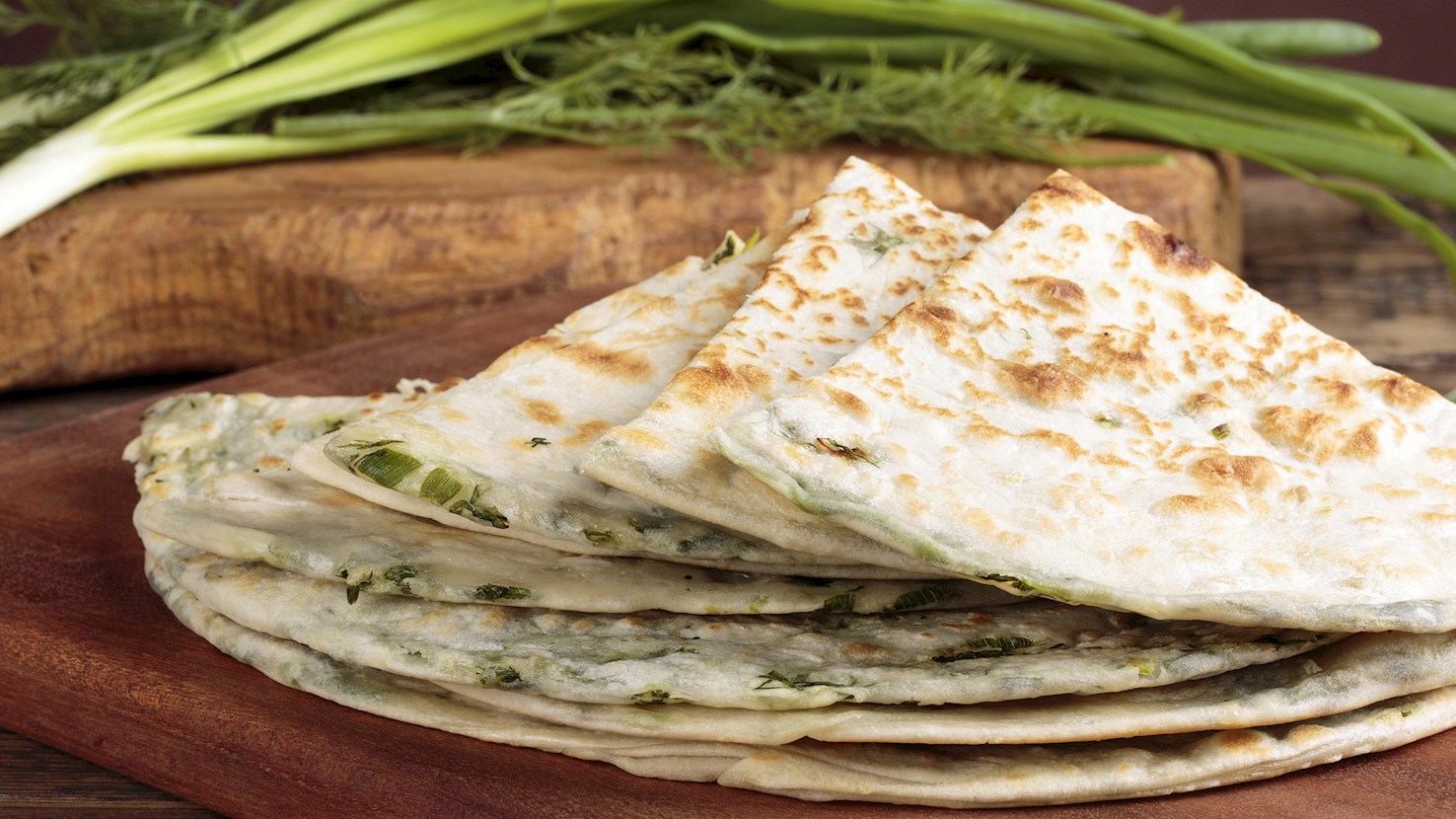
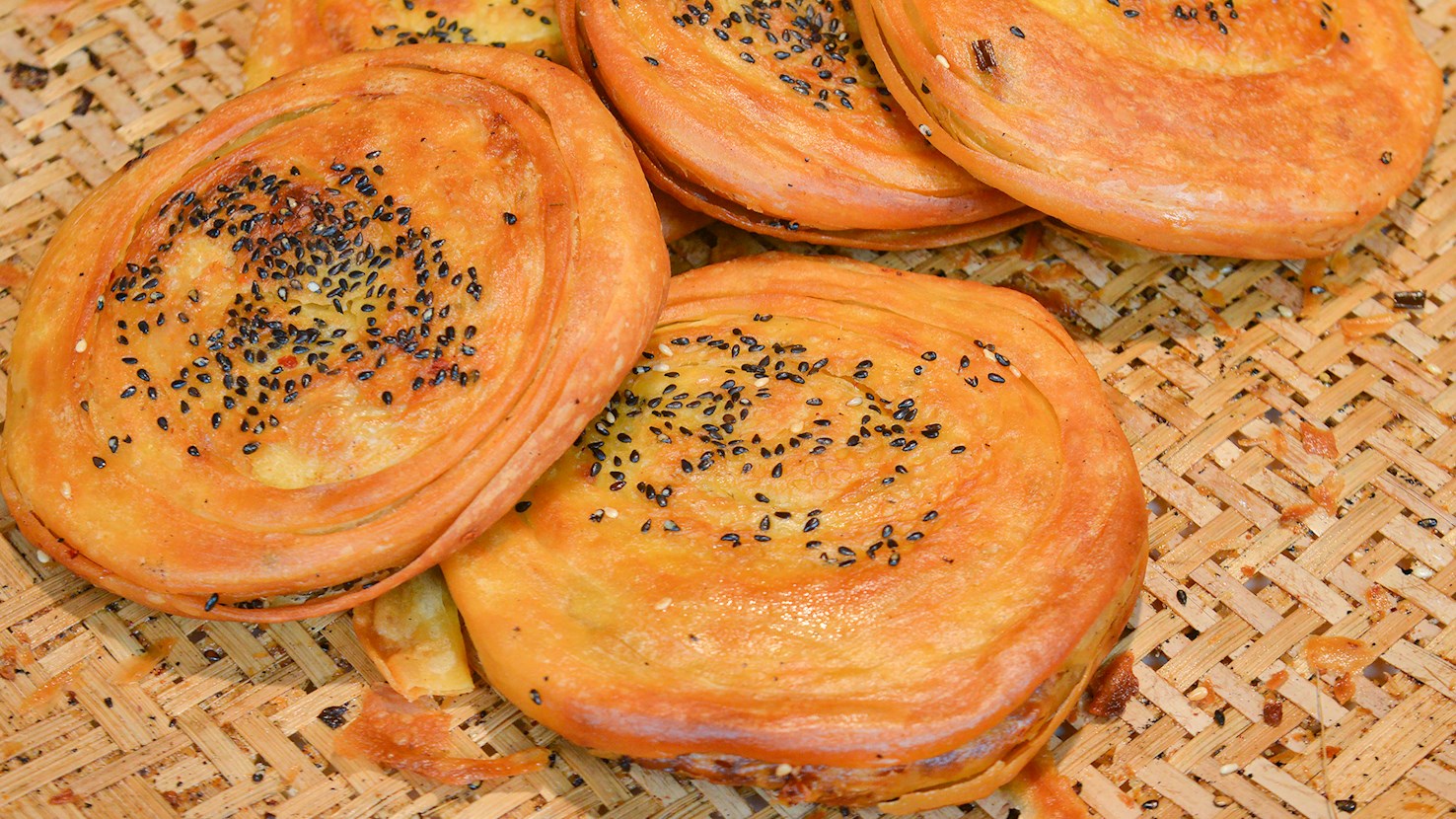
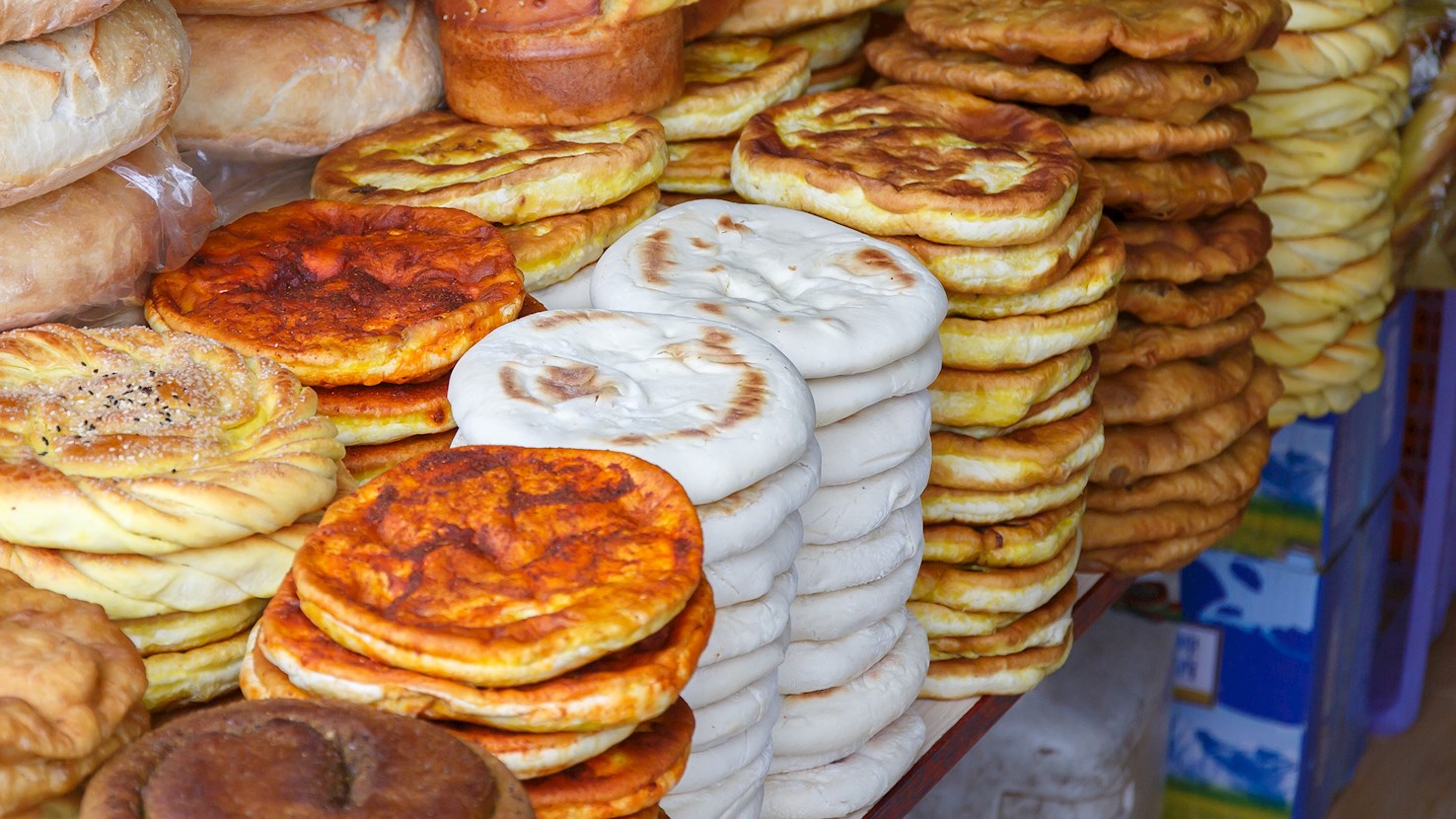
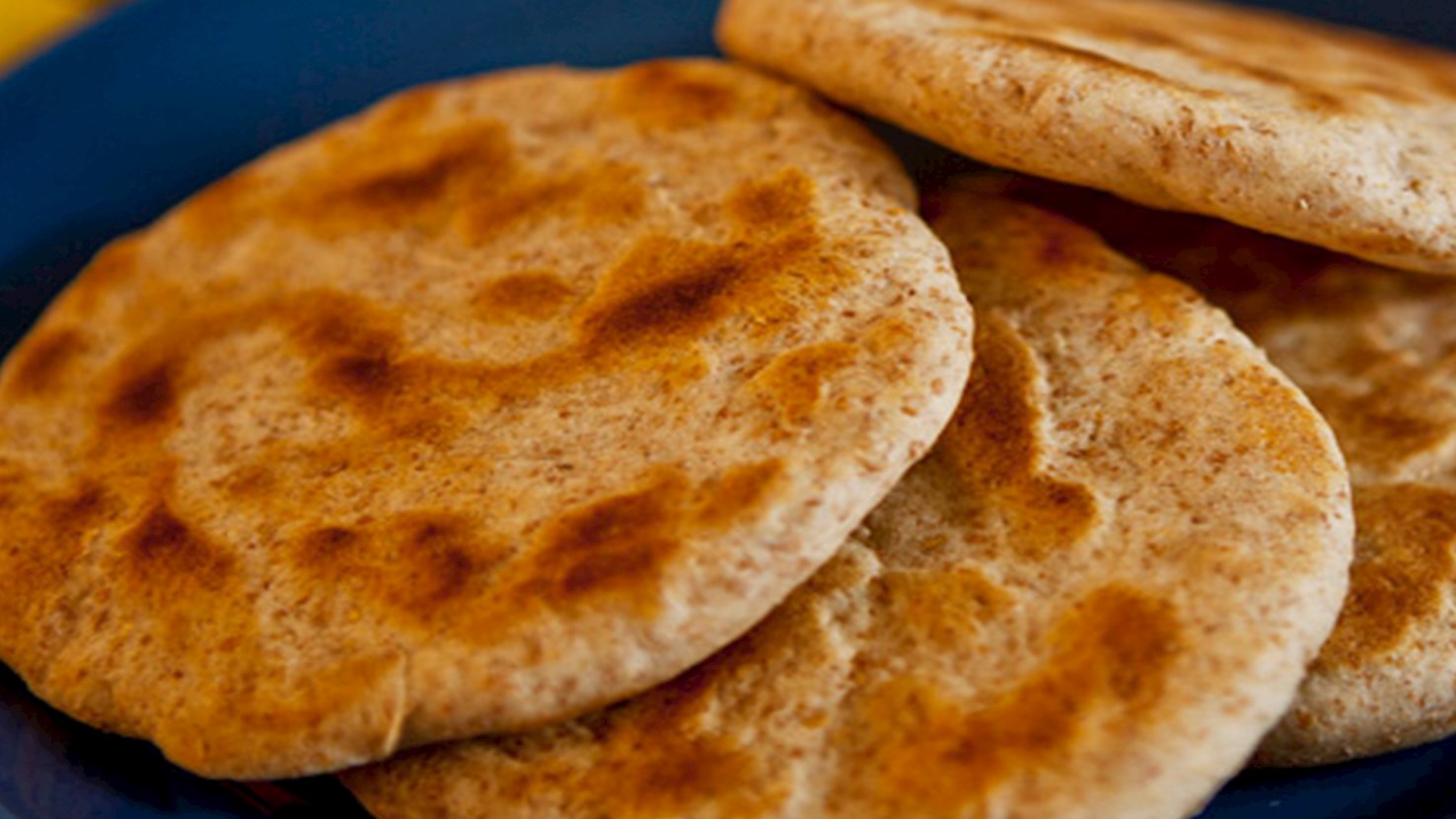
Scallion pancake is a Chinese unleavened flatbread made from wheat flour which is folded with oil and finely minced scallions. Bell peppers, fennel, and sesame seeds are some of the ingredients that are also often included in this pancake. It is usually served piping hot, cut into pieces or wedges, and served with a soy-based sauce. Although the origins of scallion pancake are still quite murky, most people believe that it originated in Shanghai, due to the fact that scallion pancakes are very similar to the Indian paratha flatbread. Because of its unique flavor and texture, scallion pancake is one of the most popular street food items in China and Taiwan.
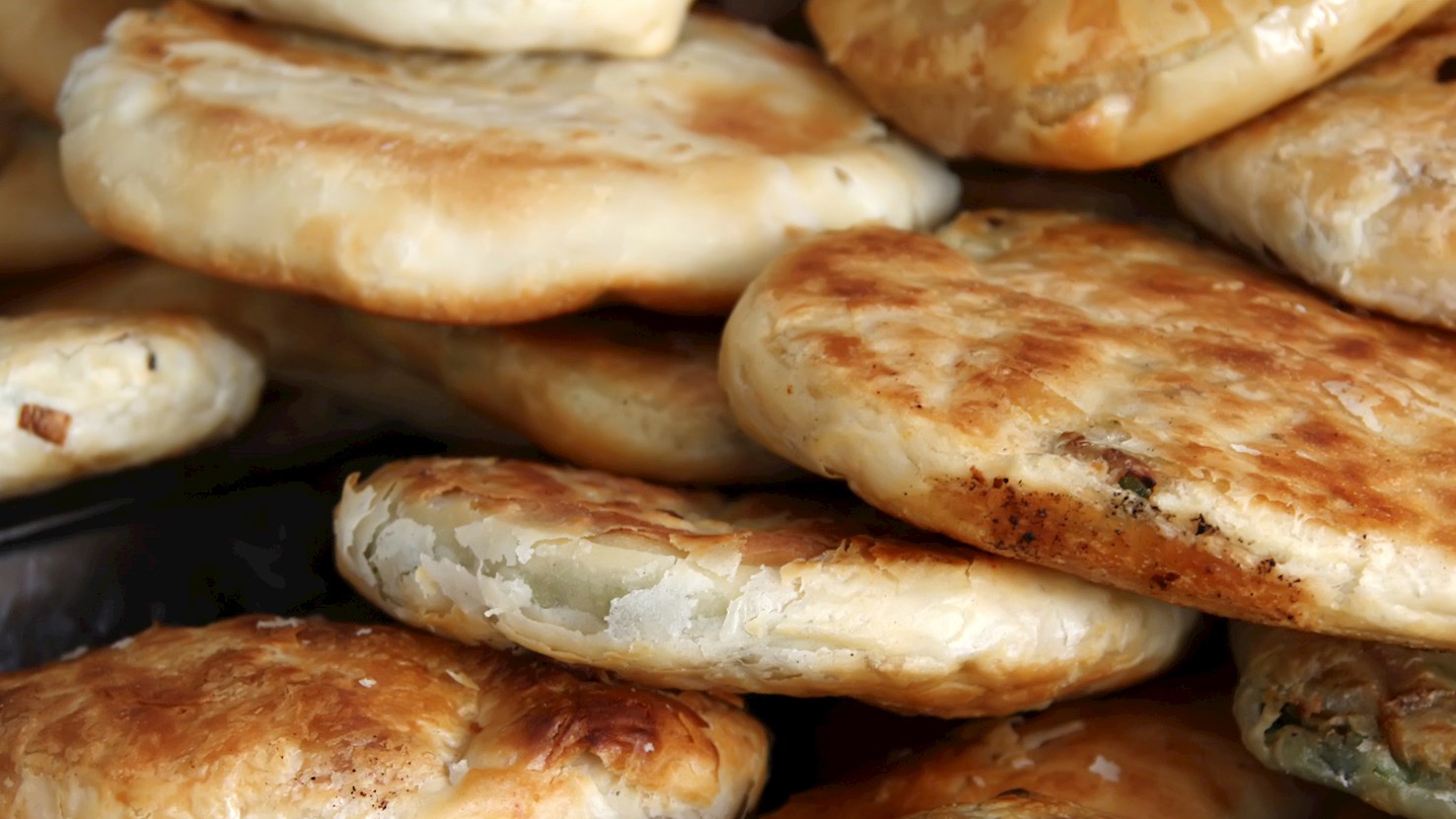
Known as a common snack food in Northern China, shaobing is a type of layered flatbread, typically topped with sesame seeds. It is made with multiple layers of dough brushed with sesame paste and resembles a flattened bread roll. Shaobing originated in the Shandong province, but today it can be found at numerous street stalls throughout the country. In fact, depending on the region, shaobing can be enjoyed in many different ways. In southern China, it is a popular breakfast choice, served with soy milk or tea and often stuffed with sweet fillings such as red bean, black sesame, or jujube (red date) paste. In the North, the Chinese prefer savory fillings: rousong (dried pork meat), char siu (roasted pork), or various stir-fried shredded meats and vegetables. However, considering that the staple crop of Northern China is wheat, shaobing is not only enjoyed as a sandwich but it is often served instead of rice, alongside main meals.
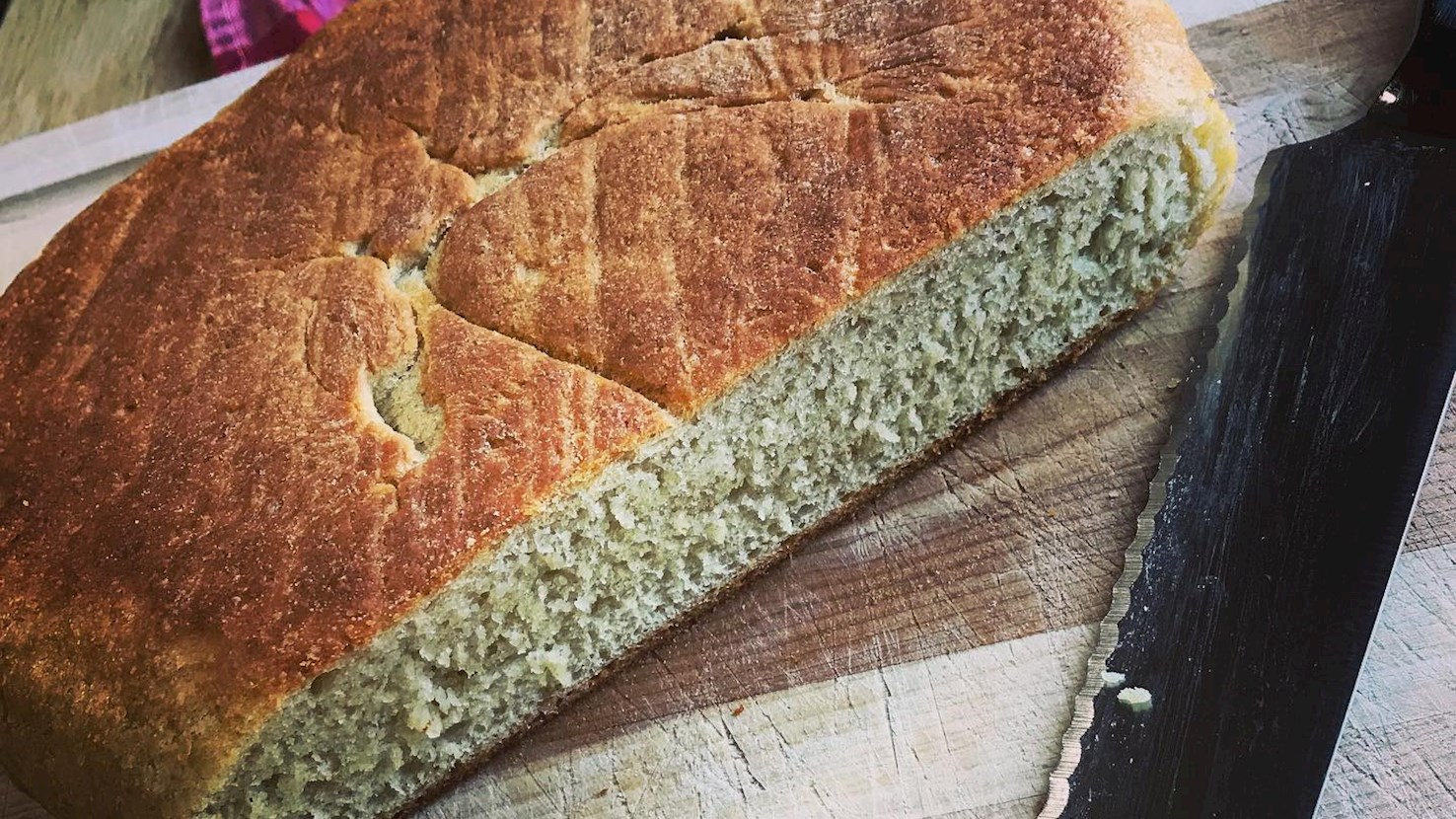
Amdo balep is a traditional Tibetan-Chinese flatbread and a type of balep originating from the Amdo region in the northeastern Tibet. The flatbread is usually made with a combination of flour, oil, sugar, yeast, water, and yogurt (optionally). The dough is kneaded until smooth, and it’s then flattened in a circular baking dish. Once it doubles in size, the flatbread is baked in the oven and it’s turned so that both sides are evenly baked. Amdo balep is typically eaten warm. On special occasions with many people, locals often make a huge amdo balep so that everyone can get a piece.
Guokui is a traditional flatbread originating from the Shaanxi province, now popular in various regions across China. Known for its large, thin, and crispy texture, guokui translates to "pot helmet," reflecting its distinctive shape when cooked. The bread is typically large and round, resembling a flattened disc, with a crispy outer layer and a soft, chewy inside. In Shaanxi, there is also guokui type that is round in shape, more reminiscent of a bread loaf than a flatbread, about a foot in diameter, an inch in thickness, and weighs about 2.5 kg. The preparation starts with making dough from wheat flour, water, and sometimes yeast or baking powder for leavening. Guokui can be either plain or filled with a variety of ingredients, such as minced pork, beef, or vegetables. It is traditionally cooked in a tandoor-like oven or on a griddle, giving it a unique smoky flavor and crispy texture. There are several varieties of guokui: Shaanxi guokui often contains spicy beef or lamb fillings and has a distinctive regional flavor; Hubei guokui is known for its thicker, softer texture and sometimes features sweet fillings; Sichuan guokui is typically spicy, filled with a mix of minced meat and Sichuan peppercorns, offering a numbing and hot taste; Chengdu guokui is usually thinner and crispier, often featuring various fillings like spicy pork or vegetables. Guokui is not just a type of bread but a symbol of Chinese culinary tradition, often enjoyed as a snack or a quick meal. It is a staple in street food culture across different regions of China, showcasing its versatility and regional adaptations.
Sha balep or shapale is a traditional Tibetan dish and a type of balep flatbread. This balep variation is filled with meat and vegetables, and the dough is usually made with a combination of flour and cold water. The filling, on the other hand, is usually made with a mixture of yak meat or ground beef, cabbage, ginger, garlic, scallions, onions, oil, bouillon cube, soy sauce, coriander, and salt. The dough is rolled and cut into circular shapes and then stuffed with the filling. Once assembled, these small meat pies are fried in oil on both sides until golden brown. Sha balep is a staple at Tibetan potluck gatherings, and it’s often eaten with rutang soup.
Balep is a famous Tibetan flatbread prepared in a few varieties – it can be plain, deep-fried, pan-cooked, or filled with various ingredients and fried. The plain variety can be made only with flour and water, with the occasional addition of baking powder. The dough is shaped into a flat circle, and it is then fried, usually in a pan. The puffy bread is often served on special occasions, and it should be piping hot.
TasteAtlas food rankings are based on the ratings of the TasteAtlas audience, with a series of mechanisms that recognize real users and that ignore bot,
nationalist or local patriotic ratings, and give additional value to the ratings of users that the system recognizes as knowledgeable.
For the “Top 6 Flatbreads in East Asia” list until June 15, 2026, 273 ratings were recorded, of which 236 were recognized by the system as legitimate.
TasteAtlas Rankings should not be seen as the final global conclusion about food. Their purpose is to promote excellent local foods,
instill pride in traditional dishes, and arouse curiosity about dishes you haven’t tried.