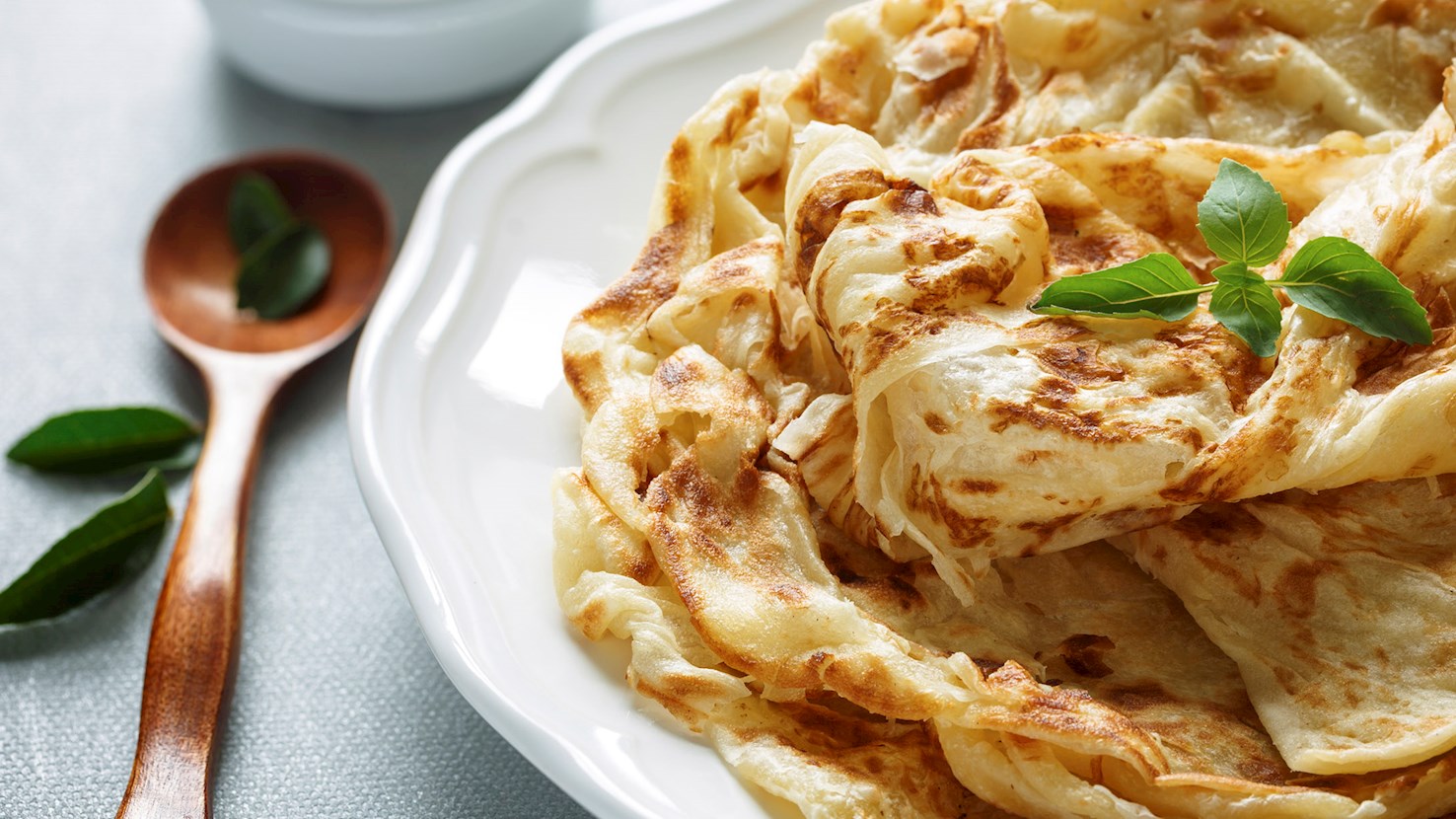
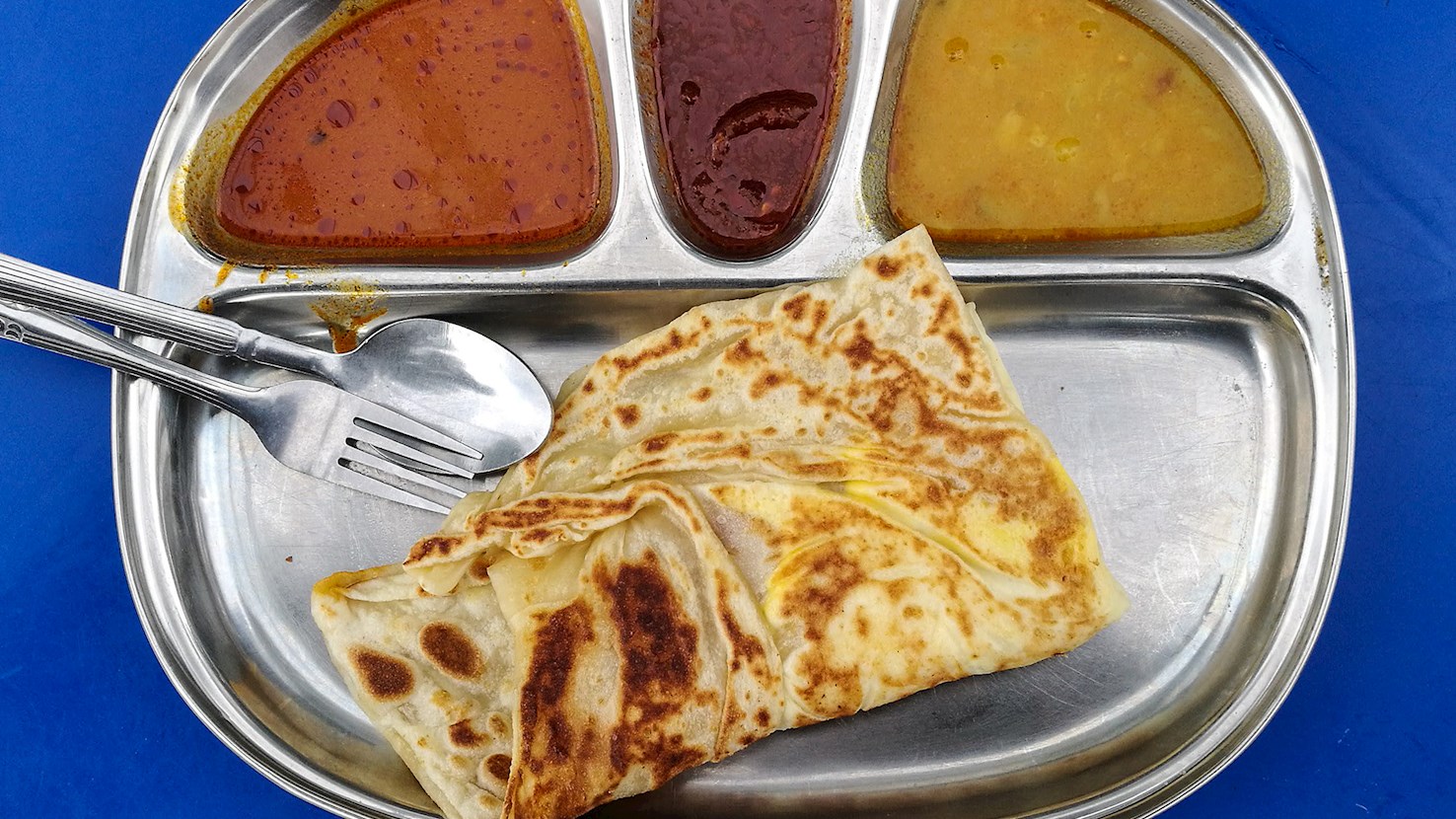
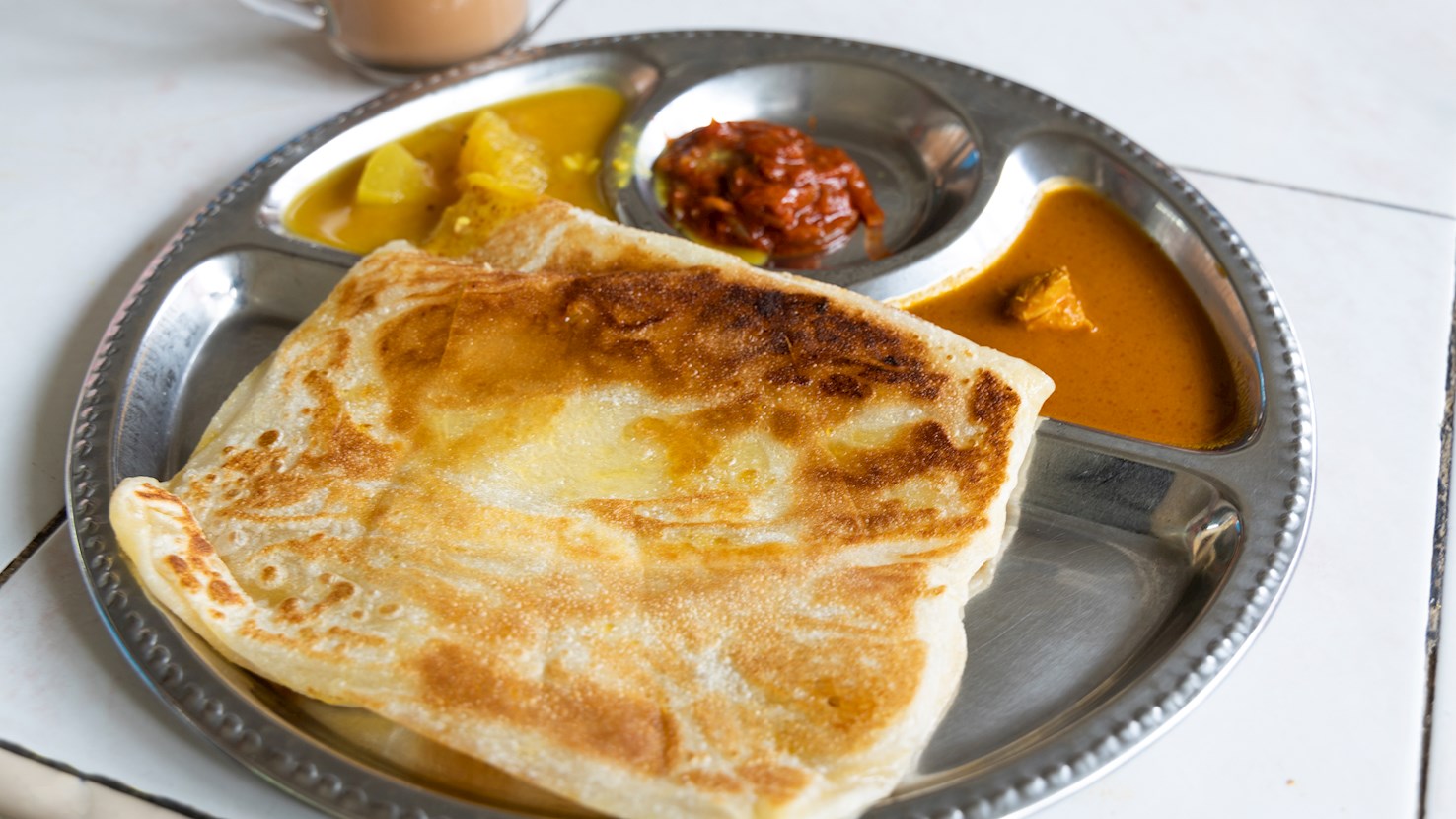
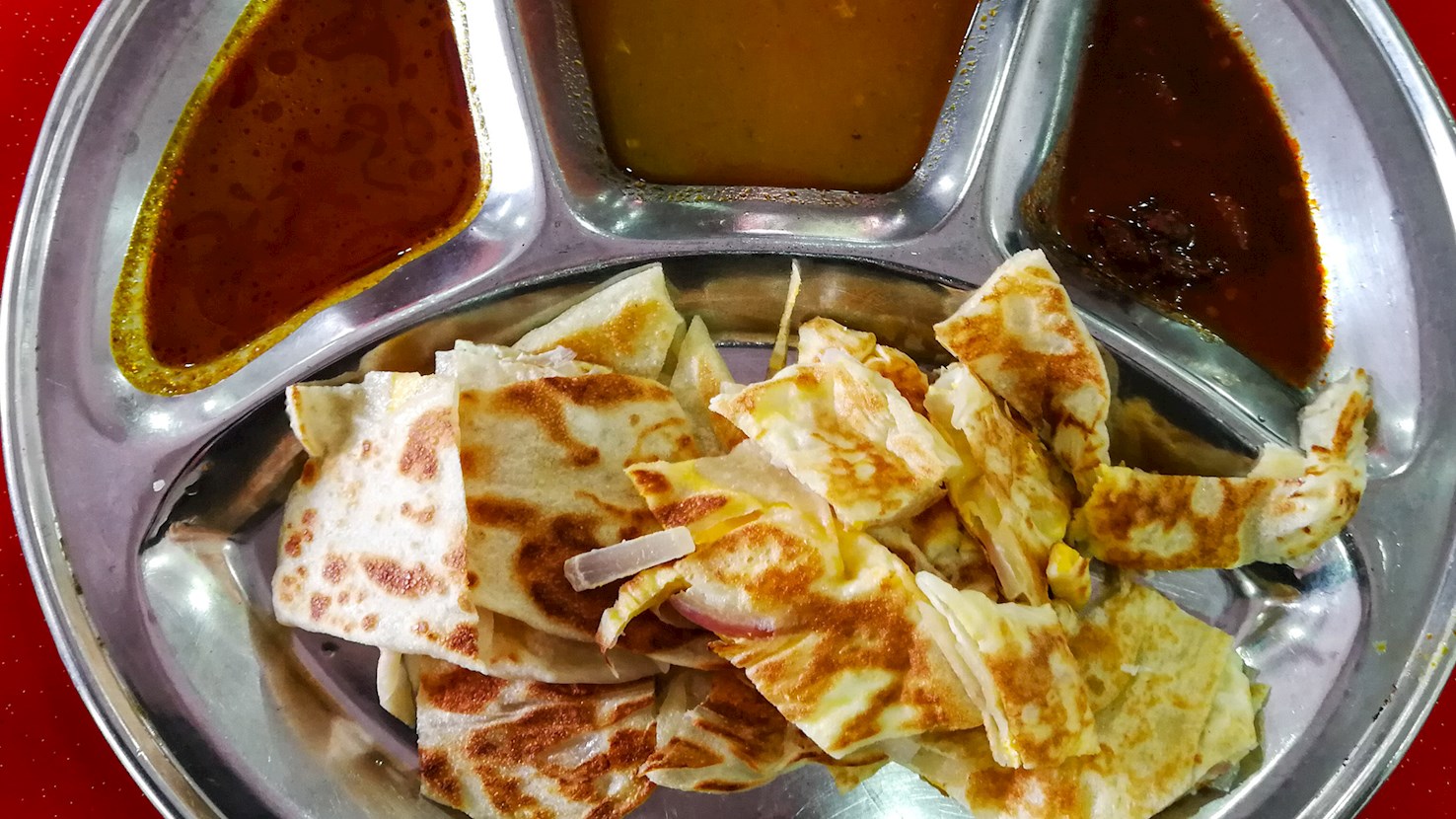
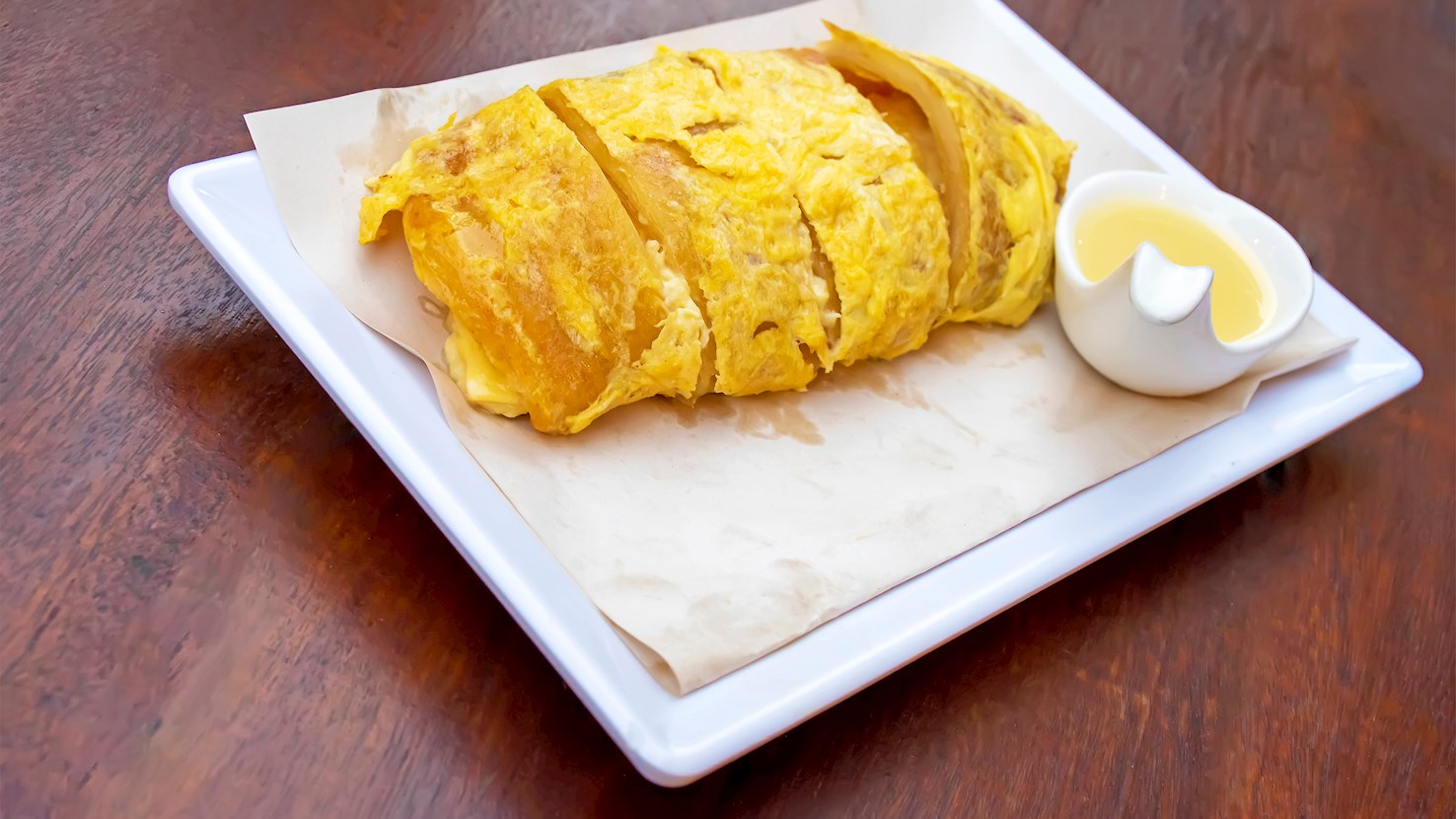
Roti canai is a traditional pan-fried flatbread made with flour, water, eggs, and fat of Indian origin, but mainly associated with Malaysia, and surrounding countries like Indonesia, Brunei, and Thailand. The dough for roti canai is repeatedly folded, so the final product has a layered texture, a soft interior, and a crispy outer layer. The most common fat used in roti canai is ghee, the traditional Indian clarified butter. It is believed that the dish originated in India when the Indian laborers who migrated to Malaysia brought the recipe and the tradition of preparing this crispy pastry to the foreign country. Usually, it is served plain in its traditional round form, as an accompaniment to curries. It can be served on the side or torn into pieces and mixed with the curry. However, roti canai is often served as the star dish, accompanied by different savory and sweet fillings and ingredients. If additional fillings are added, roti canai is usually shaped into rectangles. For example, in Malaysia, one can find various roti canai types, which are differentiated by the type of filling — egg, onion, egg and onion, banana, sardines, margarine and sugar, Maggi instant noodles, cheese, vegetable, and pork filling are some of the many available. However, roti canai doesn't have to have a filling but only a topping, such as fried eggs, curry, beans, lentils, and coffee beans. But martabak, a thick roti filled with meats, eggs, onions, and spices, is probably the best-known type of roti canai. Apart from Malaysia, it can also be found in Saudi Arabia, Yemen, and a few other countries. Other than Malaysia, a very similar type of flatbread can be found in Singapore, where it's called roti prata. This crispy bread is usually sold by street vendors called mamaks.
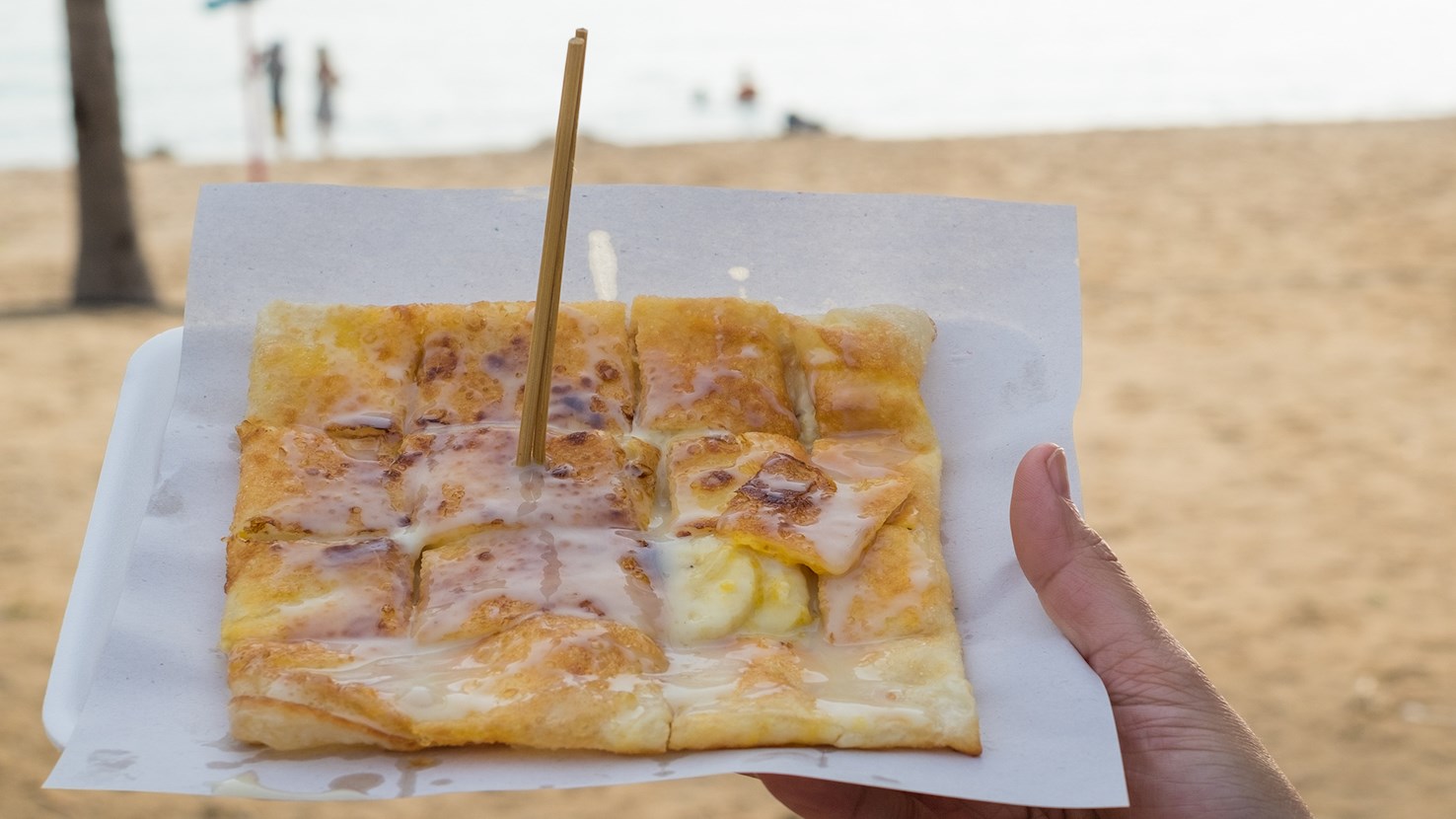
This sweet variety of the traditional Malaysian roti employs bananas as the star ingredient. The unleavened roti dough is stretched until thin, and the combination of sliced bananas, eggs, and sugar is then wrapped in the dough. Roti is usually pan-fried until golden, and it comes served cut into bite-sized pieces that are dusted with sugar and drizzled with condensed milk. The dish is a classic street food item that is usually enjoyed as a sweet and filling breakfast or an afternoon snack.
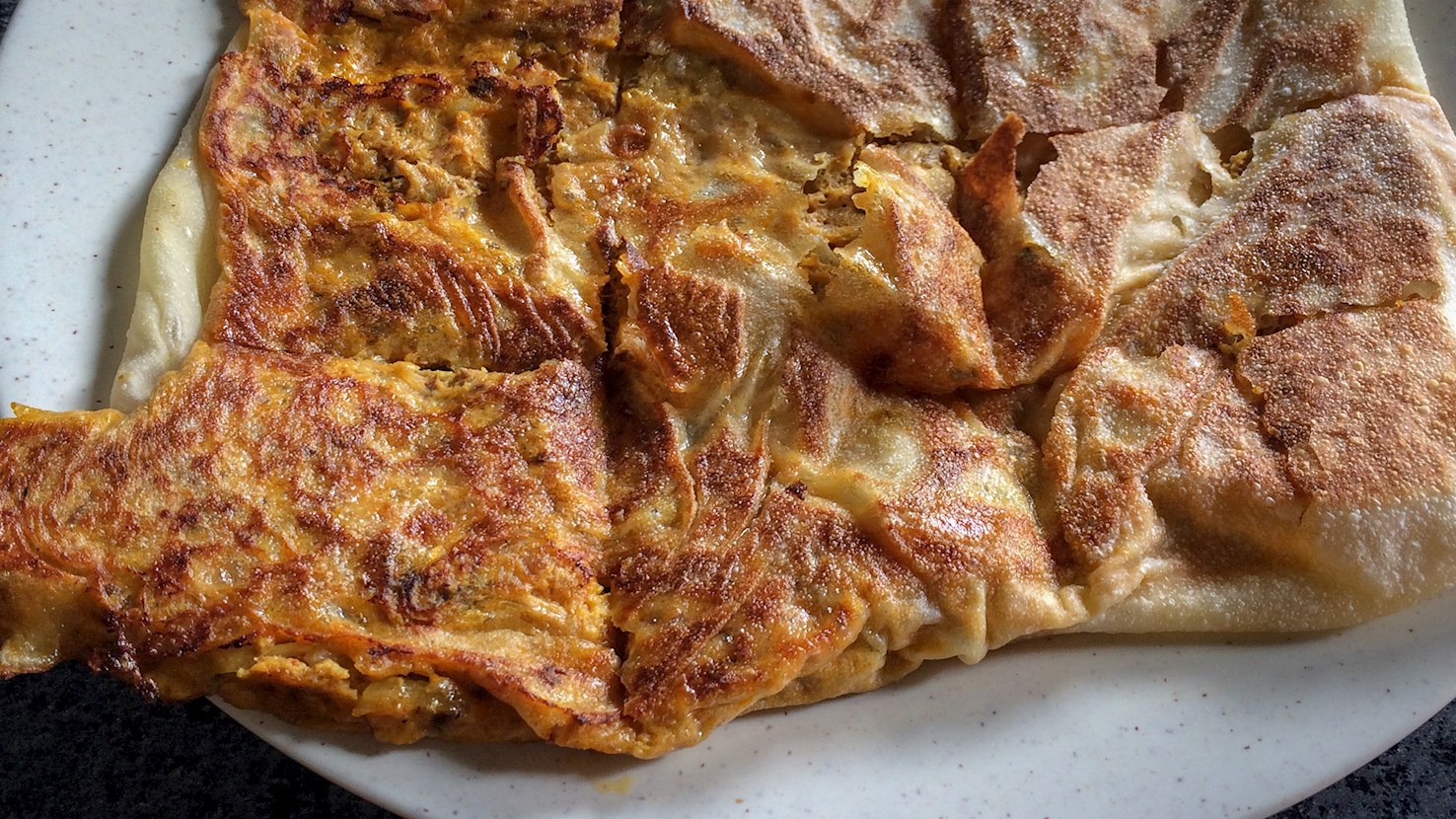
This simple variation of Malay roti canai is prepared with a cracked or lightly beaten egg that is encased inside the flaky roti dough. Roti telur is traditionally wrapped into rectangular shapes, and just like other types of savory roti snacks, it is typically accompanied by various sides that usually include thick and spicy curries or dahl dishes. The variety with added onions is known as roti telur bawang.
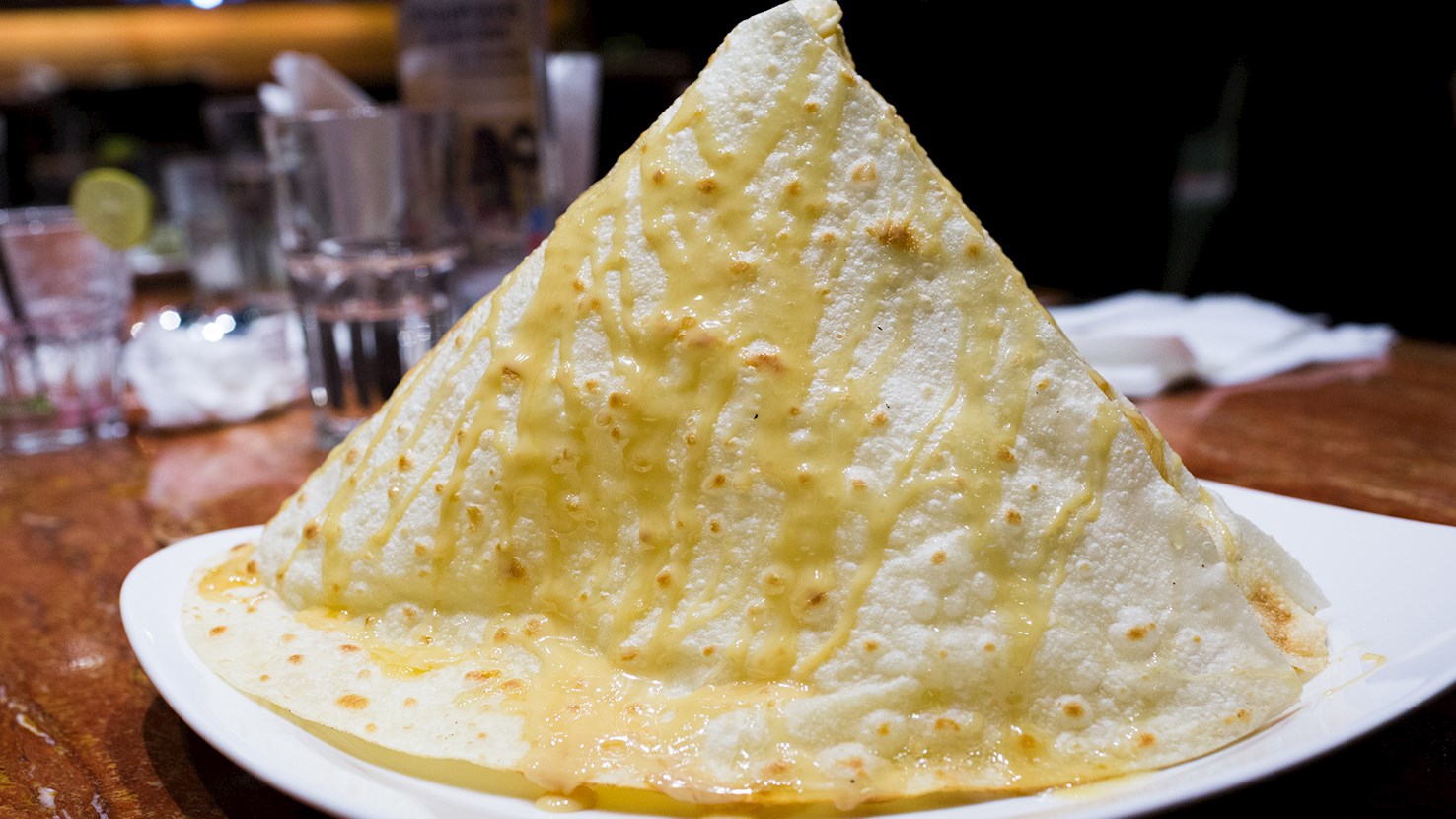
Roti tisu is the paper thin variety of the traditional Malay roti canai. It is prepared with the same type of dough that is stretched thin, sometimes up to five or six feet in length, and it is then shortly pan-fried. Tisu is served wrapped around a large cone, hence its alternative name rocket roti or roti helicopter. It can be served alongside curries or chutneys, but it is usually enjoyed as a dessert or a sweet snack, when it comes drizzled with condensed milk or chocolate, dusted with sugar, or sided with ice cream or fruit jams. A staple at Mamak restaurants and stalls throughout Singapore and Malaysia, roti tisu is usually eaten by cracking small pieces of delicate pastry with your hands.
Roti planta is a traditional variety of roti flatbread originating from Malaysia. It’s usually made with a combination of flour, eggs, salt, sugar, condensed milk, and margarine. Although quite similar to its cousin roti bom, roti planta is folded into a big square instead of a circle. This folded, square-shaped, layered roti is cooked in oil over high heat until both sides become golden brown. Due to the fact that margarine and sugar are folded into this crispy flatbread, its flavors will be savory and sweet.
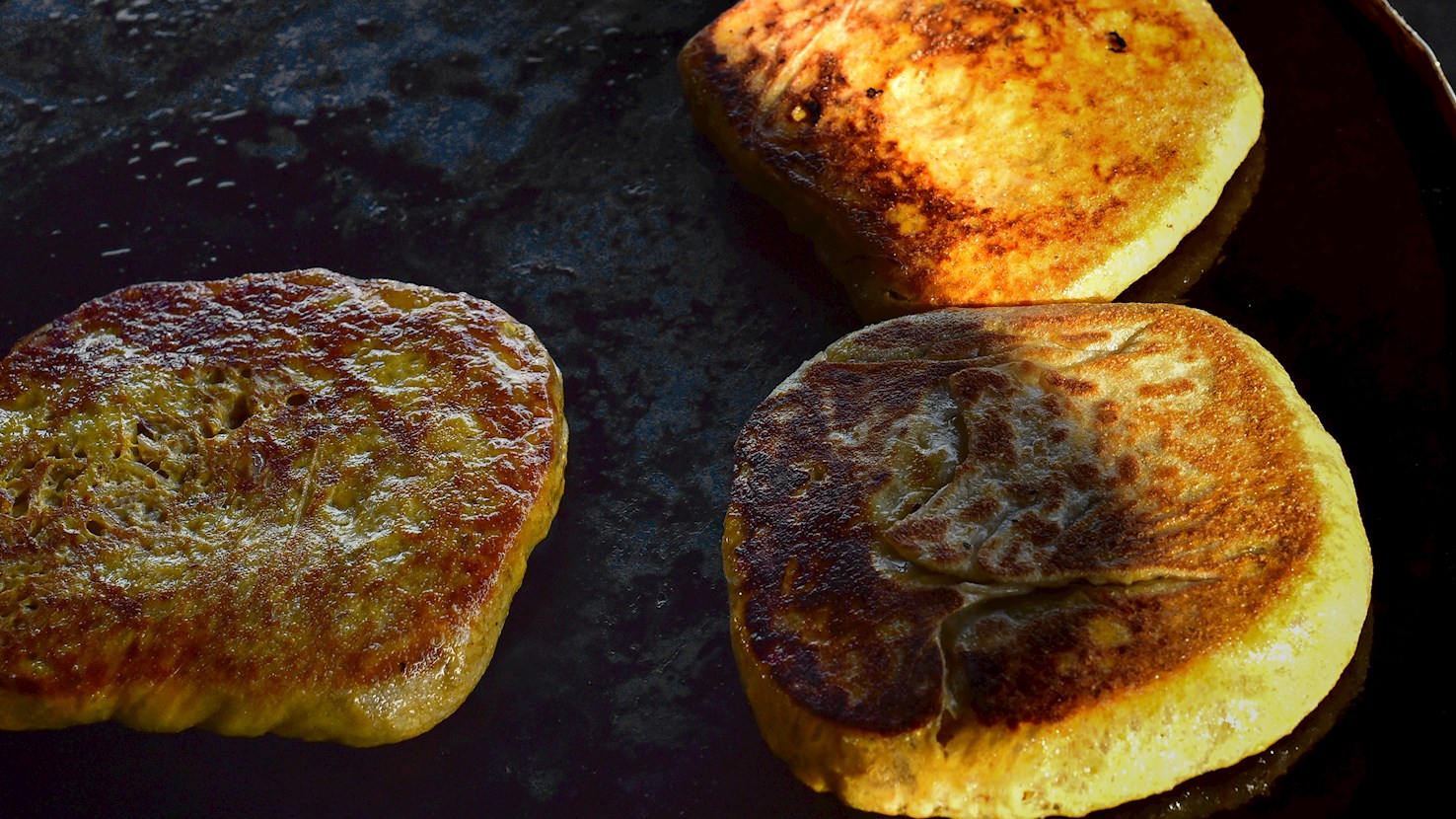
Roti bom is a traditional variety of roti flatbread originating from Malaysia. It’s usually made with a combination of flour, eggs, salt, sugar, margarine, and condensed milk. This sweet and savory flatbread is much smaller and thicker than its cousin roti canai. Due to the fact that margarine and sugar are layered into the dough, the flavors will be sweet and salty. This folded, round, layered roti is cooked in a pan on high heat with a bit of oil until both sides are golden brown.
Roti bawang is a variety of Malaysian flatbread, based on the Indian style of roti. This version of the dish is stuffed with diced onions, and it is then pan-fried. It is usually served for breakfast or consumed as a snack alongside a dipping sauce or curry. Like most other roti varieties, this version is very easy to find at street vendors and local eateries.
Roti sardin is a Malaysian flatbread dish, adapted from the Indian style of roti (translated as "bread", both in Hindustani and Malay languages). This variety is stuffed with canned sardines, sliced onions, chilies, and beaten eggs that hold everything together. Often times, it is eaten alongside ketchup, different kinds of curry or sambal (a south-east Asian type of hot sauce). The roti is pan-fried and served either as a breakfast dish or an all-day snack food.
Roti durian is a sweet variety of roti canai, layered with durian fruit purée. Durian is a favorite in Southeast Asia (described by many as the "king of fruits"), beloved for its unmistakeably strong aroma and complex flavor profile. Once the durian fruit has fully ripened, the flesh becomes more creamy and slightly alcoholic, and so the flavors become more enhanced. The recipe for roti durian is very straightforward - mix the durian flesh or purée inside the roti canai, add sugar if necessary for extra sweetness, and pan-fry the whole thing. The dish can be found at most street vendors, and you can have it as a dessert or as a stand-alone snack!
TasteAtlas food rankings are based on the ratings of the TasteAtlas audience, with a series of mechanisms that recognize real users and that ignore bot,
nationalist or local patriotic ratings, and give additional value to the ratings of users that the system recognizes as knowledgeable.
For the “Top 9 Malaysian Flatbreads” list until June 15, 2026, 743 ratings were recorded, of which 429 were recognized by the system as legitimate.
TasteAtlas Rankings should not be seen as the final global conclusion about food. Their purpose is to promote excellent local foods,
instill pride in traditional dishes, and arouse curiosity about dishes you haven’t tried.