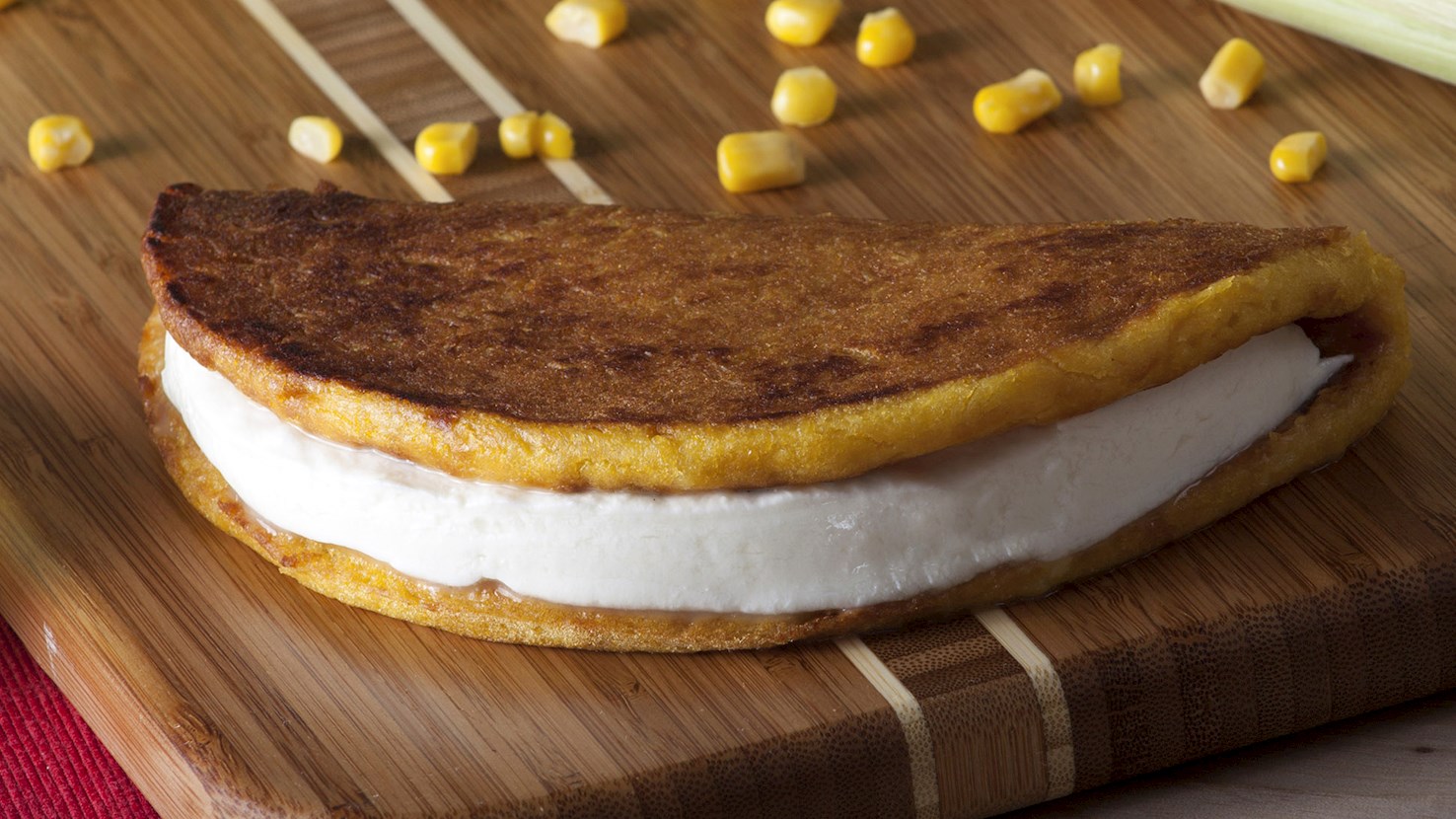
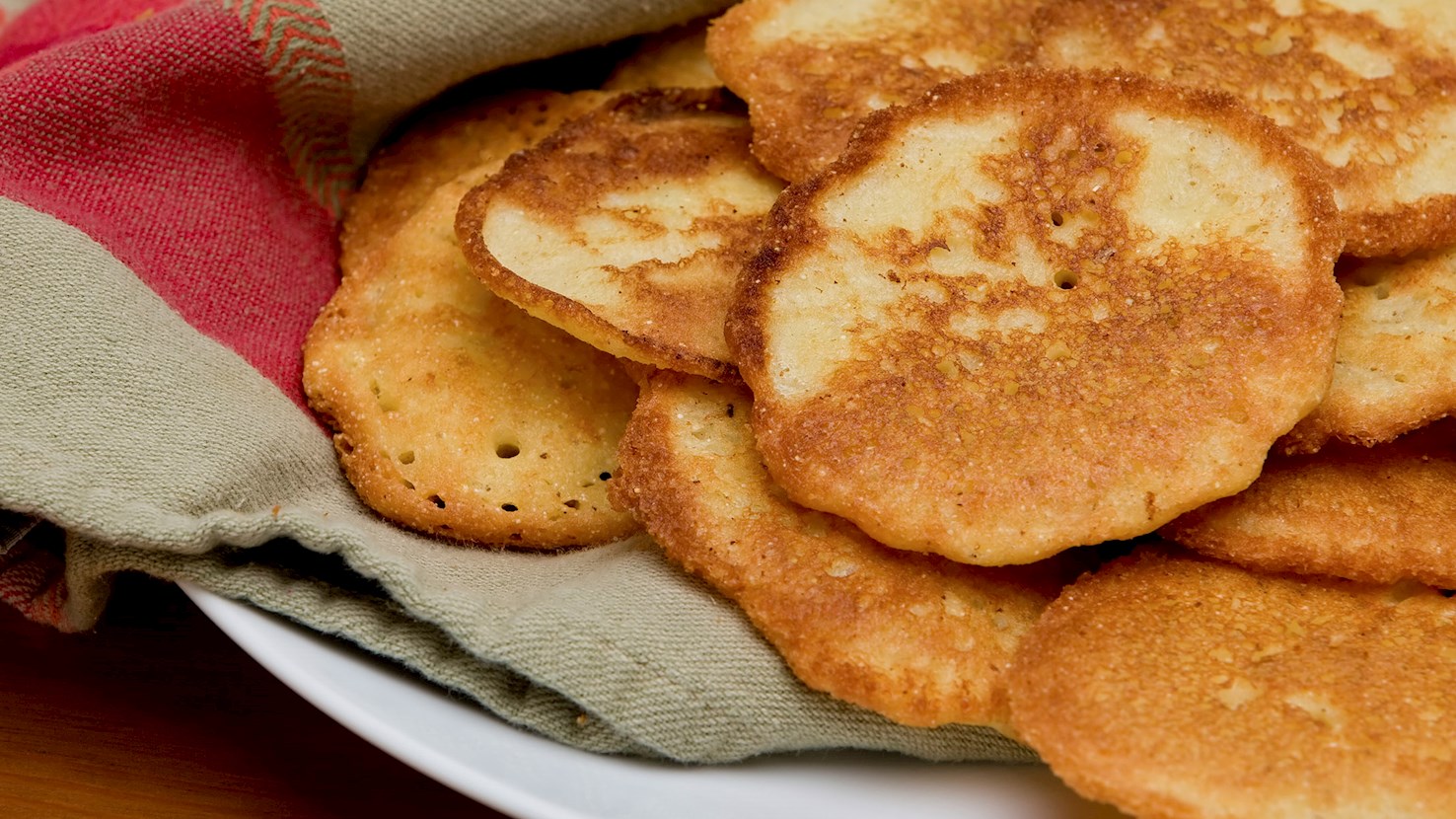
Cachapa, chorreada, arepa de choclo, güirila, toquera, tortilla de choclo, and tortilla changa, are all names that describe a Latin American corn dish that can be categorized as either a pancake, tortilla, or flatbread, depending on the country. It can be made only of corn or have additional ingredients like sugar, water, milk, salt, butter, cheese, and oil. They are typically prepared by street vendors and are either fried or griddled (in Nicaragua, they’re cooked between two banana leaves!) and characterized by a sweet-savory flavor. They can be eaten plain with a beverage, wrapped around a filling, or topped like an open-faced sandwich with things like cheese, shredded pork, sour cream, and eggs. They can be eaten any time of day, but typically they're eaten for breakfast, as a snack, or a quick dinner.
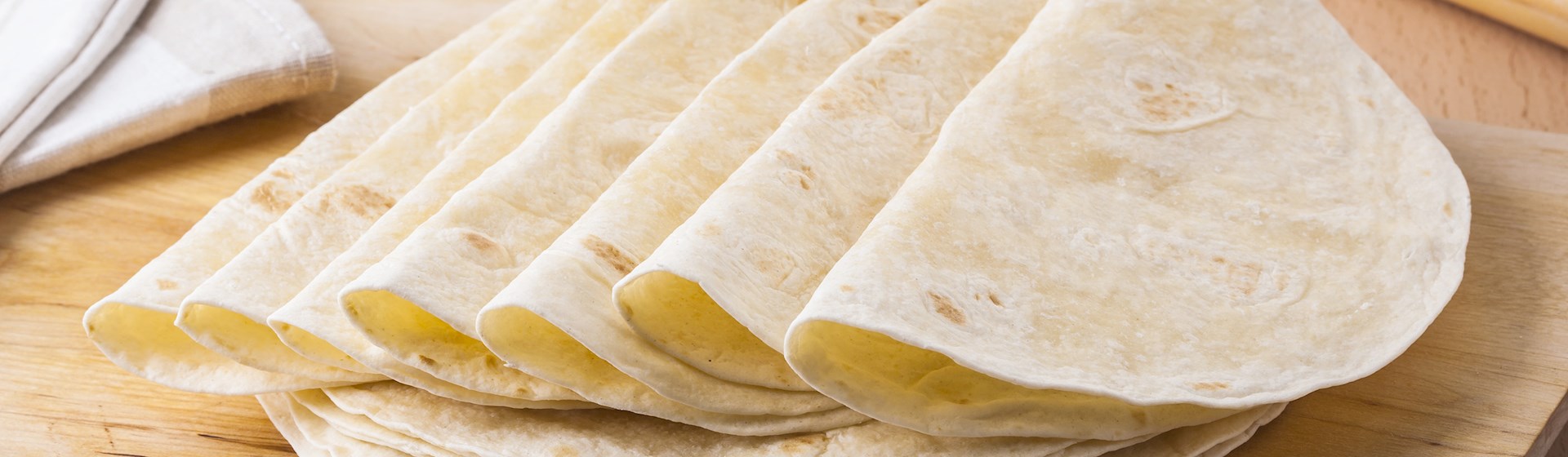
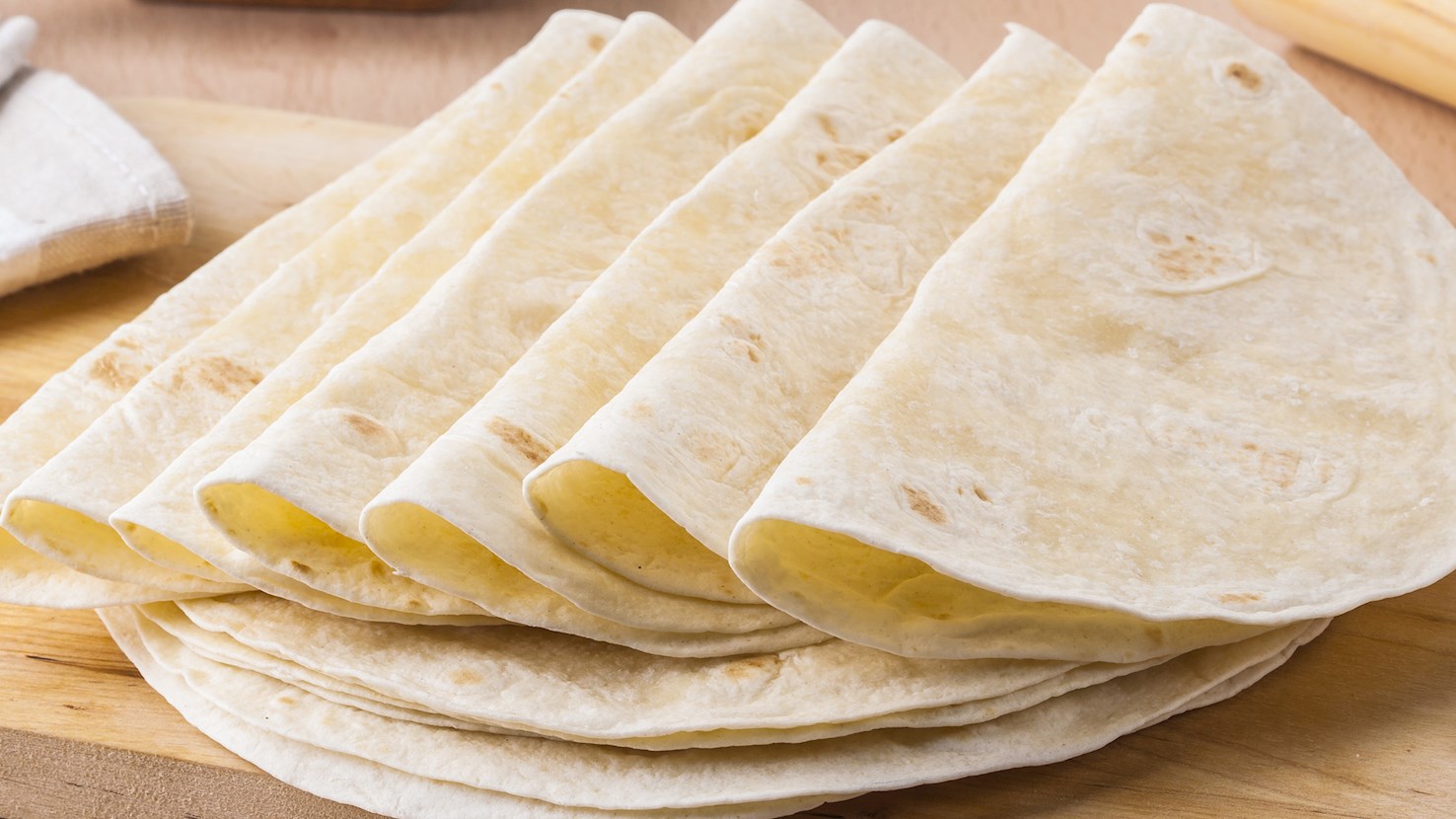
Tortilla, originally a corn flatbread, is one of the essential bread varieties that has been present in Mexican culture for thousands of years. The first tortilla was created out of the staple ingredient of indigenous cultures, the ubiquitous corn. It was an ingredient used by the ancient Mesoamerican people, who would store the corn kernels and later process them to create masa, which was then formed into balls and hand pressed to create the familiar, round and thin tortilla. This ancient tradition is still present among some native Indian groups, who are excessively trained to perfect the art of making authentic tortillas. The narrative of the tortilla has been inadvertently changed after the arrival of Spanish conquistadors to the area in the 15th century. The conquistadors brought their different culinary traditions, in which wheat played a crucial role, while the authentic corn was regarded as food of the plebeians. However, the tradition of growing and cooking with corn remained popular in rural areas among the indigenous Indians. The emergence of the wheat tortilla is believed to have happened during the colonial time, but what caused its appearance is not quite clear. Some theories claim that it grew out of the European tradition, some that it was an intentional invention of Indians to please the palates of European conquistadors, and some even say that the exiled Spanish Jews created it since they believed corn was not kosher. Regardless of the reason, wheat tortilla has first spread around the area of the Rio Grande River and continued to gain popularity following the agricultural production and advancement. Today, tortillas are not only a Mexican favorite: due to proximity, historical influence, and large Hispanic influx, tortillas have stopped being regarded as an ethnic bread in the United States, and have thoroughly been immersed as a part of the American culinary heritage. Today, tortillas are usually used as a foundation and a wrapper to numerous dishes such as tacos, burritos, enchiladas, and quesadillas. They are also commonly served alongside stews and chilies, where they are often used as an accompaniment and a utensil used to scoop the dish. Whether made with corn or wheat, this ancient Mexican product has gained followers around the world and has become one of the most common bread varieties in the world.
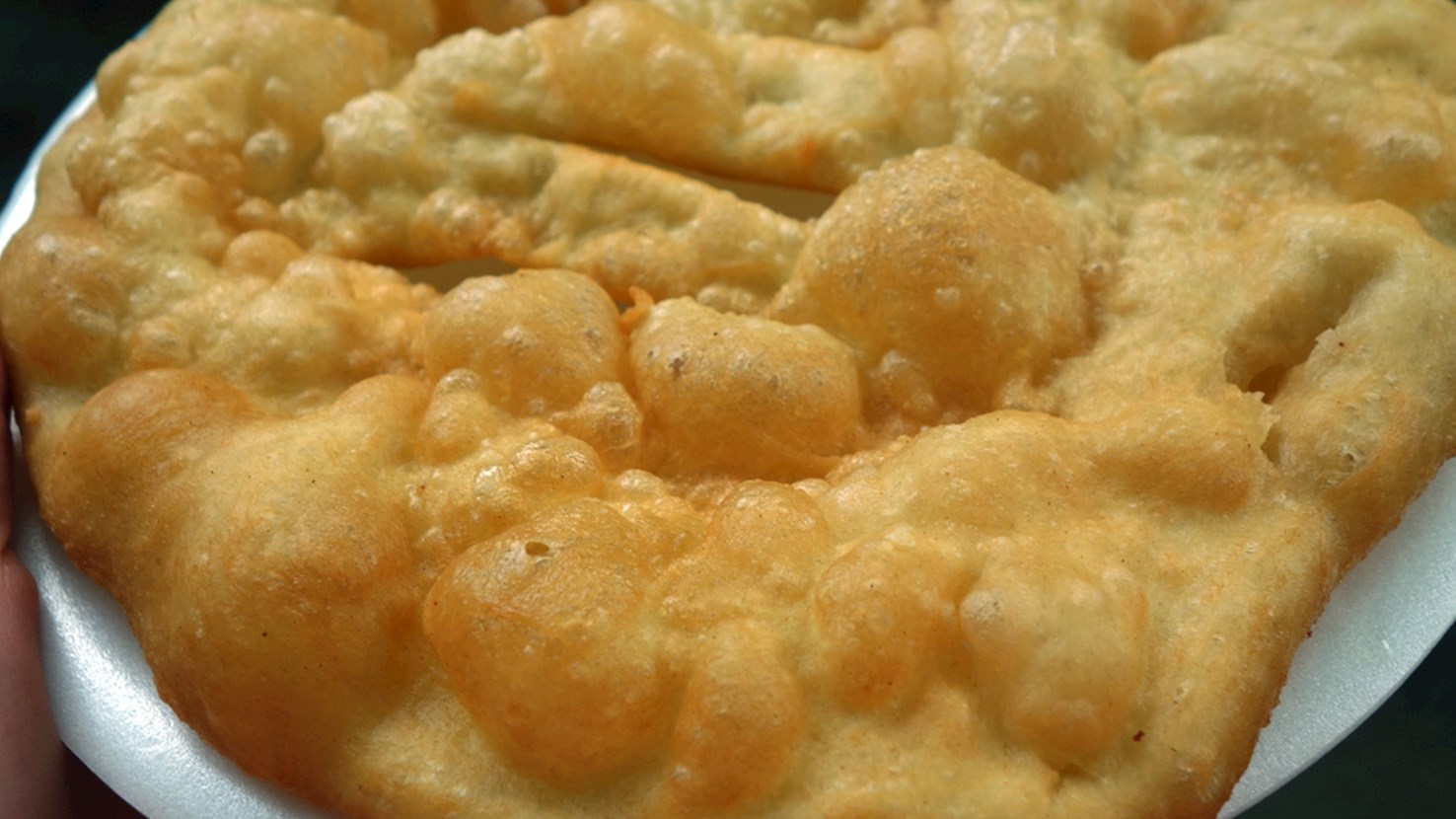
Yaniqueque or yanikeke is a Dominican fried bread with a crispy and crunchy texture. It is made with flour, salt, melted butter, and baking powder. The dough is rolled into thin circles with crimped edges, and it is then fried in hot oil until golden brown. Yaniqueques are typically placed on paper towels in order to let out excess oil. They can be found throughout the country, on numerous streets and beaches. It is believed that this is a variation on the johnny cakes, and the dish was brought to the country in the 1900s by Afro-Caribbean immigrants. Although yaniqueques are usually served with ketchup, they can also be sprinkled with salt, cinnamon, or sugar.
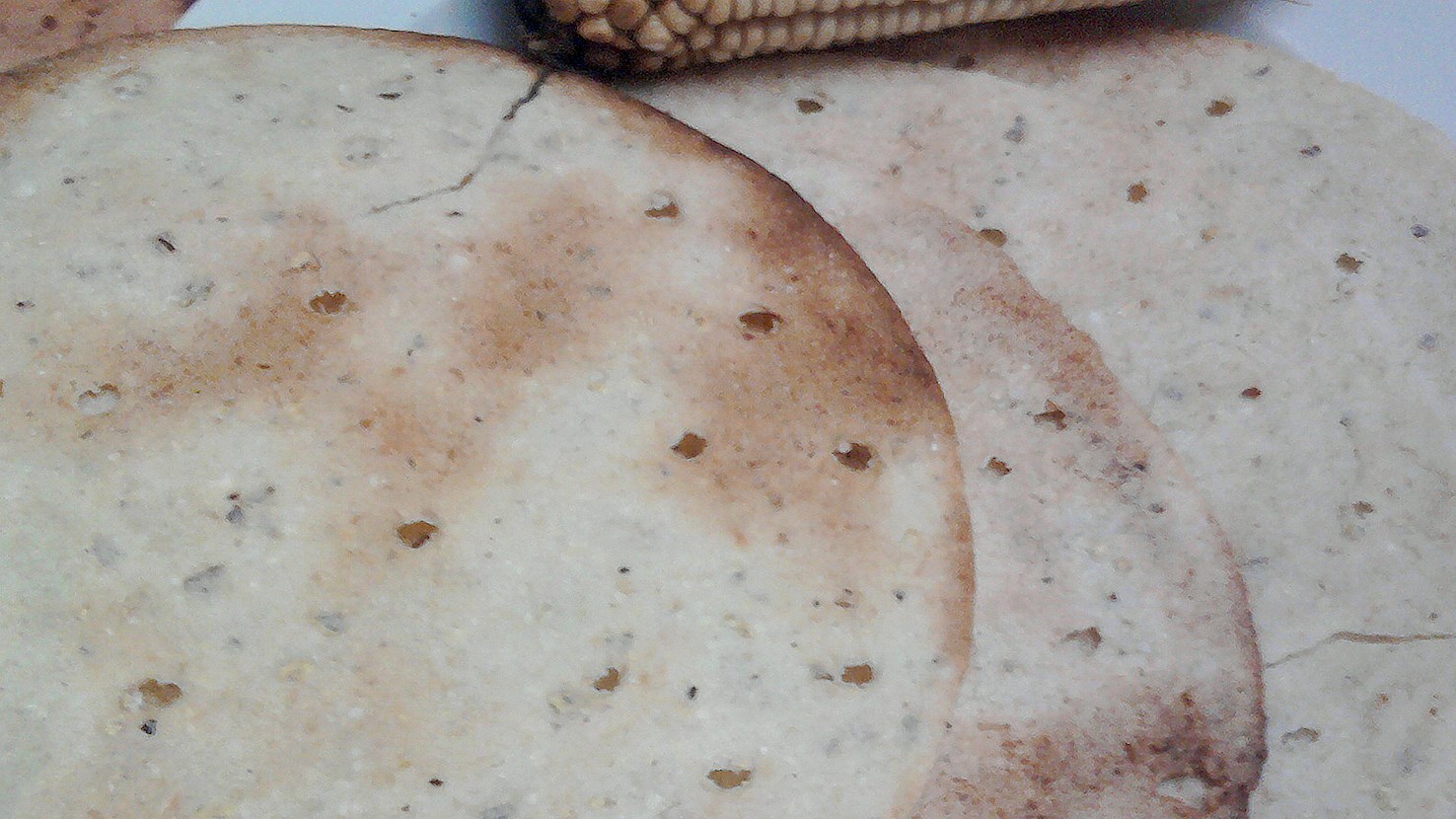
Totopo is a Mexican corn tortilla chip with variable sizes, characterized by numerous holes in the dough. It originates from the Zapotec people in the region of Oaxaca, where the chips are traditionally baked in a clay oven known as a comixcal. Crispy and dry, the tortillas can be cut into various shapes depending on their usage: large pieces can be used for dips, squares can be used as toppings and in a dish called migas, while strips are ideal for soups, salads, and garnishing.
In Trinidad, everybody eats roti – they make it in the morning and in the afternoon - that is how popular this flatbread is on the island. Although roti didn't start in Trinidad, the inhabitants made their own style over the years. Dhalpuri roti is essentially a tawa-cooked roti filled with ground split peas. Once prepared, the filled dhalpuri roti is usually consumed as a sandwich, when it is wrapped around curries, beef, potatoes, chicken, or anything else you would want, depending on personal preferences.
Johnnycake is a cornmeal flatbread, similar to a pancake, consisting of fried cornmeal, salt, and hot water or milk. It is a staple food in the Rhode Island area, where they are consumed at all times of the day - for breakfast, when they are drizzled with butter and syrup or broken up and combined with milk and sugar, or for other meals, when they act as a substitute for rice or potatoes, and sometimes even get served as a dessert. The name is likely based on jonakin, a word that is derived from another word, jannock, which is the term used by the slaves to describe a cake made of Native American corn. Another theory says it derives from journeycake, an English term referring to durable cornmeal cakes made with no butter or eggs which were carried in saddlebags and on ships during long journeys. It is believed that johnnycakes were invented by the corn-growing Native American tribes that were once the dominant group around Rhode Island. In addition to being popular in the United States, the modern version of the dish is still consumed in Colombia, Bermuda, and Saint Croix.
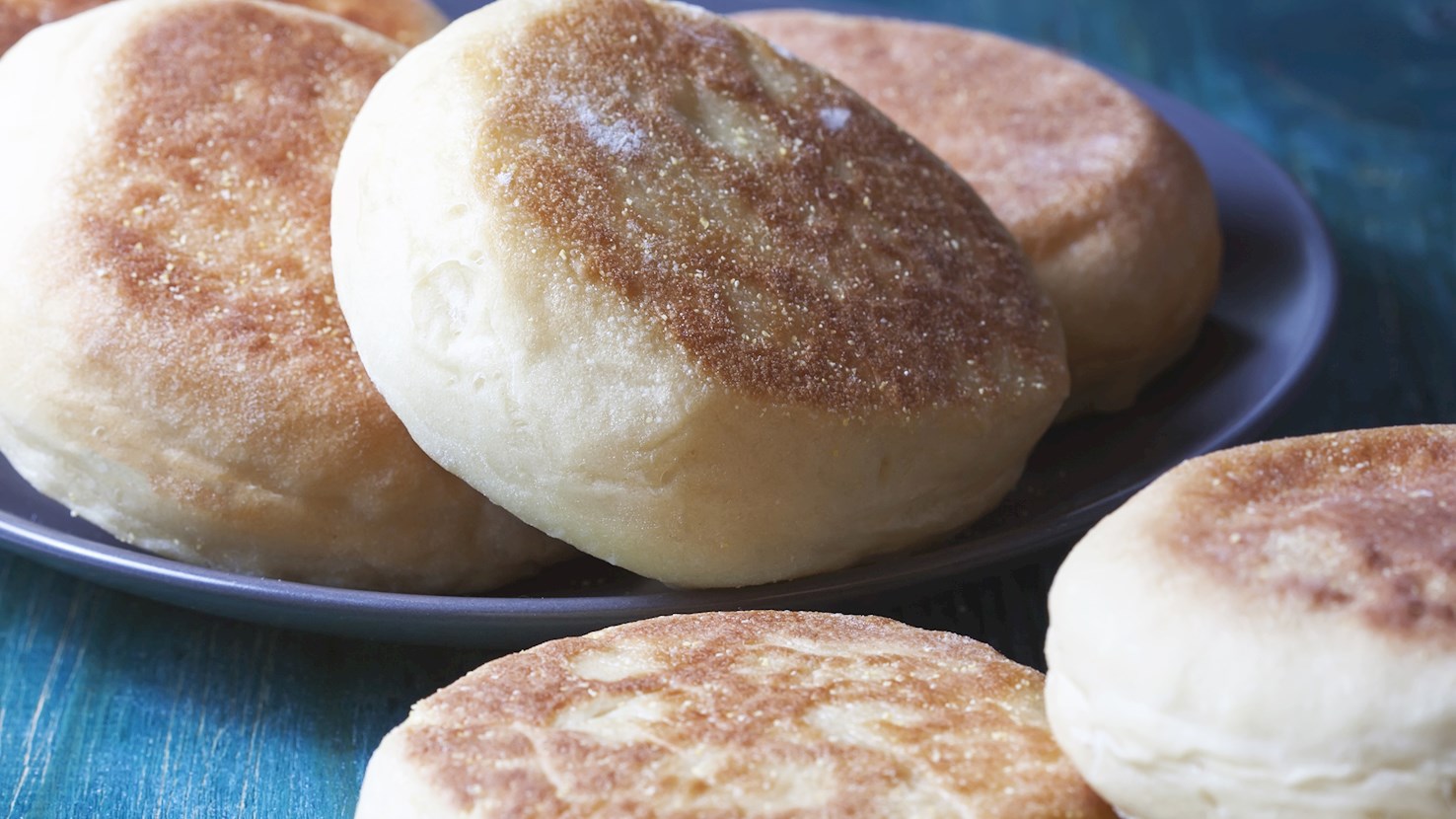
English muffin is a small, round, and flat bread that's made from a soft yeasted dough. Once shaped into rounds, either by hand or with crumpet rings, the English muffin is baked on a griddle. Before toasting, they are halved, and once toasted, they're buttered, then served for breakfast with sweet or savory toppings. These muffins are an essential part of eggs Benedict. It's not recommended to use a knife to cut them in half – most cooks agree that they should be split with a fork and gently pulled apart in order to create a surface with small peaks and craters, which gives them a crunchy texture and provides many pockets for jam and butter. The muffins can be made at home or bought in stores, where they are available in various flavors including cornmeal, cinnamon, whole wheat, raisin, and sourdough. It is believed that the first English muffin was invented in 1894 by a British immigrant to New York, Samuel Bath Thomas.
Bammy is a Jamaican cassava flatbread made from grated, pressed, and cooked cassava, usually shaped into small rounds and finished by frying, steaming, or soaking in milk or coconut milk. It is widely eaten in Jamaica, especially in coastal areas where it is commonly paired with fried or steamed fish. The flatbread is made from bitter cassava varieties that require grating and thorough pressing to remove the toxic liquid before cooking. Once pressed, the cassava meal is sieved, shaped, and cooked on a griddle or flat pan until firm. Its development is rooted in the food practices of the indigenous Taino people of the Caribbean, who processed cassava into flatbreads long before European arrival. Cassava was a staple crop that grew well in the region’s climate, and Taino communities produced flour-like meal from grated cassava that was baked on clay or stone griddles. When Africans were brought to Jamaica, they continued the use of cassava and flatbread preparation methods, merging them with other cooking approaches. Over time, communities in rural and fishing villages maintained cassava processing techniques, and bammy became a recognized Jamaican product sold in markets and produced commercially by small factories. Its persistence in Jamaican cooking reflects the continued importance of cassava in areas where wheat flour was less accessible or less preferred. Preparation begins by peeling and grating the cassava, then placing the pulp in a cloth or pressing device to remove liquid. The dried meal is passed through a sieve to create a consistent texture. A dry pan or griddle is heated, and the cassava meal is shaped into flat circles and cooked until firm and lightly browned on both sides. At this stage bammy can be stored or cooked again. Before serving, the rounds are often soaked briefly in coconut milk or water, which softens them and adds flavor, followed by frying or steaming. Some cooks simply toast the flatbread without soaking, which produces a firmer texture. Bammy is eaten throughout Jamaica, especially with seafood dishes. It is typically served with fried fish, escovitch fish, steamed fish, rundown, or saltfish preparations. It is also eaten with butter, cheese, or lightly sweet spreads in some households. Beverage pairings include ginger beer, lime water, iced tea, sorrel drink, coconut water, or cold beer, which complement the flatbread’s mild flavor and starchy texture.
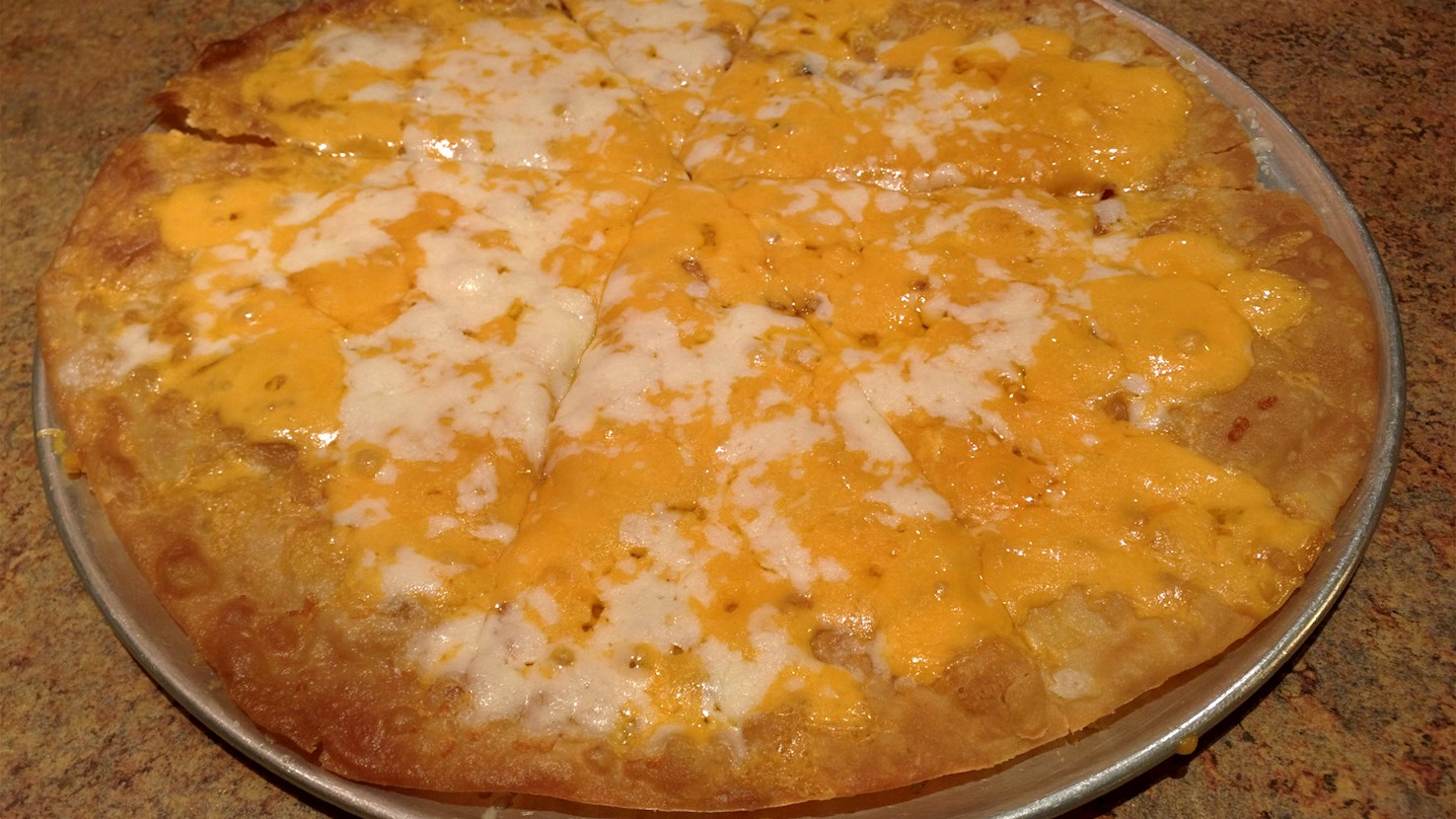
Cheese crisp is an American dish originating from Arizona. It consists of a flour tortilla that is topped with shredded cheese in its most basic form. The tortilla is placed in a butter-brushed pan which is put under a broiler until it develops a crisp texture. Cheeses such as Cheddar, Oaxaca, or Monterey Jack are typically used in the preparation of the cheese crisp. There are numerous variations, so the dish can also be topped with a variety of ingredients such as onions, carne asada, cilantro, jalapeños, bell peppers, and shrimp. It is believed that the cheese crisp was popularized by El Charro Café in Tucson.
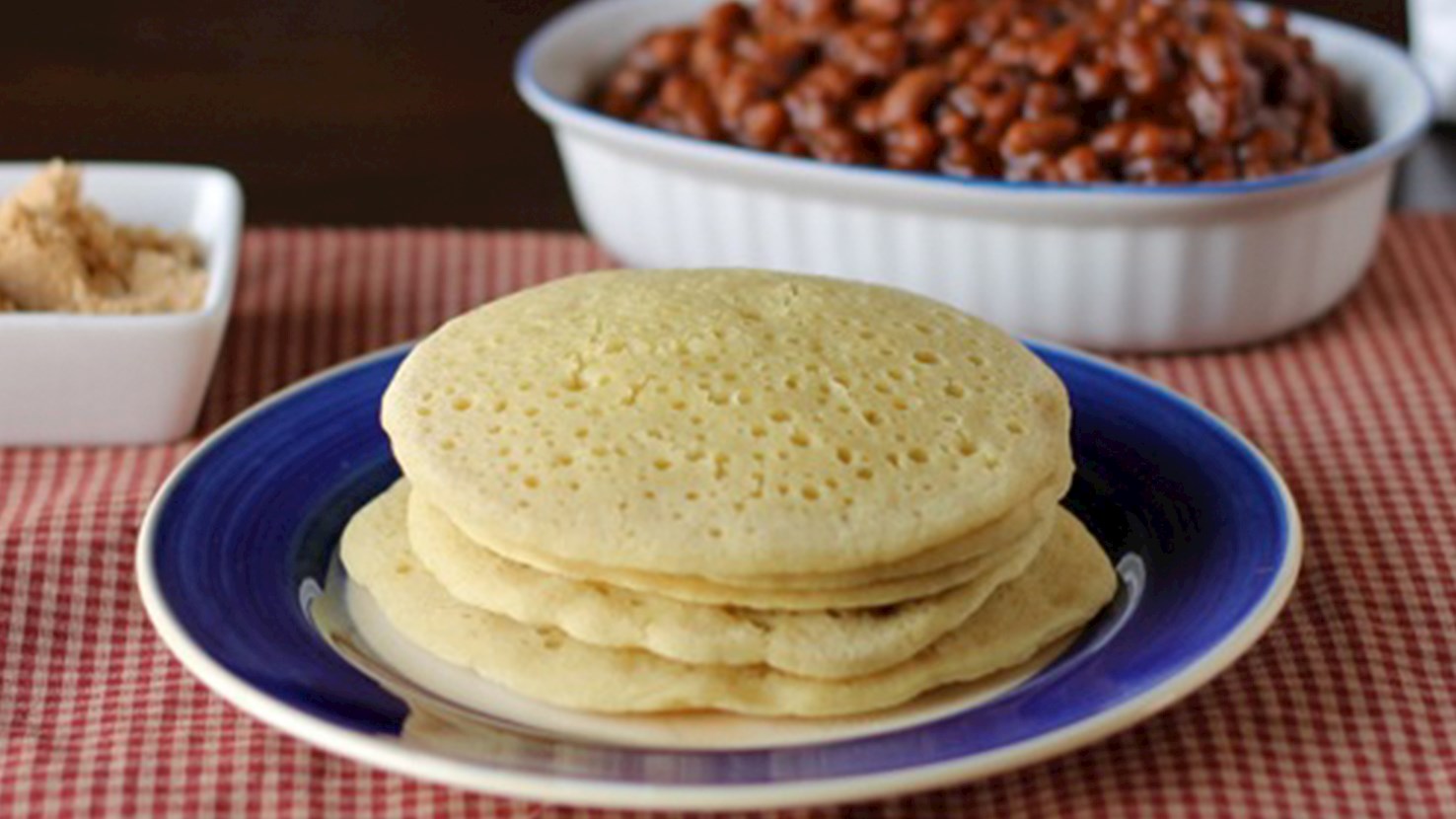
Ploye is a traditional Acadian flatbread that is often misguidedly labeled as a pancake, which it is not, since it is not flipped. Inexpensive and easy to make, ploye consists of buckwheat flour, wheat flour, water, and baking powder. It is traditionally cooked on one side only, then buttered, drizzled with maple syrup, molasses, or brown sugar. These flatbreads are consumed rolled, and are often paired with baked beans or fricot, a popular chicken stew.
TasteAtlas food rankings are based on the ratings of the TasteAtlas audience, with a series of mechanisms that recognize real users and that ignore bot,
nationalist or local patriotic ratings, and give additional value to the ratings of users that the system recognizes as knowledgeable.
For the “Top 11 North American Flatbreads” list until June 15, 2026, 1,819 ratings were recorded, of which 1,155 were recognized by the system as legitimate.
TasteAtlas Rankings should not be seen as the final global conclusion about food. Their purpose is to promote excellent local foods,
instill pride in traditional dishes, and arouse curiosity about dishes you haven’t tried.