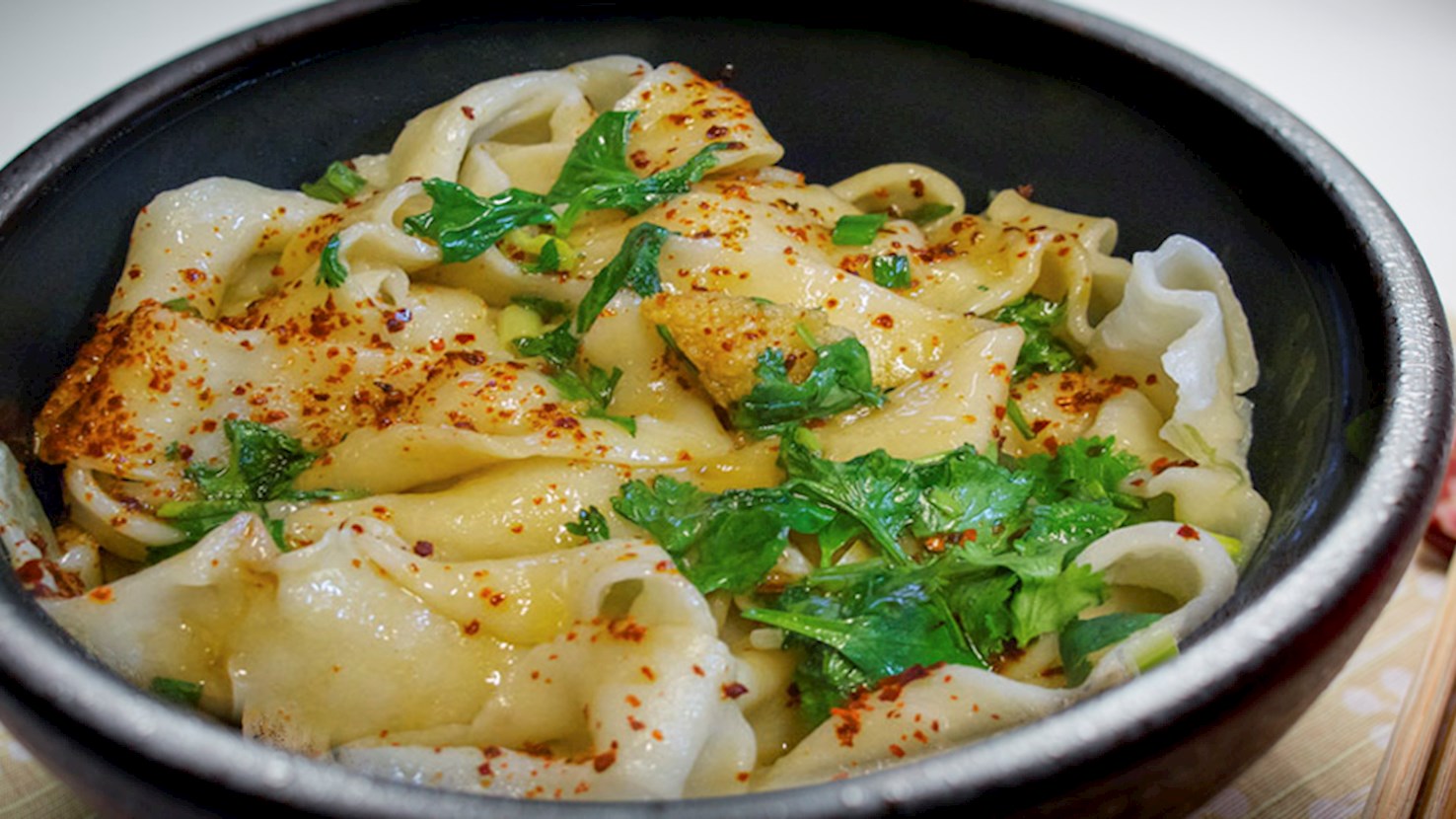
Biáng biáng noodles are a type of hand-pulled noodle from Shaanxi province, famous for their extra-wide, belt-like shape and chewy texture. They are a staple of Xi’an, the provincial capital, and are often regarded as one of the defining foods of the region’s wheat-based cuisine. Their name is also tied to a unique Chinese character, considered one of the most complex in the written language, which has become as much a symbol of the dish as the noodles themselves. The development of biáng biáng noodles reflects the reliance on wheat in northern and northwestern China, where wheat replaced rice as the dominant staple due to climate and geography. Over centuries, cooks refined methods of hand-pulling dough to achieve noodles of various shapes and textures, from thin strands to thick ribbons. In Shaanxi, this process was adapted to create exceptionally wide noodles, hearty enough to serve as a full meal on their own. The association with the character “biáng,” which does not appear in standard dictionaries, further linked the dish to regional culture, adding an element of identity and pride for locals. Making the noodles involves a straightforward but skillful process. Wheat flour dough is kneaded until elastic, rested, and then pulled into long strips. Each strip is slapped against a counter to stretch it, creating wide, flat ribbons. These are boiled quickly in water until just cooked, producing a chewy yet tender texture. Once drained, the noodles are placed in a bowl and topped with garlic, chili flakes, scallions, and sometimes vegetables or bits of meat. Very hot oil is then poured over these seasonings, releasing their aroma and forming a sauce that coats the noodles. In some versions, vinegar and soy sauce are added for balance, or additional toppings like braised beef, lamb, or eggs are included. Biáng biáng noodles are eaten widely in Shaanxi, especially in Xi’an, where they are sold in street stalls, small noodle shops, and larger restaurants. They are served as a complete meal, often accompanied by light broths or pickled vegetables. Beyond China, they have gained attention in restaurants specializing in regional Chinese cooking, where their distinctive appearance and flavor showcase the diversity of China’s noodle traditions.
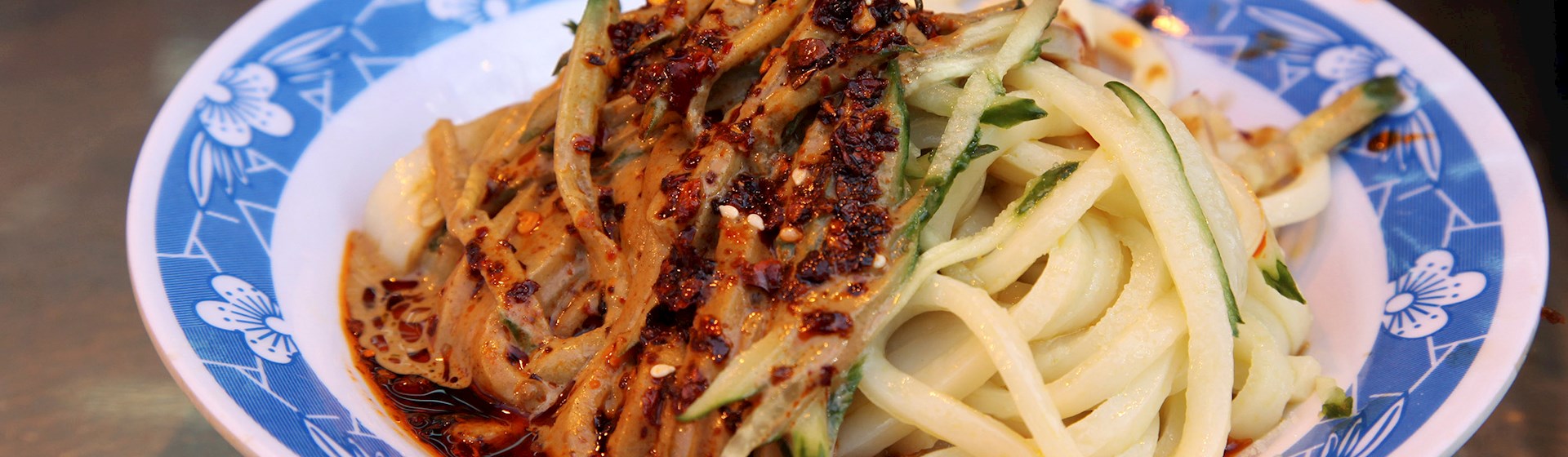
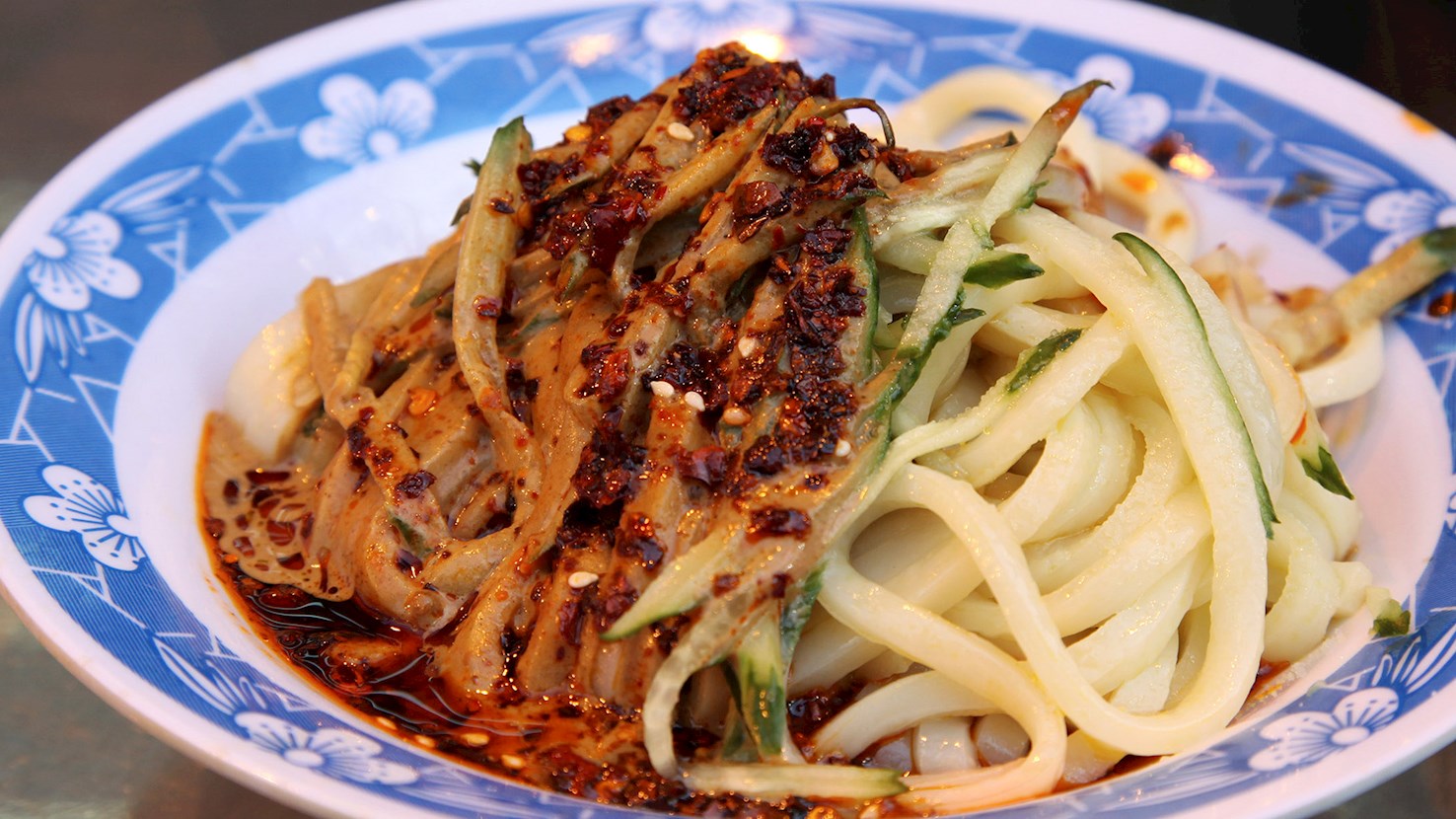
Liangpi is a noodle dish that originated in China's Shaanxi province. To prepare the dish, noodles that are made from either wheat flour, rice flour, or a combination of both are dressed with soy sauce, chili oil, and vinegar, while typical garnishing includes thinly sliced strips of cucumber, bean sprouts, and cilantro. The meaning of the name when translated is cold skin, referring to the chewy, thick, and translucent texture and appearance of the noodles, while their genesis, according to a folk tale, happened during the Qing Dynasty. Depending on what ingredients are used, several variations of the dish exist; liangpi from the city of Hanzhong is prepared with steamed garlic and hot chili oil, maijang liangpi is named after the black sesame paste that's used in the sauce, and shan xin gan mianpi is garnished with wheat gluten, mashed garlic, and bean sprouts in a sauce made with vinegar, chili oil, and salt. Liangpi is eaten cold, often as a snack, all year round.
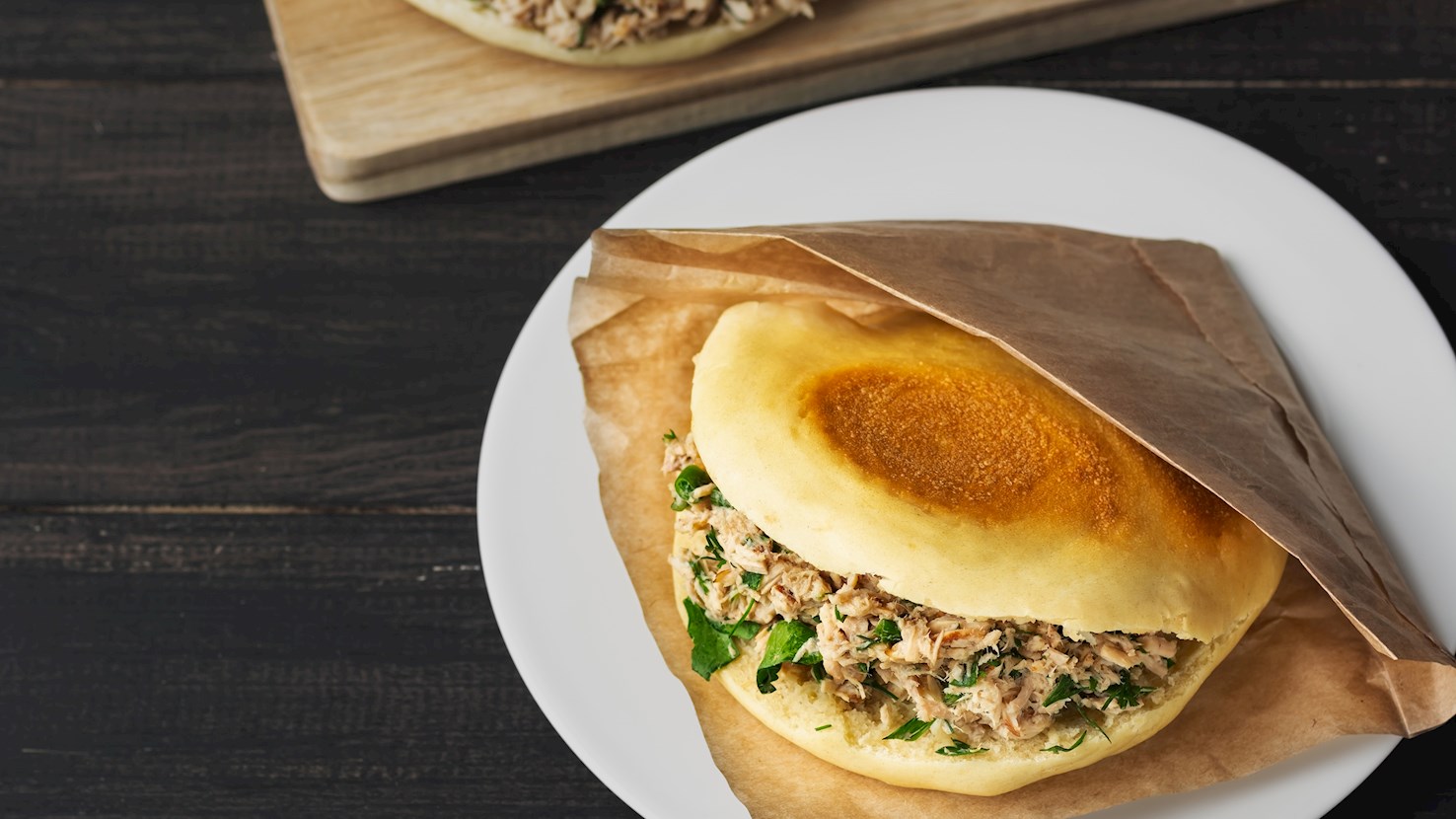
Ròujiāmó is a type of street food from Shaanxi province, often described as a meat-filled flatbread that has become one of the most recognizable snacks from the region. Its roots go back centuries, reflecting the long-standing bread culture of northern China, where wheat rather than rice dominates the diet. Over time, the idea of baking or pan-frying a dense, chewy flatbread and filling it with slow-cooked meat found a strong foothold in Xi’an and its surroundings, where food traditions were shaped by the city’s position as the starting point of the Silk Road. The preparation begins with the bread, called báijiǎo or mò, made from wheat flour, water, and a leavening agent. The dough is kneaded, left to rest, then shaped into discs and baked or griddled until crisp on the outside and soft within. The filling most commonly uses pork belly, simmered with soy sauce, rice wine, star anise, cinnamon, ginger, and other aromatics for several hours until tender enough to shred. The meat is chopped finely with a cleaver before being packed into the warm bread, soaking into its crumb and creating a balance between chewy and juicy textures. In Muslim communities of the region, beef or lamb replaces pork, giving rise to variations equally tied to local identity. Today it is eaten not only at roadside stalls and markets in Xi’an but also in cities across China where it has become a common fast food, enjoyed on its own or alongside bowls of liangpi cold noodles or soups. It pairs well with hot green tea in winter or with sour plum juice in warmer months, each beverage cutting through the richness of the meat.
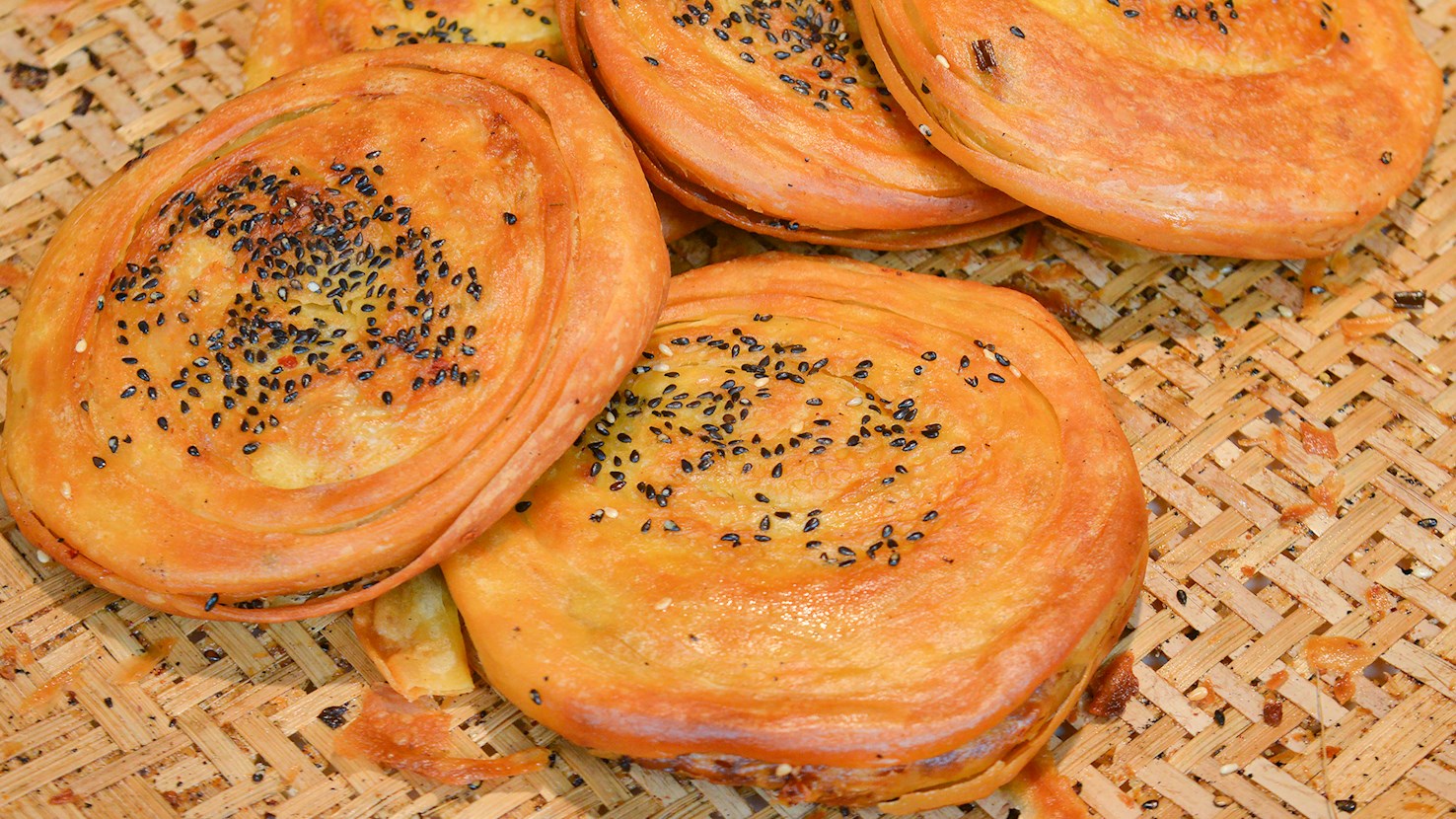
Guokui is a traditional flatbread originating from the Shaanxi province, now popular in various regions across China. Known for its large, thin, and crispy texture, guokui translates to "pot helmet," reflecting its distinctive shape when cooked. The bread is typically large and round, resembling a flattened disc, with a crispy outer layer and a soft, chewy inside. In Shaanxi, there is also guokui type that is round in shape, more reminiscent of a bread loaf than a flatbread, about a foot in diameter, an inch in thickness, and weighs about 2.5 kg. The preparation starts with making dough from wheat flour, water, and sometimes yeast or baking powder for leavening. Guokui can be either plain or filled with a variety of ingredients, such as minced pork, beef, or vegetables. It is traditionally cooked in a tandoor-like oven or on a griddle, giving it a unique smoky flavor and crispy texture. There are several varieties of guokui: Shaanxi guokui often contains spicy beef or lamb fillings and has a distinctive regional flavor; Hubei guokui is known for its thicker, softer texture and sometimes features sweet fillings; Sichuan guokui is typically spicy, filled with a mix of minced meat and Sichuan peppercorns, offering a numbing and hot taste; Chengdu guokui is usually thinner and crispier, often featuring various fillings like spicy pork or vegetables. Guokui is not just a type of bread but a symbol of Chinese culinary tradition, often enjoyed as a snack or a quick meal. It is a staple in street food culture across different regions of China, showcasing its versatility and regional adaptations.
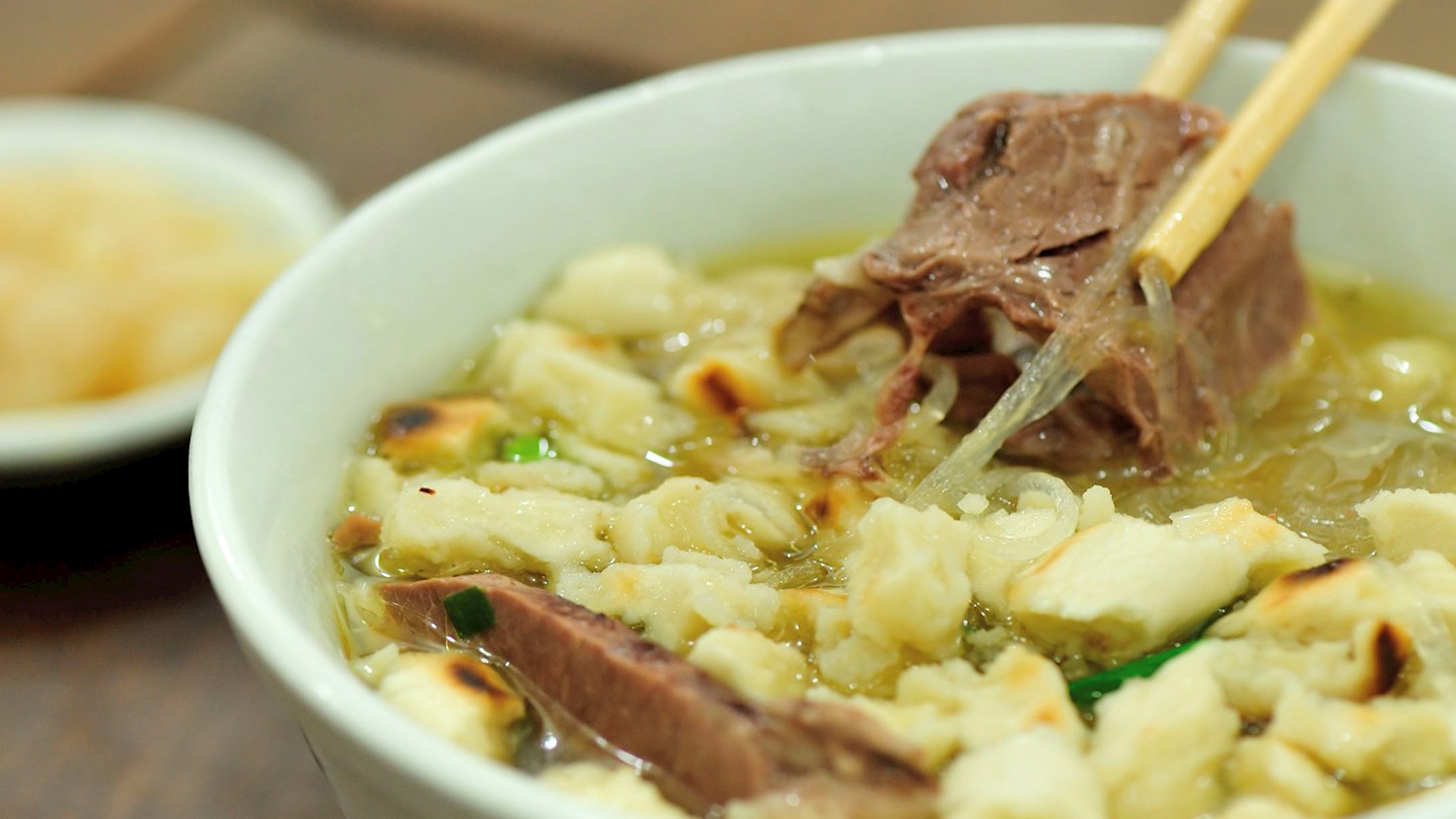
Paomo, a specialty of the Shaanxi cuisine, is a stew consisting of steamed and leavened bread (mó) that is soaked in a simple mutton soup and typically eaten in the city of Xi'an. The invention of the dish is often ascribed to the Song Emperor Zhao Kuangyin, while the name of the stew, when translated from Chinese, reveals its main feature: soaked bread. Additions commonly include rice noodles and chopped greens, while a side of pickled garlic and sweet chili paste has a principal role in elevating the flavors of the dish. Depending on the type of meat used, there are two variations; yangrou paomo made with lamb, and niurou paomo made with beef. Traditionally, in restaurants, you will be asked first to chop up or tear the bread which is then taken back to the kitchen where the cook will assemble the stew and bring it back to you complete and served with condiments. The city of Xi'an is filled with specialized paomo restaurants, predominantly in the city's Muslim Quarter.
TasteAtlas food rankings are based on the ratings of the TasteAtlas audience, with a series of mechanisms that recognize real users and that ignore bot,
nationalist or local patriotic ratings, and give additional value to the ratings of users that the system recognizes as knowledgeable.
TasteAtlas Rankings should not be seen as the final global conclusion about food. Their purpose is to promote excellent local foods,
instill pride in traditional dishes, and arouse curiosity about dishes you haven’t tried.



What People Say