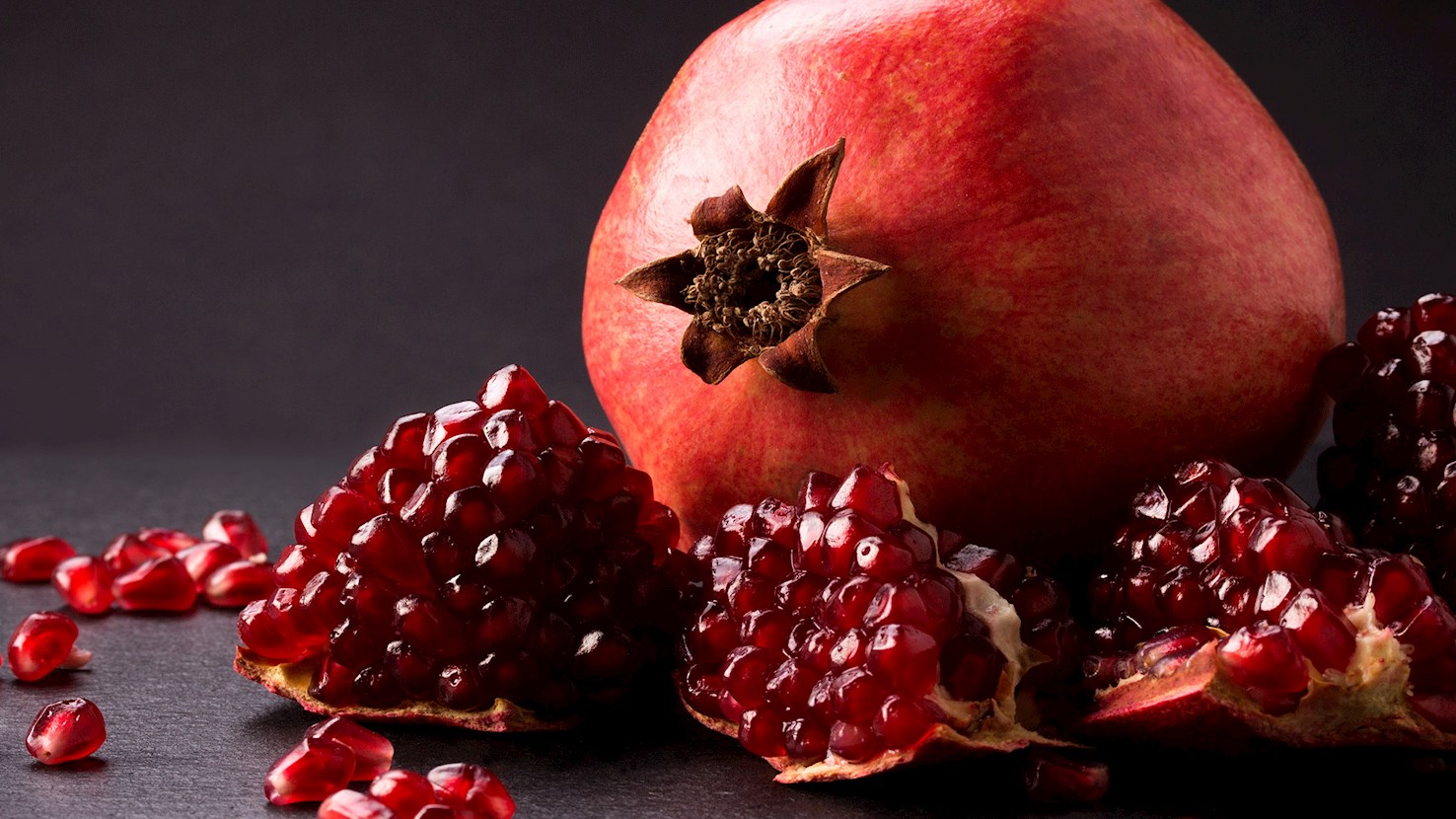
Considered an indigenous fruit of the Armenian Highlands, Armenian pomegranate is the edible fruit of a small leafy tree or shrub. With a crown-like head and a spherical shape, the pomegranate has a thick, red shell that hides hundreds of small juicy, red, and glistening arils with tiny white seeds inside. Defined by a tangy and mildly sweet flavor, the pomegranate arils, commonly called seeds, are grouped in piles that are surrounded by thin, white or yellow, bitter-flavored membranes. Armenian pomegranate has both grown wild and been cultivated on the Armenian soil since antiquity and is called nur in Armenian. This fruit has long been - and still is - omnipresent in Armenian tradition, cuisine, culture, and art - it was featured in artistic deeds such as the renowned film-maker Sergei Paradjanov’s The Color of Pomegranates and Martiros Saryan’s painting Under a Pomegranate Tree. Pomegranates are a staple fruit in Armenian households and are most commonly eaten fresh, while their juicy seeds are used as a traditional garnish for various meat and fish dishes, and are often added to traditional dishes, meats, and pies. Two excellent Armenian products featuring this remarkable fruit are pomegranate juice and pomegranate wine, which is characterized by a semi-sweet flavor.
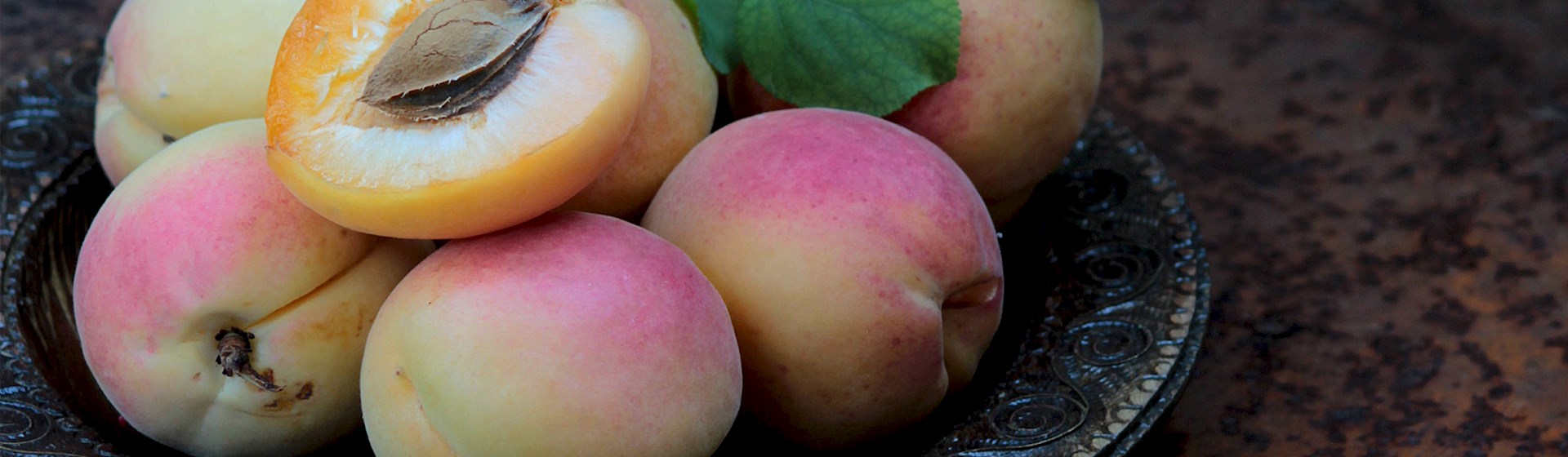
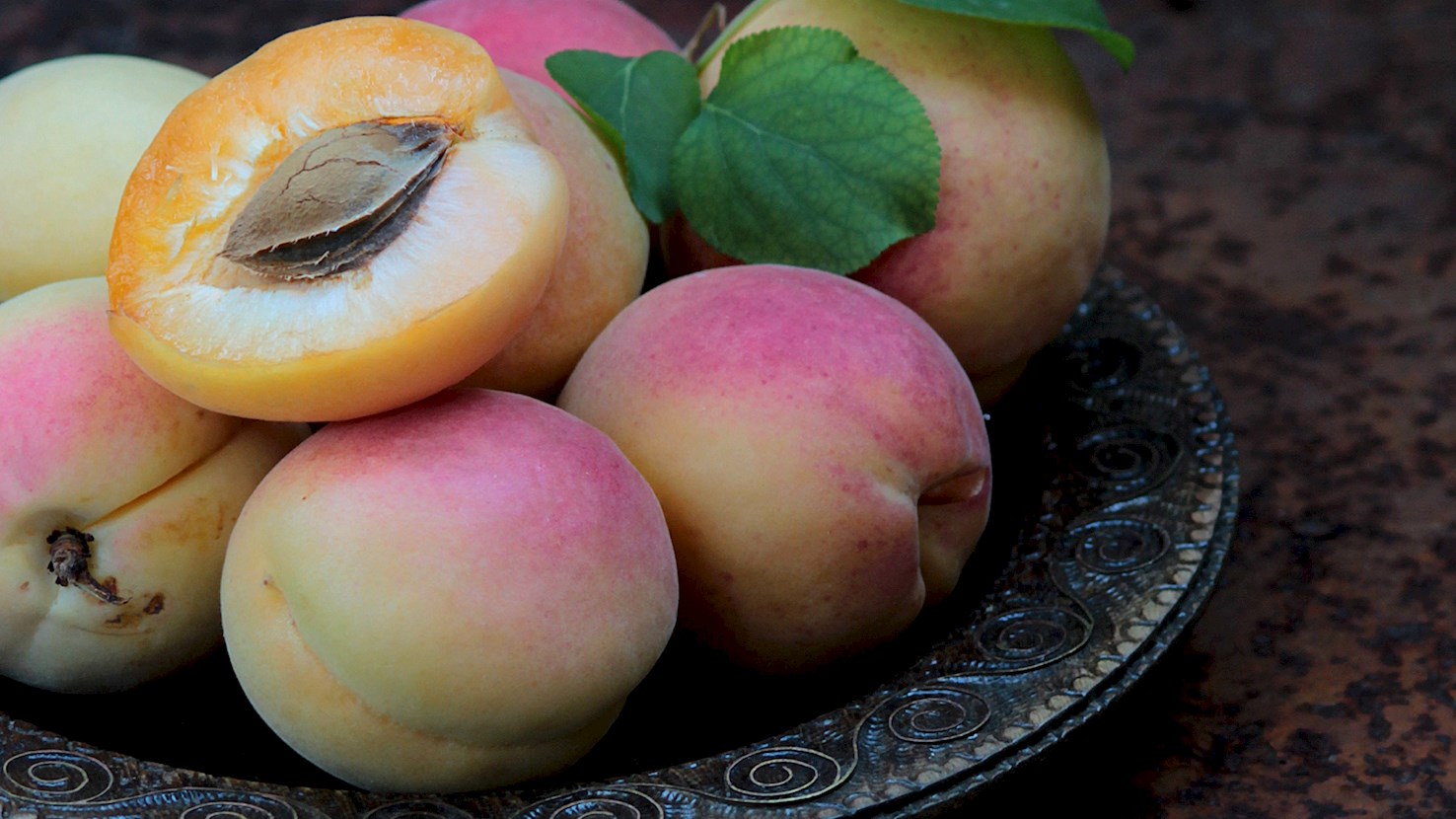
Called tsiran in Armenian, the Armenian apricot has a soft, juicy and plump pulp that is encased within a velvety outer skin and surrounds a stone that hides an edible kernel inside. Praised as the national fruit of the country, the apricot owes its exquisite honey-like sweetness and pleasant flavor and fragrance to Armenia’s volcanic soil, mild climate, and plenty of sunshine it gets throughout the year. The apricot is defined by a specific yellowish-orange color, known as tsiranaguyn in Armenian, which is on the Armenian national flag and was also the color of the tsirani, unique ornaments worn by Armenian kings and knights in the past. Armenians currently cultivate around fifty apricot varieties, which are typically harvested from the middle of June until the end of August. Dubbed "the golden fruit of Armenia," the apricot and all the specialties prepared from it are honored during the annual Apricot festival held in July, in the country’s capital. In Armenia, people consume the fruit fresh or dried and prepare a vast number of delicacies with it - be it marmalades, jams, preserves, juices, desserts, apricot vodka, apricot leather wraps, or various meat dishes. Apricots grown in the Ararat valley and the Meghri region have long been deemed as the best in the country.
Areni Noir is an Armenian red grape variety grown mainly in the Vayots Dzor region, particularly around the village of Areni, where high elevations and rocky, volcanic soils shape its character. Wines made from Areni Noir are typically medium-bodied with red fruit notes, firm acidity, and a structure that allows both youthful drinking and aging. The grape is resistant to cold conditions and performs well in vineyards situated between 1,000 and 1,600 meters above sea level, making it central to Armenian red wine production. The variety is often associated with the Areni-1 cave complex, where ancient winemaking equipment and grape remains were found, linking the area to one of the world’s earliest documented wine-producing sites. Areni Noir continued to be cultivated in Armenia through periods when viticulture shifted toward brandy production under Soviet planning. Growers in Vayots Dzor maintained vines in mixed or small private plots, and when Armenia’s wine sector expanded after independence, Areni Noir became a focal point for winemakers seeking to define a distinct national style. The grape’s adaptability to altitude, temperature changes, and volcanic soils encouraged investment in dedicated vineyards. Its ability to retain acidity and develop balanced tannin structure made it suitable for both modern stainless-steel vinification and aging in Armenian oak, which imparts a mild spice and complements the grape’s fruit profile. Winemaking with Areni Noir generally involves careful hand-harvesting, gentle destemming, and fermentation in stainless steel, concrete, or clay amphora. The grape’s thin to medium skins yield wines with moderate color intensity, and winemakers sometimes extend maceration to build structure. Aging may take place in stainless steel to preserve freshness or in oak barrels, including Armenian oak, to add depth. Some producers use whole-cluster fermentation for added aromatic lift. A notable characteristic of Areni Noir is its ability to express site-specific qualities, producing lighter, red-fruited wines at higher elevations and more structured examples in warmer locations. Areni Noir wines are consumed throughout Armenia in restaurants, wine bars, and homes, and the variety has become the leading export among Armenian red wines. It pairs well with lamb, pork, grilled vegetables, cheese, and dishes seasoned with herbs such as thyme and tarragon. Lighter expressions complement poultry and mushroom dishes, while barrel-aged versions work with richer stews and roasted meats. In international markets, Areni Noir is positioned as a distinctive high-altitude red variety, appreciated for its balance, food versatility, and connection to Armenia’s long-standing wine culture.
Voskehat is an Armenian white grape variety used to produce still and sparkling wines known for their floral aroma, medium acidity, and ability to develop complexity when aged. The grape is grown mainly in the Vayots Dzor, Aragatsotn, and Armavir regions of Armenia, where high-altitude vineyards and volcanic soils influence its character. Voskehat is regarded as one of Armenia’s most significant white wine grapes because of its resilience to climate fluctuations and its suitability for both dry and semi-sweet styles. The name means “golden berry” in Armenian, referring to the color of its ripe clusters. Voskehat has been cultivated in Armenia for centuries, supported by the country’s long-standing winemaking practices and archaeological evidence that links Armenian viticulture to some of the oldest in the world. The grape persisted through periods of decreased wine production, including the Soviet era when central planning emphasized brandy grapes over wine varieties. Small-scale growers continued to cultivate voskehat in mixed vineyards, and once independent wineries began to expand in the late twentieth and early twenty-first centuries, the grape reemerged as a key variety for Armenia’s wine identity. Its ability to produce expressive wines at high altitudes encouraged producers to plant it more widely in areas with long growing seasons and significant diurnal temperature variation. Winemaking typically involves hand-harvesting the grapes, pressing them gently, and fermenting the juice in stainless steel or oak, depending on the desired style. Stainless steel preserves the grape’s floral and stone-fruit notes, while oak fermentation or aging can add texture and spice. Voskehat has relatively thick skins, allowing for controlled skin contact and the production of amber wines when desired. Sparkling versions use the grape’s acidity and aromatic profile to create balanced, structured wines. A characteristic feature of voskehat is its ability to maintain freshness even in warm growing conditions, making it well suited to Armenia’s climate. Voskehat wines are consumed in Armenia at restaurants, tasting rooms, and homes and are increasingly exported. They pair well with poultry, grilled vegetables, cheeses, herb-focused dishes, and lightly spiced Middle Eastern and Caucasian cuisine. Sparkling versions accompany appetizers and lighter meals, while oak-aged styles pair with richer dishes such as roasted chicken or creamy sauces. In international markets, voskehat is promoted as a distinctive Armenian variety that offers an alternative to more widely known white wine grapes while reflecting the country’s high-altitude vineyards and volcanic landscapes.
TasteAtlas food rankings are based on the ratings of the TasteAtlas audience, with a series of mechanisms that recognize real users and that ignore bot,
nationalist or local patriotic ratings, and give additional value to the ratings of users that the system recognizes as knowledgeable.
For the “Top 4 Armenian Fruits” list until July 15, 2026, 139 ratings were recorded, of which 75 were recognized by the system as legitimate.
TasteAtlas Rankings should not be seen as the final global conclusion about food. Their purpose is to promote excellent local foods,
instill pride in traditional dishes, and arouse curiosity about dishes you haven’t tried.