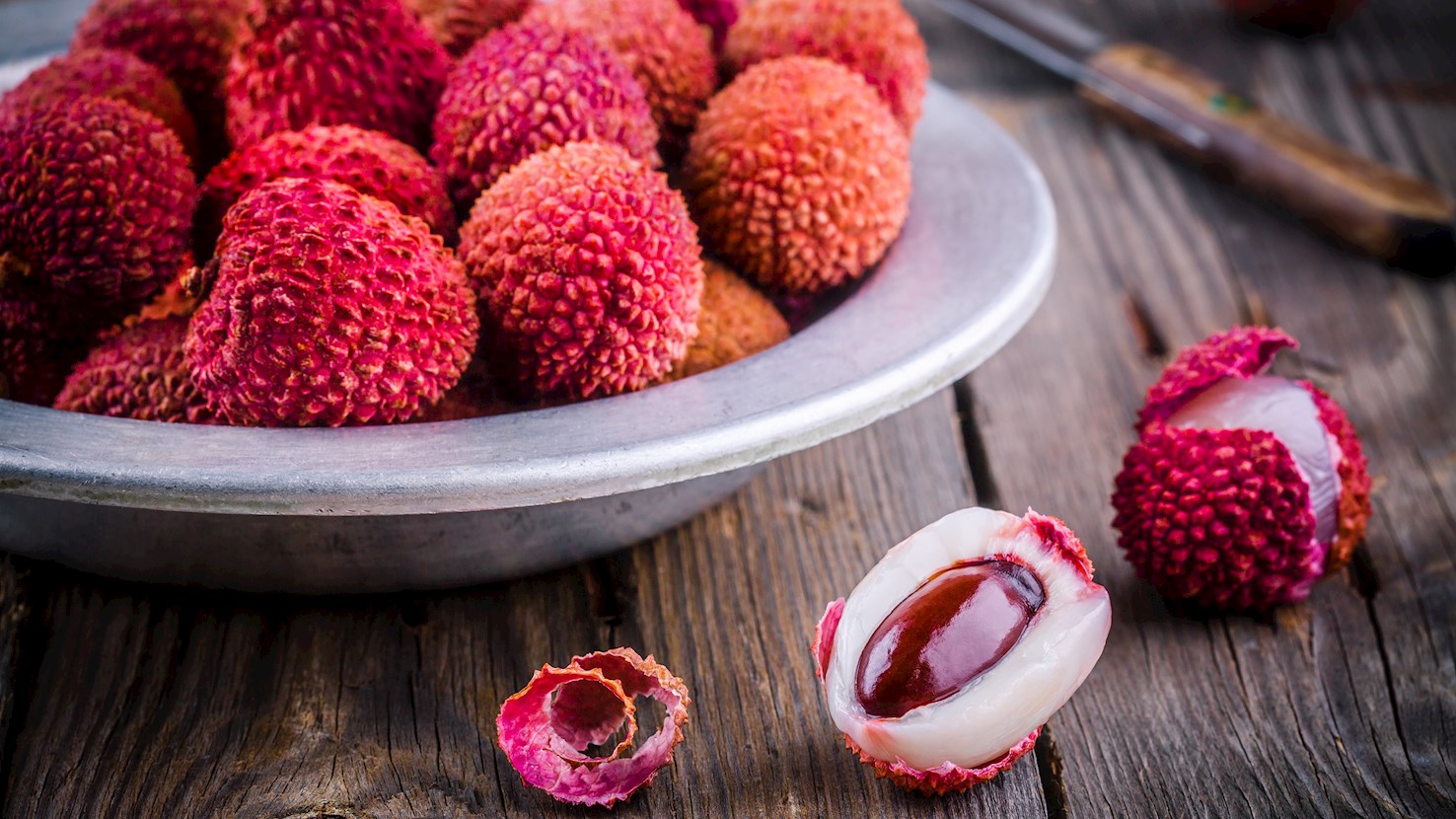
Lychee is a tropical fruit that's native to the Chinese provinces of Fujian and Guangdong. The fruit is oval to round, red in color, and has a brittle and inedible outer covering that encloses a translucent white flesh on the inside and one large seed. The flavor of the pulp is musky and aromatic when fresh, and when dried, it's acidic and sweet. Lychees are most commonly enjoyed fresh, but they can also be dried, canned, used in ice creams, or processed into wine, juice, and jelly. The fruit is a good source of minerals, vitamins, and antioxidants. Nowadays, lychees are grown in southern China and tropical Southeast Asia, India, Florida, Hawaii, and South Africa.
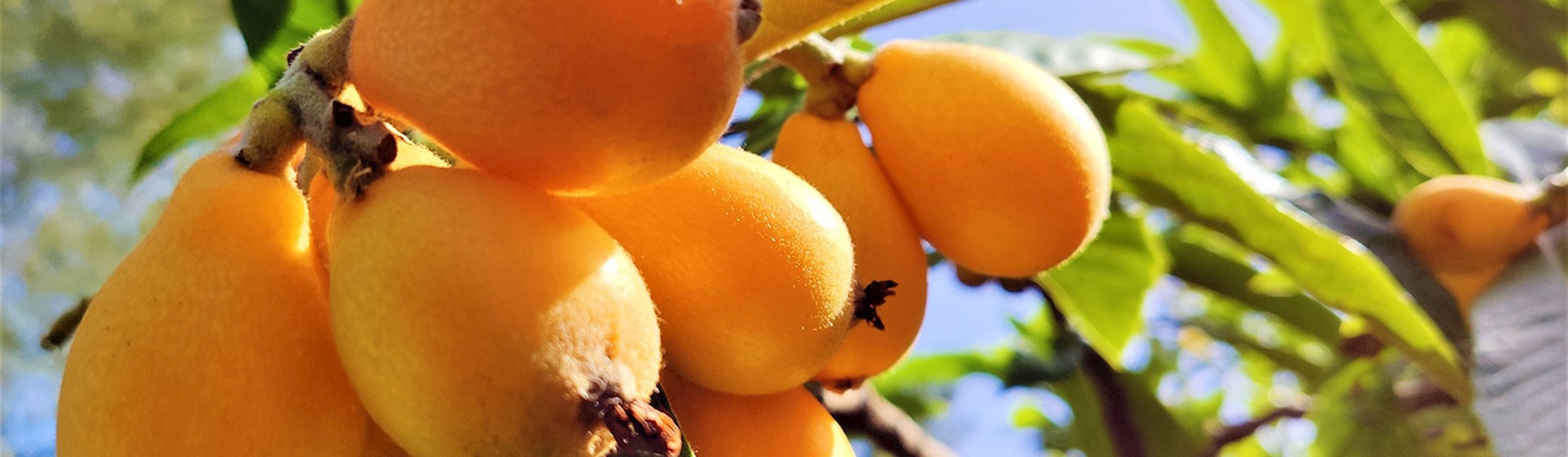
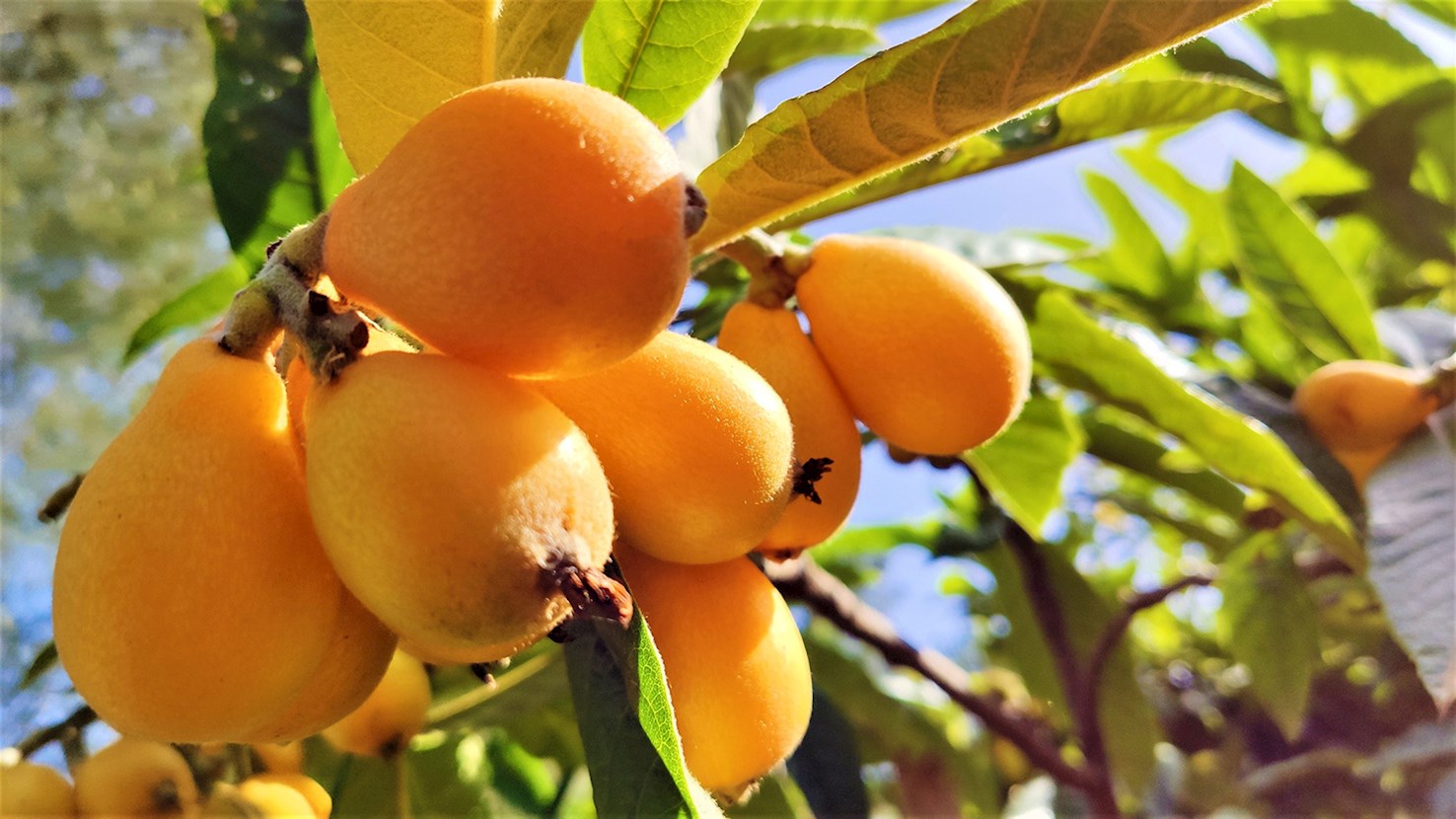
Loquat is a large evergreen shrub or a small tree that’s native to southeastern China, but the tree was also introduced to Japan in early medieval ages. The fruits are round, oval, or pear-shaped, with flesh that is subacid to sweet in flavor and very aromatic. When ripe, loquats are enjoyed fresh or used in fruit salads. They can be pickled, stewed for desserts, preserved with spices, and made into chutneys and sauces. Due to its high pectin content, loquat is often made into jellies or jams. The fruits are also sometimes fermented in order to produce fruit wine. They are low in calories and provide a nice source of potassium, copper, fiber, and vitamin A.
Meiwa kumquat (lat. Citrus crassifolia) is a small, round citrus fruit native to China. It belongs to the genus Fortunella and is primarily distinguished from other kumquat varieties by its spherical shape and its notably sweeter pulp. The fruit reached Japan during the Edo period, specifically arriving from China on a merchant ship in the year 1860, which led to its widespread cultivation and eventual introduction to the Western world by the early 20th century. Botanically, the Meiwa kumquat is often considered a natural hybrid between the Nagami and Marumi varieties, though it is treated as a distinct species in many agricultural classifications. Preparation of the Meiwa kumquat involves minimal processing as the entire fruit, including the thick, orange rind and the inner segments, is edible. Unlike the elongated Nagami variety, which has a very tart interior, the Meiwa possesses a much milder acidity and a thicker, fleshier skin that contains a high concentration of essential oils and sugars. Serving the fruit typically involves eating it fresh and whole, which allows the consumer to experience the simultaneous release of sweet oils from the zest and the slightly tangy juice from the pulp. A specific physical characteristic of the Meiwa is that it is often nearly seedless or contains significantly fewer seeds than its oblong counterparts. The fruit is also less prone to the juiciness of typical citrus, possessing a denser, more substantial texture that holds its shape when sliced. Meiwa kumquats are eaten primarily as a fresh dessert fruit or a snack in East Asia and specialized citrus-growing regions like Florida and California. They are frequently used in the preparation of candied fruits and whole-fruit syrups because their round shape and sweet pulp respond well to sugar saturation. In culinary applications, they are often paired with mild cheeses like chèvre or ricotta to balance their bright citrus notes. For beverage pairings, they are used to garnish sparkling wines and dry ciders, or muddled into gin-based cocktails where the sweetness of the rind complements the juniper botanicals.
Nagami kumquat (lat. Citrus margarita), is an oval-shaped citrus fruit characterized by an edible sweet rind and a tart inner pulp. It belongs to the Fortunella genus and is a primary variety of kumquat cultivated for commercial and domestic use. The species is native to southern China, where records of its cultivation and consumption date back to the 12th century. It was introduced to Europe in 1846 by Robert Fortune, a collector for the Royal Horticultural Society, and subsequently reached North America in the late 19th century. The fruit grows on a slow-growing evergreen shrub that is highly cold-hardy, capable of surviving temperatures as low as -10°C, which is a significant physiological trait compared to most other citrus species. Preparation of the Nagami kumquat typically involves washing the exterior thoroughly, as the fruit is consumed in its entirety, including the skin. Unlike most citrus fruits where the peel is discarded due to bitterness, the rind of the Nagami contains the majority of the fruit's sugar content, while the juice and flesh provide a sharp acidity. This inversion of the usual citrus flavor profile means that rolling the fruit between the fingers before consumption can help release essential oils and mix the sweet and sour components. Serving methods vary from eating the fruit raw as a whole snack to slicing it thinly for inclusion in salads or as a garnish. A specific physical property of the Nagami is its elongated, prolate shape, which distinguishes it from the round Marumi kumquat. The fruit contains a small number of seeds, which are technically edible but often removed when the fruit is sliced. Nagami kumquats are eaten globally, appearing in markets during the winter months when they are in peak season. They are frequently utilized in the production of marmalades, candied preserves, and chutneys because the high pectin content in the rind facilitates the gelling process. In culinary applications, they are often paired with fatty proteins like duck or pork to provide an acidic contrast. For beverage pairings, Nagami kumquats are macerated in clear spirits such as gin or vodka to create infused liquors, or sliced into iced black tea and sparkling water to contribute both sweetness and astringency.
TasteAtlas food rankings are based on the ratings of the TasteAtlas audience, with a series of mechanisms that recognize real users and that ignore bot,
nationalist or local patriotic ratings, and give additional value to the ratings of users that the system recognizes as knowledgeable.
For the “Top 4 Central Southern Chinese Fruits” list until June 01, 2026, 230 ratings were recorded, of which 214 were recognized by the system as legitimate.
TasteAtlas Rankings should not be seen as the final global conclusion about food. Their purpose is to promote excellent local foods,
instill pride in traditional dishes, and arouse curiosity about dishes you haven’t tried.