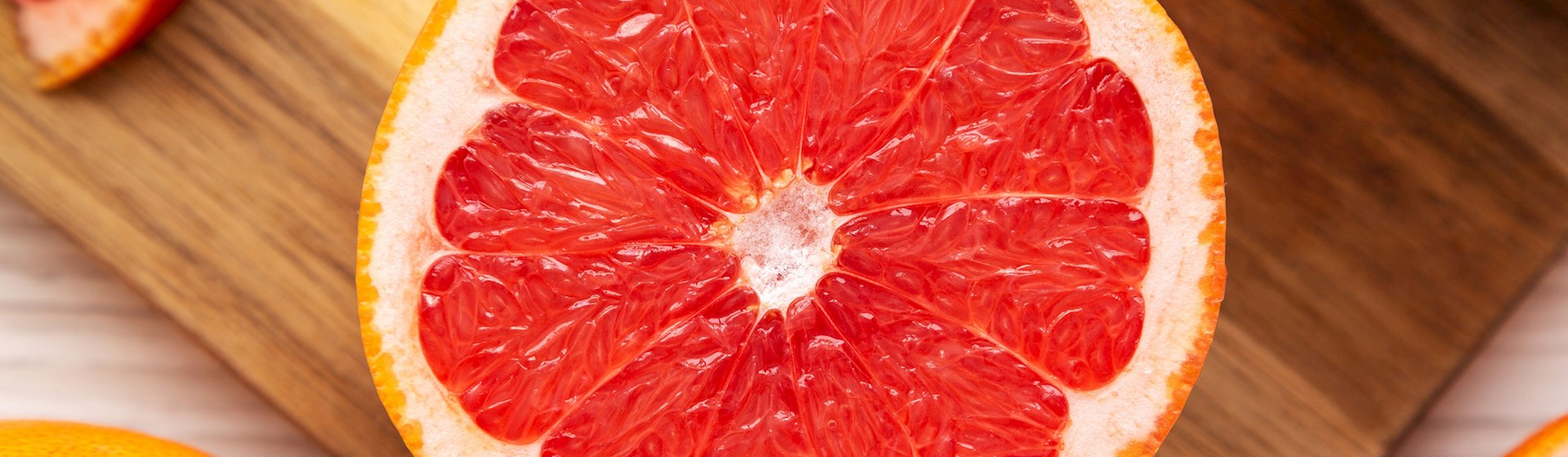
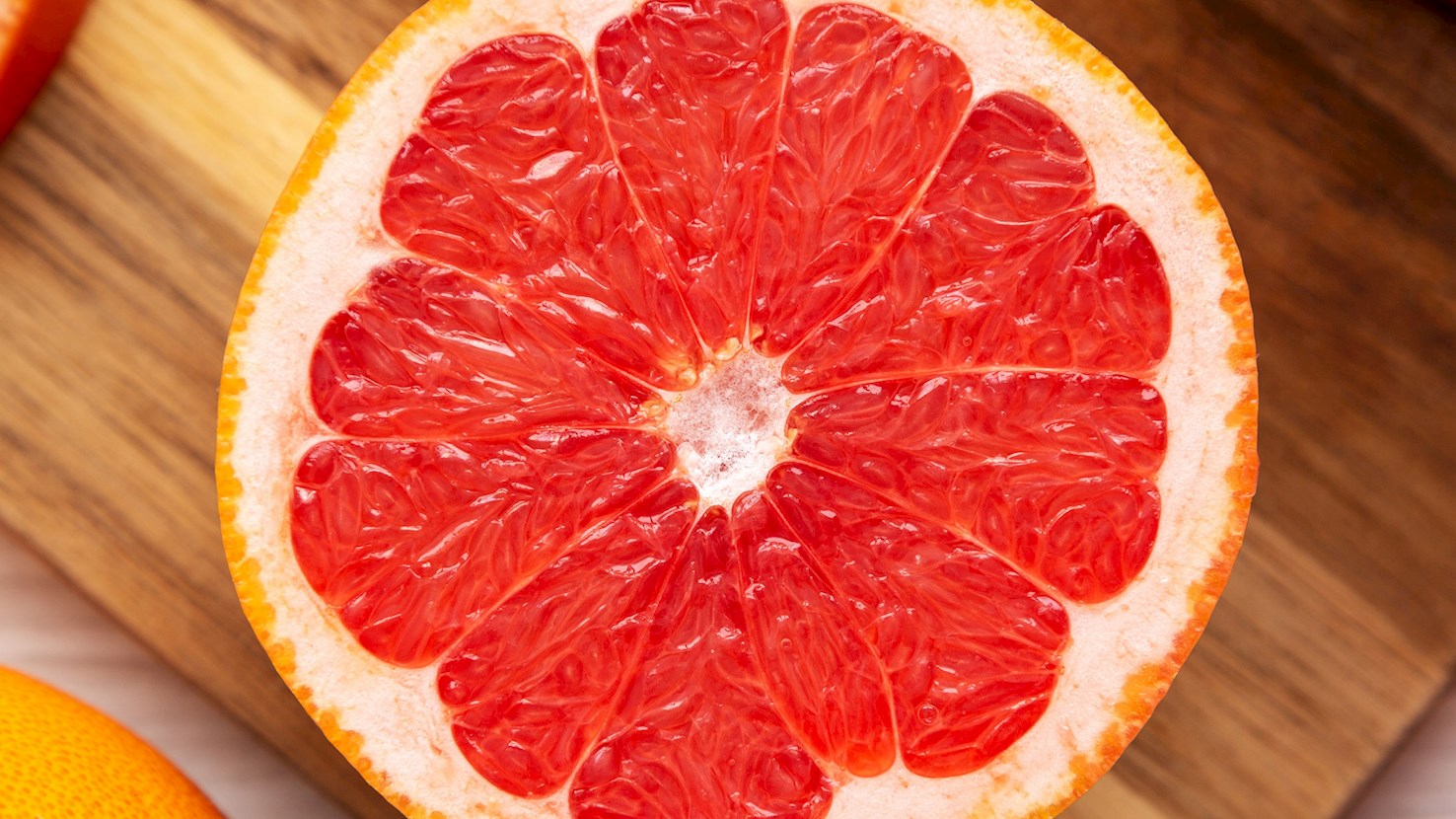
Rio Red is a late-maturing pigmented grapefruit cultivar developed and primarily grown in the Rio Grande Valley of South Texas. It is physically distinguished by a slightly thick, yellow-orange rind that often displays a pronounced red blush where the fruit cluster touches on the tree. The internal flesh is a deep, consistent crimson, significantly darker than the Ruby Red, and is characterized by a high juice content and a firm, melting texture. It is a nearly seedless variety with a flavor profile that leans toward intense sweetness, a result of its high brix levels and a relatively low concentration of naringin, the compound responsible for the characteristic bitterness in white grapefruit varieties. The development of the Rio Red is the result of a specialized breeding program led by Dr. Richard Hensz at the Texas A&I Citrus Center in Weslaco during the 1960s and 1970s. It was created through the use of thermal neutron radiation on the budwood of a Ruby Red seedling, a process intended to induce stable genetic mutations for deeper pigmentation. The specific selection was released for commercial cultivation in 1984 after demonstrating superior color stability and tree vigor compared to its predecessors. In 1993, the success of this variety led to the Texas Legislature designating the Texas Red Grapefruit as the official state fruit. By 2026, the Rio Red has become the dominant commercial variety in the region, representing the majority of the acreage in the Texas citrus industry. Preparation involves washing the thick rind and typically halving the fruit to be eaten with a spoon or segmented using a "supreming" technique to isolate the juice vesicles from the bitter internal membranes. Because the Rio Red has a lower acid-to-sugar ratio than many other citrus fruits, it is frequently consumed fresh without the addition of sweeteners. For industrial and domestic use, the fruit is prized for its juice, which retains its vibrant red color even after processing due to the high stability of its lycopene content. The fruit can also be grilled or broiled, a process that slightly caramelizes the natural sugars and softens the fibrous structure of the segments. A specific technical characteristic of the Rio Red is its ability to develop its deepest red pigment in high-temperature environments, making the climate of South Texas essential for its peak visual quality. It is eaten as a fresh snack or breakfast item, often sliced into citrus salads with arugula and shaved fennel, where its sweetness provides a counterpoint to peppery and anise-like notes. In a beverage context, it is used as the primary base for the Sea Breeze or Greyhound cocktails, paired with vodka or gin, as the fruit’s density of flavor prevents it from being diluted by spirits. For non-alcoholic pairings, it is served with fresh rosemary and sparkling mineral water or iced Earl Grey tea, which complements the bergamot notes of the tea.
The Flame grapefruit is a pigmented citrus cultivar primarily cultivated in the riverine and coastal regions of Florida and South Texas. It is physically distinguished by a smooth, thin, yellow rind that typically exhibits a moderate pink blush at maturity. The internal flesh is a deep, vibrant red, darker than the Ruby Red but slightly lighter than the Star Ruby, and is characterized by a firm, tender texture with a high juice-to-mass ratio. It is classified as a seedless variety, generally containing five or fewer seeds per fruit, and possesses a balanced flavor profile that combines significant sweetness with a regulated tartness. The development of the Flame variety is documented as a natural mutation of the Ruby Red grapefruit, first discovered in a grove in Houston, Texas. Following its identification, the selection was refined and officially released as a new commercial variety in 1987. It was specifically selected for its vigorous growth patterns and a level of cold tolerance that exceeds many of its deep-red counterparts, making it a reliable option for growers in subtropical zones. By 2026, the Flame has established itself as a mid-to-late season staple, with a harvest window extending from February through June, providing a consistent supply of high-lycopene citrus after earlier varieties have peaked. Preparation typically involves slicing the fruit transversely and using a specialized curved knife to extract the individual juice vesicles from the bitter segmental membranes. Because the Flame was bred for high sugar content, it is frequently consumed in its natural state without the application of external sweeteners. The fruit is also prepared by "supreming," a process of removing all pith and skin to produce clean wedges for use in high-moisture culinary applications. A specific technical advantage of this variety is its ability to "hold" on the tree for extended periods after reaching maturity, though the internal red pigment may experience minor fading if the fruit is harvested very late in the season. The Flame is primarily eaten as a fresh component of morning meals or utilized in the production of premium, non-concentrated juices. It is a common ingredient in citrus-based seafood ceviche, where its acidity acts as a denaturing agent for the fish proteins while its sweetness balances the heat of added chilies. In a beverage context, the Flame is paired with botanical gins or elderflower liqueurs, as the grapefruit's herbal undertones align with the juniper and floral notes of the spirits. For non-alcoholic pairings, it is served with chilled sparkling oolong tea or pressed carrot juice, which complements the earthy sweetness and beta-carotene profile of the vegetable.
Ruby Red is a pigmented cultivar of grapefruit, primarily produced in the Rio Grande Valley of South Texas. It is physically characterized by a yellow-blushed skin and a deep red internal pulp that is significantly sweeter and less acidic than white or pink varieties. The fruit contains high concentrations of lycopene, the antioxidant responsible for its saturated crimson hue, and a high juice content relative to its total mass. It is a large, globose citrus fruit that remains a dominant commercial variety in the global market due to its specific balance of bitterness and sugar. The development of the Ruby Red occurred in 1929 on a citrus grove in McAllen, Texas, owned by A.E. Henninger. It emerged as a limb sport, a spontaneous genetic mutation on a single branch, of a Thompson pink grapefruit tree. While previous pink varieties often faded to a pale buff color as the fruit matured on the tree, this specific mutation retained its deep red pigment throughout the entire growing season. Henninger was granted the first-ever patent for a citrus fruit in 1934 for this specific variety, which subsequently shifted the entire Texas citrus industry toward red-fleshed cultivars. By 2026, the Rio Star and Star Ruby, which are further developments of this original lineage, have maintained Texas as a primary source for high-pigment grapefruit. Preparation of the Ruby Red involves washing the rind and typically halving the fruit along its equator. Because the segments are separated by a fibrous, bitter pith, a serrated grapefruit knife is often used to cut around the circumference of each section to release the pulp from the membrane. Unlike the white varieties that frequently require the addition of granulated sugar to mask naringin-induced bitterness, the Ruby Red is frequently consumed without additives due to its naturally higher brix level. For culinary applications, the fruit is segmented using a technique known as "supreming," where the peel and all membranes are removed to isolate the pure juice vesicles. The fruit is eaten as a primary breakfast component, either spooned directly from the rind or incorporated into citrus salads with avocado and red onion, where the acidity helps to emulsify the fats in the avocado. It is also utilized in the Paloma cocktail, paired with tequila and sparkling water, as the grapefruit's bitterness complements the agave notes. For non-alcoholic pairings, it is served with fresh mint and chilled green tea or sparkling mineral water, which highlights the floral esters of the juice. Regarding food pairings, it is served with smoked salmon or grilled scallops, as the citrus enzymes help to break down proteins and provide a sharp, clean finish to the palate.
TasteAtlas food rankings are based on the ratings of the TasteAtlas audience, with a series of mechanisms that recognize real users and that ignore bot,
nationalist or local patriotic ratings, and give additional value to the ratings of users that the system recognizes as knowledgeable.
For the “Top 3 Texan Fruits” list until June 24, 2026, 11 ratings were recorded, of which 11 were recognized by the system as legitimate.
TasteAtlas Rankings should not be seen as the final global conclusion about food. Their purpose is to promote excellent local foods,
instill pride in traditional dishes, and arouse curiosity about dishes you haven’t tried.