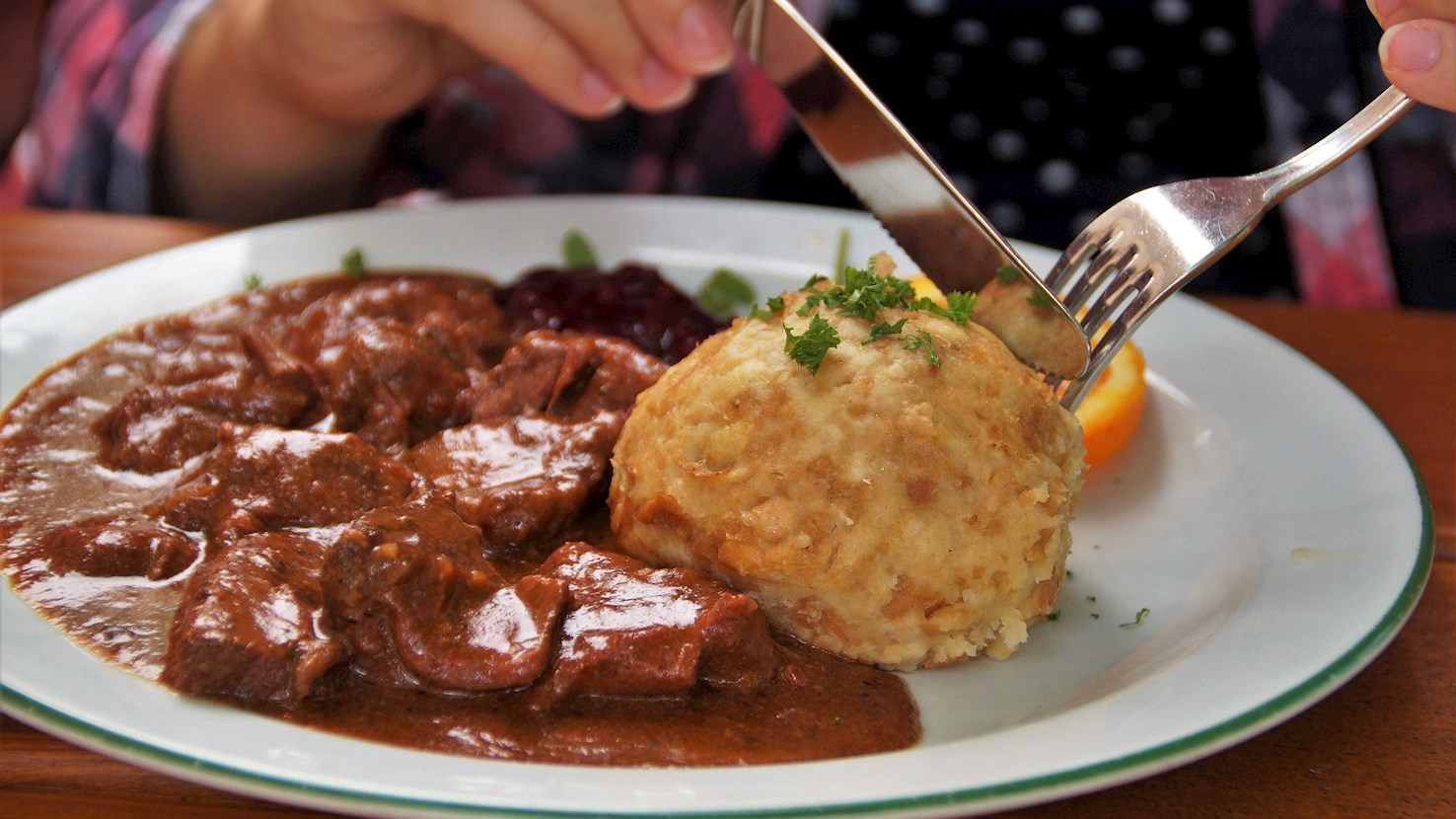
Hirschgulasch is a traditional type of goulash, a stew of meat, vegetables, and spices made specifically with venison, or deer meat, instead of the beef or pork that might be used in other types of goulash. The name of the dish translates to venison goulash. The venison is typically cut into small, bite-sized pieces and then slow-cooked with various ingredients like onions, garlic, tomatoes, and a variety of spices. Other ingredients can also be included, such as red wine, bay leaves, juniper berries, and herbs, all of which enhance the flavor of the dish. The result is a rich, hearty stew with a robust flavor.
Hirschpfeffer is a venison stew from the alpine regions of Switzerland and southern Germany, known for its deep, savory flavor built from slow-cooked game meat, red wine, and spices. The name combines “Hirsch,” meaning deer, and “Pfeffer,” which refers not only to pepper but to a style of stew cooked with a thick, spiced sauce. It reflects the hunting and forest culture of Central Europe, where game has long played an important role in rural cooking, particularly during the colder months. The dish emerged from the need to preserve and tenderize tougher cuts of wild meat, transforming them into a rich and balanced meal that could sustain through winter. Its roots lie in the countryside kitchens of alpine hunters, where venison, once cleaned and dressed, was marinated in wine and vinegar with herbs to soften its texture and tame its gamey taste. The marinade, containing juniper, cloves, bay leaves, and pepper, also provided a base for the sauce, tying together acidity and spice. Over time, the dish moved from hunting lodges to domestic tables and restaurants, especially in regions where hunting seasons remained part of local life. Though each area developed its own version (some darker and more robust, others lighter with cream or root vegetables) the essence stayed the same: venison simmered slowly in a wine-based gravy until tender enough to fall apart. Preparation begins with marinating cubes of venison for a day or more in red wine, vinegar, and aromatics. The meat is then browned in butter or oil, and the marinade is strained and added back to the pot along with onions, carrots, and a small amount of flour to thicken the sauce. The mixture is simmered gently for several hours, allowing the flavors to deepen and the meat to soften. Toward the end, a touch of currant jelly or grated apple is sometimes stirred in to round out the acidity. The sauce becomes dark, glossy, and dense, coating the venison in a balanced blend of sweet, sour, and savory tones. The dish is eaten throughout the alpine regions, particularly in autumn and winter when game is fresh. It is served hot, often with sides that complement its richness, like spätzle, mashed potatoes, bread dumplings, or red cabbage are the most common. In Switzerland, lingonberry compote frequently accompanies it, adding a light fruit note that offsets the dark sauce. A glass of full-bodied red wine, often from local vineyards, completes the meal.
Rebhuhn mit linsen is a traditional dish consisting of partridges and lentils. The dish is usually made with a combination of partridges, lentils, lemon juice, bacon, onions, carrots, celery, tomato purée, red wine, meat stock, salt, and pepper. The partridges are rubbed with salt, pepper, and lemon juice. Two bacon strips are tied across the breast of each bird. The remaining bacon is diced and fried in a pan with onions, carrots, and celery. Once the vegetables become tender, tomato purée and red wine are stirred into the mixture. The partridges are placed in the casserole so that they are coated with the sauce, and then roasted in the oven until almost done. The birds are basted with the pan juices and meat stock. They're cut in half and the cooked lentils are placed in the casserole with the bird halves on top. The partridges and lentils are served with the sauce poured over them, consisting of pan juices, leftover water from cooking lentils, salt, and pepper.
Wildschwein in burgunder is a traditional dish consisting of wild boar cooked in burgundy wine. The dish is usually made with a combination of wild boar rump, onions, carrots, celery, thyme, lemon zest, peppercorns, juniper berries, wine vinegar, cloves, red burgundy wine, cornstarch, and salt. The rump of wild boar is marinated in a combination of carrots, onions, celery, thyme, lemon zest, peppercorns, juniper berries, water, and vinegar. After three or four days, the meat is studded with cloves and seasoned with salt. The marinade is mixed with wine, brought to a boil, and the boar is simmered in the mixture for up to three hours or until tender. Once finished, the meat is roasted in the oven until it's well-browned on all sides. The sauce is thickened with cornstarch and it's then poured over the meat before serving.
TasteAtlas food rankings are based on the ratings of the TasteAtlas audience, with a series of mechanisms that recognize real users and that ignore bot,
nationalist or local patriotic ratings, and give additional value to the ratings of users that the system recognizes as knowledgeable.
TasteAtlas Rankings should not be seen as the final global conclusion about food. Their purpose is to promote excellent local foods,
instill pride in traditional dishes, and arouse curiosity about dishes you haven’t tried.





What People Say