





shutterstock

Top 7 Central European Goose Dishes

Last updated on May 16, 2026
01

Gänsebraten

4.1 ·

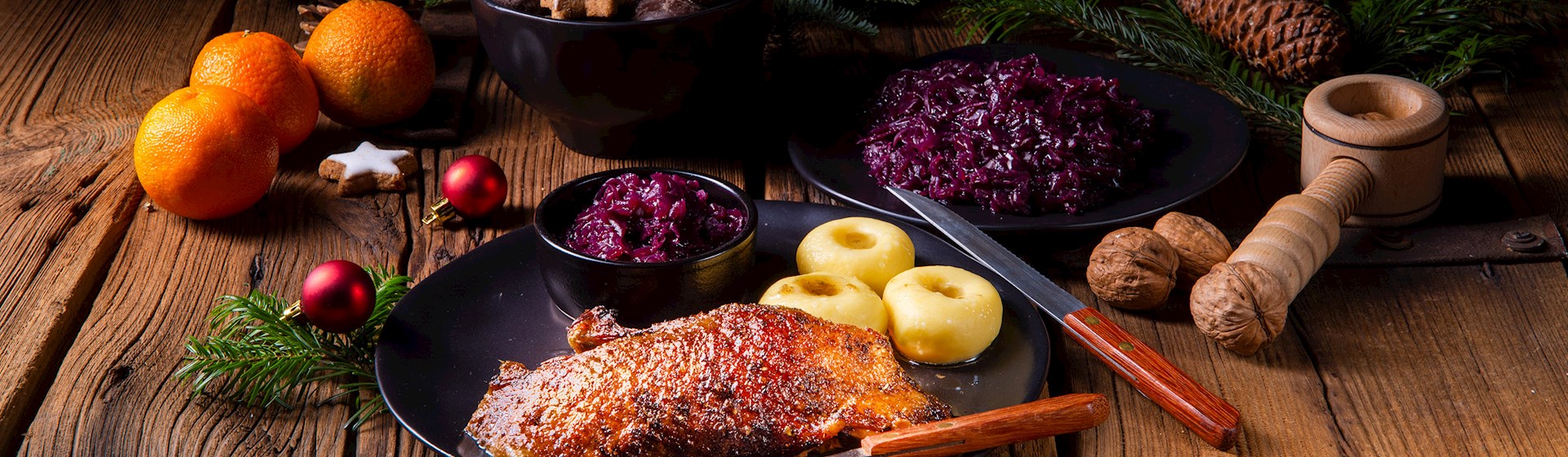
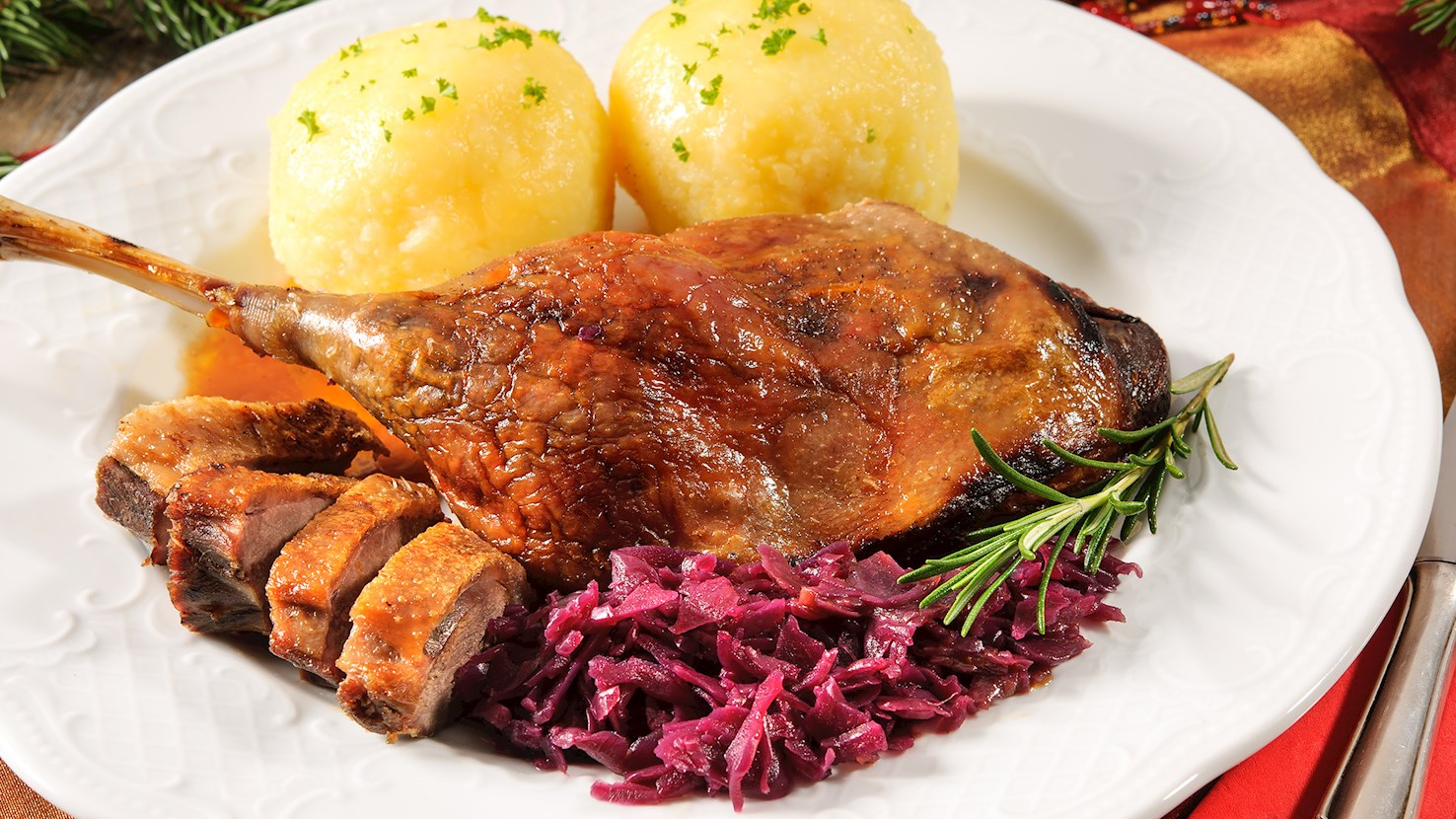
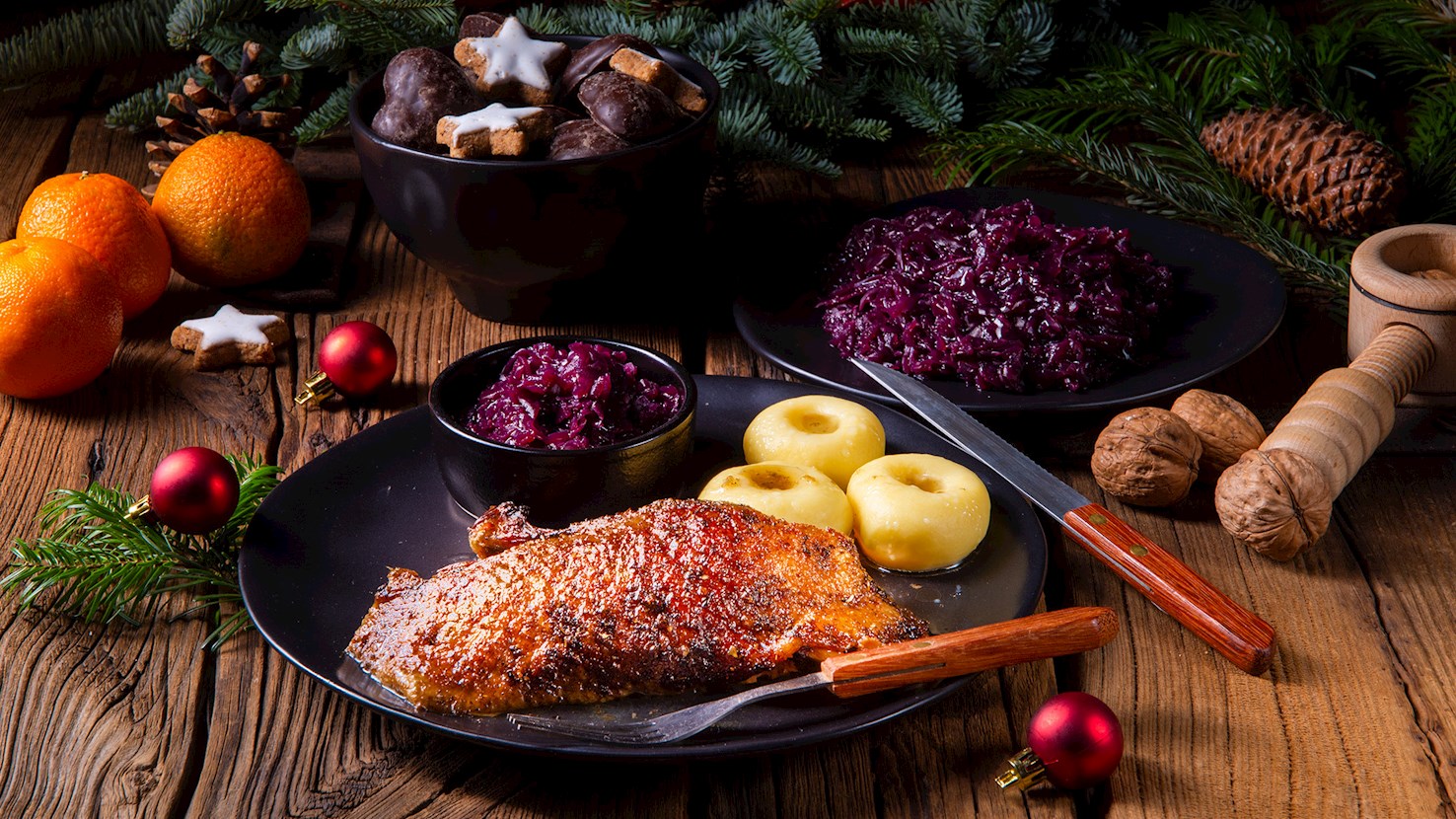
Gänsebraten is a traditional roast specialty consisting of a whole goose that has been brined, stuffed, and roasted to perfection. The goose is typically seasoned with various aromatic herbs and spices such as marjoram, thyme, nutmeg, lovage, cloves, or bay leaves, while the stuffing may include ingredients such as apples, onions, chestnuts, almonds, or bread. Slices of succulent roast goose are the best when paired with sides such as braised red cabbage (Rotkohl), gravy, apple puree, potato dumplings (Kartoffelklöße) or bread dumplings (Semmelknödel), potato salad (Kartoffelsalat), roasted chestnuts, sauerkraut, and spätzle. In Germany, roast goose is traditionally prepared for festive occasions, especially for St. Martin’s Day and Christmas Eve. The roast goose specialty that is usually enjoyed on Christmas Eve has its own name - weihnachtgans or Christmas goose - and it is typically accompanied by potato dumplings and braised red cabbage with apples.

02

Weihnachtsgans

4.1 ·

Weihnachtsgans is a traditional German roasted goose that's prepared for Christmas. The goose is typically filled with onions, prunes, chestnuts, apples, and/or dates. It is also often stuffed with a dough or meat filling. It's seasoned with salt, pepper, thyme, and marjoram in most cases. Once prepared, the goose is served with simple staples such as dumplings, spätzle, red cabbage, and gravy. It's believed that the practice of this dish stems from an old Catholic custom – on St.Martins Day (November 11th), a Martins-goose is prepared, and when the fasting period ends, on Christmas Eve, another goose was prepared to celebrate, called Weihnachtsgans.

03

Martinigans

3.7 ·

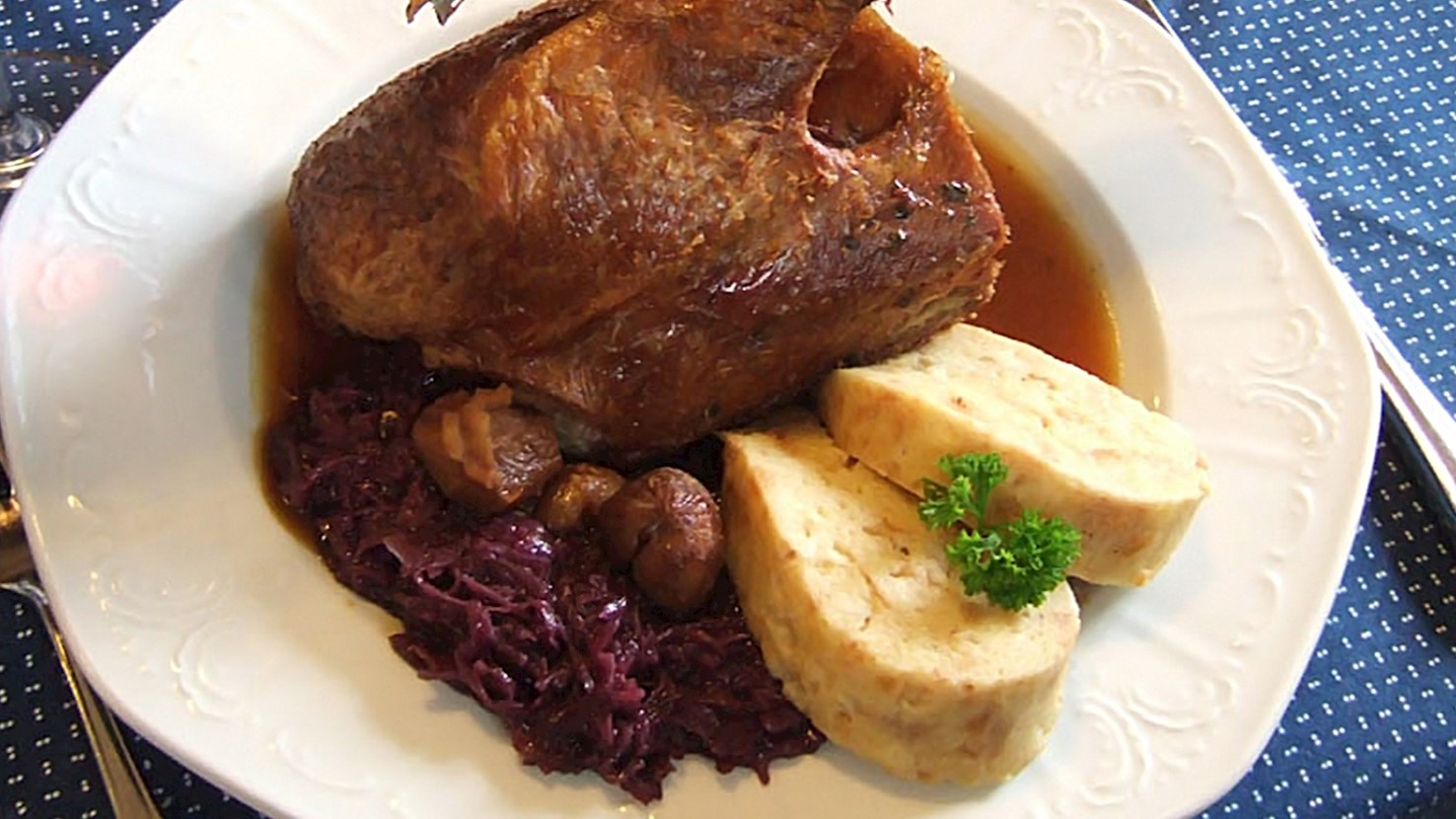
On St. Martin’s Day, November 11, stuffed goose is prepared as a traditional dish throughout Austria. The dish has many variations, but the goose is typically stuffed with chestnuts and dried plums, then roasted. When served, it is traditionally accompanied by red cabbage, potatoes, or knödel dumplings. Martinigans is sometimes drizzled over with a gravy made with a combination of stock (made from giblets) and pan drippings.

04

Gefüllter Gänsehals

n/a ·

Gefüllter gänsehals is a traditional dish consisting of stuffed goose neck. The dish is made with a combination of goose neck, goose liver, bacon, bread rolls soaked in milk, parsley, lemon zest, goose fat, onion, chicken stock, salt, and pepper. The neck is rinsed and one end is sewn closed. The bacon is heated in a pan and fried with diced goose liver and bread roll pieces.. The mixture is sprinkled with parsley, grated zest, salt, and pepper, and it's then ground. The neck skin is filled with the mixture and sewn closed on the other end as well before it's sautéed in goose fat and minced onions. Once the neck turns golden, chicken stock is added to the pan and the dish is simmered over low heat for about an hour. Once done, the stuffed goose neck is served sliced just like a wurst. The dish is served hot or cold.

05

Guska na turopoljski način (Turopolje-style goose)

n/a ·

Guska na turopoljski is a traditional dish originating from the Turopolje area. This festive dish is usually made with a combination of a whole goose, salt, and oil or pork fat. The goose is washed, seasoned with salt, and placed in a deep and wide baking pan. Heated pork fat or oil is poured over the goose, and the bird is then roasted in the oven while being occasionally basted with the pan juices. While the goose is in the oven, a side dish consisting of goose gizzard and liver, oil, onions, garlic, salt, cloves, paprika, black pepper, and polenta flour. The polenta is cooked and mixed with the rest of the ingredients that have been sautéed in oil. Once done, the goose is placed on the polenta and the combination is baked for a few more minutes before the dish is ready to be enjoyed. Guska na turopoljski način is typically made during the festive Christmas season.

06

Guščji paprikaš

n/a ·

Guščji paprikaš is a traditional stew originating from Slavonija and Baranja region, and it is especially popular in the city of Županja. The stew is made with goose meat, onions, fat, water, carrots, parsley, celery, and paprika powder. Near the end of cooking, small noodles made with eggs, flour, and salt are added to the pot and cooked until they float up to the surface. The dish is quite old, originating from the times when the field workers went out to harvest. For breakfast, they would eat various cold cuts and drink šljivovica, while guščji paprikaš was reserved for lunch, prepared in large amounts over an open flame.

07

Martinjska guska s marunima

n/a ·

Martinjska guska s marunima is a specialty of the Croatian region of Zagorje, utilizing goose and chestnuts as its main ingredients. The goose is traditionally stuffed with a combination of roasted chestnuts, bacon, onions, moistened bread, eggs, salt, and pepper. It is then baked in an oven for about 3 hours. The dish is typically served with side dishes such as potato dumplings and a salad made with red cabbage and apples. It is especially popular during the feast of St Martin, called Martinje (related to the christening of wine must), celebrated every year on November 11, so the dish is always accompanied by a few glasses of wine.

Read more
View all
View map
About this ranking

TasteAtlas food rankings are based on the ratings of the TasteAtlas audience, with a series of mechanisms that recognize real users and that ignore bot, nationalist or local patriotic ratings, and give additional value to the ratings of users that the system recognizes as knowledgeable. For the “Top 7 Central European Goose Dishes” list until May 16, 2026, 188 ratings were recorded, of which 156 were recognized by the system as legitimate. TasteAtlas Rankings should not be seen as the final global conclusion about food. Their purpose is to promote excellent local foods, instill pride in traditional dishes, and arouse curiosity about dishes you haven’t tried.

Similar lists