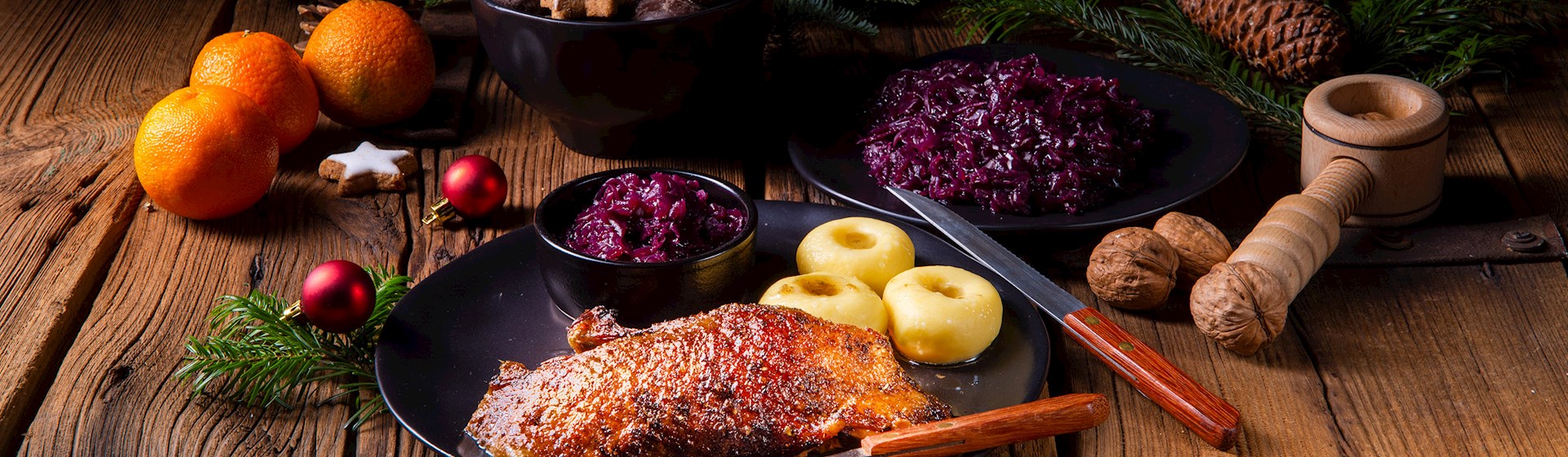
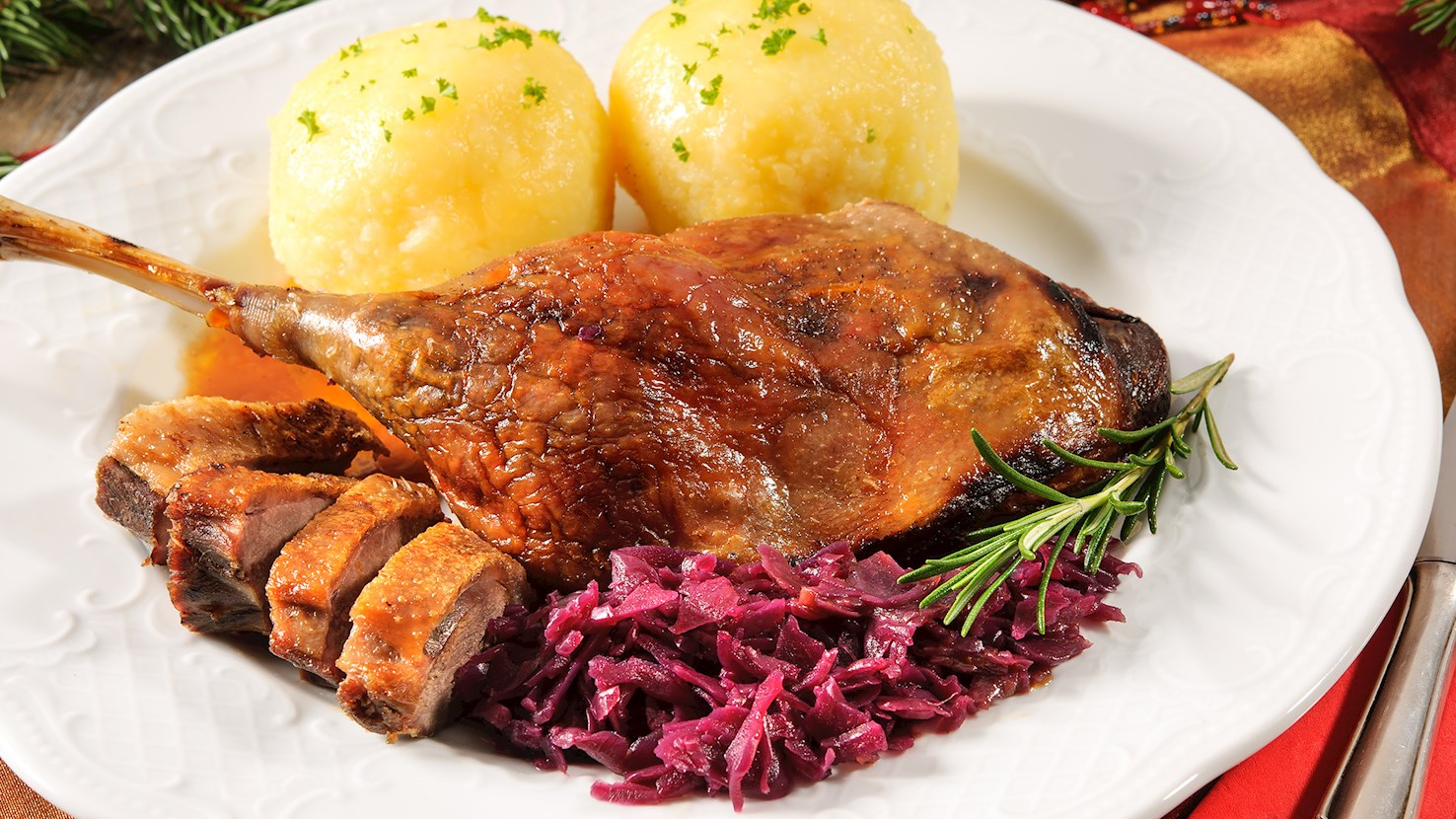
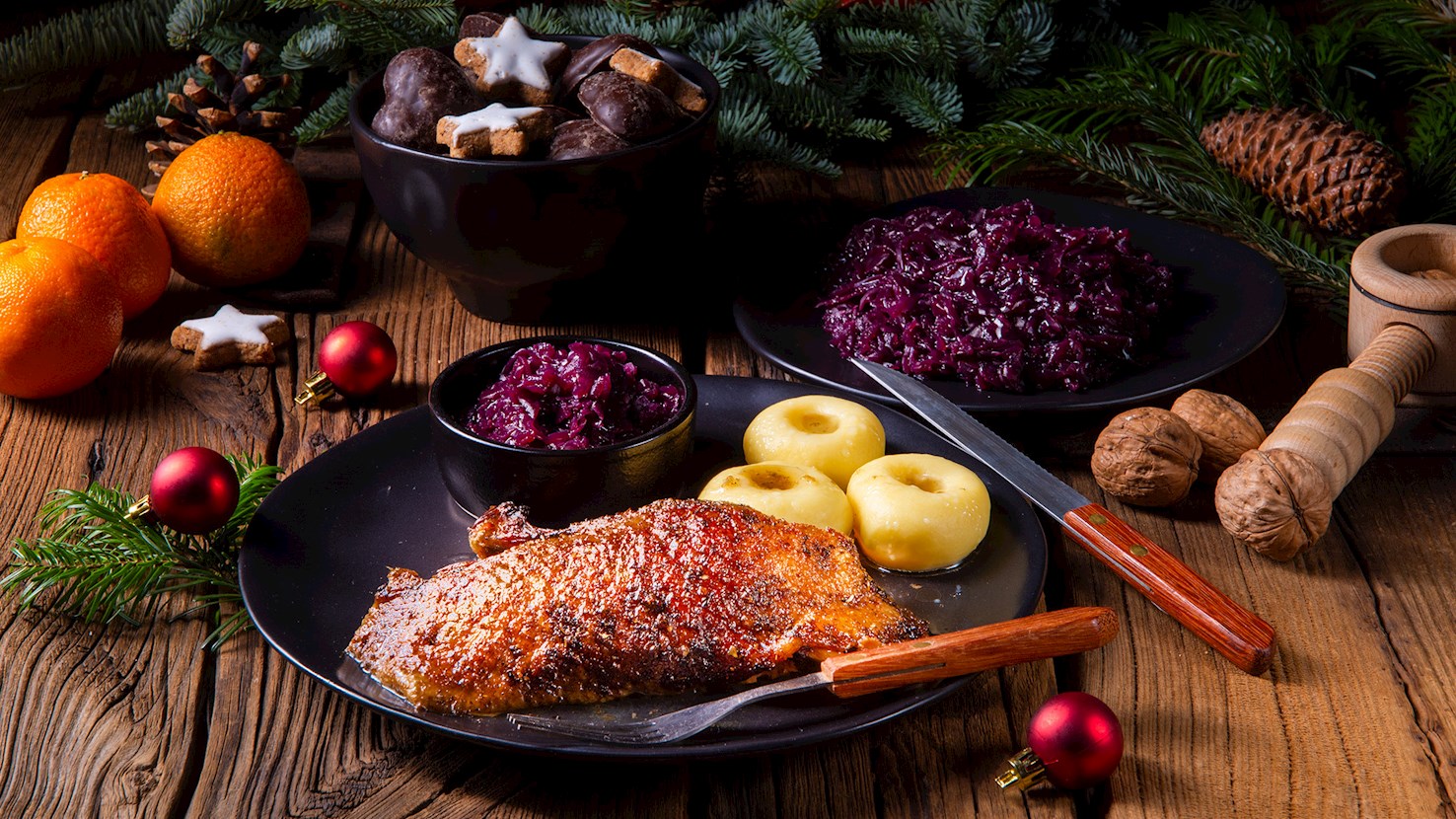
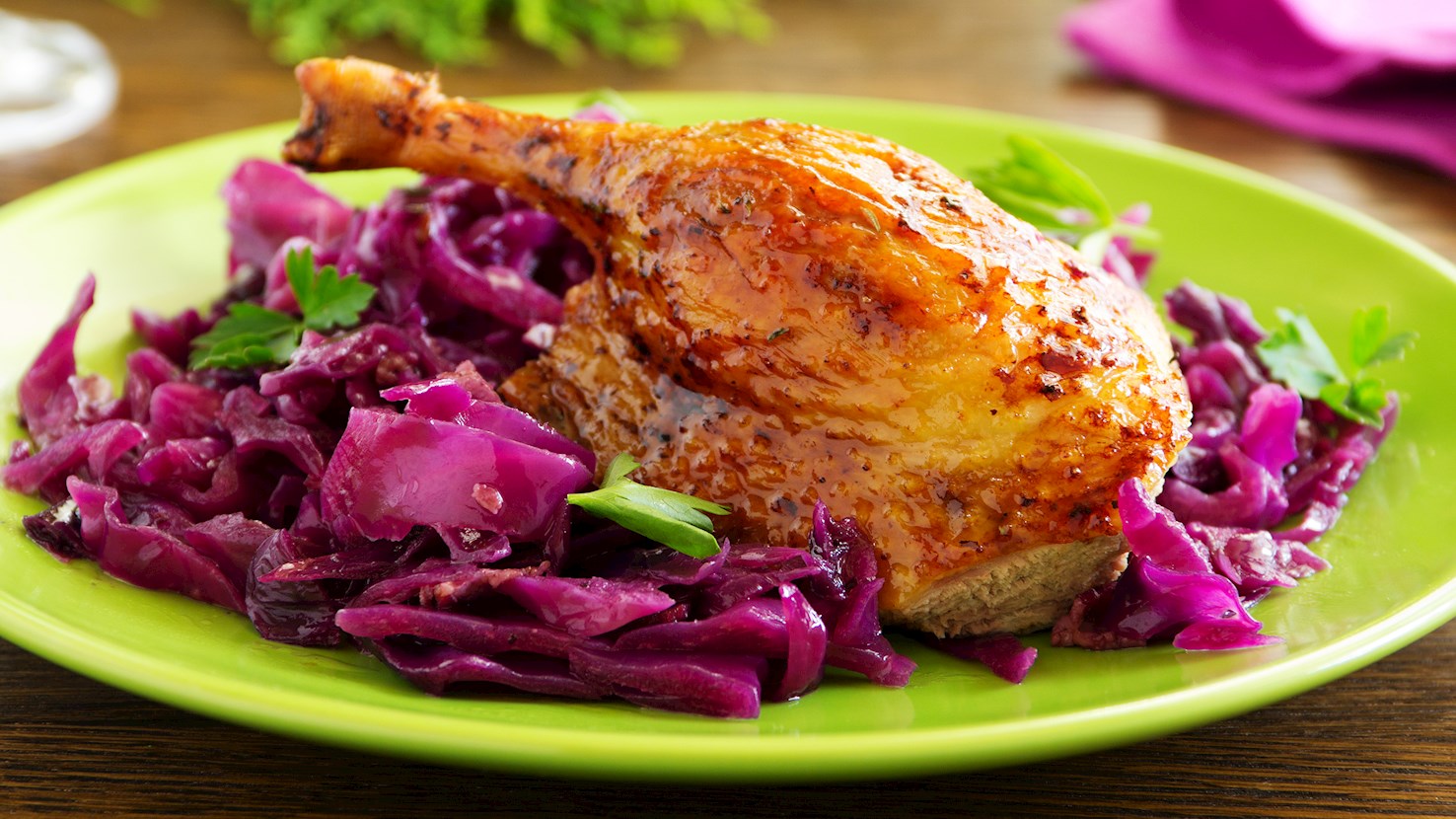
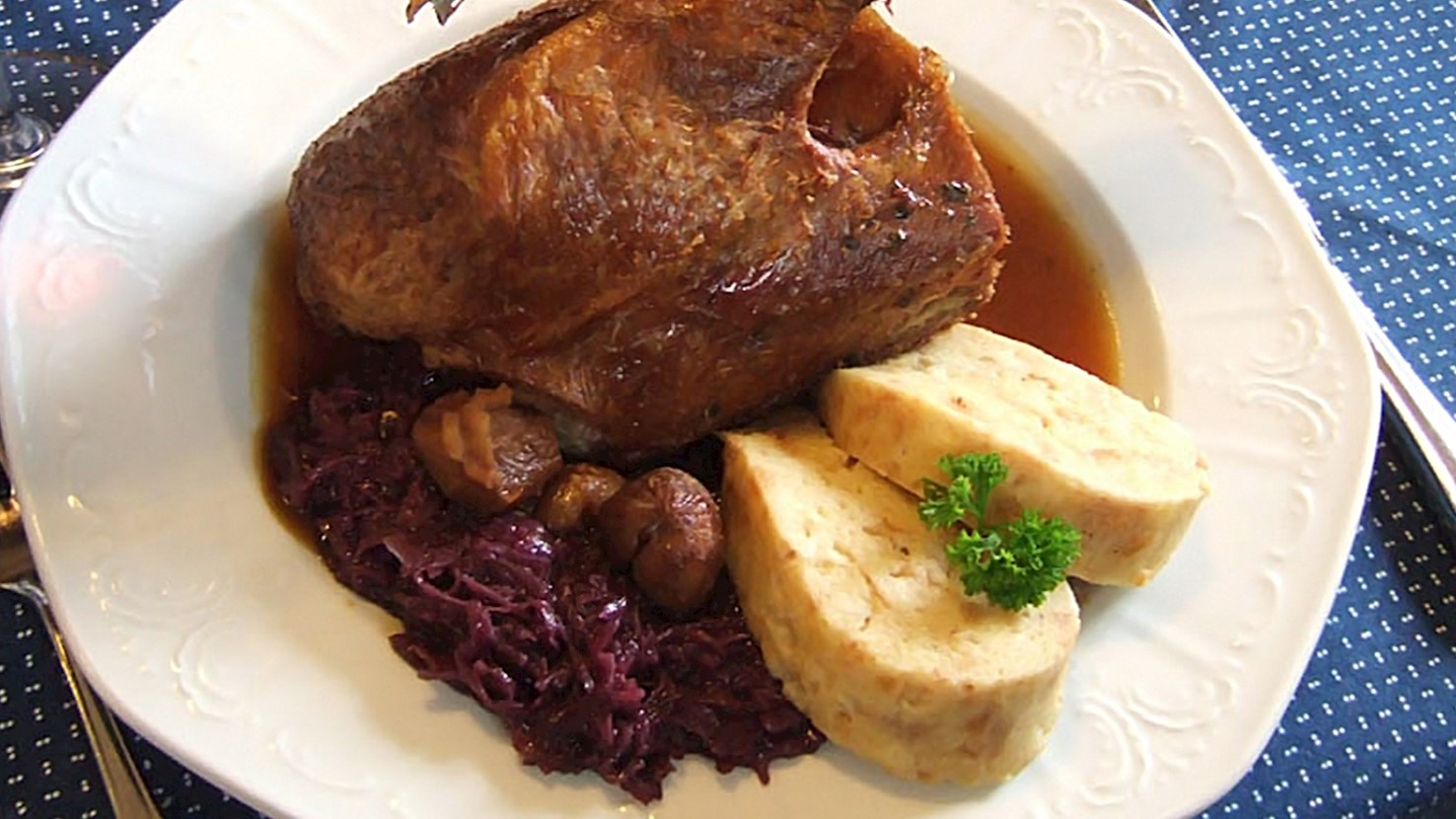
Gänsebraten is a traditional roast specialty consisting of a whole goose that has been brined, stuffed, and roasted to perfection. The goose is typically seasoned with various aromatic herbs and spices such as marjoram, thyme, nutmeg, lovage, cloves, or bay leaves, while the stuffing may include ingredients such as apples, onions, chestnuts, almonds, or bread. Slices of succulent roast goose are the best when paired with sides such as braised red cabbage (Rotkohl), gravy, apple puree, potato dumplings (Kartoffelklöße) or bread dumplings (Semmelknödel), potato salad (Kartoffelsalat), roasted chestnuts, sauerkraut, and spätzle. In Germany, roast goose is traditionally prepared for festive occasions, especially for St. Martin’s Day and Christmas Eve. The roast goose specialty that is usually enjoyed on Christmas Eve has its own name - weihnachtgans or Christmasgoose - and it is typically accompanied by potato dumplings and braised red cabbage with apples.
Weihnachtsgans is a traditional German roasted goose that's prepared for Christmas. The goose is typically filled with onions, prunes, chestnuts, apples, and/or dates. It is also often stuffed with a dough or meat filling. It's seasoned with salt, pepper, thyme, and marjoram in most cases. Once prepared, the goose is served with simple staples such as dumplings, spätzle, red cabbage, and gravy. It's believed that the practice of this dish stems from an old Catholic custom – on St.Martins Day (November 11th), a Martins-goose is prepared, and when the fasting period ends, on Christmas Eve, another goose was prepared to celebrate, called Weihnachtsgans.
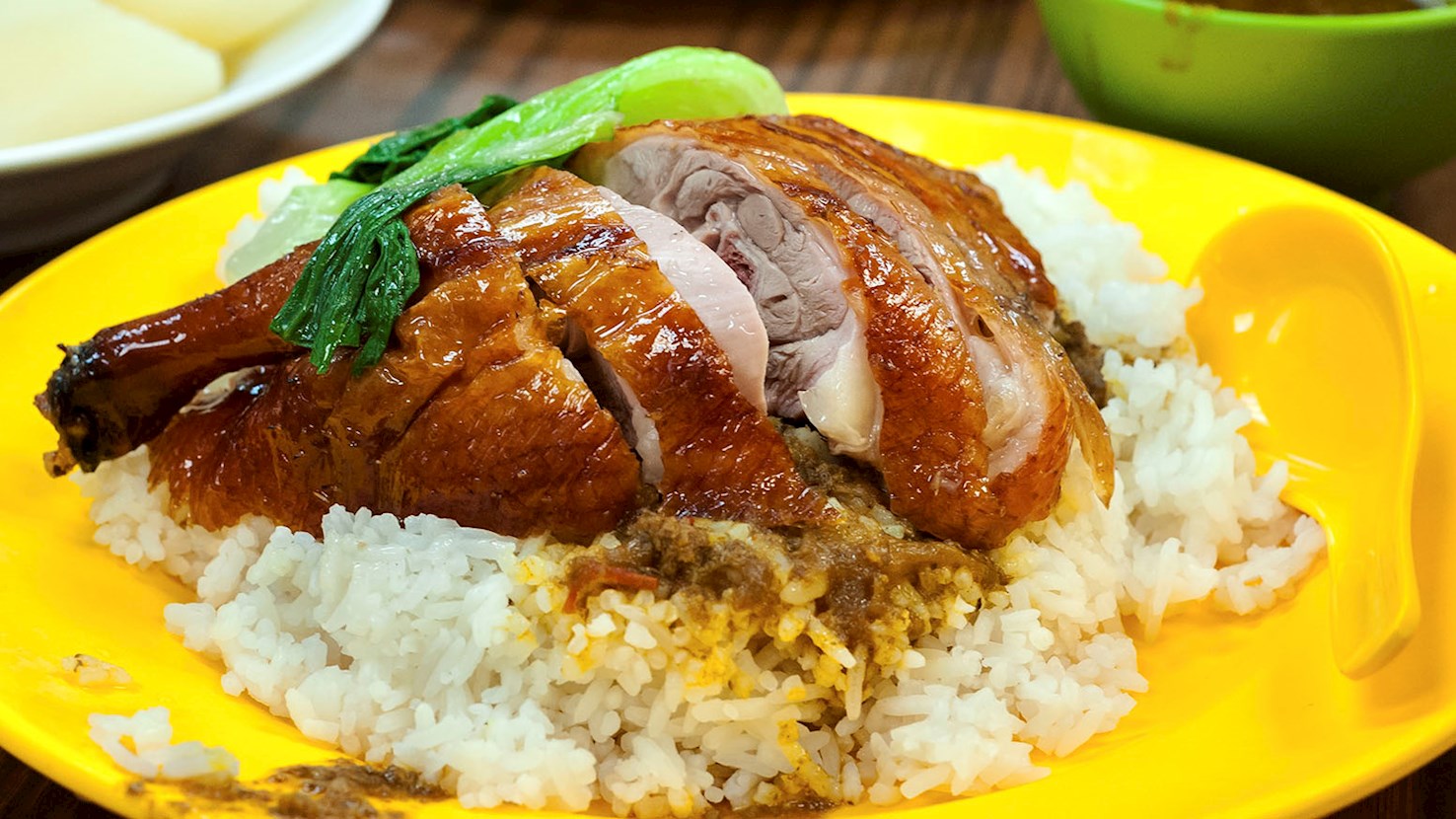
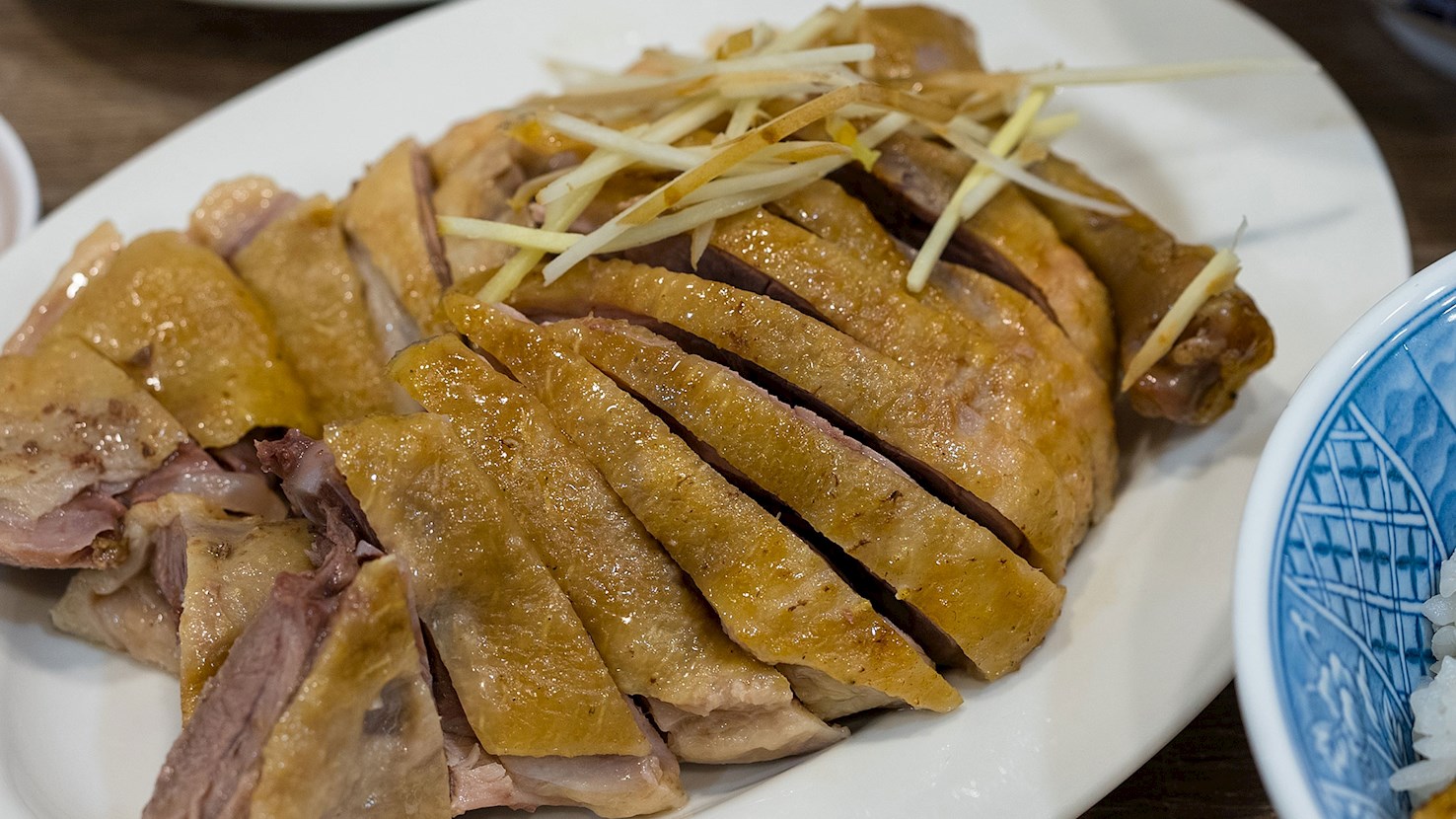
Roast goose is a Cantonese specialty and Hong Kong's national treasure, a dish consisting of plump, succulent, and tender meat with a delicately crispy skin, traditionally served over white rice with sweet plum sauce on the side. The goose is typically roasted in a charcoal furnace at very high temperatures so that the fatty skin becomes crispy. As the fat melts during the roasting, the meat takes it all in, resulting in an extremely succulent and juicy dish once it's done. Roast goose is sliced and served with the flavorful drippings poured on top of it. Other accompaniments to the dish might include pancakes, thinly cut green onions, Chinese broccoli, cucumbers, or sweet bean sauce.
Stegt gås is Danish roast goose, usually filled with tart apples and prunes and roasted until the meat is tender and the skin is deeply browned and crisp. The rich bird is closely associated with Mortensaften, celebrated on November 10, and with the Danish Christmas table. A whole goose commonly weighs around four to six kilograms, although both smaller and larger birds are used. Goose contains considerably more fat beneath the skin than chicken or turkey, and much of this fat renders out during roasting. This leaves the meat rich and succulent while allowing the skin to become crisp. The bird is dried well and seasoned generously with salt both inside and out. The cavity is then filled with peeled apple pieces and pitted prunes. Tart apples work particularly well because their acidity balances the rich meat, while the prunes absorb some of the juices and fat released inside the bird and develop a soft, intensely sweet flavor. The cavity can be closed with poultry skewers, kitchen string, or a needle and thread. Closing it helps keep the fruit inside while still allowing the hot air and steam to circulate through the cavity. The goose is placed on a rack or directly in a roasting pan and cooked slowly at a moderate temperature. Water is often added to the pan beneath it, where it combines with the roasting juices and helps prevent the drippings from burning. As the goose roasts, a substantial amount of clear fat collects in the pan. This is periodically spooned or poured away so that the bird roasts rather than sits in its own fat. The rendered gåsefedt, or goose fat, can be strained and saved for frying potatoes, cooking cabbage, or spreading on bread. The roasting time depends on the size of the bird and the oven temperature, but a large goose generally needs several hours. The meat is ready when the legs move easily at the joints and the thickest parts have cooked through while remaining juicy. The skin can be made particularly crisp by keeping it dry and allowing enough of the underlying fat to render during roasting. Some methods increase the oven temperature near the end to deepen the color and crisp the surface, although a long roast can also produce crisp skin without an extreme final burst of heat. Once roasted, the goose rests before carving. This allows the juices to settle and makes the large bird easier to divide into breasts, legs, wings, and smaller serving pieces. The apple-and-prune filling is served with the meat rather than discarded. By the end of roasting, the apples have softened considerably, and the prunes are saturated with the savory juices from the goose, giving the plate an important sweet-and-sour element. A dark brun sovs is made from the roasting juices. The fat is separated from the concentrated meat juices, which are combined with stock or water and thickened with flour or a roux. Cream may be added for a rounder flavor. Danish kulør, a dark caramel coloring, is sometimes used to deepen the gravy's brown color, but it is not essential. One of the most recognizable accompaniments is brunede kartofler. Small boiled and peeled potatoes are coated in caramel made by melting sugar in a pan and adding butter. The potatoes are turned gently in the caramel until they develop a glossy brown coating. They are sweet rather than simply fried in butter and sugar. Plain boiled potatoes, or hvide kartofler, can also be served alongside the browned potatoes. The dark goose gravy is spooned generously over them and the sliced meat. Rødkål, warm braised red cabbage, provides the main acidic contrast. Finely shredded red cabbage is slowly cooked with vinegar and sugar until tender and sweet-sour. Apple, redcurrant jelly, spices, or fruit juice may also be used, depending on the recipe. The acidity is particularly useful alongside the fatty goose and sweet caramelized potatoes. Other accompaniments can include cooked apples filled with redcurrant jelly, additional prunes, or other sweet-and-sour preserves. The overall meal deliberately combines rich meat and gravy with sweet fruit, caramelized potatoes, and acidic cabbage. The most important seasonal association is Mortensaften on November 10, the evening before St. Martin’s Day. The date also coincided with the period when farm-raised geese had reached a suitable size for slaughter after grazing through the warmer months. Goose therefore already made practical sense as an autumn feast food. The meal became connected with the legend of Martin of Tours, a fourth-century bishop. According to the story, Martin did not want to become bishop and hid among a flock of geese. Their loud honking revealed him, and the legend later explained the annual eating of geese as punishment for betraying his hiding place. The story was first printed in Danish in 1616, although European celebrations of St. Martin with abundant food and new wine are much older, and written evidence connecting the feast specifically with goose appears by the sixteenth century. The custom also fitted the agricultural calendar. November marked the end of the natural rearing season for geese, making St. Martin’s Day a convenient time to slaughter birds that had spent the summer and autumn feeding and gaining weight. Goose was an expensive feast food and was therefore more accessible to larger and wealthier households than to every family. As Danish households became smaller and more urbanized, duck increasingly replaced goose for Mortensaften because a goose was often simply too large. Today, roast duck is far more common on November 10, although the goose remains the bird historically associated with the occasion. Goose also became part of the Danish Christmas meal. From around the middle of the nineteenth century, roast goose, duck, or pork increasingly replaced older Christmas foods such as dried cod. These roasts were served with the combination that still defines much of the Danish Christmas table: apples and prunes, gravy, potatoes, and red cabbage. Goose was therefore an important Christmas centerpiece, but it existed alongside duck and pork rather than universally replacing them. Chestnut stuffing belongs more strongly to other European roast-goose customs and is not one of the defining Danish fillings. Brining and seasonings such as mugwort can also be used, but neither is central to the Danish form. Apples and prunes remain the characteristic filling.
On St. Martin’s Day, November 11, stuffed goose is prepared as a traditional dish throughout Austria. The dish has many variations, but the goose is typically stuffed with chestnuts and dried plums, then roasted. When served, it is traditionally accompanied by red cabbage, potatoes, or knödel dumplings. Martinigans is sometimes drizzled over with a gravy made with a combination of stock (made from giblets) and pan drippings.
Gefüllter gänsehals is a traditional dish consisting of stuffed goose neck. The dish is made with a combination of goose neck, goose liver, bacon, bread rolls soaked in milk, parsley, lemon zest, goose fat, onion, chicken stock, salt, and pepper. The neck is rinsed and one end is sewn closed. The bacon is heated in a pan and fried with diced goose liver and bread roll pieces.. The mixture is sprinkled with parsley, grated zest, salt, and pepper, and it's then ground. The neck skin is filled with the mixture and sewn closed on the other end as well before it's sautéed in goose fat and minced onions. Once the neck turns golden, chicken stock is added to the pan and the dish is simmered over low heat for about an hour. Once done, the stuffed goose neck is served sliced just like a wurst. The dish is served hot or cold.
Roast goose with sage and onion stuffing is an ancient English dish that can be traced back to the time of Queen Elizabeth I. The dish consists of a goose that is usually stuffed with a combination of butter, onions, celery, grated bread, eggs, diced apples, sage, salt, and pepper. The goose is lightly stuffed, trussed, and placed in a shallow roasting pan. After the goose has been slowly roasted, the roast goose is typically served with apple sauce or giblet gravy. During the roasting process, the skin is often pricked to let the fat run out, and the fat is occasionally skimmed. Some believe that the American Thanksgiving turkey evolved from this dish.
Kaz tiridi is a hot, layered poultry dish consisting of boiled and shredded winter-fattened goose meat served over pan-fried flatbread or bulgur wheat that has been heavily saturated with hot goose broth, originating from the Central and Black Sea regions of Türkiye, with the most specific geographical documentation centered within the Samsun province, particularly the districts of Havza, Ladik, and Kavak. The development of this dish correlates directly with the historical adaptation of rural agricultural communities to the severe winter climate of the Central Pontic mountains, where smallholder farmers began breeding domestic geese (Anser anser domesticus) as a primary source of high-calorie fat and storable protein, with archival Ottoman tax registers from the nineteenth century recording specific winter poultry fattening cycles that concluded after the first seasonal frost when the sub-zero temperatures naturally enhanced the lipid density of the bird’s tissue, providing the necessary rendered fat to soften dry, stored flatbread structures. The preparation of kaz tiridi requires a whole cleaned goose that has undergone a specialized late-autumn diet of grains to maximize subcutaneous fat. The bird is hung by its feet in a cool space for several days to tenderize the muscle fibers, then salted thoroughly and suspended vertically inside a deep, specialized cylindrical brick oven or boiled in a large tandoor-style copper cauldron containing a small amount of water. As the goose cooks slowly over several hours, the dense fat renders completely, collecting at the bottom of the vessel while the meat achieves a tender, pull-apart consistency. Concurrently, thin unleavened flatbreads known as yufka are prepared, cut into ribbon-like strips, rolled tightly, and pan-fried or baked until crisp. To assemble the dish, these dry bread pieces are arranged in a dense layer on a large communal serving platter, thoroughly drenched with the boiling goose broth to induce rapid starch expansion, coated with the warm, clear rendered goose fat, and then covered completely with a top layer of the shredded hot goose meat, often accompanied by a side layer of coarse bulgur pilaf that has been simmered directly in the remaining broth. Kaz tiridi is consumed as a significant cold-weather meal primarily during the months of December through March within village homes, specialized regional restaurants, and family gatherings across Samsun and parts of Çorum, Amasya, and Sinop, served at a high temperature on single large metal trays meant for shared dining. For food and beverage pairings, the exceptional fat content and rich, unctuous profile of the broth-soaked grain and goose meat require highly acidic, refreshing accompaniments to cleanse the palate and facilitate digestion, meaning it is eaten alongside bowls of garlic-infused strained yogurt, pickled hot peppers, tart turnip juice (şalgam), or paired with large glasses of salted, well-chilled ayran.
Lǔshuǐ’é is a Chinese braised goose dish originating from the Chaoshan region of Guangdong province, known for its refined Teochew culinary heritage. It is prepared using a method centered on lǔshuǐ, a master stock infused with soy sauce, sugar, aromatics, and a range of spices, which is reused and enriched over time. The use of goose in Chaoshan cuisine dates back centuries, when waterfowl were a prized protein in southern China due to their abundance in wetland environments and their suitability for slow, flavorful cooking techniques. Over time, braised goose became a signature dish in the Teochew kitchen, appearing on banquet tables, in market stalls, and at family gatherings alike. Preparation begins with cleaning and blanching a whole goose, often from a specific breed valued for its tender, flavorful meat. It is then gently simmered in the seasoned stock, which might include star anise, cassia bark, ginger, garlic, and aged soy sauce, until the meat absorbs the deep, complex flavors while remaining supple and juicy. The slow cooking process also allows the skin to take on a glossy, caramel-colored sheen while retaining a delicate layer of fat beneath. Once cooked, the goose is cooled slightly and carved into thin slices, often arranged neatly and served at room temperature, which is a hallmark of Chaoshan-style presentation. The dish is usually eaten with a small dipping sauce of garlic, vinegar, and chili to balance the richness of the meat. It is often served alongside rice, pickled vegetables, or other lǔwei (braised) items such as tofu, eggs, or offal, and it frequently appears at festive banquets and family celebrations.
Guska na turopoljski is a traditional dish originating from the Turopolje area. This festive dish is usually made with a combination of a whole goose, salt, and oil or pork fat. The goose is washed, seasoned with salt, and placed in a deep and wide baking pan. Heated pork fat or oil is poured over the goose, and the bird is then roasted in the oven while being occasionally basted with the pan juices. While the goose is in the oven, a side dish consisting of goose gizzard and liver, oil, onions, garlic, salt, cloves, paprika, black pepper, and polenta flour. The polenta is cooked and mixed with the rest of the ingredients that have been sautéed in oil. Once done, the goose is placed on the polenta and the combination is baked for a few more minutes before the dish is ready to be enjoyed. Guska na turopoljski način is typically made during the festive Christmas season.
TasteAtlas food rankings are based on the ratings of the TasteAtlas audience, with a series of mechanisms that recognize real users and that ignore bot,
nationalist or local patriotic ratings, and give additional value to the ratings of users that the system recognizes as knowledgeable.
TasteAtlas Rankings should not be seen as the final global conclusion about food. Their purpose is to promote excellent local foods,
instill pride in traditional dishes, and arouse curiosity about dishes you haven’t tried.









What People Say