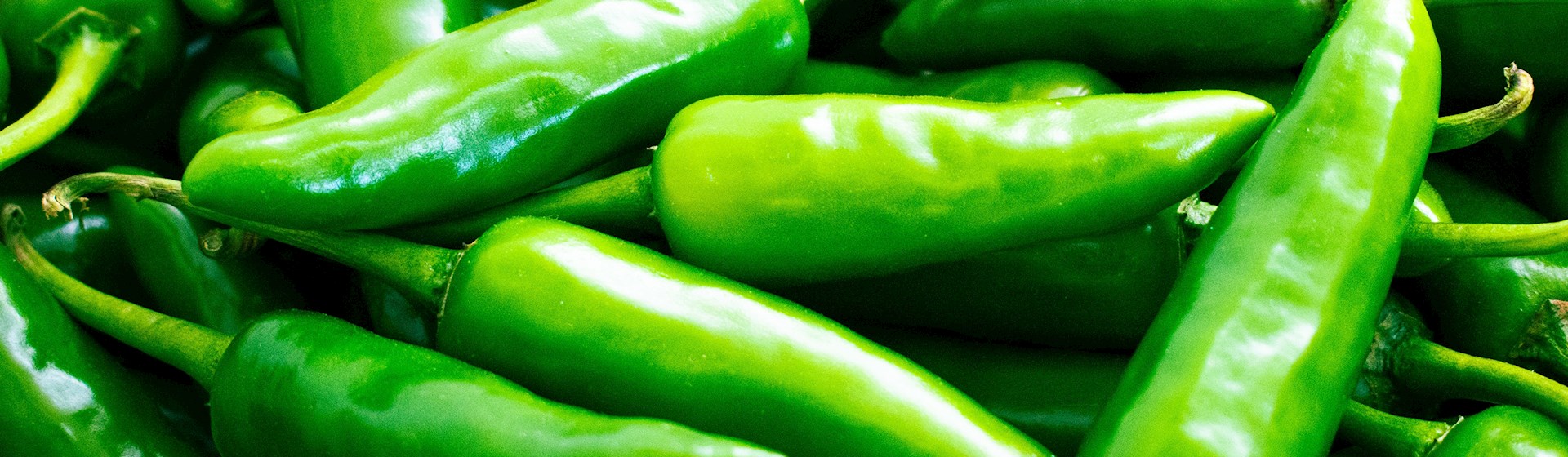
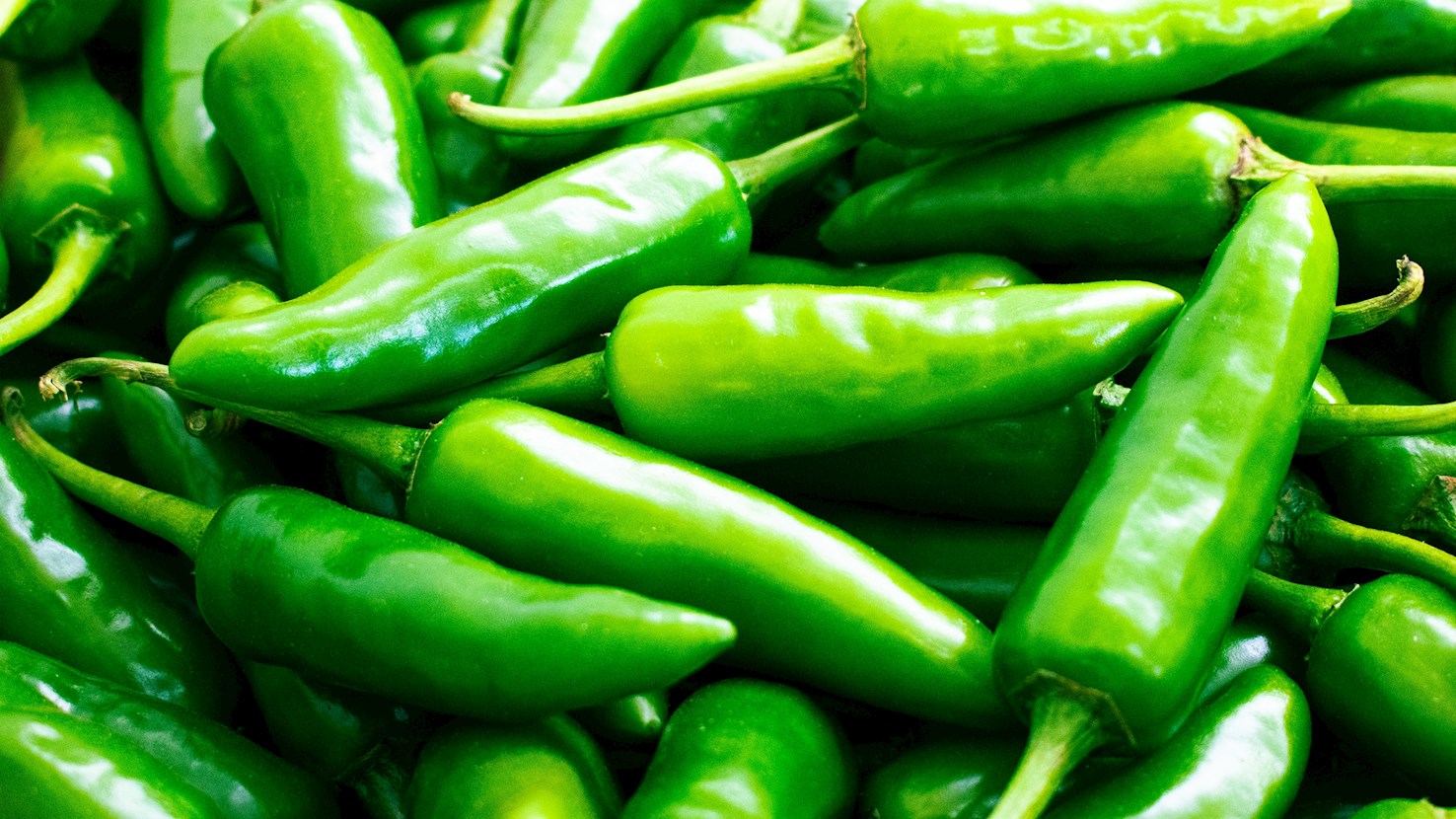
Hatch green chiles refer to various green chile peppers grown in the Hatch Valley, an area around the village of Hatch in the southern part of New Mexico, USA. These chiles are prized for their unique flavor, which is somewhat milder than many other chile varieties (typically ranges from 500-3,000 SHUs on the Scoville scale, though some cultivars can reach closer to 10,000 SHUs) but with a distinct and rich taste. While "Hatch" refers to the region where these chiles are grown, there are several varieties cultivated in this area, including Big Jim, Sandia, and Barker, among others. Hatch green chiles are known for their earthy, slightly sweet flavor with a hint of crispness. They're more about flavor than intense heat. These chiles are versatile and can be used in a range of dishes. They're often roasted to enhance their flavor and can be used in soups, stews, sauces, salsas, or even in hamburgers and pizzas. The importance of Hatch green chiles to New Mexico's culinary scene cannot be overstated. They're deeply woven into the state's culture and traditions. New Mexico even has an official state question, "Red or green?" which reveals not only a diner's preference but also whether he's a northerner or a southerner.
Anaheim is a mild green chili pepper that originated in New Mexico but gained its name after being cultivated and popularized in California, particularly in the city of Anaheim in the late nineteenth century. It belongs to the Capsicum annuum family and is closely related to New Mexican varieties, but over time it developed a distinct identity in local markets and kitchens of the American Southwest. Its spread beyond New Mexico came when Emilio Ortega introduced the seeds to California, where the pepper adapted well to the climate and soon became a common crop. Since then, it has been associated with both New Mexican and Californian cooking, bridging regional influences while remaining recognizable for its long, narrow shape and mild heat. Anaheim peppers are typically harvested when green, measuring about fifteen to twenty centimeters in length, and their heat ranges from about 500 to 2,500 Scoville units, making them considerably milder than jalapeños. They can also be left on the plant to ripen to red, at which stage they are often dried, producing a chile seco del norte with a slightly different flavor profile. In cooking, the fresh green form is favored for stuffing, roasting, or incorporating into sauces and sautés. When roasted, the skin loosens easily, and once peeled, the flesh becomes tender with a lightly sweet taste that balances its gentle spiciness. The pepper is versatile, appearing in dishes such as chile rellenos, where it is filled with cheese or meat before being battered and fried, or in stews and casseroles where it adds flavor without excessive heat. In New Mexico, similar varieties are roasted in bulk during harvest season and sold freshly charred, their aroma filling markets and streets. Anaheim peppers also dry well, and the red dried pods can be ground into powders or rehydrated for use in sauces. What sets Anaheim apart is its adaptability. Its mildness makes it suitable for people who prefer less heat, while still offering the characteristic flavor of New World chiles. It also represents a meeting point of regional identities, linked both to New Mexican agriculture and to Californian farming history. Today Anaheim peppers are eaten throughout the United States and Mexico, with a strong presence in Southwestern and Californian cuisine. They are sold fresh, canned, or dried, used in home kitchens as well as restaurants, and remain a staple in recipes that seek the balance of flavor and mild heat.
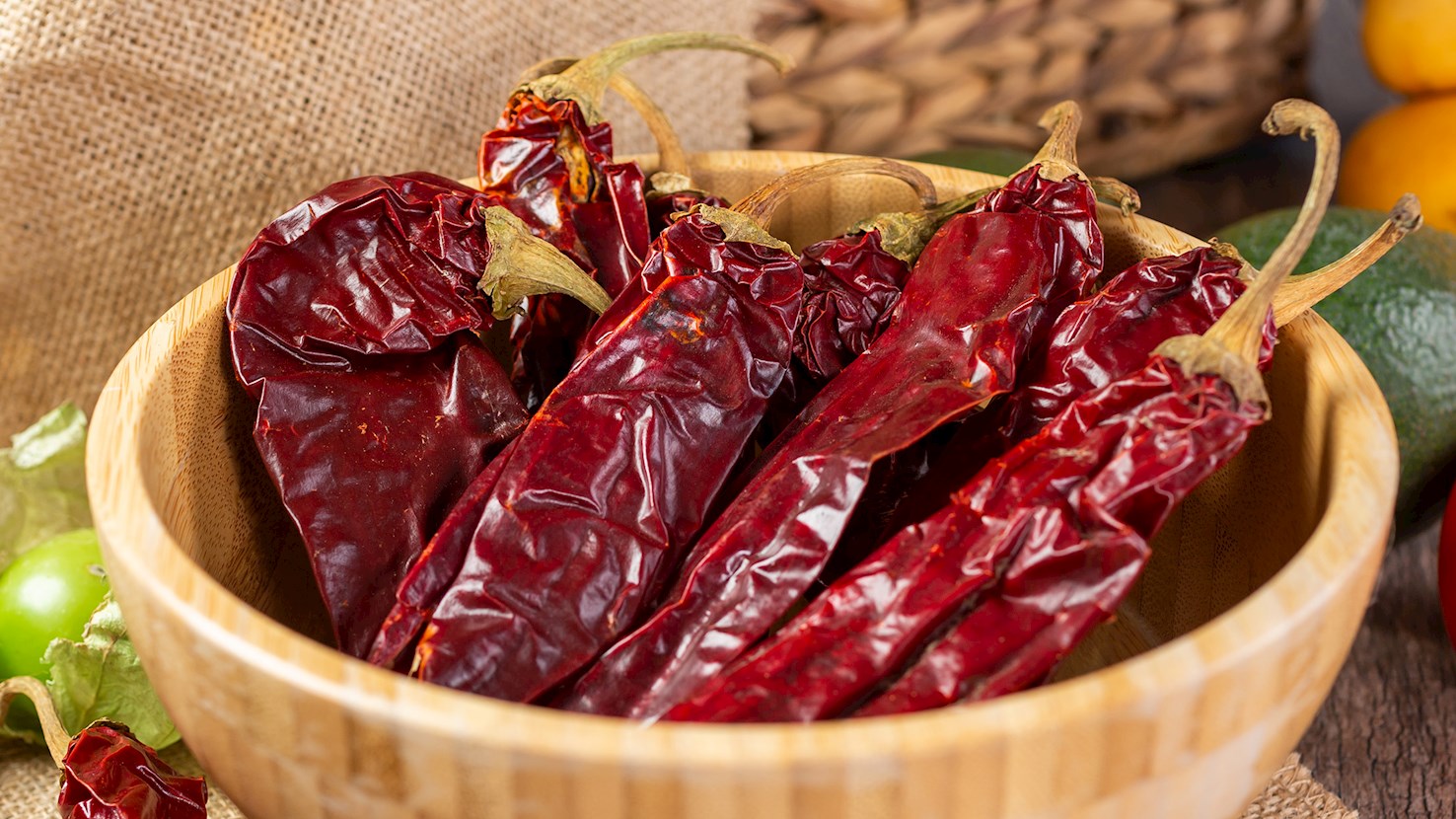
Chile colorado, in the sense of the dried Anaheim pepper, is a staple of cooking in the American Southwest and northern Mexico. The fresh Anaheim is a long, mild green chile, but once ripened to red and dried it becomes chile colorado, recognized for its deep red color and its role in stews and sauces. The pepper was brought to California in the late nineteenth century when seeds of New Mexican chiles were introduced to the city of Anaheim, where they adapted to the local climate and became widely cultivated. Over time, the dried version entered regional cooking under the name colorado, directly referring to its brick-red hue. The dried Anaheim measures about fifteen to twenty centimeters in length, with a thin skin and a heat level that is mild, usually around 500 to 2,500 Scoville units. Drying concentrates its flavor, which is earthy, slightly sweet, and tangy, without overwhelming spiciness. To prepare chile colorado, the pods are typically toasted on a hot griddle to release their aroma, then soaked in warm water until softened. Once rehydrated, they are blended into smooth purées that form the basis of sauces and marinades. These sauces often accompany pork, beef, or chicken, and are thickened with flour, stock, or masa to create the red stews commonly called chile colorado. What sets this pepper apart is its role in defining a specific style of cooking in the borderlands between Mexico and the United States. While hotter peppers are used for fiery salsas, the Anaheim-derived chile colorado provides body, color, and a balanced flavor that suits long-simmered dishes. In New Mexico, related varieties are roasted in season and dried in hanging ristras, ensuring a supply of pods that will later be ground or rehydrated for sauces. Today chile colorado is eaten widely in the Southwestern United States and northern Mexico, appearing in both home kitchens and restaurants. It is especially associated with hearty meat stews served with rice, beans, and tortillas, where the rich red sauce gives the dish both its flavor and its name.
TasteAtlas food rankings are based on the ratings of the TasteAtlas audience, with a series of mechanisms that recognize real users and that ignore bot,
nationalist or local patriotic ratings, and give additional value to the ratings of users that the system recognizes as knowledgeable.
For the “Top 3 New Mexican Hot Peppers” list until June 03, 2026, 42 ratings were recorded, of which 40 were recognized by the system as legitimate.
TasteAtlas Rankings should not be seen as the final global conclusion about food. Their purpose is to promote excellent local foods,
instill pride in traditional dishes, and arouse curiosity about dishes you haven’t tried.