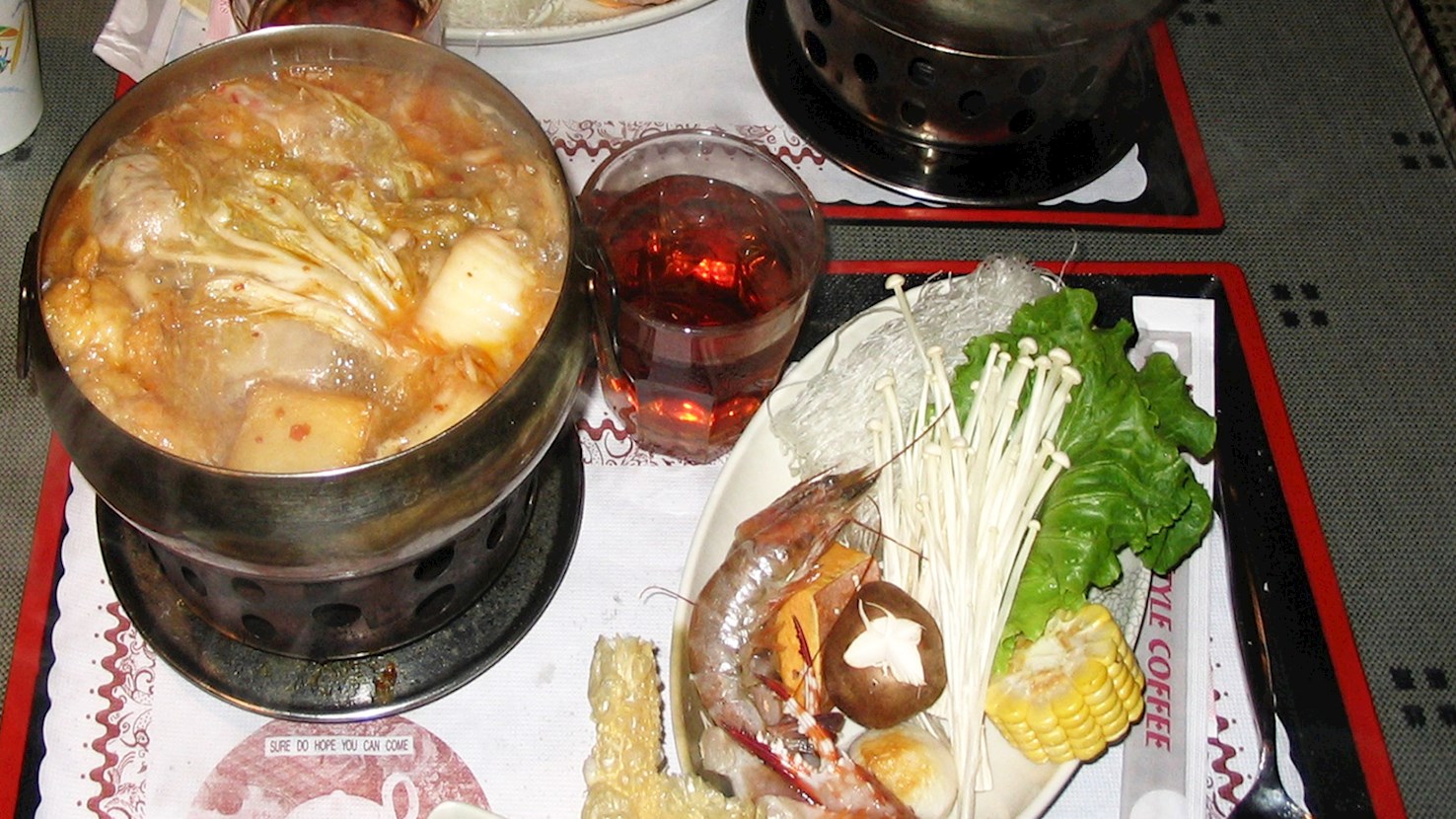
Taiwanese version of hot pot is eaten during the winter, and especially on cold and rainy days. It doesn't have a set recipe, but consists of a pot of broth and a variety of ingredients which are cooked in it, then dipped in the accompanying sauce before consumption. The broth can be made from bonito and kombu, Chinese herbs, pickled cabbage, pork bones, milk, miso, or kimchi. The ingredients cooked in it often include root vegetables, tofu, dumplings, fish cakes, fried taro, or thinly sliced meat. Most hot pot restaurants have a condiment bar with sauces and garnishes such as sha cha sauce (barbecue sauce derived from satay), soy sauce, white vinegar, black vinegar, sesame paste, garlic, cilantro, chili peppers, daikon, and sesame seeds. Taiwanese hot pot is a communal affair, with patrons sitting around the pot and each one cooking their own ingredients.
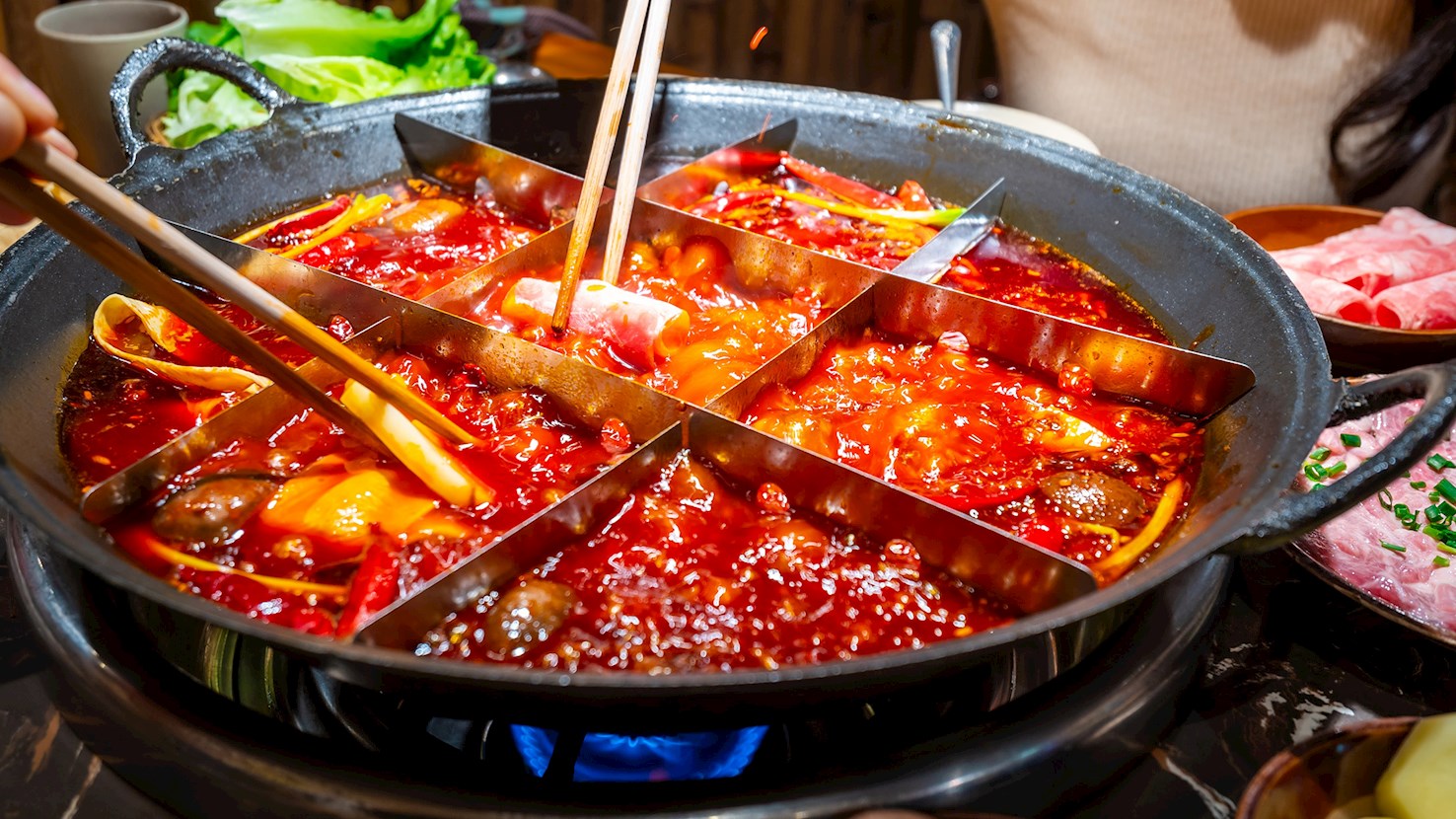
Sichuan hotpot is a numbingly hot and spicy dish made by poaching raw ingredients in a pot of boiling broth. The ingredients might include sliced meat, offal, seafood, vegetables, noodles, and most importantly, Sichuan peppercorns. Consuming hotpot is a communal affair, so people usually gather around the pot while socializing and adding the ingredients into it. As its name suggests, the dish was invented in Sichuan at the beginning of the 20th century. Originally, fisherman and port workers from the region could not afford regular cuts of meat, so they used offal, which was cooked in a spicy broth in order to disguise its pungent aromas. Over time, the dish evolved and became extremely popular throughout China and in the United States of America, due to the addition of fragrant spices and other flavorful ingredients such as ginger, garlic, cinnamon, and Sichuan bean paste. Although the dish is consumed throughout the year, it is most popular during winter because it warms the body and improves circulation.
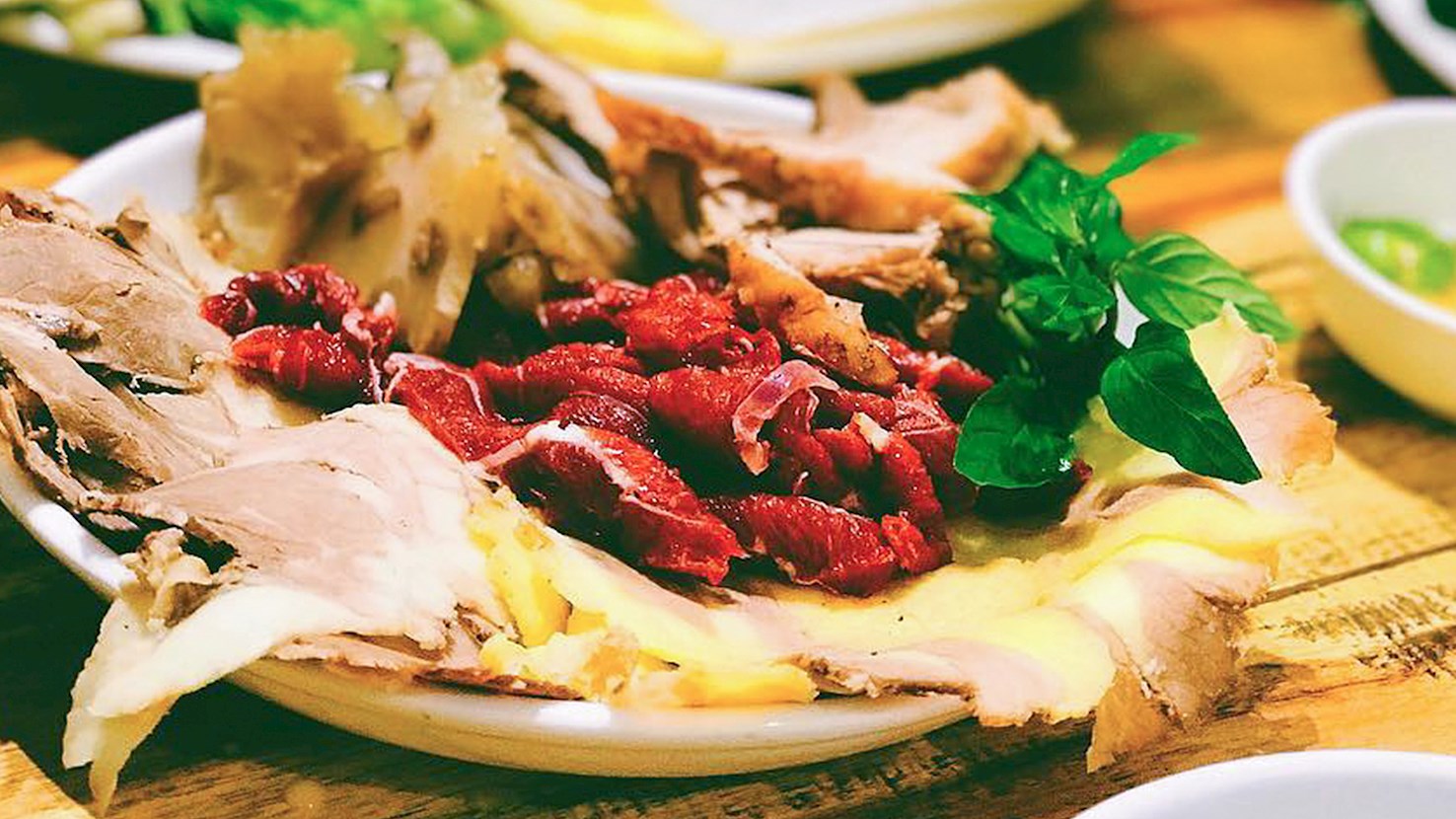
Bò nhúng dấm is a Vietnamese version of a hot pot that is traditionally served communal style. In its basic form, the dish consists of a vinegar-flavored broth that may also include coconut milk or coconut water, lemongrass, onions, or other additions, while typical accompaniments include thinly sliced raw beef and an assortment of fresh vegetables and herbs such as bean sprouts, daikon, lettuce, cucumbers, mint, basil, and perilla leaves. Although the name (bò) suggests the dish is exclusively made with beef, it can also include other types of protein such as squids or shrimps. Additional elements include rice paper sheets, which are used as wrappers, and typically nước chấm and mắm nem dipping sauces.
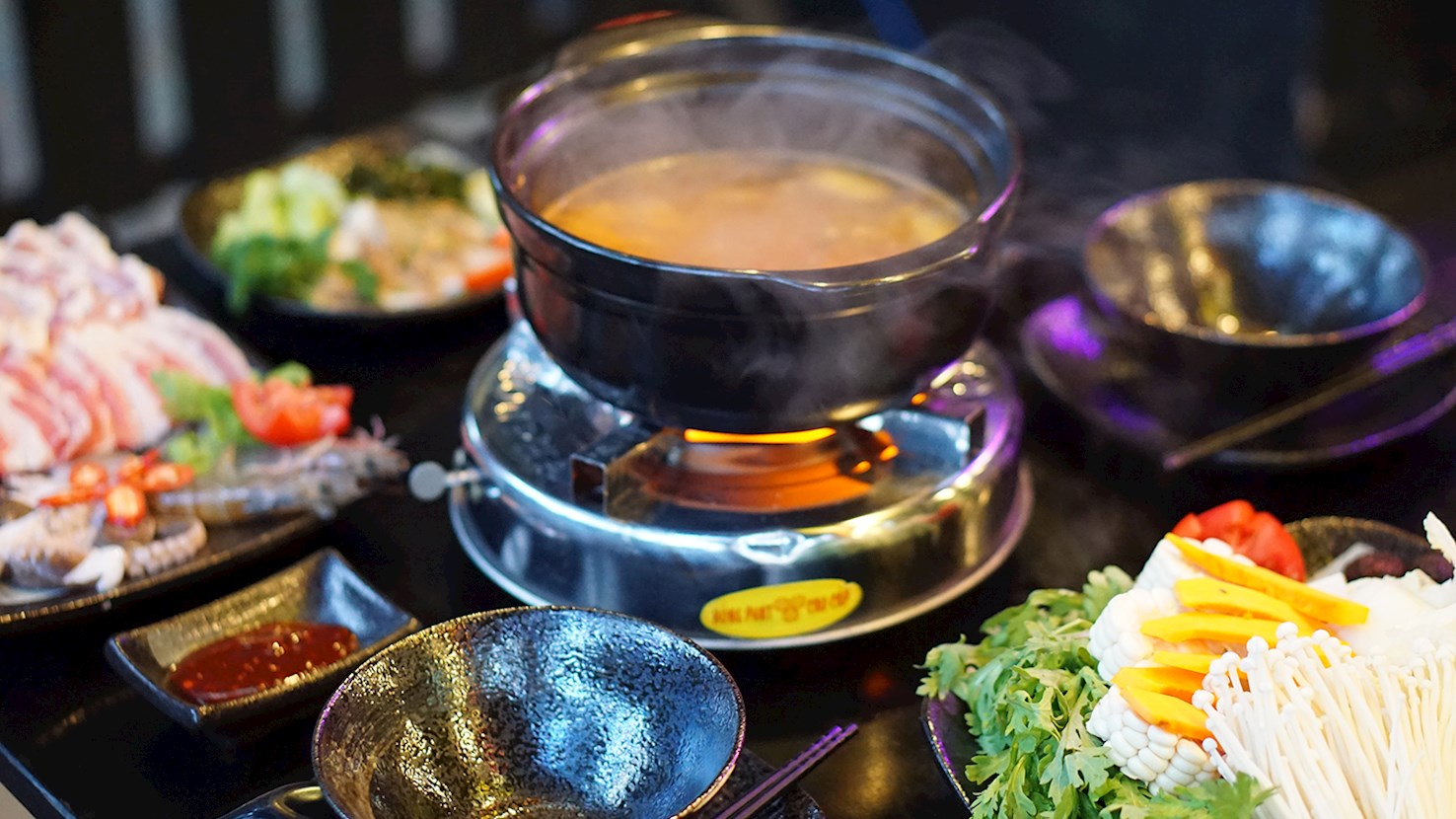
The Vietnamese version of hot pot is made by placing a large metal pot of simmering stock at the center of the table. Various ingredients are placed into the stock and cooked at the table, and the dish is especially popular after a night of heavy drinking. Typical ingredients for this hot pot type include chicken or pork, seafood, thinly sliced beef, tofu skins, wontons, mushrooms, fish cakes, vegetables, or egg dumplings. The pot is usually filled with fried garlic cloves, chili peppers, fish sauce, sugar, ginger, lemongrass, and tamarind paste before the stock is added. The more ingredients are placed in the pot, the more fragrant the hot pot will become. There are also vegetarian versions with ingredients such as herbs, rice, noodles, cabbage, bok choy, and mushrooms. After the food has been cooked in the pot, it’s usually eaten with a dipping sauce that consists of chili peppers, garlic, salt, and lime juice, or the one made with soy sauce, sugar, sesame oil, chili peppers, and roasted sesame seeds.
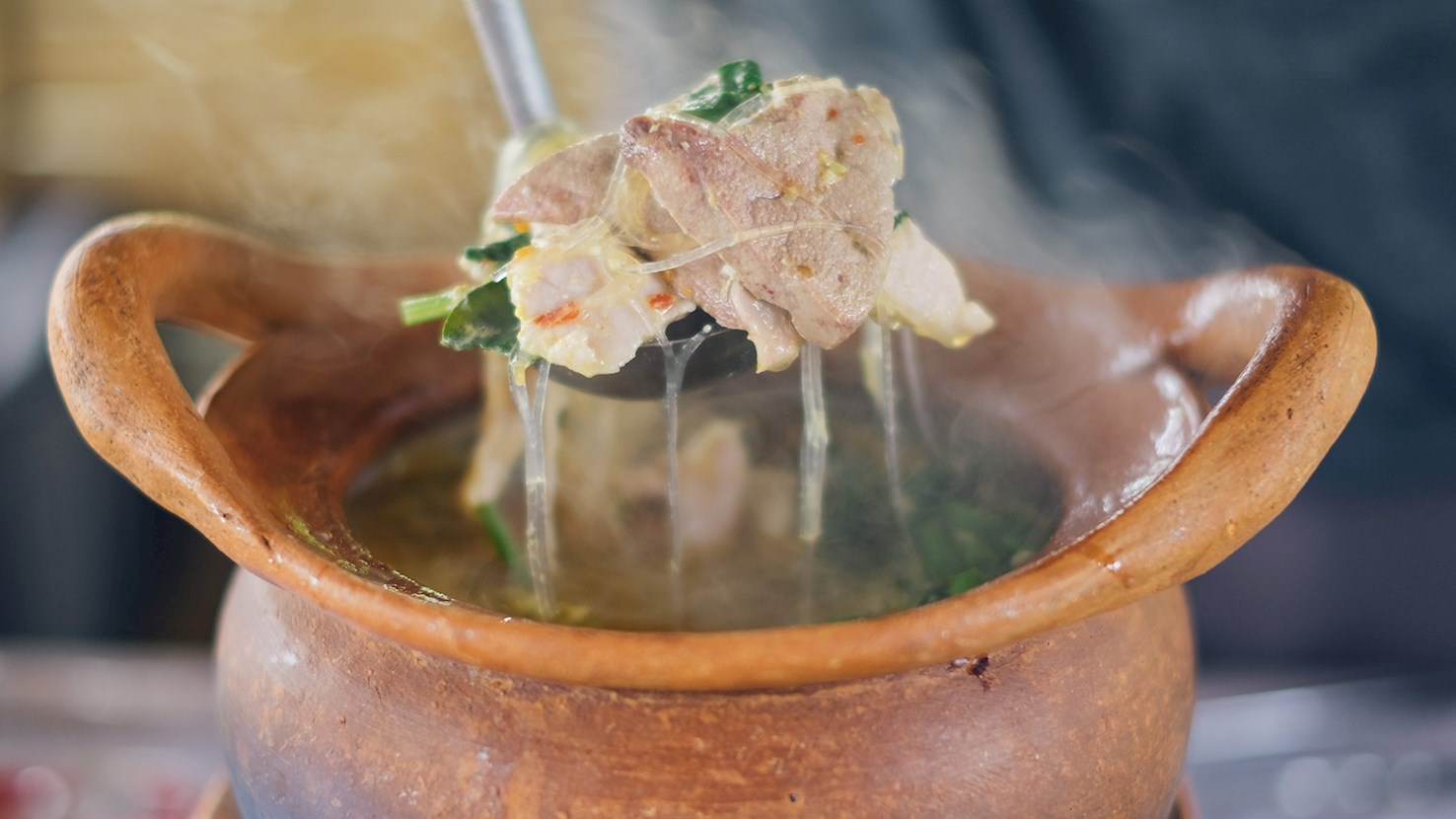
The term chim chum refers to a traditional Thai dish as well as the earthenware pot in which the dish is cooked. The preparation starts with a broth that is flavored with galangal, lemongrass, and Thai basil. Various vegetables are added next, and the broth is served together with marinated pork, chicken, or tofu - which the guest shortly simmer until cooked. Chim chum, which roughly translates as drip and drop, is intended to be eaten as a communal meal, and it is usually served with nam chim - a dipping sauce consisting of garlic, chili peppers, fish sauce, lime juice, coriander, shallots, and palm sugar.
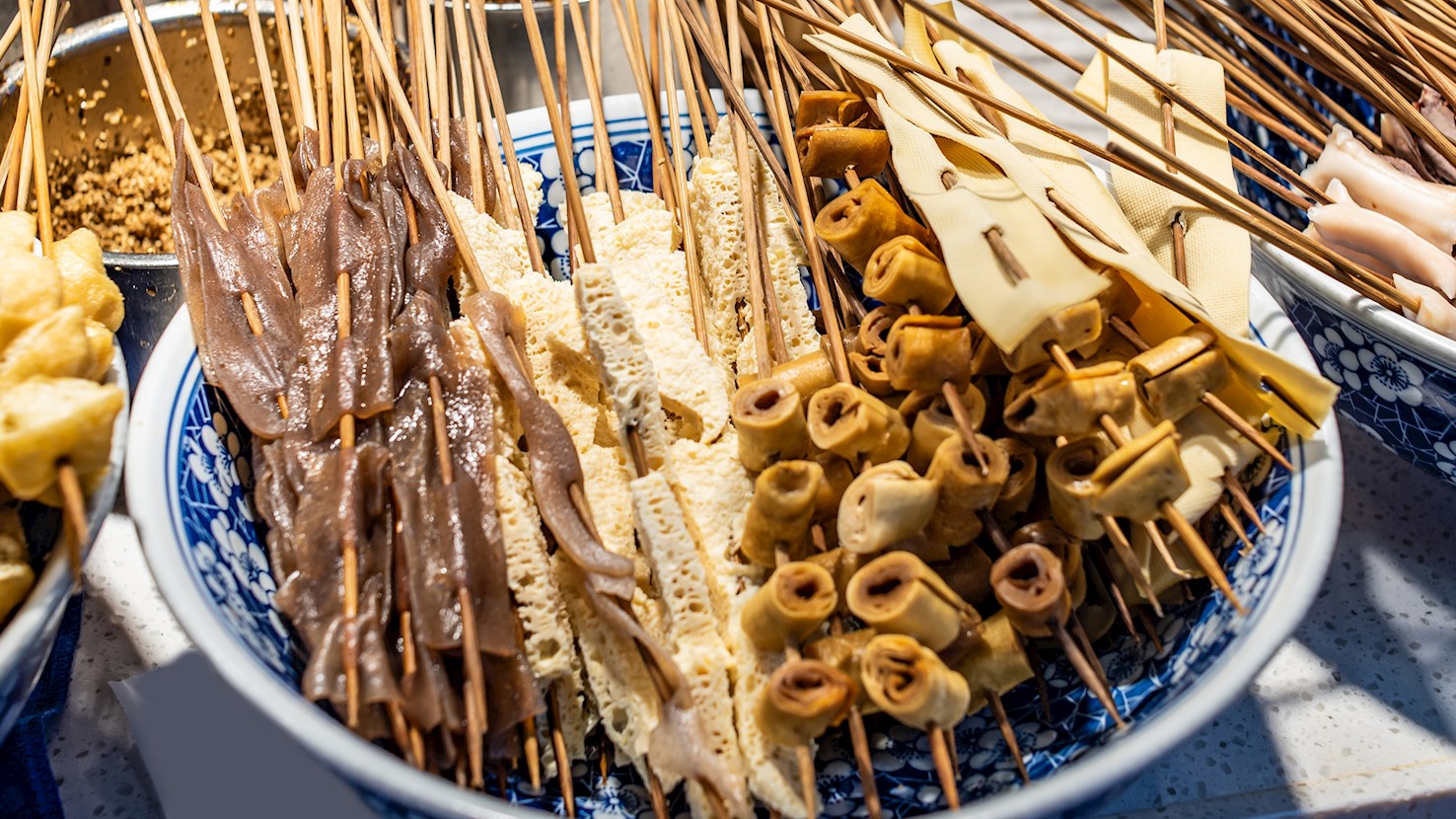
Chuànchuànxiāng is a hotpot-style street food from Chengdu in Sichuan province, where skewered meats, vegetables, and tofu are cooked in a boiling broth infused with chili, Sichuan peppercorns, and other spices. The practice of eating skewered food in Sichuan developed alongside the rise of hotpot culture, which emphasized communal dining and richly seasoned broths. Street vendors adapted this idea by preparing ingredients on bamboo skewers, which made them easier to handle, cook, and portion. Chuànchuànxiāng grew popular in Chengdu during the late twentieth century as night markets expanded and locals sought inexpensive, flavorful food that could be enjoyed socially. The skewers allowed diners to sample many different items without committing to large portions, and the variety of broths ensured that each stall offered its own character. Preparation begins with bamboo skewers threaded with ingredients such as beef slices, chicken, lotus root, potato, mushrooms, tofu skin, and leafy greens. These skewers are cooked in a pot of broth seasoned with doubanjiang, dried chilies, Sichuan peppercorns, garlic, ginger, and other spices. Some stalls serve the skewers directly in the pot of broth placed on the table, while others remove the cooked skewers and serve them in small bowls with additional dipping sauces. Payment is often based on the number of skewers consumed, with different colors or designs on the sticks indicating price categories. Today, chuànchuànxiāng is eaten throughout Chengdu and other cities in Sichuan, found in night markets, small restaurants, and specialized stalls. It is especially popular with younger crowds who enjoy its social atmosphere and wide range of flavors.
Lẩu do bien is a traditional version of a hot pot made with seafood as the main ingredient. The dish is cooked in a round metal vessel with a hollow part that goes up the middle. The pots are placed over hot charcoal, and the flames go up the chute to heat the soup in the outer part of the cooking vessel. The ingredients of a seafood hot pot are typically prawns, fish fillets, squid, scallops, mussels, vermicelli noodles, tofu, fish sauce, and vegetables such as carrots, okra, Chinese cabbage, water spinach, and mustard greens. Once done, lẩu do bien is usually accompanied by soy sauce with sliced bird's eye chili peppers for dipping. The dish is usually cooked at the dining table, and everyone takes a portion in a small bowl directly from the pot.
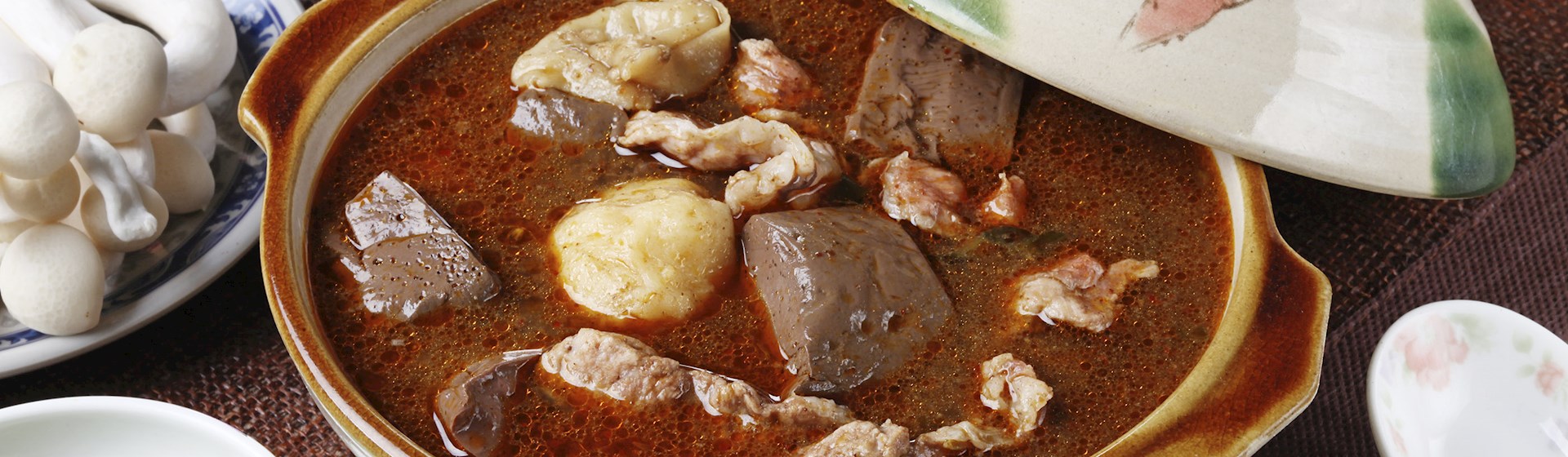
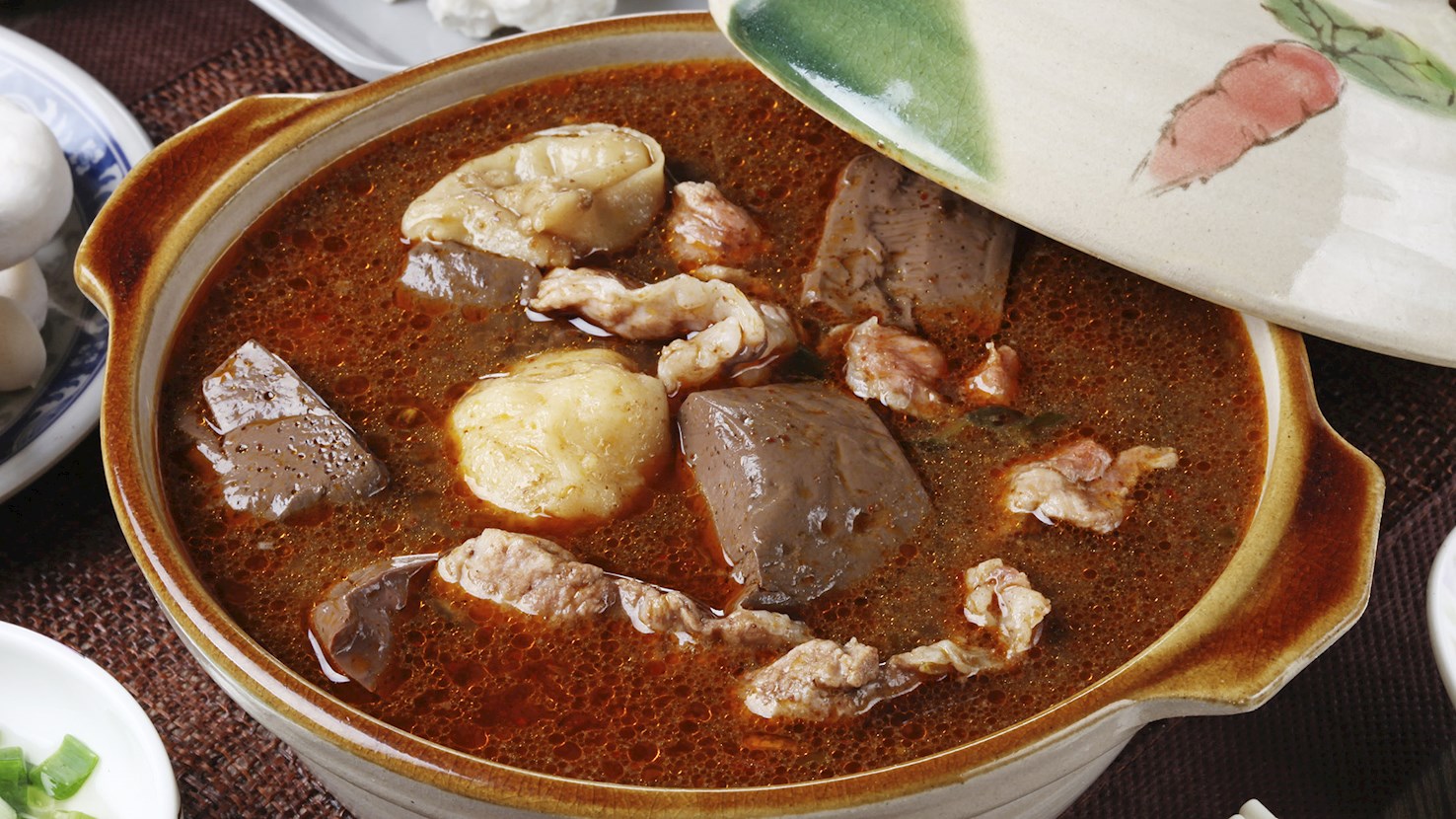
Chóngqìng huǒguō is a hotpot dish from Chongqing, famous for its intensely spicy broth filled with chilies, Sichuan peppercorns, and beef tallow. Unlike milder hotpots found elsewhere in China, this version is built around bold seasonings and oily broths designed to coat every ingredient with heat and fragrance. Its origins can be traced to the river port culture of Chongqing in the late nineteenth and early twentieth centuries. Dock workers and boatmen needed inexpensive, hearty meals that could be shared, and hotpot made with offal and simple ingredients simmered in chili-laden broth offered both sustenance and warmth. Over time, the dish moved from street stalls to specialized restaurants, where it gained refinements but retained its working-class roots. The growth of Chongqing as a major urban center helped popularize the dish nationwide, and it later spread internationally as Chinese regional cuisines gained recognition. Preparation begins with making the broth base, which typically contains beef tallow, large amounts of dried red chilies, Sichuan peppercorns, doubanjiang, ginger, and garlic. The pot is placed at the center of the table on a burner, where it simmers continuously. Diners select raw ingredients to cook in the broth, ranging from thinly sliced beef, lamb, and fish to vegetables, mushrooms, tofu, and even offal. The cooked items are dipped into individual sauces before eating, with sesame oil, garlic, and fermented bean curd among the common condiments. The experience is interactive, with everyone gathered around the bubbling pot, cooking and eating at their own pace. Chóngqìng huǒguō is eaten widely in its home city, where hotpot restaurants are among the most popular dining establishments. It has also spread across China and abroad, often serving as an introduction to Chongqing’s food culture. The dish is typically paired with cold side dishes such as cucumber salad or pickled vegetables to balance the richness, and beer or chilled soft drinks are commonly chosen to temper the heat. For many, it is not just a meal but a social gathering, combining flavor, heat, and conversation in equal measure.
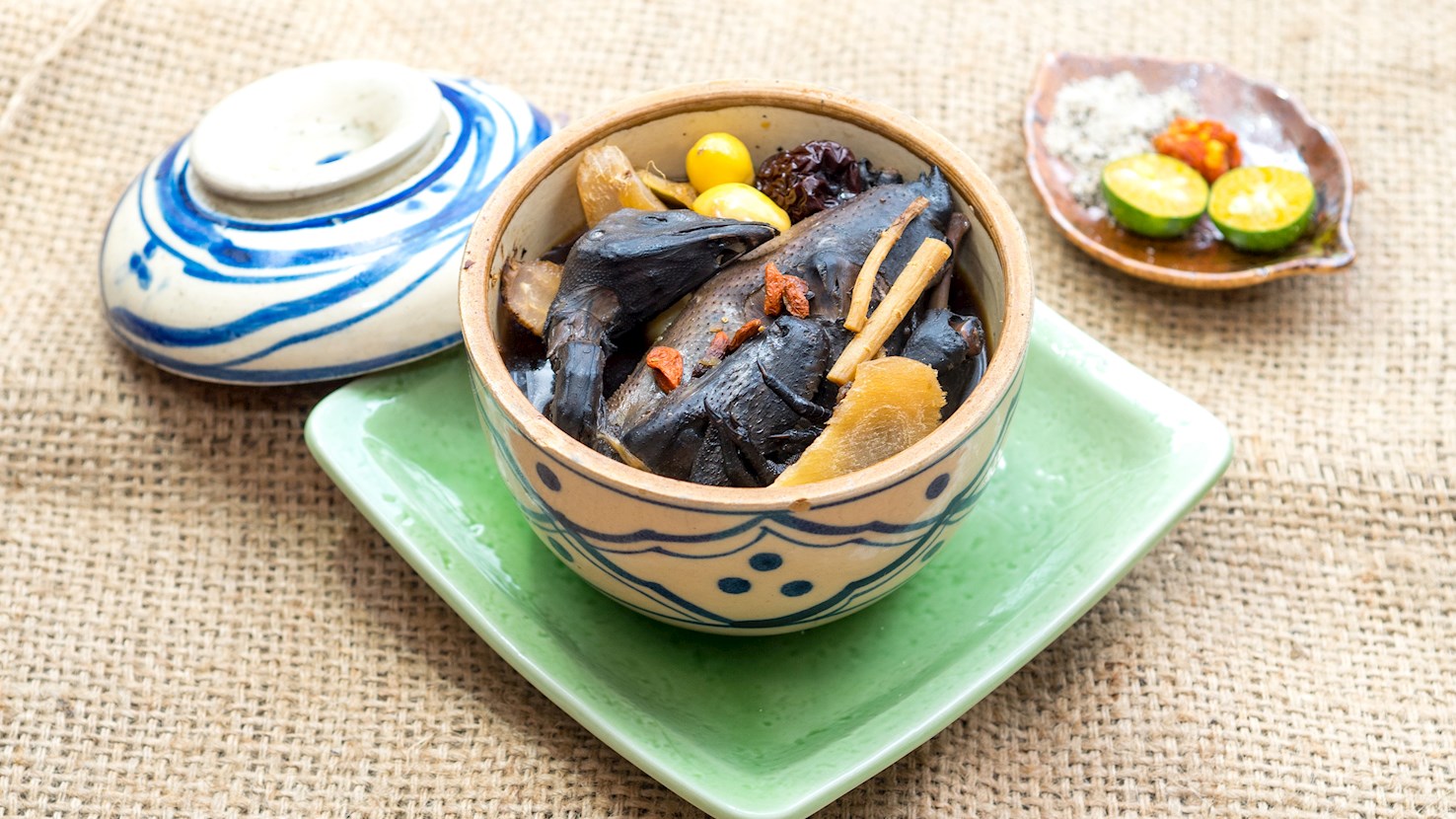
Lẩu gà đen is a traditional dish that's especially popular in the mountainous Sapa region. The dish is a hotpot made with gà đen or black chicken, one of the most unique animals in Sapa. The meat of these chickens is sweet, aromatic, and somewhat tough. It's usually cooked in a broth with young bamboo, mushrooms, ginger, red apple, and various local wild greens and vegetables. This hotpot is served as a communal dish so every person can cook the ingredients in the hot broth according to their own preferences. Although black chicken hotpot is prepared in a few Vietnamese regions, it's still the easiest to find it in Sapa.
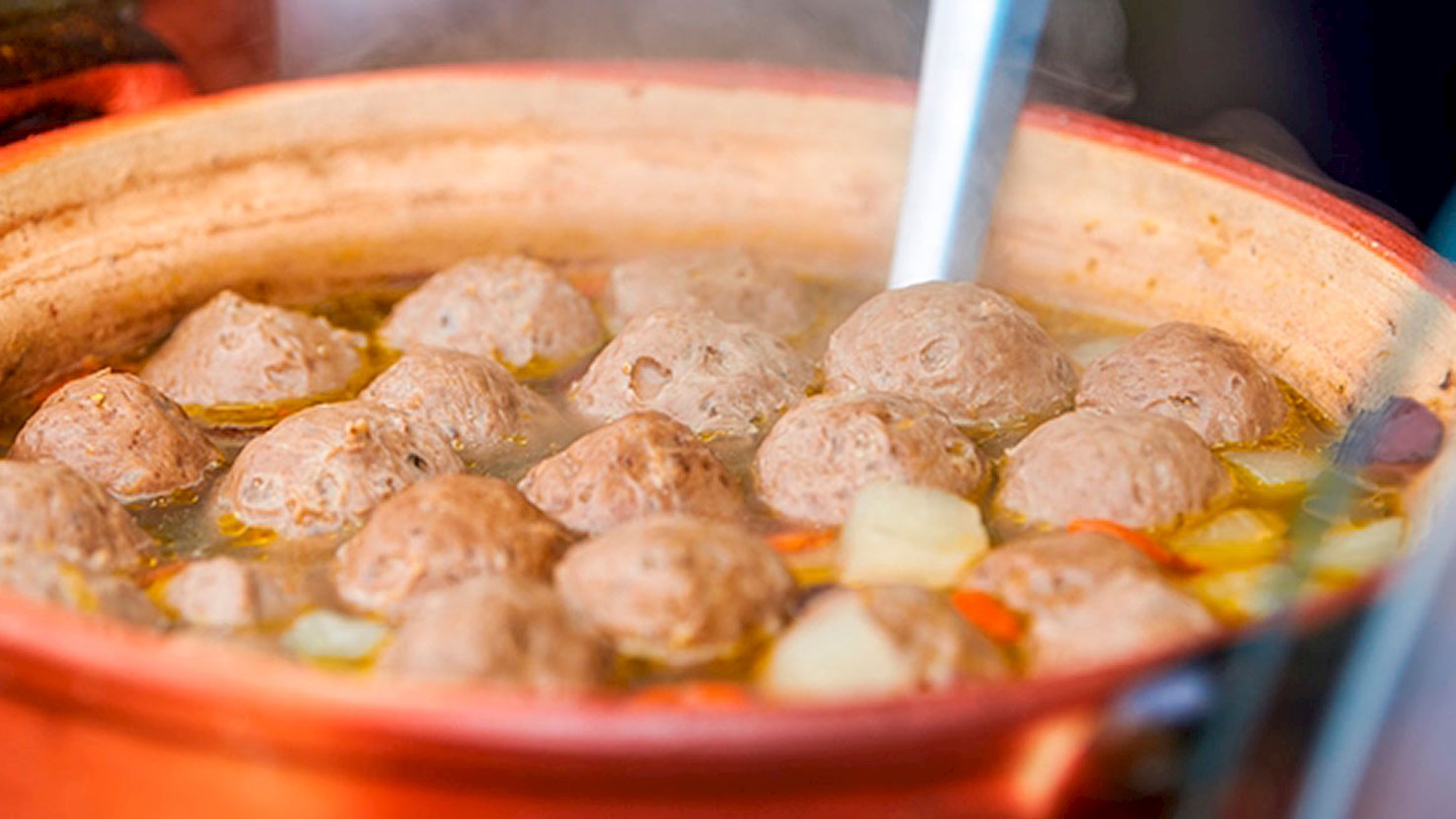
Cháoshàn niúròu huǒguō is a beef hot pot originating from the Chaoshan region. Unlike many hot pots in China that rely heavily on spicy broths or complex seasonings, this version focuses on showcasing the natural flavor and texture of beef, prepared from carefully selected cuts and cooked at the table in a clear, light stock. Its development is closely tied to the region’s deep-rooted beef culture. Chaoshan cuisine, part of the larger Teochew culinary tradition, places high value on ingredient purity, and beef was historically considered a special ingredient reserved for festive occasions and communal gatherings. As hot pot culture became popular across China, the Chaoshan approach evolved separately from Sichuan’s fiery broths or northern lamb-based styles, emphasizing instead a clean presentation that highlighted the quality of the meat itself. Preparation begins with meticulous butchering: a single carcass may yield dozens of distinct cuts, each prized for its particular texture, marbling, or flavor. These cuts are thinly sliced by hand just before cooking to preserve their integrity and tenderness. The broth, typically made from beef bones and aromatics simmered for hours, remains light and clear, serving as a medium rather than a dominant flavor. At the table, diners cook the beef slices briefly in the gently bubbling broth, timing each cut according to its ideal doneness. Meatballs, tendons, tripe, and other offal are also common additions, reflecting a nose-to-tail philosophy. Dipping sauces are simple but crucial, often featuring Chaoshan shacha sauce, a savory condiment made from soybean oil, garlic, dried shrimp, and spices, along with raw egg, soy sauce, or vinegar. A distinctive element of this hot pot is the level of precision and attention given to beef texture. Cuts are classified and served separately rather than mixed, allowing diners to experience the nuanced differences in tenderness, chew, and juiciness between them. This attention to detail has elevated Cháoshàn niúròu huǒguō beyond a casual meal to a respected culinary art form in the region. It is most often eaten communally, especially in colder months or at family gatherings, and is popular both in Chaoshan households and specialized restaurants throughout Guangdong and in Teochew communities abroad. It pairs well with light vegetable sides, tofu, or pickled condiments, and is sometimes followed by a simple soup made from the enriched broth to conclude the meal.
TasteAtlas food rankings are based on the ratings of the TasteAtlas audience, with a series of mechanisms that recognize real users and that ignore bot,
nationalist or local patriotic ratings, and give additional value to the ratings of users that the system recognizes as knowledgeable.
For the “12 Hot Pot Varieties Ranked From the Best To the Worst” list until October 17, 2026, 811,838 ratings were recorded, of which 532,919 were recognized by the system as legitimate.
TasteAtlas Rankings should not be seen as the final global conclusion about food. Their purpose is to promote excellent local foods,
instill pride in traditional dishes, and arouse curiosity about dishes you haven’t tried.









What People Say