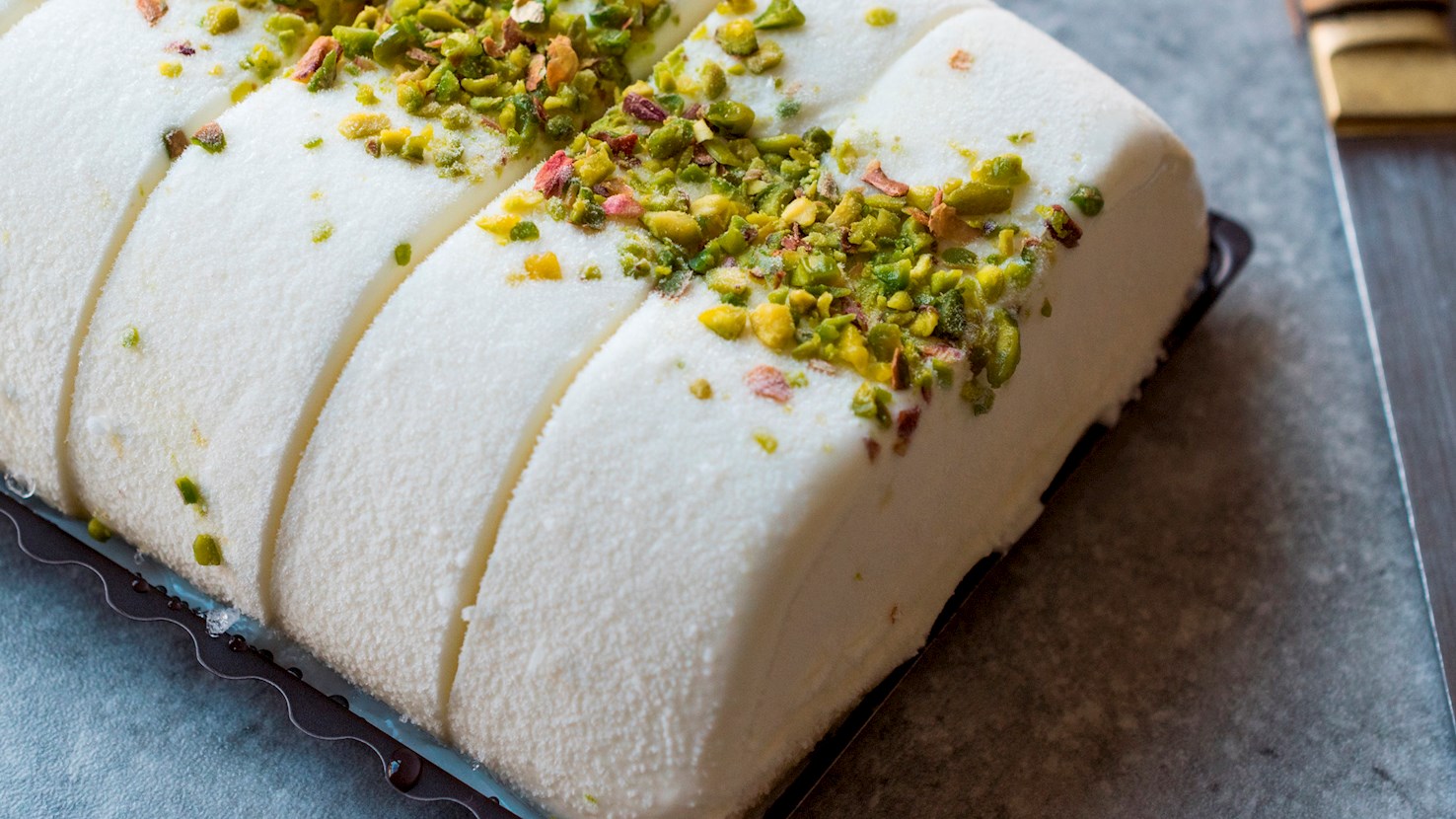
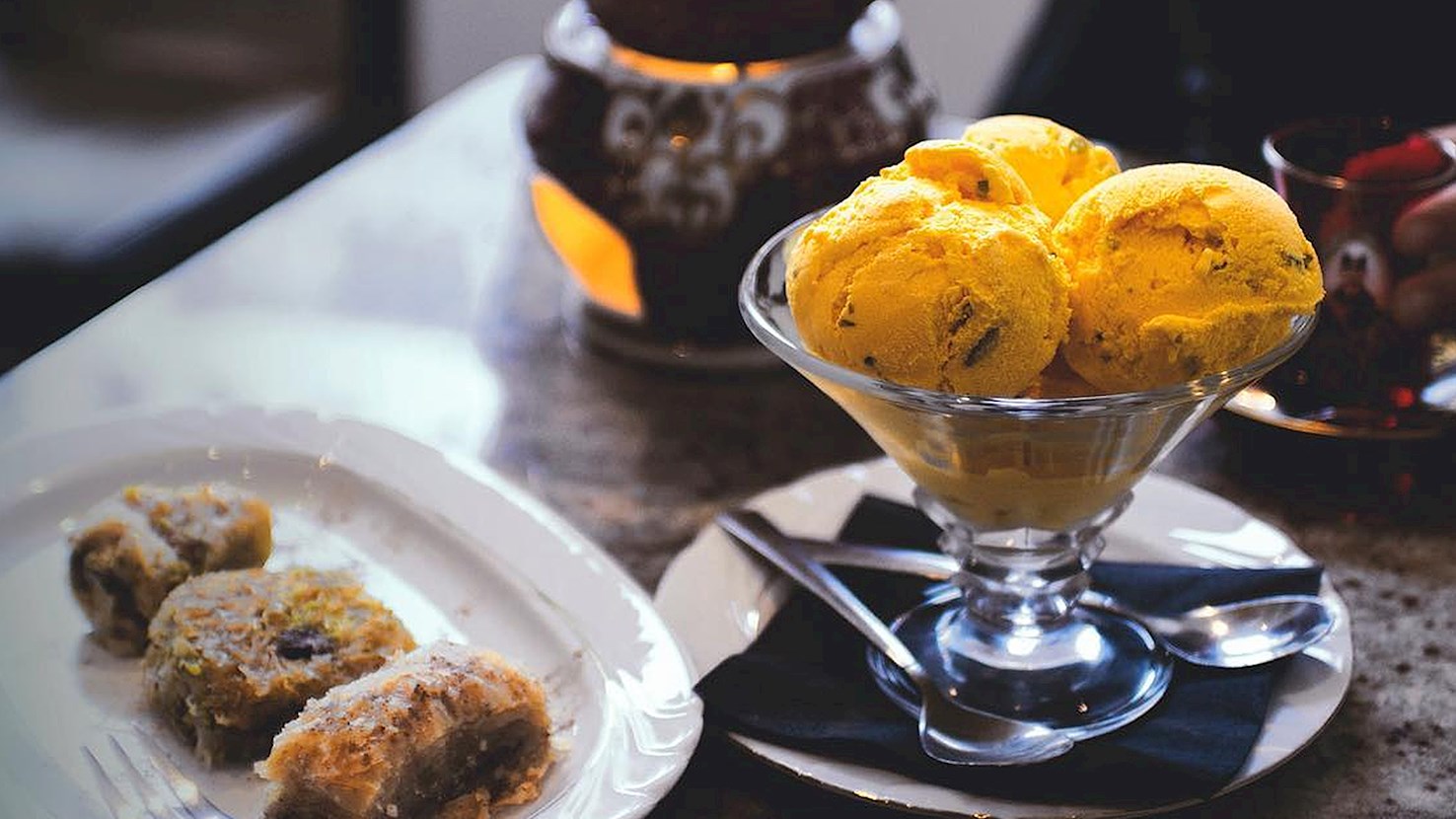
Turkish ice cream is believed to originate from the city of Maraş—hence the name—and what really sets it apart from other varieties is its resistance to melting and a particularly dense, chewy texture. These qualities are brought by adding two thickening agents to the basic milk and sugar mixture: Arab gum, also known as mastic resin, and salep—a type of flour made from the root of the early purple orchid. In fact, in the Kahramanmaraş region, ice cream typically contains distinctly more salep than usual, which is why it is sometimes called kesme dondurma—from the Turkish kesmek, meaning to cut—which is the reason why this ice cream variety is usually eaten with a knife and fork. In Türkiye, ice cream is commonly sold in the streets but also in specialized dondurması shops, whose owners will often go out of their way by producing their own salep, apart from using exclusively natural flavorings and milk from goats fed only with thyme, orchid flowers, and milkvetch.
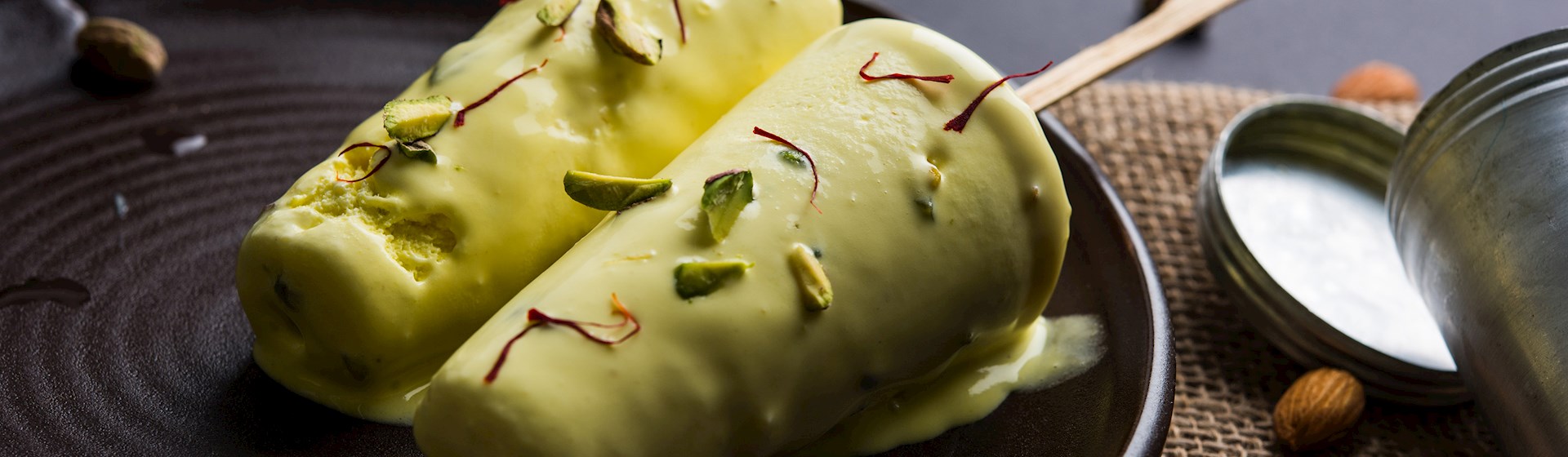
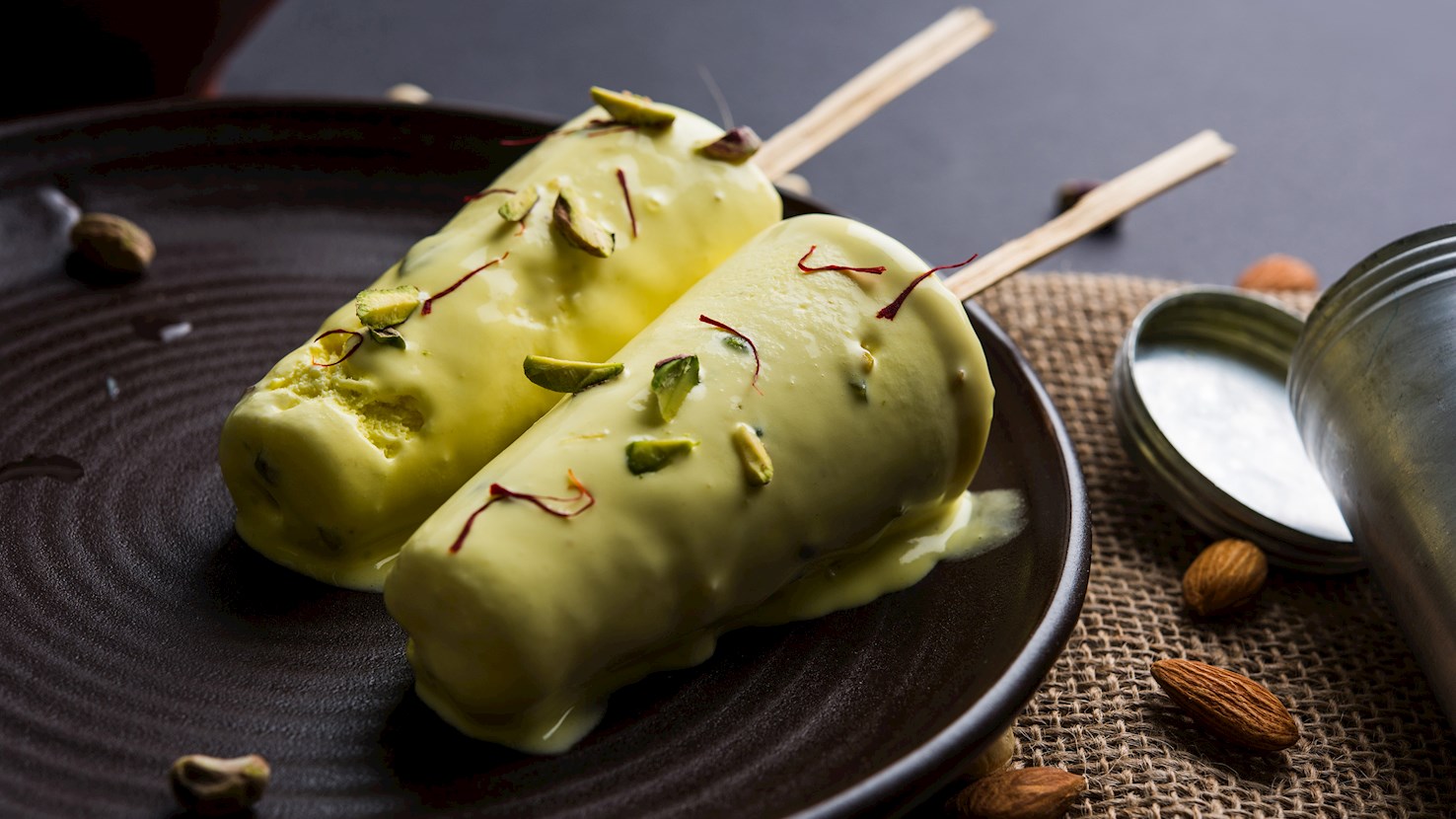
Kulfi is a traditional ice cream made with slowly simmered whole milk. Although the long-simmering process results in a loss of volume, it makes up for it with a delicious, nutty, caramelized flavor. The ice cream is characterized by its unusual, conical shape, a result of using traditional, special molds with tight-fitting lids. Kulfi is usually flavored with traditional Indian ingredients such as pistachio, rose water, and saffron, although some cooks prefer to flavor it with fruits such as berries. It is believed that kulfi was invented by the ancient inhabitants of the Himalayas during the Mughal Empire era. There are some main differences between kulfi and regular ice cream: kulfi has less air and is denser than regular ice cream, because the milk gets more concentrated through the cooking process. Today, kulfi can be made at home or found at street stalls, sold by vendors called kulfiwalas.
Sorbetes is a popular Filipino ice cream flavored with ingredients such as mango, chocolate, cheese, coconut, and purple yam (ube). Traditionally, it is produced from carabao milk and served in tiny scoops on sugar cones. Some Filipinos like to consume it sandwiched between bread buns, like a hamburger. Although it sounds similar to a sorbet, coming from the Spanish sorbete, it is not a sorbet, but a dirty ice cream, as the locals jokingly call it due to the fact that it is sold along polluted streets. Sorbetes can usually be found at numerous street carts throughout the Philippines.
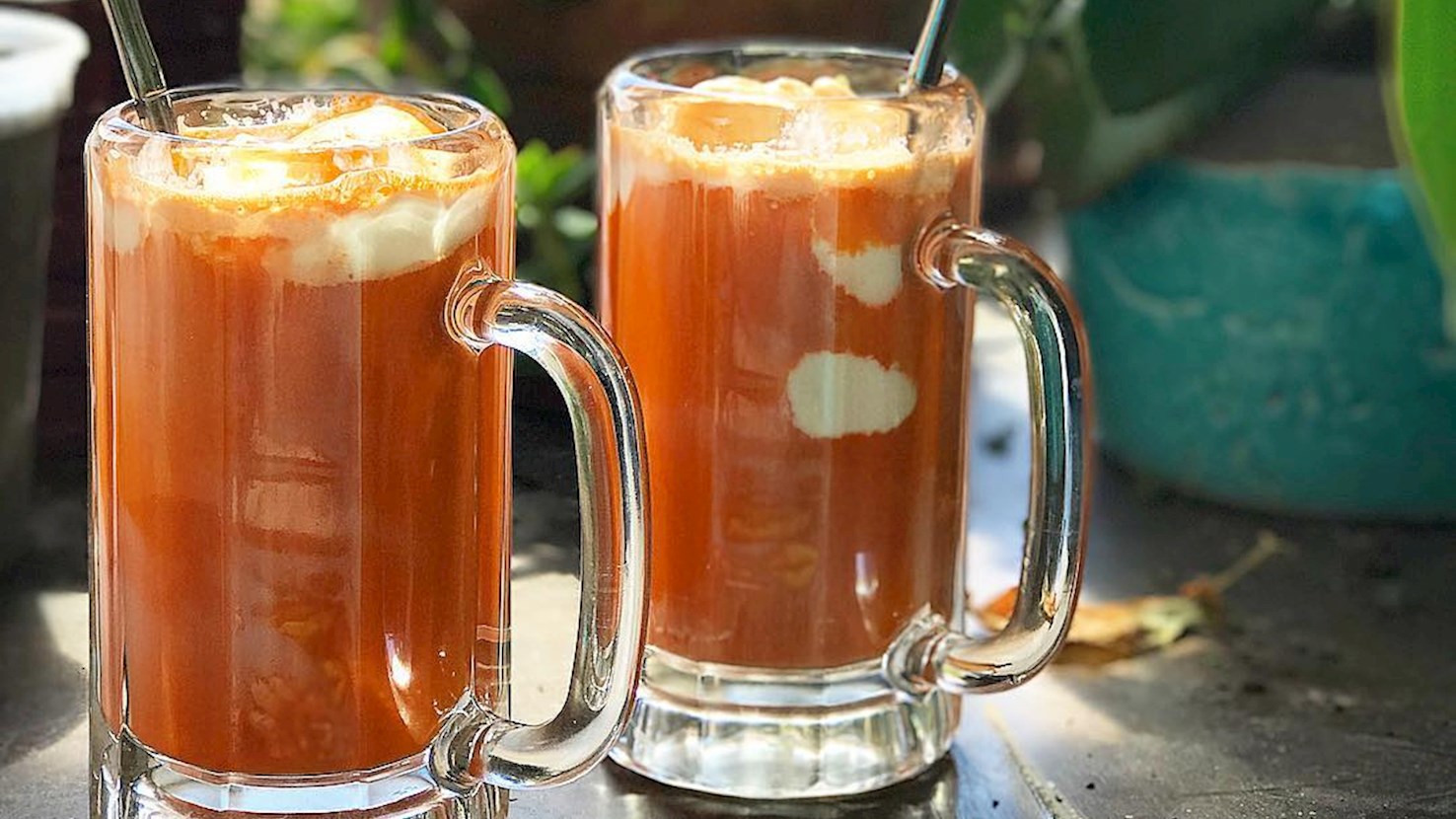
Havij bastani is a distinctive Iranian dessert beverage that combines carrot juice with ice cream to create a refreshing treat with both creamy and earthy flavors. This dessert is popular across Iran, especially in teahouses, juice shops, and during warmer months when its vivid color and rich sweetness offer a cooling respite. The name translates simply to “carrot ice cream,” and it is most commonly associated with Tehran and other large cities where juice culture has been an integral part of social life. The origins of havij bastani can be traced to Iran’s longstanding appreciation for fresh juices and dairy-based desserts. Throughout the 20th century, with the rise of modern cafes and ice cream parlors, carrot juice became a popular base for combining with creamy components such as bastani sonnati (saffron ice cream) or vanilla ice cream. As refrigeration and juicing equipment became more accessible, this combination was standardized into a menu item offered alongside other chilled beverages like faloodeh or sharbat. To prepare havij bastani, fresh carrots are juiced until smooth and slightly sweet. The juice is chilled and poured into tall glasses. A scoop or two of bastani sonnati or simple vanilla ice cream is gently added, creating a layered effect as the ice cream slowly melts into the juice. In some regions, a splash of rosewater or a sprinkle of cinnamon is used to enhance the aroma. Occasionally, crushed pistachios or slivered almonds are offered as a garnish. The dessert is served immediately with a straw and a long spoon to allow for sipping and scooping together. Havij bastani is enjoyed in cafes, juice bars, and even at home, often shared among family and friends as an afternoon refreshment or after a leisurely meal.
Bastani sonnati is a unique saffron-infused Iranian ice cream that was invented at the beginning of the 20th century by Akbar Mashti, the first ice cream vendor in Tehran. The name “bastani sonnati” means “classic ice cream,” emphasizing its status as a benchmark of Iranian confectionery. The base is a dense custard made by combining milk, cream, egg yolks, and sugar, then cooking it gently to achieve a smooth consistency. What sets bastani sonnati apart is the addition of saffron, rosewater, and ground cardamom, which infuse the ice cream with a vivid yellow color and a distinctly floral aroma. Salep, a flour derived from orchid tubers, is also incorporated, lending the mixture a stretchy, elastic quality similar to Turkish dondurma. Small pieces of frozen clotted cream, called makhloot, are sometimes folded in, creating pockets of rich creaminess in each bite. After churning, bastani is packed into shallow containers and stored at low temperatures to set. Before serving, it is often garnished with chopped pistachios, which add texture and contrast. In Iranian ice cream parlors, it is common to see bastani sonnati served alongside faloodeh, a frozen dessert made from thin vermicelli noodles in rosewater syrup. The combination of the creamy bastani and the icy faloodeh has become an iconic pairing in Iran. Unlike Western-style ice cream, bastani sonnati is known for its dense body and slower melt, which allows the saffron and rosewater aromas to linger on the palate. Many recipes are closely guarded by families or vendors, with proportions of salep and flavorings varying from one confectioner to another. Its production still relies on skill and careful handling to achieve the right balance of elasticity and smoothness.
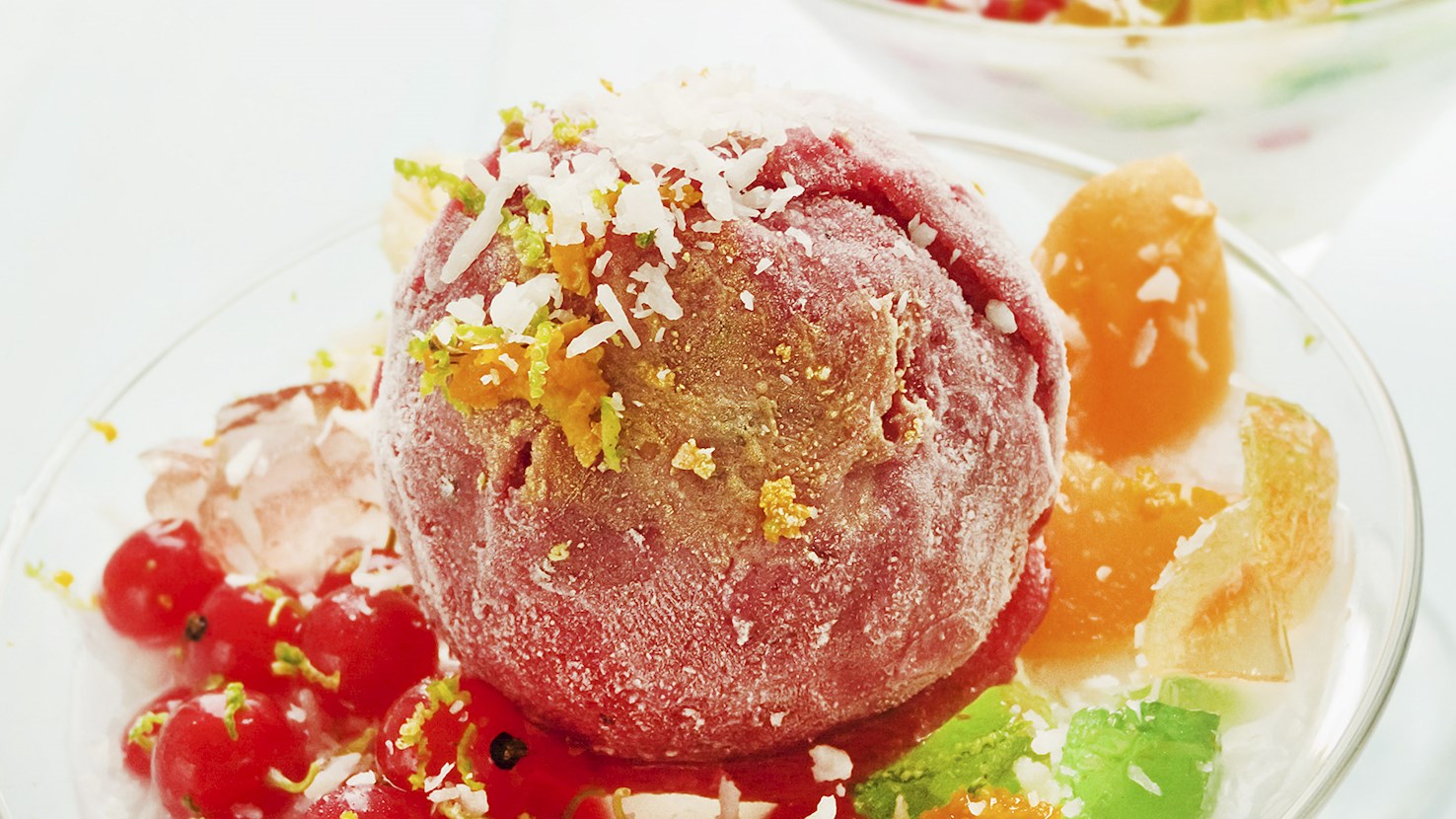
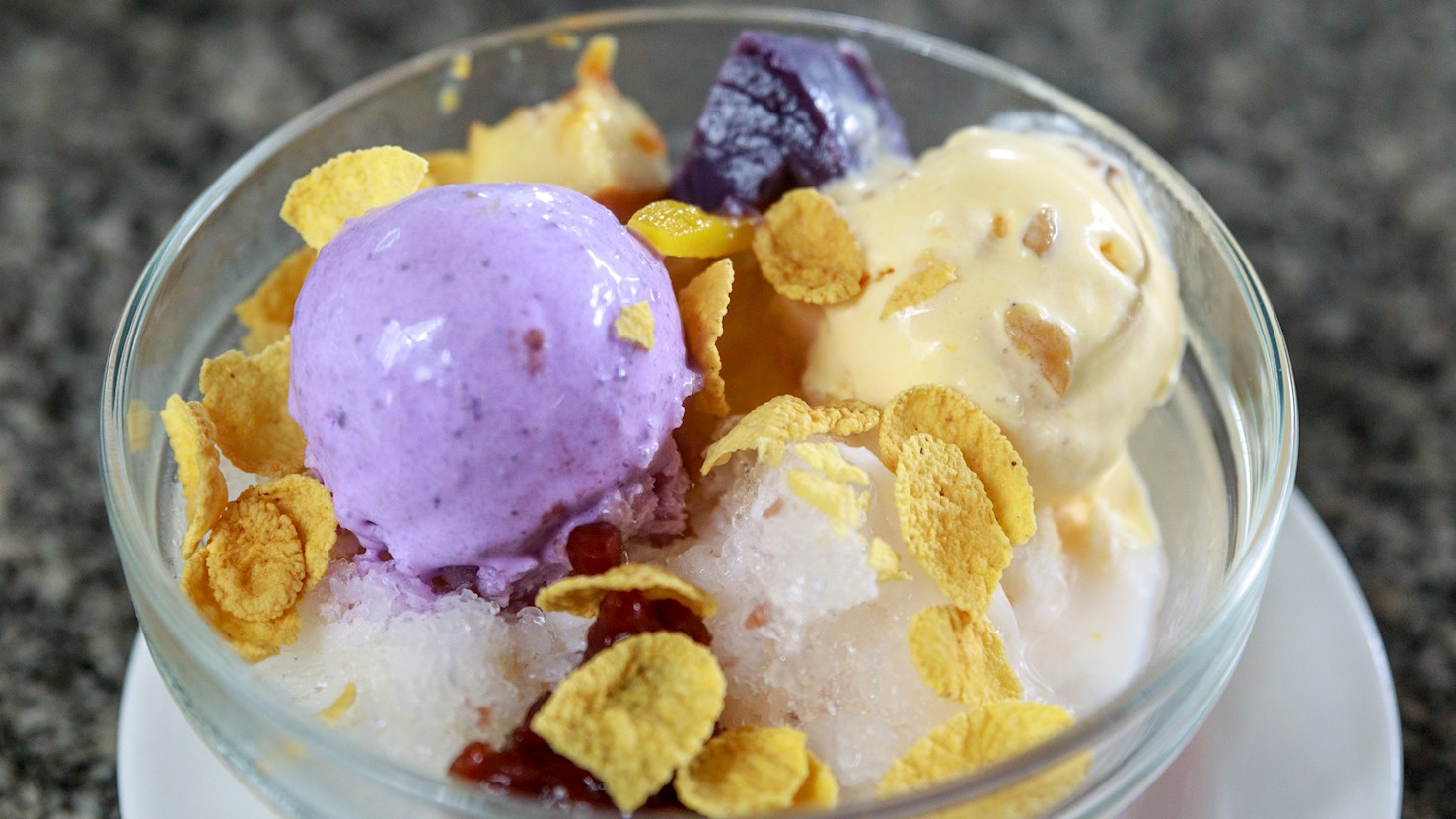
The refreshing halo-halo (lit. mix-mix) is a summer dessert or a snack of mixed fruit and beans, topped with finely crushed ice and either milk or ice cream. Some of the most common halo-halo ingredients include bananas, jackfruit, coconut, sweet potatoes, red mung beans, chickpeas, sugar palm fruit, purple yam jam, leche flan, and - in recent times - even sweet corn or corn crisps. Originally, halo-halo desserts were sold by Japanese vendors in halo-halo parlors or at numerous street stalls before the occupation of the Philippines in the 1940s. In fact, this Filipino specialty is often said to have been inspired by a shaved-ice cooler called anmitsu, another Japanese summer drink.
Booza is an ice cream variety that has its origins in the Levant and the Middle East. Apart from the standard ingredients such as milk, cream, and various flavoring additions, booza is thickened with salep—a thickener made from the orchid root—and mastic gum, a resin obtained from mastic trees. The ingredients are then pounded with wooden mallets until the mixture achieves its unique, stretchy consistency. Because no eggs or air are added, booza results in flavor-packed ice cream, with an amazingly dense and creamy texture. The most traditional flavor of booza is known as kashta or qashta—which is a variety of clotted cream often flavored with orange blossom and rose water—but standard flavorings also include fruit, chocolate, and nuts. Often dubbed as one of the oldest ice cream varieties, booza has recently caught up outside its place of origin, primarily in the United States. Similar ice cream varieties are found in Turkey (dondurma) and Greece (kaimaki).
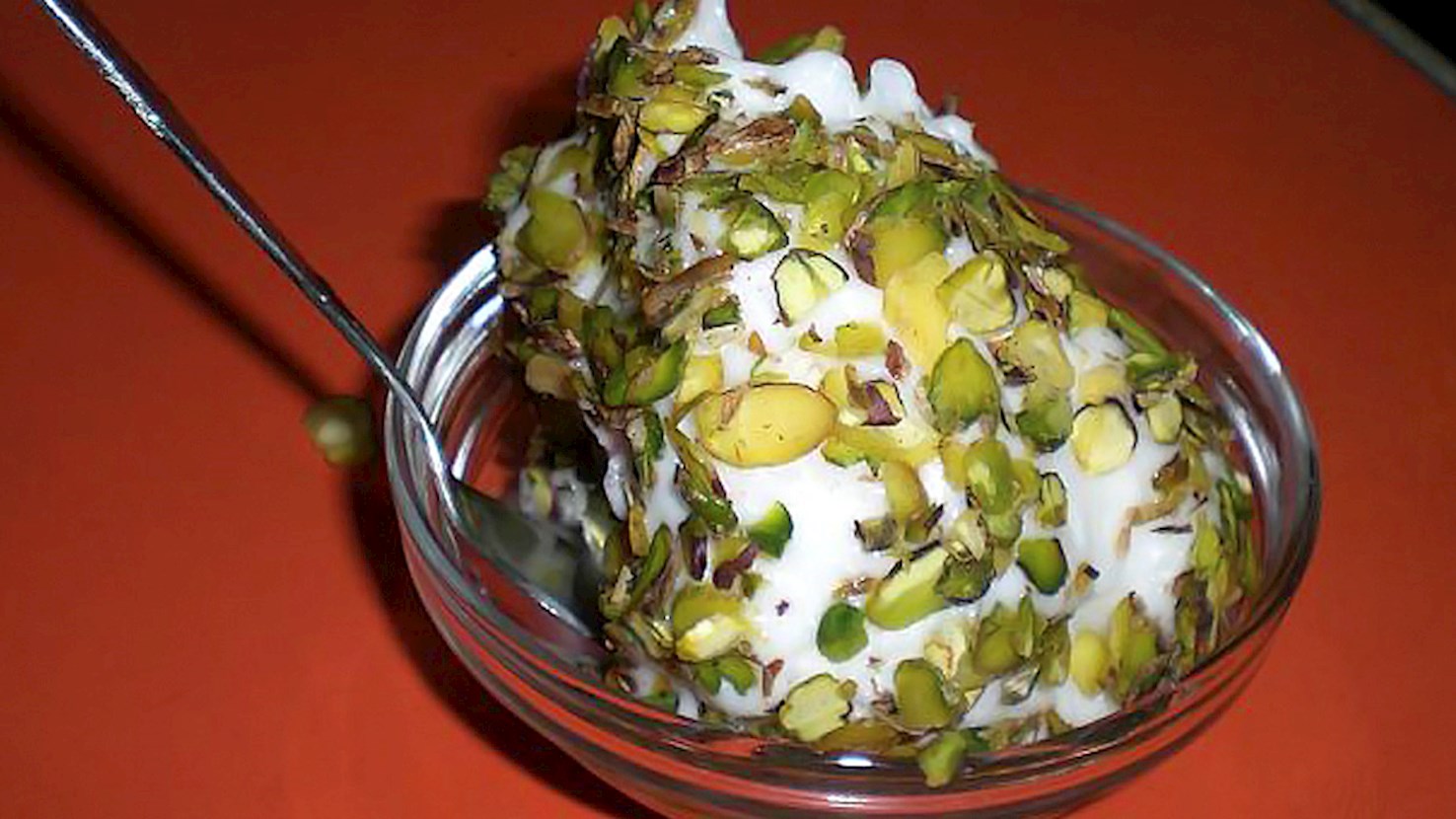
Sheer yakh, meaning frozen milk or cold milk in Dari, is a traditional dessert that uses the same ingredients as the Indian kulfi ice cream but is prepared differently. The ice cream ingredients such as milk, sugar, and flavorings are all added to a metal container, which is then placed inside another metal container filled with ice and salt. The person who makes the ice cream continuously rotates the vessel holding the ingredients manually within the stationary ice-filled container and occasionally stirs the creamy mixture until it becomes frozen. Typical flavorings include cardamom, rose water, and salep (wild orchid powder). A favorite summertime street food item, sheer yakh is usually served in small bowls and topped with chopped pistachios, almonds, and thick cream.
TasteAtlas food rankings are based on the ratings of the TasteAtlas audience, with a series of mechanisms that recognize real users and that ignore bot,
nationalist or local patriotic ratings, and give additional value to the ratings of users that the system recognizes as knowledgeable.
For the “Top 8 Asian Ice Creams” list until June 15, 2026, 2,308 ratings were recorded, of which 764 were recognized by the system as legitimate.
TasteAtlas Rankings should not be seen as the final global conclusion about food. Their purpose is to promote excellent local foods,
instill pride in traditional dishes, and arouse curiosity about dishes you haven’t tried.