

shutterstock

Top 7 Asian Insect Dishes

Last updated on June 15, 2026
01

Beondegi

2.7 ·

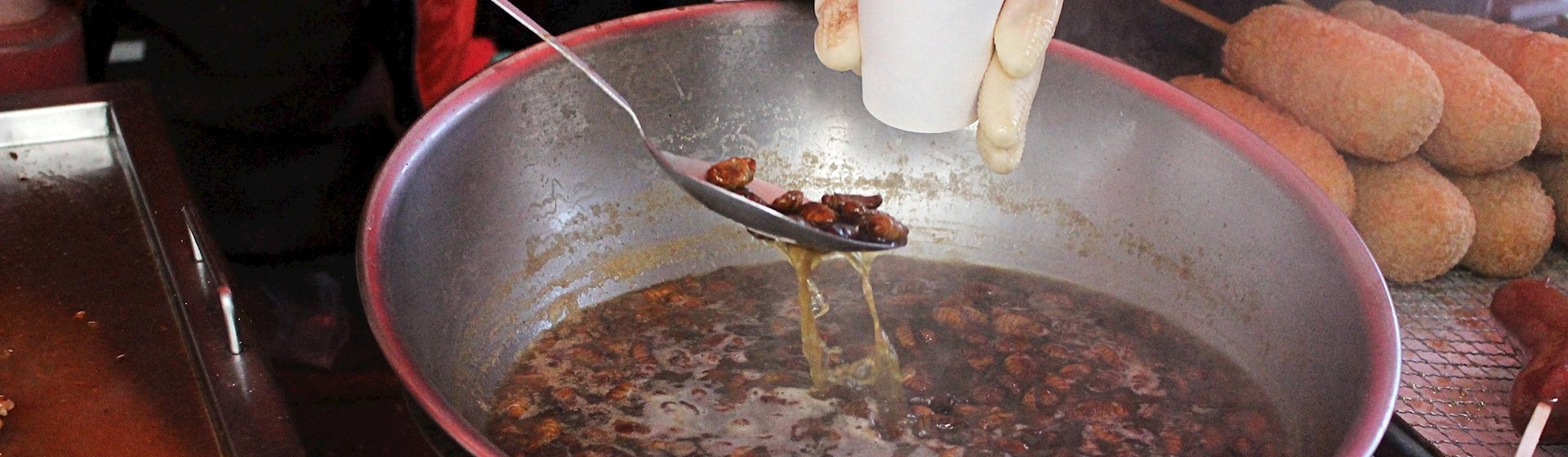
Beondegi is a classic South Korean street food consisting of silkworm pupae insects. These tiny animals are usually boiled or steamed and then seasoned before they are served in small cups. Although of an acquired taste, beondegi is available at numerous street stalls throughout the country, while the canned version is occasionally found in supermarkets. Some restaurants even serve the insects as a side dish. Beondegi became a popular option during Korean War when food was scarce, and there was a shortage of protein-rich ingredients.

02

Beondegi Soup

2.7 ·

Beondegi soup is a Korean soup made with silkworm pupae as the key ingredient. In order to prepare it, the silkworm pupae is marinated in sweet soy sauce, then boiled for a long time in water. The aromas are distinctive, pungent and earthy, making the dish recognizable from a few meters away. The pupae can be on the softer or harder side, and as they're chewed, they pop in the mouth, squirting bits of their juices. The soup has a savory and sweet flavor with hints of soy sauce. In Korean pubs, beondegi soup is often served with alcohol on the side, and there's also a canned version of the dish which can be found in most supermarkets.

03

Hon mhai (Deep-Fried Silk Worms)

2 ·

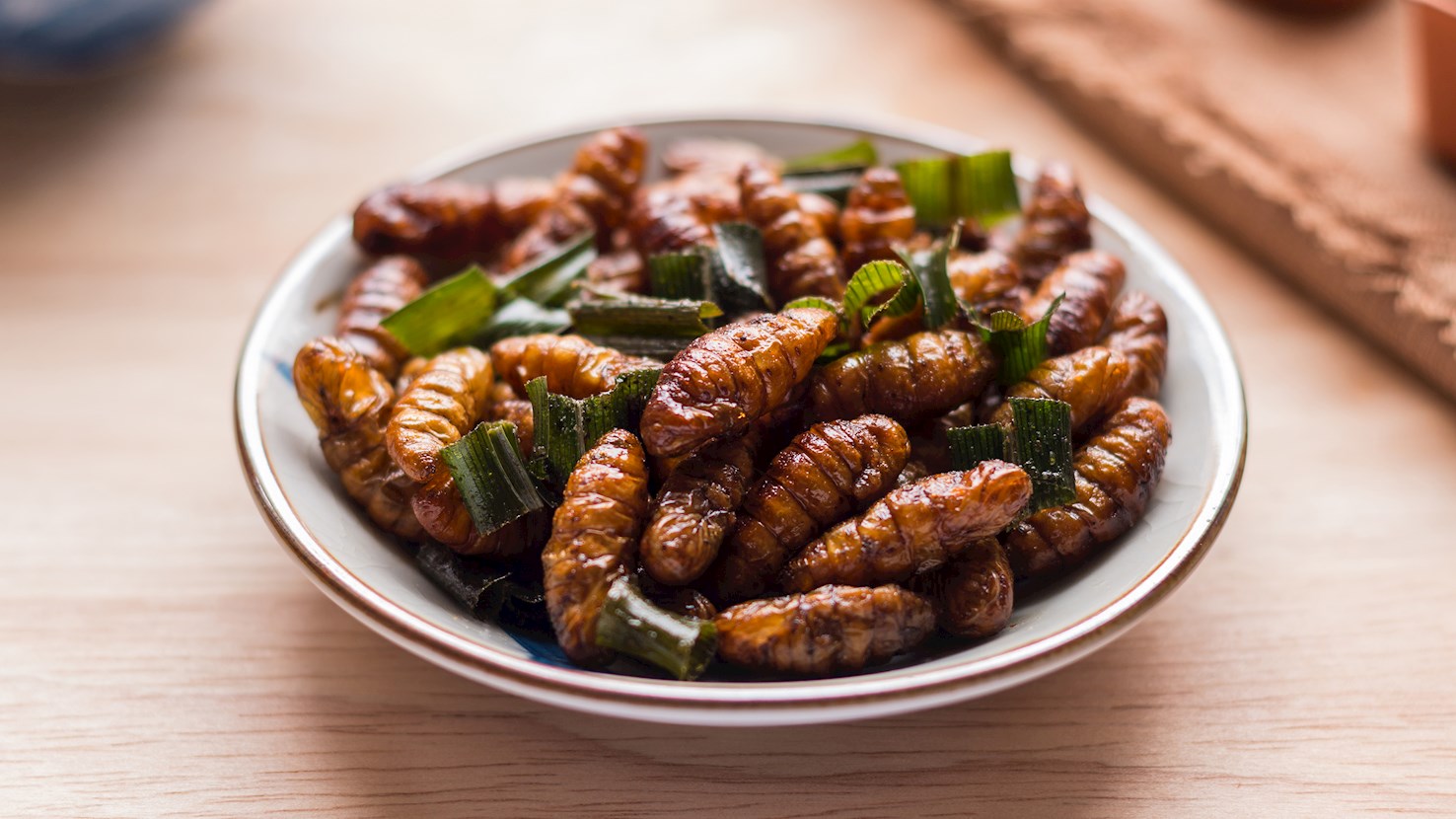
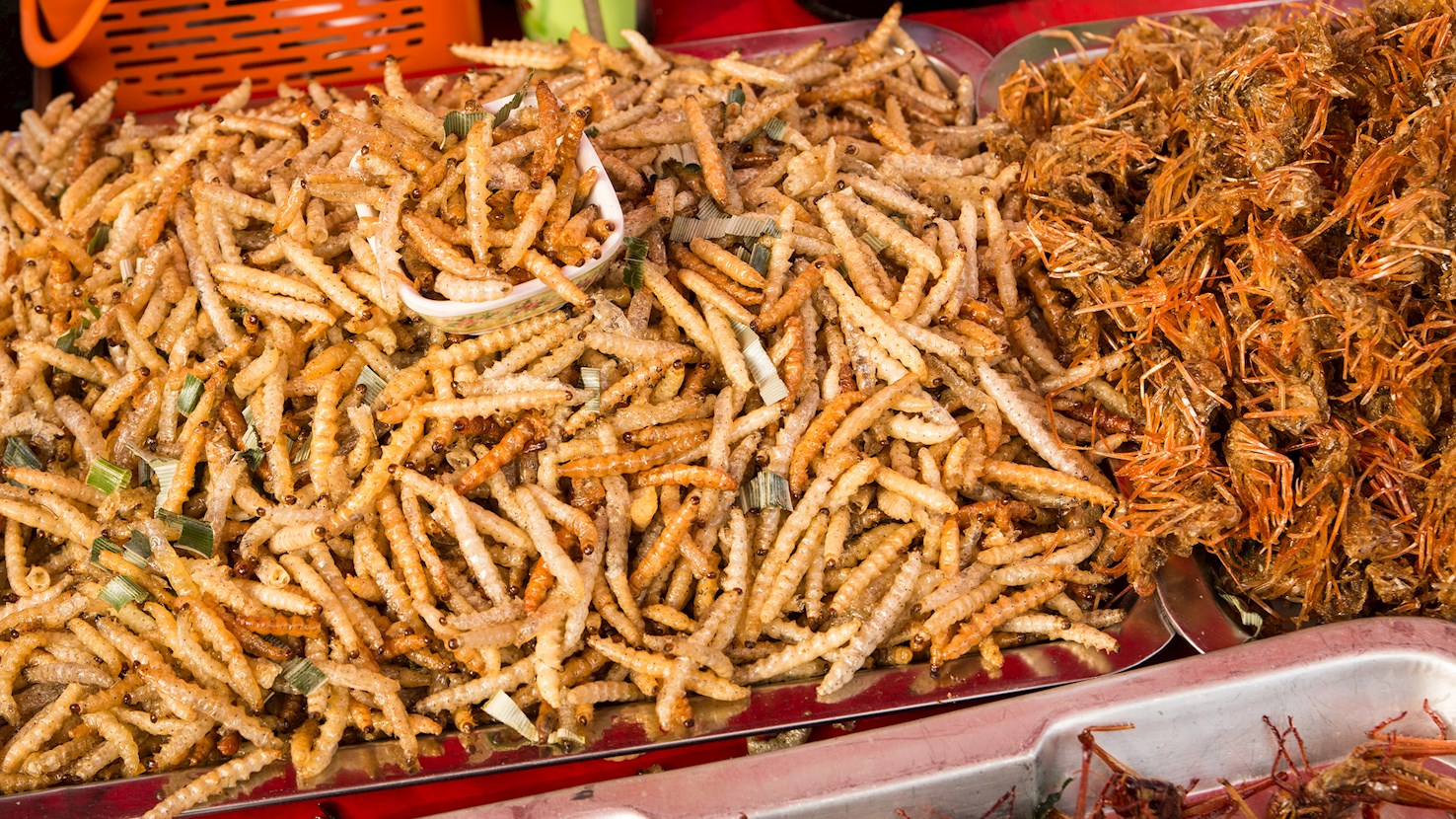
Hon mhai is a traditional insect dish that's especially popular in Bangkok. It's made by deep-frying silk worms, then seasoning them with salt, pepper, and sometimes a secret sauce that's prepared by the vendor, because the snack is usually sold from street carts. Once fried, the silk worms turn crunchy and greasy, while the flavor is sometimes described as slgihtly bitter. Hon mhai silk worms are prized because they're rich in protein and some believe that they have medicinal properties.

04

Inago no tsukudani

n/a ·

Inago no tsukudani is a traditional dish featuring insects as the key ingredient. It originates from the mountainous regions such as Nagano and Fukushima. The dish is prepared with rice grasshoppers or locusts that are cooked in a combination of soy sauce, mirin, and sugar, a method known as tsukudani. Once prepared, the locusts should be crunchy, and the flavor is described as mild and nutty. The dish is often served as a snack with sake, beer, or tea, but it can also be served as an accompaniment to main dishes.

05

Malang tod

n/a ·

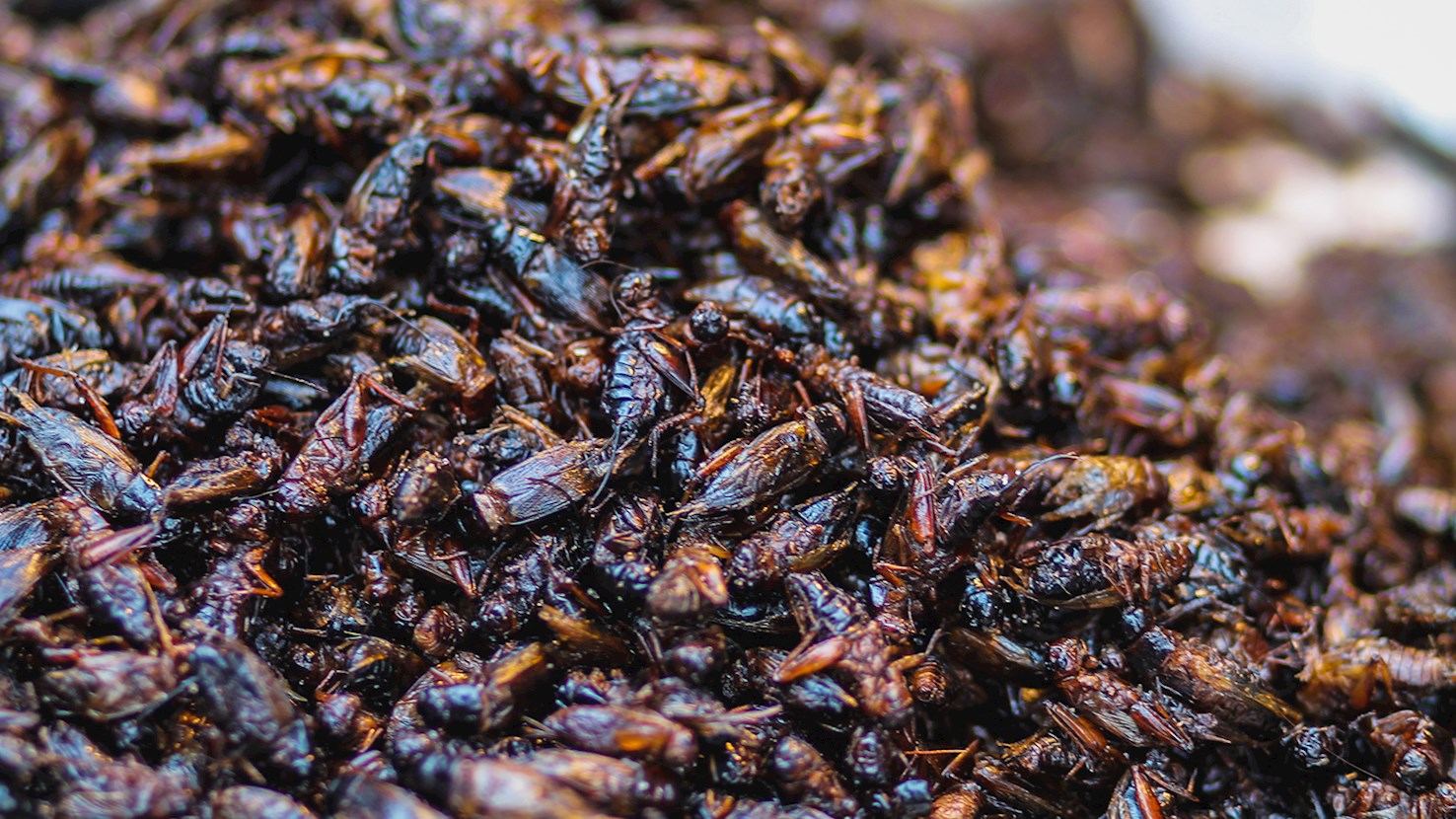
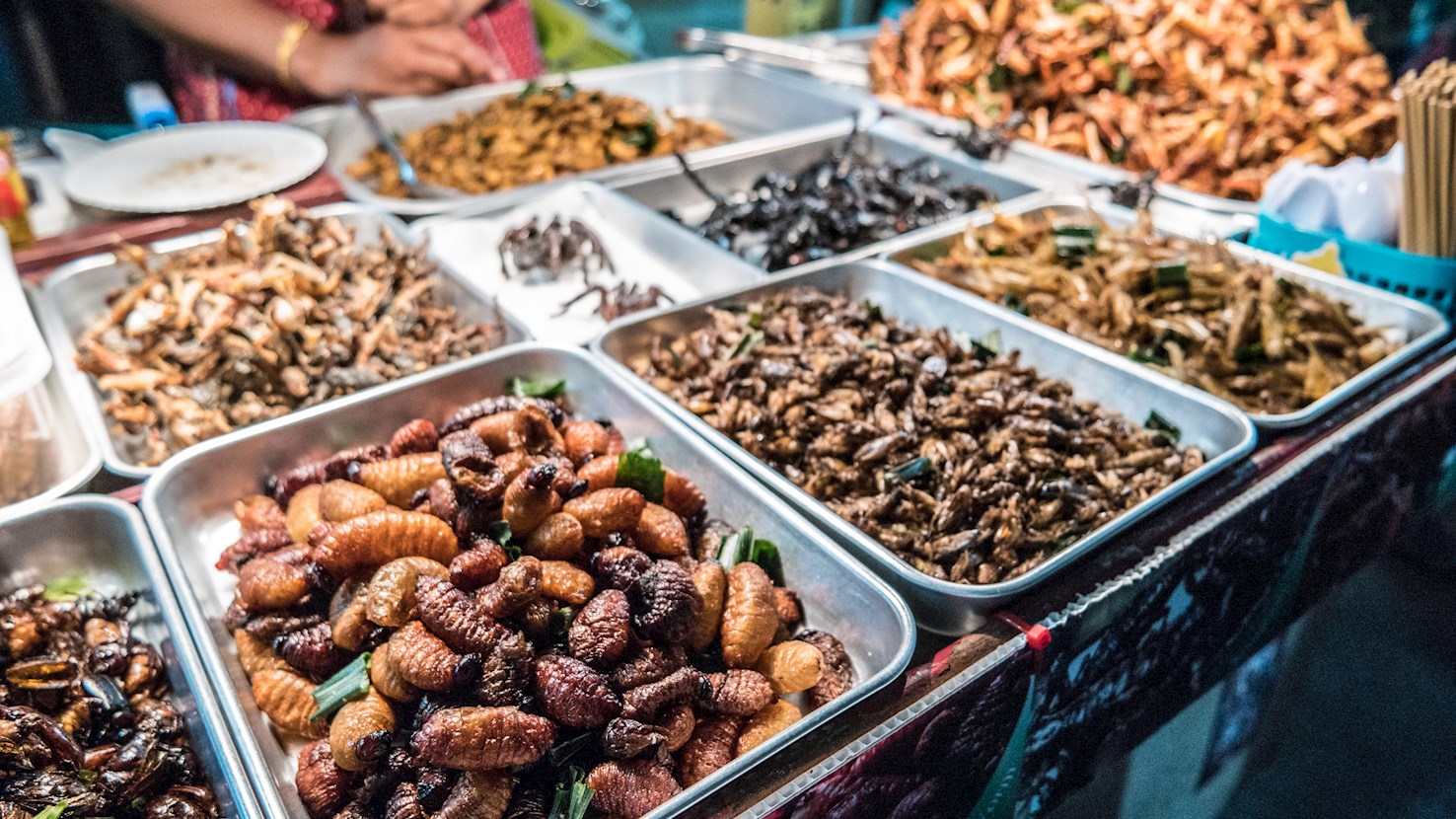
Malang tod is a Thai dish consisting of a variety of fried insects such as crickets, beetles, worms, and grasshoppers. Once fried, the insects are traditionally served with a bit of pepper and soy sauce or fish sauce. This dish is very nutritious because the insects are a great source of protein. The flavors and textures are best described as nutty, salty, and crunchy. Malang tod is usually eaten as an afternoon snack, and it's often paired with liquor or beer. Some of the most popular types of malang tod include silk worms (hon mhai), waterbugs (maeng da), and grasshoppers (takatan).

06

Rod duan

n/a ·

Rod duan are fried bamboo caterpillars originating from Thailand. The caterpillars live in the bamboos and consume it as well. They're high in protein, low in fat, and some people believe that they have medicinal properties. The caterpillars are usually deep-fried in hot oil, and they become very crunchy in texture after the process. The flavor is often compared to fried potato chips. Sometimes, they're cooked with chili paste. Rod duan can be easily found in numerous street markets in the country and it's one of the most common fried insects in Thailand.

07

Mod daeng

n/a ·

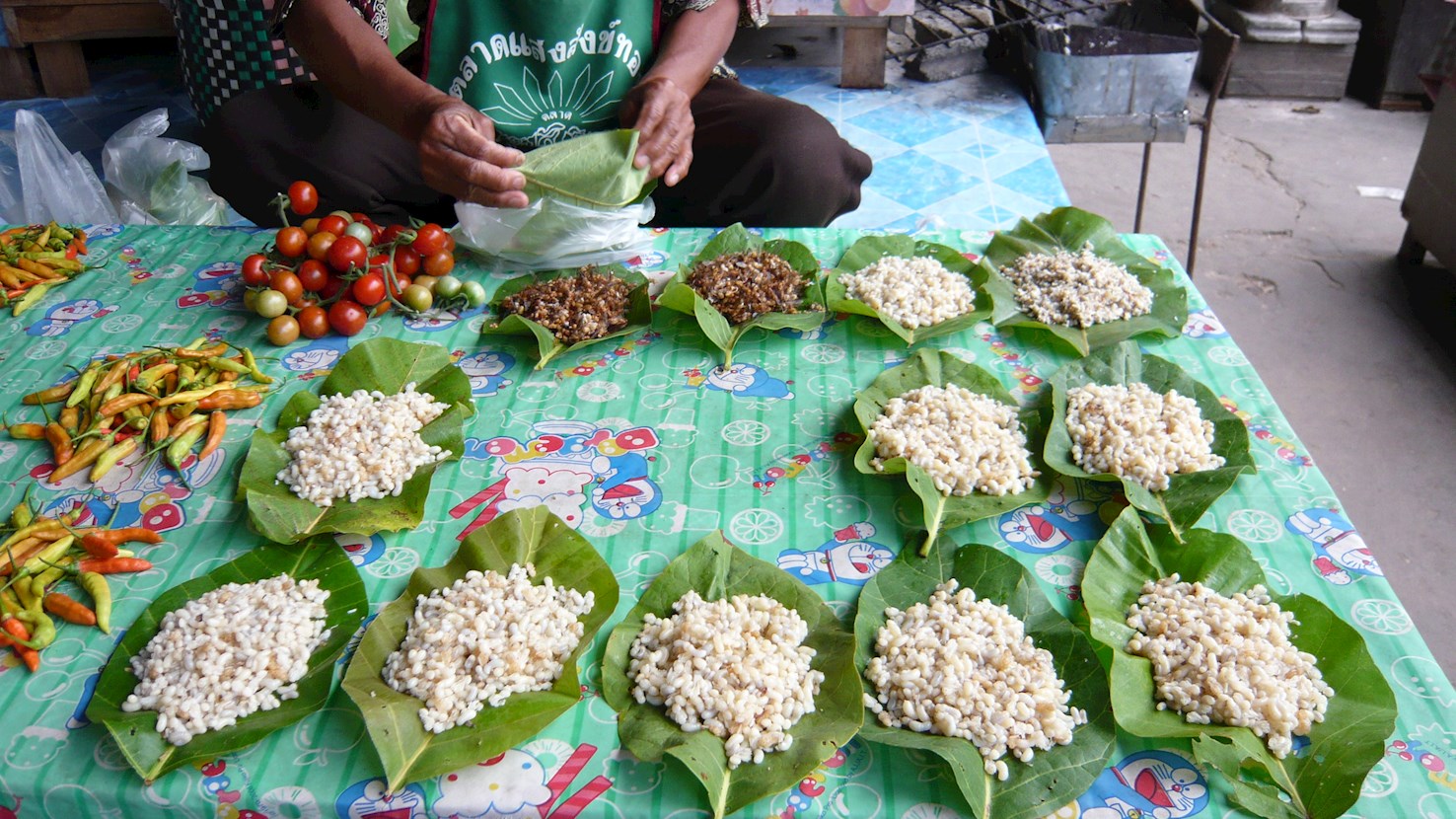
Mod daeng is the name for weaver ants that can be found in the northeast of Thailand. The literal translation from Thai means red ant. The ants are collected once a year in the dry season from February until May. Their eggs (kai mod daeng) are some of the most prized edible inscects due to their rich and pleasant flavor and medicinal properties. The eggs are rich in sugars, vitamins, and proteins. At the markets, mod daeng eggs reach high prices, making them vital for the local economy. The ants and the eggs can be fried, used in omelets, or boiled in coconut milk for the preparation of a dessert called tom kati kai mod daeng.

Read more
View all
View map
About this ranking

TasteAtlas food rankings are based on the ratings of the TasteAtlas audience, with a series of mechanisms that recognize real users and that ignore bot, nationalist or local patriotic ratings, and give additional value to the ratings of users that the system recognizes as knowledgeable. For the “Top 7 Asian Insect Dishes” list until June 15, 2026, 91 ratings were recorded, of which 63 were recognized by the system as legitimate. TasteAtlas Rankings should not be seen as the final global conclusion about food. Their purpose is to promote excellent local foods, instill pride in traditional dishes, and arouse curiosity about dishes you haven’t tried.

Similar lists