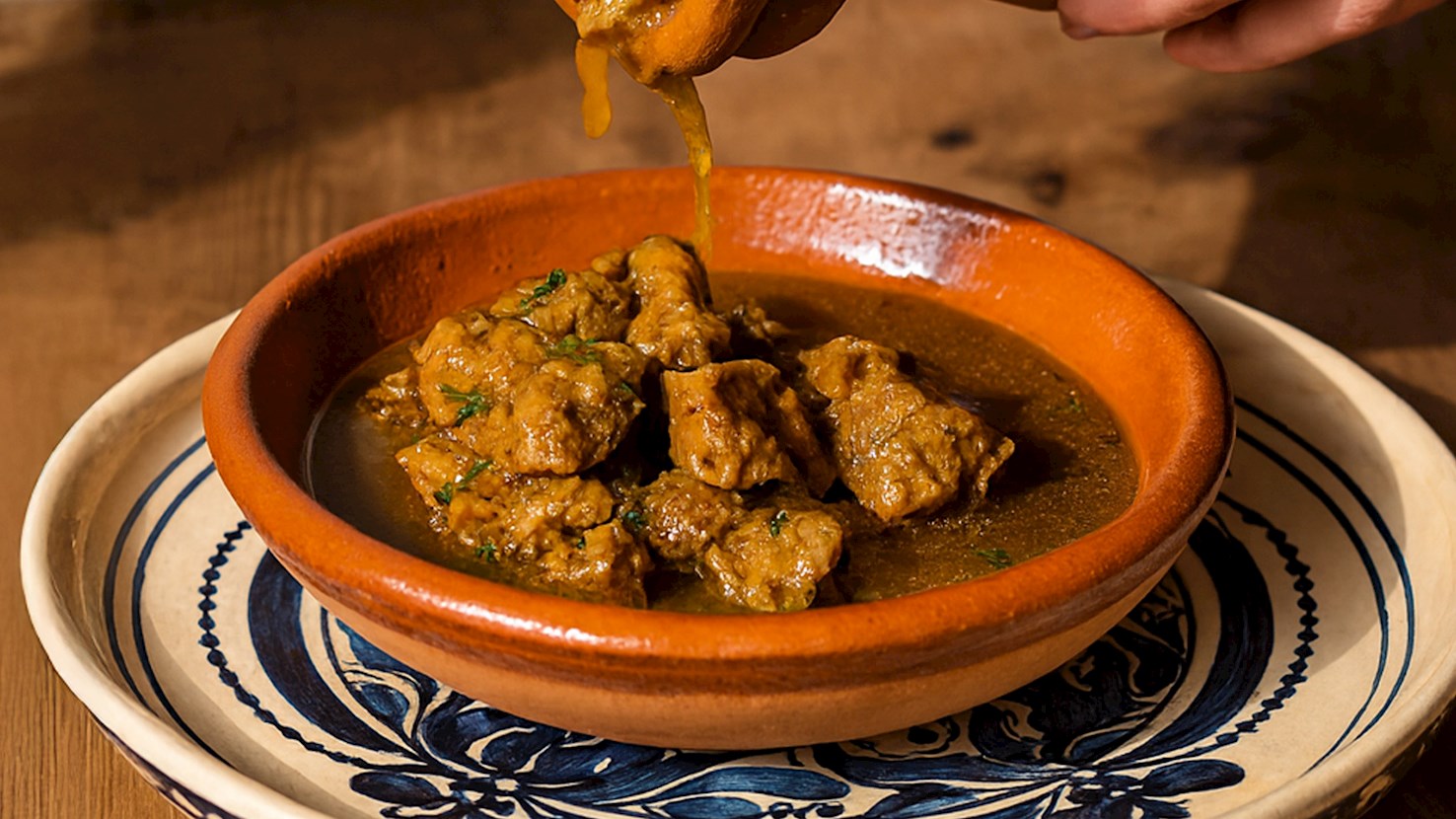
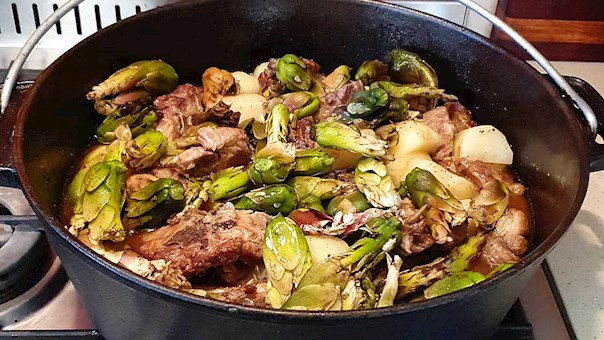
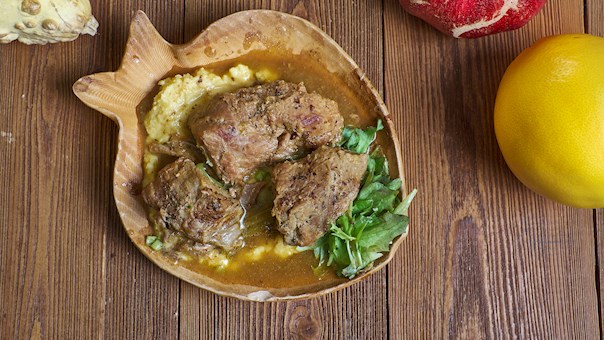
Tanjia is a unique Moroccan specialty made by cooking lamb meat in a clay urn along with flavorings such as saffron, cumin, garlic, lemons, and olive oil. The dish is especially popular in Marrakech, where the urns are filled with all of the ingredients, then placed in the coals of a public bath (hammam) to slowly cook overnight until the meat is so tender that it falls off the bone. Originally, tanjia was created and cooked by men who would go on outdoor picnics.
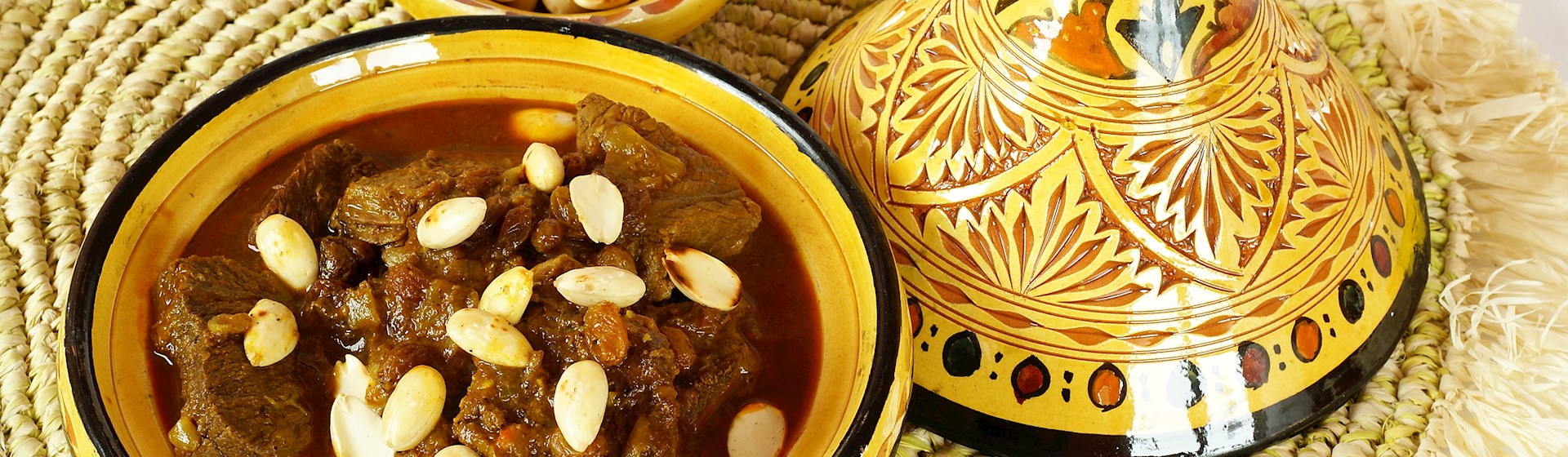
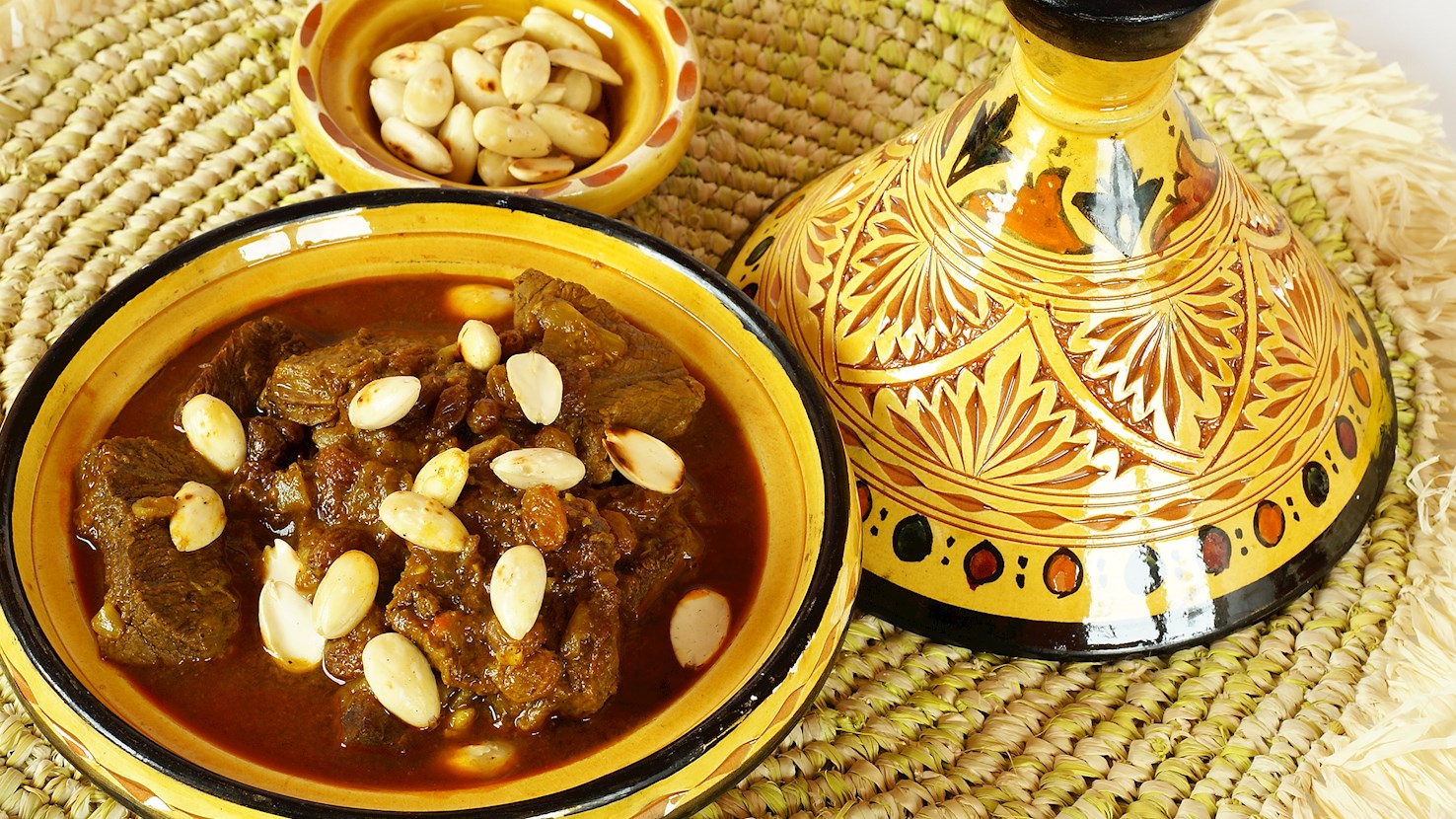
Mrouzia is one of the most loved sweet-and-savory Moroccan dishes, consisting of a tagine with lamb, honey, almonds, raisins, and ras el hanout spices. The dish is traditionally reserved for festivities, celebrations, holidays, and similar large gatherings. This tagine is one of the most popular dishes during the Muslim festival of Eid al-Adha. It is recommended to garnish the dish with a generous sprinkling of sesame seeds.
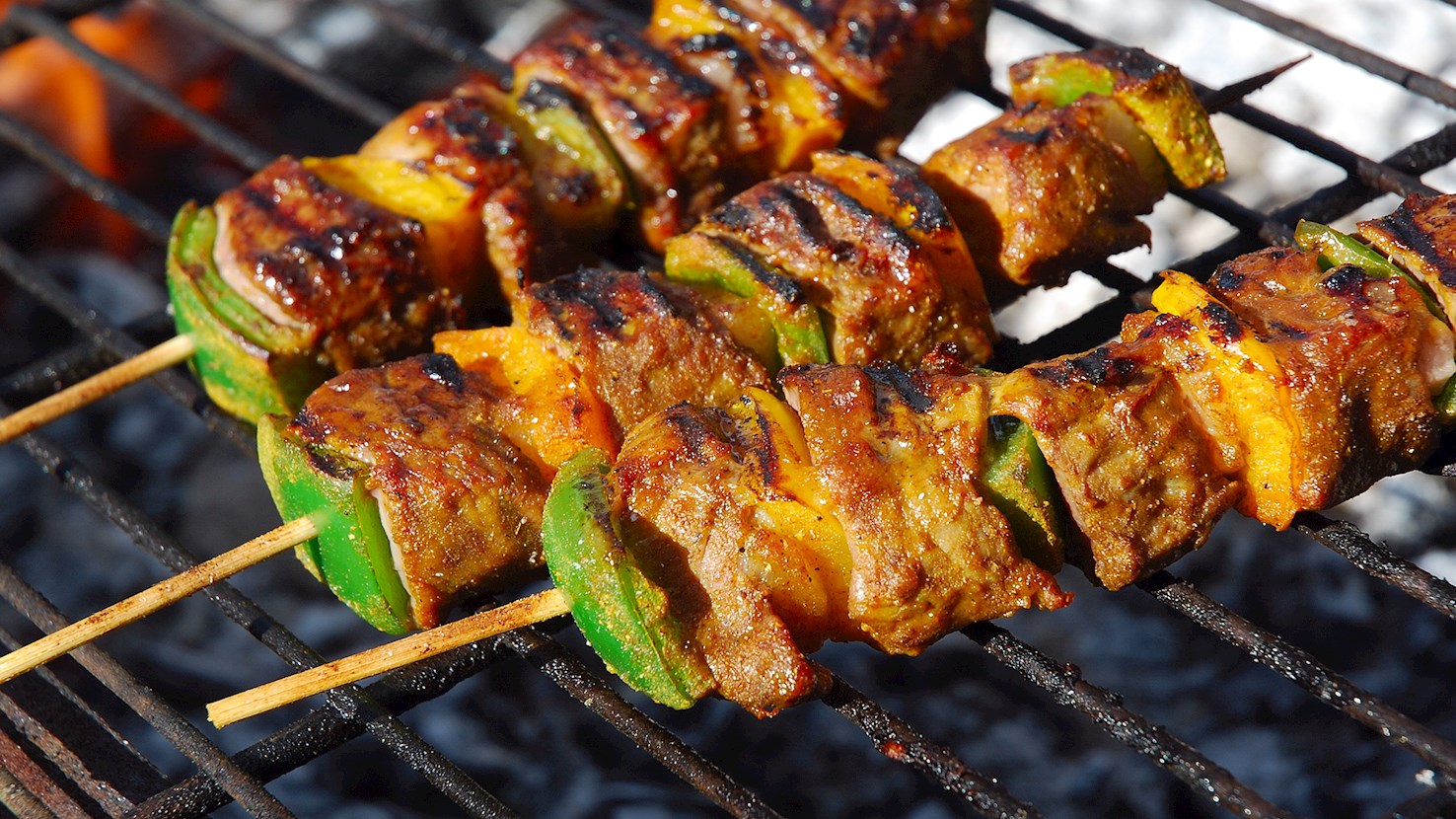
Sosatie is a South African meat dish consisting of pieces of lamb that are marinated in a sauce made with onions, garlic, hot peppers, tamarind juice, and curry leaves. The meat is then skewered and barbecued on a traditional South African braai. It is recommended to add peppers, apricots, prunes, or mushrooms between each piece of skewered meat for the best flavor. Although lamb or mutton is the most typical choice, it can be replaced with beef or chicken. It is recommended to serve sosaties with rice or a salad on the side.
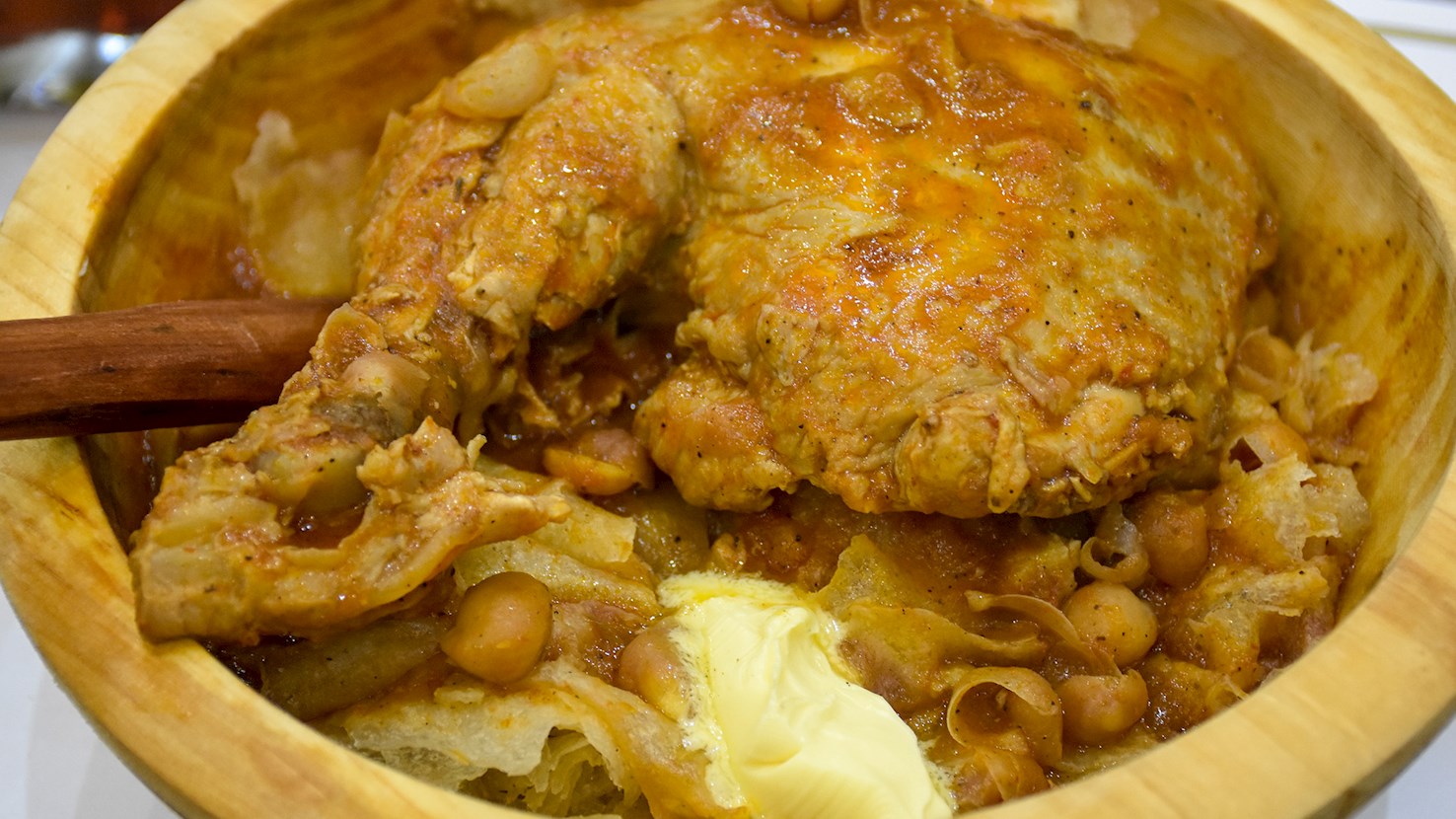
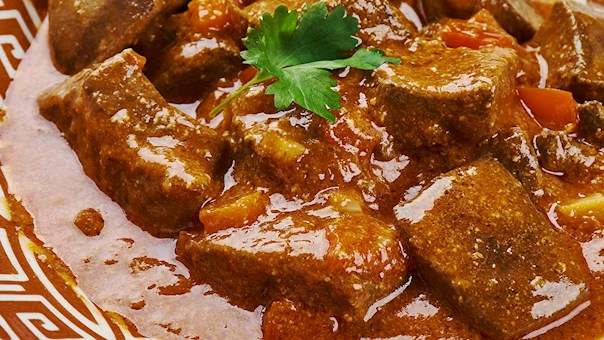
Chakhchoukha is a flavorful Algerian stew consisting of torn pieces of a thin, round flatbread known as rougag, and marqa – a stew made with diced lamb, tomatoes, chickpeas, onions, and flavorings such as cumin, ras el hanout, caraway, galangal, lavender, and red chili peppers. The dish is especially popular at celebrations and festivities. It is believed that the dish was invented by shepherds who needed a hearty meal when they came home on cold nights. The name of the dish can be roughly translated to torn flatbread, referring to the key ingredient of chakhchoukha.
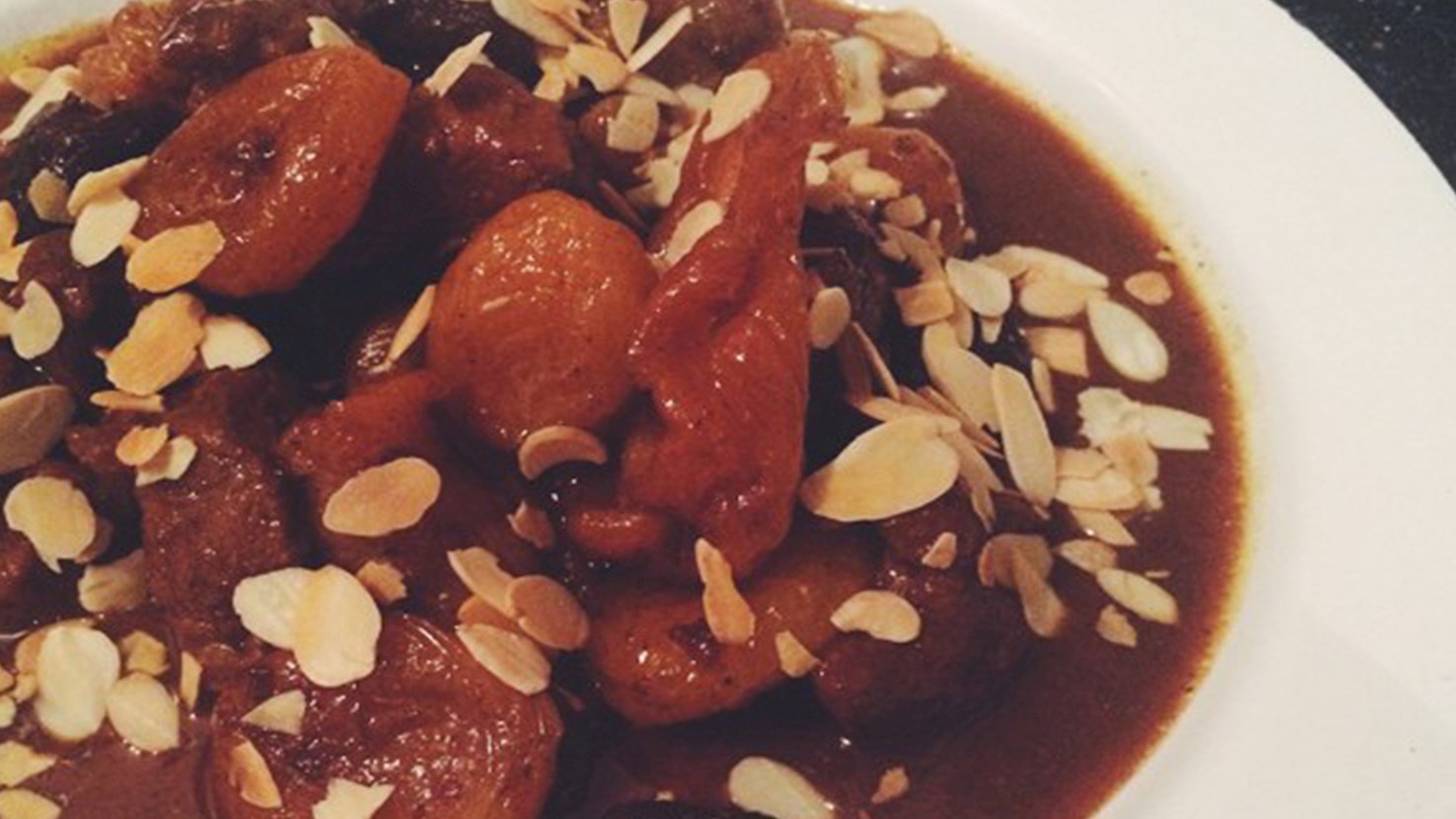
Lham (lit. meat) lahlou (lit. sweet) is an Algerian dish consisting of pieces of lamb stewed in a sweet syrup with fruit and various spices such as cinnamon and star anise. The dish often employs fruits such as prunes, quince, apples, pears, apricot, and raisins. It is typically reserved for Ramadan, when the dish is used to break the fast. Because it is full of sugar, lham lahlou is excellent for keeping the energy levels up for nightly prayers.
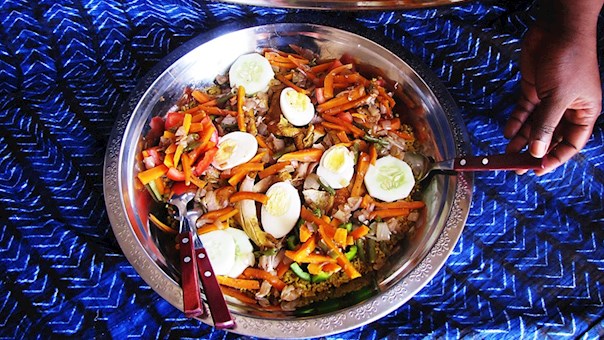
Couscous bil-bosla is a traditional dish made with a combination of couscous, chickpeas, potatoes, tomatoes, and lamb. Other ingredients used in the dish include onions, butter, chili peppers, and various spices. When served, couscous is arranged on a platter and topped with the lamb chops, and the whole dish is then covered with the chickpea sauce. The dish is traditionally served on a large sharing platter.
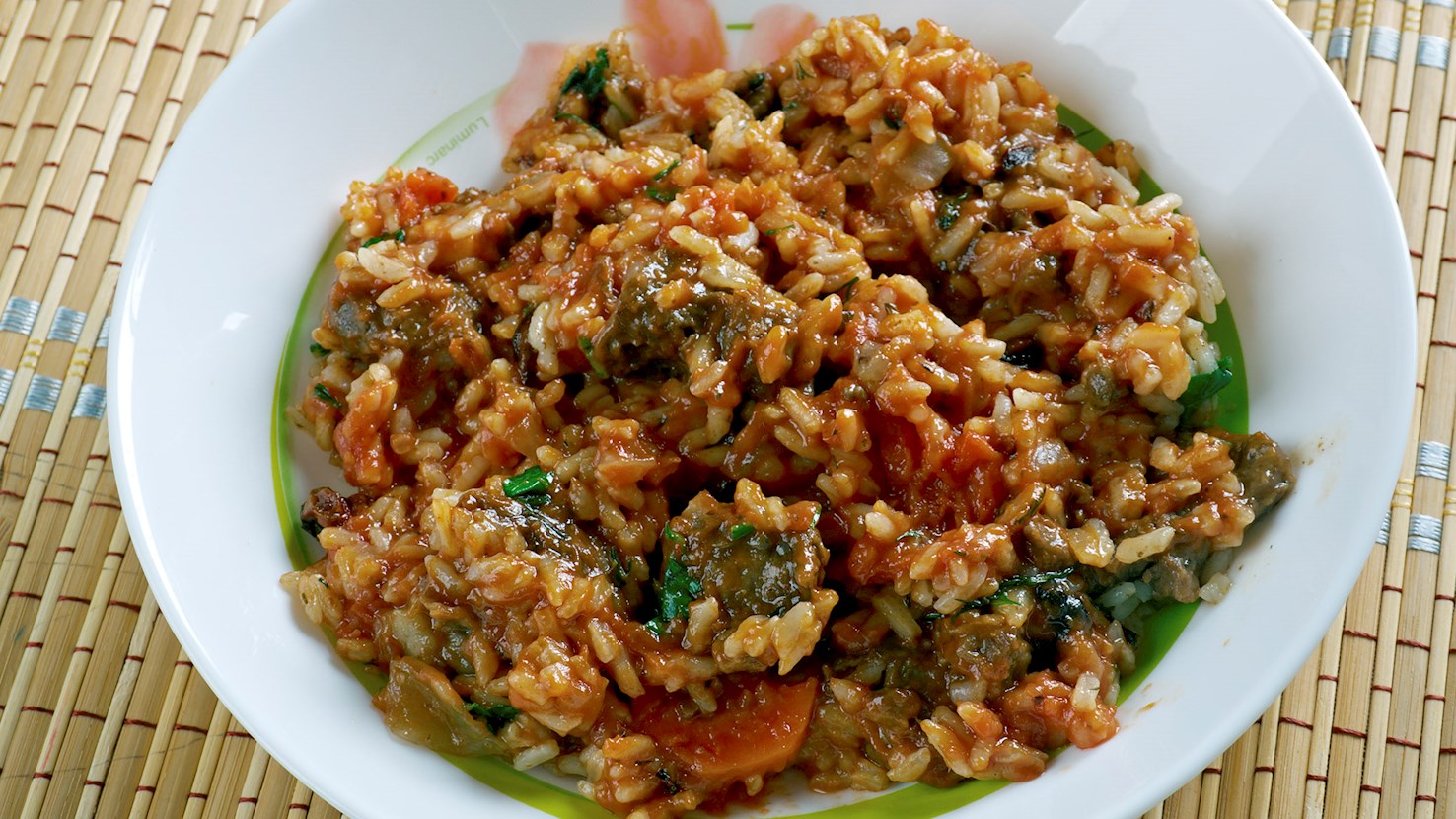
Coming from one of the world's smallest and least populated countries, Djibouti, a former French colony located between Ethiopia and Somalia, skoudehkaris is a flavourful rice dish seasoned with cardamom and cooked with lamb, although lamb can sometimes be substituted by chicken, beef, or fish. This thick, spicy stew is additionally enriched with cumin, cloves, cayenne pepper, cinnamon, and tomatoes, evolving into a warm and hearty comfort food dish. The spices and herbs are cooked with onions until soft, lamb is browned, then tomatoes and water are added to the pot. When the meat gets tender, rice is added to the pot to slowly simmer for about 20 more minutes. In the end, fragrant spices fill the air, and the meat melts in the mouth. All it needs is a bit of traditional lahoh flatbread on the side, some chopped coriander on top, and Djibouti's national dish is ready to be consumed.
Originating from East Libya, makaruna imbaukha is a savory dish made with steamed pasta as the key ingredient. The pasta is combined with meat (usually lamb) and a rich sauce made with clarified butter, tomatoes, onions, chickpeas, potatoes, pumpkin, and raisins. The whole dish is typically flavored with cloves, bay leaves, ginger, black pepper, and shaiba leaves. For the final touch, makaruna imbaukha can be sprinkled with orange flower water and cinnamon. When served, the pasta is traditionally spread in the center of the plate and topped with everything else. It is recommended to serve the dish with Libyan pickles known as mseyer on the side.
Dounguouri soko is a traditional African stew originating from Niger. It's made with a combination of lamb, white beans, bell peppers, tomatoes, onions, garlic, oil, tomato paste, salt, pepper, and (optionally) natron – a salty and bitter mix of baking soda, sodium chloride, and sodium sulfate, which is used to soften the beans and to ease digestion. The stew is similar to the French cassoulet, but it doesn't contain any spices. The beans are soaked, rinsed, mixed with natron, then boiled. The meat is cut into chunks and browned in oil with onions, peppers, tomatoes, garlic, tomato paste, and water. The beans are added to the pot, and the stew is then simmered for a bit more until the sauce thickens. It's recommended to serve dounguouri soko with mayonnaise.
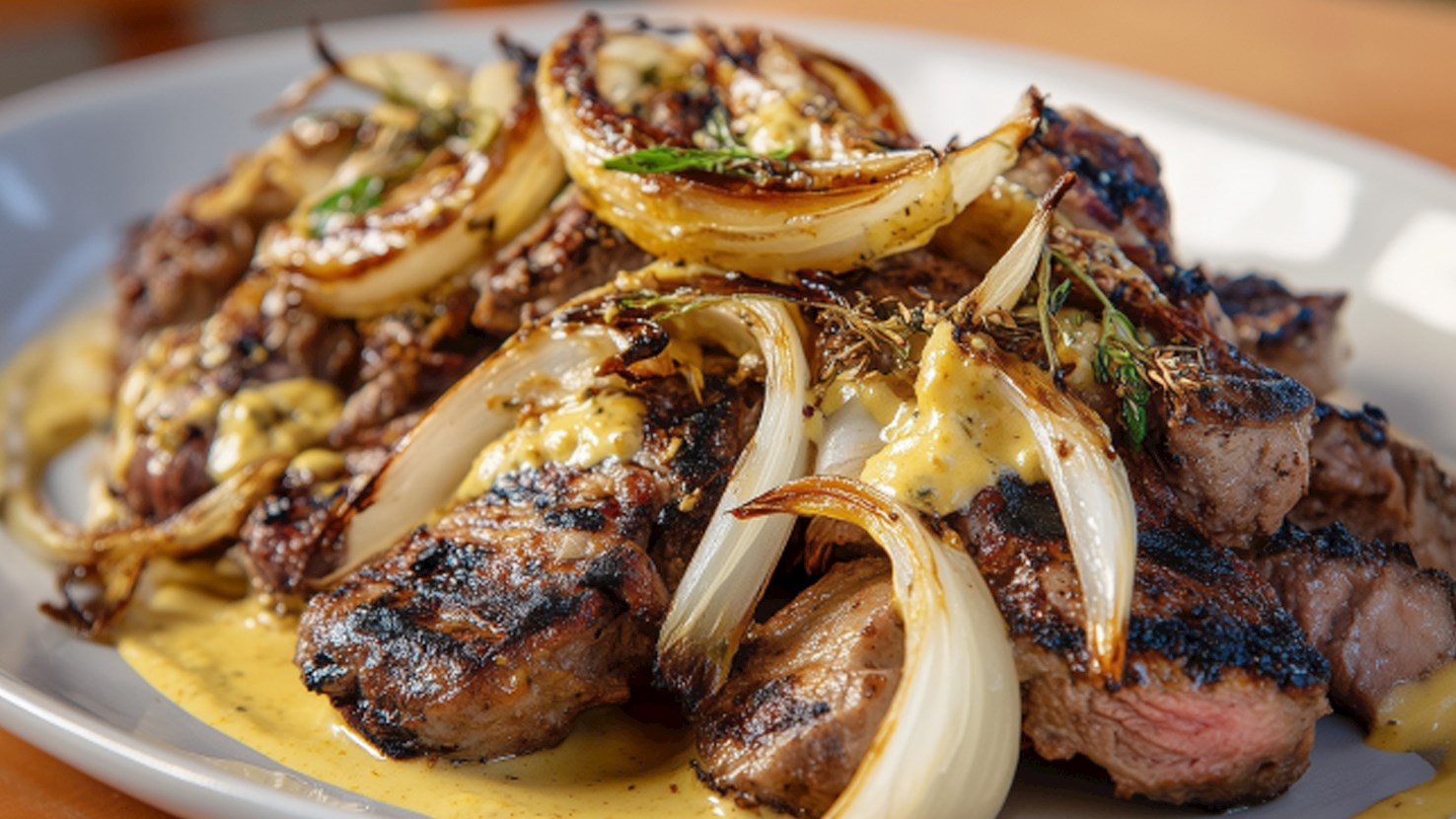
Dibi is a Senegalese dish consisting of grilled meat, most often lamb, seasoned simply and cooked over open flames before being served with accompaniments such as onions, mustard, and bread. It is found throughout Senegal, especially in Dakar, where small eateries known as dibiteries specialize in preparing it. The dish has become an emblem of Senegalese street food, associated with communal dining and casual gatherings. Its roots lie in the widespread practice of roasting and grilling meat across West Africa, where lamb and mutton have long been staples of both everyday and celebratory meals. As urban centers like Dakar expanded in the twentieth century, demand grew for quick yet flavorful meals that could be enjoyed socially, and the dibiterie became a fixture of city neighborhoods. These establishments often set up grills outside, attracting passersby with the aroma of sizzling meat. Preparation begins with cuts of lamb, which may be marinated lightly or seasoned with salt, pepper, and spices before being grilled over wood or charcoal. The meat is cut into portions or small pieces, sometimes skewered, and served on paper or plates with raw onions, a squeeze of mustard, and often baguette bread, reflecting the French influence on Senegalese cuisine. The combination of smoky meat with tangy accompaniments gives the dish its characteristic balance of flavors. What distinguishes dibi is not only the simplicity of its preparation but also the way it is sold and shared. Dibiteries are more than food stalls; they function as social spaces where people gather in the evenings to eat together. The visibility of the cooking process, with whole sides of lamb roasted and carved in front of customers, reinforces its identity as both food and spectacle. Today, dibi remains popular across Senegal and has spread to neighboring countries, often prepared in urban areas where street food culture thrives. It is eaten casually, usually with friends or family, either at the dibiterie itself or taken home.
TasteAtlas food rankings are based on the ratings of the TasteAtlas audience, with a series of mechanisms that recognize real users and that ignore bot,
nationalist or local patriotic ratings, and give additional value to the ratings of users that the system recognizes as knowledgeable.
For the “Top 17 African Lamb Dishes” list until June 15, 2026, 1,384 ratings were recorded, of which 218 were recognized by the system as legitimate.
TasteAtlas Rankings should not be seen as the final global conclusion about food. Their purpose is to promote excellent local foods,
instill pride in traditional dishes, and arouse curiosity about dishes you haven’t tried.