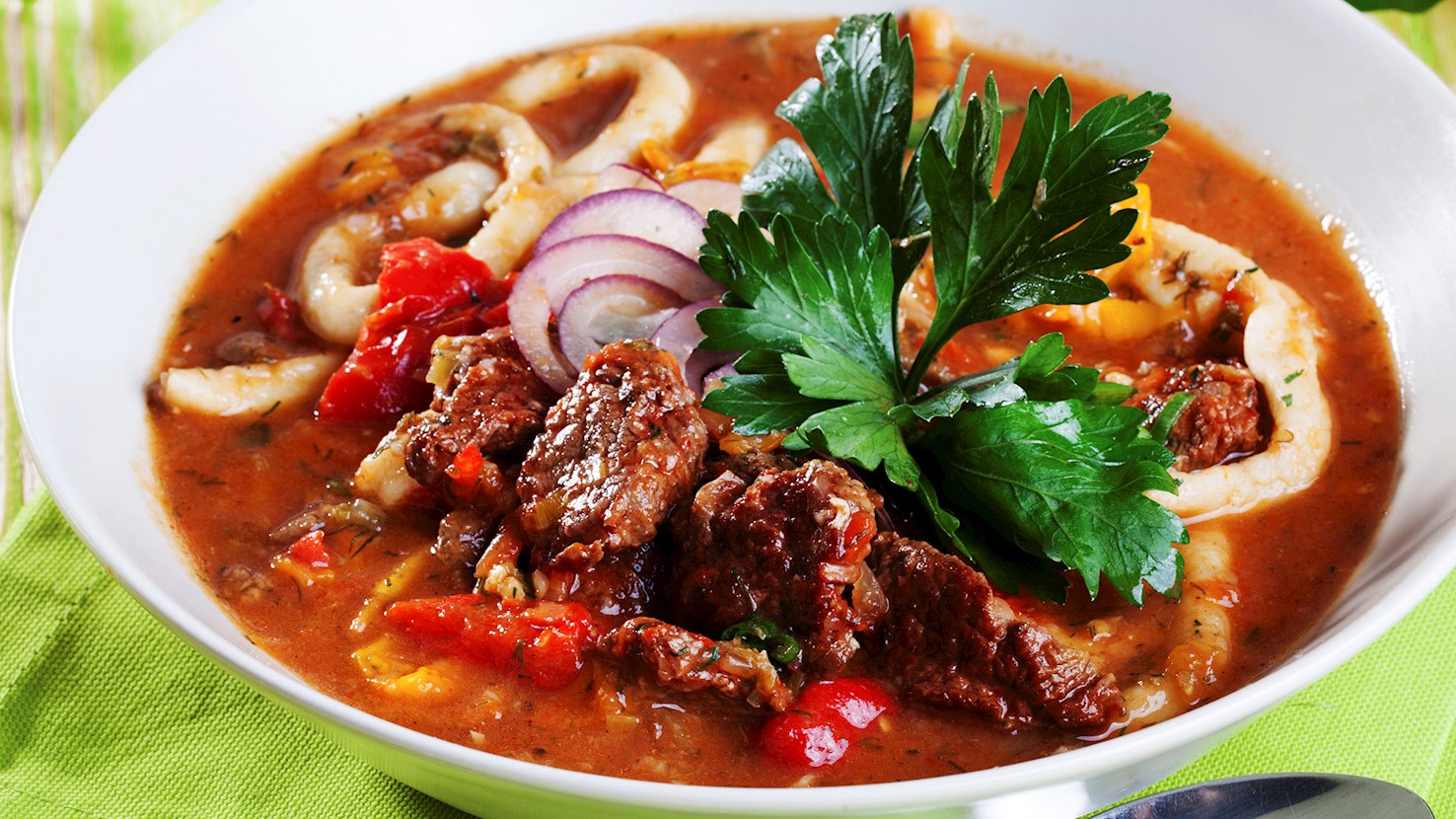
Lağman is a noodle-based dish made from hand-pulled wheat noodles served with a savory topping of meat, vegetables, and sauce, prepared across Central Asia and most closely associated with Uyghur communities in the Xinjiang region of China as well as widely cooked in Kazakhstan, Kyrgyzstan, and Uzbekistan, where it appears in home kitchens and casual eateries as a full meal rather than a side. Its development follows the movement of Turkic-speaking peoples along inland trade routes, where wheat cultivation, noodle-making techniques, and stir-based meat cookery intersected, resulting in a dish that combined Chinese-style hand-pulled noodles with Central Asian preferences for lamb, onions, and robust sauces, and adapted locally depending on available vegetables and fats. Preparation centers on a firm dough made from wheat flour, water, and salt that is rested and repeatedly stretched and pulled by hand into long, elastic strands, while the topping is cooked separately by sautéing meat, most often lamb or beef, with onions, garlic, tomatoes, peppers, and other vegetables, simmered until cohesive but not thickened into a paste, then spooned over or mixed with the cooked noodles. Serving can take two main forms, either with the sauce ladled generously over drained noodles or with additional broth added to create a soup-like consistency, and it is brought to the table immediately so the noodles retain their structure. What distinguishes lağman is the noodle-making method itself, which relies on manual stretching rather than cutting, producing strands with uneven thickness that hold sauce differently along their length and require skill and timing rather than tools. It is eaten hot, usually with a spoon and fork or chopsticks depending on local custom, commonly at lunch or dinner, and it pairs well with simple salads, pickled vegetables, or raw onions, while beverages such as black tea, lightly salted tea, or plain water are most often consumed alongside to balance the richness of the meat and sauce.
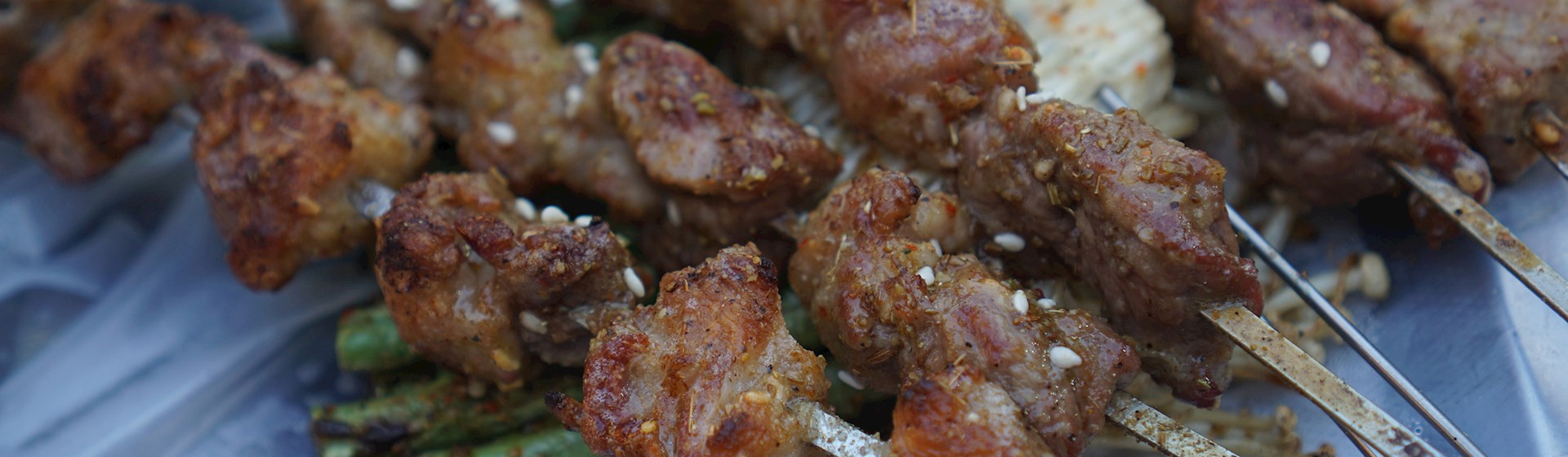
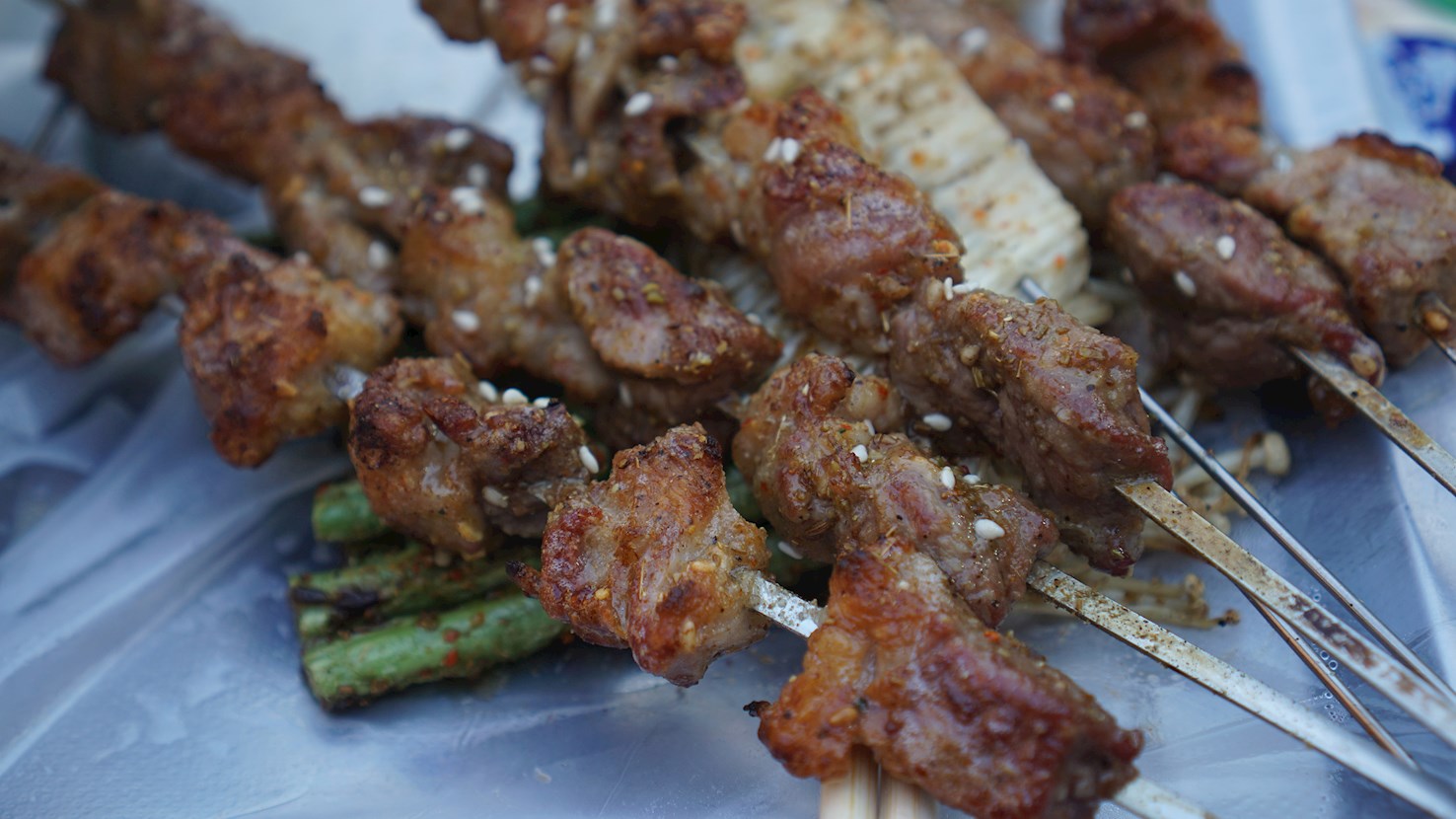
Xinjiang lamb skewers is a dish consisting of pieces of lamb (rarely even mutton) that are skewered onto a stick and then grilled using a special technique. The lamb is first cut up into pieces, each having a different texture and flavor. Every piece of lamb can be grilled, from lean and fatty meats to skin, tripe, marrow, and offal. The first step is shortly grilling the lamb, then dipping it into hot mutton suet that’s been previously melted in a metal can, which locks in the juices and adds rich flavor. Then, the skewers are seasoned — the spices distribute thanks to the coating of fat evenly. Finally, the skewers are then back on the grill and grilled until crispy on the outside while the insides remain tender and juicy.
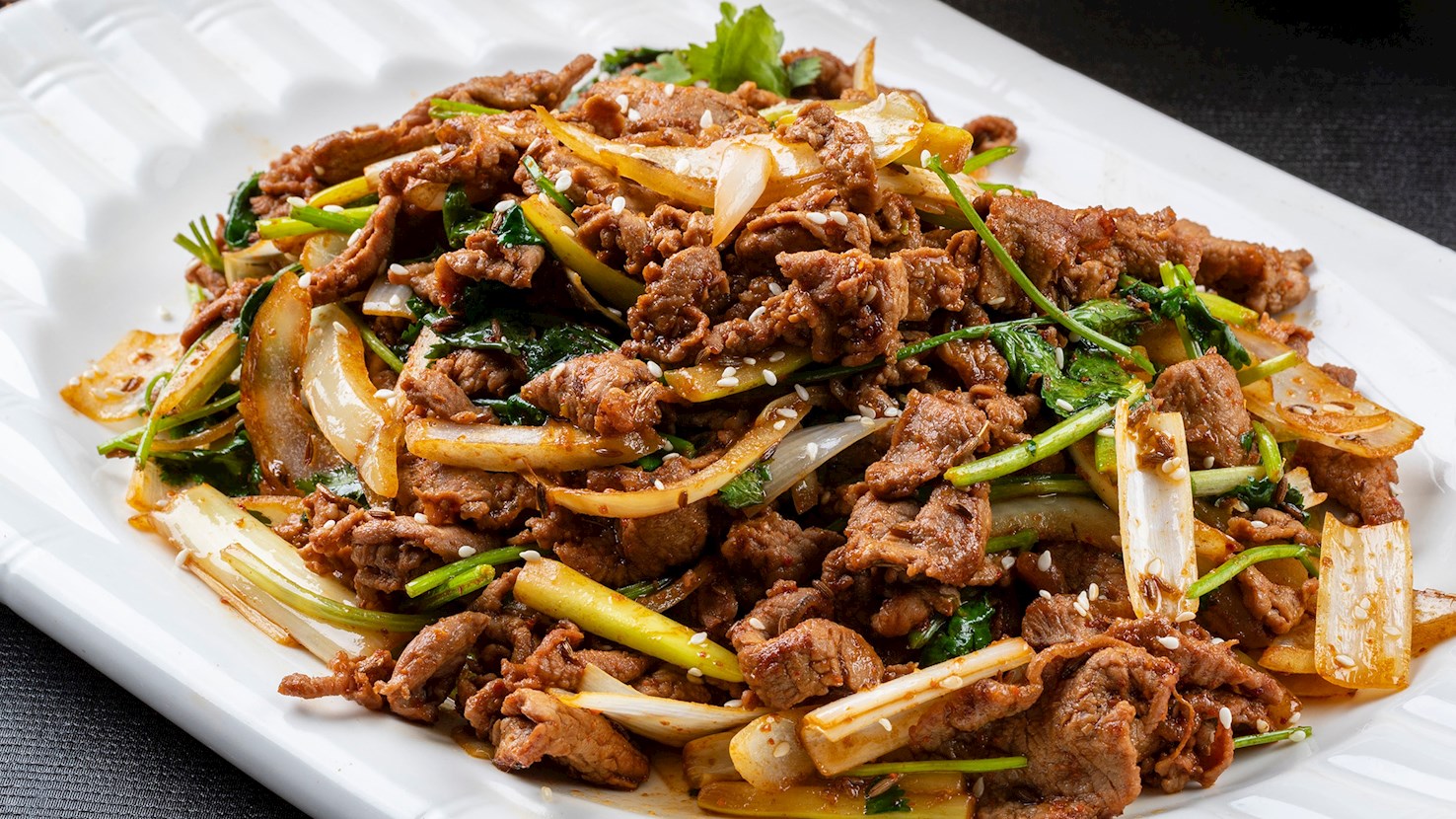
Zī rán yáng ròu is a Chinese stir-fried lamb dish seasoned primarily with cumin, chili, and garlic, originating from Xinjiang. The region has long relied on lamb and mutton as staple proteins, and its cuisine reflects influences from Central Asia and the Silk Road, where spices like cumin were introduced and became central to local cooking. Its development is tied to the pastoral lifestyle of Xinjiang communities, where herding sheep and goats provided a natural base for the diet. When cumin and other spices made their way into the region through trade, they blended seamlessly with the strong flavors of lamb, creating a preparation that soon became emblematic of Xinjiang cooking. As Chinese cities grew more cosmopolitan and regional cuisines spread beyond their origins, zī rán yáng ròu gained popularity across the country, representing both the unique flavors of the northwest and the diversity of Chinese gastronomy as a whole. To prepare the dish, lamb is cut into thin slices or small cubes, often marinated briefly with soy sauce, rice wine, or ginger to tenderize the meat and balance its gaminess. It is then stir-fried quickly over high heat with whole cumin seeds or ground cumin, dried chili peppers, onions, and garlic. Some versions include bell peppers, scallions, or celery, which add texture and contrast to the richness of the lamb. The method emphasizes high heat and rapid cooking, locking in the meat’s juices while coating it with the fragrance of spices. Today, zī rán yáng ròu is eaten in Xinjiang with flatbreads or rice, fitting into the broader diet of the region, while in other parts of China it is often paired with plain steamed rice or noodles to balance its strong, aromatic profile. It is a common feature at barbecue stalls, casual eateries, and increasingly at restaurants abroad that showcase regional Chinese cooking, allowing it to be enjoyed both as a quick street-side dish and as part of a larger meal shared among friends and family.
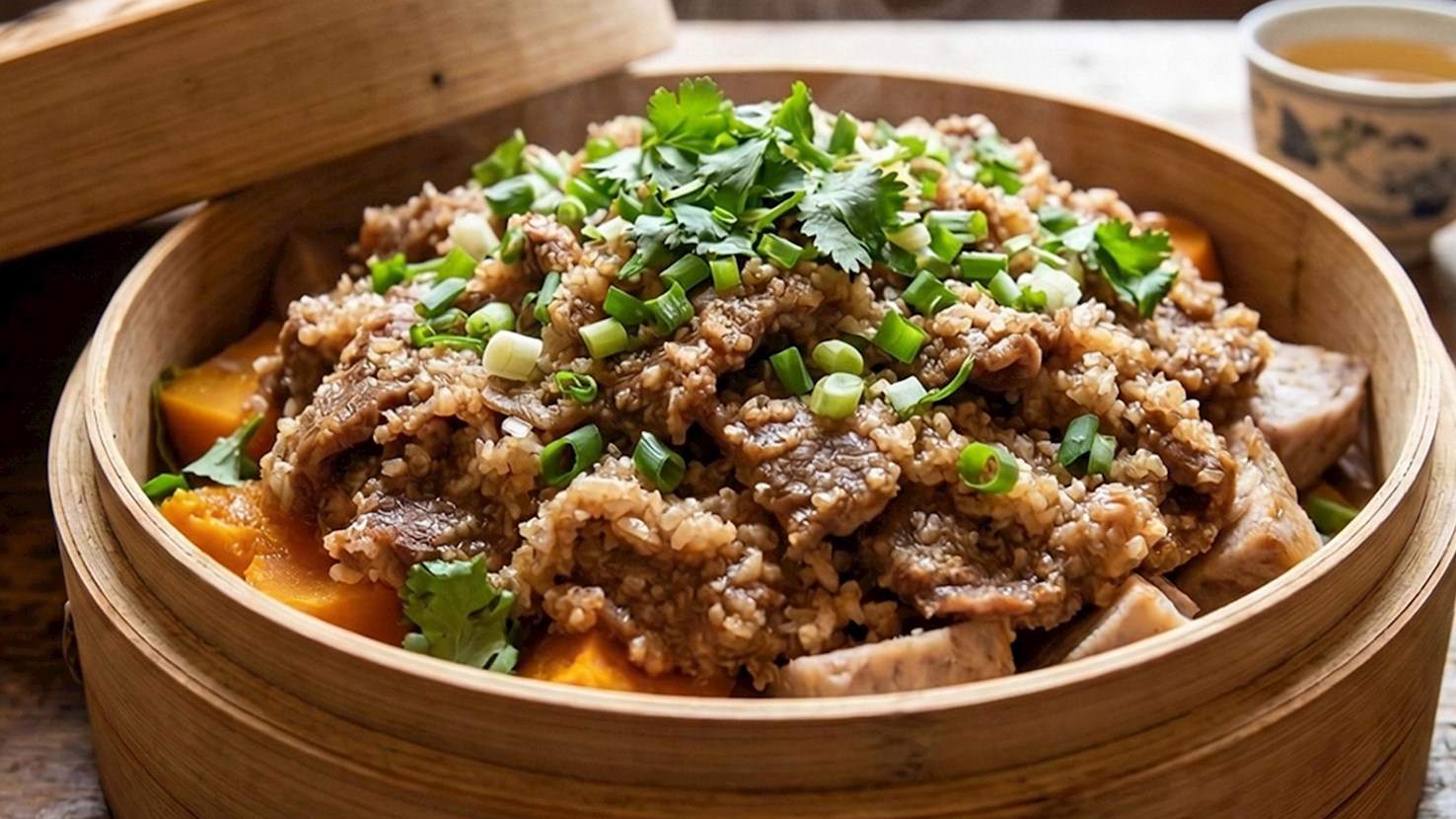
Fěnzhēng yángròu is a steamed lamb dish from Sichuan cuisine, notable for being coated in ground rice flour before cooking. It originates from southwestern China, where steaming techniques and the use of rice flour are common methods to achieve tender textures and layered flavors. Its roots lie in the long history of steaming in Chinese cooking, a technique prized for preserving the natural qualities of meat. In Sichuan, where lamb was introduced and adapted into local foodways, cooks combined it with rice flour, which had already been used in other dishes like steamed pork with rice flour. Lamb, with its stronger flavor compared to pork, was complemented by the flour coating that absorbed juices and spices during steaming, resulting in a dish that was both filling and nuanced. Over time, fěnzhēng yángròu became associated with family meals and banquet tables, where it stood out as a distinctive way of preparing lamb in a region more often linked with beef and pork. Preparation involves slicing lamb into pieces, then marinating it with seasonings such as soy sauce, Shaoxing wine, Sichuan peppercorns, ginger, and sometimes chili bean paste. The meat is then coated with toasted and ground rice, often mixed with a little flour and spices, before being placed in a steamer. During steaming, the rice coating absorbs the lamb’s juices, swelling into a moist, fragrant crust that clings to the meat. The result is lamb that is tender without being greasy, with each bite offering both the grainy softness of the rice and the richness of the meat. Today, fěnzhēng yángròu is eaten in Sichuan households and at restaurants that serve regional cuisine. It is often accompanied by plain rice or simple vegetables, since the dish itself is hearty and spiced enough to be the centerpiece of a meal. In banquets, it is presented in its steamer basket, allowing diners to appreciate its aroma before serving.
Tāsìmì is a traditional dish originating from Beijing. This savory, sweet, tart, spicy, and creamy dish is usually made with a combination of lamb, soy sauce, Shaoxing rice wine, Chinkiang black vinegar, cornstarch, sesame oil, sugar, wheat paste, and ginger juice. The lamb is cut into thin slices and marinated in a mixture of cornstarch, ginger juice, rice wine, vinegar, and soy sauce. The meat is then fried in oil in a wok until browned. When the tender lamb is barely done, the sugar and wheat paste are added to the wok, everything is tossed well, and the dish is then ready to be enjoyed. It is believed that the dish was made for the dowager empress Cixi, and as the chef couldn't name the dish, the empress commented that the dish is like honey (tā sì mì), hence the name.
TasteAtlas food rankings are based on the ratings of the TasteAtlas audience, with a series of mechanisms that recognize real users and that ignore bot,
nationalist or local patriotic ratings, and give additional value to the ratings of users that the system recognizes as knowledgeable.
For the “Top 5 Chinese Lamb Dishes” list until June 15, 2026, 166 ratings were recorded, of which 131 were recognized by the system as legitimate.
TasteAtlas Rankings should not be seen as the final global conclusion about food. Their purpose is to promote excellent local foods,
instill pride in traditional dishes, and arouse curiosity about dishes you haven’t tried.