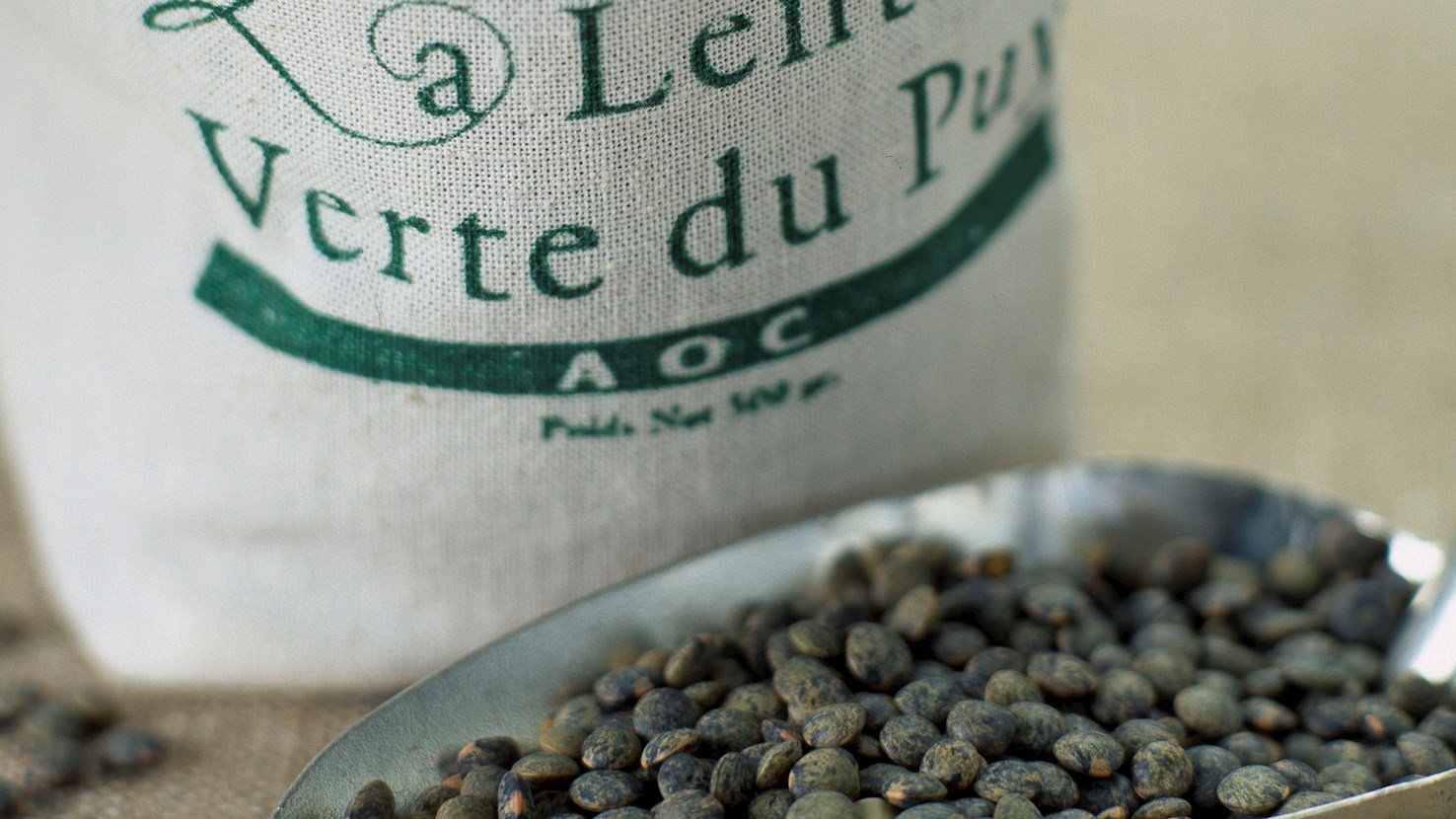
Lentille verte du Puy are commonly known as Puy lentils, grown in the French region of Haute-Loire and are considered superior in their texture and have a unique, peppery taste. The lentil seeds are dark green, with blue marbling and must belong to the Lens Esculenta Puyensis variety. The climate in the region - dry summers and big differences in day and night temperatures provide firmness to the lentils, once they are cooked. They have been around in the region since the early 19th century, which has been proven with the discovery of a Gallo-Roman vase containing the tasty seeds. Puy lentils are a great accompaniment to fish, game meat and sausages.
Named after the village of Castelluccio - the highest settlement of the Apennines nestled next to the Monti Sibillini National Park and just above the fertile Piano Grande Plateau - Lenticchia di Castelluccio di Norcia refers to the lentil beans grown within the neighboring provinces of Perugia and Macerata. Tiny in size, this variety of pulses is characterized by its color ranging from veined green to light chestnut. Being particularly tender, Castelluccio lentils are prized for their short time of cooking prior to which they don't have to be soaked. These earthy flavored pulses are used in many different kinds of soup and stews but the two most famous Italian delicacies that can't possibly go without Castelluccio lentils are pork Cotechino and Zampone di Modena, traditionally enjoyed around Christmastime.
Faki Eglouvis is a variety of lentils grown on the Eglouvi plateau on the Greek island of Lefkada, at an altitude of a thousand meters. These lentils are small, brown, and predominantly spherical, flattened, or disc-shaped. They are appreciated for being easy to boil and for their wonderful aroma when cooked. It's classified as a landrace, which means it's a non-genetically modified, local variety that has adapted to the specific environment over a long period. The cultivation is organic, avoiding pesticides, and weed control is done manually, making it labor-intensive yet resulting in a highly nutritious product. It has been awarded the Protected Designation of Origin (PDO) status by the European Union.
Lentiles vertes du Berry are dark green lentils, whole seeds of the Lens culinaris variety that have been dried and are intended mostly for cooking. The maximum cooking time is 30 minutes and they have been grown in the Indre and Cher regions in France since the year 1950. The favorable climate in the region helps the lentils to achieve their best qualities, from the dry periods in March to the rainy periods in April and May, they help the lentils germinate and prevent the development of diseases. The taste is nutty when cooked, reminiscent to that of chestnuts and they provide four times more fiber than potatoes, rice or pasta. The lentils can also be ground to make gluten-free flour for making unique pancakes, gnocchi or cakes.
Lenteja de Tierra de Campos are the lentils grown in the unpolluted soil and under the bright skies of the León, Palencia, Valladolid and Zamora provinces. These lentils are brown to gray-brown with black flecks, smooth and buttery in texture. After the harvesting, which takes place from late June to July, Lenteja de Tierra de Campos are dried and stored in the appropriate conditions to preserve their natural properties. Nutritionally, these lentils are high in protein and fibre, low in fat and have a significant content of iron and calcium. Lenteja de Tierra de Campos are traditionally used in different kinds of soups and stews, mostly combined with various meats and vegetables.
Lenteja de La Armuña are the green dried lentils of the Rubia de La Armuña variety grown in the in the District of Armuña in the North of the Province of Salamanca. The lentils are grown on the certified parcels by registered farmers who respect all the rules and regulations for growing these beans. After the harvesting, which takes place from late June to July, Lenteja de La Armuña are dried and stored in the appropriate conditions to preserve their natural properties. Nutritionally, these lentils are high in protein, low in fat and have a significant content of iron. They are traditionally used in different kinds of soups and stews, mostly combined with various meats and vegetables.
Gotlandslins refers to lentils grown on the Swedish island of Gotland, valued for their nutty flavor, firm texture, and adaptability in cooking. The island’s limestone-rich soil and mild climate provide favorable growing conditions that set these lentils apart from many other varieties cultivated in northern Europe. Lentil cultivation on Gotland has been documented for centuries, with the crop once being a modest part of local farming before gaining more prominence as demand for plant-based ingredients increased. Farmers developed techniques to adapt the crop to the island’s specific soil composition and seasonal patterns, resulting in a product that holds its shape well after cooking. Preparation of Gotlandslins is straightforward; they are typically rinsed, simmered in water or stock, and seasoned according to the dish. They are used in soups, salads, and stews, and can be paired with fish, root vegetables, or herbs without losing their texture. One notable feature is their resilience during cooking, which makes them suitable for both warm dishes and cold preparations without becoming mushy. In Gotland, they are available in local markets and featured in restaurants that focus on regional produce, often served as part of seasonal menus or in simple home-cooked meals. Their reputation has spread beyond the island, and they are now found in specialty food shops on the mainland, enjoyed by those looking for a lentil with both local character and reliable cooking qualities.
Lenticchia di Altamura is Italian dried lentils of the Laird and Eston varieties. Once considered a food of the poor, lenticchia di Altamura gained commercial popularity in the 1930s, and nowadays it is one of the most popular products of the region. These round and flat, unevenly sized lentils must be soaked for at least 12 hours, and cooked for additional 2 before being enjoyed, so they are most commonly used in thick soups enriched with celery, onions, and olive oil. The logo of Lenticchia di Altamura comprises 19 stylised lentils of various sizes, arranged and proportioned to represent the size and location of the 19 municipalities where the lentils are produced.
Masaura are Nepalese sun-dried vegetable balls made with a combination of minced vegetables and black lentil paste. The vegetables used in the process are typically yam and colocassia leaf. The dried balls are usually fried in oil and used in curries, which are then paired with steamed rice on the side.
TasteAtlas food rankings are based on the ratings of the TasteAtlas audience, with a series of mechanisms that recognize real users and that ignore bot,
nationalist or local patriotic ratings, and give additional value to the ratings of users that the system recognizes as knowledgeable.
TasteAtlas Rankings should not be seen as the final global conclusion about food. Their purpose is to promote excellent local foods,
instill pride in traditional dishes, and arouse curiosity about dishes you haven’t tried.










What People Say