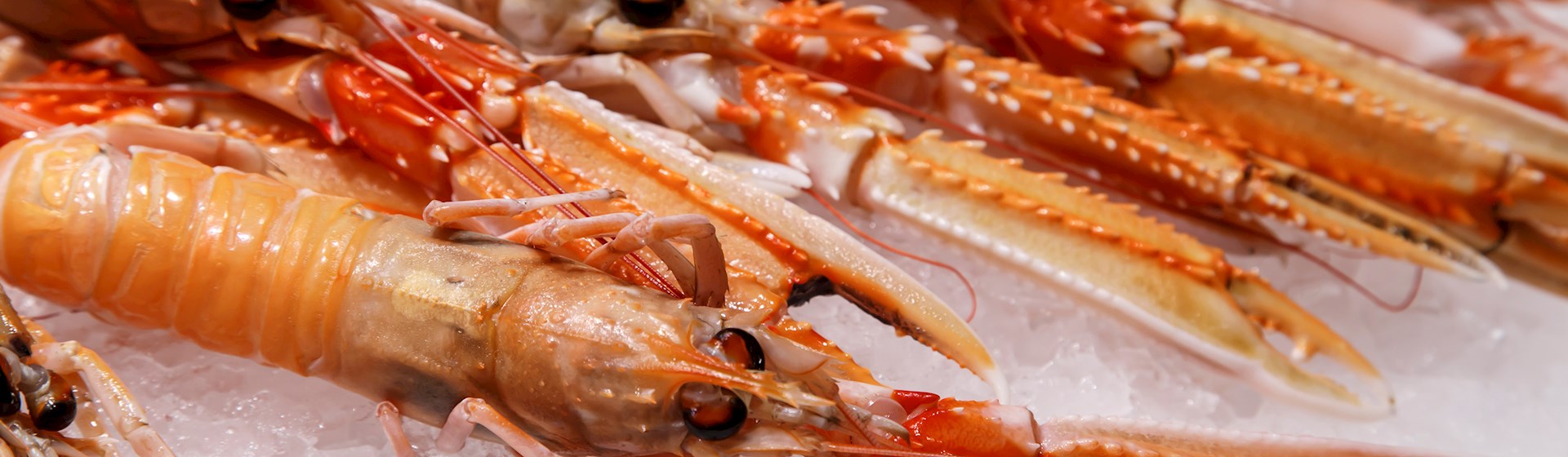
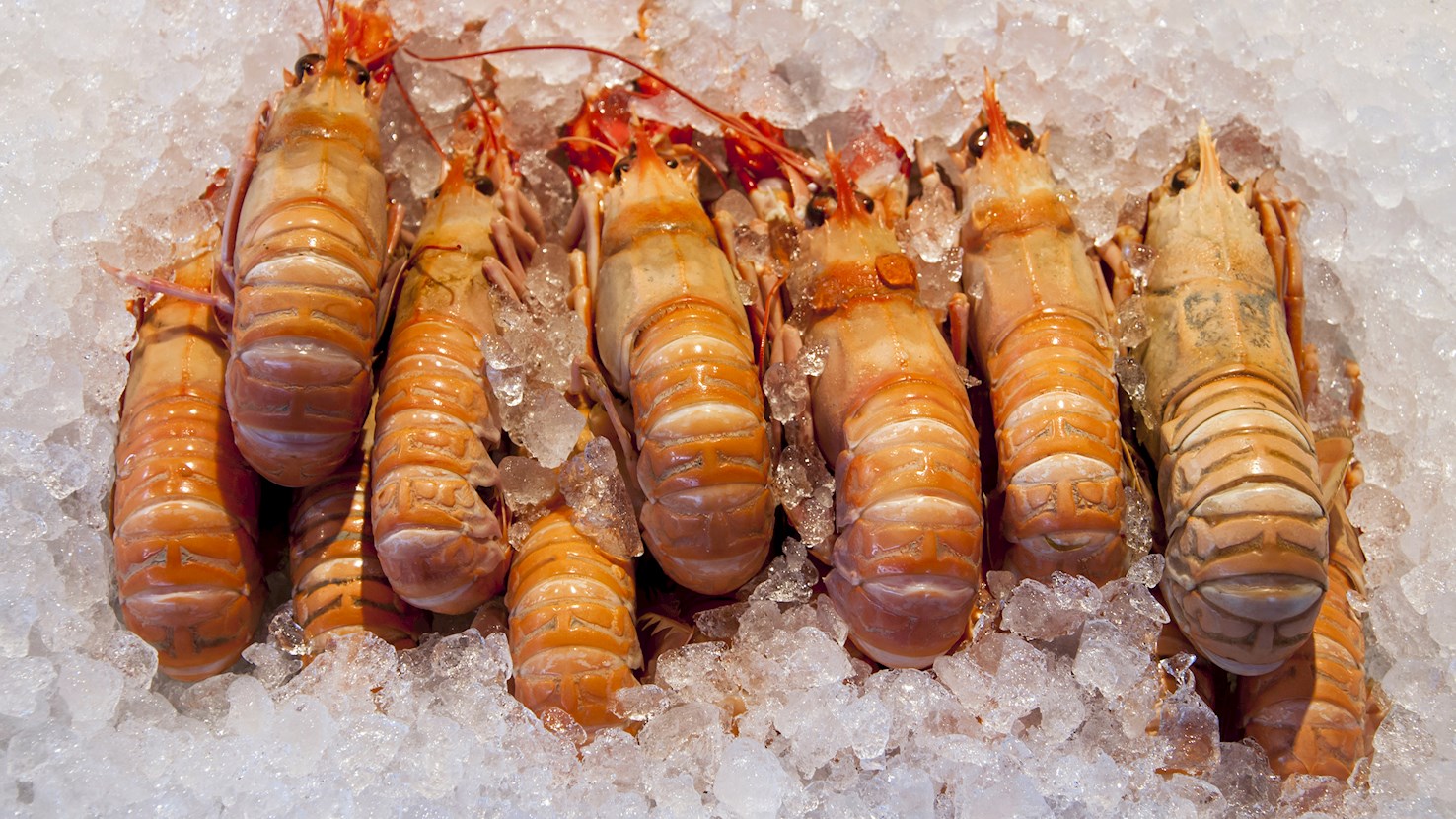
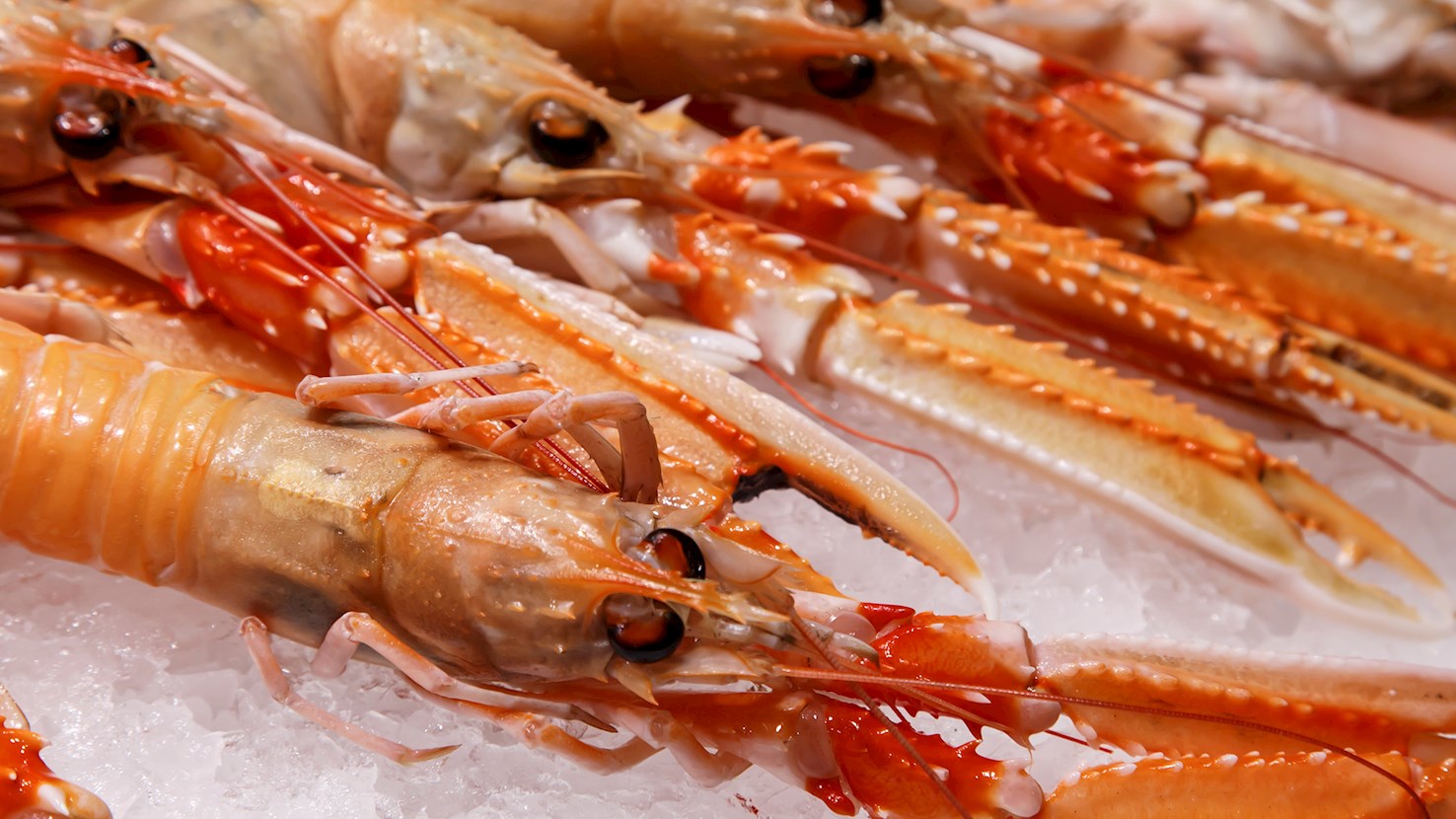
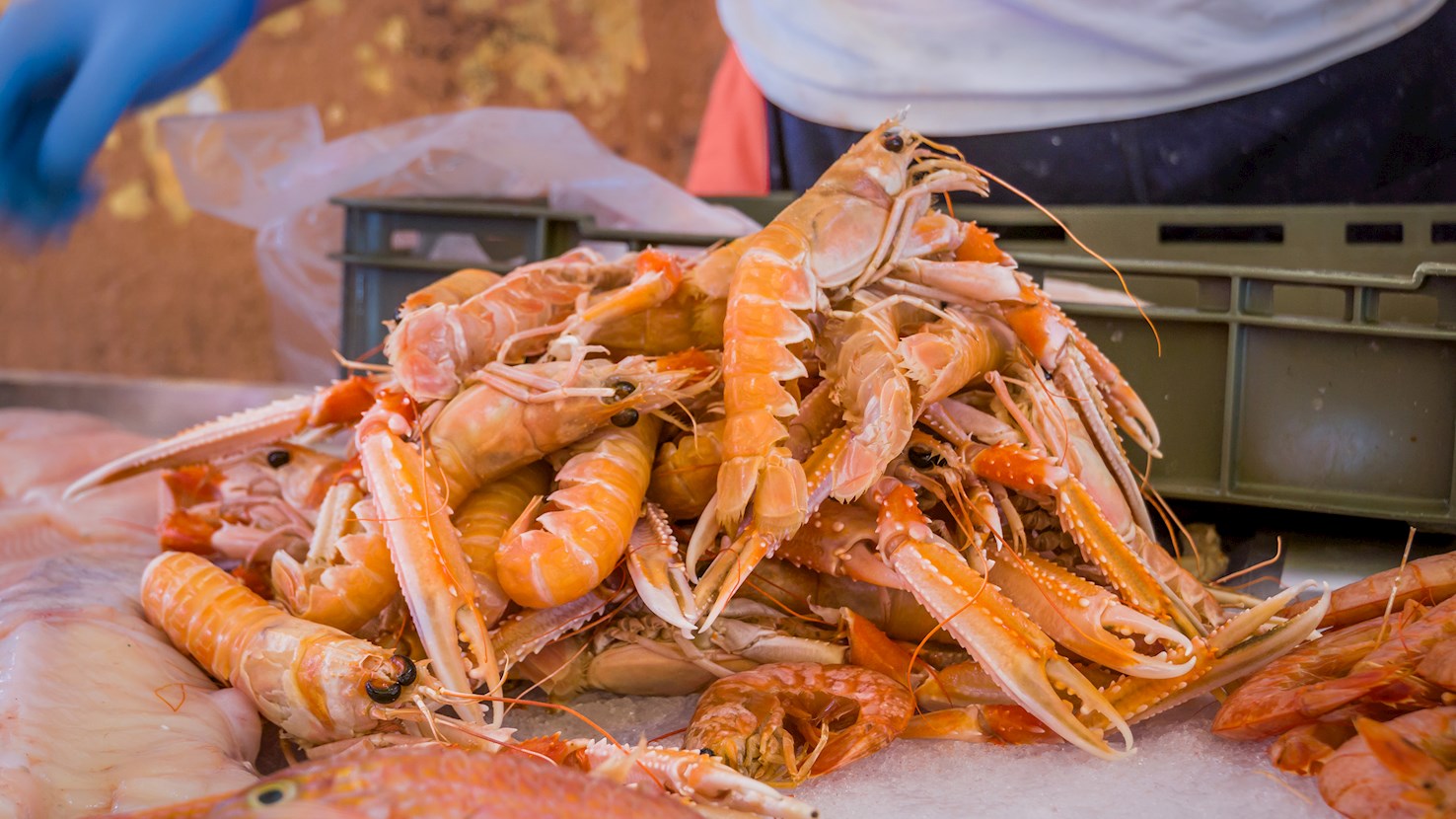
Norwegian lobsters have a mild and sweet flavor, while the meat is white and firm. The best meat can be found in the head, tail, and claws. Nutrition-wise, it's rich in iodine, selenium, protein, and vitamin B12. The lobsters are caught throughout the year all along the Norwegian coast to the Lofoten Islands, in the strait of Skagerrak, and in the North Sea. They live on the dark ocean floor where they dig themselves a hole in which they spend most of their days. When night falls, the lobsters sometimes emerge to find food, a mate, or a trap that's sunk into the ocean – if they go out at day and see the light, the lobsters go blind as their eyes are very sensitive to light. Once caught, the meat can be grilled, pan-fried, or steamed, used in soups, casseroles, and salads.
Dublin Bay prawns, also known as langoustines or Norway lobsters, are small, slender crustaceans caught mainly off the east and west coasts of Ireland. Despite their name, they are not true prawns but belong to the same family as lobsters, recognizable by their pinkish-orange shells and long, narrow claws. The species, Nephrops norvegicus, inhabits muddy seabeds where it burrows and is harvested using small trawlers. The name “Dublin Bay prawns” came into use because catches landed from Dublin Bay were once among the most recognizable and highly prized shellfish in Irish waters. They are regarded as one of Ireland’s finest seafood products and have long featured in both domestic and restaurant cooking. Commercial fishing of langoustines in Irish waters increased significantly during the nineteenth century when Dublin’s port became an important center for seafood trade. Fishermen along the Irish Sea, particularly around Howth and Dun Laoghaire, supplied local markets and restaurants with freshly caught prawns. As preservation methods improved, they became available further inland and abroad, and the name “Dublin Bay prawns” became the accepted trade term for Irish langoustines. Their reputation grew with the rise of seafood restaurants in Dublin and coastal towns, where the shellfish were served boiled, grilled, or in refined dishes such as bisques, salads, and cold platters. Preparation depends on whether they are served hot or cold. Whole prawns are usually boiled in salted water or lightly seasoned stock for a few minutes until the shell turns bright pink and the meat firms. For grilling, the prawns are split lengthwise, brushed with butter, garlic, and herbs, then cooked quickly to preserve their delicate texture. They can also be pan-fried in butter or olive oil, added to pasta dishes, or featured in soups such as langoustine bisque. When served cold, they are often paired with mayonnaise or lemon wedges. The flavor is sweet, mild, and slightly nutty, and the flesh is softer than that of shrimp, which makes it suitable for quick cooking. Overcooking can easily toughen the meat, so precision is essential. Dublin Bay prawns are eaten throughout Ireland and exported widely to continental Europe. In Irish restaurants, they are often served as starters or main courses, sometimes with garlic butter, lemon, or light cream sauces. They pair well with crisp white wines such as Sauvignon Blanc, Albariño, or Chablis, which complement their sweetness without overpowering it. For casual meals, they go well with Irish cider or a light lager, both of which balance their rich flavor.
Kvarnerski škamp is a species of scampi, a langoustine that inhabits the seabeds of the Croatian Kvarner Gulf. The Kvarner škamp is characterized by a pale orange or pinkish color and a thin shell, and it has delicate and tender meat with a sweet and complex flavor. With the use of specialized fishing traps, the scampi are usually sourced from a depth of about 40 to 60 meters, from mud tunnels these crustaceans build on their own. This high-end culinary delicacy is typically caught from the beginning of April until the beginning of October and can be found on the menus of numerous fine dining restaurants. In Croatia, kvarnerski škampi have been celebrated during the annual Kvarner Scampi Festival held in Istria each May. A wide range of scampi delicacies are prepared during this festival and they are typically paired with fine local wines. Due to the unique flavor and renowned quality of this scampi, there has been an increasing initiative to protect the origins of this Croatian seafood specialty in the European Union.
Demoiselles du Guilvinec is a local brand name for Norway lobsters (langoustines), caught and brought ashore exclusively at the fishing port of Le Guilvinec in Brittany. The local fishing industry grew rapidly in the 20th century when crews started using specialized nets to drag the muddy ocean floor of the Bay of Biscay and the Celtic Sea. The town created this nickname to highlight the high quality of its fresh catch and distinguish it from frozen seafood caught by large industrial ships. The small local boats run on a strict daily schedule, leaving before sunrise and returning to the harbor auction by late afternoon so the crew can unload the shellfish while they are still alive and moving. Unlike common lobsters, which turn bright red when cooked, this crustacean has a pale pink shell that retains its color whether it is alive in the ocean or boiled in a pot. Cooking these langoustines requires very little time to keep the tail meat soft. A cook drops the live catch into boiling seawater or into heavily salted water seasoned with bay leaves and thyme, leaving it in the pot for no more than 3 minutes. Right after boiling, the batch is transferred to a bowl of ice water to stop the cooking process and prevent the meat from becoming tough and rubbery. The cold seafood is then stacked on large metal platters. People eat them at seafood restaurants, coastal festivals, and home dining tables throughout Brittany. To eat one, a person twists off the head, cracks the tail shell open with their fingers, and pulls out the solid piece of white meat by hand. Individuals usually dip the peeled tail into a small bowl of fresh mayonnaise or a sharp shallot vinaigrette. Thick slices of crusty bread spread with salted butter always accompany the meal, along with poured glasses of very dry, crisp white wines like Muscadet or Sauvignon Blanc to balance the heavy fats of the mayonnaise and butter.
Named after the fishing port of Loctudy, where they are unloaded alive daily between April and October, demoiselles de Loctudy are a regional catch of Norway lobster (Nephrops norvegicus). Following the introduction of motorized trawlers in the mid-twentieth century, local maritime crews shifted their focus toward harvesting these deep-water crustaceans from the muddy seabed of the Bay of Biscay and the Celtic Sea. The specific nickname emerged as a municipal identifier to distinguish the local landings from imported frozen alternatives, highlighting the strict operational practice of returning the boats to the harbor daily to unload the crustaceans while they are still alive and actively moving. Unlike many other marine arthropods that undergo a drastic color transformation only when exposed to heat, this specific species possesses a pale, translucent orange-pink exoskeleton even in its natural, unheated state beneath the ocean surface. Culinary application requires minimal intervention to maintain the delicate structural integrity of the tail meat. Cooks plunge the whole specimens into heavily salted boiling water or a rapidly simmering liquid infused with aromatic vegetables and peppercorns, removing them after exactly two to three minutes to prevent the muscular tissue from seizing into a rubbery texture. The cooked catch is immediately transferred to an ice bath to halt the thermal process and subsequently arranged on large serving platters. People consume the chilled or room-temperature crustaceans at coastal seafood festivals, specialized marine brasseries, and private residences along the Breton coastline. Consuming the seafood requires manually detaching the head from the thorax, pinching the tail shell to fracture the calcified plates, and extracting the unbroken segment of white meat entirely by hand. The extracted tail sections are frequently swiped through freshly whisked mayonnaise or a simple garlic emulsion. Slices of dense, dark bread, heavily coated with coarse-salt-flecked butter, usually accompany the lobster, alongside poured glasses of highly mineral white wines, such as Muscadet Sèvre et Maine or a crisp Chablis, which structurally balance the rich lipids of the paired condiments.
TasteAtlas food rankings are based on the ratings of the TasteAtlas audience, with a series of mechanisms that recognize real users and that ignore bot,
nationalist or local patriotic ratings, and give additional value to the ratings of users that the system recognizes as knowledgeable.
For the “Top 5 European Lobsters” list until June 24, 2026, 52 ratings were recorded, of which 26 were recognized by the system as legitimate.
TasteAtlas Rankings should not be seen as the final global conclusion about food. Their purpose is to promote excellent local foods,
instill pride in traditional dishes, and arouse curiosity about dishes you haven’t tried.