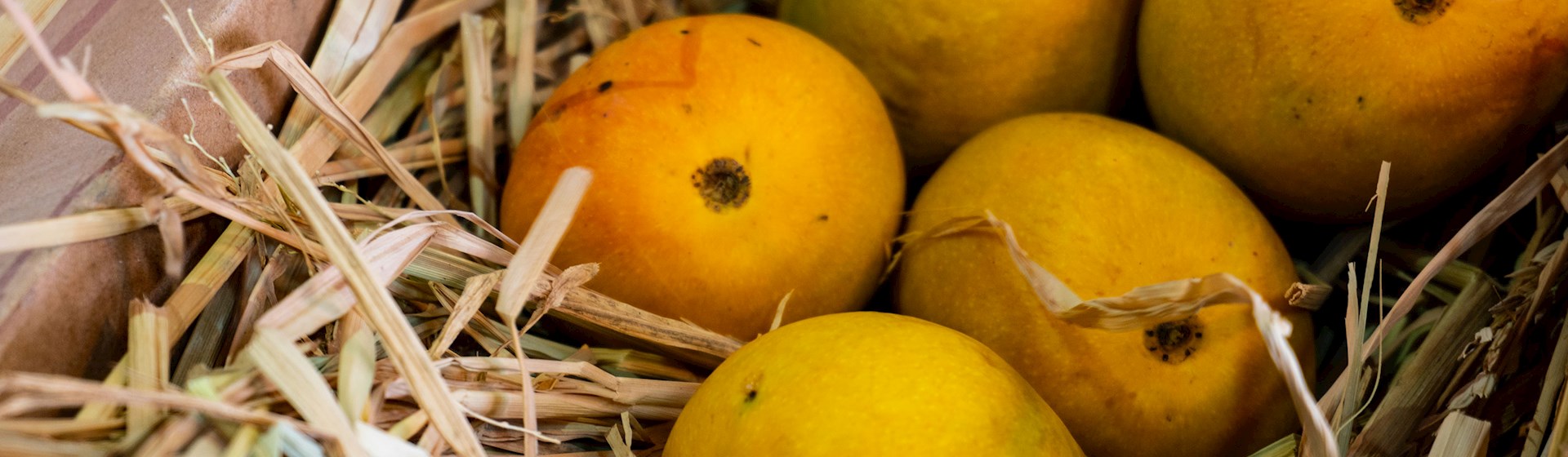
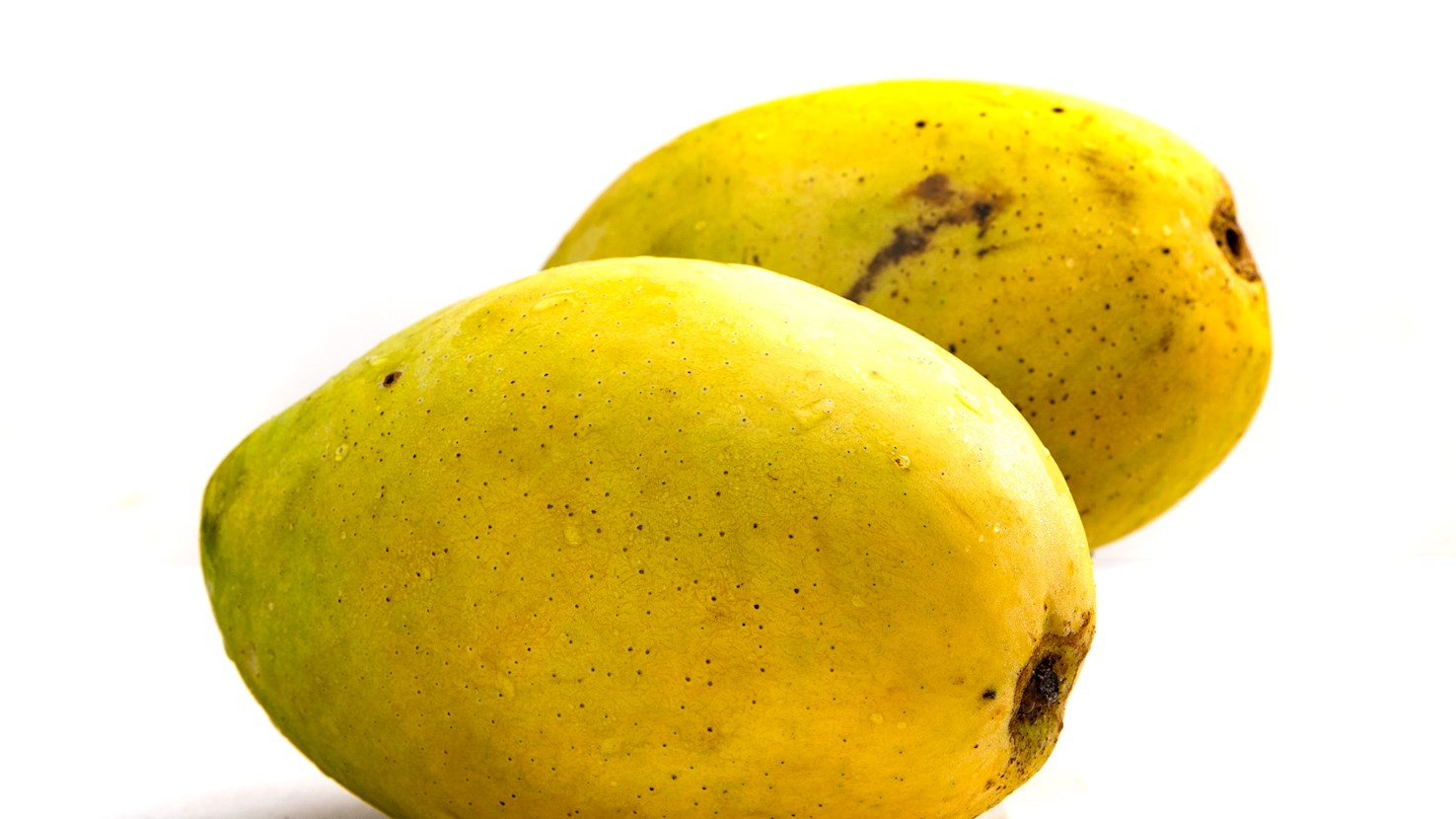
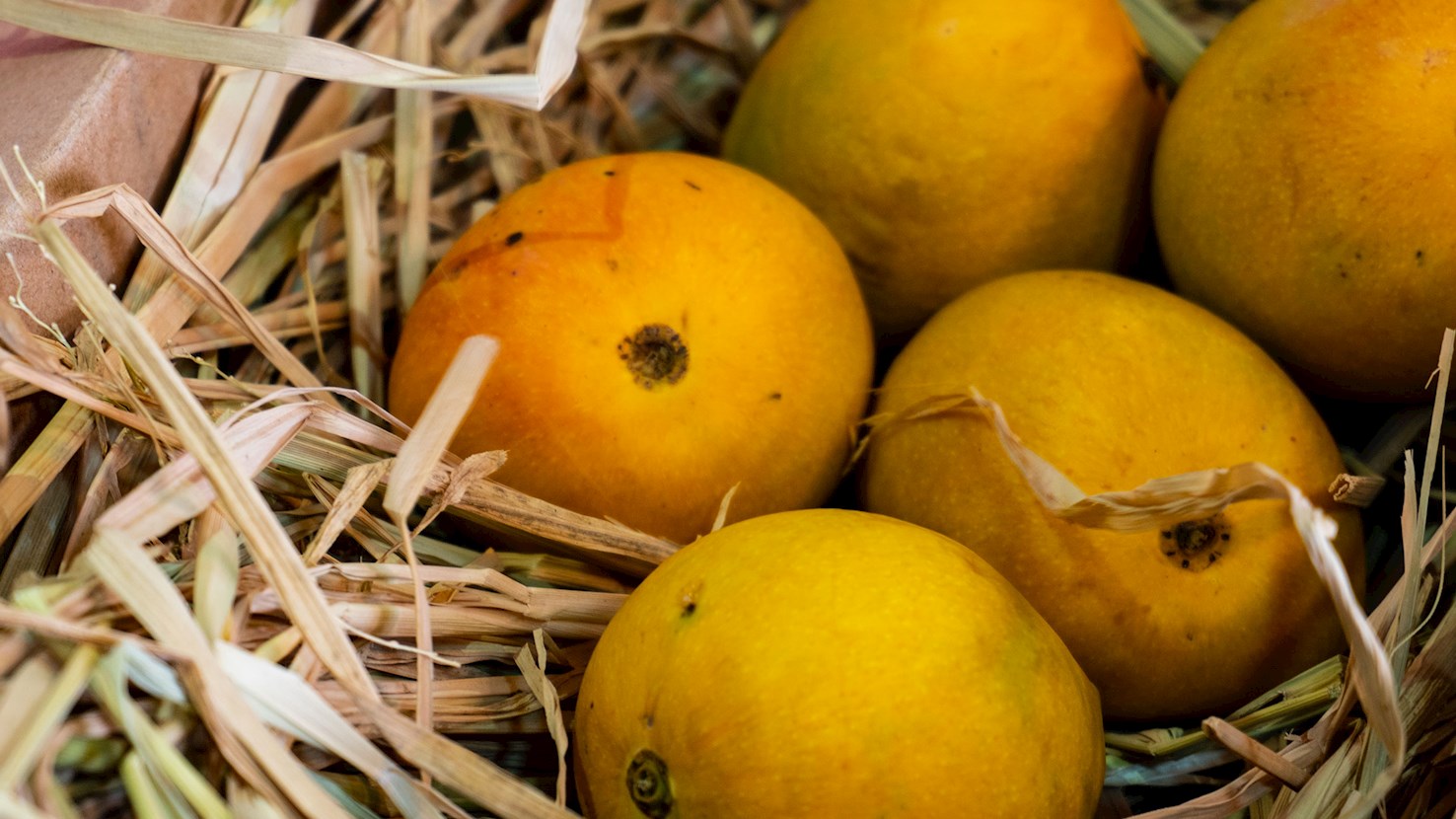
Hoa Loc is the most famous mango variety originating from the Mekong Delta. The mangoes are elongated and have a bright yellow skin when fully ripe. The texture of the yellow flesh is firm, smooth, and low in fiber, while the aroma is fragrant and the flavor is exceptionally sweet. These mangoes were first grown in 1930 in Hoa Hung commune, Cai Be district, Tien Giang province (formerly known as Hoa Loc commune, Giao Duc district, Dinh Tuóng province). Hoa Loc mango is mainly eaten fresh out of hand or used in fruit salads.
Miyazaki mangoes are premium mangoes grown in the Miyazaki Prefecture on Kyushu Island, Japan. These mangoes are renowned for their exceptional sweetness, rich flavor, and juicy, tender flesh, with most premium fruits designated as "Taiyo no Tamago", which translates to "Egg of the Sun". The cultivation of Miyazaki mangoes began in 1984, and is highly meticulous, involving careful hand-tending and precise agricultural techniques to ensure each fruit reaches its highest quality. Each mango is grown with support to prevent it from falling and bruising and is harvested only when fully ripe. The fruits must meet strict standards of weight, sugar content, and appearance to be classified as "Taiyo no Tamago". Miyazaki mangoes are distinctive for their bright red and vibrant yellow coloration. They are often quite large, with some weighing as much as a kilogram each. Due to their luxurious quality and the labor-intensive methods of cultivation, these mangoes are quite expensive (hailed as the most expensive mango variety in the world), often given as gifts or served on special occasions in Japan.
Hapus amba or Alphonso mango is a prized mango cultivar from the Konkan coast of Maharashtra. It is most closely associated with Ratnagiri, Sindhudurg, Devgad, Raigad, Thane, and Palghar, where the coastal climate, lateritic soil, sea breeze, and warm summer conditions help produce mangoes with a rich aroma, saffron-orange pulp, smooth texture, and high sweetness. The English name Alphonso is linked to Afonso de Albuquerque and to Portuguese influence in western India, where grafting helped stabilize selected mango trees into a recognizable cultivar. The Konkan Alphonso from Ratnagiri, Sindhudurg, Palghar, Thane, and Raigad is registered as a Geographical Indication in India, a status used for products whose qualities and reputation are tied to a defined place. A ripe hapus amba is usually medium-sized, with a thin yellow to golden skin that may show a light blush, and flesh that is deep orange, juicy, creamy, and almost free of fiber. Its flavor is sweet but not plain, with a strong mango fragrance, low acidity, and a rounded taste that becomes fuller after proper ripening. The fruit is usually harvested when mature but firm, then allowed to ripen off the tree for several days until the skin turns a warmer color and the aroma develops. It is rarely cooked when the fruit is at its best, because heat dulls the fragrance and reduces the value of its smooth pulp. The usual preparation is simple: the mango is washed, chilled lightly or kept at room temperature, sliced along the flat seed, scored into cubes, or squeezed and eaten by hand in the older home style. The pulp is also used for aamras, milkshakes, ice cream, kulfi, shrikhand, lassi, mousse, cakes, sorbets, and mango cream, but the highest-quality fruit is often eaten plain so its aroma and texture remain clear. Hapus amba is seasonal, generally arriving from late March into June, and its short availability is part of its importance in western Indian food culture. The fruit is also heavily associated with gifting, export boxes, family orders, and regional pride, especially because names such as Ratnagiri hapus and Devgad hapus are used to signal place and quality. It is one of the Indian mangoes most affected by questions of authenticity, since cheaper mangoes may be sold under the hapus name, which is one reason regional identity and GI recognition matter. Hapus amba is eaten across Maharashtra, Goa, Gujarat, and much of urban India during mango season, either as a fresh dessert fruit or as pulp served with puri, chapati, or simple meals. It pairs well with milk, yogurt, cream, cardamom, saffron, pistachio, almond, coconut, lime, mild cheese, vanilla, and wheat flatbreads, while suitable drinks include lassi, buttermilk, chilled milk, sparkling water, masala chai after a meal, or sweet wines and light dessert beverages when served in a more formal setting.
Taiyo no tamago is a premium Japanese mango brand from Miyazaki Prefecture, reserved for fully ripe mangoes that meet strict standards for sweetness, weight, color, shape, and appearance. The name means “egg of the Sun,” a fitting description for a fruit that is large, oval, and glowing red to orange, and is treated in Japan less like an ordinary mango than as a luxury seasonal gift. It is not a separate mango species, but a top-grade selection of Miyazaki’s ripe mangoes, which are usually grown in greenhouses with careful control of temperature, sunlight, water, and humidity. To qualify as taiyo no tamago, a mango must generally weigh at least 350 grams (12 ounces), have a sugar content of 15 degrees Brix or higher, and exhibit excellent color and shape. What makes taiyo no tamago distinctive is the way the fruit is allowed to ripen completely on the tree. Rather than being picked early, each mango is usually supported in a small protective net, and when it reaches full ripeness, it naturally drops into the net. This method helps the fruit develop a fuller aroma, softer flesh, and more concentrated sweetness before harvest, while also protecting it from bruising. The result is a mango with a smooth, melting texture, vivid tropical perfume, and a deep sweetness balanced by just enough acidity to keep it fresh rather than cloying. Its flesh is rich orange, juicy, and almost custard-like when perfectly ripe, with a flavor that is often described as floral, honeyed, and intensely tropical. The appeal is not only in the taste, but in the whole presentation: the polished skin, the careful packing, the branded label, and the sense that the fruit has been selected piece by piece. Taiyo no tamago belongs to Japan’s culture of luxury fruit, where appearance, seasonality, and gift value are nearly as important as flavor. The most perfect examples are sold in elegant boxes and are often bought as formal gifts, seasonal presents, or special treats rather than everyday fruit. Prices can be high, especially for early-season or exceptional auction specimens, because only mangoes that pass the grading standards can carry the taiyo no tamago name. The best way to eat it is plain, slightly chilled, or at room temperature, cut around the flat seed and scored into cubes so the flesh opens outward in the familiar flower-like shape. Cream, sugar, pastry, or heavy sauces are unnecessary because the fruit is meant to be appreciated on its own.
TasteAtlas food rankings are based on the ratings of the TasteAtlas audience, with a series of mechanisms that recognize real users and that ignore bot,
nationalist or local patriotic ratings, and give additional value to the ratings of users that the system recognizes as knowledgeable.
For the “Top 4 Mangoes in the World” list until June 10, 2026, 18 ratings were recorded, of which 9 were recognized by the system as legitimate.
TasteAtlas Rankings should not be seen as the final global conclusion about food. Their purpose is to promote excellent local foods,
instill pride in traditional dishes, and arouse curiosity about dishes you haven’t tried.