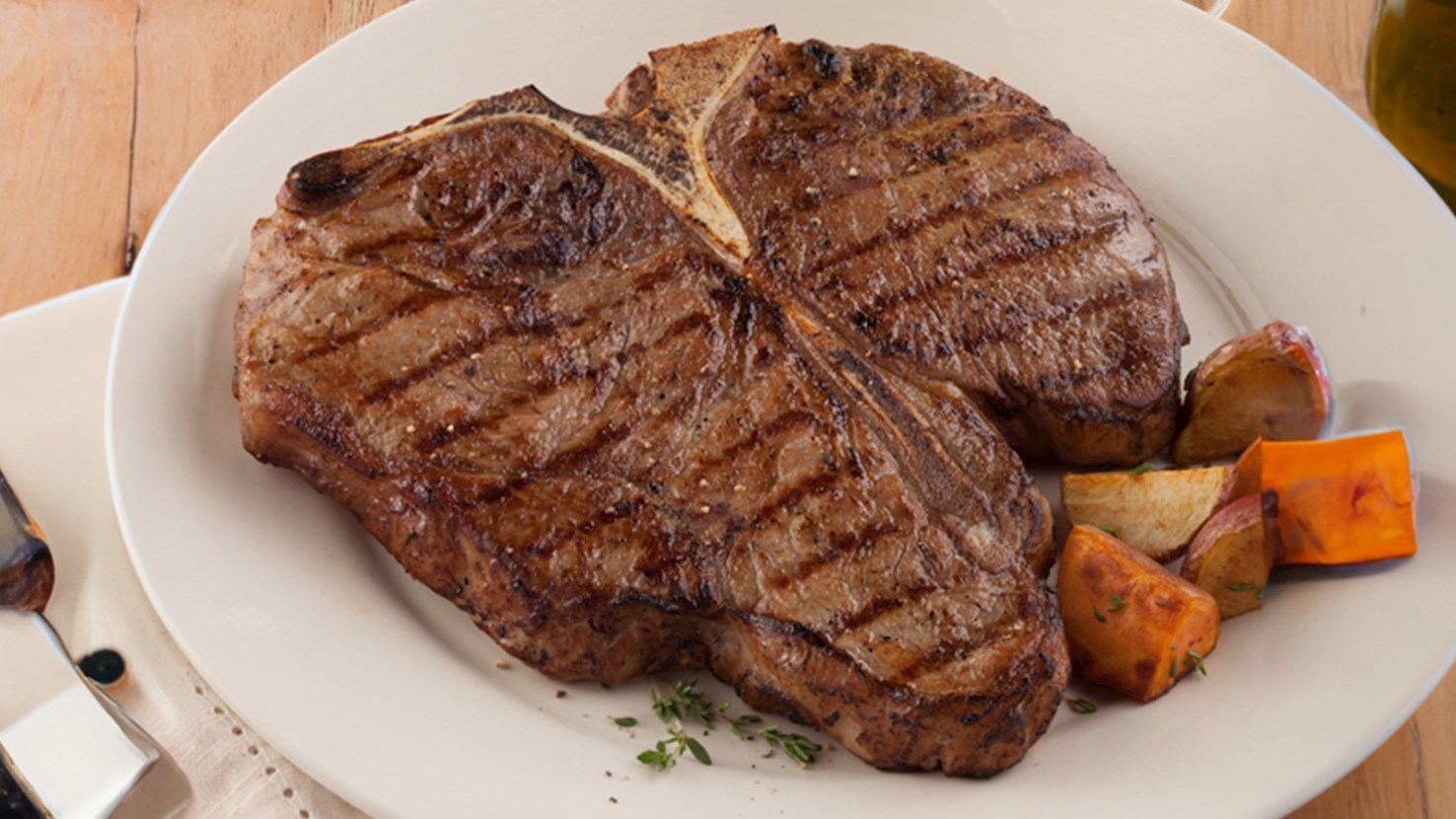
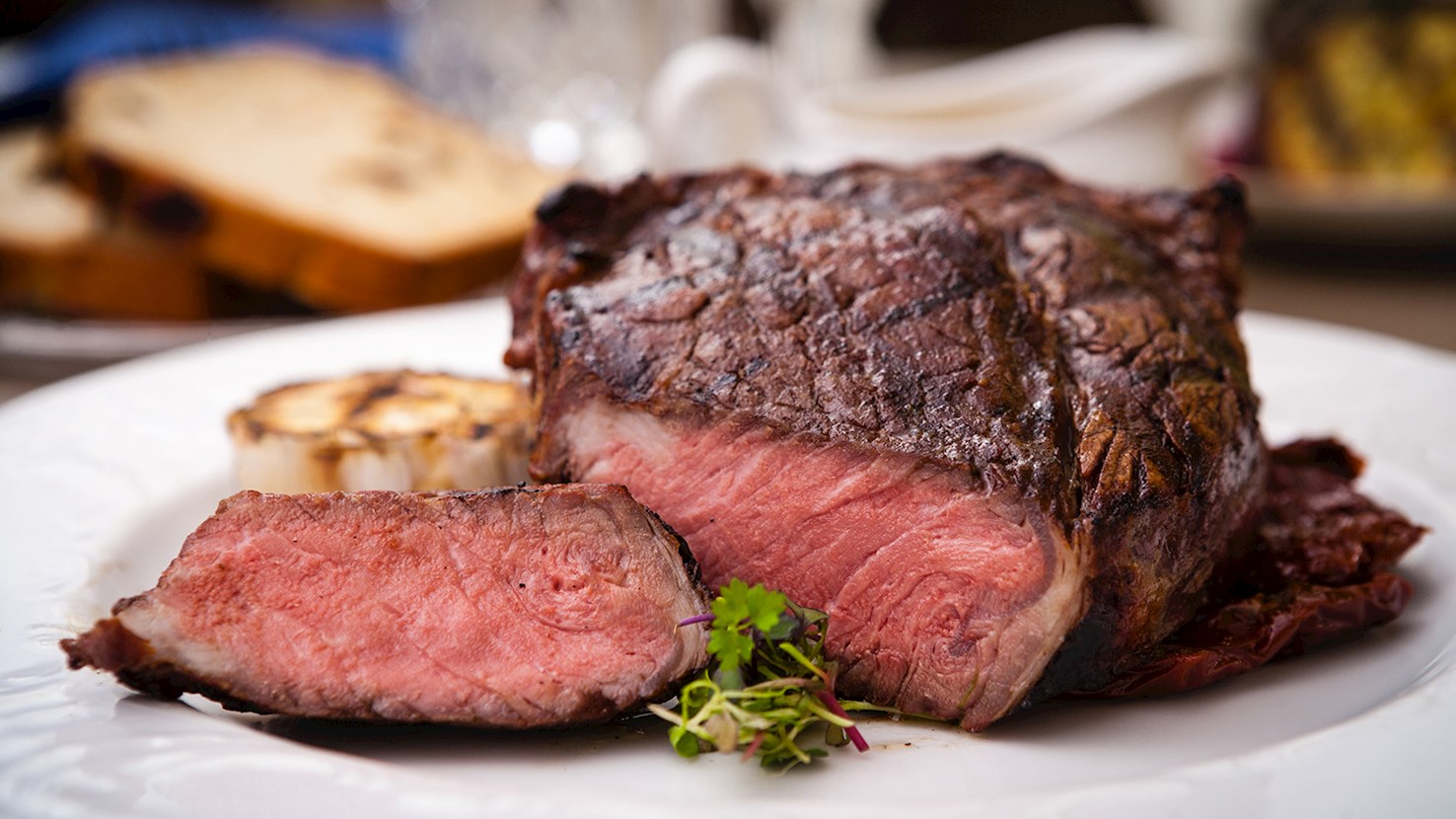
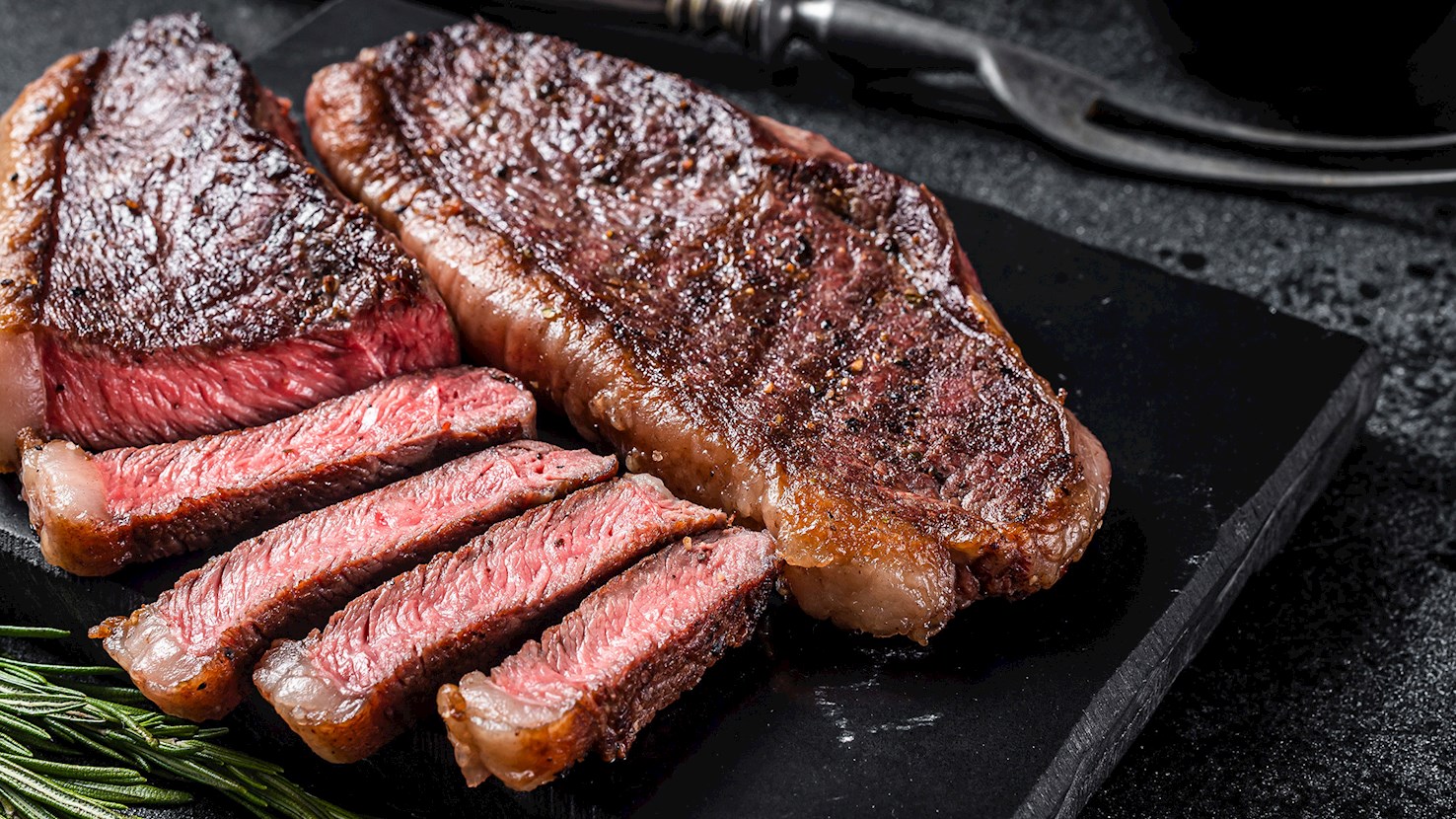
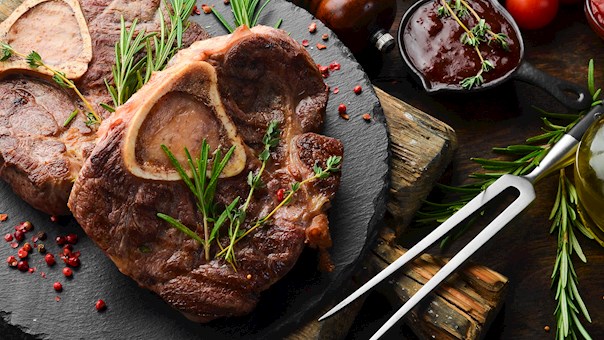
Known as the holiest of holies of Italian cuisine, the Florentine-style beef steak is prepared exclusively with dry-aged beef from the Chianina cattle, which is particularly prized for its tenderness. Even though bistecca alla Fiorentina is often described as a T-bone steak, it is much closer to a porterhouse - since it's cut closer to the center, the tenderloin is much larger than the one on a regular T-bone. Also, bistecca alla Fiorentina must be thick; the cut needs to be at least three fingers wide so that when the meat is grilled over a very hot flame, a nice, slightly charred crust forms on the outside of the steak while the inside remains succulent. In fact, bistecca alla Fiorentina is never, ever served medium or well-done, as any true Tuscan will insist that this dream of a steak should only be eaten sanguinoso, meaning rare. To enjoy your Florentine-style steak the Italian way, simplicity is the way to go - highlight the rich flavor of grilled beef with nothing more than a drizzle of extra virgin olive oil, rosemary, and salt.
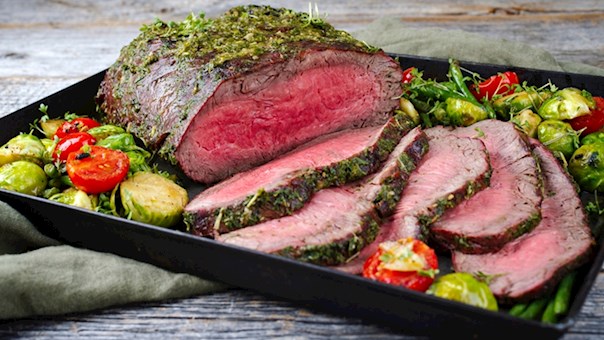
Contrary to popular belief, the word Châteaubriand does not refer only to a cut of beef, but to a method used to grill or roast a thick cut of beef tenderloin. The steak was originally prepared by a chef named Montmireil in 1822 for a French author, diplomat, and statesman Francois René Vicomte de Chateaubriand. When served in France, Châteaubriand will always be accompanied by a sauce – most often either a traditional red wine sauce or Béarnaise sauce. The steak is usually served with a side of roasted new potatoes or tiny chateau potatoes.
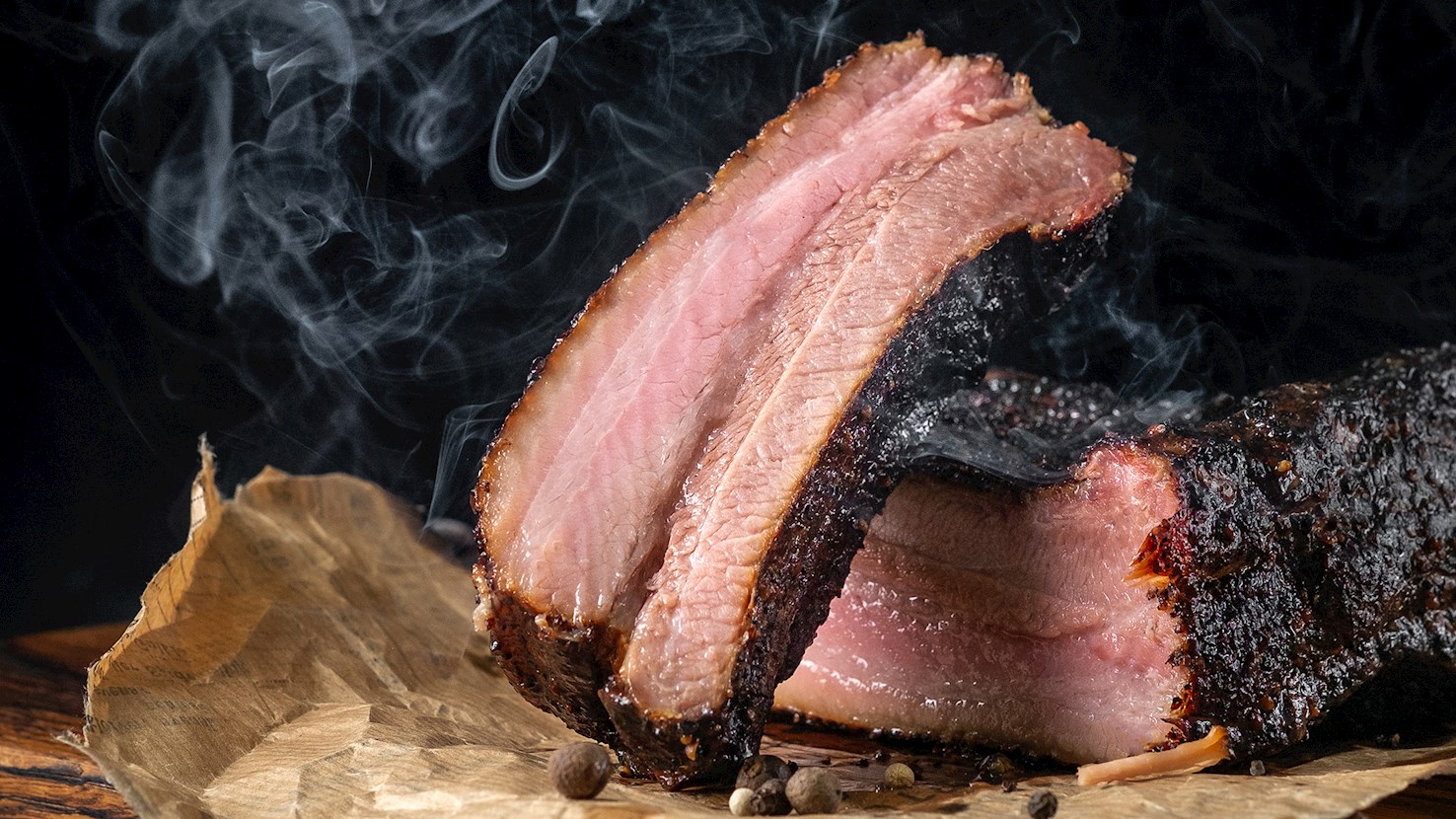
In the American, English and German systems of primal beef cuts, the brisket (or rinderbrust) is a cut that comes from the breast or lower chest of the cow. The brisket is one of the nine primal cuts of beef and is particularly known for its size and for having a significant amount of connective tissue. This cut consists of two different muscles: the pectoralis major, known as the "flat," and the pectoralis minor, or the "point." The flat is leaner, while the point has more fat and marbling. Because of the high amount of connective tissue, brisket needs to be cooked slowly, over low heat, to allow the collagen in the meat to break down and become tender. This makes it a popular choice for slow cooking methods like smoking, braising, or slow roasting. Brisket is notably used in a variety of regional American barbecue traditions, particularly Texas-style barbecue, where it's often smoked for many hours. It's also traditionally used for making corned beef and pastrami.
A porterhouse steak is a large, thick cut of beef taken from the rear end of the short loin. Although it is not linked to a specific country of origin, it is most commonly associated with British and American cuisines. It is named "porterhouse" because it was traditionally served in 18th-century porterhouses, which were inns or restaurants that served porter beer. The porterhouse steak is closely related to bistecca alla Fiorentina and is similar to a T-bone steak. The difference between a T-bone and a porterhouse is that the latter is cut from further back on the short loin, resulting in a larger portion of tenderloin and a larger overall size. The defining characteristic of a porterhouse steak is the T-shaped bone that runs through the center, separating two different cuts of meat: the strip steak (commonly known as the New York strip - marbled, flavorful cut known for its beefy taste) and the tenderloin (also known as filet mignon - tender and lean cut, prized for its mild flavor). A properly cooked porterhouse steak will have a juicy and tender texture with a combination of flavors from both the strip steak and the tenderloin. Due to its large size, it is often considered a steak for sharing or for those with hearty appetites. Porterhouse steaks are commonly grilled or pan-seared to enhance their natural flavors, and they are often served with accompaniments like vegetables, potatoes, or sauces.
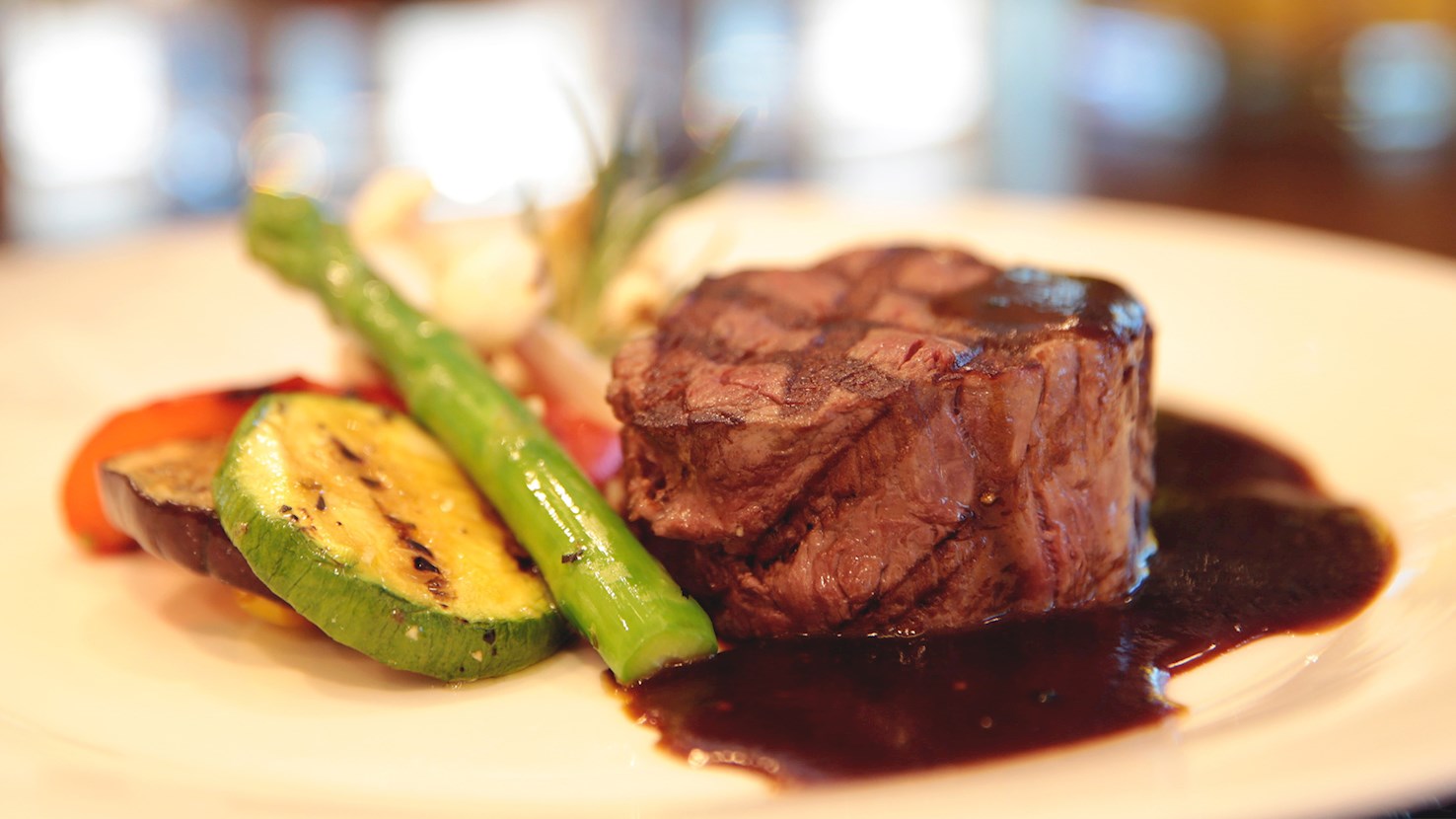
Filet mignon is a premium steak cut from the tenderloin of a cow, a muscle that runs along the spine. The name "filet mignon" is French, meaning "dainty fillet" or "delicate steak," which reflects its reputation as one of the most tender and luxurious cuts of beef. Known for its exceptional tenderness, filet mignon has a smooth, fine-grained texture and almost buttery consistency. However, it has a relatively mild flavor compared to other cuts like ribeye or strip steak, which are more marbled with fat. This makes filet mignon an ideal candidate for pairing with rich sauces, marinades, or other flavor-enhancing techniques. Typically cut into small, round portions weighing between 4 to 8 ounces each, filet mignon steaks are often thick-cut to help maintain their juiciness when cooked. They are usually prepared using high-heat methods such as grilling, broiling, or pan-searing and are best served medium-rare to medium to preserve their tenderness. Because filet mignon is so lean, it can dry out if overcooked, requiring careful attention during preparation. A favorite in fine dining, filet mignon is often the centerpiece of gourmet dishes, sometimes wrapped in bacon to add flavor and moisture. It is also commonly served with rich sauces like Béarnaise, peppercorn, or red wine reductions. Due to its tenderness and the skill required to prepare it properly, filet mignon is one of the more expensive cuts of beef, often reserved for special occasions and fine dining experiences.
Entrecôte is a type of beef steak that's cut from between the ribs, but it's more commonly known as a thin and boneless rib-eye steak. The butchers cut bone-in rib-eyes with the bone on each side, but there are also six leftover boneless steaks from the meat between each bone-in rib-eye, and they're known as the entrecôtes. Due to the fact that these cuts are thin, it makes them great for quick cooking on the grill or in a pan (high heat), but it's important not to overcook them. The steaks are juicy, tender, and generously marbled. This type of meat cut is popular in France and Europe, and the word entrecôte means between the ribs.
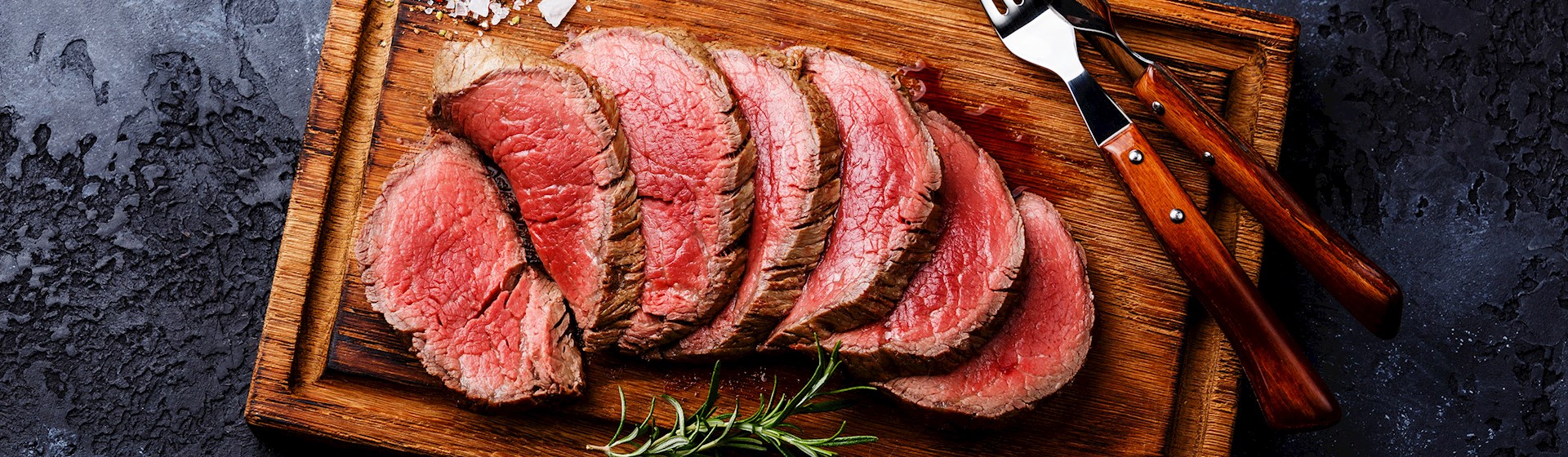
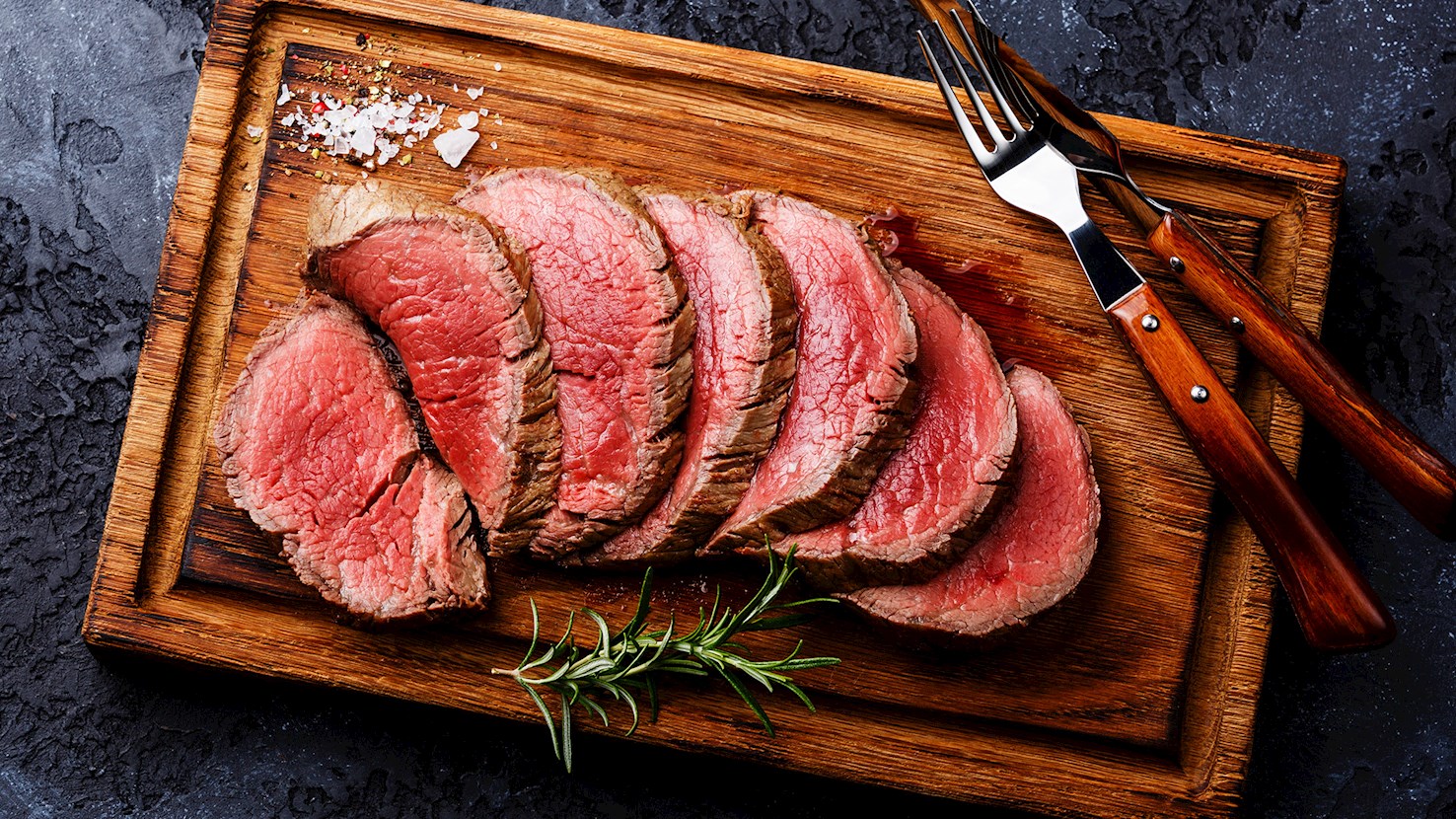
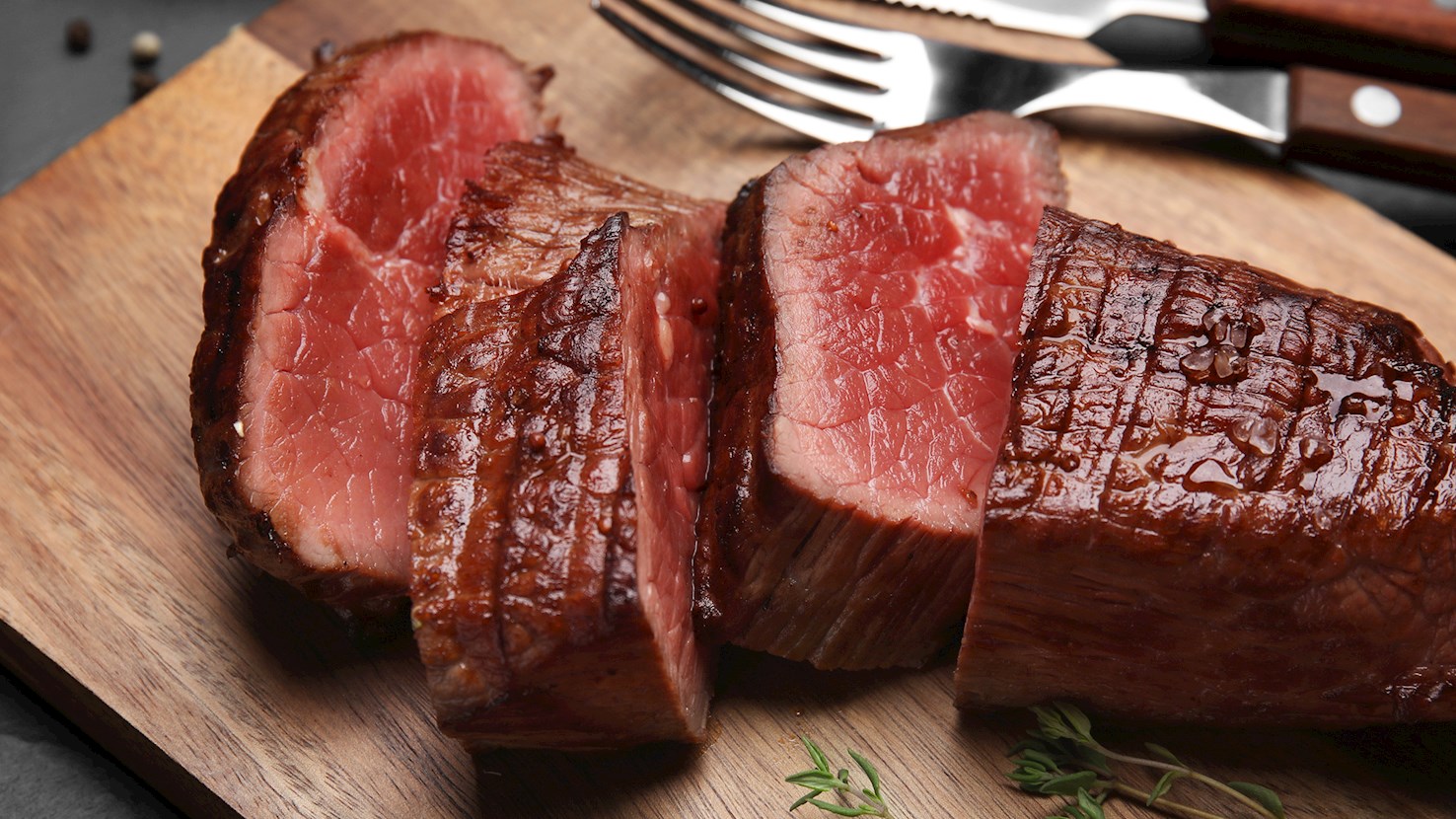
In the American, French, German, Brazilian, and Korean systems of primal beef cuts, the tenderloin is a cut from the loin, which is located towards the back of the cow, nestled under the ribs, next to the backbone. It spans two primal cuts: the short loin and the sirloin. The tenderloin is one of the most tender cuts of beef as it comes from a muscle that doesn't get much exercise. It is also one of the most highly prized and correspondingly expensive cuts of beef, due to its tenderness and flavor. Given the tenderness of this cut, the tenderloin is often cooked quickly over high heat, with methods such as grilling or broiling. It's often served slightly rare to maintain its tender texture.
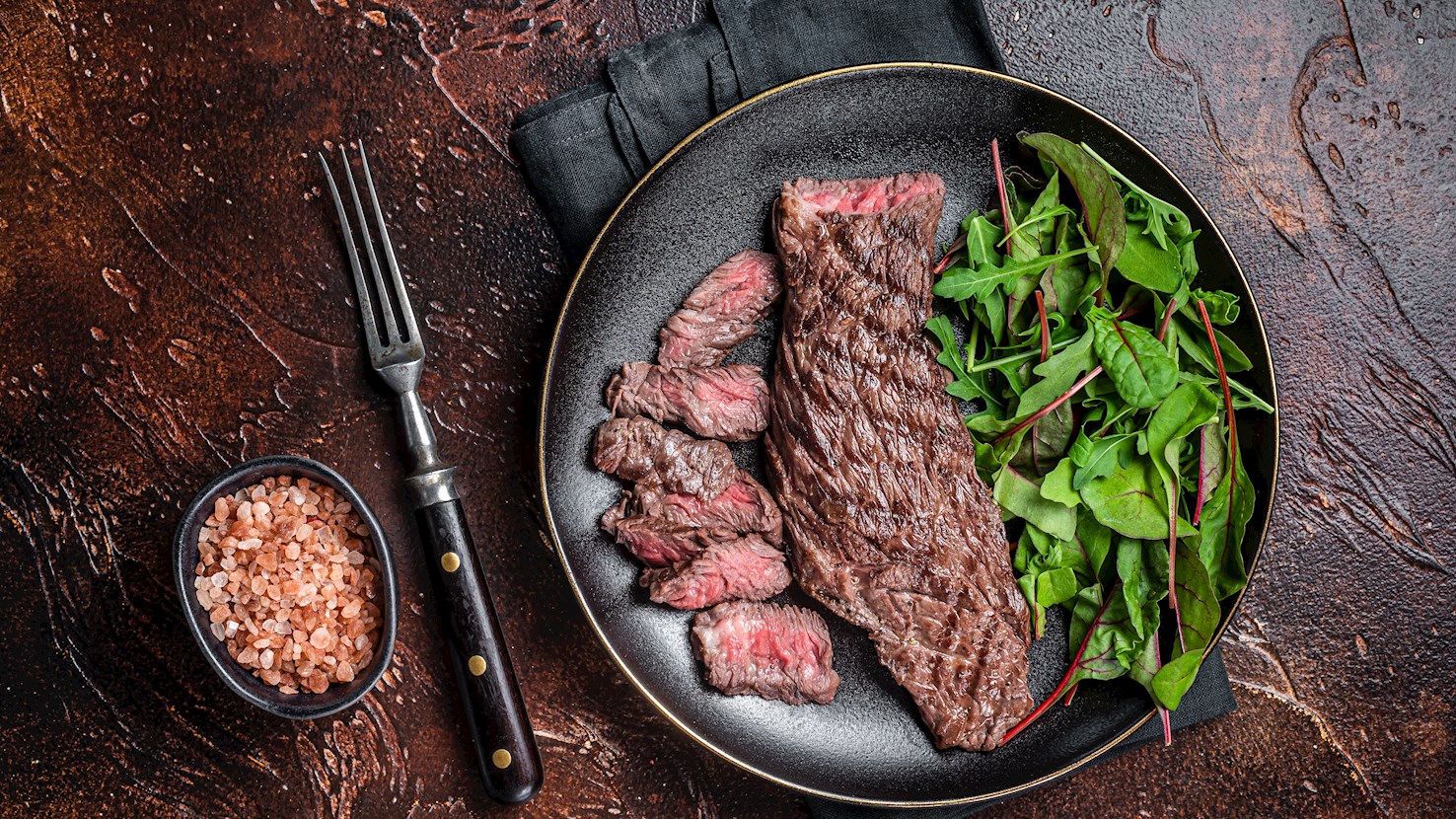
Onglet de bœuf in French butchery refers to the hanger steak, which is a cut from the plate primal of the cow, located near the animal's belly. It is also known as "butcher's steak" because butchers would often reserve it for themselves due to its high quality and limited quantity - there's only one hanger steak per animal. The hanger steak is known for its strong beefy flavor. It has a coarse texture compared to other steaks, yet when cooked correctly, it can be very tender. The onglet is traditionally associated with French cuisine, but it's also popular in other cuisines. It's best when cooked to medium-rare and should be marinated before grilling or broiling to help tenderize the meat. Overcooking can result in a tougher texture. After cooking, it's typically sliced against the grain before serving.
In English butchery, rump is a primal beef cut positioned at the hindquarters, directly behind the sirloin and ahead of the leg. The rump is from a muscle group that is relatively active, granting it a pronounced beefy flavor and a texture that's slightly firmer than cuts like the sirloin. Given its robust taste, the rump is particularly favored by beef connoisseurs who appreciate a meatier bite. Its texture, although less tender than some other premium cuts, offers a chewiness that many find satisfying, especially when cooked to perfection. Rump steaks, sliced from this primal cut, are a popular choice for grilling, frying, or broiling. They benefit from a high-heat, quick-cooking method that sears the exterior and retains the juicy interior. Due to its leanness, it's advisable not to cook rump steaks beyond medium to preserve their moisture and flavor. For those who prefer larger cuts, the whole rump can also be roasted, often served in traditional English pubs as part of a carvery. When aged appropriately, rump's flavors become even more profound, further enhancing its status in the beef hierarchy.
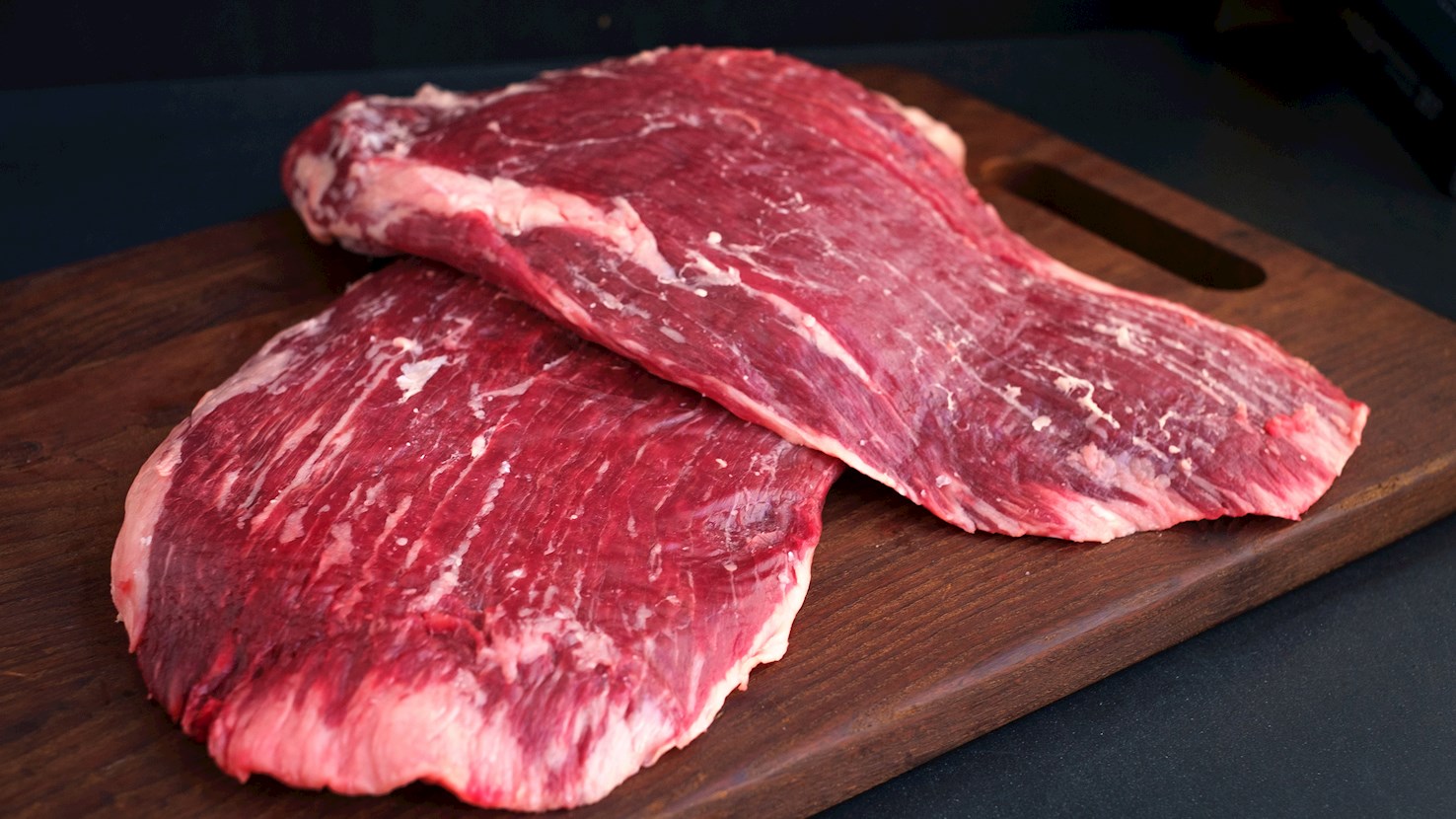
Bavette d’aloyau in French butchery refers to a rear part of flank, a cut of beef taken from the abdominal muscles of the cow. The term "bavette" comes from the French word for "bib," which is a reference to the long, flat shape of this cut. Bavette d’aloyau is known for its strong beef flavor and relatively tough texture, due to the amount of physical activity this muscle area gets. It contains a lot of tough fibers and has little fat marbling, making it less tender than other cuts. However, if it's marinated before cooking and then cooked to medium-rare, it can be quite tender and flavorful. It's also crucial to cut it against the grain to shorten the muscle fibers and enhance its tenderness. The bavette d’aloyau is often used in dishes that require marinating and quick cooking, such as grilling or broiling. It's a popular choice for dishes like fajitas, London broil, and various stir-fry dishes.
TasteAtlas food rankings are based on the ratings of the TasteAtlas audience, with a series of mechanisms that recognize real users and that ignore bot,
nationalist or local patriotic ratings, and give additional value to the ratings of users that the system recognizes as knowledgeable.
For the “Top 58 European Beef Cuts” list until July 15, 2026, 1,915 ratings were recorded, of which 1,644 were recognized by the system as legitimate.
TasteAtlas Rankings should not be seen as the final global conclusion about food. Their purpose is to promote excellent local foods,
instill pride in traditional dishes, and arouse curiosity about dishes you haven’t tried.






What People Say