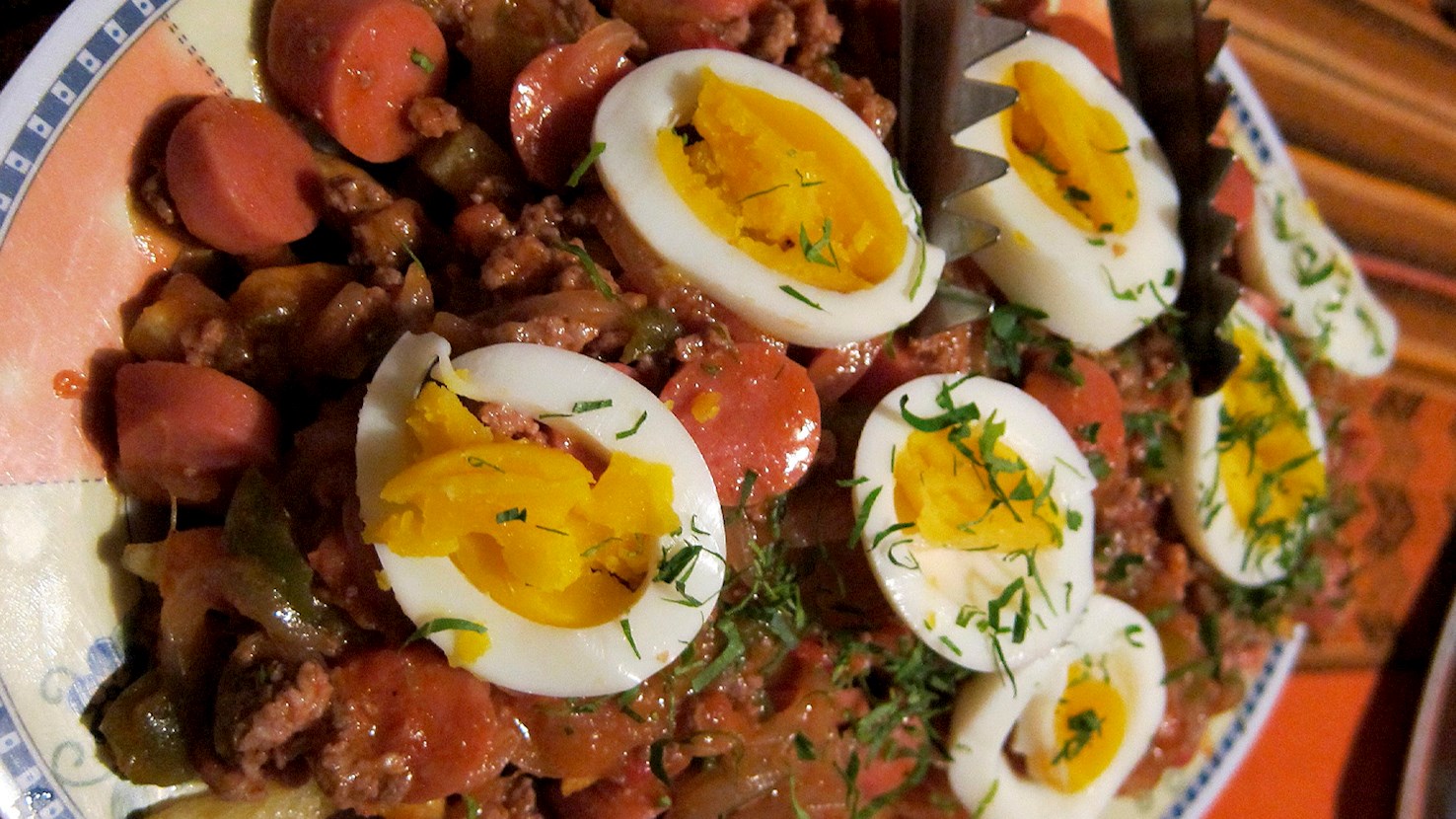
Pique macho is a massive, protein-heavy platter of bite-sized beef, sausages, French fries, and spicy peppers originating in Cochabamba, Bolivia. The dish was invented in 1969 by Evangelina Rojas Vallejo and Honorato Quiñones Andia at the Restaurante Miraflores to feed late-night patrons. The exceptionally fiery meal was presented with a verbal challenge to finish the sharp peppers, testing masculine endurance and firmly establishing the dish's name. The first step is marinating bite-sized chunks of beef tenderloin or sirloin in a mixture of dark beer, soy sauce, minced garlic, and ground cumin. The marinated beef is pan-fried in hot oil alongside diagonally sliced frankfurters or local beef sausages until thoroughly browned. A savory brown gravy forms naturally in the pan from the rendered meat juices and the reduced beer marinade. Simultaneously, thick-cut potatoes are deep-fried until crisp and golden. The base of the meal is constructed by spreading the hot fries across a large communal platter. The cooked beef, sausages, and gravy are poured directly over the fries, allowing the starches to absorb the seasoned cooking liquids. The mountain of meat and potatoes is subsequently topped with coarse slices of raw or lightly sautéed red onions, fresh tomatoes, and fiercely spicy green locoto peppers. Sliced or quartered hard-boiled eggs are arranged around the perimeter and across the peak of the mound. Generous ribbons of ketchup, mayonnaise, and yellow mustard are squeezed over the entire assembly. The towering platter is served exclusively as a shared dish, placed in the center of the table for communal consumption. Due to the heavy fat content, dense carbohydrates, and sharp spice levels, the massive meal is heavily consumed late at night following alcohol consumption or the next morning as a potent hangover cure. While available year-round, the dish is a mandatory fixture at celebratory gatherings, regional carnivals, and weekend social events. The massive portion size and intense heat firmly cement the plate as a symbol of Cochabamba's regional culture, representing culinary abundance and communal gastronomy.
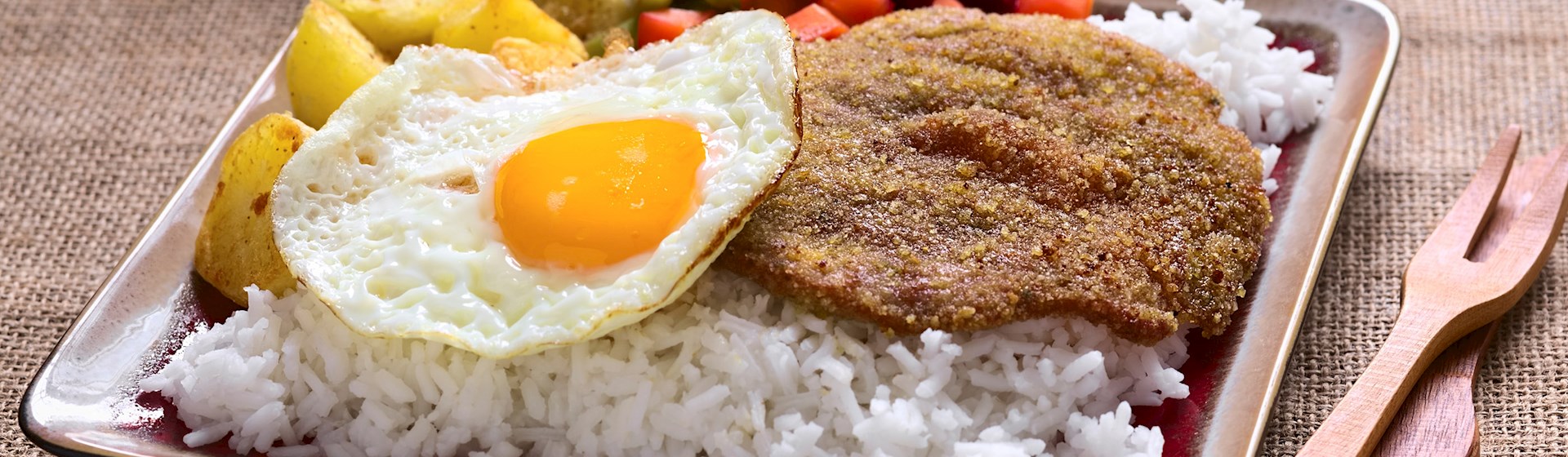
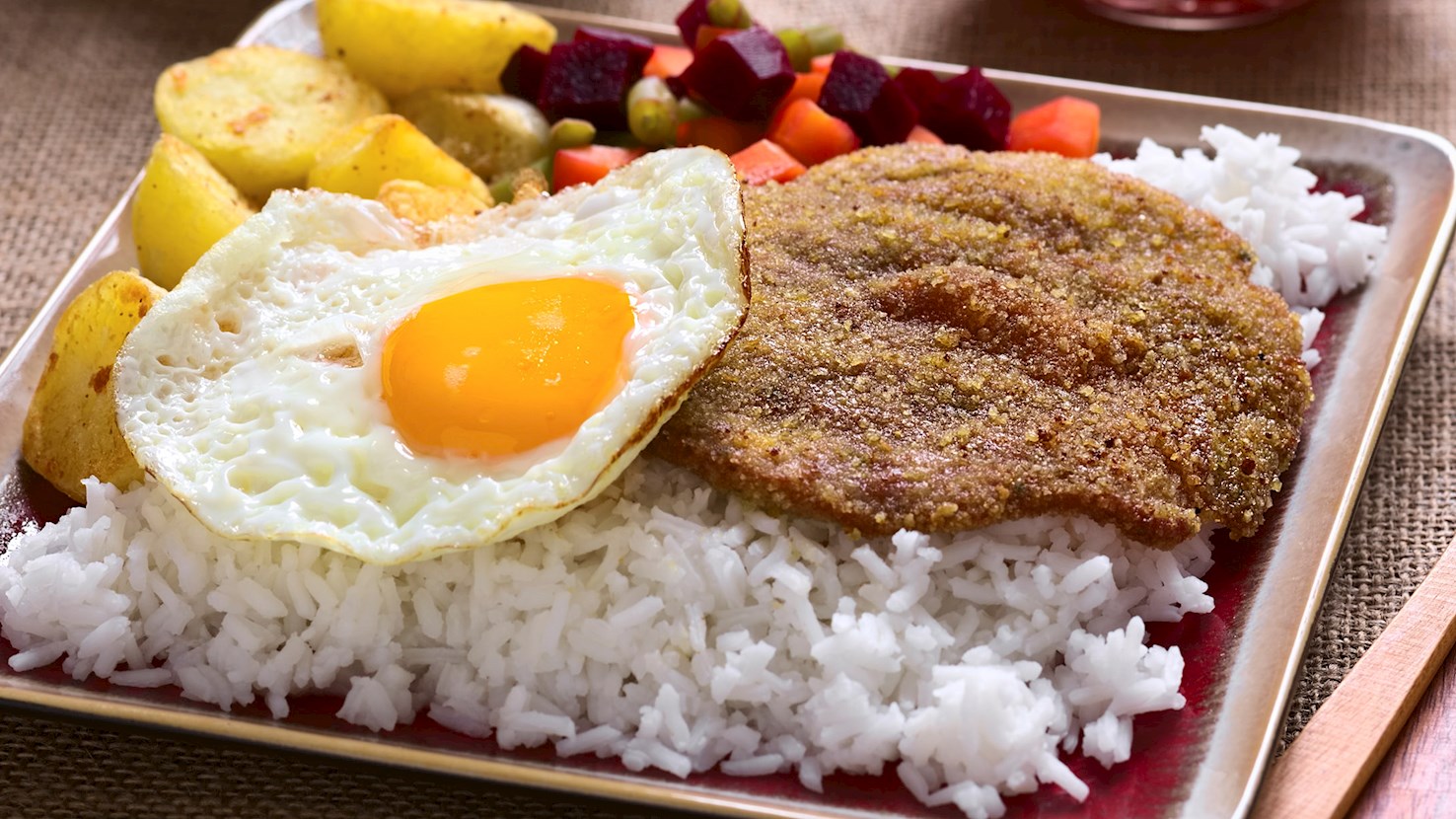
Silpancho is a traditional dish characterized by its huge size and ingredients that are rich in fat and carbohydrates. The dish typically consists of a layer of white rice topped with boiled or steamed potatoes, beef or chicken cutlets, and fried eggs. Silpancho is usually garnished with chopped parsley, onions, and beets. The dish was invented in the city of Cochabamba, famous for its unique cuisine. Its name comes from a Quechua word silpanch'u, meaning thin and pounded, referring to the meat used in the dish. Although it is a traditional dish of Cochabamba, it has become so popular that it quickly spread throughout Bolivia, where it's served in many restaurants with different variations on the recipe.
Saice is a traditional dish hailing from the state of Tarija. It's made with a combination of beef, potatoes, peas, and cumin. The meat is fried, then cooked with potatoes, peas, cumin, and a spicy sauce consisting of onions, tomatoes, and red chili peppers. The combination is simmered until everything is fully cooked. Saice is typically served in a bowl over noodles or steamed rice, ideally with boiled chuño potatoes on the side.
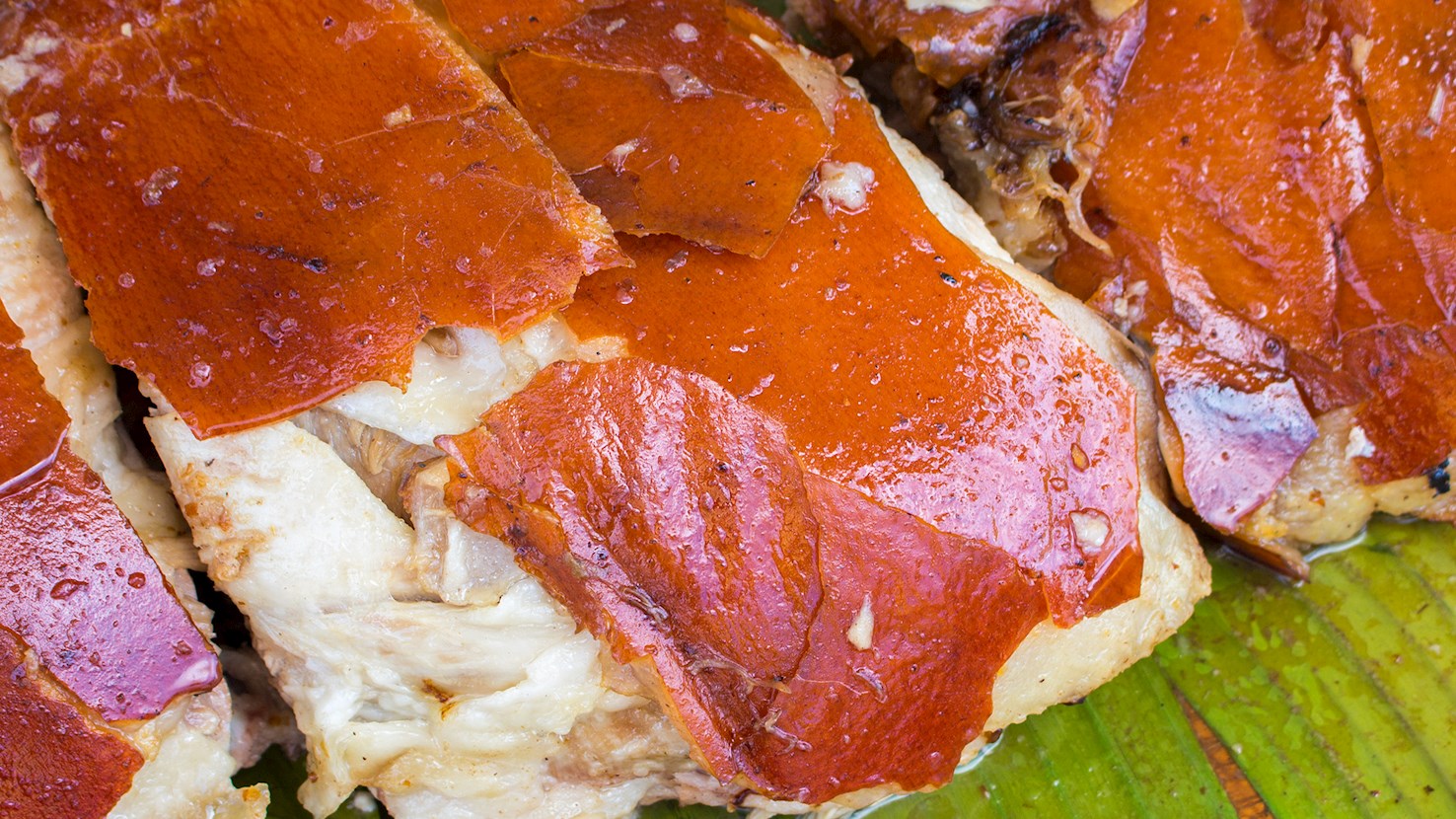
Lechón al horno is the most popular Bolivian version of pork roast, typically using a suckling pig as the star ingredient. The meat is usually marinated in a combination of oil, vinegar, garlic, and spices such as thyme, parsley, red pepper, cumin, and oregano before being baked in an oven for a long time. This dish is considered a specialty and is traditionally prepared during the festive Christmas period.
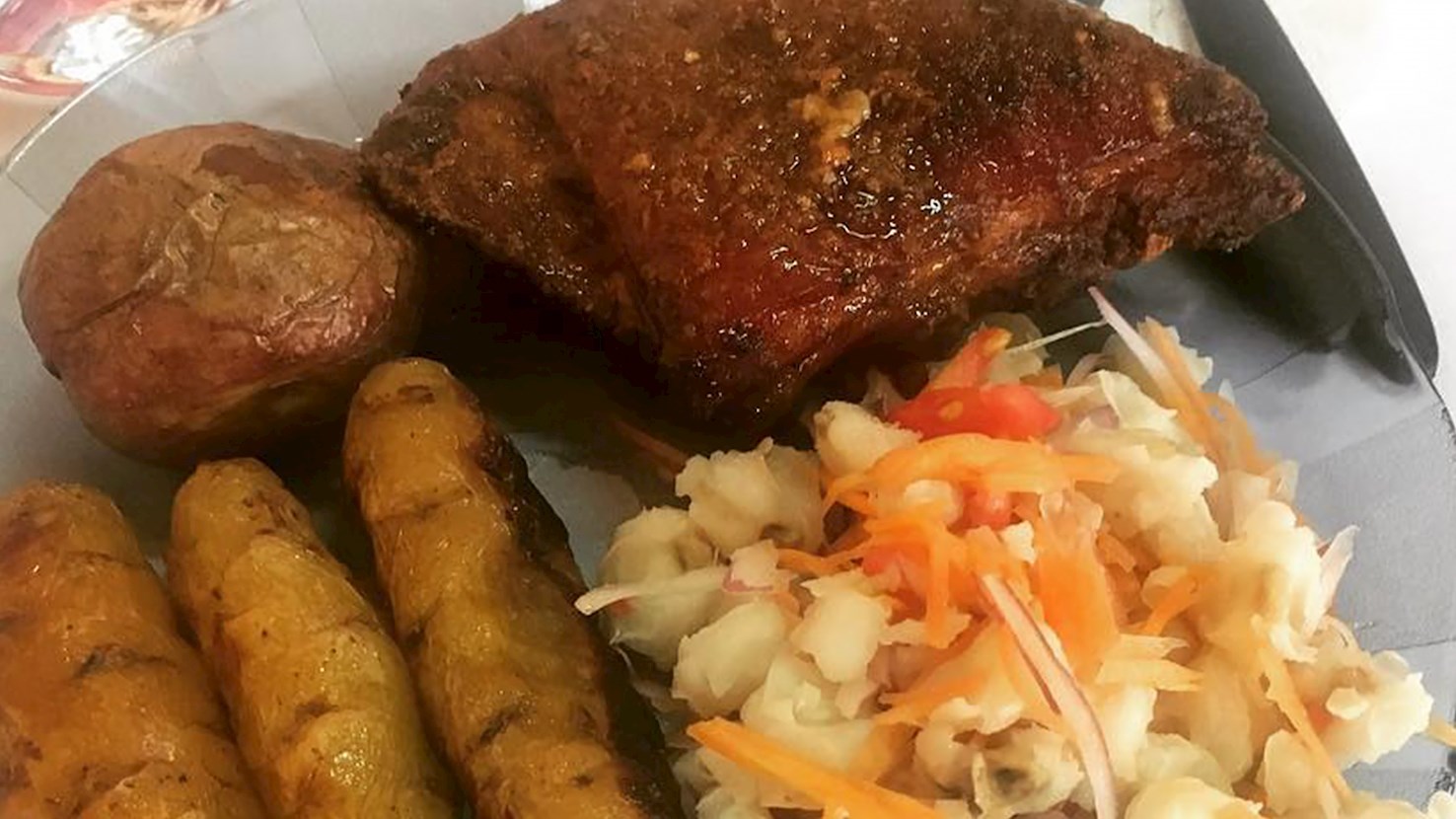
Chancho a la cruz is a whole-roasted pork specialty particularly associated with the department of Tarija. A young pig is opened out, fastened to a large iron cross, and cooked slowly beside a wood fire until the meat becomes tender and smoky and the skin turns crisp. It is usually served with potatoes or mote, salad, and llajua, a fresh chile sauce. The pig is generally a relatively young animal weighing around 12 to 16 kilograms. Larger pigs can be used, but their thicker skin and greater size make them considerably slower and more difficult to cook evenly. Before roasting, the carcass is opened so that it can lie relatively flat against the frame. In the Tarija method, the legs are loosened at the joints, the hindquarters are opened out, and cuts are made around the ribs and spine so that heat and seasoning can penetrate the thicker parts of the animal. The pig is then secured firmly to a metal cross with wire, hooks, or other metal fasteners. Unlike meat cooked directly over a grill, chancho a la cruz is cooked beside the fire, usually about 70 to 80 centimeters from the heat. The slow radiant heat and smoke gradually cook the entire carcass without exposing it continuously to direct flames. Seasoning can be remarkably simple. Salt is essential, and some versions brine the pig overnight before it goes onto the cross. This seasons the thick meat more evenly and helps it retain moisture during the long roast. A characteristic Tarija method is to repeatedly bast the pig with a mixture of beer, lemon juice, and salt, sometimes with a little oil. The liquid is brushed or splashed over the meat throughout the roast, adding flavor while preventing the exposed surface from drying excessively. Garlic, cumin, oregano, vinegar, or other seasonings can be added individually, but they are not necessary to define chancho a la cruz. The pig is not left in one position for the entire roast. It is turned so that different parts face the fire, including roasting it with the head pointing downward and later upward. This helps the thick shoulders, legs, ribs, and loin cook more evenly. Cooking is deliberately slow. Depending on the size of the pig, the strength and distance of the fire, and the desired degree of smoking, the process can take roughly four to twelve hours. A Tarija-style roast of a 12–16 kg pig commonly takes several hours before the skin is given its final crisping. Much of the pig’s fat renders during this period, keeping the meat succulent while gradually reducing the layer beneath the skin. The finished pork should remain juicy rather than dry, with a noticeable smoky character from the wood fire. The skin receives special attention toward the end. Once the meat is cooked, the pig is turned so that the skin faces the fire more directly. Oil may be rubbed over it, and some methods use a small amount of bicarbonate to encourage browning and crispness. The goal is a deeply browned, brittle cuero contrasting with the tender meat underneath. Beer therefore has a genuine place in chancho a la cruz, but it is normally used as part of the basting mixture rather than completely replacing the other liquids. A beer-and-lemon baste is particularly characteristic. Chicha can be used in individual versions, but it is not a defining ingredient of the established Tarija method. Once the pig is ready, it is removed from the cross and divided into portions containing both meat and crisp skin. It does not need to be hacked apart with a machete; ordinary heavy knives and cleavers can be used to portion the roasted carcass. The characteristic accompaniments are simple. Mote, or cooked maize kernels, and boiled potatoes are especially common, and either may provide the main starch. Fresh salad is also frequently included. Llajua provides the fresh chile element. It is generally based on tomato and locoto, often with herbs such as quirquiña. Its freshness and heat contrast with the fatty roasted pork, but it need not be described as strongly acidic, as lime juice or vinegar is not required. Chancho a la cruz is strongly identified with the department of Tarija, including both the city and the wider Chaco area, where details of the method vary. The dish has become particularly visible in Tarija during festivals and large communal events. Its public profile increased considerably during the early twenty-first century, including the organization of gastronomic fairs devoted to the roa
Pampaku refers to the Bolivian way of roasting the meat underground. The choice of meat is typically cooked with hot spices in a pit that is heated by wood or coal fire. When it's done, pampaku is traditionally served with plantains, potatoes, and cassava on the side.
Pacumuto is a grilled meat skewer from eastern Bolivia, and is a staple of outdoor gatherings, markets, and celebrations. It is made by threading chunks of meat—beef, sausages, chicken, or other meats—onto skewers, alternating with vegetables such as peppers or onions, and grilling them over hot coals until smoky and tender. The dish reflects the ranching and barbecue culture of the region, where cattle-raising has long shaped local cuisine and where grilling is central to social life. Preparation begins with selecting tender cuts of beef —often sirloin or loin —and cutting them into bite-sized cubes. These are sometimes marinated in salt, garlic, and local spices, though the seasoning is usually kept simple to highlight the meat's flavor. Soy sauce is often used as a seasoning ingredient. The pieces are skewered, sometimes along with slices of sausage or vegetables, and cooked over charcoal or wood embers until charred on the outside and juicy within. It is a dish prepared for communal occasions — from family gatherings and weekend barbecues to local fairs and festivals — and is often enjoyed outdoors, reinforcing its connection to Bolivian barbecue culture. Pacumuto is usually eaten hot straight from the grill, either as a main course or as part of a larger meal shared among friends and family. It is usually accompanied by yuca, salad, Bolivian hot sauce llajua, or rice with cheese. These Bolivian skewers go well with cold beer, local wines, or refreshing beverages like chicha or mocochinchi, which balance the richness of the grilled meat.
TasteAtlas food rankings are based on the ratings of the TasteAtlas audience, with a series of mechanisms that recognize real users and that ignore bot,
nationalist or local patriotic ratings, and give additional value to the ratings of users that the system recognizes as knowledgeable.
TasteAtlas Rankings should not be seen as the final global conclusion about food. Their purpose is to promote excellent local foods,
instill pride in traditional dishes, and arouse curiosity about dishes you haven’t tried.





What People Say