shutterstock

Top 100 Central European Meat Dishes

Last updated on May 15, 2026

Best Central European Meat Dishes
01

Rinderbrust

4.3 ·

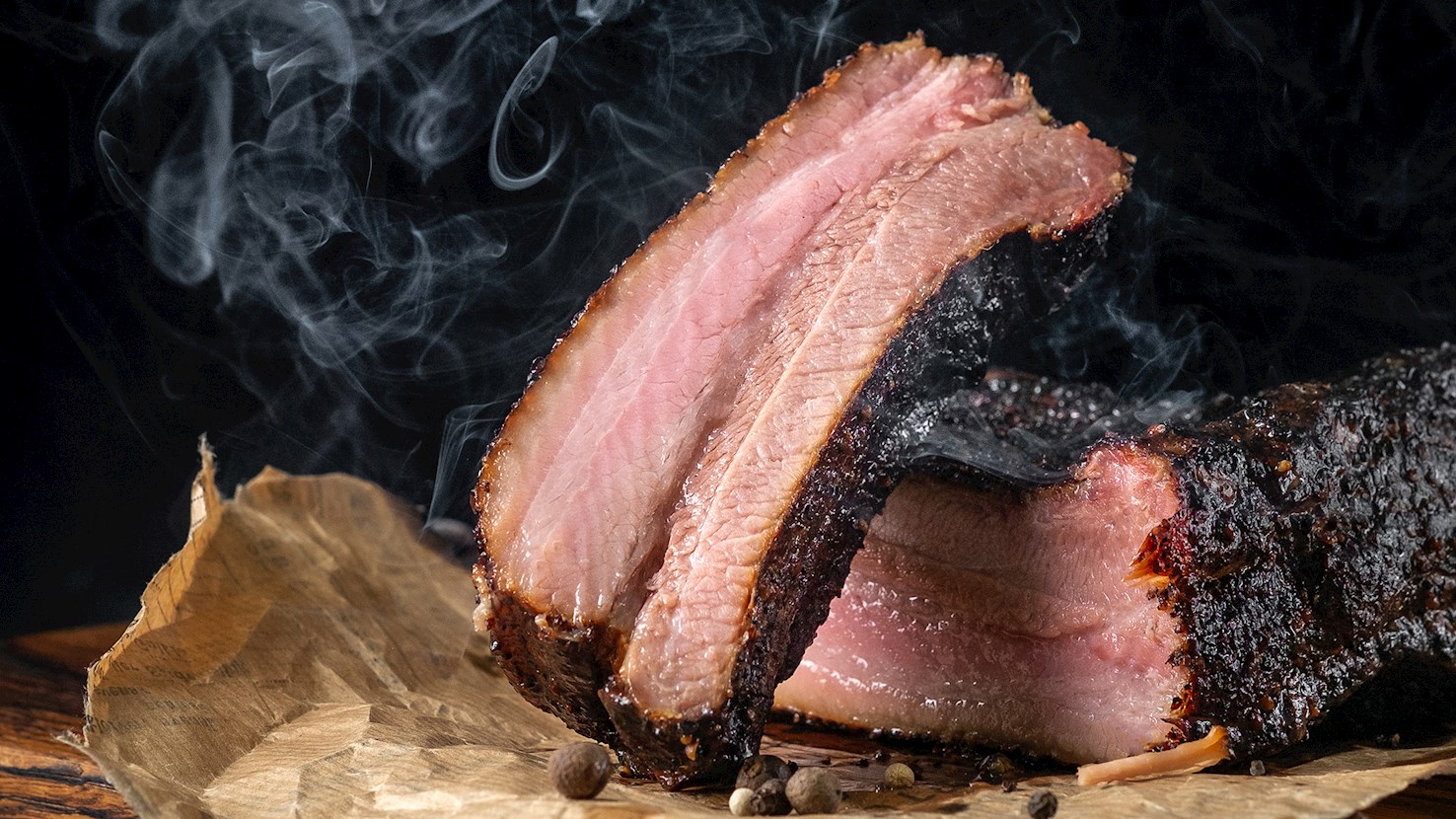
In the American, English and German systems of primal beef cuts, the brisket (or rinderbrust) is a cut that comes from the breast or lower chest of the cow. The brisket is one of the nine primal cuts of beef and is particularly known for its size and for having a significant amount of connective tissue. This cut consists of two different muscles: the pectoralis major, known as the "flat," and the pectoralis minor, or the "point." The flat is leaner, while the point has more fat and marbling. Because of the high amount of connective tissue, brisket needs to be cooked slowly, over low heat, to allow the collagen in the meat to break down and become tender. This makes it a popular choice for slow cooking methods like smoking, braising, or slow roasting. Brisket is notably used in a variety of regional American barbecue traditions, particularly Texas-style barbecue, where it's often smoked for many hours. It's also traditionally used for making corned beef and pastrami.

02

Svíčková

4.3 ·

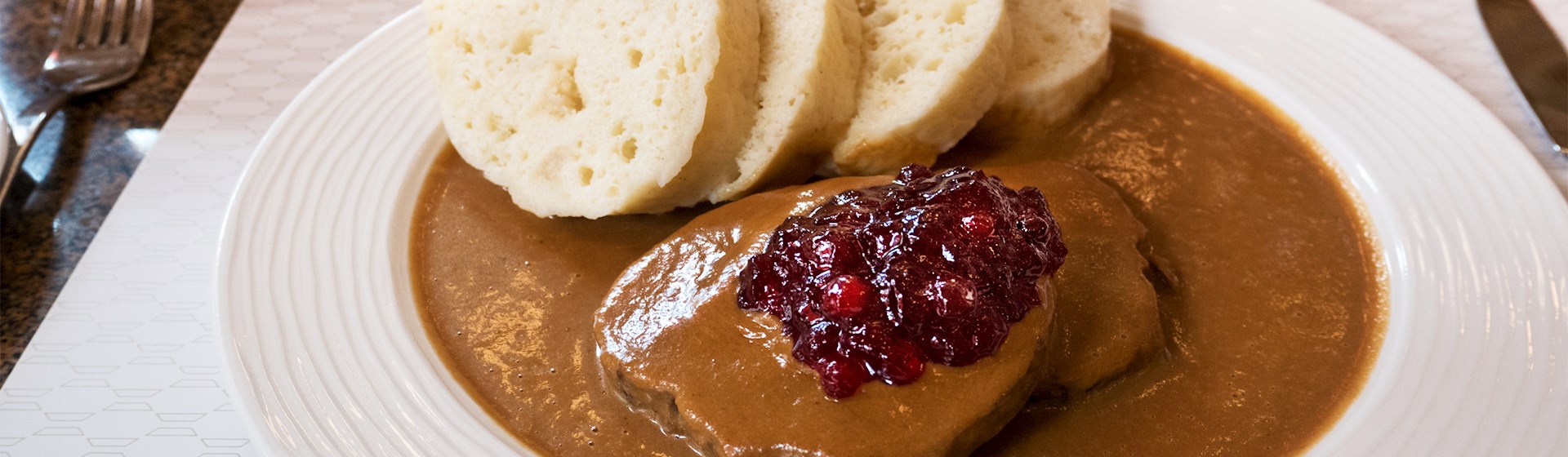
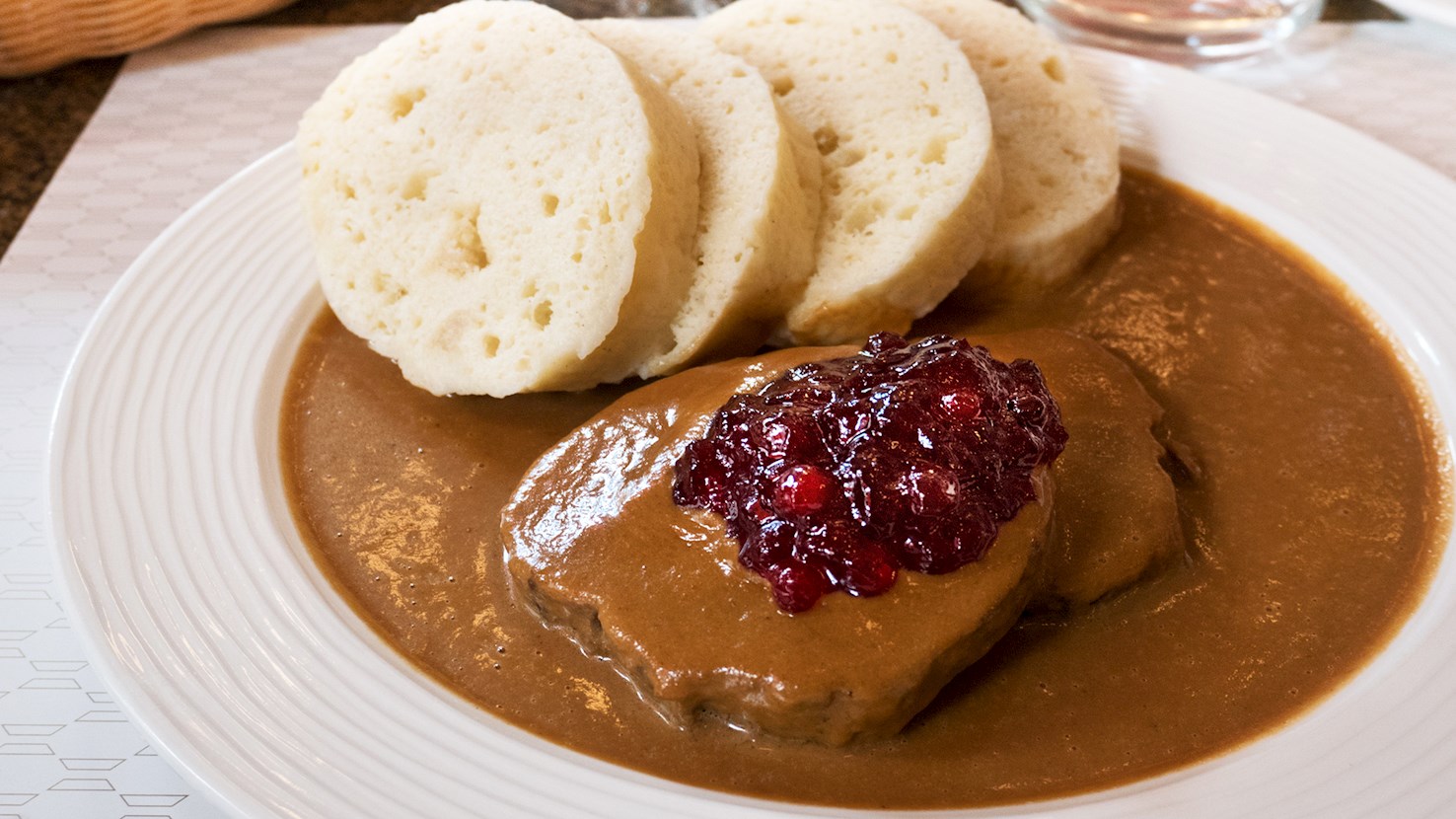
This delicious beef dish is one of the best-known creations of Czech cuisine. It is made with marinated braised beef, usually tenderloin, served in a creamy vegetable sauce made with carrots, celeriac, and parsley root. The dish is usually spiced with thyme, bay leaves, and allspice, which lend the dish bold flavors. The trademark of this dish, however, is its creamy gravy made with puréed or mashed root vegetables and sour cream. The recipe for this traditional dish first appeared in 1805. It was heavily influenced by Bavarian cuisine and traditional French cooking techniques, both of which incorporate generous amounts of butter and cream into their recipes. Svíčková is traditionally served with the famous soft Czech bread dumplings, a slightly tart cranberry sauce, a dollop of whipped cream, and a slice of lemon.

03

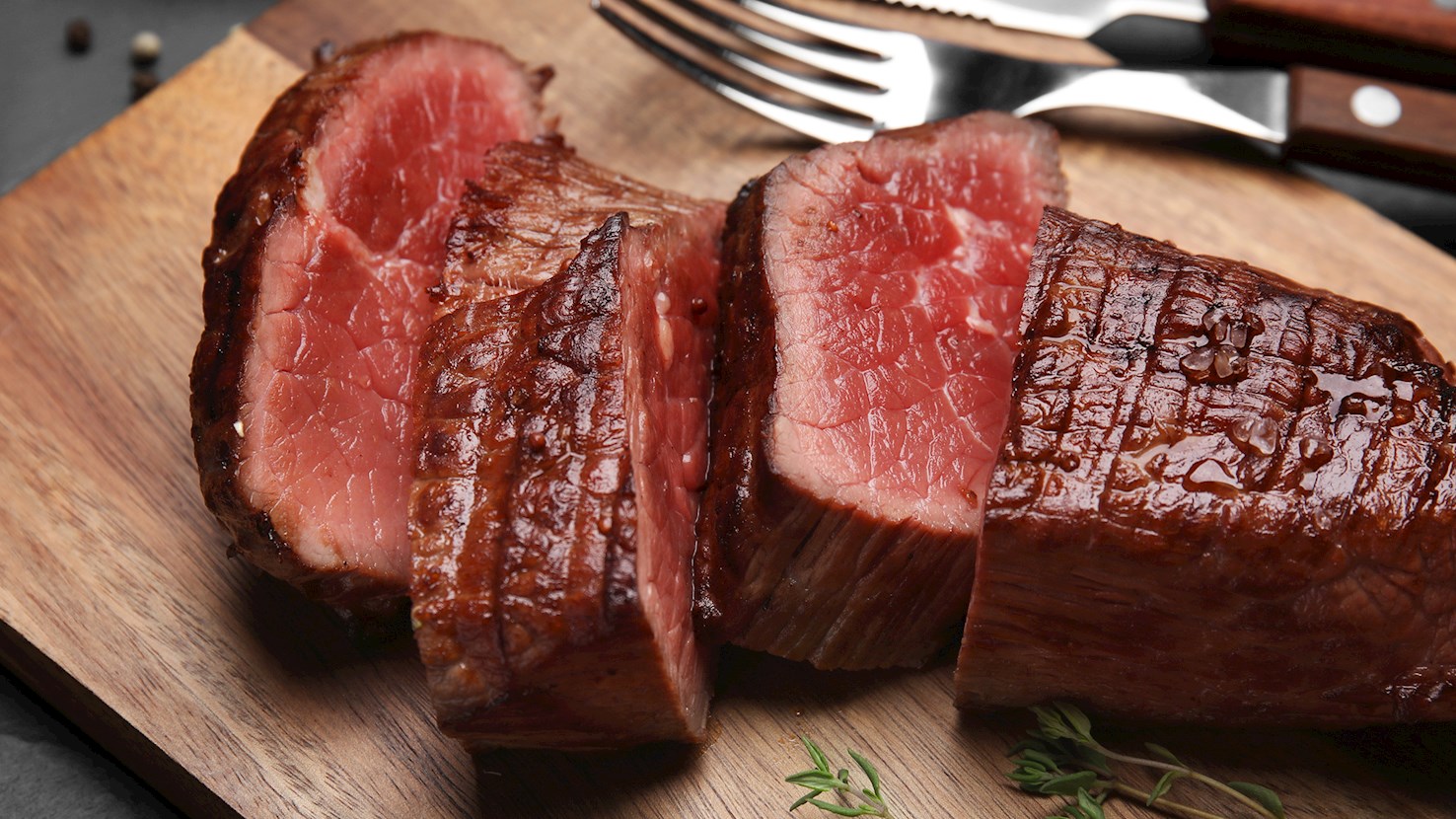
Filet

4.3 ·

In the American, French, German, Brazilian, and Korean systems of primal beef cuts, the tenderloin is a cut from the loin, which is located towards the back of the cow, nestled under the ribs, next to the backbone. It spans two primal cuts: the short loin and the sirloin. The tenderloin is one of the most tender cuts of beef as it comes from a muscle that doesn't get much exercise. It is also one of the most highly prized and correspondingly expensive cuts of beef, due to its tenderness and flavor. Given the tenderness of this cut, the tenderloin is often cooked quickly over high heat, with methods such as grilling or broiling. It's often served slightly rare to maintain its tender texture.

04

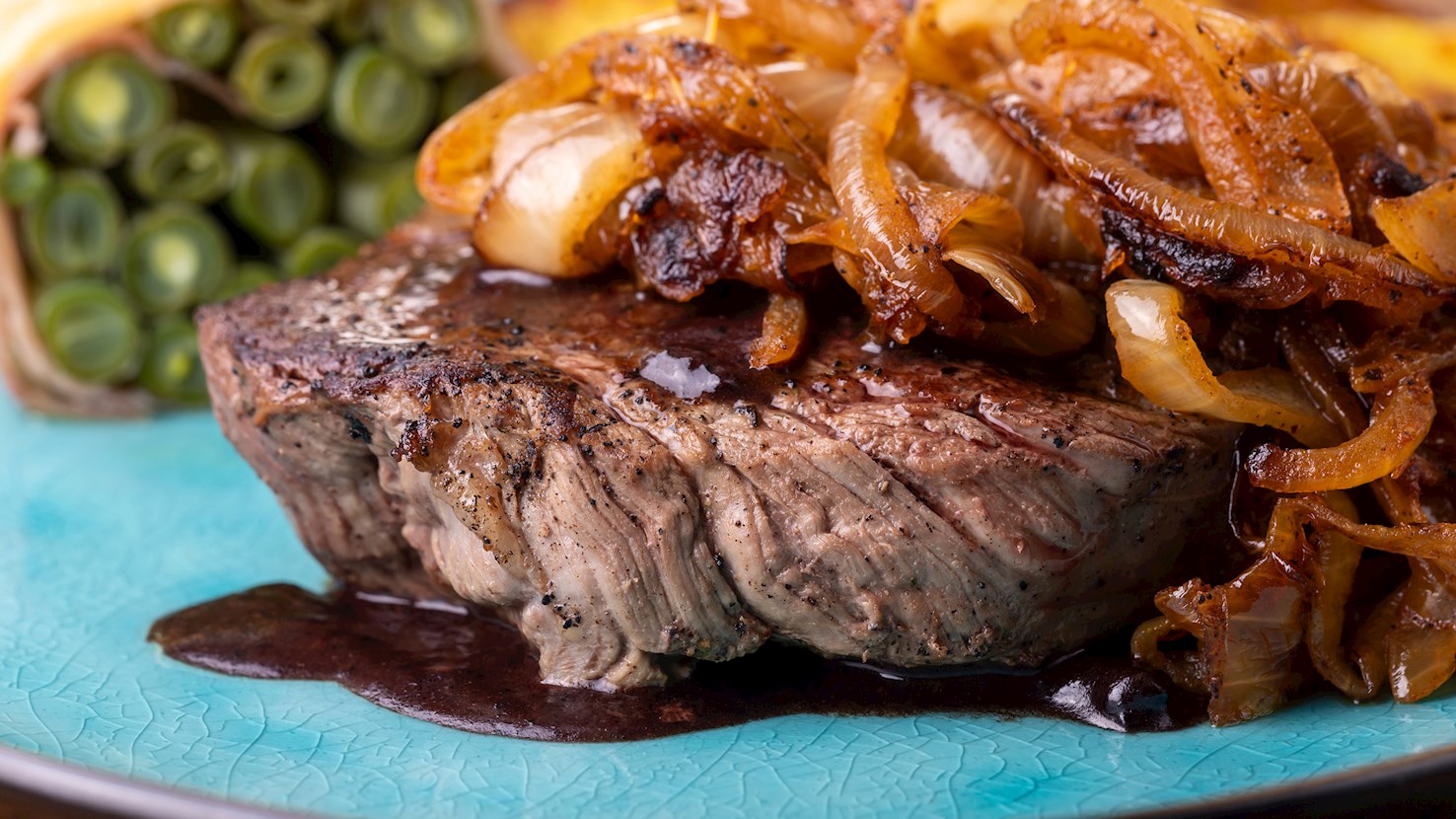
Zwiebelrostbraten

4.3 ·

Zwiebelrostbraten is a traditional dish that's served in most German and Austrian restaurants in Bavaria and Vienna, respectively. The dish is usually made with a combination of beef (sirloin steak), onions, flour, oil, butter, paprika, Dijon mustard, cream, beef stock, salt, and pepper. The onions are sliced into rings, dipped in a mixture of flour and paprika, fried in oil, and set aside. The steaks are lightly pounded, seasoned with salt and pepper, coated with flour and paprika, fried in oil and butter on both sides, and removed from the pan. The fried onions are returned to the pan with mustard and beef stock, and the mixture is cooked until the juice are reduced. Cream is added to the pan and everything is simmered for a few minutes. The steaks are added to the sauce, and the dish is then served with spätzle or potatoes on the side. The meat is typically topped with the remaining onions before serving.

05

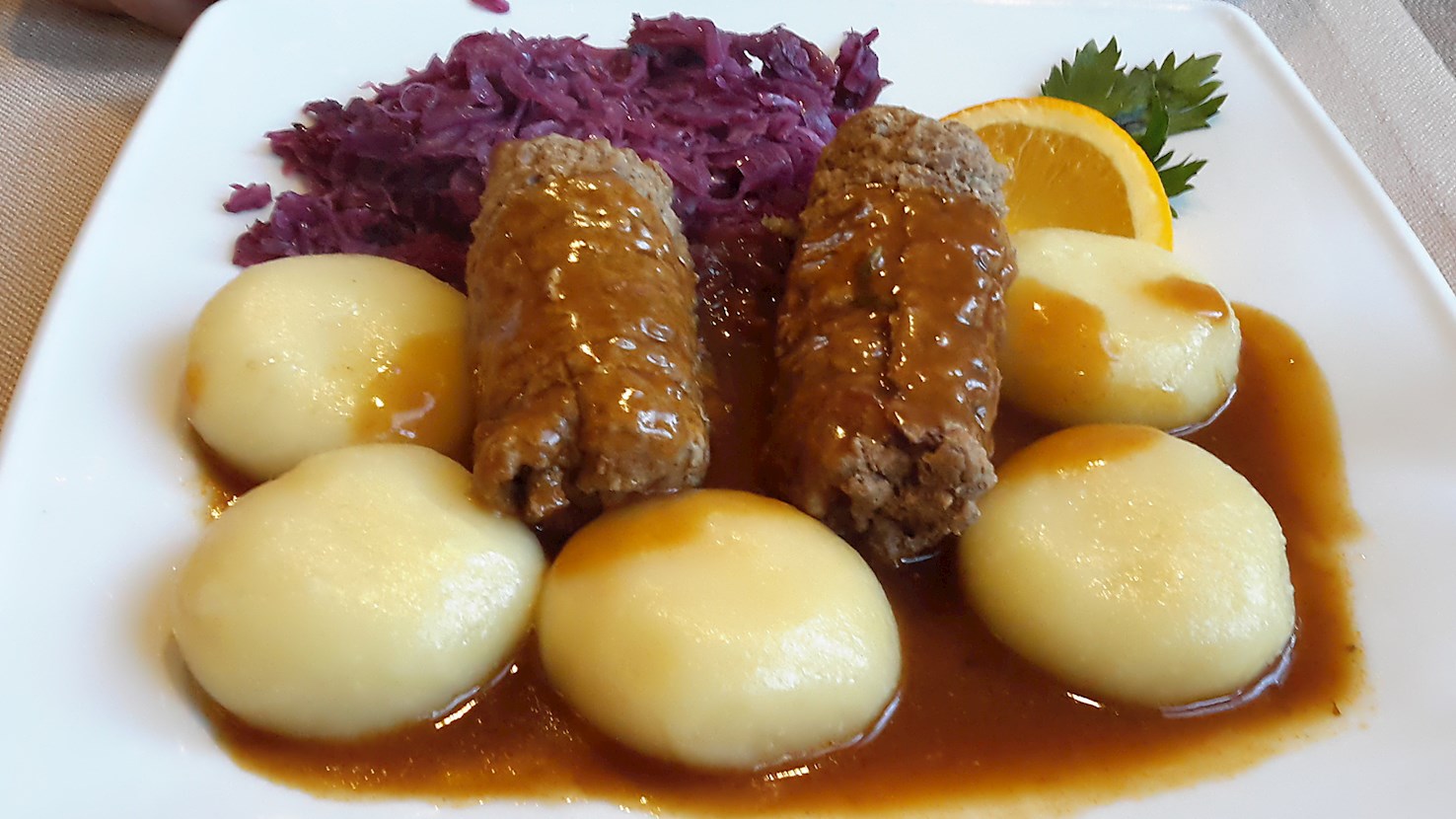
Rolada z modrą kapustą

4.3 ·

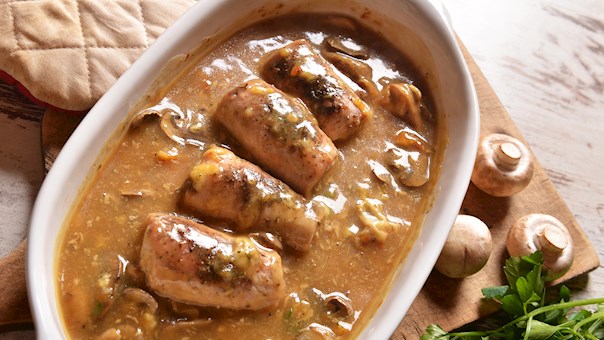
An authentic Silesian dish, rolada z modrą kapustą is a beef roulade served with a side of cooked red cabbage and potato dumplings. Traditionally, the beef roulade is filled with pickled cucumbers, bacon, sausages, onions, and mustard. It is first fried and then cooked in a sauce with spices and onions. Cooked modrą kapustą, or red cabbage, is lightly fried with onions and bacon, and then tossed with grated apples, vinegar, pepper, and salt. Also known as kluski śląskie, Silesian potato dumplings consist of boiled potatoes, flour, eggs, and salt. The beef roulade is served on a large plate with the cooked red cabbage and potato dumplings on the side, all drizzled with the cooking sauce and topped with freshly chopped dill. The dish is traditionally eaten on Sundays for dinner, but it is also often served at wedding receptions. It can be found in restaurants throughout the Silesian region.

06

Wiener Saftgulasch

4.3 ·

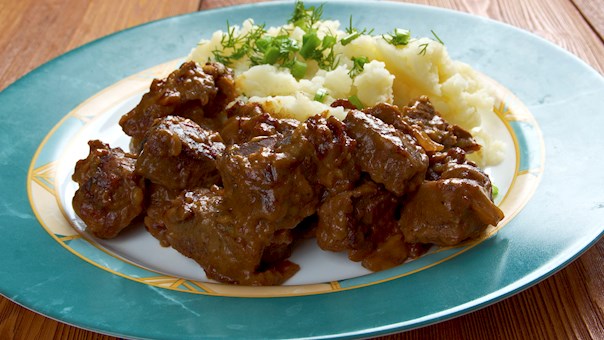
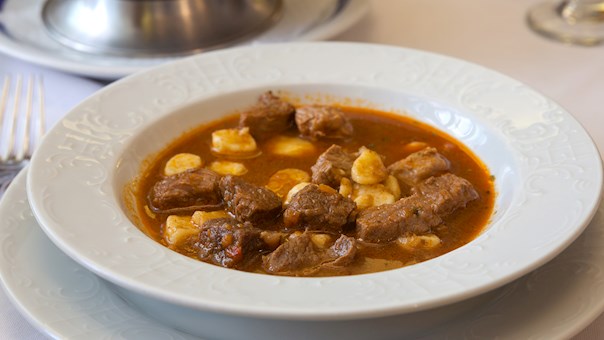
Regarded as the Austrian answer to Hungarian-style goulash, Wiener saftgulasch is a hearty stew that consists of diced lean beef drenched in a thick, flavorful gravy. Although it has evolved from the Hungarian version of the dish, Austrian beef goulash is believed to be a gourmet delicacy of its own kind. It is usually prepared with beef (traditionally lean beef shank), onions, tomato paste, and lard, while the combination is typically flavored with vinegar, Hungarian paprika, bay leaves, marjoram, caraway, lemon zest, juniper berries, sugar, salt, and black pepper. What makes this variety of goulash stand out from the rest is the thick and smooth consistency of the sauce that is achieved through the cooking process, without the addition of any thickeners such as roux, sour cream, or flour, as well as the stew's rich, savory, and spicy flavor. It is recommended to prepare this Austrian specialty at least a day ahead of consumption since the flavor is said to improve significantly with time. Traditionally, Wiener saftgulasch is enjoyed with accompaniments such as nockerl (a type of dumplings), spätzle (noodles), potatoes, or kaiser rolls (crusty round bread rolls). The beef stew's popularity has given rise to numerous variations throughout the country, including the one that is known as fiakergulasch (coachman's goulash).

Best restaurants
07

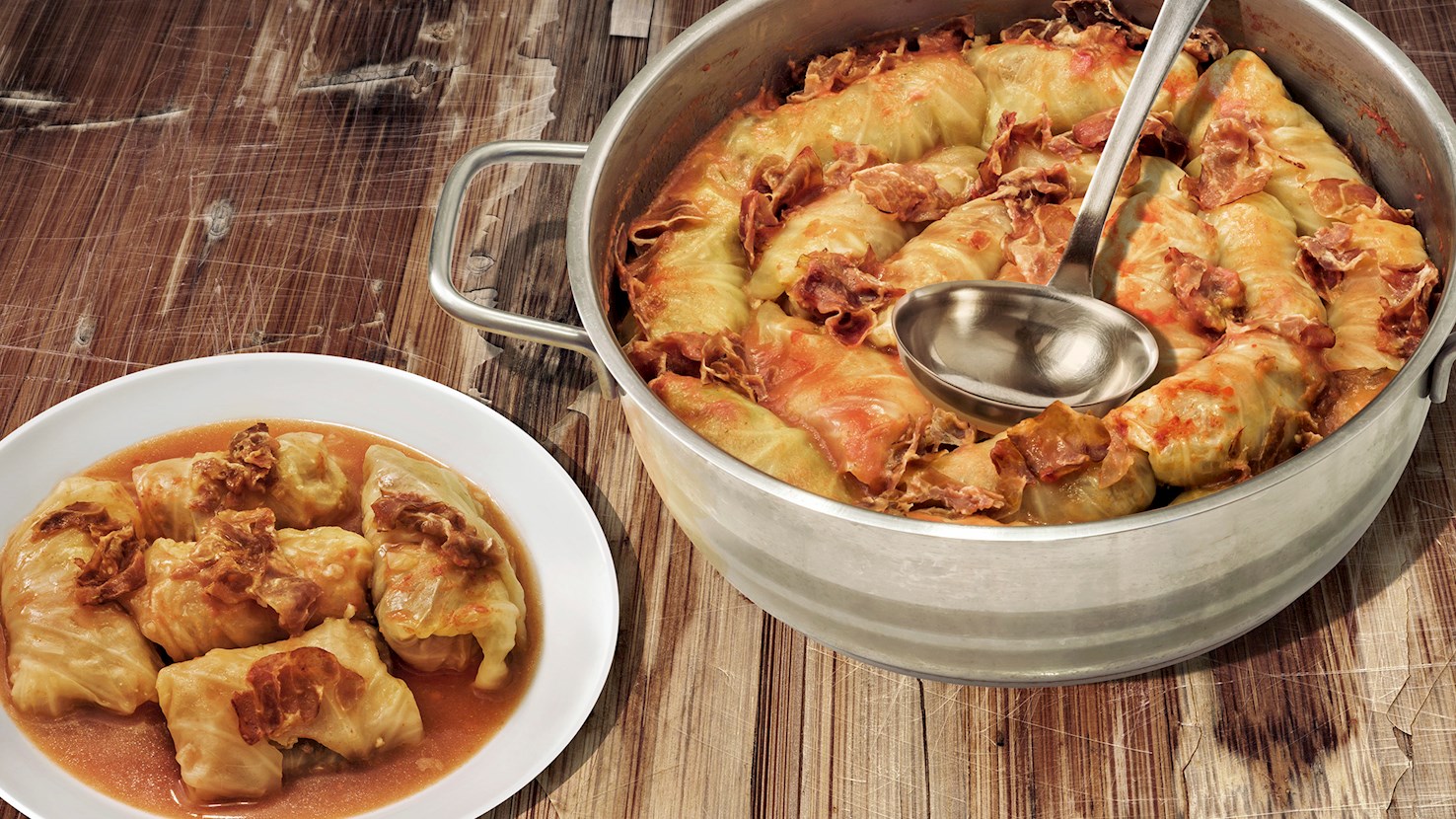
Sarma

4.2 ·

One of the staples of traditional Turkish cuisine, sarma consists of a filling that is snugly surrounded by leaves or leafy vegetables. There are numerous versions of this dish but the mixture typically combines ingredients such as minced meat, rice or bulgur, various herbs, seasonings, red pepper, paprika, ground sumac, or tomato sauce, while the typical wrapping usually includes vine, cabbage, or sauerkraut leaves, or a variety of leafy vegetables such as collard greens and swiss chard. Having its roots in the Ottoman Empire, sarma is also traditionally consumed in the Balkans, the countries of Central Europe, the South Caucasus, and the Middle East. Although it is commonly enjoyed as a filling lunch or dinner (typically during the winter season), sarma is often prepared on special occasions and holidays. The dish is usually accompanied by plain yogurt, mashed potatoes, and crusty bread on the side.

08

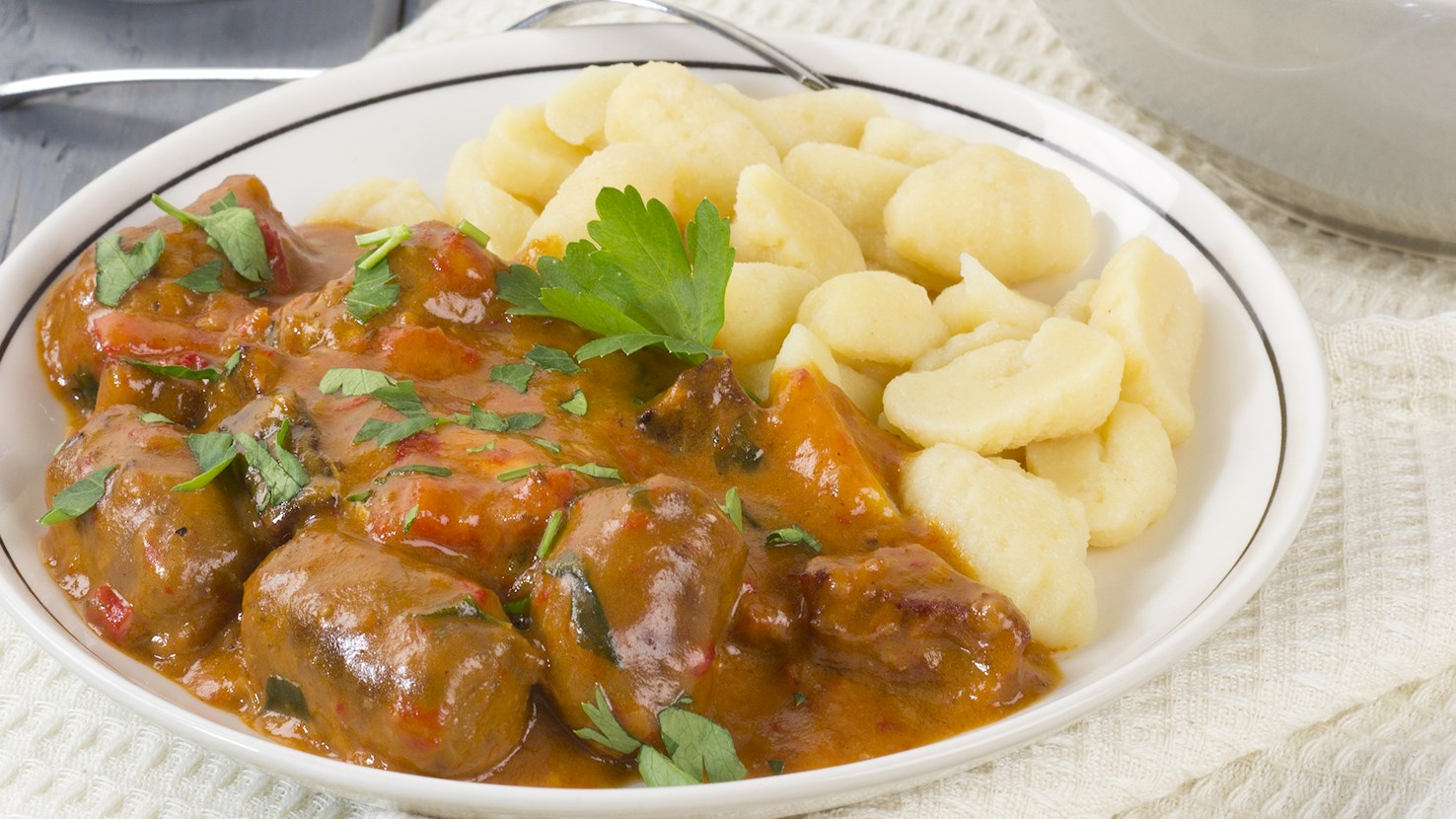
Pörkölt

4.2 ·

Pörkölt is Hungary's national stew, its name derived from the word pörkölni, meaning to roast or singe. The stew is made from meat such as beef, lamb, pork, or chicken, simmered in a red sauce with lots of onions, garlic, and paprika powder. It is traditionally served with dumplings, boiled potatoes, or pasta, and it is recommended to pair it with a Hungarian fruit brandy. Pörkölt's history is closely linked to the traditional Hungarian goulash, as both dishes were originally prepared as peasant meals that made hefty use of powdered paprika. Today, there are many varieties of pörkölt, with the names accordingly matching the key ingredient used in the dish, such as pacalpörkölt (tripe), marhapölkört (beef), and borjupörkölt (veal). In the Czech Republic, pörkölt is traditionally made with pork, dark bread, caraway seeds, and dark beer.

09

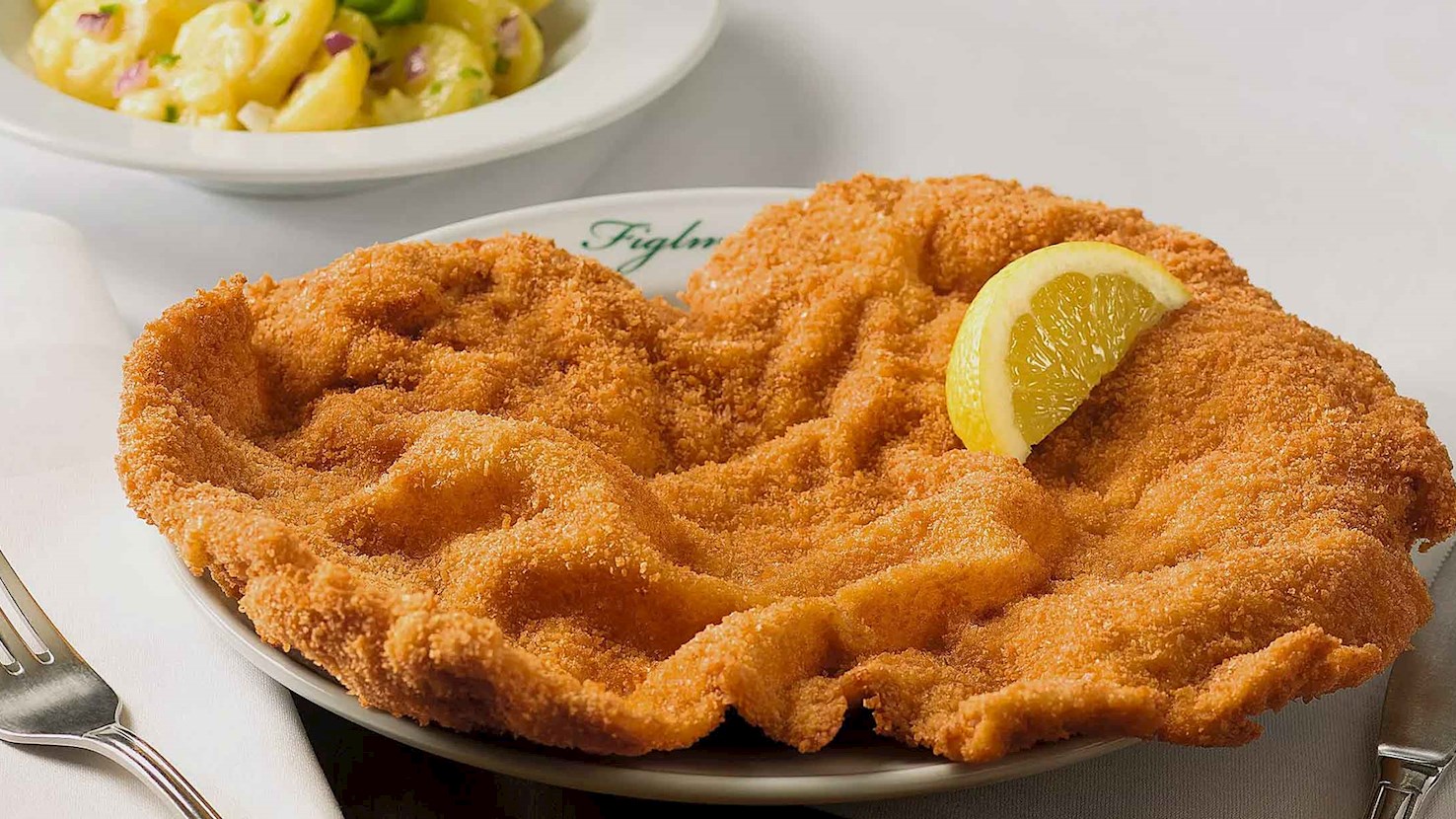
Schnitzel Wiener Art

4.2 ·

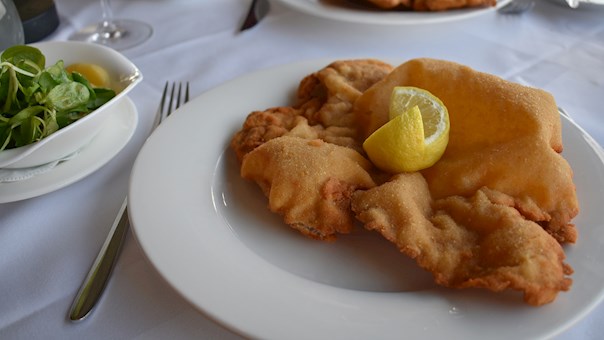
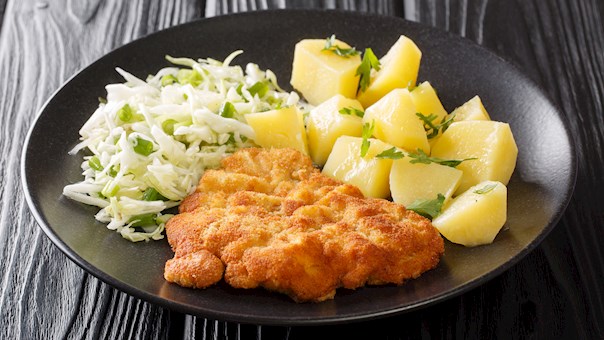
Schnitzel Wiener Art is a take on the classic of Austrian cuisine, the Wiener schnitzel, a breaded and fried veal cutlet. But unlike the traditional Wiener schnitzel, the schnitzel Wiener Art is made with a pork cutlet, not a veal one. The reason behind this switch is the fact that pork is much cheaper and more available than veal. Today, most restaurants in Austria and Germany serve the Wiener schnitzel made with pork and not the real Wiener schnitzel. Luckily, they are obliged by law to state so on their menu. Schnitzel Wiener Art is prepared the same way as the traditional Wiener schnitzel. The pork is thinly pounded, breaded, and pan-fried, usually in oil or a mix of oil and butter. When it comes to serving, the same side dishes are served as with the traditional Wiener schnitzel — a potato salad, French fries, and parsley potatoes will all do, and to cut through the fat, any of the following — a dollop of lingonberry jam, a salad, or lemon wedges to squeeze over the meat — should also be present when the schnitzel is served.

10

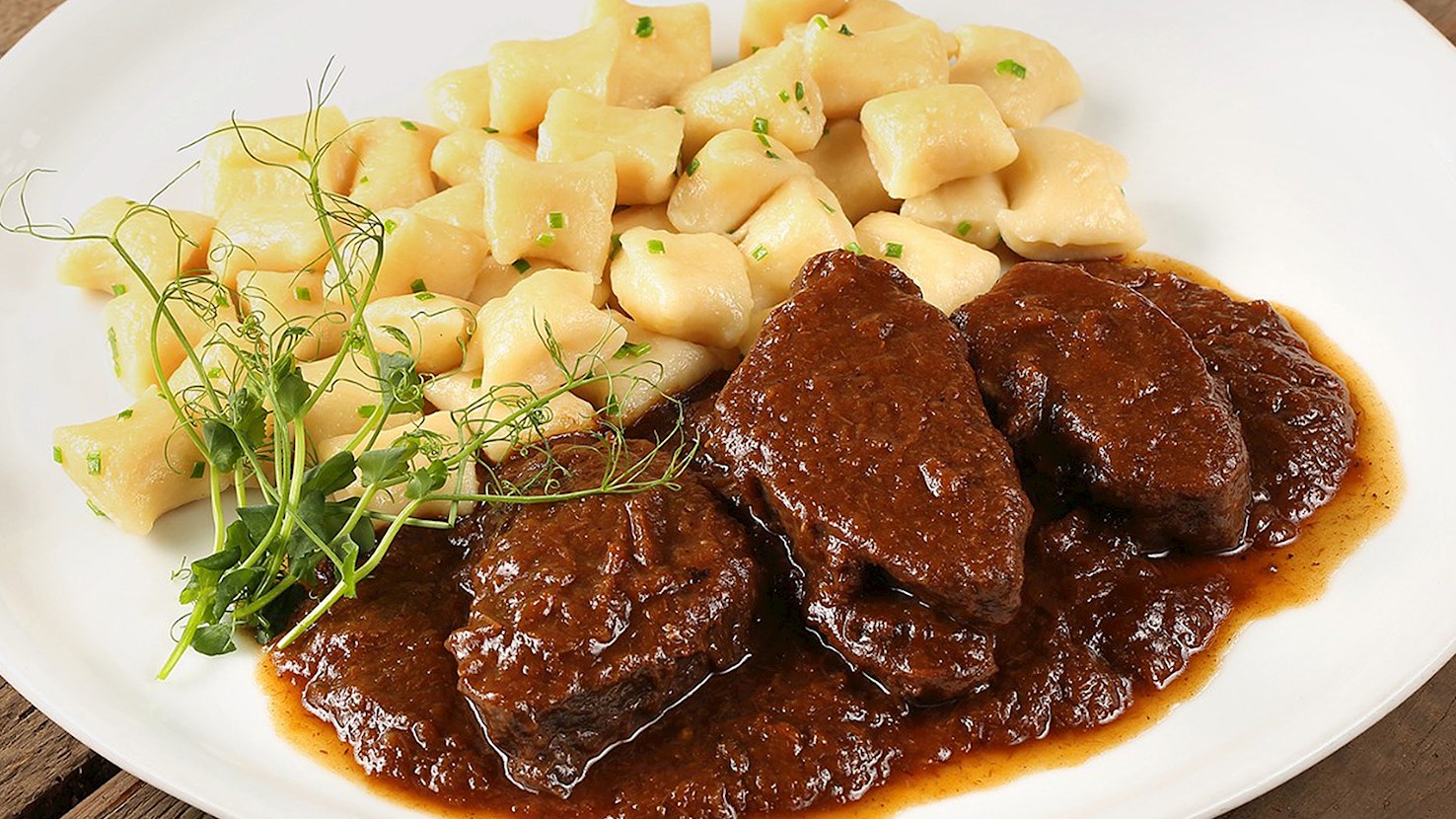
Dalmatinska pašticada

4.2 ·

Dalmatinska pašticada is a traditional Dalmatian dish consisting of beef (the traditional cut used being frikando, the toughest part of beef round) that is marinated in vinegar and spices for up to a couple of days, after which it’s stewed in red wine or prošek with bacon, tomatoes, a few dried prunes or figs, and root vegetables. Once cooked, the sauce is puréed and additionally seasoned with a selection of various spices. Traditionally, the dish is served at weddings with a side of gnocchi or homemade pasta. It is recommended to serve pašticada with some grated cheese on top. Experts believe that the dish had traveled a long way from ancient Greece and Rome to the Republic of Venice and the tables of noblemen until it was finally brought over to Dalmatia, where it became an ingrained part of local cuisine.

Best Central European Meat Dishes
01

Vinzenzmurr

4.5 ·
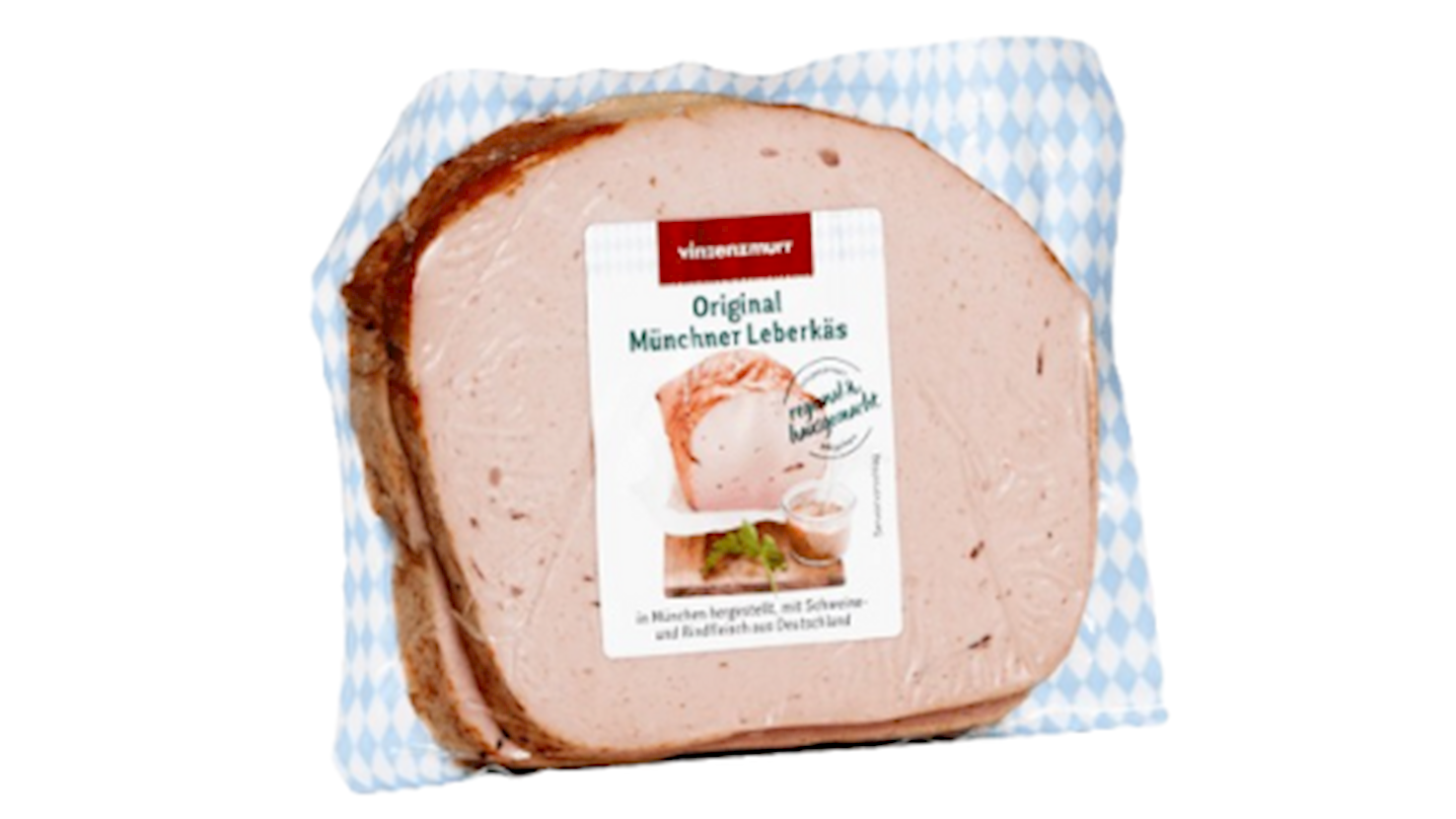
Vinzenzmurr is a traditional Bavarian butcher and delicatessen company based in Munich, founded in 1902 and deeply embedded in the city’s food culture. Built on classic butcher craftsmanship, the brand combines in-house production with a strong focus on freshness, traceability, and regional sourcing, working closely with Bavarian farmers. Vinzenzmurr is best known for its range of traditional specialties such as Münchner Weißwurst, Leberkäse, sausages, hams, and prepared meat dishes, produced according to long-established recipes and strict quality standards. Centralized production in Munich supplies a wide network of retail shops across the city and southern Bavaria, ensuring consistent quality while maintaining a local, neighborhood presence. Beyond everyday retail, the brand is also visible in Munich’s culinary traditions, including its long-standing presence at Oktoberfest. Vinzenzmurr positions itself not as a gourmet brand, but as a reliable, heritage-driven butcher rooted in everyday Bavarian cuisine, where craftsmanship, volume, and regional identity meet.
Read more
View all
View map
About this ranking

TasteAtlas food rankings are based on the ratings of the TasteAtlas audience, with a series of mechanisms that recognize real users and that ignore bot, nationalist or local patriotic ratings, and give additional value to the ratings of users that the system recognizes as knowledgeable. For the “Top 100 Central European Meat Dishes” list until May 15, 2026, 12,611 ratings were recorded, of which 10,017 were recognized by the system as legitimate. TasteAtlas Rankings should not be seen as the final global conclusion about food. Their purpose is to promote excellent local foods, instill pride in traditional dishes, and arouse curiosity about dishes you haven’t tried.

The initial list of top producers was compiled based on available reviews, awards, local recommendations, media and blog coverage, and consumer reviews. The list will be updated with ratings from TasteAtlas local ambassadors and TasteAtlas users.

Similar lists