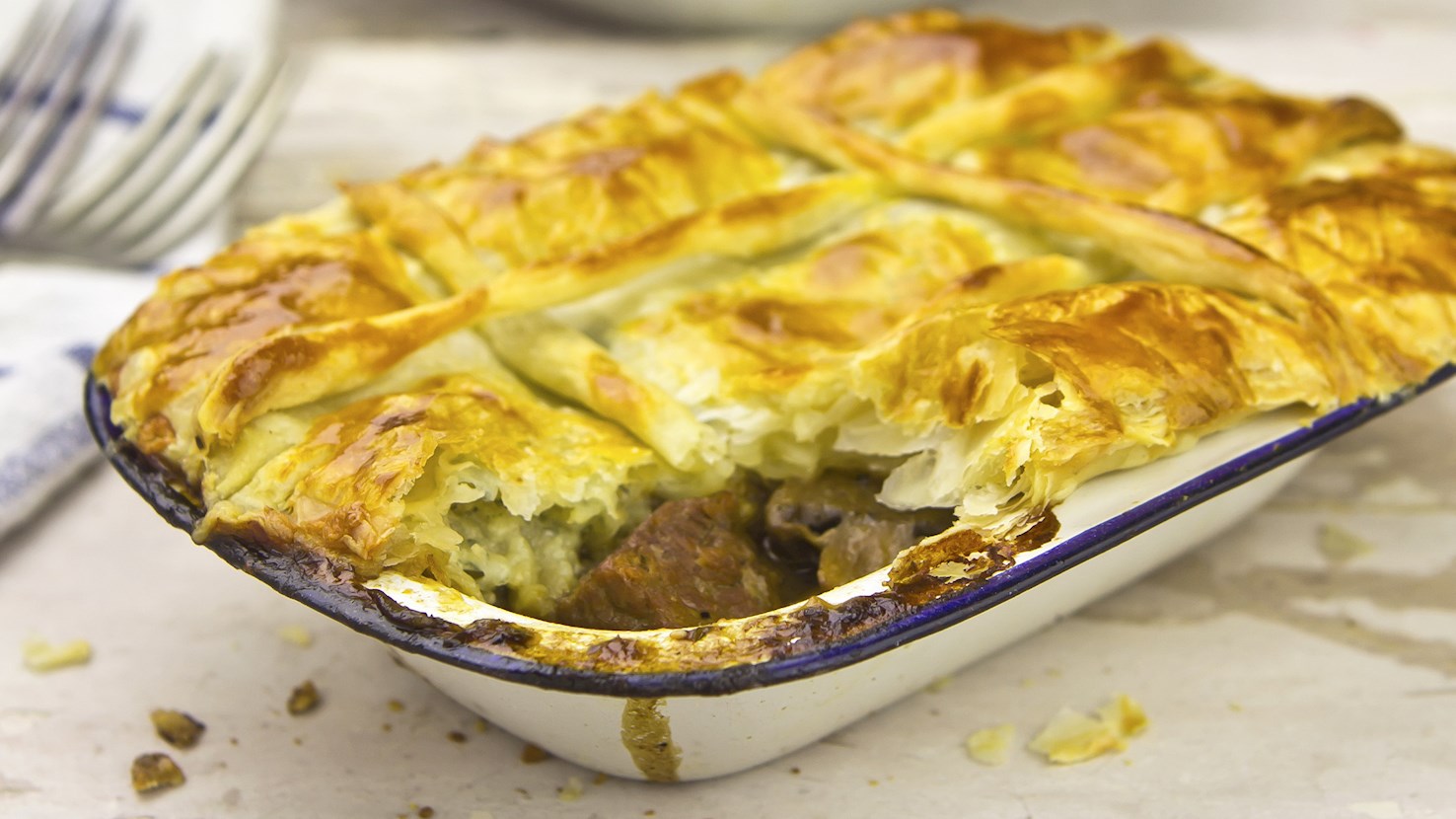
Beef and Guinness pie is a savory dish from Ireland, made by slow-cooking beef with onions, carrots, and herbs in a rich sauce built on the dark, malty character of Guinness stout, then sealing the filling beneath a golden pastry crust. Its roots are found in the longstanding Irish habit of using stout in cooking, where the beer’s depth of flavor complements meats and turns stews into robust, warming meals. Over time, cooks took the hearty beef and Guinness stew and enclosed it in pastry, creating a dish that combined the comforting qualities of a slow-braised filling with the satisfying crispness of baked dough. The preparation begins with browning cubes of beef to develop flavor, followed by softening onions and other vegetables in the same pot. Flour is often added to thicken the sauce before Guinness is poured in along with stock, herbs like thyme or bay leaf, and sometimes a touch of Worcestershire sauce or mustard for complexity. The filling is simmered until the beef becomes tender and the sauce takes on a silky texture. It is then cooled slightly, placed into a baking dish, and topped with shortcrust or puff pastry, brushed with egg wash, and baked until the crust is crisp and golden. Beef and Guinness pie is served across Ireland in pubs, restaurants, and homes, especially during colder months or festive gatherings. It is often accompanied by mashed potatoes, chips, or buttered greens, and sometimes paired with a pint of stout to echo the flavors in the filling. Its reputation has spread beyond Ireland, and it is now found in Irish pubs abroad, where it has become a marker of Irish comfort cooking.
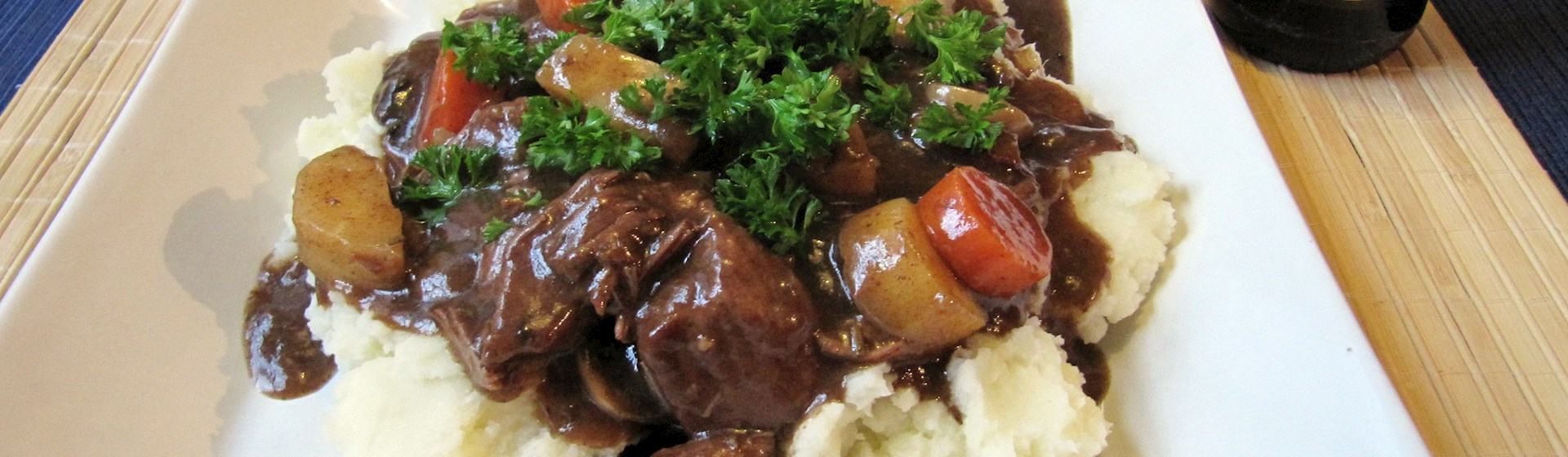
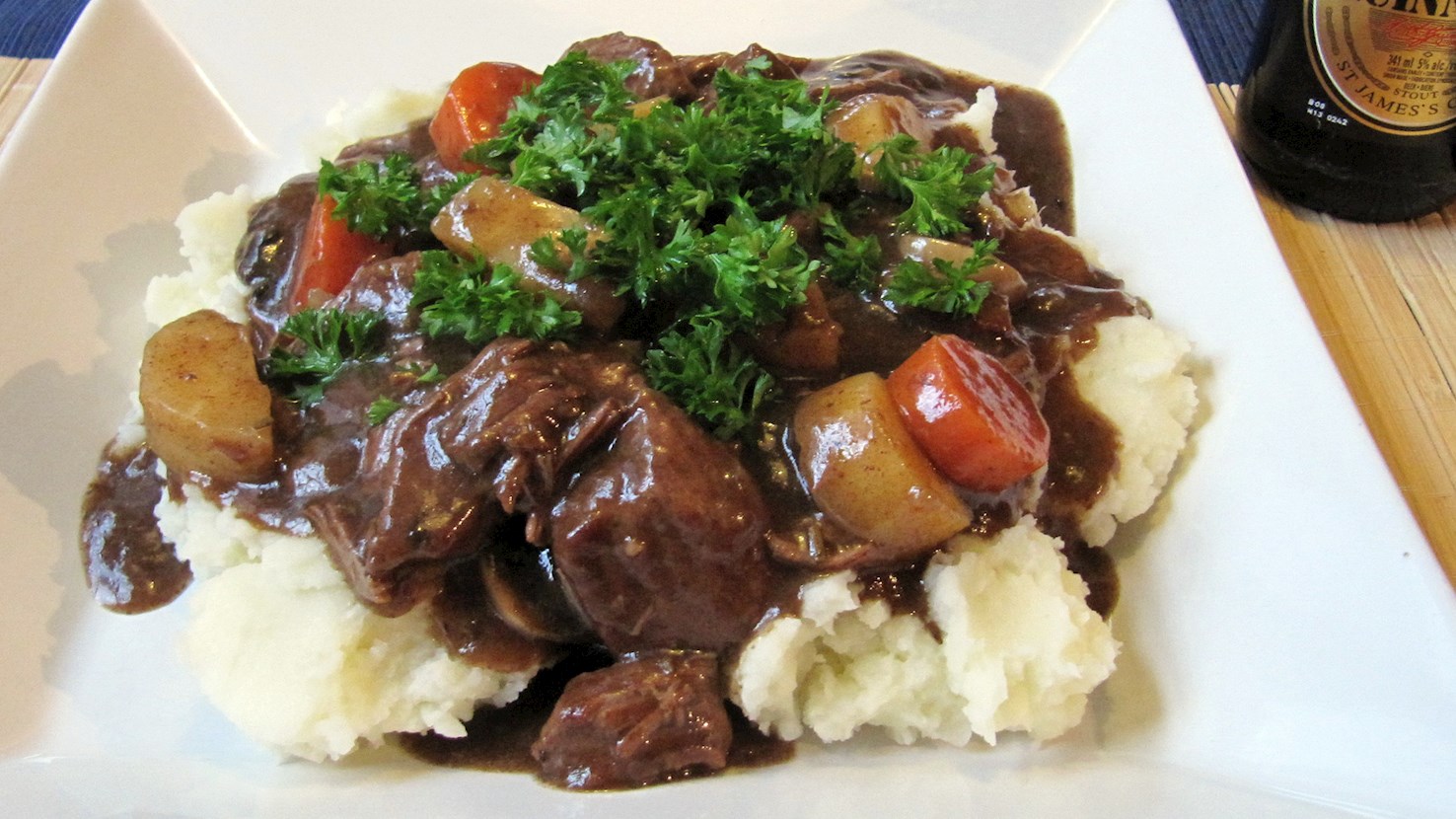
Beef and Guinness stew is a slow-cooked meat dish from Ireland that brings together the depth of stout beer with the richness of braised beef. Its roots are connected to rural cooking, where hearty stews were a practical way to transform modest cuts of beef and simple root vegetables into a warming and filling meal. The introduction of Guinness stout into the preparation reflects Ireland’s brewing heritage, adding both flavor and character to an otherwise straightforward preparation of beef, onions, carrots, and potatoes. The method of making this stew is centered on patience. Beef is first browned to build flavor, then simmered gently in a mixture of stock and Guinness until tender. Vegetables are added, sometimes in stages to maintain texture, and the stew thickens naturally as the starch from the potatoes mingles with the broth. The stout itself mellows during cooking, leaving behind notes of roasted malt and a slight bitterness that balances the sweetness of onions and carrots. In some variations, herbs like thyme or bay leaf are included, and cooks may thicken the sauce further with flour or add a small splash of Worcestershire sauce for extra depth. Today, beef and Guinness stew is eaten widely in Ireland and has become a hallmark of Irish pubs around the world, particularly during gatherings such as St. Patrick’s Day. It is most often served with bread like soda bread to soak up the sauce, or with mashed potatoes for an even heartier meal. Pairings are naturally straightforward: a pint of Guinness itself is the most iconic accompaniment, though other robust ales or even red wines also complement its rich, slow-cooked flavors.
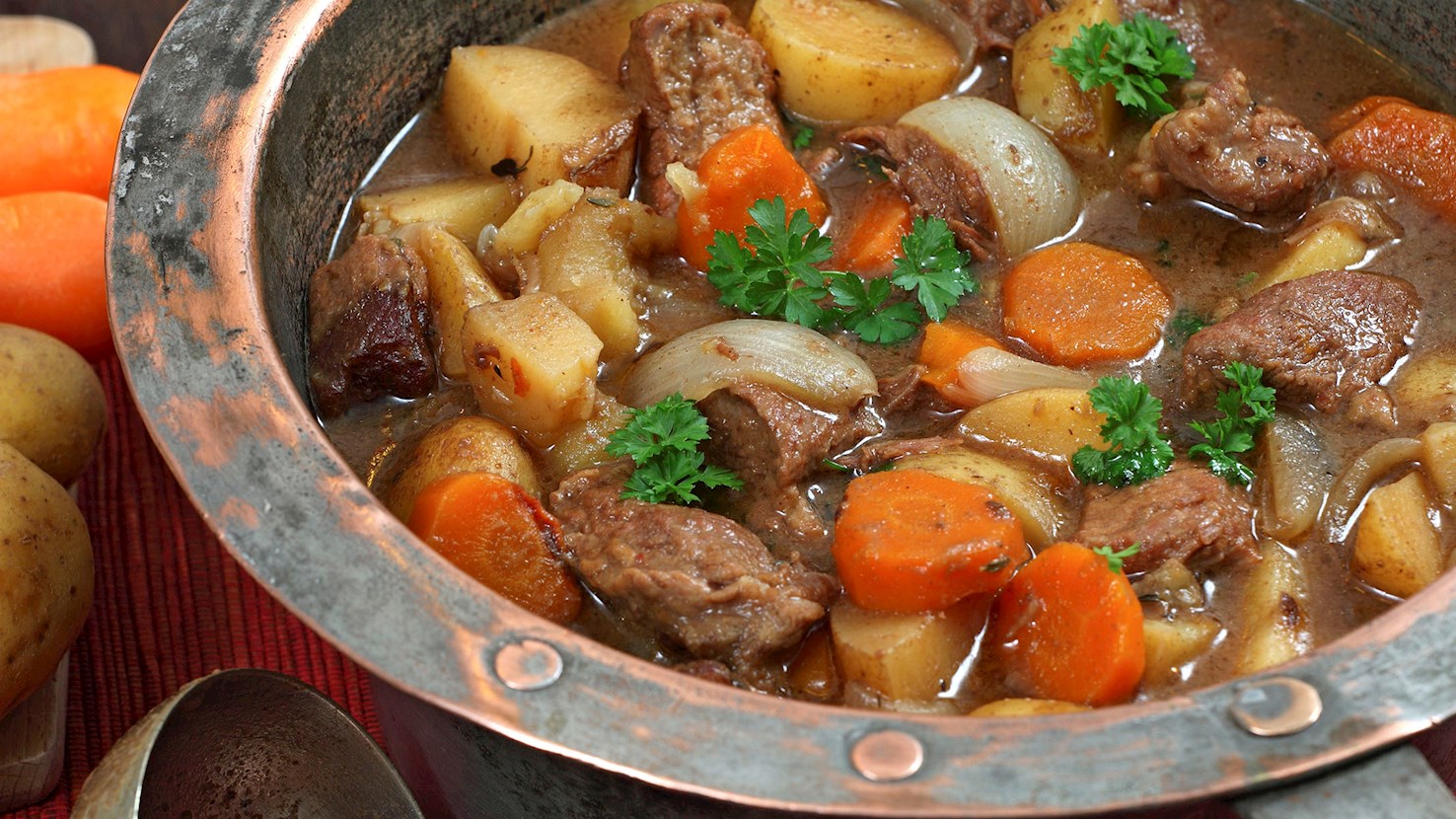
Irish stew is a traditional folk stew that first appeared at the beginning of the 19th century and was developed out of necessity to make a meal out of available, leftover ingredients. Originally, the stew was made only with mutton, onions, potatoes, and sometimes barley, while lamb meat and other root vegetables like carrots, turnips, and parsnips were added later. It is said that goat meat was also used in the past, but besides the previously mentioned mutton and lamb, beef is a common addition in today's recipes. Given that the meat used in the dish is chewy and hard, usually bone-in, the stew is cooked slowly for a couple of hours so that the meat turns tender and releases the fat into the stew, thus enhancing the flavor of the entire dish. A stew made with Guinness stout has gained widespread popularity throughout Ireland as it intensifies the flavors and gives the broth a rich, brown color. Traditionally, the stew is consumed on St. Patrick's Day and for Samhain, an old Gaelic festival, but it can also be found on the menus of most Irish restaurants throughout the year.
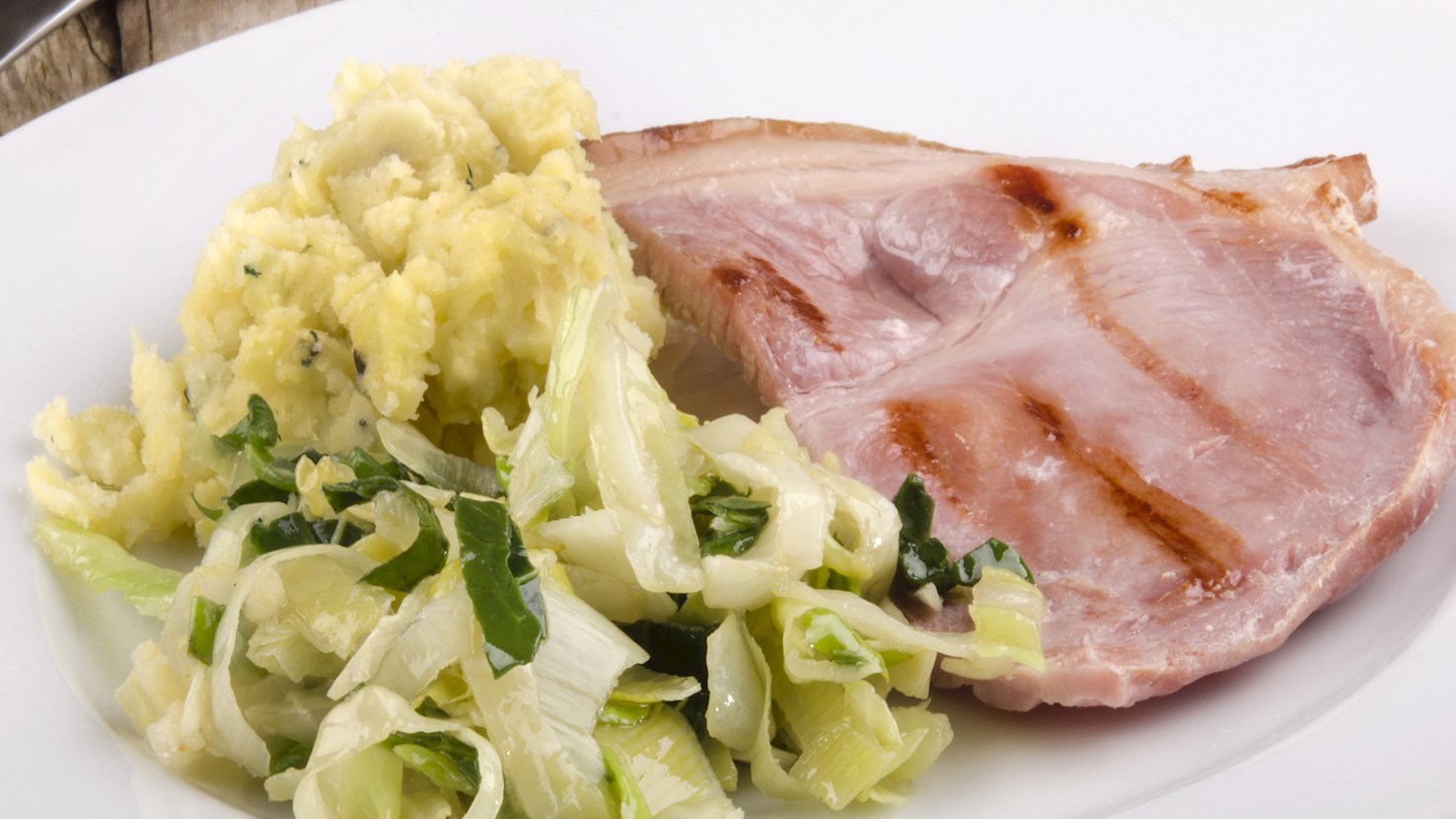
Bacon and cabbage is a classic Irish dish consisting of cured pork served with boiled cabbage and potatoes. It is rooted in the farming culture of Ireland, where pigs were a common household animal and cabbage one of the most dependable vegetables. Together with potatoes, which became central to the Irish diet after their introduction in the 16th century, these ingredients formed the basis of a hearty, filling meal that could sustain rural families through hard work and long days. The dish developed in an environment where self-sufficiency was vital, and pork was preserved through curing or salting to ensure it lasted. This curing method produced the cut of meat commonly referred to as Irish bacon, distinct from the streaky bacon more familiar elsewhere. Paired with boiled cabbage and potatoes, it created a complete meal that was both economical and nourishing. Over time, bacon and cabbage became closely associated with Irish identity and remained a staple long after the country’s diet began to modernize. Preparation begins with simmering the bacon joint gently in water, often with aromatics like onions, carrots, or bay leaves, until tender. The cabbage is then cooked in the same water, which has absorbed the flavor of the pork, giving it a savory depth. Potatoes, whether boiled or mashed, are served alongside to round out the dish. The simplicity of the cooking allows the natural flavors of each element to shine while blending together harmoniously. Today, bacon and cabbage is still enjoyed across Ireland, often considered a comfort food that reflects the country’s agrarian past. It is commonly served at family gatherings and also appears in pubs and restaurants, especially on menus that highlight Irish heritage. The dish is frequently paired with stout beers or a glass of Irish whiskey, both of which balance its rich and savory qualities.
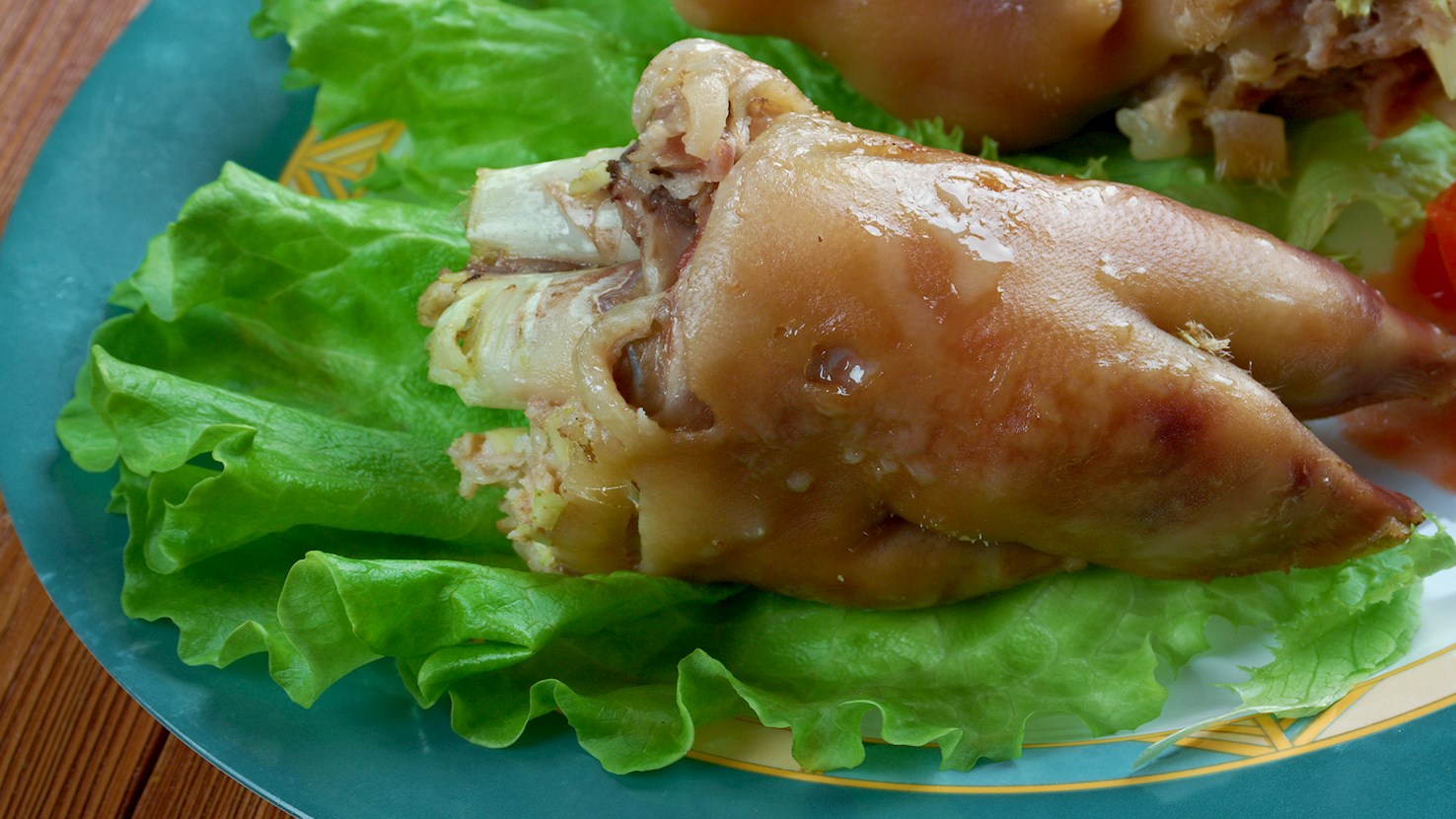
Crubeens are an Irish dish consisting of boiled or braised pig’s feet, often served whole and eaten by hand. The name comes from the Irish word crúibín, meaning “little hoof,” and the dish is strongly associated with rural cooking and market food across Ireland. Pig’s feet were a widely available and inexpensive cut, valued for their collagen-rich texture and deep flavor when slow-cooked, and their use reflects a broader Irish practice of making full use of the animal after slaughter. Crubeens gained particular prominence in the nineteenth and early twentieth centuries, when they were commonly sold from market stalls, public houses, and street vendors, especially in urban centers such as Dublin, Cork, and Limerick. They were often linked to fairs, race days, and public gatherings, where their portability and ease of eating made them a familiar presence. Preparation begins with careful cleaning of the feet, followed by a long, gentle simmering in water or stock with aromatics such as onion, bay leaf, and peppercorns. The slow cooking breaks down the connective tissue and releases gelatin, producing a tender texture and a rich, slightly sticky mouthfeel. Once cooked, crubeens can be served hot as they are, with a sprinkling of salt and mustard on the side, or cooled and breaded before being fried to create a crisp exterior. In some versions, the meat is picked from the bone after cooking and used as a filling in pies or terrines, though the most common presentation remains the whole foot served intact. Crubeens are still prepared across Ireland, often appearing in pubs, at food festivals, and occasionally on menus showcasing regional fare. They are usually eaten hot, often paired with brown bread, sharp mustard, or tangy relishes that cut through the richness. Beer, particularly a dry stout or a malty red ale, is a frequent companion, as the carbonation and bitterness balance the gelatinous texture and savory depth of the dish.
Steak and oyster pie is a British meat pie that combines slow-cooked beef with oysters, topped with flaky puff pastry. While today it is often associated with hearty pub fare or comfort food, its origins go back to Victorian England, when the dish emerged out of necessity rather than indulgence. Beef was expensive in the 19th century, and home cooks and pie-makers sought ways to extend its quantity and flavor. Oysters, once plentiful and cheap around London’s docks, provided an ideal solution, adding bulk, depth, and a distinctive briny character to the stew. The pie is also present and typical in Australia, New Zealand, Ireland, and Norfolk, Virgina. The preparation starts with stewing beef cubes, lightly coated with flour, and browned in oil and butter to develop a rich base. Onions are sautéed in the same pan to absorb the beef juices, and a roux is formed before deglazing with beef stock and sometimes stout. Herbs like bay leaves and thyme build an intensely flavored sauce. Oysters are stirred in at the end of cooking the filling, or just before the filling is topped with puff pastry and baked until golden. Usually, the filling mixture will be thickened with flour or cornflour. Variations include adding additional seasonings, such as mushroom ketchup, carrots, mushrooms, different herbs and seasonings, all depending on the recipe.
TasteAtlas food rankings are based on the ratings of the TasteAtlas audience, with a series of mechanisms that recognize real users and that ignore bot,
nationalist or local patriotic ratings, and give additional value to the ratings of users that the system recognizes as knowledgeable.
For the “Top 6 Irish Meat Dishes” list until June 15, 2026, 366 ratings were recorded, of which 320 were recognized by the system as legitimate.
TasteAtlas Rankings should not be seen as the final global conclusion about food. Their purpose is to promote excellent local foods,
instill pride in traditional dishes, and arouse curiosity about dishes you haven’t tried.