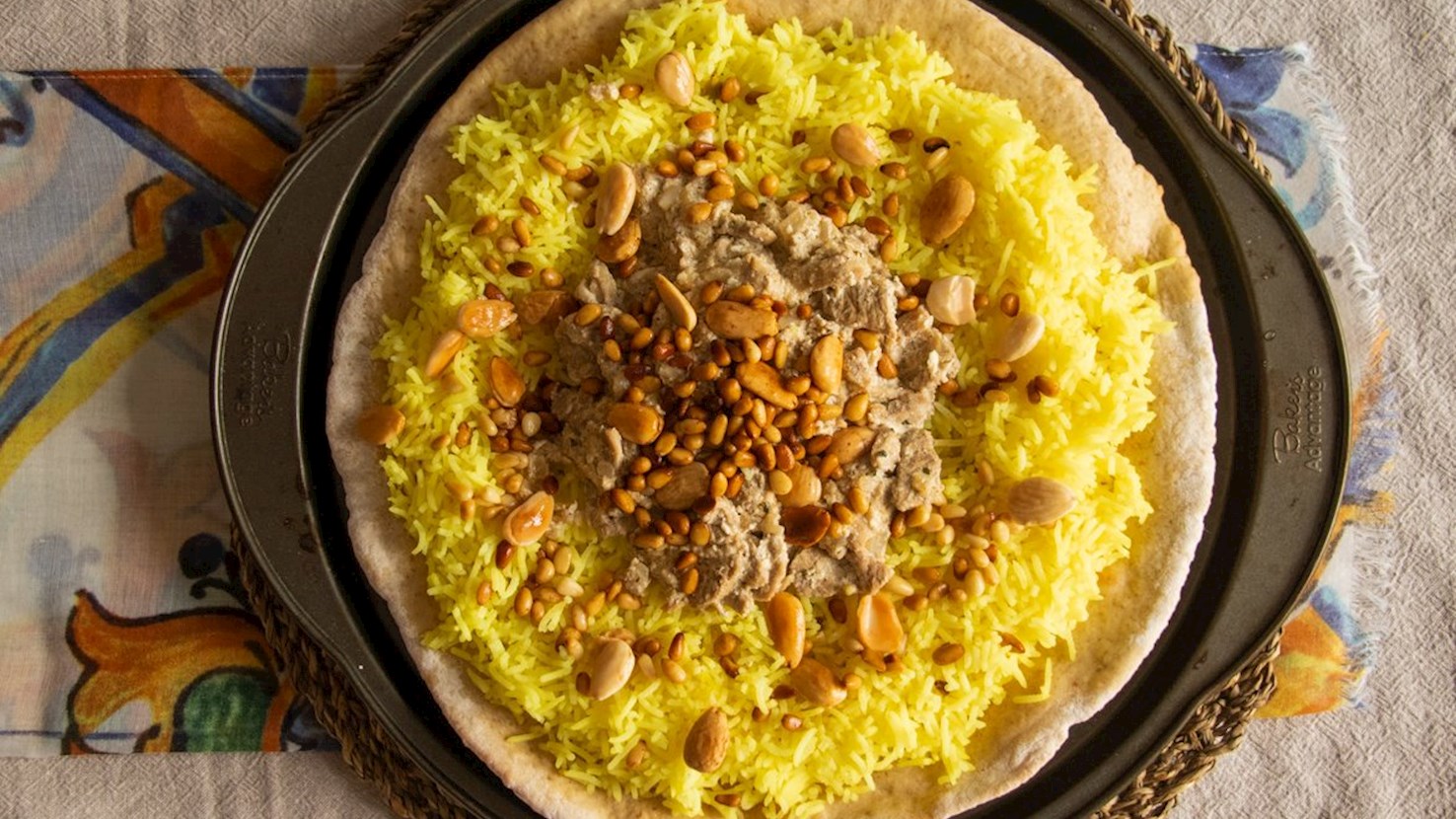
Mansaf is the national dish of Jordan that plays a key role in all celebrations and festivals in the country. The meat is slowly cooked in fermented, yogurt-like goat's milk called jameed, resulting in a unique dish that is not just a meal, but a social tradition. Mansaf, an Arabic word for explosion, is commonly offered to guests as a sign of appreciation, value, and respect. It can be made with goat, lamb, beef, or chicken meat, where goat signifies the highest level of respect and value, and chicken the least, so beef or chicken is rarely to be seen in Mansaf. Traditionally, cooked goat's head will be placed in the center and offered to the most important guests at an event. Mansaf is served on a large platter over rice and khubz flatbread, garnished with almonds and pine nuts. Guests eat the dish communally, with their right hand, while the left hand is placed behind their back. The host must continually cover the rice with cooked yogurt sauce, ensuring that the guests don't complain about lack of hospitality. Mansaf is also significant in resolving conflicts between tribes or families, when the heads of each tribe visit one another, sacrifice a goat to cook the dish, then offer it as an act of peace and respect, eating the dish together as a way of marking the end of a conflict.
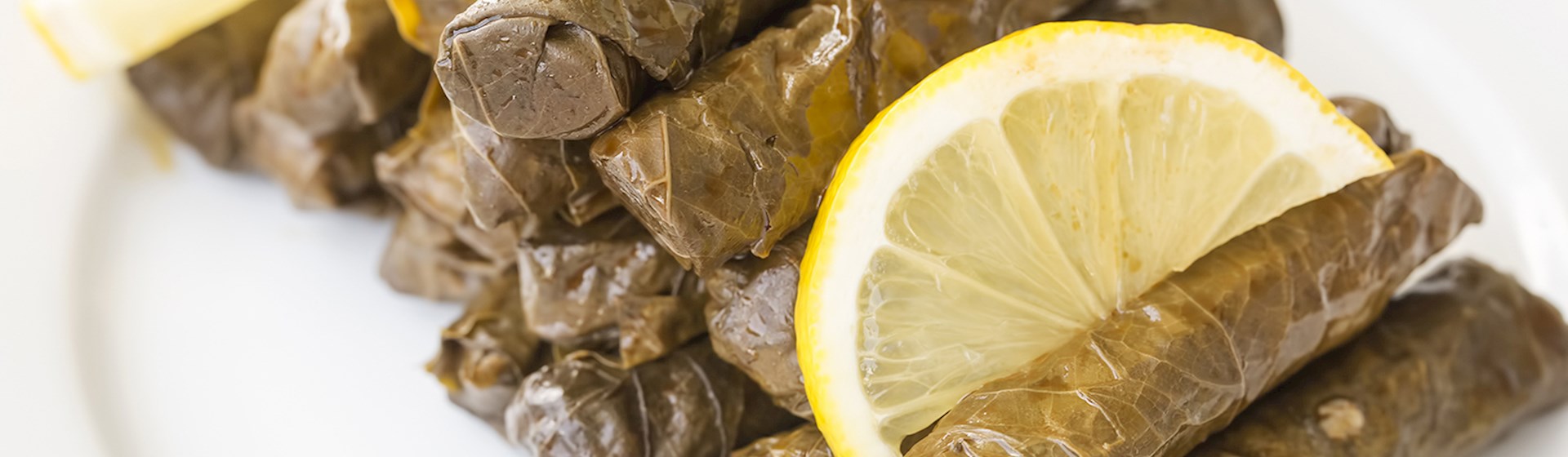
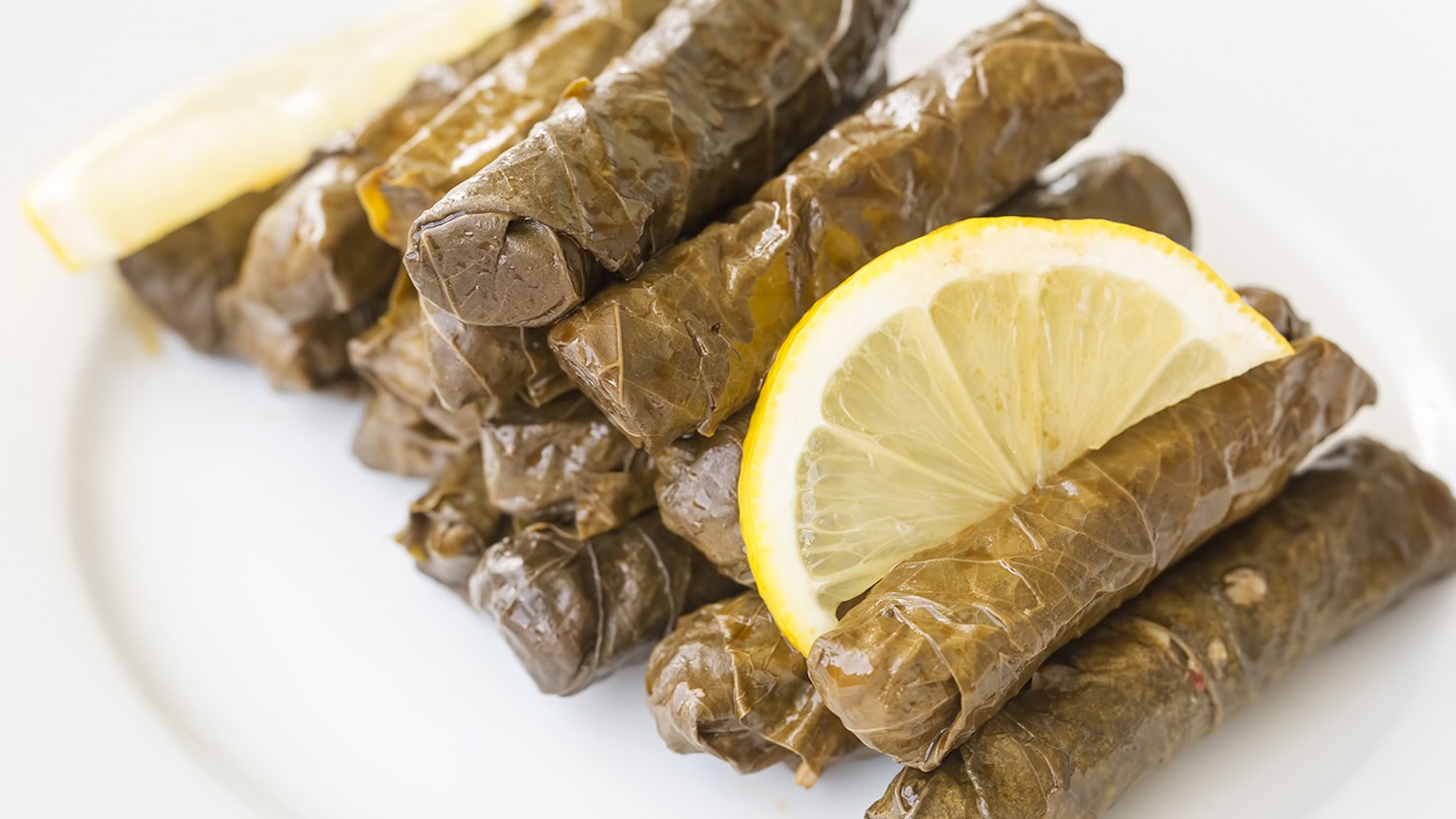
Warak enab is a dish of stuffed grape leaves prepared across the eastern Mediterranean and Middle East, especially in Lebanon, Syria, Jordan, and Palestine, consisting of tender vine leaves wrapped around a filling of rice, and in many versions minced meat, then gently cooked in a lightly acidic liquid. Its development is tied to long-established viticulture in the Mediterranean basin, where grape leaves were readily available alongside grapes and wine production, and where cooking practices evolved to make use of seasonal leaves by blanching and preserving them for later use, with references to stuffed leaves appearing in Byzantine and early Arabic culinary records that describe similar techniques applied to vegetables and leaves across the region. Preparation involves blanching fresh or preserved grape leaves to soften them, placing a small amount of filling made from short-grain rice, minced lamb or beef if used, salt, and mild spices near the base of each leaf, rolling them tightly into compact cylinders, and arranging them snugly in a pot layered to prevent movement during cooking, after which they are simmered slowly in water or stock with lemon juice until the rice is fully cooked and the leaves tender but intact. Warak enab is served warm or at room temperature, often drizzled lightly with olive oil and presented neatly arranged to emphasize uniformity rather than volume. A defining characteristic of warak enab is the balance between acidity from lemon and the neutral absorbent quality of rice, which allows the grape leaf itself to remain the dominant flavor rather than the filling. It is eaten in homes, restaurants, and social gatherings as part of shared meals, commonly alongside yogurt, grilled meats, or other vegetable dishes, and it pairs well with water, unsweetened black or mint tea, arak diluted with water, or dry white wines, fitting naturally into tables where multiple dishes are eaten slowly and in combination rather than in isolated courses.
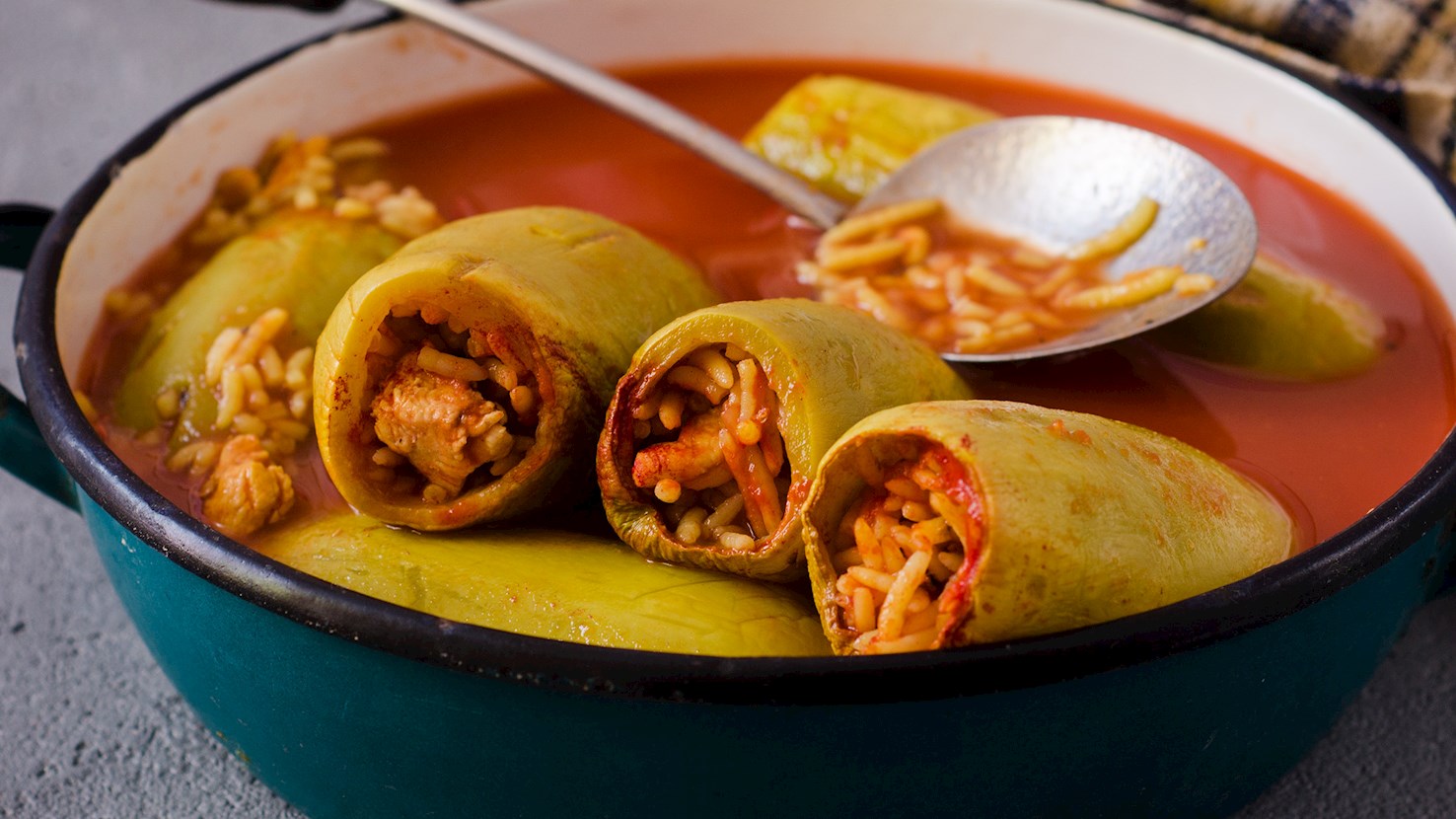
Kousa mahshi is a stuffed zucchini dish prepared and eaten across the Levant, particularly in Lebanon, Syria, Jordan, and Palestine, consisting of pale green zucchini hollowed and filled with a mixture of rice, minced meat, and seasoning, then gently cooked in a light broth or tomato-based liquid. Its development is closely linked to the long cultivation of squash varieties in the eastern Mediterranean and to cooking practices that favored extending limited quantities of meat by combining them with grains and vegetables, with written references to stuffed vegetables appearing in medieval Arabic cookery manuscripts that describe similar methods applied to gourds, eggplants, and vine leaves, indicating an established culinary framework well before modern national cuisines formed. Preparation involves coring small zucchini to create a thin shell, filling them loosely with a mixture of short-grain rice, minced lamb or beef, salt, and mild spices, then arranging them in a pot and simmering them slowly until the rice is fully cooked and the zucchini tender, sometimes finished in a yogurt-based sauce or a lightly acidic tomato broth depending on regional preference. Kousa mahshi is served hot, often with some of its cooking liquid spooned over the top, and presented as a composed dish rather than a side, reflecting its balance of vegetable, grain, and protein in a single form. A defining characteristic of kousa mahshi is the use of hollowed zucchini as both container and component, allowing the filling to absorb moisture and flavor while remaining distinct rather than forming a dense mass. It is eaten mainly at home meals and family gatherings, commonly accompanied by plain yogurt, flatbread, or simple salads, and it pairs naturally with water, unsweetened black tea, or lightly fermented yogurt drinks, fitting into meals where moderate seasoning and careful cooking emphasize texture and balance rather than intensity.
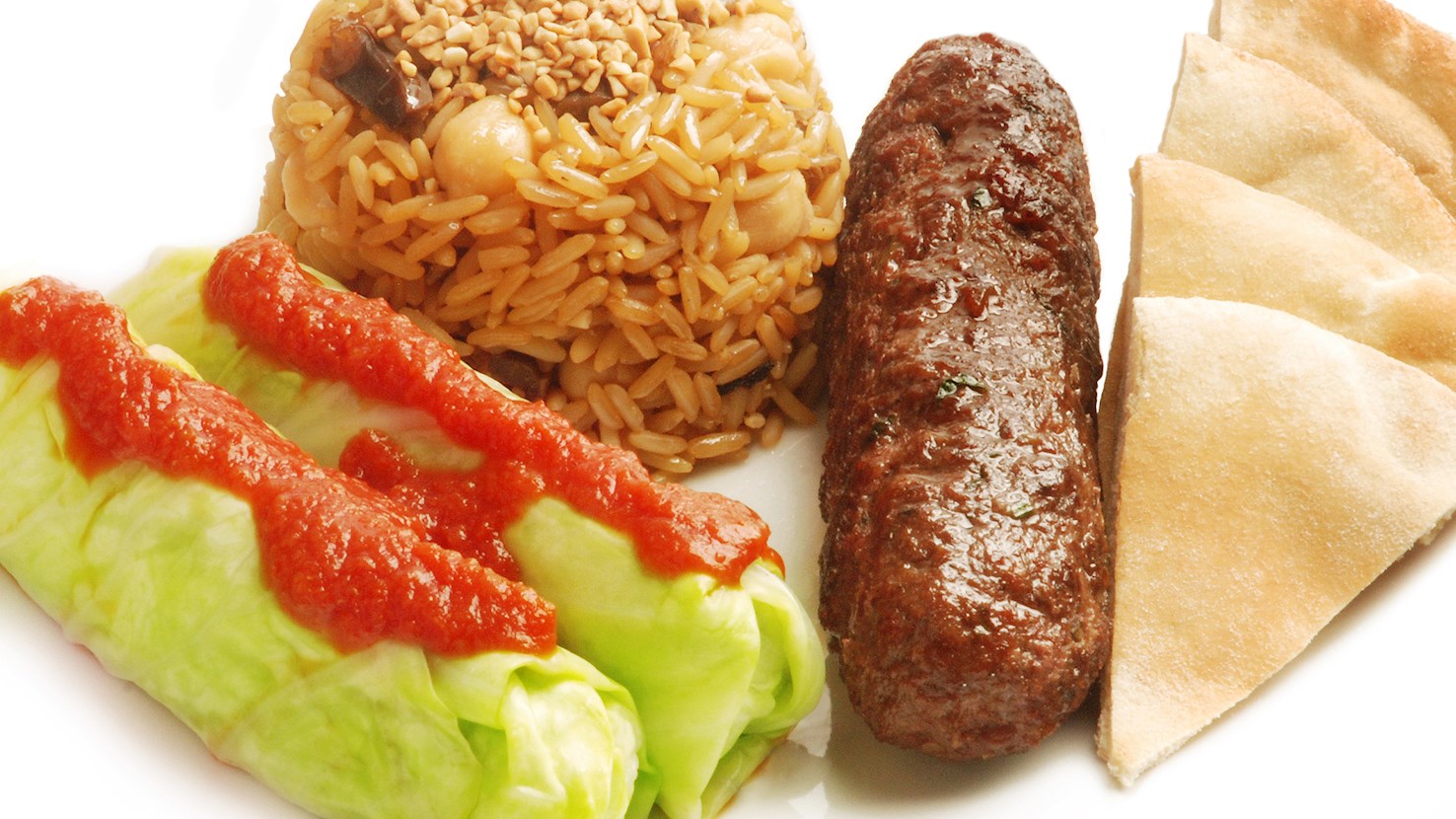
Malfuf is a dish made of cabbage leaves wrapped around a seasoned filling and cooked slowly, widely prepared in the Levant and neighboring eastern Mediterranean areas, particularly in Lebanon, Syria, Palestine, and Jordan, where it is known as a winter dish tied to the availability of cabbage rather than grape leaves. Its development is linked to cold-season agriculture and the long-standing practice in the region of stuffing vegetables with rice and meat mixtures, a method that adapted easily to cabbage once it became widely cultivated, especially during periods when vine leaves were unavailable, leading to a parallel dish that followed similar cooking logic but required adjustments in seasoning and handling due to the thicker, sturdier leaves. Preparation begins by separating whole cabbage leaves and blanching them until pliable, then trimming the thick central ribs to allow even rolling, after which a filling of rice mixed with minced lamb or beef, finely chopped onion, salt, and restrained spicing is placed near the base of each leaf and rolled into compact cylinders that are arranged tightly in a pot lined with leftover leaves or sliced vegetables, covered with water or light stock, weighted to prevent movement, and simmered gently until the rice and meat are fully cooked and the cabbage becomes tender without breaking apart. Serving is usually hot, with the rolls transferred carefully to maintain their shape and often finished with garlic-infused lemon juice poured over them after cooking, a step that differentiates malfuf from other stuffed vegetables and sharpens its overall profile without altering the filling itself. The dish stands out for the way cabbage absorbs cooking liquid and seasoning more deeply than vine leaves, producing a softer texture and a milder vegetal base that allows garlic and lemon to be added at the end rather than incorporated early, a method that is closely associated with malfuf rather than being universally applied across stuffed-leaf dishes. It is eaten at home meals more often than as part of mixed small-plate spreads, commonly accompanied by plain yogurt, simple salads, or pickled vegetables, and pairs well with rice-based side dishes, grilled meats served separately, and beverages such as yogurt drinks, lightly carbonated water with lemon, or dry white wines that complement the acidity added at serving.
TasteAtlas food rankings are based on the ratings of the TasteAtlas audience, with a series of mechanisms that recognize real users and that ignore bot,
nationalist or local patriotic ratings, and give additional value to the ratings of users that the system recognizes as knowledgeable.
For the “Top 4 Jordanian Meat Dishes” list until June 15, 2026, 1,095 ratings were recorded, of which 178 were recognized by the system as legitimate.
TasteAtlas Rankings should not be seen as the final global conclusion about food. Their purpose is to promote excellent local foods,
instill pride in traditional dishes, and arouse curiosity about dishes you haven’t tried.