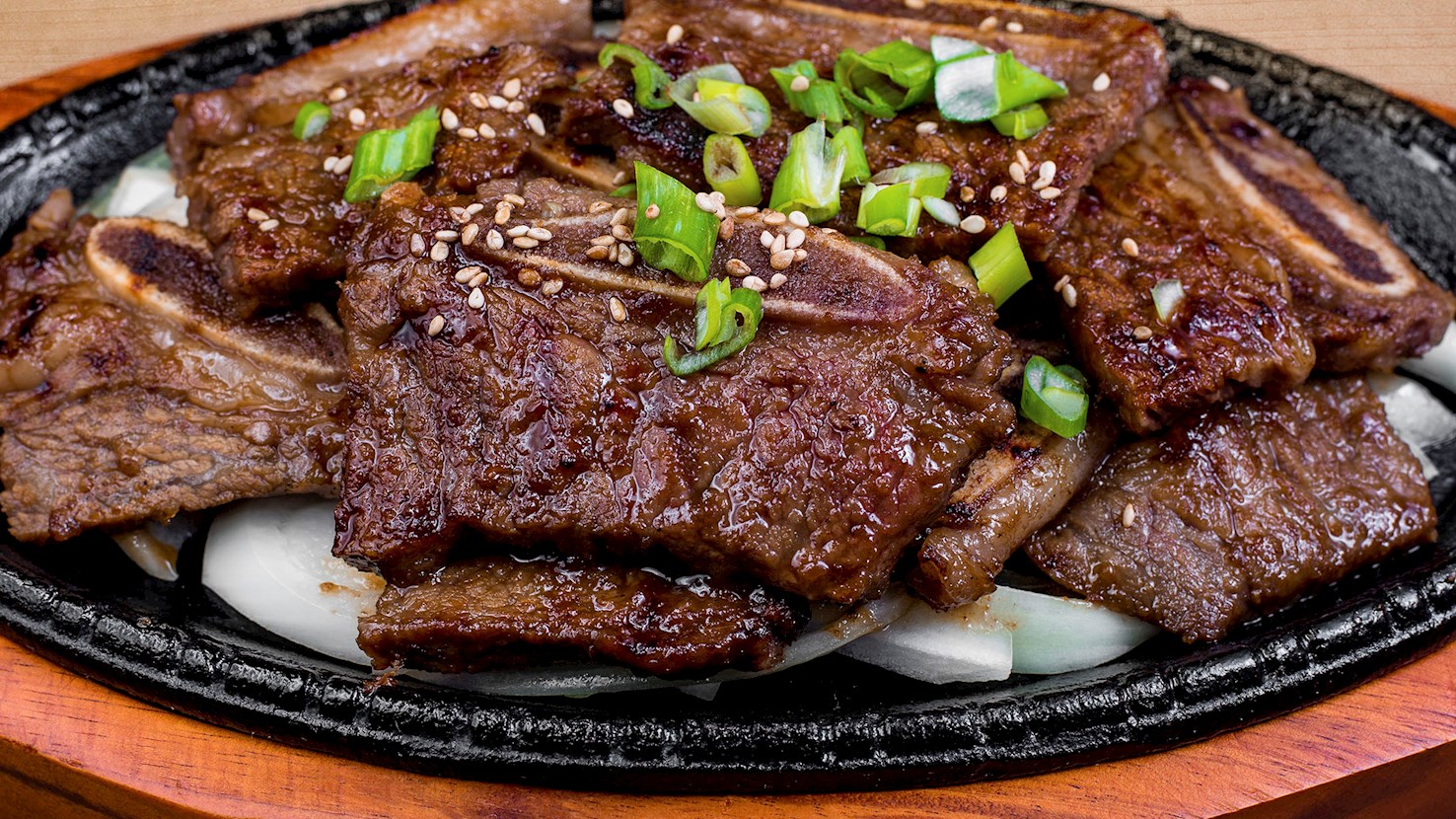
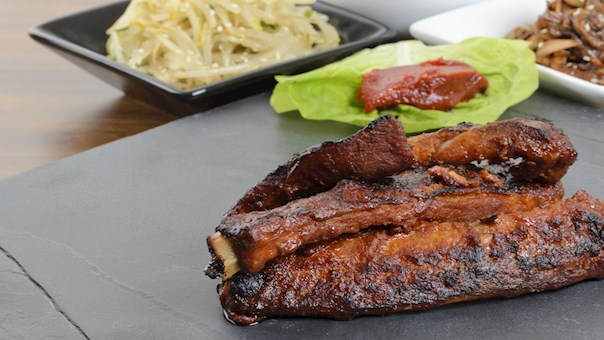
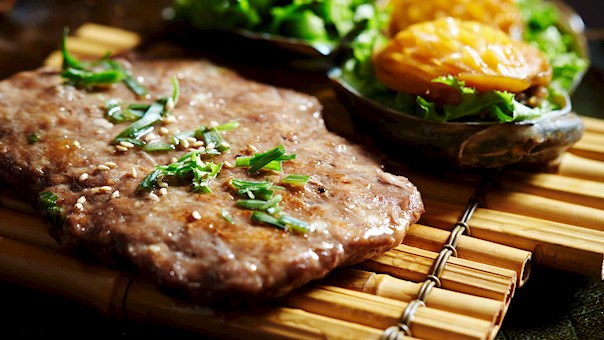
Galbi or kalbi refers to a variety of grilled beef short ribs dishes popular in South Korea. The ribs are marinated in a sweet sauce consisting of soy sauce, sugar, rice wine, sesame oil, and garlic. Although the name of the dish translates to ribs, chicken or pork meat can also be used. The dish originates from 18th-century Korea, when killing cows was strictly forbidden. As workers were building the Hwa Castle, they needed to be well-fed, so King Jeongjo allowed the opening of only one slaughterhouse in the whole country to process beef and feed the hungry workers. Of course, it didn't stop at just one slaughterhouse, and that is the best recommendation for trying the dish for yourself. Galbi is typically accompanied by kimchi, red bean paste or rice, but it can also be wrapped up in lettuce leaves with a variety of other vegetables. Due to galbi's great balance of sweet and savory flavors and rising popularity, the dish even has its own annual festival since 1995, called the Suwon Galbi Festival, offering the visitors a chance to indulge in this celebrated delicacy.
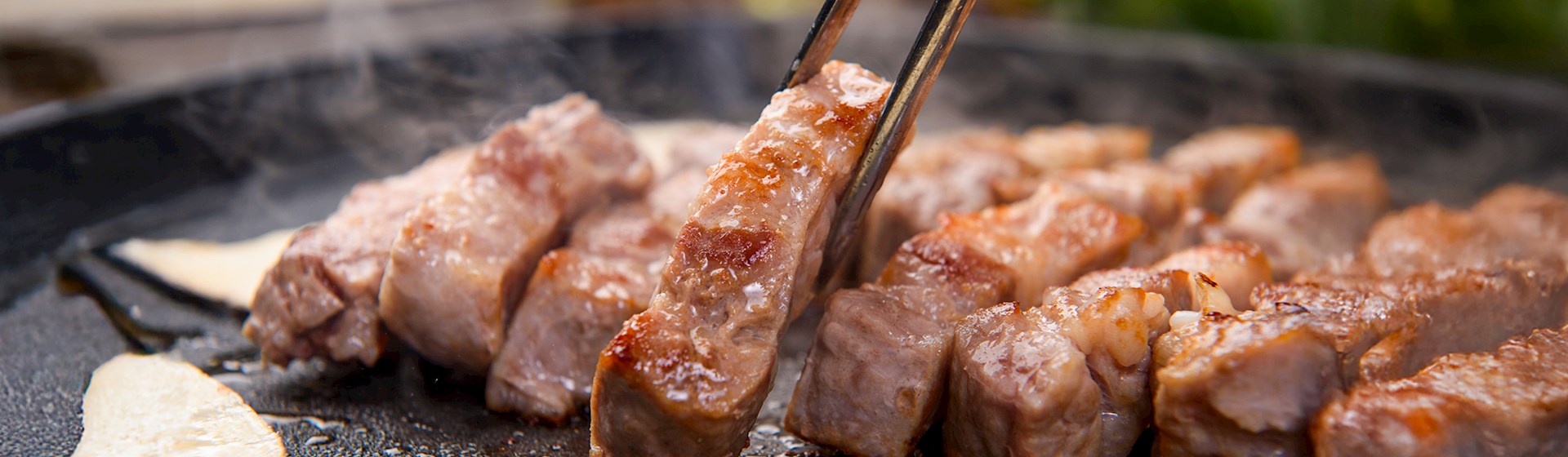
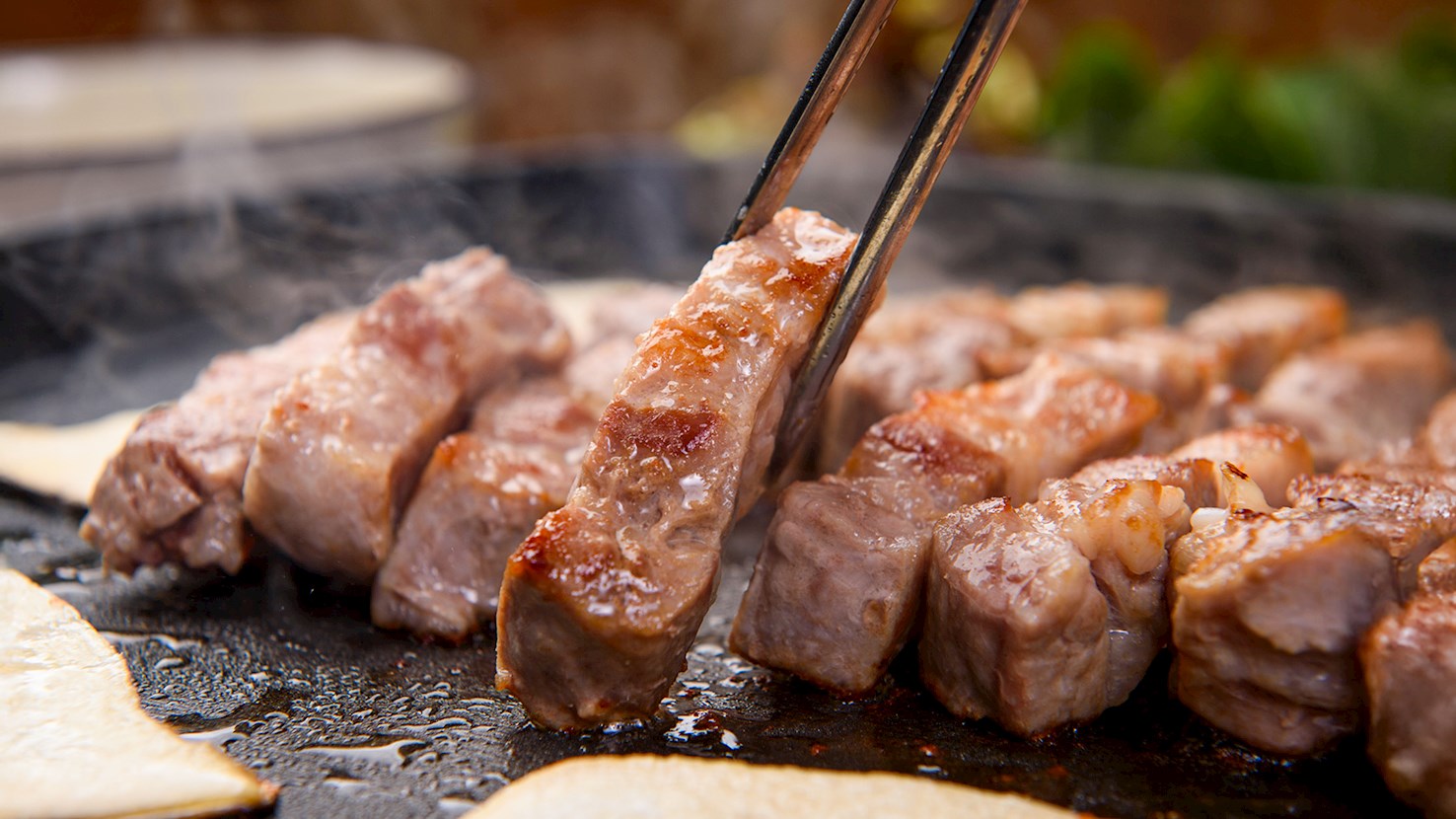
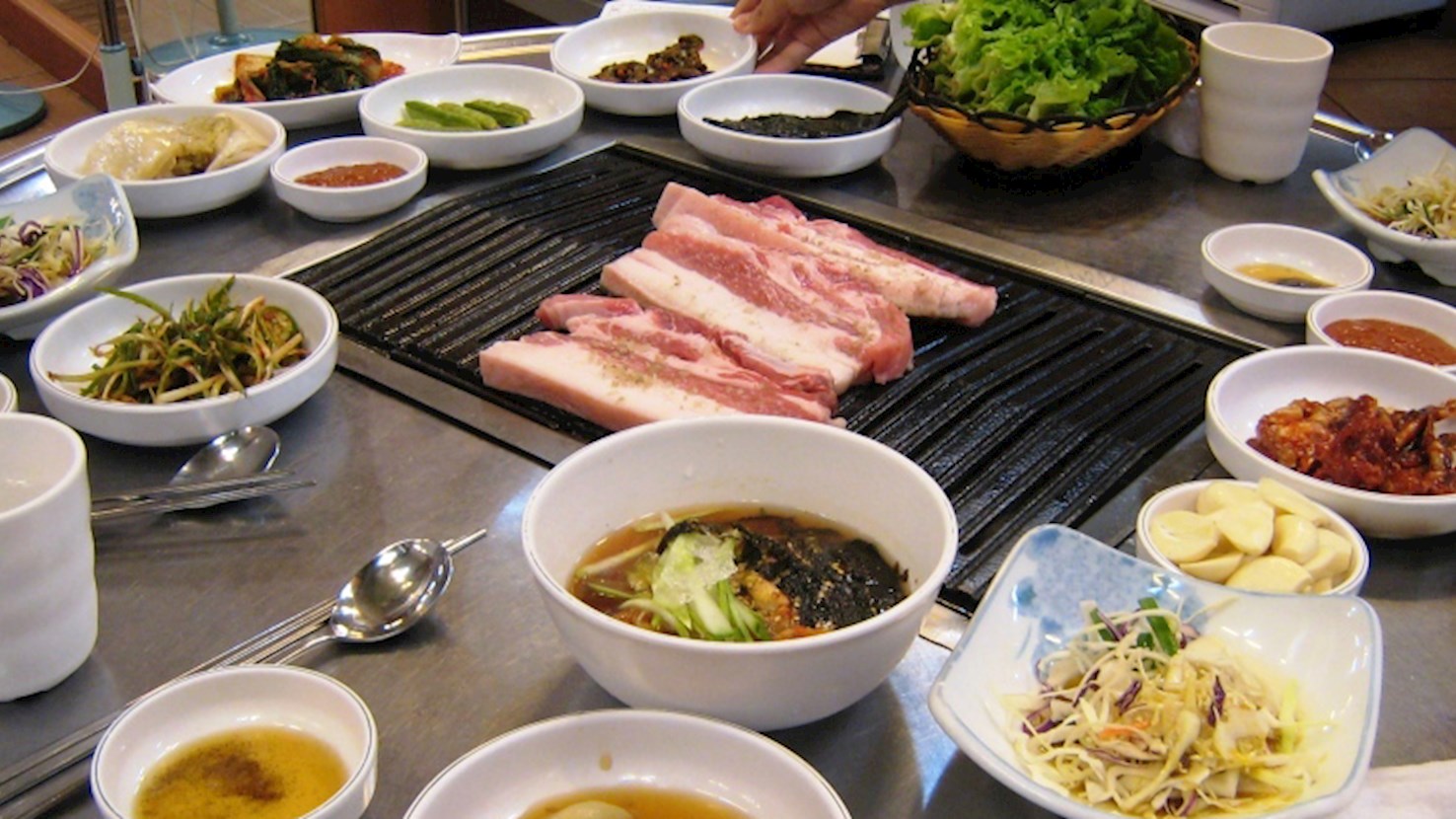
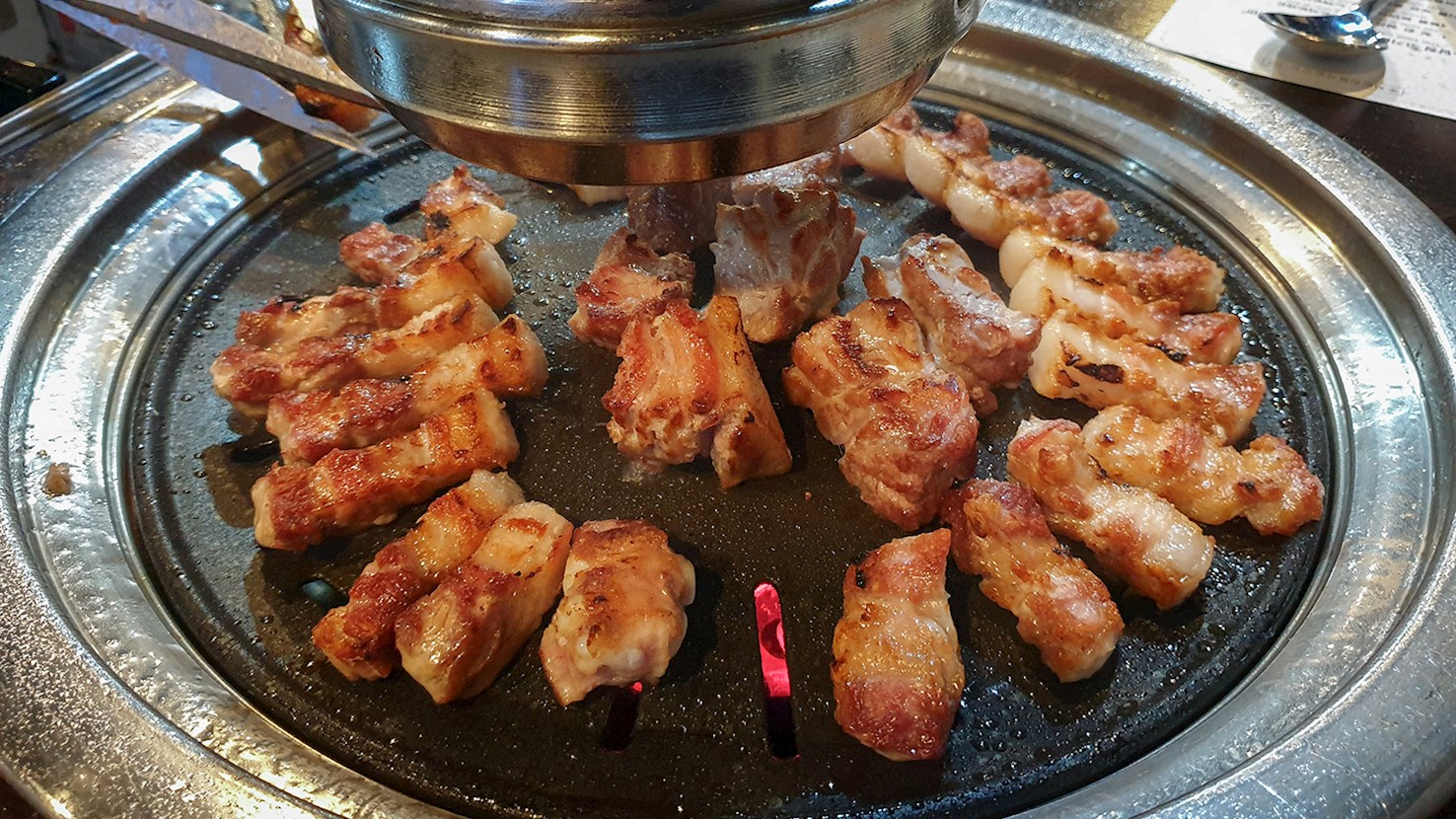
Samgyeopsal is a grilled meat dish featuring thick slices of unmarinated pork belly cooked directly on a hot metal pan at the dining table. The uneasoned pieces of pork belly are placed on a very hot grill, often set at a slight tilt to allow the rendered fat to slide downward and pool in a small collection cup. To maximize flavor, thick wedges of raw garlic, sharp white onions, enoki mushrooms, and deeply fermented sour kimchi are deliberately positioned at the lower end of the sloped metal to fry aggressively in the dripping pork fat. Once the meat develops a deeply browned, crispy exterior, individuals utilize metal tongs and large kitchen scissors to snip the long strips into bite-sized squares right on the hot surface. Samgyeopsal is eaten wrapped in lettuce, either green lettuce or perilla, known as ssam. A piece of the sizzling meat is dragged through gireumjang, a simple mixture of toasted sesame oil, coarse sea salt, and black pepper, or heavily coated in ssamjang, a thick, spicy paste combining fermented soybeans and chili. The dipped pork goes into the leaf alongside the grilled garlic, raw green chilies, and a sharply dressed scallion salad, before the entire bundle is folded tightly and eaten in a single, massive bite. Cold shots of clear distilled liquor, specifically soju, almost universally accompany the heavy meal to cut through the intense grease. While the plain, unseasoned slabs represent the absolute standard, there are massive variations in thickness and marinades. Daepae samgyeopsal uses freezing temperatures to slice the belly remarkably thin, resembling wood shavings, which crisp up rapidly over heat in mere seconds. Ogyeopsal leaves the chewy skin fully attached, offering a five-layered cut with significantly more bounce and texture. Other modern iterations soak the raw meat in red wine, coat it heavily in green herbs, or entirely ditch the unmarinated rule by submerging the strips in sweet soy sauce or fiery red chili paste before hitting the grill. The name of the dish consists of three words: sam (three), gyeop (layered), and sal (meat), so it can be literally translated as three-layered meat, referring to the three visible layers of the meat. The massive surge in this specific fatty cut dates to the late 20th century, accelerating during the economic boom of the 1980s and 1990s. During this era, export markets heavily favored lean pork cuts, leading to massive quantities of the rejected fatty belly sections flooding the domestic market at incredibly low prices. Concurrently, a widespread belief emerged among coal miners and construction workers that consuming the heavily greasy meat effectively washed away toxic dust accumulated in the throat and lungs after a long shift. This combination of cheap abundance and perceived health benefits firmly cemented grilled meat as an absolute staple, so much so that March 3rd is universally celebrated as a dedicated holiday for eating samgyeopsal, a date that mirrors the three layers in the meat. The dish is most commonly accompanied by lettuce, raw garlic, green chili peppers, kimchi, and green onions. Two dipping sauces are traditionally served on the side: one is ssamjang, consisting of sesame oil, chili paste, and soybean paste, and the other is gireumjang, consisting of sesame oil, salt, and black pepper.
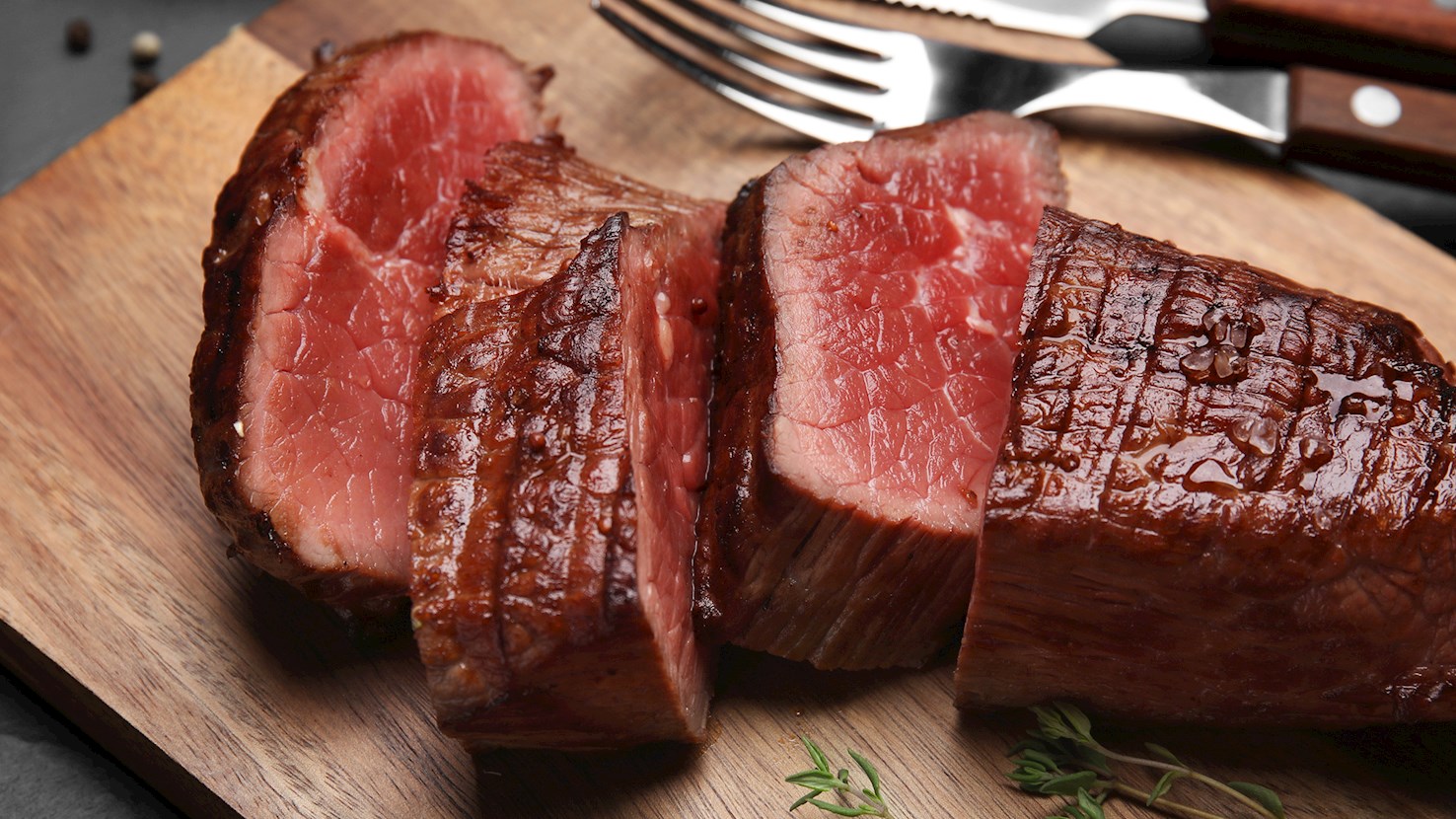
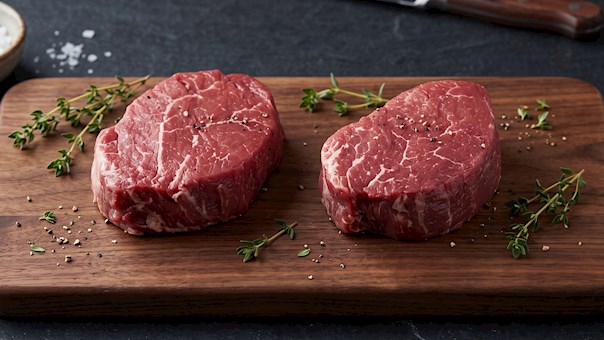
In the American, French, German, Brazilian, and Korean systems of primal beef cuts, the tenderloin is a cut from the loin, which is located towards the back of the cow, nestled under the ribs, next to the backbone. It spans two primal cuts: the short loin and the sirloin. The tenderloin is one of the most tender cuts of beef as it comes from a muscle that doesn't get much exercise. It is also one of the most highly prized and correspondingly expensive cuts of beef, due to its tenderness and flavor. Given the tenderness of this cut, the tenderloin is often cooked quickly over high heat, with methods such as grilling or broiling. It's often served slightly rare to maintain its tender texture.
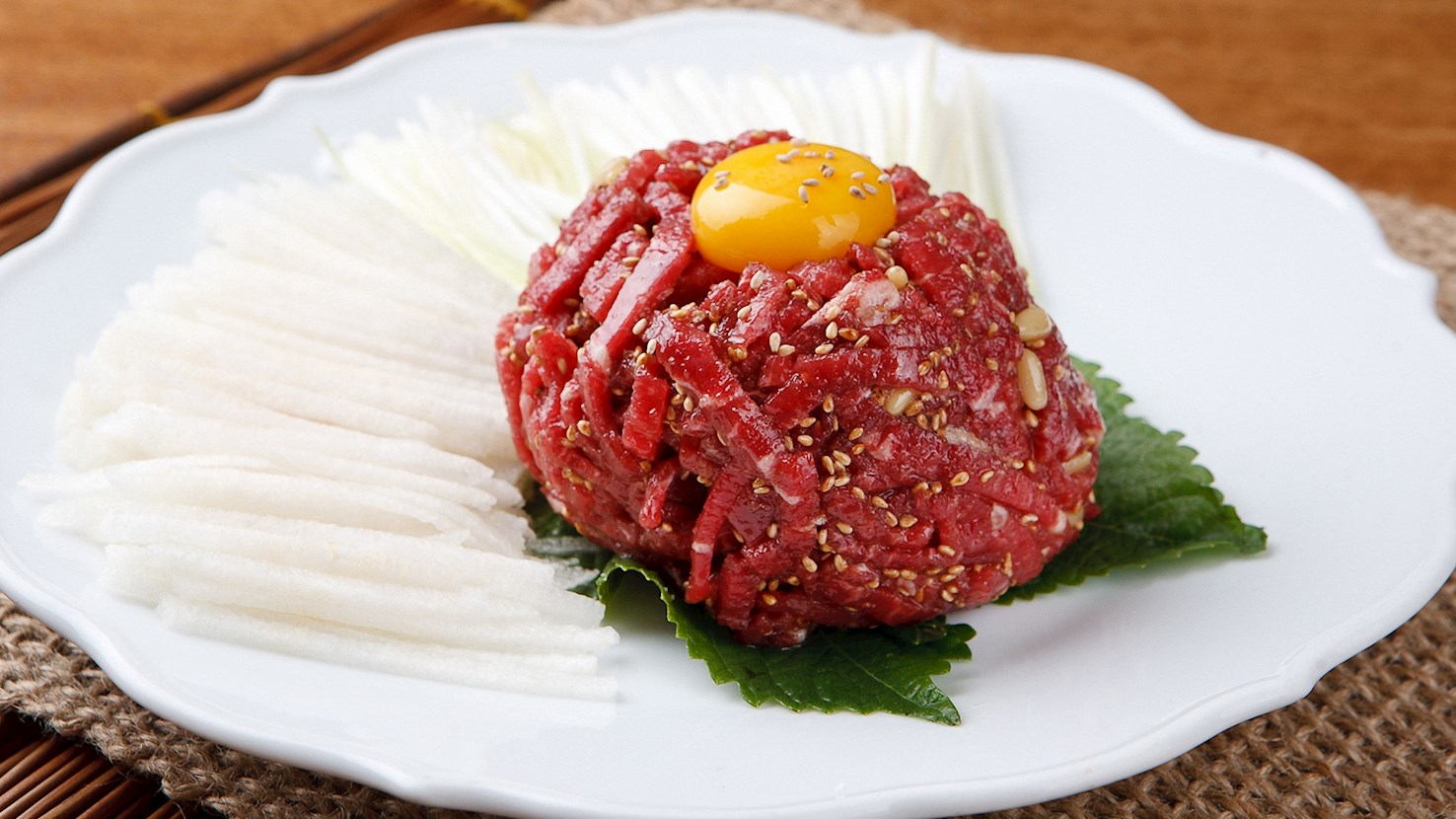
Yukhoe is the Korean version of steak tartare, consisting of thinly sliced beef marinated in soy sauce, sesame oil, garlic, and sugar. The concoction is then seasoned with salt and pepper. The dish is always served with a raw egg yolk on top, while thinly sliced Korean pear is an often-seen addition served on the side. The name of the dish is derived from two words: yuk, meaning meat, and hoe, meaning sashimi. No one is yet sure about the origins of yukhoe, but some say it originated in China, while the others claim it was first served at the Korean Royal Court. Today, the dish is traditionally consumed by dipping the meat in raw egg yolks or in chogochujang sauce, consisting of chili, sugar, vinegar, and honey.
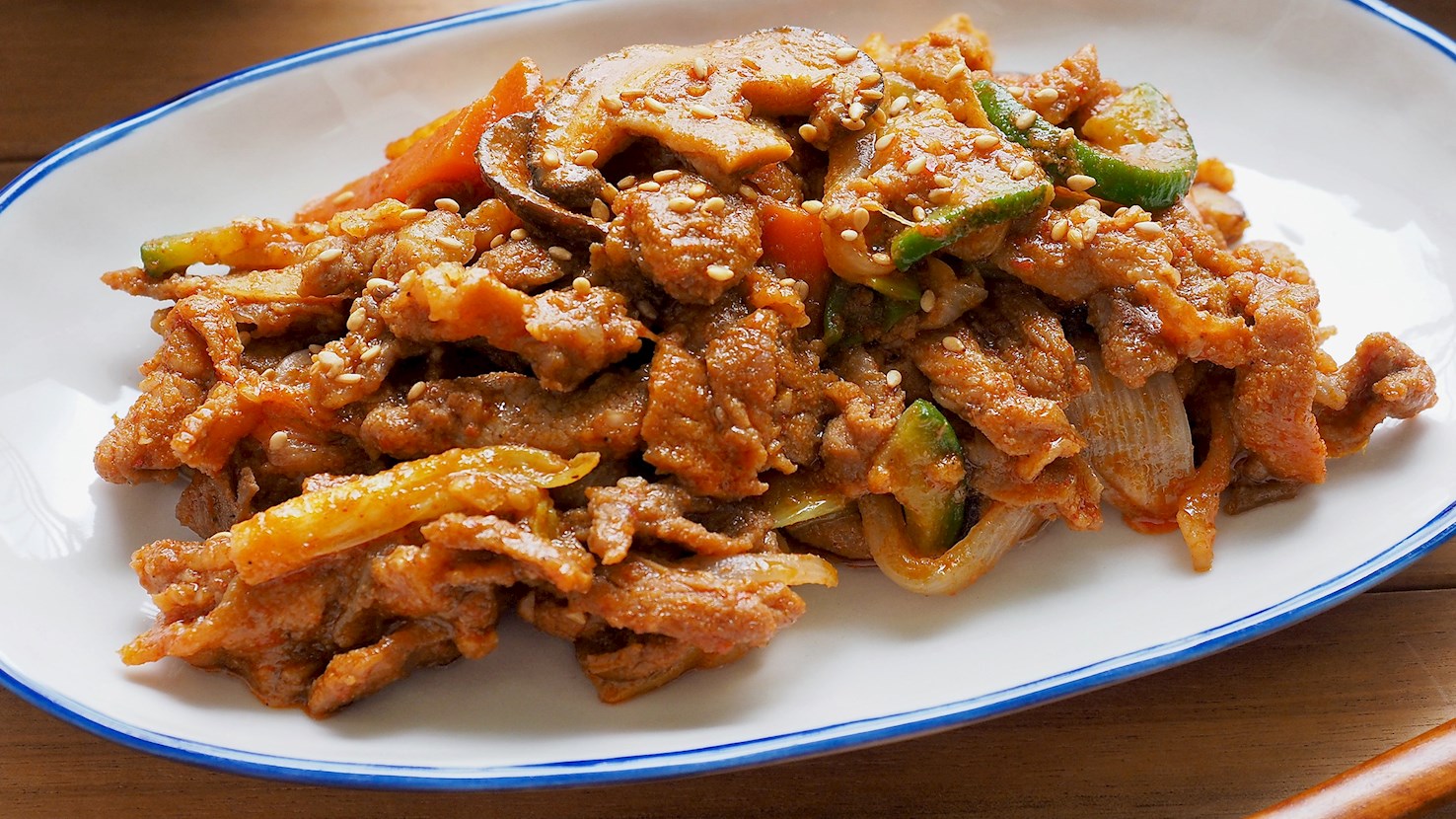
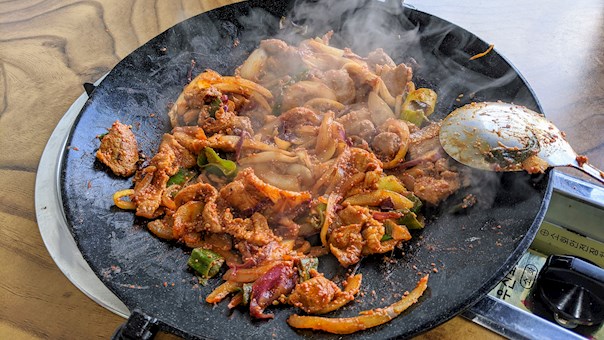
This South Korean classic consists of thinly sliced fatty pork cuts that are marinated and then grilled or pan-fried. The marinade is based on gochujang - a spicy Korean chili paste - and additions such as soy sauce, chili flakes, rice wine, garlic, and ginger. Also known as dwaejigogi bokkeum, this pork dish is commonly prepared at home, and it is a staple at Korean restaurants. Jeyuk bokkeum is usually served with lettuce or perilla leaves that are meant to be used as wrappers, while other accompaniments include ssamjang and kimchi.
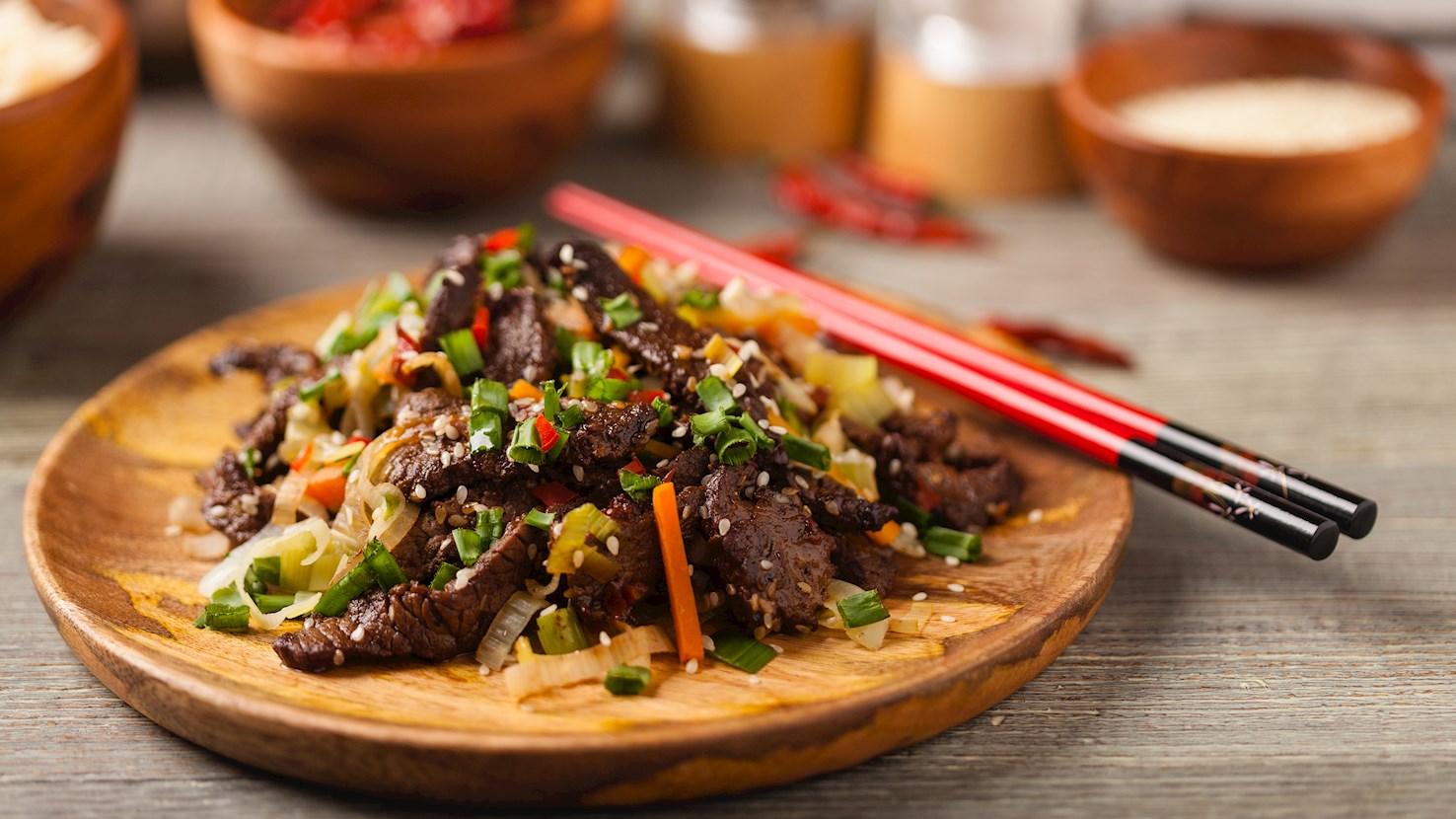
It's hard to say which is better: the succulent meat or spicy side dishes that define bulgogi, the Asian barbecue style in which thin slices of marinated meat are quickly cooked over high heat on top of a perforated, round metal plate that covers the grill's piping hot coals. The name of the dish stems from bool and kogi, Korean words denoting fire and meat. The earliest form of the dish originates from the Goguryeo period, when the meat was marinated before grilling, unlike the standard Chinese practice of seasoning the meat after it has been grilled. The marinade traditionally consists of honey, sesame, soy sauce, garlic, and scallions, while the alternatives for beef, chicken, and pork can be either tofu, shrimp, or squid. Typical for Korean food, the meat always comes to the table with a variety of accompaniments and side dishes such as rice, lettuce leaves, scallion pancakes, kimchi, and the omnipresent gochujang. What harissa is to Moroccan cuisine and what ketchup is to burgers and hot dogs in the USA, gochujang is to bulgogi, a fiery hot condiment made from dried chili peppers, soybean paste, and rice powder, all slowly fermented in huge clay pots, giving a pungent kick both to bulgogi, served at every Korean dinner party, and a variety of other meat and rice dishes.
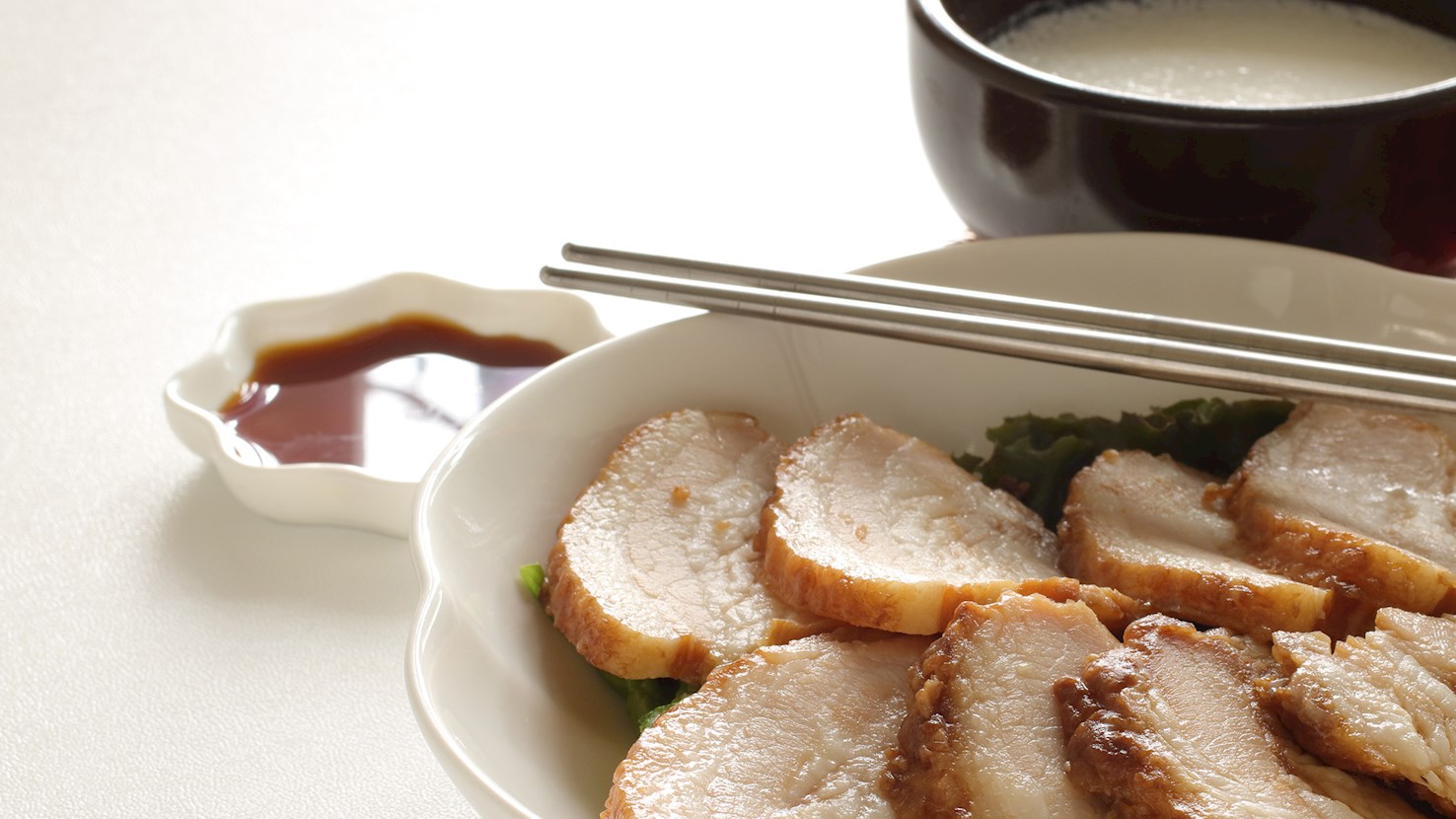
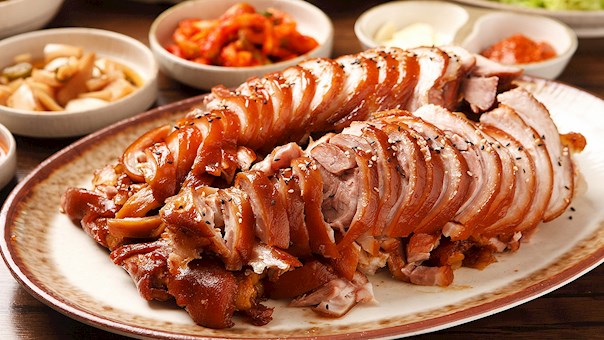
Bossam is a hearty meal centered on thinly sliced, mildly flavored boiled pork, bundled in leafy greens with pungent sauces and crisp vegetables. The origins of this boiled meat are closely tied to the annual autumn agricultural labor event known as gimjang, where vast quantities of winter cabbage are harvested and mixed with spices to make kimchi. Because this massive workload required heavy caloric replenishment, large blocks of pork were submerged in boiling water and served immediately alongside the freshly salted, unfermented cabbage leaves. The solid blocks of pork belly or shoulder are placed into a boiling liquid heavily flavored with ginger, whole garlic cloves, scallions, and thick fermented soybean paste to cook. This specific boiling liquid completely eliminates lingering animal odors from the fat while softening the meat. Sometimes, instant coffee granules or dark soybean sauce are poured directly into the stock to dye the outer layer of the fat a rich, appetizing brown. The pork simmers continuously until it is highly tender, then it is removed, briefly cooled, and sliced into neat, thick rectangles. Upon arrival at the table, the warm meat sits on a large shared platter, surrounded by a vast array of wrapping components. Fresh lettuce, aromatic perilla leaves, or lightly salted napa cabbage serve as the outer vessel. A slice of the warm pork is placed onto the leaf and crowned with saeujeot, a highly salty liquid filled with tiny fermented shrimp that cuts through the rich pork fat. A dollop of thick, spicy soybean paste, raw green chilies, and a remarkably sweet, crunchy radish salad coated in red chili flakes join the meat inside the leaf before the entire bundle is folded tightly and eaten in a single bite, typically accompanied by rice, sweet kimchi, and shrimp sauce. The meal is widely regarded as a highly favored late-night delivery option and is often consumed alongside cold alcoholic beverages. Moving beyond the standard pork-and-radish combination, distinct modifications introduce raw seafood directly into the mix. Gul bossam integrates freshly shucked, raw oysters straight into the wrap, creating a sharp, briny contrast to the heavy meat oils. Another distinct offshoot, hoe bossam, incorporates chewy, heavily spiced raw skate or flounder into the vegetable bundle, drastically altering the texture and introducing a pungent bite to the savory profile.
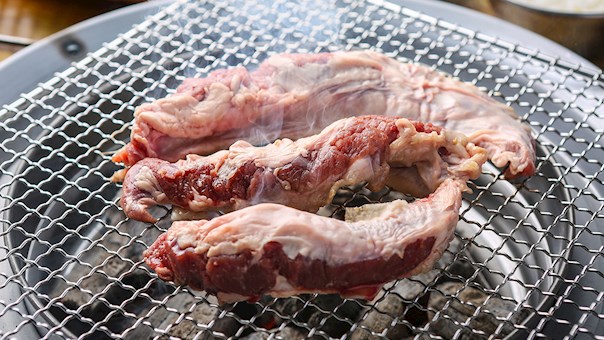
Ogyeopsal is a pork belly cut traditionally used in South Korean barbecue (gui). The cut comes from the pork belly together with the skin. It is similar to more popular samgyeopsal, which does not include the skin. Ogyeopsal is typically sliced into strips that are then grilled on traditional Korean barbecue. It is usually cut into smaller, bite-size pieces. Grilled ogyeopsal can be enjoyed plain—accompanied by side dishes and dipping sauces—but it is also commonly incorporated into ssam wrappers, together with the accompaniments. Ogyeopsal roughly translates as five-layered meat, due to the number of layers visible on the cut.
Moksal is a Korean name for pork cuts obtained from the neck of the animal. This pork cut is nicely marbled, and its tough and stiff texture makes it great for grilling. Compared to samgyeopsal (pork belly), moksal doesn’t have as much fat. This cut comes in pork chop size, and as it’s grilled, the meat is often cut into bite-sized pieces with special scissors. This is one of the most popular pork cuts in Korea and it’s mostly used for Korean barbecue.
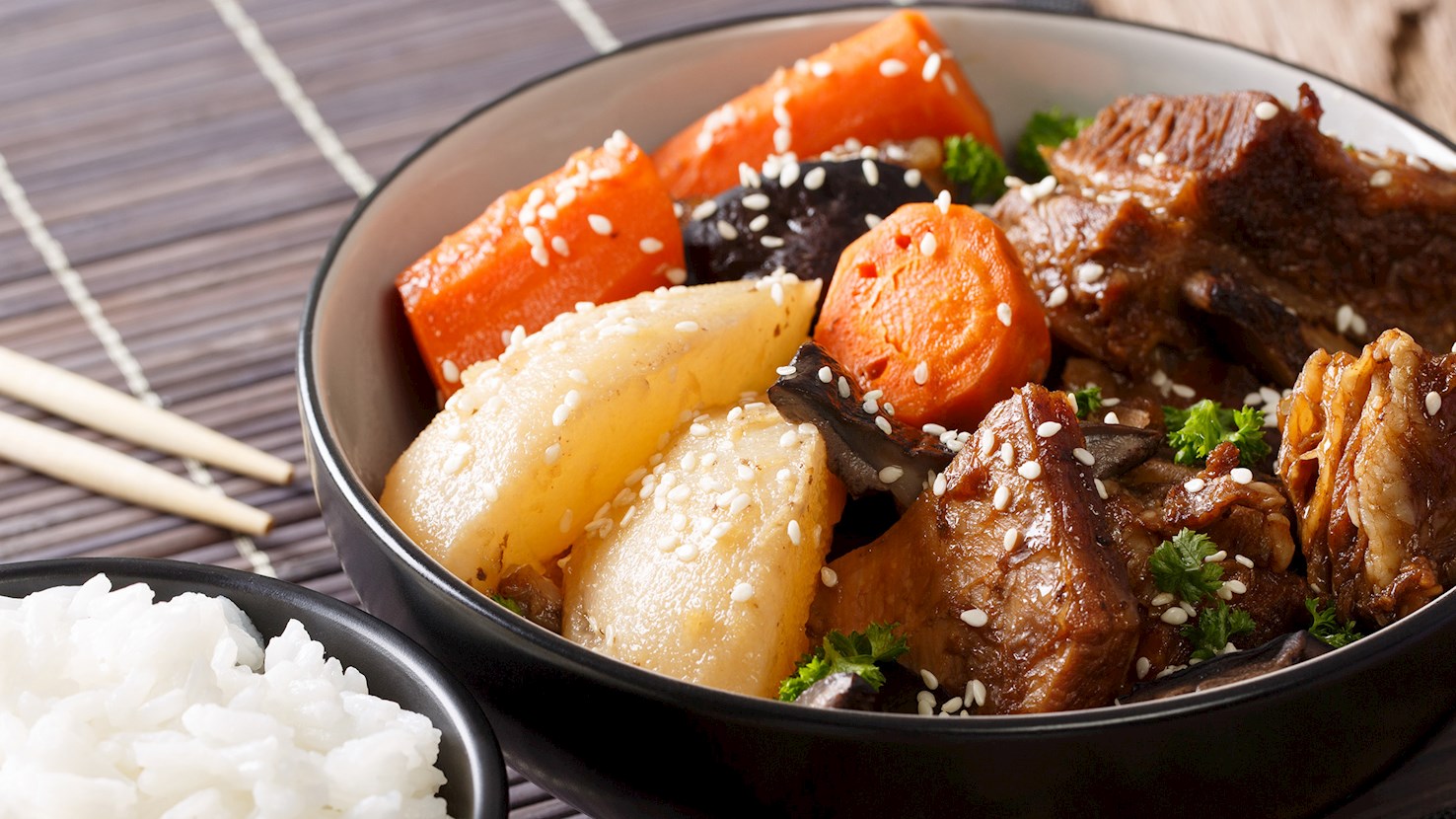
Galbijjim is a traditional South Korean dish that is prepared by braising beef short ribs in a flavorful sauce consisting of honey, mirin, soy sauce, onions, garlic, ginger, and grated apples or pears. Other ingredients include various vegetables such as radishes, shiitake mushrooms, or carrots, as well as chestnuts, pine nuts, jujube, and gingko nuts. It is believed that galbijjim originated sometime in the 1700s, and it was initially reserved only for special occasions. Nowadays it is still a staple on various festivities and holidays but is also a comforting home-cooked meal and a standard restaurant dish. It is best served with rice and kimchi on the side.
TasteAtlas food rankings are based on the ratings of the TasteAtlas audience, with a series of mechanisms that recognize real users and that ignore bot,
nationalist or local patriotic ratings, and give additional value to the ratings of users that the system recognizes as knowledgeable.
For the “Top 23 Korean Meat Dishes” list until October 15, 2026, 1,441 ratings were recorded, of which 1,287 were recognized by the system as legitimate.
TasteAtlas Rankings should not be seen as the final global conclusion about food. Their purpose is to promote excellent local foods,
instill pride in traditional dishes, and arouse curiosity about dishes you haven’t tried.




What People Say