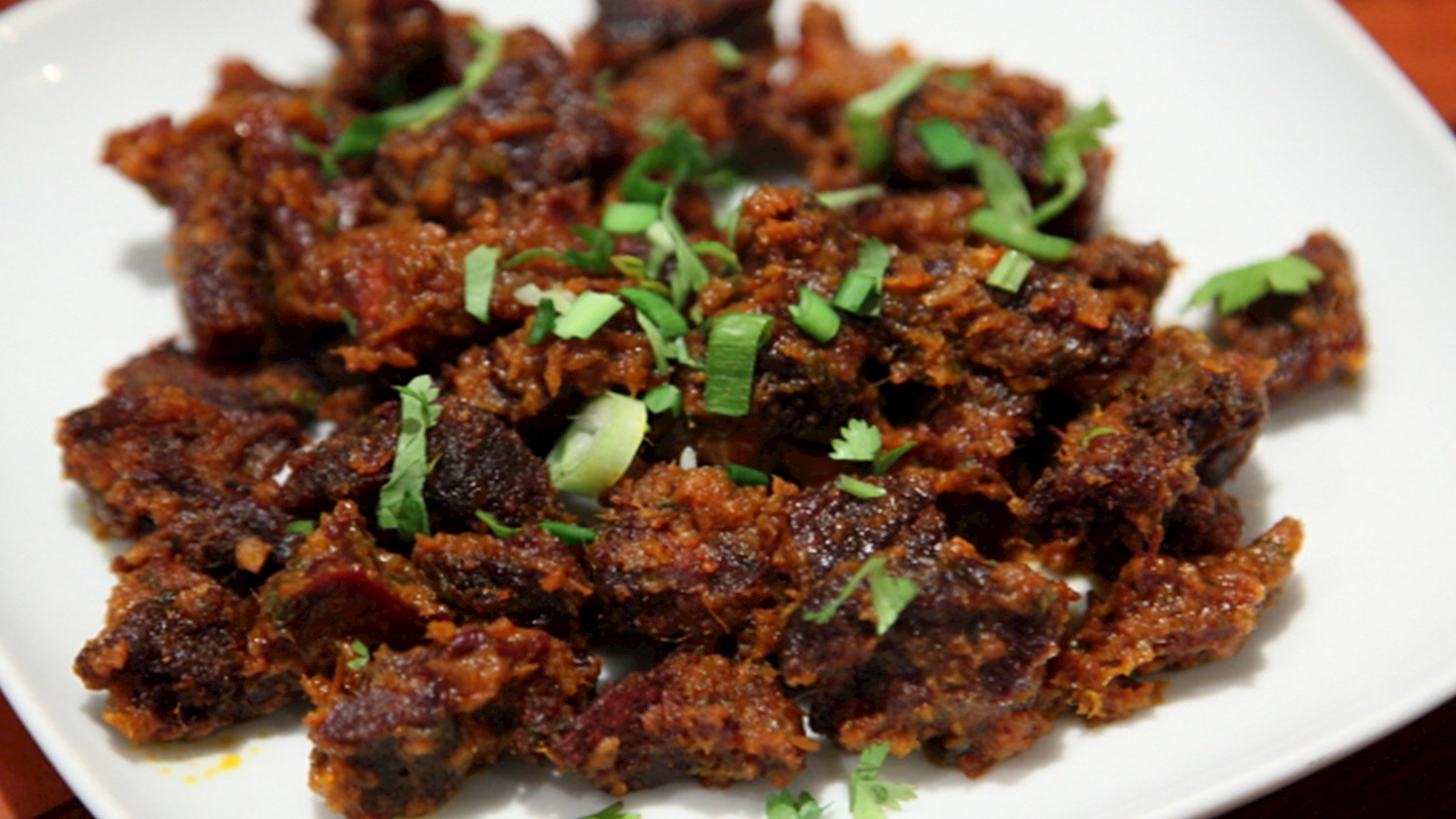
Khasi ko masu is a flavorful Nepalese curry made with goat meat. Although the meat has its own rich flavor and doesn't need many spices to enhance the flavors of the dish, it is combined with flavorings such as garam masala, chili, turmeric, cloves, and cinnamon. The dish is especially popular during the largest Nepalese festival called Dashain. It is recommended to pair the curry with rice and roti bread.
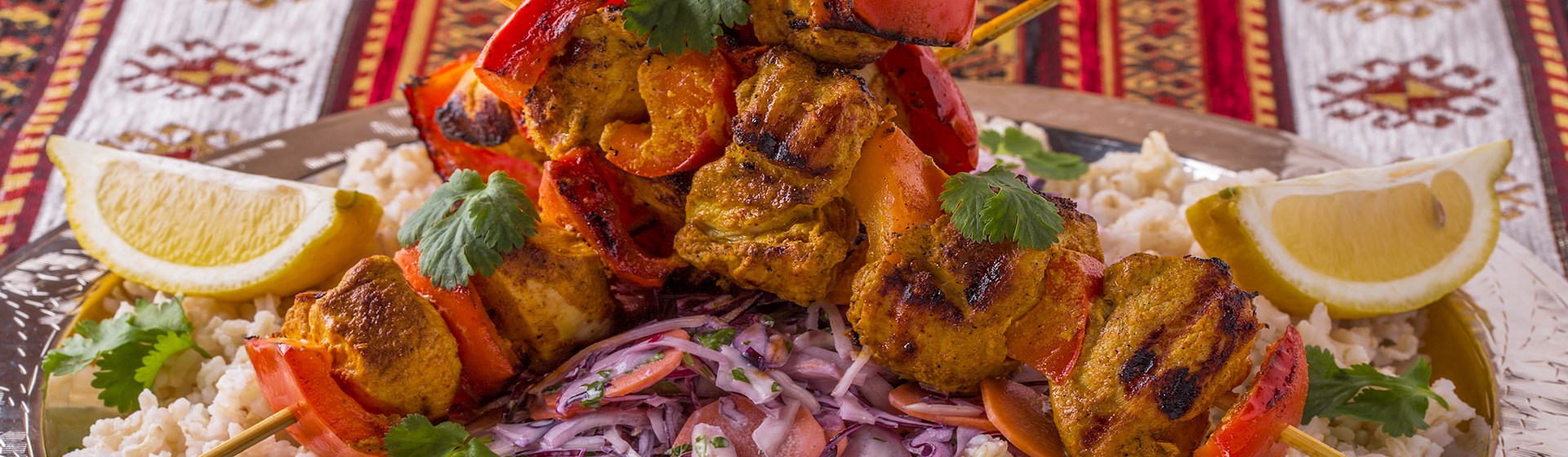
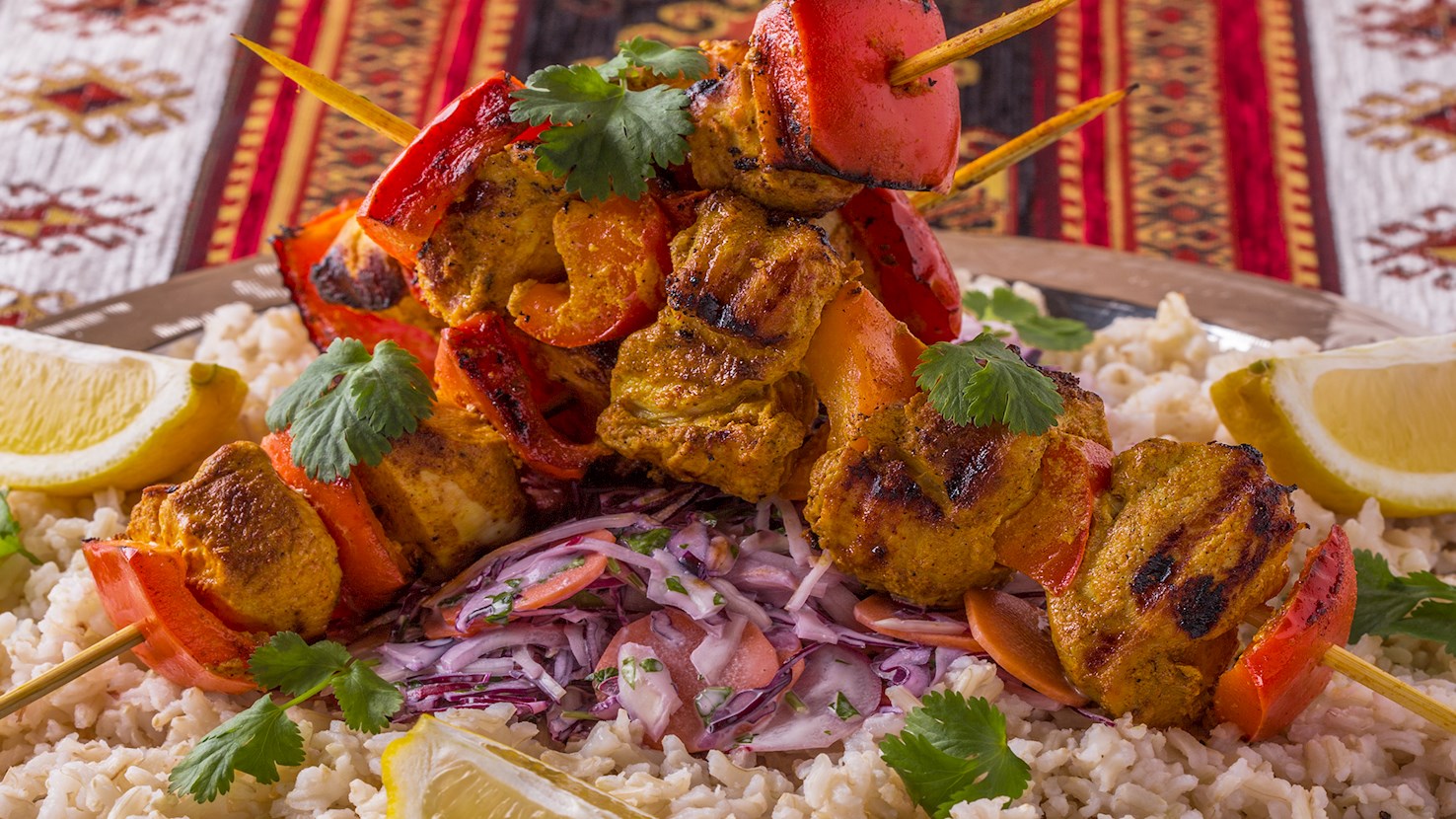
Sekuwa is a heavily spiced charcoal-grilled meat skewer known for its intense smoky flavor and sharp, numbing marinade. The raw meat, usually water buffalo, pork, mutton, or chicken, is cut into bite-sized cubes and coated in a thick, pungent wet rub. Cold-pressed mustard oil forms the base of the marinade, binding minced garlic, fresh ginger, red chili powder, turmeric, and crushed timur, a high-altitude mountain pepper with a distinctly citrusy bite. The coated meat rests overnight in a cold place, allowing the spices to penetrate the muscle fibers. After marinating, the meat cubes are tightly threaded onto flat-iron skewers or soaked bamboo skewers. The loaded skewers are placed directly over an open pit of glowing wood charcoal. The intense heat quickly caramelizes the exterior, while animal fat drips onto the hot coals below. This creates thick clouds of aromatic smoke that rise back up and coat the meat with a charred, smoky crust. The origins of this grilling method are tied to the indigenous Kirat communities, especially the Rai and Limbu tribes of the eastern Sunsari district. It began as a practical way for hunters to cook freshly caught wild game directly over open campfires in dense forest areas. Over time, the eastern city of Dharan became the major commercial center of sekuwa. Sekuwa gained prominence in Kathmandu's urban landscape during the 1970s, when a vendor named Dinanath Bhandari opened a successful stall near the international airport. His single cart grew into the large commercial brand Bajeko Sekuwa, helping establish the grilled meat as a permanent feature of city food culture. Different kinds of meat give different results and are preferred in different regions of Nepal. Water buffalo, commonly called buff, dominates the capital region and gives the skewers a dark, lean, and robust flavor. In eastern hubs such as Dharan, vendors often use fatty pork belly, which creates large flare-ups on the grill and produces a richer, more heavily charred bite. Smaller spice adjustments are also common. Thick yogurt may be added to the marinade to tenderize older cuts of mutton, while dry red chilies may be replaced entirely with a bright green chili paste. The blistering hot meat is slid directly from the skewers onto a wide, shallow metal plate. A large mound of dry flattened rice, known as chiura, is almost always served beside the charred pieces. The chiura acts as a crunchy, neutral carbohydrate that absorbs the remaining mustard oil. A fiercely acidic tomato and fresh coriander chutney is served on the side, adding a sharp contrast to the rich animal fat. Sliced raw red onions and a wedge of fresh lime usually complete the meal, bringing a burst of acidity that cuts through the heavy charcoal smoke.
Sukuti is a unique Nepalese dish consisting of dried meat such as lamb which is cut into thin slices and marinated in cumin, turmeric, black pepper, coriander, chili, and ginger, garlic, and onion paste. It can be consumed as it is, but it can also be charbroiled and spiced, then served as an appetizer or snack. Many people like to combine it with achar, curries, or noodles.
Choila is a specialty of the Nepalese Newari, and it consists of grilled meat - either water buffalo, chicken, or mutton. The dish is characterized by its spiciness coming from green and red chilis, along with spices such as turmeric and fenugreek seeds. It is usually served with a side dish of pounded rice.
Chunla is a traditional meat dish originating from the Kathmandu Valley in Nepal. The meat (usually water buffalo's meat) is finely chopped with a meat grinder or a knife. The spices are kneaded into the meat, and it's then fried in oil and simmered in water. Once done, the meat is topped with a combination of fenugreek seeds and oil. Chunla can also be shaped into meatballs or meat patties for certain ceremonies. The meat is also often used as a filling for momos or a topping for rice flour pancakes known as chatanmari.
Kachilā is a popular dish of the Nepalese Newari community, made with raw meat of water buffalo, chicken, or lamb. The meat is minced and combined with garlic, coriander, chili, salt, and fenugreek seeds, which are fried in oil with turmeric. Fenugreek and turmeric are poured over the meat and spices, and the whole concoction is finally garnished with coriander and spring garlic.
Haku choila is a traditional meat dish originating from Nepal. This is one of the most well-known dishes of the Newar community, and it's usually made with a combination of buffalo meat, scallions, garlic, ginger, hot peppers, mustard oil, coriander, cumin, fenugreek, salt, and wheat straw. The meat is cut into long strips, roasted over an open fire, chopped into chunks, then mixed with the rest of the ingredients and served hot. When prepared traditionally, the fire must be fueled by wheat straw, as the smoke will make the meat more tender. Nowadays, chicken, mutton, and duck meat can replace the buffalo meat, but those versions of haku choila are not considered traditional.
Bandel karang is a traditional pork dish originating from Nepal. The dish is usually made with a combination of pork ribs, soy sauce, flour, eggs, garlic, ginger, chili peppers, and five-spice powder. The ribs are cooked in water, then smeared with a combination of all other ingredients except the soy sauce so that they're fully coated. Once done, the spicy pork ribs are slowly mixed with the soy sauce and fried until most of the liquid has evaporated.
Bhutuwa is a traditional stir-fried dish originating from Nepal. The dish is usually made with a combination of chicken (pork, shrimp, or lamb are also often used), lemon juice, cumin, turmeric, cinnamon, mustard oil, fenugreek, cloves, scallions, garlic, ginger, peas, chili peppers, salt, and black pepper. The chicken pieces are marinated in lemon juice, mustard oil, turmeric, cumin, and seasonings. The cloves and fenugreek are sautéed in mustard oil, and the chicken is then browned in the pan with garlic, ginger, and chili peppers. The peas, scallions, and cinnamon are added near the end of cooking. Once done, bhutuwa is typically served with rice, roti, or stir-fried vegetables.
TasteAtlas food rankings are based on the ratings of the TasteAtlas audience, with a series of mechanisms that recognize real users and that ignore bot,
nationalist or local patriotic ratings, and give additional value to the ratings of users that the system recognizes as knowledgeable.
TasteAtlas Rankings should not be seen as the final global conclusion about food. Their purpose is to promote excellent local foods,
instill pride in traditional dishes, and arouse curiosity about dishes you haven’t tried.







What People Say