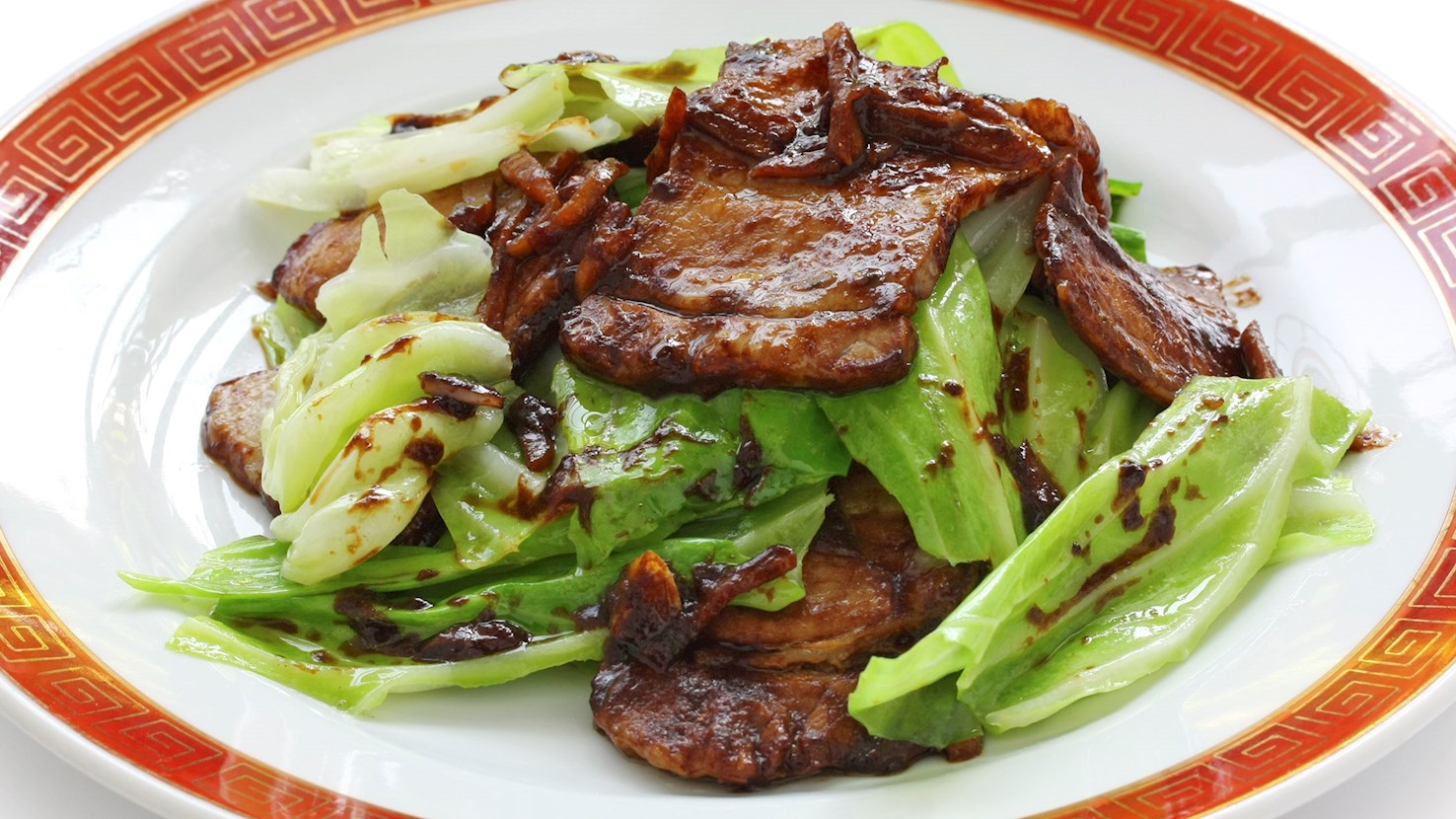
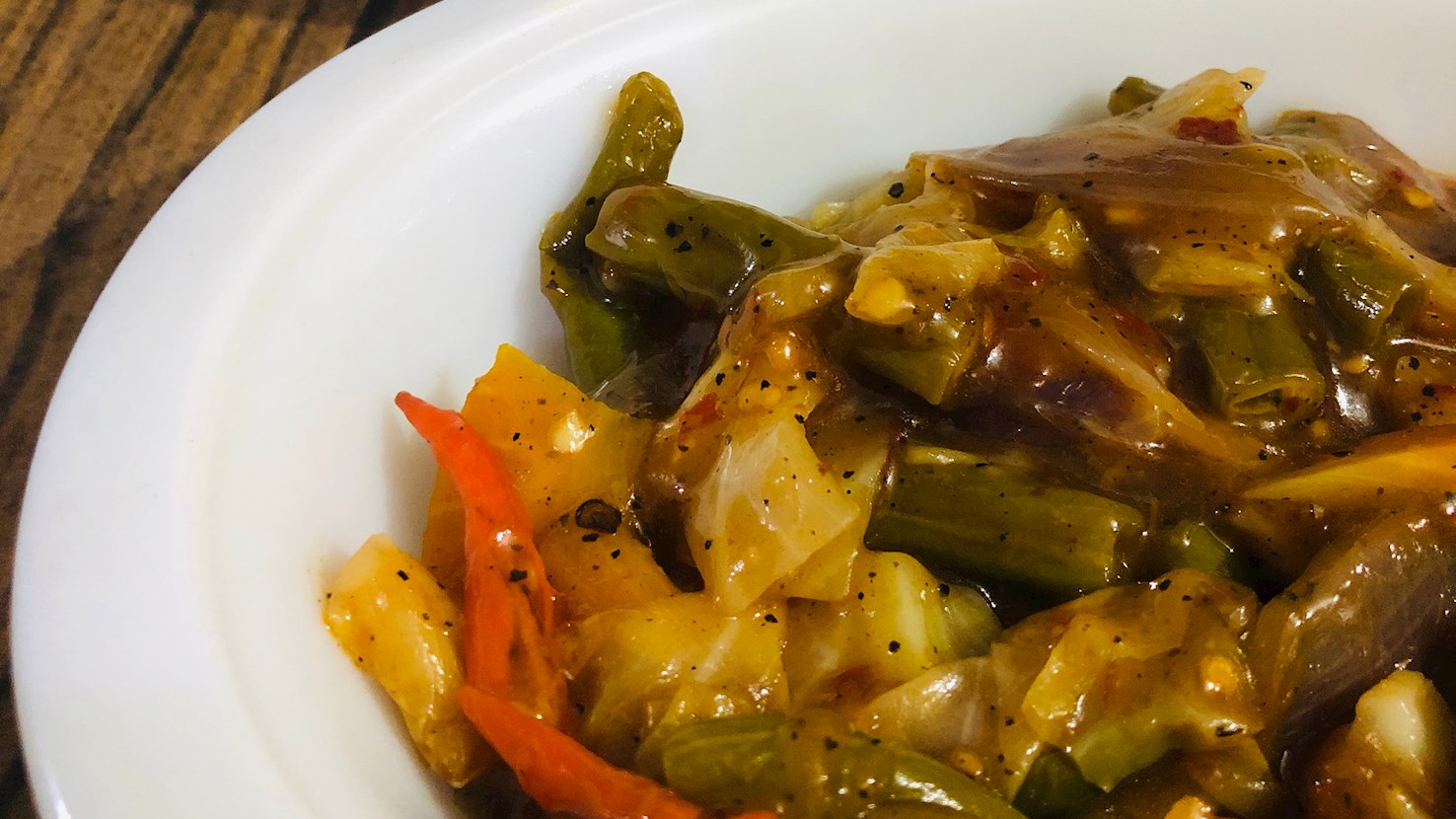
Twice cooked pork is a Sichuan specialty prepared by cooking fatty pork leg or belly (with the skin intact) in two different ways. Pork is first simmered in a pot and cooled in the refrigerator in order for the meat and fat to firm up. After that, the meat is sliced and stir-fried with vegetables such as cabbage, bell peppers, leeks, and mushrooms until it develops a brown color and the skin gets crispy on the edges. Ingredients may vary from one cook to another, but most of them add a sauce made with rice wine, soy sauce and various other condiments to the wok along with meat and vegetables. It is believed that the dish was invented during the Song Dynasty period by a poet who was preparing a pork dish for his friend. He cooked the meat in a pot and forgot about it, and when he returned, he saw that the liquids had evaporated, and the meat was sizzling in its own fat, thus a new dish was created. Today, the people of Sichuan traditionally have a feast on every 1st and 15th lunar month, where twice cooked pork is prepared as the main star of the festivities.
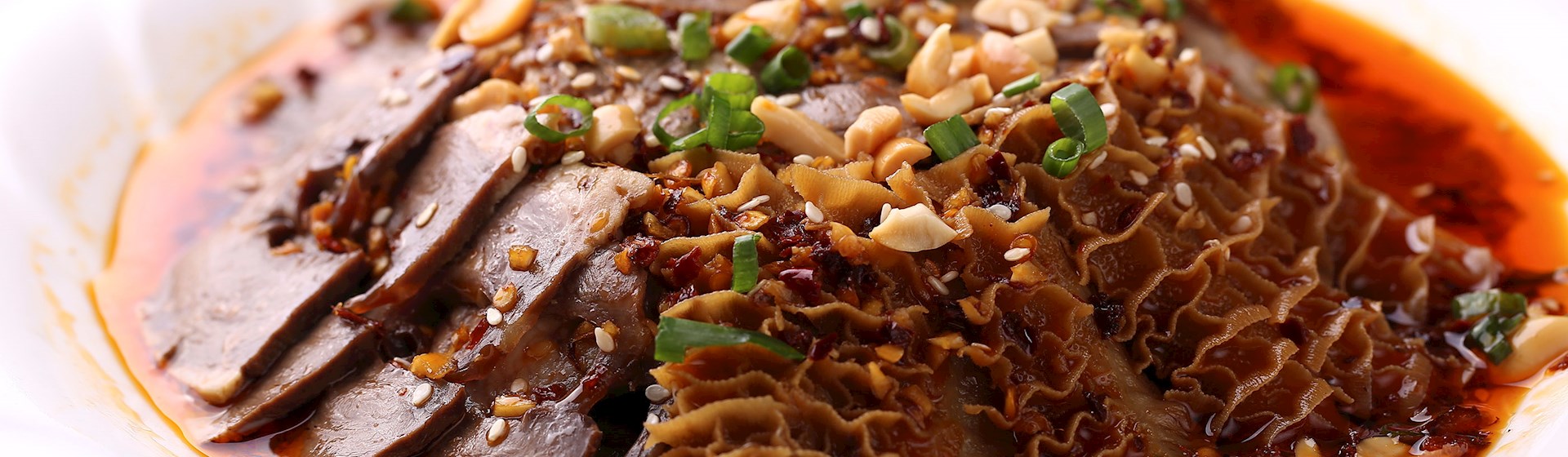
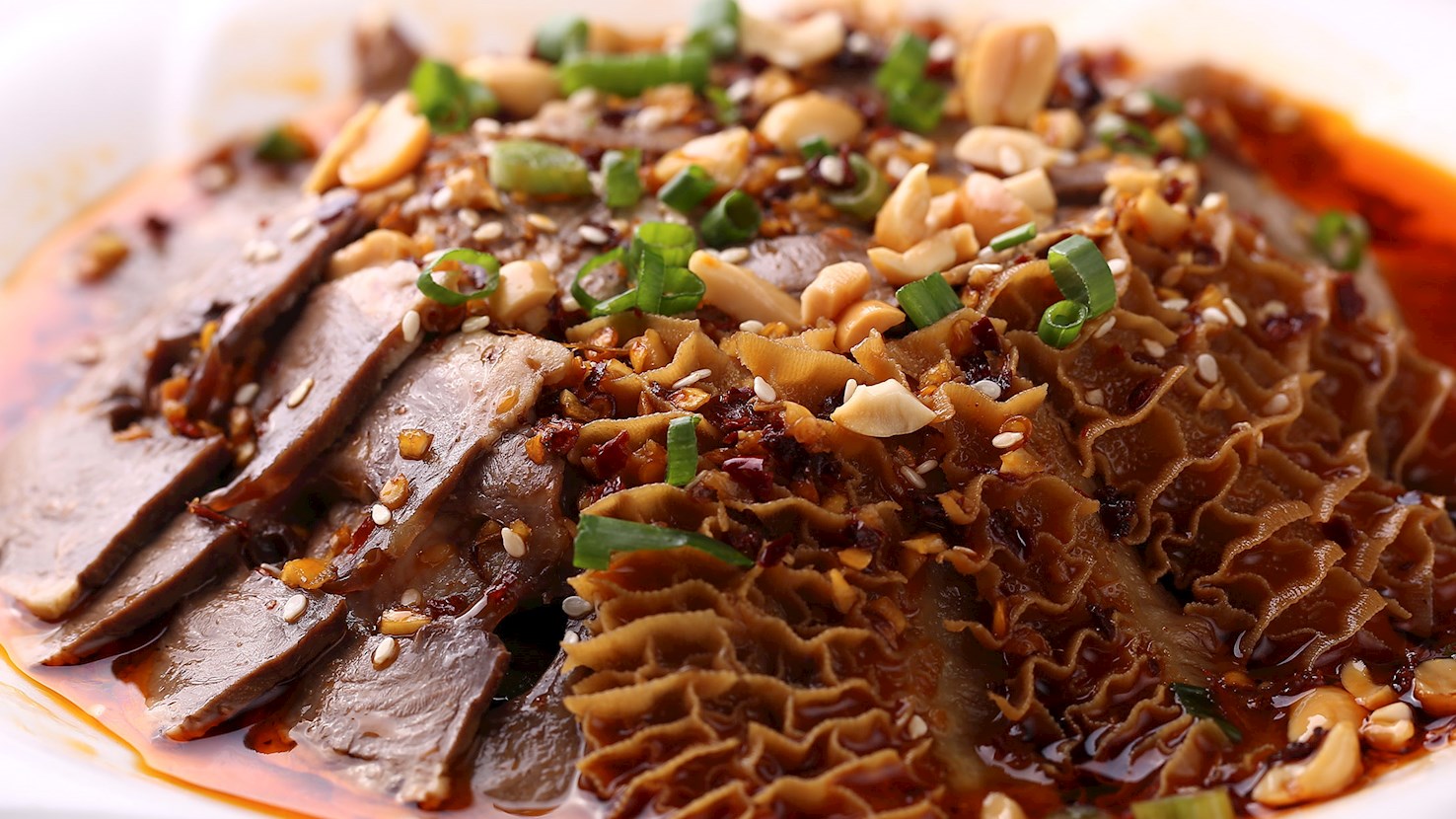
Fūqī fèipiàn is a Sichuanese cold dish made from thinly sliced beef and offal dressed in a fragrant, spicy sauce. The dish gained its distinctive name, meaning “husband and wife slices,” from a couple in Chengdu, Guo Chaohua and Zhang Tianzheng, who became famous in the early twentieth century for their exceptional version sold at street stalls. Their skill in seasoning and preparation turned what began as a humble vendor’s snack into one of the most recognizable representatives of Sichuan cuisine. Over time, the name stuck, spreading beyond Chengdu until it became synonymous with this particular style of seasoned beef. Preparation begins with beef heart, tongue, and tripe simmered in a lightly spiced broth until tender, then cooled and sliced thin to achieve a uniform texture. The sauce is what defines the dish: chili oil blended with Sichuan peppercorn, garlic, soy sauce, vinegar, sugar, and sesame paste, each component calibrated to strike a balance between numbing, heat, salt, and subtle sweetness. Once mixed, the sliced meat is coated thoroughly, allowing the oil to glisten over the surface and carry the fragrance of pepper and spice. Peanuts, sesame seeds, and fresh cilantro are often sprinkled on top, adding crispness and color. The result is both rich and precise, with the coolness of the meat offset by the warmth and sting of the dressing. Fūqī fèipiàn is served widely in Sichuan restaurants and across China, often as an appetizer or part of a shared spread. It pairs naturally with plain rice or light noodles that absorb its sauce without dulling its sharpness. Many people enjoy it with cold beer or mild grain spirits, as the drink’s crispness refreshes the palate between bites.
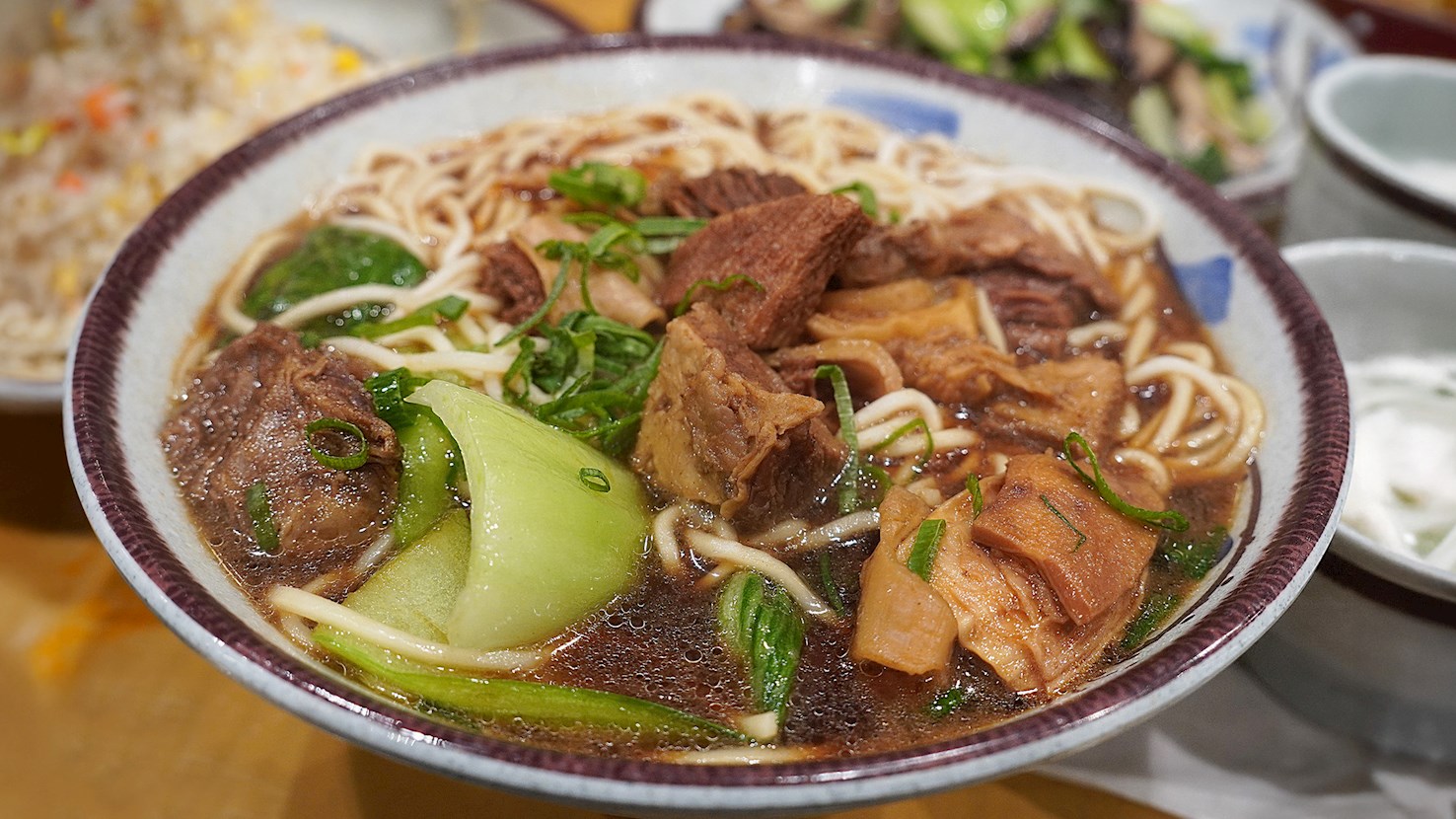
Braised beef noodle soup, is a well-known dish from China that has become especially prominent in Taiwan, where it is considered a staple of local food culture. It consists of wheat noodles served in a savory broth with chunks of soy sauce–braised beef, often accompanied by vegetables and pickled greens. The dish can be traced back to Chinese beef-braising techniques, particularly from Sichuan region where beef was more commonly eaten. When migrants brought these cooking styles to Taiwan in the mid-twentieth century, they adapted them to local tastes, creating the red-braised version that has since become a hallmark of Taiwanese street food and restaurant menus. Over time, regional variations emerged, with some emphasizing spiciness, others focusing on clear broth, and many blending influences from different parts of China to suit local preferences. Preparation begins with beef shank or brisket, which is cut into chunks and slowly braised with soy sauce, rice wine, ginger, garlic, star anise, and other aromatics until tender. The braising liquid is often combined with stock to form the base of the soup. Wheat noodles are cooked separately and placed in bowls, topped with the beef and broth, and sometimes garnished with blanched greens, scallions, and pickled mustard stems. The dish can be adjusted for depth and spice, with some versions adding chili bean paste or dried chilies to enhance heat and complexity. Today, braised beef noodle soup is eaten widely in both mainland China and Taiwan, with Taiwan in particular treating it as an everyday meal available in night markets, noodle shops, and restaurants ranging from casual to upscale. It is enjoyed at any time of day, from a quick lunch to a filling dinner.
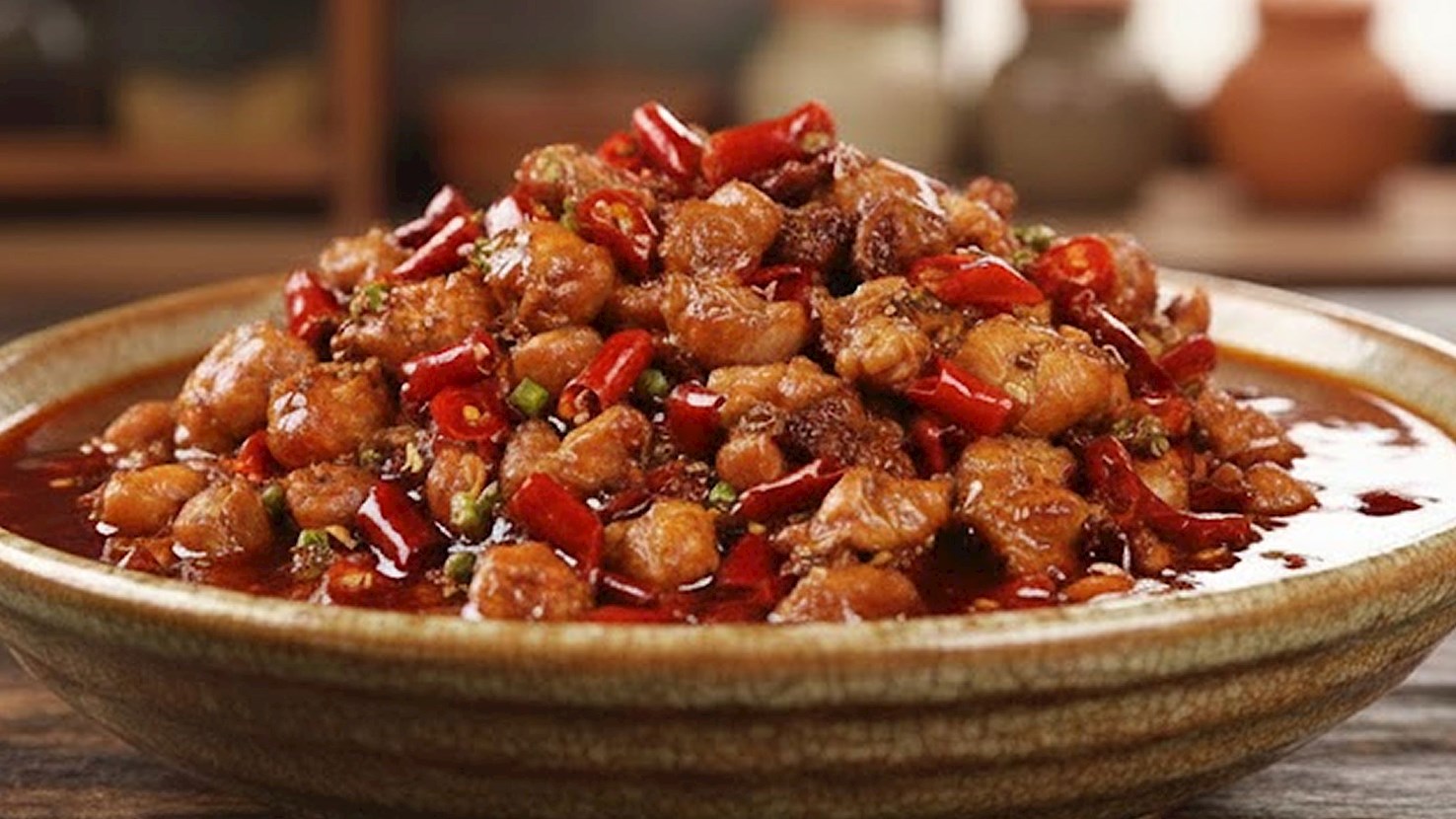
Shapta or shaptak is a traditional stir-fried meat dish originating from Tibet. The dish is usually made with a combination of meat (yak, beef, pork, or mutton), ginger, garlic, Sichuan peppercorns, cabbage, hot peppers, oil, onions, sesame oil, soy sauce, scallions, and salt. Dried and fresh hot peppers are sautéed in oil and mixed with garlic, ginger, and onions. The meat, salt, and Sichuan pepper are then added to the pan and stir-fried. Cabbage, sesame oil, and soy sauce are stirred in, and everything is stir-fried over high heat until done. Before serving, shapta is garnished with scallions. The name of the dish means fried meat and there are many versions of it throughout Tibet. The dish is typically served with tingmo (steamed bread) or rice on the side.
Zìgòng lěngchī tù is a cold rabbit dish from Zigong, a city in Sichuan province known for its strong, layered flavors and mastery of spicy cuisine. The name translates to “Zigong cold-eaten rabbit,” describing both the place of origin and the way it is consumed: served at room temperature or chilled, heavily seasoned with chili, Sichuan peppercorn, and aromatic spices. The dish traces back to the culinary habits of salt workers in Zigong, which was once China’s most important salt-producing center. Workers often prepared meats that could be stored and eaten over time, especially during hot weather. Rabbit, being lean and abundant in the region, became a favored ingredient. To preserve it and enhance its flavor, cooks developed a method of cooking and marinating the meat with chili oil, vinegar, and peppercorn, which allowed it to stay flavorful even when eaten cold. Over generations, this preparation evolved into a signature local specialty, spreading beyond the saltworks into households, markets, and restaurants. It remains closely tied to Zigong’s identity as a city that values robust, layered seasoning and craftsmanship in food preparation. To make Zigong cold-eaten rabbit, a whole rabbit is cleaned and chopped into small pieces, often bone-in to retain flavor. The meat is first boiled or steamed until tender, then cooled completely. A complex sauce is prepared from a combination of chili powder, ground Sichuan peppercorn, garlic, ginger, fermented bean paste, soy sauce, vinegar, sugar, and sesame oil. The sauce is poured over the rabbit and mixed thoroughly, allowing the flavors to penetrate the meat. It is then left to rest, sometimes for several hours, to develop its full taste. The result is a dish that is intensely aromatic, spicy, slightly numbing, and tinged with sourness. The meat’s firmness contrasts with the smooth chili oil coating, creating a layered sensory effect typical of Sichuan cooking. In Zigong, the dish is eaten throughout the year but is especially popular in warmer months when cold dishes are preferred. It is often served as a centerpiece for casual meals, paired with plain rice, congee, or cold noodles to offset the intensity of the spice. Locals sometimes enjoy it with cold beer or tea, both of which help refresh the palate.
Suànní báiròu is a Sichuanese dish made of thinly sliced boiled pork dressed with a sauce rich in garlic, chili, and vinegar. The name translates to “garlic paste white pork,” referring to both its color and the sharp, aromatic sauce that defines it. Suànní báiròu represents a cold appetizer style common in Sichuan cooking, where meat is served cooled or at room temperature and coated in a highly seasoned sauce rather than cooked within it. The dish emerged from the home kitchens and small restaurants of Sichuan, where boiling pork belly was a common way to prepare meat economically while preserving its tenderness. As chili oil, garlic, and vinegar became staples of the regional pantry, cooks began using them to season slices of plain meat, transforming a simple preparation into something vibrant and complex. Over time, suànní báiròu became a familiar feature on Sichuan menus, appreciated for its contrast between the mildness of the pork and the assertive heat and sourness of the sauce. Its preparation also reflects an older Chinese culinary principle: treating leftover or simple ingredients with care through seasoning rather than costliness. To make the dish, pork belly is simmered gently with ginger, scallion, and a splash of cooking wine until tender but not falling apart. After cooling, it is sliced as thinly as possible—often translucent when held to light. The sauce is made by blending minced garlic with chili oil, soy sauce, vinegar, sugar, and sesame paste or sesame oil, creating a thick, fragrant mixture that coats each slice evenly. Some versions include finely chopped peanuts or green onion for texture. The pork is arranged neatly on a plate and covered with the sauce, allowing the flavors to soak in before serving. The balance of the dressing is crucial: too much vinegar would overpower, too much garlic would dull the chili, and too much oil would mask the meat’s natural sweetness. The dish is eaten across Sichuan and in many parts of China where Sichuan food is served. It appears as a cold starter or light side dish, often before heavier, hot preparations like twice-cooked pork or mapo tofu. It pairs well with plain rice or steamed buns, which absorb the sauce, and is sometimes accompanied by a mild soup to refresh the palate. Some enjoy it with light beer or plum wine, whose sweetness softens the spice.
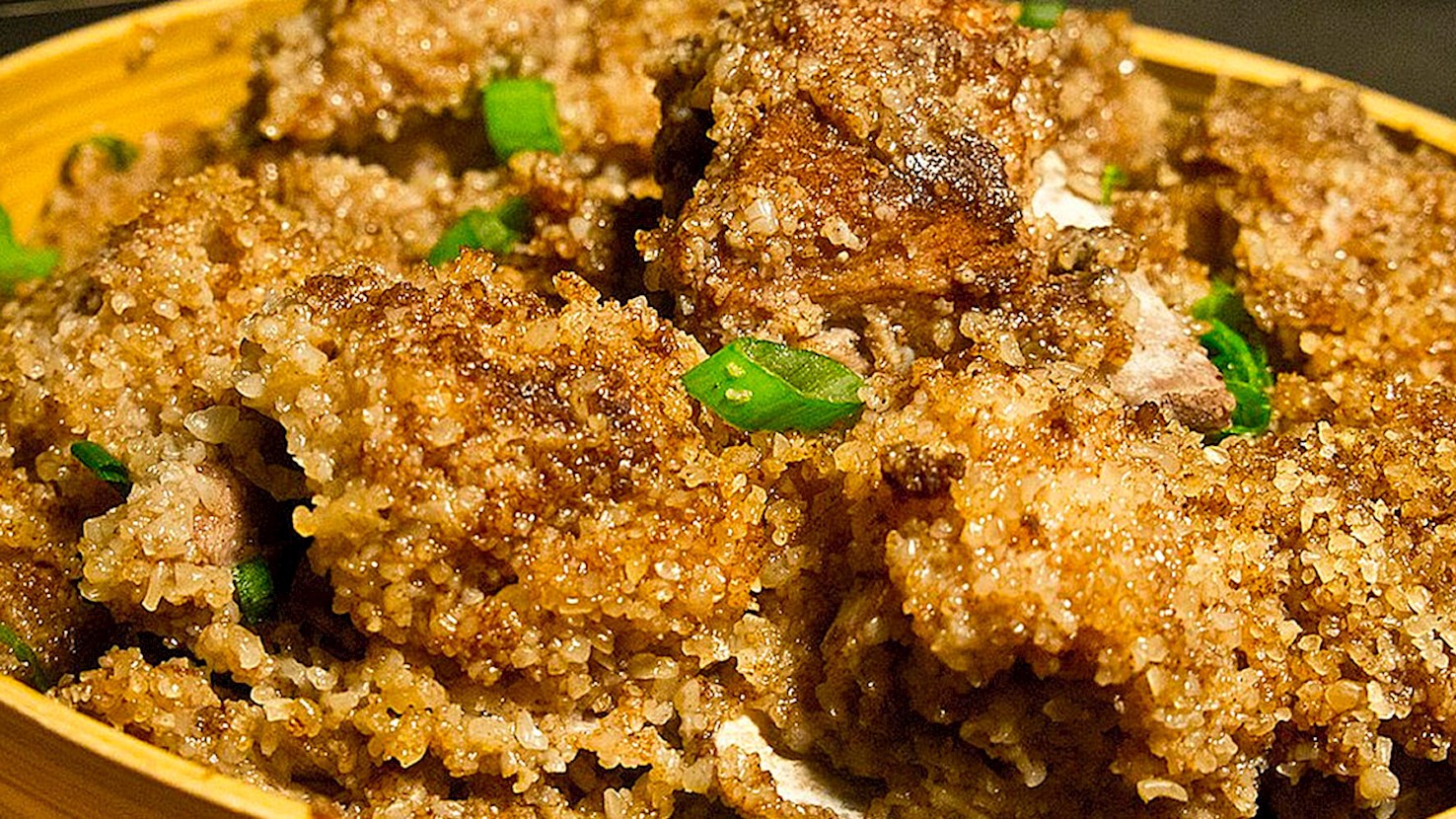
Fěnzhēng ròu is a Chinese steamed pork dish coated in ground rice flour, most closely associated with Sichuan and Hunan cuisines. It is made by marinating slices of pork belly, coating them with a mixture of ground toasted rice and spices, and steaming until the meat is tender and the rice has absorbed the juices. The technique creates a dish that is rich yet not greasy, with a distinctive texture from the soft, flavored rice layer clinging to the pork. The dish reflects a long development of steaming methods in southern and central China, where steaming was valued for retaining nutrition and keeping food moist in humid climates. Rice, the staple grain of the region, was used in more than one form, and cooks discovered that toasting and grinding rice before applying it to meat created a coating that enhanced flavor while moderating fat. Over time, this preparation became a household favorite and was later featured at banquets, appreciated for its depth of flavor and comforting character. Variations appeared across provinces, but Sichuan and Hunan made the dish particularly famous by combining it with their own regional spices. Preparing fěnzhēng ròu begins with toasting raw rice until golden, often together with spices like star anise, Sichuan peppercorns, or dried chilies, then grinding it into a coarse powder. Pork belly is sliced and marinated with seasonings such as soy sauce, Shaoxing wine, ginger, garlic, and sometimes fermented bean paste for added depth. Each piece of pork is coated thoroughly in the rice mixture, then arranged in a dish or bamboo steamer lined with leaves to prevent sticking. Steaming for around an hour allows the rice to swell with the pork’s juices, creating a crust that is soft, savory, and fragrant, while the meat inside turns tender. Today, fěnzhēng ròu is eaten in households and restaurants across central and southern China. It is commonly paired with plain rice or light vegetable sides, since the dish itself is richly seasoned and filling. In banquets, it is served in the same dish it was steamed in, preserving the aroma and presentation, while in home cooking it is a comforting centerpiece shared among family.
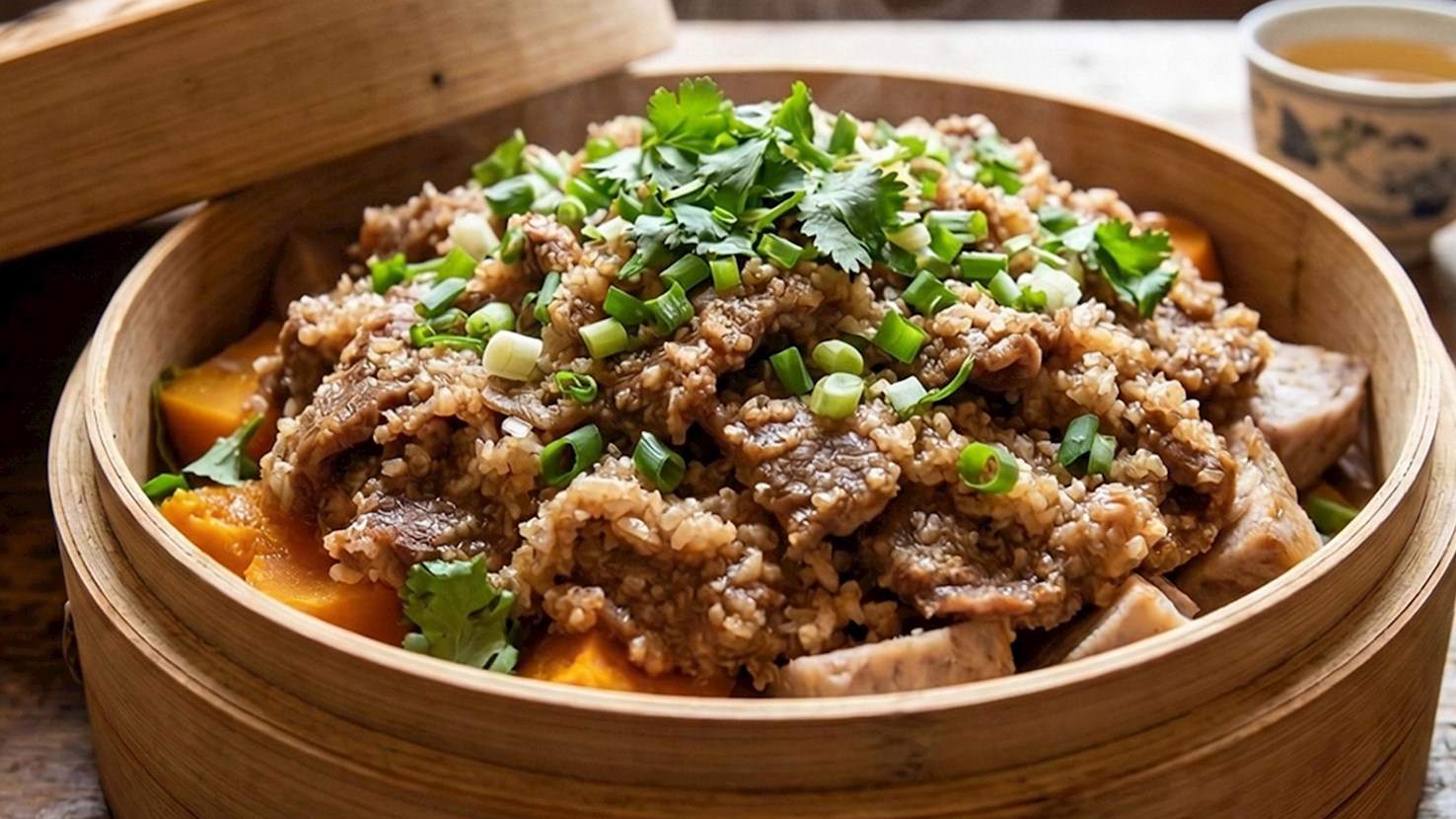
Fěnzhēng yángròu is a steamed lamb dish from Sichuan cuisine, notable for being coated in ground rice flour before cooking. It originates from southwestern China, where steaming techniques and the use of rice flour are common methods to achieve tender textures and layered flavors. Its roots lie in the long history of steaming in Chinese cooking, a technique prized for preserving the natural qualities of meat. In Sichuan, where lamb was introduced and adapted into local foodways, cooks combined it with rice flour, which had already been used in other dishes like steamed pork with rice flour. Lamb, with its stronger flavor compared to pork, was complemented by the flour coating that absorbed juices and spices during steaming, resulting in a dish that was both filling and nuanced. Over time, fěnzhēng yángròu became associated with family meals and banquet tables, where it stood out as a distinctive way of preparing lamb in a region more often linked with beef and pork. Preparation involves slicing lamb into pieces, then marinating it with seasonings such as soy sauce, Shaoxing wine, Sichuan peppercorns, ginger, and sometimes chili bean paste. The meat is then coated with toasted and ground rice, often mixed with a little flour and spices, before being placed in a steamer. During steaming, the rice coating absorbs the lamb’s juices, swelling into a moist, fragrant crust that clings to the meat. The result is lamb that is tender without being greasy, with each bite offering both the grainy softness of the rice and the richness of the meat. Today, fěnzhēng yángròu is eaten in Sichuan households and at restaurants that serve regional cuisine. It is often accompanied by plain rice or simple vegetables, since the dish itself is hearty and spiced enough to be the centerpiece of a meal. In banquets, it is presented in its steamer basket, allowing diners to appreciate its aroma before serving.
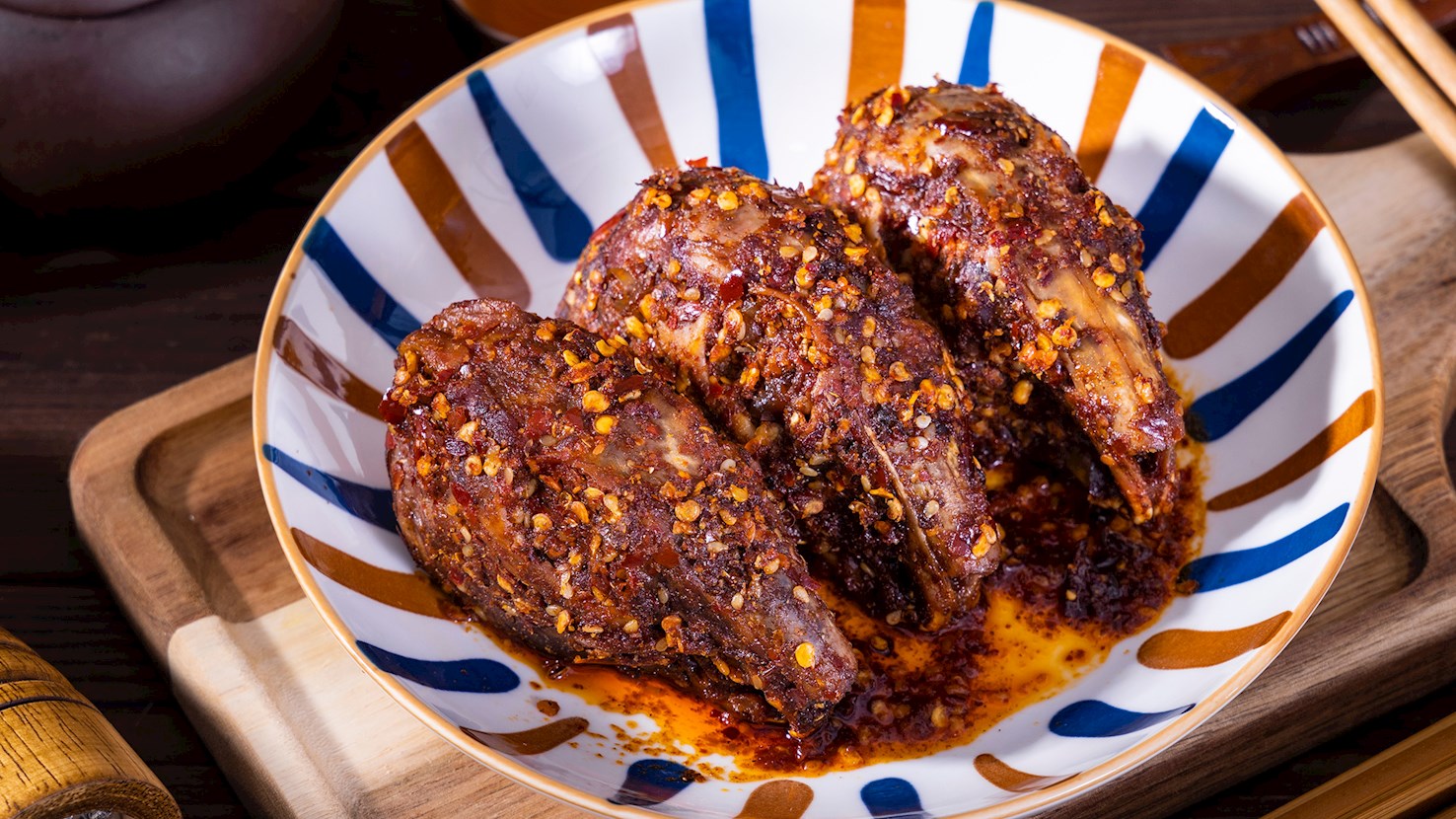
Tù tóu, meaning rabbit head, is a specialty dish most famously associated with Sichuan province, known for its bold seasoning and for being eaten in an unconventional way, since the entire head of the rabbit is cooked and served as the centerpiece. The practice of eating rabbit in Sichuan goes back centuries, as rabbits were widely available and their meat was appreciated for being lean and tender. In Chengdu and surrounding areas, cooks developed methods of seasoning rabbit heads with the same spice combinations that define local cuisine, particularly the use of Sichuan peppercorns and chili. Over time, rabbit heads became popular in night markets and roadside stalls, where they were prepared in large batches and sold as affordable snacks. Their rise in popularity reflects both the resourcefulness of Sichuan cooking and the appetite for intense flavors that characterize the region. Preparation usually begins with cleaned rabbit heads that are simmered or braised with chili bean paste, soy sauce, garlic, ginger, and a generous amount of Sichuan peppercorns. Some versions are cooked in a spicy red oil base, while others emphasize braising with aromatics and spices for a more savory profile. Once cooked, the heads are served whole, and diners use their hands and chopsticks to eat the meat, tongue, and cheeks, savoring the complex seasoning. The bones are not eaten but add depth to the broth or braising liquid during cooking. Today, tù tóu is most commonly eaten in Chengdu and other parts of Sichuan, sold in night markets, small restaurants, and specialty shops that focus entirely on rabbit head dishes. It is eaten primarily as a street snack or late-night food, often with beer or tea.
Lanrou xiqin is a traditional dish originating from Sichuan. Although there are many variations, the dish is usually made with a combination of celery, doubanjiang (chili bean paste), ground pork, oil, ginger, soy sauce, Chinkiang vinegar, Sichuan pepper, and chili oil. Ground pork is stir-fried in oil over high heat, and it's then mixed with doubanjiang. The mixture is stir-fried until the oil is red and aromatic. The ginger, finely chopped celery, soy sauce, vinegar, Sichuan pepper, and chili oil are added in the order shown. The dish is served hot and it's often accompanied by plain white rice.
TasteAtlas food rankings are based on the ratings of the TasteAtlas audience, with a series of mechanisms that recognize real users and that ignore bot,
nationalist or local patriotic ratings, and give additional value to the ratings of users that the system recognizes as knowledgeable.
For the “Top 10 Southwestern Chinese Meat Dishes” list until June 15, 2026, 109 ratings were recorded, of which 91 were recognized by the system as legitimate.
TasteAtlas Rankings should not be seen as the final global conclusion about food. Their purpose is to promote excellent local foods,
instill pride in traditional dishes, and arouse curiosity about dishes you haven’t tried.