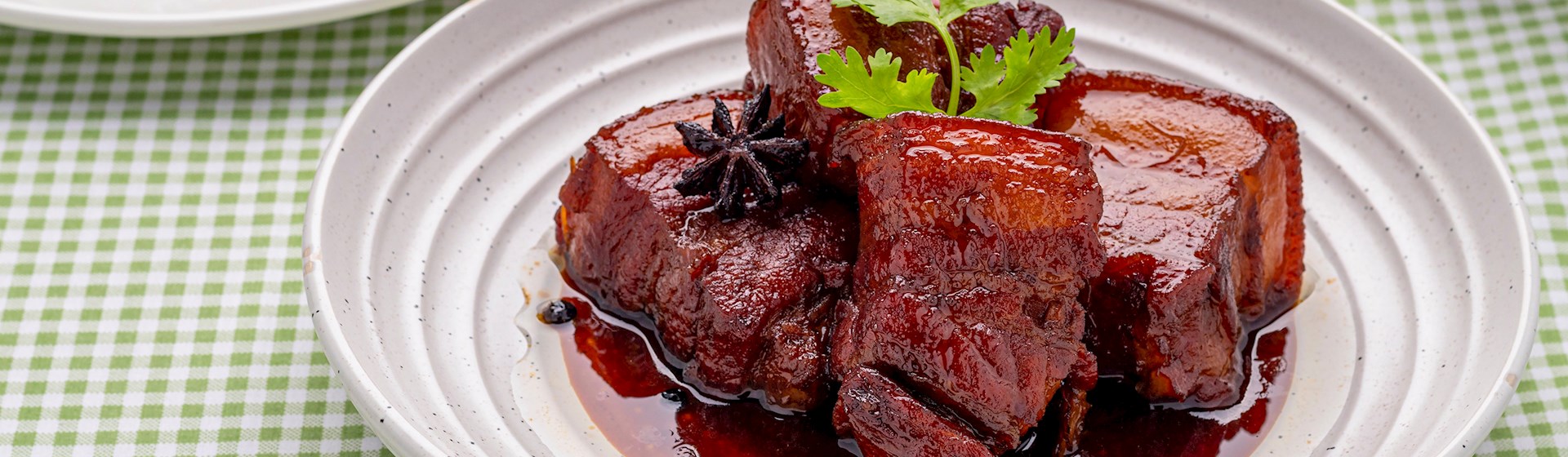
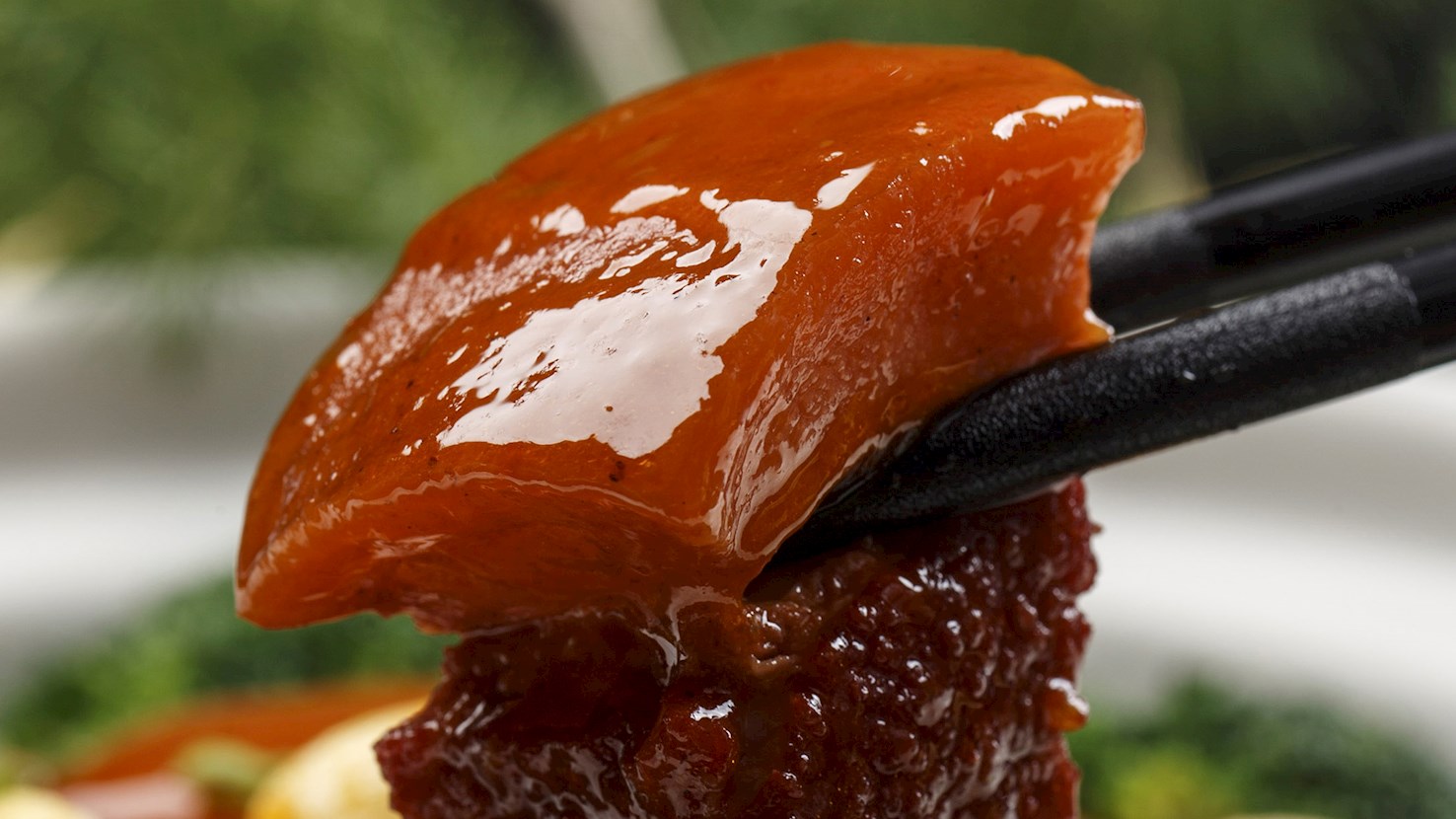
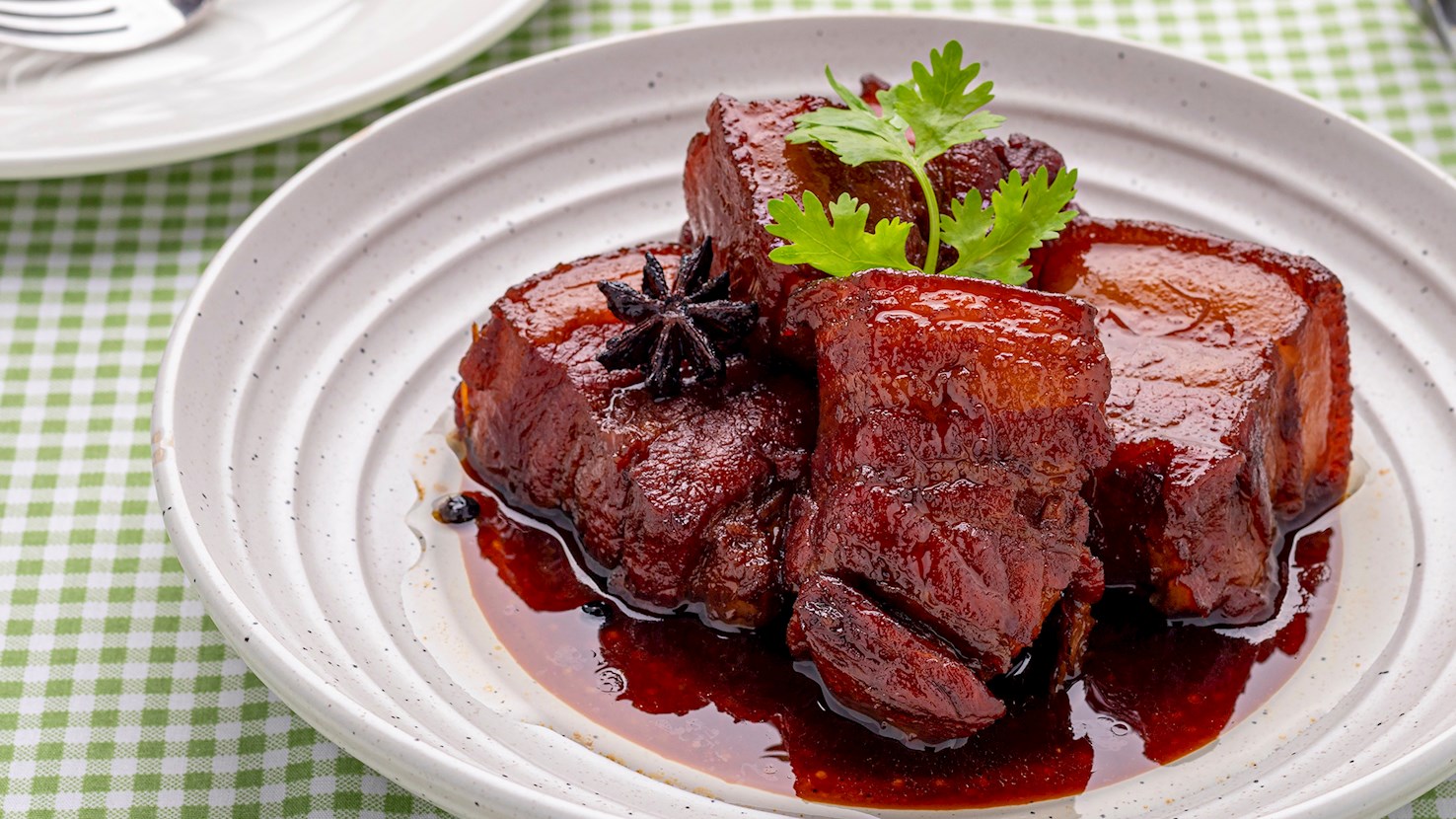
The traditional Hangzhou's trademark dish of red-cooked pork belly, Dōngpō ròu, is built with a handful of Chinese staple ingredients like ginger, scallions, soy sauce and, most importantly, Shàoxīng rice cooking wine, an essential ingredient for red-cooked meals. The meat (with the skin on) is typically browned in fat, simmered twice, braised, sautéed, and finally steamed, after which it becomes so amazingly tender it can be pulled away with chopsticks. Dōngpō ròu is said to have been invented (or at least inspired) by Su Dongpo, an 11th-century Song Dynasty statesman, poet, artist, calligrapher, and one of the four classical Chinese gastronomes. According to legend, one day Su Dongpo decided to prepare stewed pork when, in the middle of cooking, an old friend visited and challenged him to a game of Chinese chess. Engrossed with the game, Su had completely forgotten about his stew until the intense aroma of slow-braised pork meat reminded him of it. The dish was eventually named Dongpo pork in his honor and later became widely popular across the country.
Hóngshāoròu is a Chinese braised pork dish made with pork belly slowly cooked in a mixture of soy sauce, sugar, rice wine, and aromatics until it becomes tender and richly flavored, with a glossy red-brown sauce coating each piece. It originates from the Jiangnan region of eastern China, particularly Jiangsu and Zhejiang provinces, but it is now deeply embedded in the culinary identity of many regions, each with slight variations in seasoning and texture. The technique of red-braising, which gives the dish its name, has been part of Chinese cooking for centuries, arising from a broader practice of slow-cooking meat in soy sauce and sugar to preserve moisture and develop depth of flavor. The dish gained prominence in imperial kitchens and scholar households during the Ming and Qing dynasties, where long, gentle braises were favored for their ability to transform inexpensive cuts of meat into luxurious dishes. Over time, hóngshāoròu became a home-cooked staple and a centerpiece at festive meals, symbolizing abundance and comfort. Preparation typically begins with selecting pork belly that has alternating layers of meat and fat, which ensures the right balance of tenderness and richness. The pork is blanched briefly to remove impurities, then caramelized with sugar in oil or water until lightly browned, a step that deepens the color and flavor of the final dish. Soy sauce, Shaoxing wine, ginger, star anise, and occasionally cinnamon or dried chilies are added, and the mixture is simmered slowly for one to two hours. During this time, the meat absorbs the flavors of the sauce and becomes soft enough to melt in the mouth, while the braising liquid reduces into a thick, glossy coating. Hóngshāoròu is served hot, usually as a centerpiece dish accompanied by plain steamed rice, which absorbs the rich sauce. It is often paired with lighter side dishes such as blanched greens or pickled vegetables, which provide contrast to its richness. In some regions, it is served with steamed buns or mantou, allowing diners to soak up the sauce.
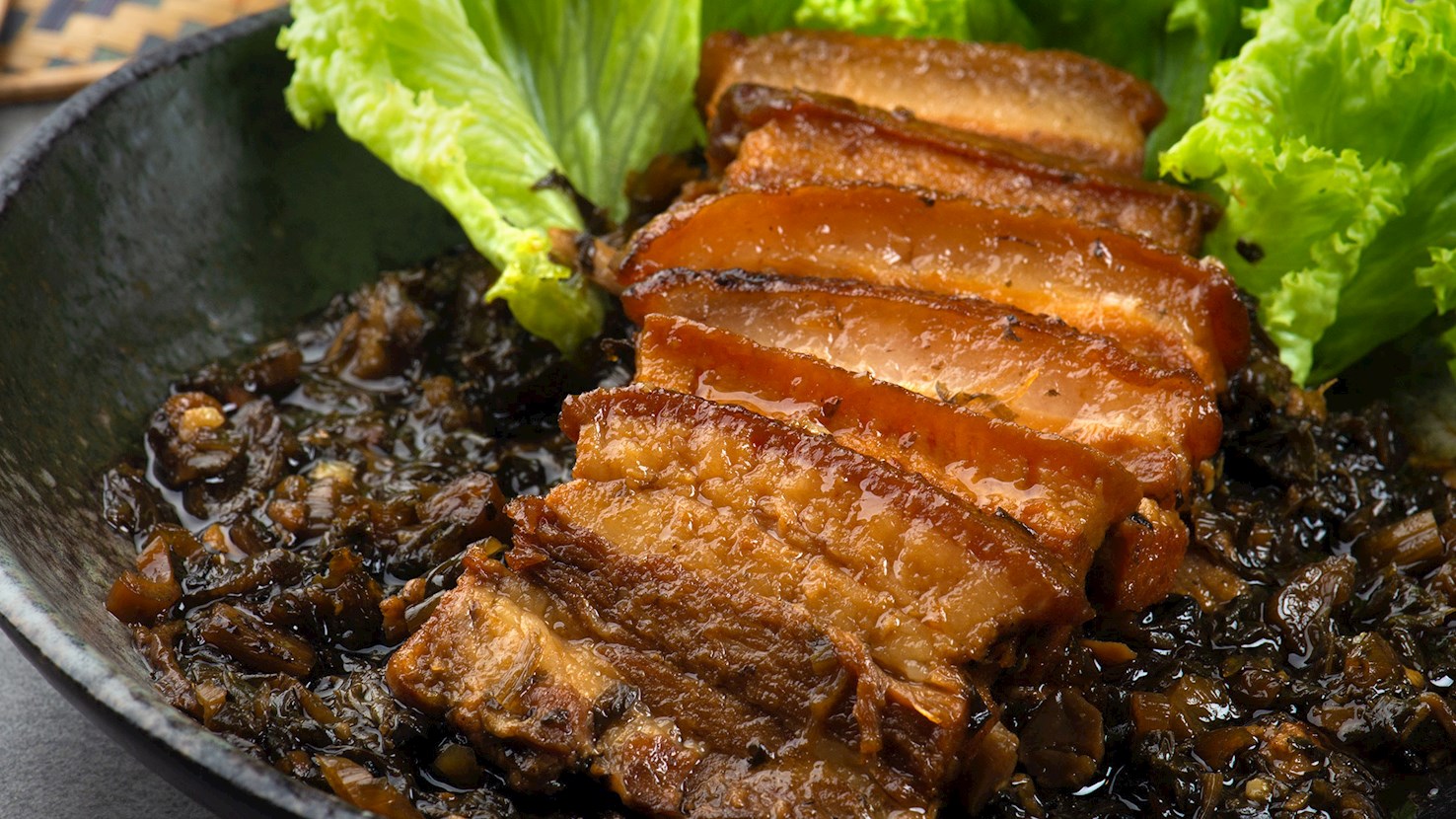
Méigāncài kòuròu is a pork dish from Zhejiang, particularly known in areas such as Shaoxing and Ningbo. It consists of thick slices of pork belly steamed with preserved mustard greens called méigāncài, which gives the dish its characteristic aroma and savory-sweet depth. The dish is recognized as a staple of home-style and banquet cooking in southern China, where preserved vegetables are often paired with fatty cuts of meat to achieve a balance of richness and saltiness. The pork belly used for méigāncài kòuròu is typically parboiled, then deep-fried or blanched again to firm the skin and create a golden layer before slicing. The preserved mustard greens are rinsed to remove excess salt, chopped finely, and stir-fried with sugar, soy sauce, Shaoxing wine, and occasionally fermented bean paste to enhance the flavor. The prepared pork slices are layered over the greens, with the skin facing down in a bowl, and the mixture is steamed slowly for one to two hours until the fat becomes soft and the flavors combine. Once cooked, the bowl is inverted onto a plate so the glossy pork skin forms the top layer. The steaming process allows the pork to absorb the savory and slightly sweet aroma of the preserved greens, resulting in a dish that is tender but structured, with a balance of meat, fat, and vegetable texture. Méigāncài kòuròu is served hot as a main dish, often accompanied by plain rice, steamed buns, or other mild sides that offset the richness. It appears frequently at family gatherings, festivals, and restaurant banquets, valued for its deep, mellow flavor and satisfying texture. The dish pairs well with Shaoxing wine, which complements its sweetness and helps cleanse the palate, or with hot green tea, which balances its oiliness. In Zhejiang households, it represents an enduring preference for dishes that integrate preserved ingredients and slow cooking to create harmony between fat, salt, and fragrance.
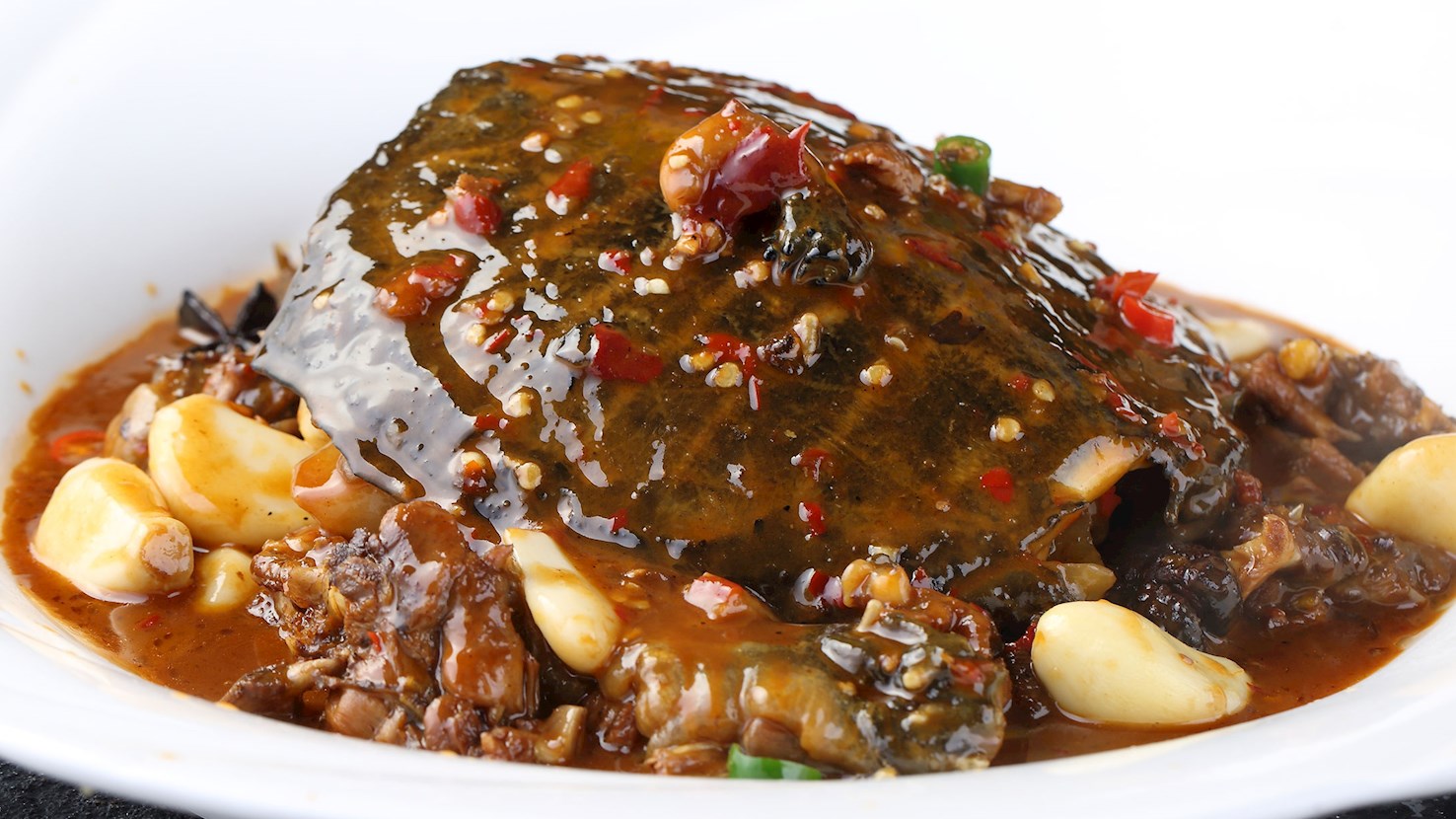
Bīngtáng jiǎyú, or crystal sugar turtle, is a sweet-savory dish from Ningbo in Zhejiang province, a region known for its refined coastal cuisine and emphasis on delicate seasoning. It features freshwater soft-shelled turtle cooked slowly with crystal sugar, soy sauce, and aromatics until the meat becomes tender and lightly caramelized. The dish reflects the Ningbo preference for dishes that highlight the natural flavor of fresh ingredients through controlled sweetness and long simmering rather than strong seasonings. It developed in Ningbo households and banquet cooking, where turtle was regarded as a prized ingredient, and sugar-based braising methods were applied to enhance texture and aroma. Preparation begins with a cleaned and sectioned soft-shelled turtle, which is blanched to remove impurities before being braised gently in a mixture of Shaoxing wine, soy sauce, ginger, and crystal sugar. The cooking process requires low heat over an extended period so that the sugar melts evenly into the sauce, coating the meat with a clear, amber glaze. The result is a tender, slightly gelatinous texture with a mild sweetness balanced by savory undertones from the soy and wine. In some versions, a small amount of rock sugar replaces part of the crystal sugar for a deeper gloss, and aromatics like scallions or star anise are added sparingly. It is served hot, typically as a centerpiece in banquet meals or celebratory dinners, accompanied by plain rice or steamed buns to balance the richness of the sauce. In Ningbo, it is sometimes paired with Shaoxing wine or light oolong tea, which complements the dish’s sweetness while cleansing the palate.
TasteAtlas food rankings are based on the ratings of the TasteAtlas audience, with a series of mechanisms that recognize real users and that ignore bot,
nationalist or local patriotic ratings, and give additional value to the ratings of users that the system recognizes as knowledgeable.
TasteAtlas Rankings should not be seen as the final global conclusion about food. Their purpose is to promote excellent local foods,
instill pride in traditional dishes, and arouse curiosity about dishes you haven’t tried.



What People Say